
 Tweet
Tweet
hat tip Michael Coston
CIDRAP: The Need For `Game Changing? Flu Vaccines
# 6636
For those of us who promote influenza vaccines as a sensible - and extraordinarily safe (see Harvard Study Reaffirms Safety Of Flu Vaccine) ? measure to help prevent the flu each year, there is one caveat we are always obliged to mention.
A few of their findings for the current flu vaccine:
The authors concluded that better vaccine technologies are sorely needed as evidence showed influenza vaccine effectiveness to be lower than had been publicly stated in the past.
At this point I?ll turn to the press release from CIDRAP, where Dr. Osterholm emphasizes the idea that our history of overestimating the effectiveness of the current vaccine serves as a barrier to developing new vaccine technologies.
Given that this study challenges many long held beliefs, it will be interesting to see how it is received by the vaccine industry, public health officials, and ultimately, the public.
Posted by Michael Coston at <a class="timestamp-link" href="http://afludiary.blogspot.com/2012/10/cidrap-need-for-game-changing-flu.html" rel="bookmark" title="permanent link"><abbr class="published" title="2012-10-15T11:58:00-04:00">11:58 AM</abbr>
CIDRAP: The Need For `Game Changing? Flu Vaccines
# 6636
For those of us who promote influenza vaccines as a sensible - and extraordinarily safe (see Harvard Study Reaffirms Safety Of Flu Vaccine) ? measure to help prevent the flu each year, there is one caveat we are always obliged to mention.
The flu shot isn?t as nearly as effective as most other vaccines - and in some people (particularly the elderly) - may fail to produce protective levels of antibodies.
This is a problem we?ve covered many times before, including: CID Study: Effectiveness Of 2010-11 Flu Vaccine
Study: Flu Vaccines And The Elderly
Flu Shots For The Elderly May Have Limited Benefits
In October of 2011, in A Comprehensive Flu Vaccine Effectiveness Meta-Analysis, Michael T. Osterholm and his team at CIDRAP produced the largest meta-analysis of influenza vaccine studies to date. Study: Flu Vaccines And The Elderly
Flu Shots For The Elderly May Have Limited Benefits
A few of their findings for the current flu vaccine:
TIV showed efficacy in preventing influenza during 8 of 12 flu seasons (67%) with a combined efficacy of 59% among healthy adults (aged 18?65 years).
And among children aged 2-7, the LAIV proved even more protective, showing efficacy in 9 out of 12 flu seasons (75%) with a pooled efficacy of 83%.
And among children aged 2-7, the LAIV proved even more protective, showing efficacy in 9 out of 12 flu seasons (75%) with a pooled efficacy of 83%.
At best, today?s flu vaccines were shown to provide a moderate level of protection. Certainly better than no vaccination,but quite obviously, not nearly good enough.
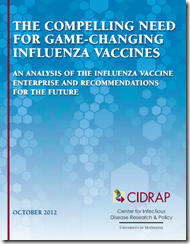
Osterholm and his team are back today, with a truly impressive 160-page report that emphasizes the need for a revolution in vaccine technology. The Compelling Need for Game-Changing Influenza Vaccines
An Analysis of the Influenza Vaccine Enterprise and Recommendations for the Future
Michael T. Osterholm, PhD, MPH, Nicholas S. Kelley, PhD, Jill M. Manske, PhD, MPH, Katie S. Ballering, PhD, Tabitha R. Leighton, MPH, Kristine A. Moore, MD, MPH
For those not ready to commit to reading a 160-page report, there is a 12-page Executive summary available.An Analysis of the Influenza Vaccine Enterprise and Recommendations for the Future
Michael T. Osterholm, PhD, MPH, Nicholas S. Kelley, PhD, Jill M. Manske, PhD, MPH, Katie S. Ballering, PhD, Tabitha R. Leighton, MPH, Kristine A. Moore, MD, MPH
At this point I?ll turn to the press release from CIDRAP, where Dr. Osterholm emphasizes the idea that our history of overestimating the effectiveness of the current vaccine serves as a barrier to developing new vaccine technologies.
New U of M-led analysis finds urgent need for new influenza vaccines
EMBARGOED until 10:00 a.m. CST, October 15, 2012
Laurel Herold, Academic Health Center, 612-624-2449, hero0045@umn.edu
Justin Paquette, Academic Health Center, 612-626-7037, jpaquett@umn.edu
MINNEAPOLIS/ST. PAUL (October 15, 2012) ? According to a new report from the University of Minnesota?s Center for Infectious Disease Research and Policy (CIDRAP), current influenza vaccines offer less protection against seasonal influenza than previously reported. As a result, the misperception that current vaccines are highly effective in fighting influenza has become a barrier to creating new, more effective vaccines.
Innovative influenza vaccines currently in investigational research offer the potential of lasting, broad and potent protection against both seasonal and pandemic influenza, but substantial research and policy support is needed to further their development and evaluation.
In addition, the report finds that as part of an effort to reduce influenza illness and death, policy shifts toward a universal recommendation for influenza vaccination often were based on professional judgment and not on sound data.
The new report, The Compelling Need for Game Changing Influenza Vaccines from the CIDRAP Comprehensive Influenza Vaccine Initiative (CCIVI), follows a review of more than 12,000 peer-reviewed publications, documents, transcripts and notes dating back to 1936 and interviews and follow up with nearly 100 experts in influenza vaccine research, development, and use.
?We urge people to get their flu shot. The present vaccines are the best interventions available for seasonal influenza,? said Michael T. Osterholm, Ph.D., M.P.H., University of Minnesota infectious disease expert and the CCIVI report?s lead author. ?However, these vaccines do not offer consistent, high-level protection ? especially in individuals at risk of medical complications or those aged older than 65 years. Unfortunately, these are the populations where we need the vaccines to work the best. We need new influenza vaccines that work for everyone, most of the time.?
Researchers found that during some influenza seasons, current vaccines offer more protection for most of the population than being unvaccinated. However, compared to most routinely recommended vaccines, influenza vaccine protection is substantially lower.
?We can no longer accept the status quo with regard to influenza vaccine research and development,? added CCIVI expert advisory group chair, Alfred Sommer, Ph.D, Johns Hopkins Bloomberg School of Public Health, after reviewing the latest report. ?Only with new game-changing vaccines can we ever really be prepared for the next influenza pandemic.?
EMBARGOED until 10:00 a.m. CST, October 15, 2012
Laurel Herold, Academic Health Center, 612-624-2449, hero0045@umn.edu
Justin Paquette, Academic Health Center, 612-626-7037, jpaquett@umn.edu
MINNEAPOLIS/ST. PAUL (October 15, 2012) ? According to a new report from the University of Minnesota?s Center for Infectious Disease Research and Policy (CIDRAP), current influenza vaccines offer less protection against seasonal influenza than previously reported. As a result, the misperception that current vaccines are highly effective in fighting influenza has become a barrier to creating new, more effective vaccines.
Innovative influenza vaccines currently in investigational research offer the potential of lasting, broad and potent protection against both seasonal and pandemic influenza, but substantial research and policy support is needed to further their development and evaluation.
In addition, the report finds that as part of an effort to reduce influenza illness and death, policy shifts toward a universal recommendation for influenza vaccination often were based on professional judgment and not on sound data.
The new report, The Compelling Need for Game Changing Influenza Vaccines from the CIDRAP Comprehensive Influenza Vaccine Initiative (CCIVI), follows a review of more than 12,000 peer-reviewed publications, documents, transcripts and notes dating back to 1936 and interviews and follow up with nearly 100 experts in influenza vaccine research, development, and use.
?We urge people to get their flu shot. The present vaccines are the best interventions available for seasonal influenza,? said Michael T. Osterholm, Ph.D., M.P.H., University of Minnesota infectious disease expert and the CCIVI report?s lead author. ?However, these vaccines do not offer consistent, high-level protection ? especially in individuals at risk of medical complications or those aged older than 65 years. Unfortunately, these are the populations where we need the vaccines to work the best. We need new influenza vaccines that work for everyone, most of the time.?
Researchers found that during some influenza seasons, current vaccines offer more protection for most of the population than being unvaccinated. However, compared to most routinely recommended vaccines, influenza vaccine protection is substantially lower.
?We can no longer accept the status quo with regard to influenza vaccine research and development,? added CCIVI expert advisory group chair, Alfred Sommer, Ph.D, Johns Hopkins Bloomberg School of Public Health, after reviewing the latest report. ?Only with new game-changing vaccines can we ever really be prepared for the next influenza pandemic.?
There is a natural reluctance for many health care providers to go into great detail regarding the protective value of the flu vaccine.
With a vaccine effectiveness rate of under 60%, it?s like trying to sell a bullet-proof vest designed to stop one out of every two bullets. Disclosures like that tend to create market resistance.
And so the tendency is to generalize, approximate, or gloss over the effectiveness issue.
This, Dr. Osterholm believes, creates the false illusion that the current vaccine technology is `good enough?. And that, during a severe pandemic influenza outbreak, could prove disastrous.
The study provides 10 key findings.
1. During some influenza seasons vaccination offers substantially more protection for most of the population than being unvaccinated; however, influenza vaccine protection is markedly lower than for most routinely recommended vaccines and is suboptimal.
2. A major barrier to the development of game-
changing influenza vaccines is the perception that current vaccines are already highly effective in
preventing influenza infection.
3. In an effort to reduce influenza morbidity and
mortality, over the last three decades the ACIP
has expanded the populations recommended to
receive influenza vaccine. These recommendations,
however, often were based on professional
judgment and not on scientifically sound data.
4. Novel-antigen influenza vaccines in investigational research offer the potential of
lasting, broad, and potent protection; however,
substantial research support is needed to further
develop and evaluate these vaccines.
5. The current US government regulatory process for approving influenza vaccines is primarily designed for incremental changes to existing vaccines and presents a barrier to the development of game-changing vaccines.
6. Substantial financial risks and inadequate
incentives create significant barriers to bringing
game-changing vaccines to market.
7. Coordinated partnerships involving national
governments, the pharmaceutical industry, the
investment community, and academia will be
critical to move such vaccines through clinical
trials and the licensure process.
8. Current policy goals for influenza vaccines focus
on increasing production capacity and have not
addressed key public health challenges related to
the effectiveness of current vaccines.
9. Significant policy, investment, organizational,
and leadership barriers must be overcome to
achieve novel-antigen game-changing influenza
vaccines.
10. Pandemic influenza remains a clear and
compelling threat to our national security and requires commensurate prioritization and an unprecedented coordinated effort among
government, academia, and the private sector to
mitigate this threat.
2. A major barrier to the development of game-
changing influenza vaccines is the perception that current vaccines are already highly effective in
preventing influenza infection.
3. In an effort to reduce influenza morbidity and
mortality, over the last three decades the ACIP
has expanded the populations recommended to
receive influenza vaccine. These recommendations,
however, often were based on professional
judgment and not on scientifically sound data.
4. Novel-antigen influenza vaccines in investigational research offer the potential of
lasting, broad, and potent protection; however,
substantial research support is needed to further
develop and evaluate these vaccines.
5. The current US government regulatory process for approving influenza vaccines is primarily designed for incremental changes to existing vaccines and presents a barrier to the development of game-changing vaccines.
6. Substantial financial risks and inadequate
incentives create significant barriers to bringing
game-changing vaccines to market.
7. Coordinated partnerships involving national
governments, the pharmaceutical industry, the
investment community, and academia will be
critical to move such vaccines through clinical
trials and the licensure process.
8. Current policy goals for influenza vaccines focus
on increasing production capacity and have not
addressed key public health challenges related to
the effectiveness of current vaccines.
9. Significant policy, investment, organizational,
and leadership barriers must be overcome to
achieve novel-antigen game-changing influenza
vaccines.
10. Pandemic influenza remains a clear and
compelling threat to our national security and requires commensurate prioritization and an unprecedented coordinated effort among
government, academia, and the private sector to
mitigate this threat.
Given that this study challenges many long held beliefs, it will be interesting to see how it is received by the vaccine industry, public health officials, and ultimately, the public.
Posted by Michael Coston at <a class="timestamp-link" href="http://afludiary.blogspot.com/2012/10/cidrap-need-for-game-changing-flu.html" rel="bookmark" title="permanent link"><abbr class="published" title="2012-10-15T11:58:00-04:00">11:58 AM</abbr>

Comment