
 Tweet
Tweet
Collective relocation of Fukushima residents
Municipalities in Fukushima Prefecture are relocating residents and administrative functions to remote areas. Many of them are located within the evacuation zone around the troubled Fukushima Daiichi nuclear power plant.
On March 19th, Futaba Town moved its functions and the entire community to Saitama City in Saitama Prefecture....
Saturday, March 26, 2011 19:22 +0900 (JST)
http://www3.nhk.or.jp/daily/english/26_21.html
Death toll as of Saturday
Japanese police say so far 10,489 people have been confirmed dead and more than 16,600 are missing after the March 11th earthquake and tsunami that hit northeastern Japan.
6,333 dead were counted in Miyagi Prefecture.
In Iwate Prefecture 3,152 people have been confirmed dead, while in Fukushima Prefecture 946 people died...
Sunday, March 27, 2011 08:53 +0900 (JST)
http://www3.nhk.or.jp/daily/english/27_05.html
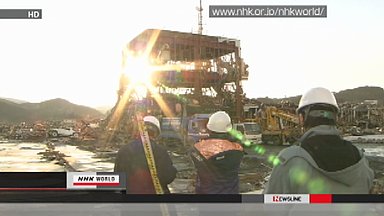
Record 16-meter tsunami hit Minami-sanriku
Scientists say a record 16-meter tsunami hit a coastal town in Miyagi Prefecture on March 11th.
Researchers at the Port and Airport Research Institute released the finding after inspecting buildings in Minami-sanriku Town, which was devastated by the massive earthquake and tsunami....
Sunday, March 27, 2011 08:53 +0900 (JST)
http://www3.nhk.or.jp/daily/english/26_23.html
No rolling blackouts on Sunday
Tokyo Electric Power Company has cancelled planned rolling blackouts for Sunday in parts of Tokyo and surrounding areas as electricity demand is not likely to exceed supply.
TEPCO said on Saturday that demand during the evening peak hour from 6 to 7 is expected to be lower than initially thought. Planned rolling blackouts were also cancelled on Saturday....
Sunday, March 27, 2011 08:53 +0900 (JST)
http://www3.nhk.or.jp/daily/english/27_03.html
Steel makers provide TEPCO with electricity
Japan's major steel makers are moving to provide electricity to Tokyo Electric Power Company in an effort to help ease power shortages in Tokyo and its surrounding areas.
Sumitomo Metal Industries reactivated its conventional power station on Saturday at its steel plant in Kashima, Ibaraki Prefecture. The power station had been shut down for safety checks after the March 11th earthquake and tsunami....
Sunday, March 27, 2011 08:53 +0900 (JST)
http://www3.nhk.or.jp/daily/english/27_09.html
Brazil raises funds for Japanese quake survivors
People in Sao Paulo, a city with a large Japanese-Brazilian population, have made donations to a fund raising campaign for survivors of the recent disaster in Japan.
A donation box was set up at the city center in an event sponsored by the Red Cross and Japanese-Brazilians...
Sunday, March 27, 2011 08:53 +0900 (JST)
http://www3.nhk.or.jp/daily/english/27_08.html
Raising funds in Thailand for quake-hit Japan
Thai students affected by the March 11th earthquake in Japan have appealed in Bangkok for funds to help Japanese survivors.
About 100 Thai people including students at universities in Japan called on passers-by for cash donations in a fashionable Bangkok shopping district on Saturday...
Sunday, March 27, 2011 08:53 +0900 (JST)
http://www3.nhk.or.jp/daily/english/27_02.html
Israeli medical team to arrive in Japan
An emergency medical team from Israel is on its way to Japan to aid survivors of the massive quake and tsunami.
The group of 60 doctors and nurses left an air force base in southern Israel on Saturday. They are the first foreign medical team sent to Japan since the March 11th disaster...
Sunday, March 27, 2011 11:31 +0900 (JST)
http://www3.nhk.or.jp/daily/english/27_10.html
Indonesians create handprinted Hinomaru for Tohoku
People in Indonesia have created a handprint version of Japan's national flag to cheer up survivors of the March 11th massive earthquake and tsunami.
The event was organized by former workers of Japanese companies....
Sunday, March 27, 2011 16:01 +0900 (JST)
http://www3.nhk.or.jp/daily/english/27_13.html
Over 10,000 confirmed dead in quake and tsunami
Japanese police say that 10,633 deaths have been confirmed in the massive earthquake and tsunami that hit northeastern Japan on March 11th.
By region, 6,477 deaths were confirmed in Miyagi Prefecture, surpassing the confirmed death toll of 6,434 in the 1995 Great Hanshin earthquake that struck the Kobe area of central Japan.....
Sunday, March 27, 2011 16:24 +0900 (JST)
http://www3.nhk.or.jp/daily/english/27_14.html
Man waiting for fuel died of CO poisoning
An old man has been found dead in a vehicle near a gas station in quake-hit Fukushima Prefecture. Police think he died of carbon monoxide poisoning.
Gas station workers found the man unconscious in the mini-vehicle in Tanakura Town on Sunday morning....
Sunday, March 27, 2011 17:03 +0900 (JST)
http://www3.nhk.or.jp/daily/english/27_15.html
Fisheries coop in Iwate to study recovery steps
A fisheries cooperative in northeastern Japan will study recovery steps after confirming the willingness of its members to continue their business.
One of the 3 fisheries coops in Kamaishi City, Iwate Prefecture, had more than 400 fishing boats before the tsunami, but 90 percent of them have been lost. All seaweed and scallop farms were swept away by the tsunami....
Sunday, March 27, 2011 17:03 +0900 (JST)
http://www3.nhk.or.jp/daily/english/27_16.html
Municipalities in Fukushima Prefecture are relocating residents and administrative functions to remote areas. Many of them are located within the evacuation zone around the troubled Fukushima Daiichi nuclear power plant.
On March 19th, Futaba Town moved its functions and the entire community to Saitama City in Saitama Prefecture....
Saturday, March 26, 2011 19:22 +0900 (JST)
http://www3.nhk.or.jp/daily/english/26_21.html
Death toll as of Saturday
Japanese police say so far 10,489 people have been confirmed dead and more than 16,600 are missing after the March 11th earthquake and tsunami that hit northeastern Japan.
6,333 dead were counted in Miyagi Prefecture.
In Iwate Prefecture 3,152 people have been confirmed dead, while in Fukushima Prefecture 946 people died...
Sunday, March 27, 2011 08:53 +0900 (JST)
http://www3.nhk.or.jp/daily/english/27_05.html
Record 16-meter tsunami hit Minami-sanriku
Scientists say a record 16-meter tsunami hit a coastal town in Miyagi Prefecture on March 11th.
Researchers at the Port and Airport Research Institute released the finding after inspecting buildings in Minami-sanriku Town, which was devastated by the massive earthquake and tsunami....
Sunday, March 27, 2011 08:53 +0900 (JST)
http://www3.nhk.or.jp/daily/english/26_23.html
No rolling blackouts on Sunday
Tokyo Electric Power Company has cancelled planned rolling blackouts for Sunday in parts of Tokyo and surrounding areas as electricity demand is not likely to exceed supply.
TEPCO said on Saturday that demand during the evening peak hour from 6 to 7 is expected to be lower than initially thought. Planned rolling blackouts were also cancelled on Saturday....
Sunday, March 27, 2011 08:53 +0900 (JST)
http://www3.nhk.or.jp/daily/english/27_03.html
Steel makers provide TEPCO with electricity
Japan's major steel makers are moving to provide electricity to Tokyo Electric Power Company in an effort to help ease power shortages in Tokyo and its surrounding areas.
Sumitomo Metal Industries reactivated its conventional power station on Saturday at its steel plant in Kashima, Ibaraki Prefecture. The power station had been shut down for safety checks after the March 11th earthquake and tsunami....
Sunday, March 27, 2011 08:53 +0900 (JST)
http://www3.nhk.or.jp/daily/english/27_09.html
Brazil raises funds for Japanese quake survivors
People in Sao Paulo, a city with a large Japanese-Brazilian population, have made donations to a fund raising campaign for survivors of the recent disaster in Japan.
A donation box was set up at the city center in an event sponsored by the Red Cross and Japanese-Brazilians...
Sunday, March 27, 2011 08:53 +0900 (JST)
http://www3.nhk.or.jp/daily/english/27_08.html
Raising funds in Thailand for quake-hit Japan
Thai students affected by the March 11th earthquake in Japan have appealed in Bangkok for funds to help Japanese survivors.
About 100 Thai people including students at universities in Japan called on passers-by for cash donations in a fashionable Bangkok shopping district on Saturday...
Sunday, March 27, 2011 08:53 +0900 (JST)
http://www3.nhk.or.jp/daily/english/27_02.html
Israeli medical team to arrive in Japan
An emergency medical team from Israel is on its way to Japan to aid survivors of the massive quake and tsunami.
The group of 60 doctors and nurses left an air force base in southern Israel on Saturday. They are the first foreign medical team sent to Japan since the March 11th disaster...
Sunday, March 27, 2011 11:31 +0900 (JST)
http://www3.nhk.or.jp/daily/english/27_10.html
Indonesians create handprinted Hinomaru for Tohoku
People in Indonesia have created a handprint version of Japan's national flag to cheer up survivors of the March 11th massive earthquake and tsunami.
The event was organized by former workers of Japanese companies....
Sunday, March 27, 2011 16:01 +0900 (JST)
http://www3.nhk.or.jp/daily/english/27_13.html
Over 10,000 confirmed dead in quake and tsunami
Japanese police say that 10,633 deaths have been confirmed in the massive earthquake and tsunami that hit northeastern Japan on March 11th.
By region, 6,477 deaths were confirmed in Miyagi Prefecture, surpassing the confirmed death toll of 6,434 in the 1995 Great Hanshin earthquake that struck the Kobe area of central Japan.....
Sunday, March 27, 2011 16:24 +0900 (JST)
http://www3.nhk.or.jp/daily/english/27_14.html
Man waiting for fuel died of CO poisoning
An old man has been found dead in a vehicle near a gas station in quake-hit Fukushima Prefecture. Police think he died of carbon monoxide poisoning.
Gas station workers found the man unconscious in the mini-vehicle in Tanakura Town on Sunday morning....
Sunday, March 27, 2011 17:03 +0900 (JST)
http://www3.nhk.or.jp/daily/english/27_15.html
Fisheries coop in Iwate to study recovery steps
A fisheries cooperative in northeastern Japan will study recovery steps after confirming the willingness of its members to continue their business.
One of the 3 fisheries coops in Kamaishi City, Iwate Prefecture, had more than 400 fishing boats before the tsunami, but 90 percent of them have been lost. All seaweed and scallop farms were swept away by the tsunami....
Sunday, March 27, 2011 17:03 +0900 (JST)
http://www3.nhk.or.jp/daily/english/27_16.html


 sankei news
 sankei news
Comment