
Announcement

Collapse
No announcement yet.

Russia ILI surveillance 2012-2013

Collapse
X
 
  • Filter
  • Time
  • Show
Clear All
new posts

  • #16
    Re: Russia ILI surveillance 2012-2013

    Week 21.01.2013-27.01.2013

    Influenza and ARI morbidity data

    Epidemic thresholds of ILI and ARI were exceeded by 57.7-117.6% in 3 cities (Tomsk, Ekaterinburg, Ufa) and by 20-49.6% in 8 cities (Birobidzhan, Kazan, Kemerovo, Novosibirsk, Samara, Saratov, Chelyabinsk and Cheboksary) of 59 ones collaborating with two WHO NICs in Russia.
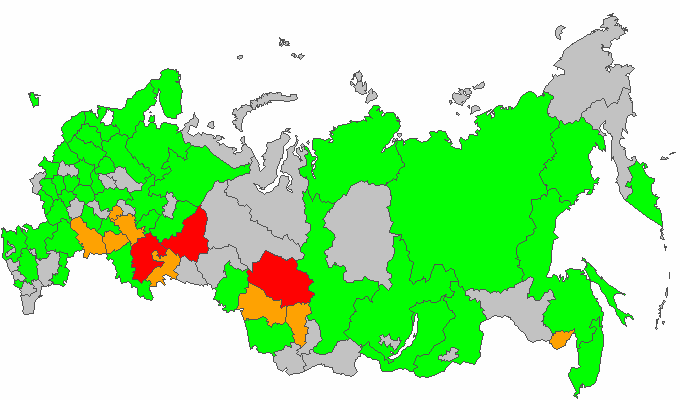
    Click image for larger version

Name:	Rus.gif
Views:	1
Size:	11.9 KB
ID:	660415

    Cumulative number of diagnosed influenza cases

    Cumulative results of influenza laboratory diagnosis by different tests were submitted by 53 RBLs. According to these data as a result of investigation of 2363 patients the overall proportion of respiratory samples positive for influenza virus was estimated as 14.7%, including 7.6% for influenza A(H1N1)pdm09 virus, 5.4% for influenza A(H3N2) virus, 0.6% for non-subtyped influenza A virus and 1.1% for influenza B virus. Twenty five influenza viruses were isolated this week including 13 influenza A(H1N1)pdm09 viruses in Ekaterinburg (Ural FD), Moscow NIC (Central FD) and Orenburg (Volga FD), 8 influenza A(H3N2) viruses in Astrakhan (South FD), Ekaterinburg (Ural FD), Novosibirsk, Tomsk (Siberian FD) and Vladivostok (Far-Eastern FD) and 4 influenza B viruses in Novosibirsk (Siberian FD) and Vladivostok (Far-Eastern FD).
    ...
    Conclusion

    Cumulative results of influenza laboratory diagnosis by different tests were submitted by 53 RBLs. According to these data as a result of investigation of 2363 patients the overall proportion of respiratory samples positive for influenza virus was estimated as 14.7%, including 7.6% for influenza A(H1N1)pdm09 virus, 5.4% for influenza A(H3N2) virus, 0.6% for non-subtyped influenza A virus and 1.1% for influenza B virus. Twenty five influenza viruses were isolated this week including 13 influenza A(H1N1)pdm09 viruses in Ekaterinburg (Ural FD), Moscow NIC (Central FD) and Orenburg (Volga FD), 8 influenza A(H3N2) viruses in Astrakhan (South FD), Ekaterinburg (Ural FD), Novosibirsk, Tomsk (Siberian FD) and Vladivostok (Far-Eastern FD) and 4 influenza B viruses in Novosibirsk (Siberian FD) and Vladivostok (Far-Eastern FD).
    Percent of positive ARI cases of non-influenza etiology (PIV, adeno- and RSV) was estimated as 18.2% of investigated patients by IFA and 19.3% by PCR.
    In sentinel surveillance system clinical samples from 100 SARI and ILI/ARI patients were investigated by rRT-PCR. As a result 10 (29.4%) of influenza cases were detected among 34 SARI patients, including 7 (20.6%) A(H1N1)pdm09 cases, 2 (5.9%) influenza A(H3N2) cases and 1 (2.9%) influenza B case. Among 66 ILI/ARI patients 28 (42.4%) influenza cases were detected including 22 (33.3%) influenza A(H1N1)pdm09 cases and 6 (9.1%) influenza A(H3N2) cases.

    Twitter: @RonanKelly13
    The views expressed are mine alone and do not represent the views of my employer or any other person or organization.

    Comment


    • #17
      Re: Russia ILI surveillance 2012-2013

      Week 28.01.2013-03.02.2013

      Influenza and ARI morbidity data

      Epidemic thresholds of ILI and ARI were exceeded by 61.5-98.7% in 4 cities (Tomsk, Saratov, Ekaterinburg, Ufa) and by 31.6-46.0% in 10 cities (Birobidzhan, Izhevsk, Kaliningrad, Kemerovo, Novosibirsk, Samara, Syktyvkar, Ulyanovsk, Chelyabinsk and Cheboksary) of 59 ones collaborating with two WHO NICs in Russia.

      Click image for larger version

Name:	Rus.gif
Views:	1
Size:	12.0 KB
ID:	660417

      Cumulative number of diagnosed influenza cases

      Cumulative results of influenza laboratory diagnosis by different tests were submitted by 54 RBLs. According to these data as a result of investigation of 3109 patients the overall proportion of respiratory samples positive for influenza virus was estimated as 21.6%, including 13.2% for influenza A(H1N1)pdm09 virus, 5.4% for influenza A(H3N2) virus, 0.6% for non-subtyped influenza A virus and 2.3% for influenza B virus. Thirty four influenza viruses were isolated this week including 13 influenza A(H1N1)pdm09 viruses in cities of 5 FD (Nort-Western, Central, South, Ural and Far-Eastern), 18 influenza A(H3N2) viruses in cities of 4 FD (South, Siberian, Far-Eastern and Nort-Western) and 3 influenza B viruses in cities of 3 FD (Central, Siberian and Ural).

      ...
      Conclusion

      Influenza and ARI morbidity data. Increased influenza activity was registered during the week 5.2013 in traditional surveillance system in Russia. The nationwide ILI & ARI morbidity level registered this week (85.6 per 10 000 of population) exceeded the national baseline by 27.9%.
      Etiology of ILI & ARI morbidity. The overall proportion of respiratory samples tested positive for influenza was estimated as 21.6%, including 13.2% for influenza A(H1N1)pdm09 virus, 5.4% for influenza A(H3N2) virus, 0.6% for non-subtyped influenza A virus and 2.3% for influenza B virus. Thirty four influenza viruses were isolated this week including 13 influenza A(H1N1)pdm09 viruses, 18 influenza A(H3N2) viruses and 3 influenza B viruses. Percent of positive ARI cases of non-influenza etiology (PIV, adeno- and RSV) was estimated as 18.3% of investigated patients by IFA and 14.0% by PCR.
      In sentinel surveillance system clinical samples from 109 SARI and ILI/ARI patients were investigated by rRT-PCR. As a result 23 (51.1%) of influenza cases were detected among 45 SARI patients, including 6 (26.1%) A(H1N1)pdm09 cases, 15 (65.2%) influenza A(H3N2) cases and 2 (8.7%) influenza B cases. Among 64 ILI/ARI patients 15 (23.4%) influenza cases were detected including 11 (73.3%) influenza A(H1N1)pdm09 cases and 4 (26.7%) influenza A(H3N2) cases
      Twitter: @RonanKelly13
      The views expressed are mine alone and do not represent the views of my employer or any other person or organization.

      Comment


      • #18
        Re: Russia ILI surveillance 2012-2013

        Week 04.02.2013-10.02.2013

        Influenza and ARI morbidity data

        Epidemiological data show increase of influenza activity in Russia in comparison with previous week. The nationwide ILI & ARI morbidity level registered this week (97.5 per 10 000 of population) exceeded the national baseline by 45.7%. ILI and ARI epidemic thresholds were exceeded by 28.9-76.2% in 24 cities of 59 ones collaborating with two WHO NICs in Russia.

        Click image for larger version

Name:	Rus.gif
Views:	1
Size:	12.1 KB
ID:	660436

        Cumulative number of diagnosed influenza cases

        Cumulative results of influenza laboratory diagnosis by different tests were submitted by 54 RBLs. According to these data as a result of 3751 patients investigation the overall proportion of respiratory samples positive for influenza virus was estimated as 27.8%, including 17.6% for influenza A(H1N1)pdm09 virus, 7.5% for influenza A(H3N2) virus, 0.7% for non-subtyped influenza A virus and 1.9% for influenza B virus. Eighty five influenza viruses were isolated this week including 51 influenza A(H1N1)pdm09 viruses in different cities of 6 FD (Nort-Western, Central, South, Volga, Ural and Siberian), 24 influenza A(H3N2) viruses in cities of 4 FD (South, Siberian, Far-Eastern and Nort-Western) and 7 influenza B viruses in cities of 3 FD (Central, Siberian and Nort-Western).
        ...
        Conclusion

        Influenza and ARI morbidity data. Increased influenza activity was registered during the week 6.2013 in traditional surveillance system in Russia. The nationwide ILI & ARI morbidity level registered this week (97.5 per 10 000 of population) exceeded the national baseline by 45.7%.
        Etiology of ILI & ARI morbidity. The overall proportion of respiratory samples tested positive for influenza was estimated as 27.8%, including 17.6% for influenza A(H1N1)pdm09 virus, 7.5% for influenza A(H3N2) virus, 0.7% for non-subtyped influenza A virus and 1.9% for influenza B virus. Eighty five influenza viruses were isolated this week including 51 influenza A(H1N1)pdm09 viruses, 24 influenza A(H3N2) viruses and 7 influenza B viruses. Percent of positive ARI cases of non-influenza etiology (PIV, adeno- and RSV) was estimated as 17.9% of investigated patients by IFA and 15.1% by PCR.
        In sentinel surveillance system clinical samples from 126 SARI and ILI/ARI patients were investigated by rRT-PCR. As a result 19 (45.2%) of influenza cases were detected among 42 SARI patients, including 13 (68.4%) A(H1N1)pdm09 cases, 5 (26.3%) influenza A(H3N2) cases and 1 (5.3%) influenza B case. Among 84 ILI/ARI patients 25 (29.8%) influenza cases were detected including 21 (84%) influenza A(H1N1)pdm09 cases, 3 (12%) influenza A(H3N2) cases and 1 (4%) influenza B case.
        Twitter: @RonanKelly13
        The views expressed are mine alone and do not represent the views of my employer or any other person or organization.

        Comment


        • #19
          Re: Russia ILI surveillance 2012-2013

          Week 11.02.2013-17.02.2013

          Influenza and ARI morbidity data

          Epidemiological data show increase of influenza activity in Russia in comparison with previous week. The nationwide ILI & ARI morbidity level (103.7 per 10 000 of population) exceeded the national baseline by 55%. ILI and ARI epidemic thresholds were exceeded in 29 cities of 59 ones collaborating with two WHO NICs in Russia.

          Click image for larger version

Name:	Rus.gif
Views:	1
Size:	12.4 KB
ID:	660480

          Cumulative number of diagnosed influenza cases

          Cumulative results of influenza laboratory diagnosis by different tests were submitted by 55 RBLs. According to these data as a result of 4966 patients investigation the overall proportion of respiratory samples positive for influenza virus was estimated as 28.7%, including 18.2% for influenza A(H1N1)pdm09 virus, 6.8% for influenza A(H3N2) virus, 1.6% for non-subtyped influenza A virus and 2.5% for influenza B virus. Forty one influenza viruses were isolated this week including 24 influenza A(H1N1)pdm09 viruses in different cities of 7 FD (North-Western, Central, South, Volga, Ural, Siberian and Far-Eastern), 4 influenza A(H3N2) viruses in cities of 2 FD (Siberian and North-Western) and 9 influenza B viruses in cities of 4 FD (South, Central, Siberian and North-Western).
          ...
          Conclusion

          Influenza and ARI morbidity data. Increased influenza activity was registered during the week 7.2013 in traditional surveillance system in Russia. The nationwide ILI & ARI morbidity level (103.7 per 10 000 of population) exceeded the national baseline by 55%.
          Etiology of ILI & ARI morbidity. The overall proportion of respiratory samples tested positive for influenza was estimated as 28.7%, including 18.2% for influenza A(H1N1)pdm09 virus, 6.8% for influenza A(H3N2) virus, 1.6% for non-subtyped influenza A virus and 2.5% for influenza B virus. Forty one influenza viruses were isolated this week including 24 influenza A(H1N1)pdm09 viruses, 4 influenza A(H3N2) viruses and 9 influenza B viruses. Percent of positive ARI cases of non-influenza etiology (PIV, adeno- and RSV) was estimated as 15.6% of investigated patients by IFA and 12.8% by PCR.
          In sentinel surveillance system clinical samples from 141 SARI and ILI/ARI patients were investigated by rRT-PCR. As a result 14 (29.8%) of influenza cases were detected among 47 SARI patients, including 9 (64.3%) A(H1N1)pdm09 cases and 5 (35.7%) influenza A(H3N2) cases. Among 94 ILI/ARI patients 19 (20.2%) influenza cases were detected including 10 (52.6%) influenza A(H1N1)pdm09 cases,6 (31.6%) influenza A(H3N2) cases and 3 (15.8%) influenza B cases.
          Twitter: @RonanKelly13
          The views expressed are mine alone and do not represent the views of my employer or any other person or organization.

          Comment


          • #20
            Re: Russia ILI surveillance 2012-2013

            Week 18.02.2013-24.02.2013

            Influenza and ARI morbidity data

            ILI and ARI epidemic thresholds were exceeded in 25 cities of 59 ones collaborating with two WHO NICs in Russia.

            Click image for larger version

Name:	Rus.gif
Views:	1
Size:	12.4 KB
ID:	660502

            Cumulative number of diagnosed influenza cases

            Cumulative results of influenza laboratory diagnosis by different tests were submitted by 48 RBLs. According to these data as a result of 5079 patients investigation the overall proportion of respiratory samples positive for influenza virus was estimated as 29.7%, including 18.4% for influenza A(H1N1)pdm09 virus, 6.6% for influenza A(H3N2) virus, 1.1% for non-subtyped influenza A virus and 3.7% for influenza B virus. 124 influenza viruses were isolated this week including 58 influenza A(H1N1)pdm09 viruses in different cities of 4 FD (North-Western, Central, Volga, Ural), 41 influenza A(H3N2) viruses in cities of 5 FD (North-Western, Central, Volga, Siberian and Far-Eastern) and 25 influenza B viruses in cities of 5 FD (North-Western, Central, Volga, Siberian and Far-Eastern).
            ...
            Conclusion

            Influenza and ARI morbidity data. No increase of influenza activity was registered during the week 8.2013 in traditional surveillance system in Russia. The nationwide ILI & ARI morbidity level (103.1 per 10 000 of population) exceeded the national baseline by 54.1%.

            Etiology of ILI & ARI morbidity. The overall proportion of respiratory samples tested positive for influenza was estimated as 29.7%, including 18.4% for influenza A(H1N1)pdm09 virus, 6.6% for influenza A(H3N2) virus, 1.1% for non-subtyped influenza A virus and 3.7% for influenza B virus. 124 influenza viruses were isolated this week including 58 influenza A(H1N1)pdm09 viruses, 41 influenza A(H3N2) viruses and 25 influenza B viruses. Percent of positive ARI cases of non-influenza etiology (PIV, adeno- and RSV) was estimated as 15.7% of investigated patients by IFA and 12.4% by PCR.
            In sentinel surveillance system clinical samples from 194 SARI and ILI/ARI patients were investigated by rRT-PCR. As a result 36 (42.9%) of influenza cases were detected among 84 SARI patients, including 12 (33.3%) A(H1N1)pdm09 cases, 15 (41.7%) influenza A(H3N2) cases and 9 (25%) influenza B cases. Among 110 ILI/ARI patients 32 (29.1%) influenza cases were detected including 15 (46.9%) influenza A(H1N1)pdm09 cases, 16 (50%) influenza A(H3N2) cases and 1 (3.1%) influenza B case.
            Seven lethal influenza cases were registered in weeks 7 and 8 including 6 influenza A(H1N1)pdm09 cases and one non subtyped influenza A case. A total 15 lethal influenza cases were registered this season, all of them among adult patients.
            Twitter: @RonanKelly13
            The views expressed are mine alone and do not represent the views of my employer or any other person or organization.

            Comment


            • #21
              Re: Russia ILI surveillance 2012-2013

              Week 25.02.2013-03.03.2013

              Influenza and ARI morbidity data

              Epidemiological data show increase of influenza activity in Russia in comparison with previous week. The nationwide ILI & ARI morbidity level (107.9 per 10 000 of population) exceeded the national baseline by 61.3%.
              ILI and ARI epidemic thresholds were exceeded in 39 cities of 59 ones collaborating with two WHO NICs in Russia.

              Click image for larger version

Name:	Rus.gif
Views:	1
Size:	12.6 KB
ID:	660540

              Cumulative number of diagnosed influenza cases

              Cumulative results of influenza laboratory diagnosis by different tests were submitted by 53 RBLs and two WHO NICs. According to these data as a result of 6095 patients investigation the overall proportion of respiratory samples positive for influenza virus was estimated as 27.5%, including 14.7% for influenza A(H1N1)pdm09 virus, 7.2% for influenza A(H3N2) virus, 1.0% for non-subtyped influenza A virus and 4.6% for influenza B virus. 106 influenza viruses were isolated this week including 56 influenza A(H1N1)pdm09 viruses in different cities of 5 FDs (North-Western, Central, Volga, Ural and South), 19 influenza A(H3N2) viruses in cities of 3 FDs (North-Western, Volga, Siberian) and 31 influenza B viruses in cities of 5 FDs (North-Western, Central, Volga, Siberian and South).

              ...
              Conclusion

              Influenza and ARI morbidity data. Increased influenza activity was registered during the week 9.2013 in traditional surveillance system in Russia. The nationwide ILI & ARI morbidity level (107.9 per 10 000 of population) exceeded the national baseline by 61.3%.

              Etiology of ILI & ARI morbidity. The overall proportion of respiratory samples tested positive for influenza was estimated as 27.5%, including 14.7% for influenza A(H1N1)pdm09 virus, 7.2% for influenza A(H3N2) virus, 1.0% for non-subtyped influenza A virus and 4.6% for influenza B virus.
              106 influenza viruses were isolated this week including 56 influenza A(H1N1)pdm09 viruses, 19 influenza A(H3N2) viruses and 31 influenza B viruses. Percent of positive ARI cases of non-influenza etiology (PIV, adeno- and RSV) was estimated as 14.0% of investigated patients by IFA and 10.8% by PCR.

              In sentinel surveillance system clinical samples from 204 SARI and ILI/ARI patients were investigated by rRT-PCR. As a result 25 (37.3%) of influenza cases were detected among 67 SARI patients, including 11 (44%) A(H1N1)pdm09 cases, 12 (48%) influenza A(H3N2) cases and 2 (8%) influenza B cases. Among 137 ILI/ARI patients 27 (19.7%) influenza cases were detected including 14 (51.9%) influenza A(H1N1)pdm09 cases, 11 (40.7%) influenza A(H3N2) cases and 2 (7.4%) influenza B cases.

              Antigenic characterization.
              A total of 93 influenza viruses were characterized antigenically. 53 investigated influenza A(H1N1)pdm09 viruses were closely related to A/California/7/09 virus, 23 A(H3N2) viruses were like to influenza A/Victoria/361/11 virus, 17 investigated influenza B viruses belonged to B/Yamagata lineage and were antigenically related to B/Wisconsin/1/10 virus.
              As a result of genetic characterization one investigated influenza A(H1N1)pdm09 virus was genetically related to group A(H1)pdm09, represented by A/St. Peterburg/27/2011 virus. Two A(H3N2) viruses belonged to A/Victoria/208/2009 clade, subgroup A/Victoria/361/11.

              Twitter: @RonanKelly13
              The views expressed are mine alone and do not represent the views of my employer or any other person or organization.

              Comment


              • #22
                Re: Russia ILI surveillance 2012-2013

                Week 04.03.2013-10.03.2013

                Influenza and ARI morbidity data

                Epidemiological data show decrease of influenza activity in Russia in comparison with previous week. The nationwide ILI & ARI morbidity level (85.3 per 10 000 of population) exceeded the national baseline by 27.5%.
                ILI and ARI epidemic thresholds were exceeded in 21 cities of 59 ones collaborating with two WHO NICs in Russia.

                Click image for larger version

Name:	Rus.gif
Views:	1
Size:	12.3 KB
ID:	660568

                Cumulative number of diagnosed influenza cases

                Cumulative results of influenza laboratory diagnosis by different tests were submitted by 52 RBLs and two WHO NICs. According to these data as a result of 5219 patients investigation the overall proportion of respiratory samples positive for influenza virus was estimated as 27.8%, including 13.6% for influenza A(H1N1)pdm09 virus, 7.9% for influenza A(H3N2) virus, 1.0% for non-subtyped influenza A virus and 5.3% for influenza B virus. 89 influenza viruses were isolated this week including 40 influenza A(H1N1)pdm09 viruses in different cities of 6 FDs (North-Western, Central, Volga, Ural, Siberian and Far-Eastern), 19 influenza A(H3N2) viruses in cities of 5 FDs (North-Western, Central, Volga, Siberian and Far-Eastern) and 30 influenza B viruses in cities of 6 FDs (North-Western, Central, Volga, Ural, Siberian and South).
                Antigenic characterization. Totally 180 influenza viruses were characterized antigenically including 115 (H1N1)pdm09 viruses, 35 influenza A(H3N2) viruses and 40 influenza B viruses. 111 investigated influenza A(H1N1)pdm09 viruses were closely related to A/California/7/09 virus and 4 strains were drift variants of A/California/7/09 virus, 31 A(H3N2) viruses were like influenza A/Victoria/361/11 virus and 5 strains showed reduced titers with antiserum produced against A/Victoria/361/11 virus, 34 investigated influenza B viruses belonged to B/Yamagata lineage and were antigenically related to B/Wisconsin/1/10 virus, 6 strains were related to B/Brisbain/60/07 virus and belonged to Victoria lineage.
                As a result of genetic characterization one investigated influenza A(H1N1)pdm09 virus was genetically related to group A(H1)pdm09, represented by A/St. Peterburg/27/2011 virus. Two A(H3N2) viruses belonged to A/Victoria/208/2009 clade, subgroup A/Victoria/361/11.
                ...
                Conclusion

                Influenza and ARI morbidity data. Decreased influenza activity was registered during the week 10.2013 in traditional surveillance system in Russia. The nationwide ILI & ARI morbidity level (85.3 per 10 000 of population) exceeded the national baseline by 27.5%.
                Etiology of ILI & ARI morbidity. The overall proportion of respiratory samples tested positive for influenza was estimated as 27.8%, including 13.6% for influenza A(H1N1)pdm09 virus, 7.9% for influenza A(H3N2) virus, 1.0% for non-subtyped influenza A virus and 5.3% for influenza B virus. 89 influenza viruses were isolated this week including 40 influenza A(H1N1)pdm09 viruses, 19 influenza A(H3N2) viruses and 30 influenza B viruses. Percent of positive ARI cases of non-influenza etiology (PIV, adeno- and RSV) was estimated as 14.0% of investigated patients by IFA and 12.8% by PCR.
                In sentinel surveillance system clinical samples from 117 SARI and ILI/ARI patients were investigated by rRT-PCR. As a result 13 (24.1%) of influenza cases were detected among 54 SARI patients, including 3 (23.1%) A(H1N1)pdm09 cases, 6 (46.2%) influenza A(H3N2) cases, 1 (7.7%) non subtyped influenza A cases and 3 (23.1%) influenza B case. Among 63 ILI/ARI patients 28 (44.4%) influenza cases were detected including 11 (39.3%) influenza A(H1N1)pdm09 cases, 15 (53.6%) influenza A(H3N2) cases and 2 (7.1%) non subtyped influenza A cases.
                Antigenic characterization.
                Totally 180 influenza viruses were characterized antigenically including 115 (H1N1)pdm09 viruses, 35 influenza A(H3N2) viruses and 40 influenza B viruses. 111 investigated influenza A(H1N1)pdm09 viruses were closely related to A/California/7/09 virus and 4 strains were drift variants of A/California/7/09 virus, 31 A(H3N2) viruses were like influenza A/Victoria/361/11 virus and 5 strains showed reduced titers with antiserum produced against A/Victoria/361/11 virus, 34 investigated influenza B viruses belonged to B/Yamagata lineage and were antigenically related to B/Wisconsin/1/10 virus, 6 strains were related to B/Brisbain/60/07 virus and belonged to Victoria lineage.
                As a result of genetic characterization one investigated influenza A(H1N1)pdm09 virus was genetically related to group A(H1)pdm09, represented by A/St. Peterburg/27/2011 virus. Two A(H3N2) viruses belonged to A/Victoria/208/2009 clade, subgroup A/Victoria/361/11.
                Twitter: @RonanKelly13
                The views expressed are mine alone and do not represent the views of my employer or any other person or organization.

                Comment


                • #23
                  Re: Russia ILI surveillance 2012-2013

                  Week 11.03.2013-17.03.2013

                  Influenza and ARI morbidity data

                  Epidemiological data show increase of influenza activity in Russia in comparison with previous week. The nationwide ILI & ARI morbidity level (94.6 per 10 000 of population) exceeded the national baseline by 41.4%.
                  ILI and ARI epidemic thresholds were exceeded in 36 cities of 59 ones collaborating with two WHO NICs in Russia.

                  Click image for larger version

Name:	Rus.gif
Views:	1
Size:	12.6 KB
ID:	660599

                  Cumulative number of diagnosed influenza cases

                  Cumulative results of influenza laboratory diagnosis by different tests were submitted by 51 RBLs and two WHO NICs. According to these data as a result of 5176 patients investigation the overall proportion of respiratory samples positive for influenza virus was estimated as 25.6%, including 10.8% for influenza A(H1N1)pdm09 virus, 7.4% for influenza A(H3N2) virus, 1.3% for non-subtyped influenza A virus and 6.1% for influenza B virus. 99 influenza viruses were isolated this week including 43 influenza A(H1N1)pdm09 viruses in different cities of 5 FDs (North-Western, Central, Volga, Ural and Far-Eastern), 33 influenza A(H3N2) viruses in cities of 5 FDs (North-Western, Central, Volga, Siberian and Far-Eastern) and 22 influenza B viruses in cities of 5 FDs (North-Western, Central, Ural, Siberian and South).
                  Antigenic characterization. Totally 193 influenza viruses were characterized antigenically including 115 (H1N1)pdm09 viruses, 48 influenza A(H3N2) viruses and 40 influenza B viruses. 111 investigated influenza A(H1N1)pdm09 viruses were closely related to A/California/7/09 virus and 4 strains were drift variants of A/California/7/09 virus, 44 A(H3N2) viruses were like influenza A/Victoria/361/11 virus and 5 strains showed reduced titers with antiserum produced against A/Victoria/361/11 virus, 34 investigated influenza B viruses belonged to B/Yamagata lineage and were antigenically related to B/Wisconsin/1/10 virus, 6 strains were related to B/Brisbain/60/08 virus and belonged to Victoria lineage.
                  As a result of genetic characterization of 9 new influenza viruses one investigated influenza A(H1N1)pdm09 virus was genetically related to group A(H1)pdm09, represented by A/St. Peterburg/27/2011 virus, 3 influenza A(H3N2) viruses belonged to A/Victoria/208/2009 clade, subgroup A/Victoria/361/11 and 5 influenza B viruses belonged to B/Yamagata lineage subgroup B/Estonia/55669/11.
                  ...
                  Conclusion

                  Influenza and ARI morbidity data. Increased influenza activity was registered during the week 11.2013 in traditional surveillance system in Russia. The nationwide ILI & ARI morbidity level (94.6 per 10 000 of population) exceeded the national baseline by 41.4%.
                  Etiology of ILI & ARI morbidity. The overall proportion of respiratory samples tested positive for influenza was estimated as 25.6%, including 10.8% for influenza A(H1N1)pdm09 virus, 7.4% for influenza A(H3N2) virus, 1.3% for non-subtyped influenza A virus and 6.1% for influenza B virus.
                  99 influenza viruses were isolated this week including 43 influenza A(H1N1)pdm09 viruses, 33 influenza A(H3N2) viruses and 22 influenza B viruses.
                  Percent of positive ARI cases of non-influenza etiology (PIV, adeno- and RSV) was estimated as 12.0% of investigated patients by IFA and 7.9% by PCR.
                  In sentinel surveillance system clinical samples from 163 SARI and ILI/ARI patients were investigated by rRT-PCR. As a result 19 (30.6%) of influenza cases were detected among 62 SARI patients, including 4 (21.1%) A(H1N1)pdm09 cases, 11 (57.9%) influenza A(H3N2) cases, 4 (21.1%) influenza B cases. Among 101 ILI/ARI patients 23 (22.8%) influenza cases were detected including 7 (30.4%) influenza A(H1N1)pdm09 cases, 11 (47.8%) influenza A(H3N2) cases and 5 (21.7%) non-subtyped influenza B cases.
                  Antigenic characterization. 193 influenza viruses were characterized antigenically including 115 (H1N1)pdm09 viruses, 48 influenza A(H3N2) viruses and 40 influenza B viruses. 111 investigated influenza A(H1N1)pdm09 viruses were closely related to A/California/7/09 virus and 4 strains were drift variants of A/California/7/09 virus, 44 A(H3N2) viruses were like influenza A/Victoria/361/11 virus and 5 strains showed reduced titers with antiserum produced against A/Victoria/361/11 virus, 34 investigated influenza B viruses belonged to B/Yamagata lineage and were antigenically related to B/Wisconsin/1/10 virus, 6 strains were related to B/Brisbain/60/08 virus and belonged to Victoria lineage.
                  As a result of genetic characterization of 9 new influenza viruses one investigated influenza A(H1N1)pdm09 virus was genetically related to group A(H1)pdm09, represented by A/St. Peterburg/27/2011 virus, 3 influenza A(H3N2) viruses belonged to A/Victoria/208/2009 clade, subgroup A/Victoria/361/11 and 5 influenza B viruses belonged to B/Yamagata lineage subgroup B/Estonia/55669/11.
                  Twitter: @RonanKelly13
                  The views expressed are mine alone and do not represent the views of my employer or any other person or organization.

                  Comment


                  • #24
                    Re: Russia ILI surveillance 2012-2013

                    Week 18.03.2013-24.03.2013

                    Influenza and ARI morbidity data

                    Epidemiological data show decrease of influenza activity in Russia in comparison with previous week. The nationwide ILI & ARI morbidity level (85.4 per 10 000 of population) exceeded the national baseline by 27.7%.
                    ILI and ARI epidemic thresholds were exceeded in 14 cities of 59 ones collaborating with two WHO NICs in Russia.
                    Click image for larger version

Name:	Rus.gif
Views:	1
Size:	12.1 KB
ID:	660621

                    Cumulative number of diagnosed influenza cases

                    Cumulative results of influenza laboratory diagnosis by different tests were submitted by 51 RBLs and two WHO NICs. According to these data as a result of 4240 patients investigation the overall proportion of respiratory samples positive for influenza virus was estimated as 24.1%, including 8.9% for influenza A(H1N1)pdm09 virus, 7.7% for influenza A(H3N2) virus, 0.1% for non-subtyped influenza A virus and 7.4% for influenza B virus. 106 influenza viruses were isolated this week including 28 influenza A(H1N1)pdm09 viruses in different cities of 6 FDs (North-Western, Central, Volga, South, Siberian and Far-Eastern), 24 influenza A(H3N2) viruses in cities of 4 FDs (North-Western, South, Siberian and Far-Eastern) and 53 influenza B viruses in cities of 5 FDs (North-Western, Central, South, Siberian and Far-Eastern).
                    ...
                    Conclusion

                    Influenza and ARI morbidity data. Decreased influenza activity was registered during the week 12.2013 in traditional surveillance system in Russia. The nationwide ILI & ARI morbidity level (85.4 per 10 000 of population) exceeded the national baseline by 27.7%.

                    Etiology of ILI & ARI morbidity. The overall proportion of respiratory samples tested positive for influenza was estimated as 24.1%, including 8.9% for influenza A(H1N1)pdm09 virus, 7.7% for influenza A(H3N2) virus, 0.1% for non-subtyped influenza A virus and 7.4% for influenza B virus.
                    106 influenza viruses were isolated this week including 28 influenza A(H1N1)pdm09 viruses, 24 influenza A(H3N2) viruses and 53 influenza B viruses.
                    Percent of positive ARI cases of non-influenza etiology (PIV, adeno- and RSV) was estimated as 17.0% of investigated patients by IFA and 15.7% by PCR.

                    In sentinel surveillance system clinical samples from 129 SARI and ILI/ARI patients were investigated by rRT-PCR. As a result 9 (16.1%) of influenza cases were detected among 56 SARI patients, including 5 (55.6%) influenza A(H3N2) cases, 4 (44.4%) influenza B cases. Among 73 ILI/ARI patients 16 (21.9%) influenza cases were detected including 6 (37.5%) influenza A(H1N1)pdm09 cases, 7 (43.8%) influenza A(H3N2) cases and 3 (18.8%) influenza B cases.

                    Antigenic characterization. Totally 283 influenza viruses were characterized antigenically including 151 (H1N1)pdm09 viruses, 56 influenza A(H3N2) viruses and 76 influenza B viruses. All investigated influenza A(H1N1)pdm09 viruses were closely related to A/California/7/09 virus or were drift variants of A/California/7/09 virus, influenza A(H3N2) viruses were like influenza A/Victoria/361/11 virus and 5 strains showed reduced titers with antiserum produced against A/Victoria/361/11 virus, 70 influenza B viruses belonged to B/Yamagata lineage and were antigenically related to B/Wisconsin/1/10 virus, 6 strains were related to B/Brisban/60/08 virus and belonged to Victoria lineage.

                    As a result of genetic characterization
                    of 15 new influenza viruses five investigated influenza A(H1N1)pdm09 virus were genetically related to 6 group A(H1)pdm09, represented by A/St. Peterburg/27/2011 virus, 5 influenza A(H3N2) viruses belonged to A/Victoria/208/2009 clade, subgroup 3C - A/Victoria/361/11 and 5 influenza B viruses belonged to B/Yamagata lineage subgroup 2 - B/Estonia/55669/11.

                    Susceptibility to antiviral drugs.
                    According to Munana-test investigations showed that 37 influenza A(H1)pdm09 viruses, 11 A(H3N2) viruses and 16 influenza B viruses were susceptible to oseltamivir. All investigated 48 influenza A viruses were resistante to rimantadin.
                    Twitter: @RonanKelly13
                    The views expressed are mine alone and do not represent the views of my employer or any other person or organization.

                    Comment


                    • #25
                      Re: Russia ILI surveillance 2012-2013

                      Week 01.04.2013-07.04.2013

                      Influenza and ARI morbidity data

                      Epidemiological data show decrease of influenza activity in Russia in comparison with previous week. The nationwide ILI & ARI morbidity level (68.7 per 10 000 of population) exceeded the national baseline by 2.7%.
                      ILI and ARI epidemic thresholds were exceeded in 9 cities of 59 ones collaborating with two WHO NICs in Russia.

                      Click image for larger version

Name:	Rus.gif
Views:	1
Size:	12.0 KB
ID:	660653

                      Cumulative number of diagnosed influenza cases

                      Cumulative results of influenza laboratory diagnosis by different tests were submitted by 51 RBLs and two WHO NICs. According to these data as a result of 2964 patients investigation the overall proportion of respiratory samples positive for influenza virus was estimated as 20.0%, among them 3.3% of influenza A(H1N1)pdm09 virus, 6.1% of influenza A(H3N2) virus, 0.3% of influenza A virus and 10.4% of influenza B virus. 94 influenza viruses were isolated this week including 23 influenza A(H1N1)pdm09 viruses in different cities of 5 FDs (North-Western, Volga, South, Central and Far-Eastern), 31 influenza A(H3N2) viruses in cities of 5 FDs (North-Western, Central, Volga, Siberian and Far-Eastern) and 40 influenza B viruses in cities of 5 FDs (North-Western, Central, South, Siberian and Volga).
                      Antigenic characterization. Totally 450 influenza viruses were characterized antigenically including 216 (H1N1)pdm09 viruses, 67 influenza A(H3N2) viruses and 167 influenza B viruses. All investigated influenza A(H1N1)pdm09 viruses were related to A/California/7/09 virus, influenza A(H3N2) viruses were like to influenza A/Victoria/361/11 virus, 6 strains showed reduced titers with antiserum produced against A/Victoria/361/11 virus. 142 (85%) influenza B viruses belonged to B/Yamagata lineage and were antigenically related to B/Wisconsin/1/10 virus, 25 (15%) strains were related to B/Brisbane/60/08 virus and belonged to Victoria lineage.
                      As a result of genetic characterization of 26 new influenza viruses five investigated influenza A(H1N1)pdm09 virus were genetically related to 6 group A(H1)pdm09, represented by A/St. Peterburg/27/2011 virus, 10 influenza A(H3N2) viruses belonged to A/Victoria/208/2009 clade, subgroup 3C represented by A/Victoria/361/11 virus. 11 influenza B viruses belonged to B/Yamagata lineage subgroup 2 represented by B/Estonia/55669/11 virus.
                      Susceptibility to antiviral drugs.
                      According to Munana-test investigations 41 influenza A(H1)pdm09 viruses, 22 A(H3N2) viruses and 38 influenza B viruses were susceptible to oseltamivir.

                      ...
                      Conclusion

                      Influenza and ARI morbidity data. Decreased influenza activity was registered during the week 14.2013 in traditional surveillance system in Russia. The nationwide ILI & ARI morbidity level (68.7 per 10 000 of population) exceeded the national baseline by 2.7%.
                      Etiology of ILI & ARI morbidity. The overall proportion of respiratory samples tested positive for influenza was estimated as 20.0%, including 3.3% for influenza A(H1N1)pdm09 virus, 6.1% for influenza A(H3N2) virus, 0.3% for non-subtyped influenza A virus and 10.4% for influenza B virus. 94 influenza viruses were isolated this week including 23 influenza A(H1N1)pdm09 viruses, 31 influenza A(H3N2) viruses and 40 influenza B viruses.
                      Percent of positive ARI cases of non-influenza etiology (PIV, adeno- and RSV) was estimated as 20.6% of investigated patients by IFA and 21.4% by PCR.
                      In sentinel surveillance system clinical samples from 117 SARI and ILI/ARI patients were investigated by rRT-PCR. As a result 5 (16.7%) of influenza cases were detected among 30 SARI patients, including 1 (20%) influenza A(H3N2) case and 4 (80%) influenza B cases. Among 83 ILI/ARI patients 11 (13.3%) influenza cases were detected including 1 (9.1%) influenza A(H1N1)pdm09 case, 6 (54.5%) influenza A(H3N2) cases and 4(36.4%) influenza B cases.
                      Twitter: @RonanKelly13
                      The views expressed are mine alone and do not represent the views of my employer or any other person or organization.

                      Comment


                      • #26
                        Re: Russia ILI surveillance 2012-2013

                        Week 08.04.2013-14.04.2013

                        Influenza and ARI morbidity data

                        Epidemiological data show decrease of influenza activity in Russia in comparison with previous week. The nationwide ILI & ARI morbidity level (63.2 per 10 000 of population) was lower than the national baseline by 5.5%.
                        ILI and ARI epidemic thresholds were exceeded in 3 cities of 59 ones collaborating with two WHO NICs in Russia.

                        Click image for larger version

Name:	Rus.gif
Views:	1
Size:	11.8 KB
ID:	660686

                        Cumulative number of diagnosed influenza cases

                        Cumulative results of influenza laboratory diagnosis by different tests were submitted by 50 RBLs and two WHO NICs. According to these data as a result of 2860 patients investigation the overall proportion of respiratory samples positive for influenza virus was estimated as 20.0%, among them 4.1% of influenza A(H1N1)pdm09 virus, 4.5% of influenza A(H3N2) virus, 1.0% of influenza A virus and 10.5% of influenza B virus. 60 influenza viruses were isolated this week including 16 influenza A(H1N1)pdm09 viruses in different cities of 4 FDs (North-Western, Central, Siberian and Far-Eastern), 21 influenza A(H3N2) viruses in cities of 4 FDs (North-Western, Central, Siberian and Far-Eastern) and 23 influenza B viruses in cities of 5 FDs (North-Western, Central, Ural, Siberian and Far-Eastern).
                        ...
                        Conclusion

                        Influenza and ARI morbidity data. Decreased influenza activity was registered during the week 15.2013 in traditional surveillance system in Russia. The nationwide ILI & ARI morbidity level (63.2 per 10 000 of population) was lower than the national baseline by 5.5%.

                        Etiology of ILI & ARI morbidity. The overall proportion of respiratory samples tested positive for influenza was estimated as 20.0%, including 4.1% of influenza A(H1N1)pdm09 virus, 4.5% of influenza A(H3N2) virus, 1.0% of influenza A virus and 10.5% of influenza B virus.
                        60 influenza viruses were isolated this week including 16 influenza A(H1N1)pdm09 viruses, 21 influenza A(H3N2) viruses and 23 influenza B viruses.
                        Percent of positive ARI cases of non-influenza etiology (PIV, adeno- and RSV) was estimated as 21.1% of investigated patients by IFA and 12.0% by PCR.

                        In sentinel surveillance system clinical samples from 104 SARI and ILI/ARI patients were investigated by rRT-PCR. As a result 5 (11.9%) of influenza cases were detected among 42 SARI patients, including 1 (20%) influenza A(H1N1)pdm09 case, 1 (20%) influenza A(H3N2) case and 3 (60%) influenza B cases. Among 62 ILI/ARI patients 8 (12.9%) influenza cases were detected including 5 (62.5%) influenza A(H3N2) cases and 3 (37.5%) influenza B cases.
                        503 influenza viruses were characterized antigenically including 220 (H1N1)pdm09 viruses, 97 influenza A(H3N2) viruses and 186 influenza B viruses. All investigated influenza A(H1N1)pdm09 viruses were related to A/California/7/09 virus, influenza A(H3N2) viruses were like to influenza A/Victoria/361/11 virus, 6 strains showed reduced titers with antiserum produced against A/Victoria/361/11 virus. 157 (84.4%) influenza B viruses belonged to B/Yamagata lineage and were antigenically related to B/Wisconsin/1/10 virus, 29 (15.6%) strains were related to B/Brisbane/60/08 virus and belonged to Victoria lineage.

                        As a result of genetic characterization of 30 new influenza viruses 8 investigated influenza A(H1N1)pdm09 virus were genetically related to 6 group A(H1)pdm09, represented by A/St. Peterburg/27/2011 virus, 11 influenza A(H3N2) viruses belonged to A/Victoria/208/2009 clade, subgroup 3C represented by A/Victoria/361/11 virus. 11 influenza B viruses belonged to B/Yamagata lineage subgroup 2 represented by B/Estonia/55669/11 virus.

                        Susceptibility to antiviral drugs.
                        According to Munana-test investigations 41 influenza A(H1)pdm09 viruses, 22 A(H3N2) viruses and 38 influenza B viruses were susceptible to oseltamivir.

                        Twitter: @RonanKelly13
                        The views expressed are mine alone and do not represent the views of my employer or any other person or organization.

                        Comment


                        • #27
                          Re: Russia ILI surveillance 2012-2013

                          Week 15.04.2013-21.04.2013

                          Influenza and ARI morbidity data

                          Epidemiological data show decrease of influenza activity in Russia in comparison with previous week. The nationwide ILI & ARI morbidity level (60.5 per 10 000 of population) was lower than the national baseline by 9.6%.
                          ILI and ARI epidemic thresholds were exceeded in 3 cities of 59 ones collaborating with two WHO NICs in Russia.

                          Click image for larger version

Name:	Rus.gif
Views:	1
Size:	11.9 KB
ID:	660701

                          Cumulative number of diagnosed influenza cases

                          Cumulative results of influenza laboratory diagnosis by different tests were submitted by 50 RBLs and two WHO NICs. According to these data as a result of 2224 patients investigation the overall proportion of respiratory samples positive for influenza virus was estimated as 18.7%, among them 2.2% of influenza A(H1N1)pdm09 virus, 4.7% of influenza A(H3N2) virus, 0.2% of influenza A virus and 11.6% of influenza B virus. 72 influenza viruses were isolated this week including 10 influenza A(H1N1)pdm09 viruses in different cities of 4 FDs (North-Western, Central, Siberian and Far-Eastern), 29 influenza A(H3N2) viruses in cities of 4 FDs (North-Western, Central, Siberian and Far-Eastern) and 30 influenza B viruses in cities of 5 FDs (North-Western, Central, Ural, Siberian and Far-Eastern).
                          ...
                          Conclusion

                          Influenza and ARI morbidity data. Decreased influenza activity was registered during the week 16.2013 in traditional surveillance system in Russia. The nationwide ILI & ARI morbidity level (60.5 per 10 000 of population) was lower than the national baseline by 9.6%.
                          Etiology of ILI & ARI morbidity. The overall proportion of respiratory samples tested positive for influenza was estimated as 18.7%, among them 2.2% of influenza A(H1N1)pdm09 virus, 4.7% of influenza A(H3N2) virus, 0.2% of influenza A virus and 11.6% of influenza B virus.
                          72 influenza viruses were isolated this week including 10 influenza A(H1N1)pdm09 viruses, 29 influenza A(H3N2) viruses and 30 influenza B viruses.
                          Percent of positive ARI cases of non-influenza etiology (PIV, adeno- and RSV) was estimated as 22.4% of investigated patients by IFA and 17.9% by PCR.
                          In sentinel surveillance system clinical samples from 119 SARI and ILI/ARI patients were investigated by rRT-PCR. As a result 7 (18.4%) of influenza cases were detected among 38 SARI patients, including 2 (28.6%) influenza A(H1N1)pdm09 cases and 5 (71.4%) influenza B cases. Among 81 ILI/ARI patients 12 (14.8%) influenza cases were detected including 2 (16.7%) influenza A(H1N1)pdm09 cases, 5 (41.7%) influenza A(H3N2) cases and 5 (41.7%) influenza B cases.
                          559 influenza viruses were characterized antigenically including 221 (H1N1)pdm09 viruses, 137 influenza A(H3N2) viruses and 201 influenza B viruses. All investigated influenza A(H1N1)pdm09 viruses were related to A/California/7/09 virus, influenza A(H3N2) viruses were like to influenza A/Victoria/361/11 virus, 29 strains showed reduced titers with antiserum produced against A/Victoria/361/11 virus. 165 (81.1%) influenza B viruses belonged to B/Yamagata lineage and were antigenically related to B/Wisconsin/1/10 virus, 36 (17.9%) strains were related to B/Brisbane/60/08 virus and belonged to Victoria lineage.
                          As a result of genetic characterization of 30 new influenza viruses 8 investigated influenza A(H1N1)pdm09 virus were genetically related to 6 group A(H1)pdm09, represented by A/St. Peterburg/27/2011 virus, 11 influenza A(H3N2) viruses belonged to A/Victoria/208/2009 clade, subgroup 3C represented by A/Victoria/361/11 virus. 11 influenza B viruses belonged to B/Yamagata lineage subgroup 2 represented by B/Estonia/55669/11 virus.
                          Susceptibility to antiviral drugs. According to Munana-test investigations 41 influenza A(H1)pdm09 viruses, 22 A(H3N2) viruses and 38 influenza B viruses were susceptible to oseltamivir.
                          Twitter: @RonanKelly13
                          The views expressed are mine alone and do not represent the views of my employer or any other person or organization.

                          Comment

                          Working...
                          X