Announcement

Collapse
No announcement yet.

Deepwater Horizon oil spill disaster- Update on BP's attempt to stop the oil leaks - The Macondo 252 well is now officially DEAD

Collapse
X
 
  • Filter
  • Time
  • Show
Clear All
new posts

  • #31
    Re: US Oil Spill Response Team: Plan To Deploy Dome

    about relief drills ...


    excerpt:
    "Although the idea sounds simple, the experience with a similar spill last year near Australia shows just how difficult it can be to execute the maneuver.
    It’s like finding a needle in a haystack,” said Rachel Siewert, an Australian senator who is a member of the country’s opposition Greens Party and is critical of the oil industry.
    The Australian accident, known as the Montara spill, began Aug. 21 with a blowout of high-pressure oil similar to the one in the gulf. With the well spewing 17,000 to 85,000 gallons per day, precious weeks passed before the relief wells were started.

    When efforts got under way, the first four attempts — drilled on Oct. 6, 13, 17 and 24 — missed the original well.

    A fifth attempt finally intersected the original on Nov. 1, and about 3,400 barrels of heavy mud were pumped through the relief well into the base of the original well. The spewing oil finally stopped Nov. 3 — more than 10 weeks after the original explosion."

    Comment


    • #32
      Re: US Oil Spill Response Team: Plan To Deploy Dome

      BP: Tube siphons less oil from Gulf for 2nd day

      by Greg Bluestein / The Associated Press
      wwltv.com
      Posted on May 24, 2010 at 8:55 AM
      Updated today at 9:01 AM


      COVINGTON, La. -- The amount of oil siphoned by the mile-long tube inserted into the leaking well in the Gulf of Mexico has fallen again.

      BP PLC spokesman John Curry told The Associated Press on Monday that the tube collected some 47,040 gallons of oil on Sunday. BP said that the siphon collected 57,120 gallons on Saturday and 92,400 gallons on Friday.

      The company, which leased the rig and is responsible for the cleanup, has said that the amount of oil that the tube siphons will vary widely. BP said in a news release that the mile-long tube is "a new technology, and both its continued operation and its effectiveness in capturing the oil and gas remain uncertain.?

      Anger with the government and BP has grown as the monthlong oil spill creeps deeper into the Gulf Coast's wetlands.

      Comment


      • #33
        Re: US Oil Spill Response Team: Plan To Deploy Dome

        Success of 'top kill' strategy to squelch Gulf of Mexico oil spill should be known by Wednesday evening

        By Jaquetta White, The Times-Picayune

        May 24, 2010, 7:12PM

        Patrick Semansky/The Associated PressDoug Suttles, chief operating officer for BP, was photographed during a news conference in Venice on May 9.

        BP will attempt a "top kill" maneuver to permanently stanch the oil flow from a leaking well Wednesday morning and will know whether or not the procedure is working by that evening, the company's Chief Operating Officer Doug Suttles said Monday. If the top kill does not work, the company will try to contain the oil by placing a cap on the riser pipe and sucking oil to the surface.

        "This job has taken quite some time to prepare and plan for. It's not unique or new but it is unique and new in 5,000 feet of water," Suttles said. "If that operation is successful, we will be able to stop the flow from the well."

        Tony Hayward, BP's chief executive officer said Monday that there is a 60 percent to 70 percent chance of success with the top kill.

        The single biggest challenge to the procedure, Suttles said, will be overcoming the rate at which oil is gushing up from the well.

        BP is working to contain two oil leaks on a pipe attached to the sunken Deepwater Horizon rig. The rig, which BP leased from Transocean, exploded about 50 miles off the Louisiana coast on April 20 and subsequently sank. Eleven people on the rig were killed.

        The top kill will be performed near the smaller of the two leaks. The second, larger leak, has been affixed with a tube that is capturing some, but not all, of the oil and natural gas spilling from it. Because the top kill will be performed at the base of the broken pipe, down near the blowout preventer, it should permanently shut off both leaks if it is successful.

        The top kill process involves pumping fabricated "kill mud," which is about twice the density of water, into the well at 50 barrels a minute to overcome the flow.

        The material will be pumped at that high pressure down the choke and kill lines of the blowout preventer, which failed to seal the well after the rig exploded, to push the oil back into the reservoir. Choke and kill lines are used to control the amount and pressure of drilling mud in the wellbore so that surges of oil and natural gas can be kept under control.

        If the kill mud is not able to overcome the flow of oil, it could get trapped in the riser pipe and erode it, which could lead to additional leaks, Suttles said.

        The drill mud could be followed with cement to permanently seal the well.

        Should the maneuver fail, BP may pump debris into the well to clog it and then try the top kill again, Suttles said. The company may also cut the joint where the riser pipe comes out of the blowout preventer and place a cap on it. The cap would be attached to another riser pipe that BP would use to suction oil from the well to a drill ship on the surface. Doing so would not stop the flow of oil, but would contain oil escaping from both leak sites.


        Comment


        • #34
          Re: US Oil Spill Response Team: Plan To Deploy Dome

          Bill Nye on Drilling Mud and Top kill

          More than six hours after BP's latest attempt to cap the runaway leak in the Gulf of Mexico got under way Wednesday afternoon, officials said it was too soon to say whether it was working.

          Comment


          • #35
            Re: US Oil Spill Response Team: Plan To Deploy Dome

            Sally post #34,
            news link excerpts:

            "During a speech at a fundraiser in San Francisco, California, on Tuesday, Obama said he initiated a review into "how it is that oil companies can say they know how to handle these problems and it turns out, actually, that they don't." But he blamed more than BP. He also blamed the failure of the country to transition away from fossil fuels toward green technologies.
            "We've been putting it off for decade after decade after decade and it is about time that we said to ourselves that we're ready to make a change on behalf of the future of our children and our grandchildren," Obama said."

            ...

            "U.S. Commerce Secretary Gary Locke on Monday declared a fishery disaster in the Gulf of Mexico.
            A final, permanent solution to cap the well could take until August -- the estimated completion date for a relief well that is being dug on a parallel course with other efforts to stop the leak, said Coast Guard Commandant Adm. Thad Allen, the Obama administration's point person in the Gulf."


            what? "until August" ...


            how many $ trilions of possible compensation,
            and global irreversible megadamage will be done to the environment
            until August ...

            insert the spill sucking supertankers

            Comment


            • #36
              Re: US Oil Spill Response Team: Plan To Deploy Dome

              BP yet to make call on choking Gulf oil gusher

              <SCRIPT language=JavaScript type=text/javascript> function hideCompanion(){ var adDiv = document.getElementById("player_companion"); adDiv.setAttribute("class", "hide"); adDiv.setAttribute("className", "hide"); adDiv.innerHTML = ""; } function showCompanion(){ var adDiv = document.getElementById("player_companion"); adDiv.setAttribute("class", "show"); adDiv.setAttribute("className", "show"); } </SCRIPT><SCRIPT src="http://www.wwltv.com/includes/swfobject.js" type=text/javascript></SCRIPT>
              <SCRIPT type=text/javascript> if((navigator.userAgent.match(/iPhone/i)) || (navigator.userAgent.match(/iPod/i)) || (navigator.userAgent.match(/iPad/i))) { document.getElementById('flashUpgrade').style.disp lay = "none"; document.write("<img src=\"http://media.wwltv.com/images/52510+spill29.jpeg\" width=\"470\" height=\"288\">") } else { // <![CDATA[ var bimso = new SWFObject("http://media.wwltv.com/designvideo/bimVideoPlayer20100412b.swf", "BIMvidPlayer", "470", "288", "9.0.115.0", "#000000"); bimso.useExpressInstall('http://media.wwltv.com/designvideo/expressinstall.swf'); bimso.addParam("wmode", "opaque"); bimso.addParam("AllowScriptAccess", "always"); bimso.addParam("AllowFullScreen", "true"); bimso.addVariable("videoId", "94909789"); bimso.addVariable("mediaXML", "http%3A%2F%2Fwww.wwltv.com%2Fnews%2Flocal%2FB P-CEO-yet-to-make-call-on-choking-Gulf-oil-gusher-94909789.html%3Fxml%3Dv"); bimso.addVariable("pageURL", "http%3A%2F%2Fwww.wwltv.com%2Fnews%2Flocal%2FB P-CEO-yet-to-make-call-on-choking-Gulf-oil-gusher-94909789.html"); bimso.addVariable("overlayhide", "false"); bimso.addVariable("autostart", "false"); bimso.addVariable("share", "true"); bimso.addVariable("themeColor", "303030"); bimso.addVariable("DartCompanion300x250", "yes"); bimso.addVariable("dartCompanionRemove", "yes"); bimso.addVariable("videoPlayerId", "flashcontent"); bimso.addVariable("companionId", "player_companion"); bimso.addVariable("zid", "bi.wwltv"); bimso.addVariable("adaptag", "/news/local"); bimso.addVariable("adKey", "broadcastinteractivemedia"); bimso.addVariable("omnitureRun", "belo"); bimso.addVariable("omnitureId", "biwwltvcom"); bimso.addVariable("omnitureDomain", "wwltv.com"); bimso.write("flashcontent"); // ]]> } </SCRIPT>
              by Greg Bluestein and Mike Baker / Associated Press
              wwltv.com
              Posted on May 26, 2010 at 6:28 AM
              Updated today at 7:44 AM

              COVINGTON, La. - BP's latest experimental bid to plug its seabed oil gusher in the Gulf of Mexico **** in the balance early Wednesday as its top executive reviewed overnight tests before deciding whether to go ahead.

              BP was still running tests and expected to decide Wednesday morning if it will go ahead with an effort to choke off its oil gusher at the bottom of the Gulf of Mexico by force-feeding it heavy drilling mud and cement, Chief Executive Tony Hayward said.

              Hayward told NBC's "Today" show that if he gives the green light, he expected the top kill procedure to happen Wednesday.

              The top kill involves pumping enough mud into the gusher to overcome the flow of the well, which has leaked millions of gallons of oil into the water since an April 20 rig explosion. Engineers then plan to follow it up with cement that the company hopes will permanently seal the well.

              "I have to say that it will be a day or two before we can have certainty that it's worked." Hayward said on NBC. He said pressure tests ahead of the procedure continued through the night and he would review the results before deciding whether to go ahead.

              The top kill has been successful in aboveground wells but has never been tried a mile beneath the sea. Hayward earlier pegged its chances of success in this case at 60 percent to 70 percent.

              It is the company's latest effort to stem the spill and comes as politicians and Gulf residents are losing patience with the company over several failed attempts to stop the leak.

              (Click photo for live stream of oil leak.)


              At least 7 million gallons of crude have spilled into the sea, fouling Louisiana's marshes, coating birds and other wildlife and threatening livelihoods from fishing and tourism.

              "We want what everybody wants -- to stop the flow at the source as quickly as possible," said BP PLC spokesman John Curry. "We understand the frustration and we just want to bring this to closure."

              BP said those who want can watch the procedure online. Live video of the leak has been available for the past few days, and BP said that it will continue throughout the procedure.
              /.../

              Comment


              • #37
                Re: Deepwater Horizon oil spill disaster- Update on BP's attempt to stop the oil leaks

                What is 'top kill' and when will we know if it plugs BP oil spill?

                The 'top kill' procedure aims to cap the undersea well feeding the BP oil spill in the Gulf. The US Coast Guard gave approval Wednesday to proceed.


                By Mark Guarino, Staff writer / May 26, 2010

                The US Coast Guard has cleared BP to proceed with the ?top kill? procedure that officials say is the most complex attempt yet to stop oil from gushing into the Gulf of Mexico. The procedure is expected to begin Wednesday, though BP and the US Minerals Management Service had not announced a start time.


                At its simplest, top kill involves pumping drilling mud at a rate of 40 to 50 barrels per minute to reduce the pressure of the oil?s flow, ultimately stopping it altogether. Top kills have been performed to address similar spills, BP officials say, but none has been done at 5,000 feet below the water?s surface.

                ?The pace at which we are doing this is unprecedented ? [and] we need to be careful in terms of setting expectations,? said Kent Wells, BP's vice president for exploration and production.

                The procedure requires an elaborate and precise orchestration among five vessels at the surface, whose duties range from housing pumping equipment to storing a total of 50,000 barrels of drilling mud, and several remote-controlled undersea robots. If all goes as planned, the dense mud will be pumped through a single 6-5/8-inch-diameter drill pipe from one vessel, which will then enter two 3-inch-diameter hoses. Those hoses will deliver the material to the sea floor, where they will intersect with the choke and kill lines of the damaged blowout preventer, which sits atop the well.

                On Monday BP Chief Operating OfficerDoug Suttles defined success as halting the flow of oil from the well. If the procedure is launched early Wednesday, ?by Wednesday evening we should know if it?s successful,? he said.

                If the flow is stopped, the well would then either be permanently sealed with concrete or be covered by a second blowout preventor to replace the one that failed April 20, the date of the explosion that initiated the crisis, Mr. Suttles said.

                The procedure is not without risk. The condition of the well?s bottom remains uncertain, and fractures in the rock may prevent the mud from having a solid enough base to exert pressure against the oil so that its flow is reversed.

                The direction of the mud entering the well is also problematic because it will be driving into the well from both its sides, not from the top, which may strip the mud of the kinetic energy it needs to push the oil down, says Bruce Johnson, professor emeritus of oceanic engineering at the US Naval Academy in Annapolis, Md.

                By injecting the mud sideways, ?they?re really depending on the weight of the mud to force [the oil] back down the tube,? Dr. Johnson says. ?I think that?s going to be tough.?

                US Coast Guard Rear Adm. Mary Landry has said she is ?optimistic? that top kill will work, but she told reporters last week that plans are in place in case it fails. ?We have be to ready for the long haul to see this through,? Landry said.

                If the top kill fails, one risk is that it could end up eroding the riser, a now-broken pipe connected to the wellhead, and increasing the well?s flow of oil, Suttles said Monday.

                If that happens, BP plans to cut the riser and place another containment dome over the leak. Another option on the table is launching the ?junk shot,? which is an injection into the well of materials ranging from rubber tire shards to golf balls. The procedure was planned weeks ago but dropped once it was determined it would risk the effectiveness of the top kill, Suttles said.

                The &#039;top kill&#039; procedure aims to cap the undersea well feeding the BP oil spill in the Gulf. The US Coast Guard gave approval Wednesday to proceed.

                Comment


                • #38
                  Re: Deepwater Horizon oil spill disaster- Update on BP's attempt to stop the oil leaks

                  BP Starts Top-Kill Strategy To Cap Leak

                  2010/05/26 | CityNews.ca Staff

                  John Moore/Getty Images


                  <!-- START OF STORY TOOLS --><!-- START OF RELATED STORIES -->


                  <!-- END OF RELATED STORIES --><!-- END OF STORY TOOLS -->BP has started its so-called top kill strategy to stop the oil leak in the Gulf of Mexico that?s been spewing crude into the water for over a month.

                  BP Chief Executive Tony Hayward gave the green light Wednesday after U.S. government scientists said it was safe to proceed. Crews plan to pump manufactured mud and cement, twice as dense as the sea water, into the Deepwater Horizon rig?s blowout preventer.
                  The hope is the heavy materials will counteract the upward pressure of the oil.
                  Watch a live underwater video feed of the spill

                  Engineers will then use cement to permanently seal up the well.

                  One expert doesn?t have high hopes for this proposed action. Bob Bea, a professor of engineering at Berkeley, said the speed at which the oil is flowing may result in a failed attempt to cap the leak.

                  This technique has proven successful on above-ground wells, but has never been used more than a kilometre under water. Hayward claims there?s a 60 to 70 per cent chance of success in this case.
                  If this effort fails, the government will have to step in to stop what could become the worst oil spill in American history.

                  At least 26 million litres of oil have spilled into the sea since the rig explosion on April 20 that killed 11 people. The spill has devastated Louisiana fishermen, threatened the state?s tourism industry and has seriously harmed wildlife and ecosystems.

                  And as BP begins its latest plan of action some disturbing reports have come to light, including one that suggests government watchdogs have accepted gifts from oil and gas companies. In a report released this week, Mary Kendall, the acting inspector general for the Interior Department, claims some employees from the government agency responsible for keeping tabs on the industry have negotiated jobs with the companies they?re supposed to be monitoring.

                  Reports also suggest there were warnings before the explosion. Testimony given before a hearing Tuesday and BP?s internal investigation show managers from Transocean, the company that owns the rig, worried BP wasn?t taking the necessary steps to contain pressure, according to a rig worker.

                  There was also testimony alleging BP took ?shortcuts?.

                  Tests taken less than an hour before the explosion also showed pressure was building, suggesting a very large abnormality in the well, according to a BP investigator.
                  http://www.citytv.com/toronto/cityne...gy-to-cap-leak
                  CSI:WORLD http://swineflumagazine.blogspot.com/

                  treyfish2004@yahoo.com

                  Comment


                  • #39
                    Re: Deepwater Horizon oil spill disaster- Update on BP's attempt to stop the oil leaks

                    BP: effort to plug Gulf oil spill going as planned

                    By GREG BLUESTEIN Associated Press Writer ? 2010 The Associated Press
                    May 26, 2010, 6:08PM


                    COVINGTON, La. ? BP started pumping heavy mud into the leaking Gulf of Mexico well Wednesday and said everything was going as planned in the company's boldest attempt yet to plug the gusher that has spewed millions of gallons of oil over the last five weeks.

                    BP hoped the mud could overpower the steady stream of oil, but chief executive Tony Hayward said it would be at least 24 hours before officials know whether the attempt has been successful. The company wants to eventually inject cement into the well to permanently seal it.

                    "I'm sure many of you have been watching the plume," Hayward said from Houston. "All I can say is it is unlikely to give us any real indication of what is going on. Either increases or decreases are not an indicator of either success or failure at this time."

                    The stakes are high. Fisherman, hotel and restaurant owners, politicians and residents along the coast are fed up with BP's so far ineffective attempts to stop the oil leak that sprang after an offshore drilling rig exploded April 20. Eleven workers were killed, and by the most conservative estimate, 7 million gallons of crude have spilled into the Gulf, fouling Louisiana's marshes and coating birds and other wildlife.

                    The top kill has worked above ground but has never before been tried 5,000 feet beneath the sea. Company officials peg its chance of success at 60 to 70 percent.

                    President Barack Obama said "there's no guarantees" it will work. The president planned a trip to Louisiana on Friday.

                    "We're going to bring every resource necessary to put a stop to this thing," he said.

                    .../

                    Comment


                    • #40
                      Re: Deepwater Horizon oil spill disaster- Update on BP's attempt to stop the oil leaks

                      May 27


                      ___

                      MOONPORT PRODUCTIONS SPECIAL REPORT - Gulf Oil Spill Part 2 - Top Kill May Have Failed


                      May 26
                      ___

                      BP's bottom line on 'top kill' -- wait a day
                      More than six hours after BP's latest attempt to cap the runaway leak in the Gulf of Mexico got under way Wednesday afternoon, officials said it was too soon to say whether it was working.


                      By the CNN Wire Staff <script type="text/javascript">cnnAuthor = "By the CNN Wire Staff ";</script>
                      <script type="text/javascript">if(location.hostname.indexOf( 'edition.' ) > -1) {document.write('May 26, 2010 -- Updated 2322 GMT (0722 HKT)');} else {document.write('May 26, 2010 7:22 p.m. EDT');}</script>May 26, 2010 7:22 p.m. EDTMay 26, 2010
                      ___

                      May 25:
                      Gulf oil crisis- Possible sea floor collapse video (last part of video)

                      Comment


                      • #41
                        Re: Deepwater Horizon oil spill disaster- Update on BP's attempt to stop the oil leaks

                        BP resumes pumping mud into well to stop oil

                        by Associated Press
                        wwltv.com
                        Posted on May 27, 2010 at 6:57 PM
                        Updated today at 7:32 PM

                        ROBERT, La. -- BP says it has resumed pumping heavy drilling mud into a gushing well in the Gulf of Mexico in a bid to stop the flow of oil.

                        The operation, known as a "top kill," is considered the best chance to halt the worst oil spill in U.S. history.

                        BP began pumping mud into the well on Wednesday afternoon but stopped late Wednesday night to assess how the effort was working and to bring in more materials. Pumping resumed Thursday evening.

                        The company also may shoot material into a crippled piece of equipment atop the well to keep the mud from escaping.

                        It could be late Friday or the weekend before the company knows if it has cut off the oil that has been flowing for five weeks.

                        Comment


                        • #42
                          Re: Deepwater Horizon oil spill disaster- Update on BP's attempt to stop the oil leaks

                          Top kill strategy to be adjusted to incorporate different clogging materials

                          By Jaquetta White, The Times-Picayune

                          May 27, 2010, 10:02PM

                          BP PLC / The Associated PressThe equipment being used to try to plug the gushing oil well in the Gulf of Mexico appeared on video Wednesday.

                          A day after launching the "top kill" method to stop thousands of barrels of oil from leaking into the Gulf of Mexico each day, BP said Thursday that the maneuver has not yet been successful at stanching the oil flow.

                          "We understand where we stand today," Doug Suttles, BP's chief operating officer, said Thursday. "The well continues to flow."

                          Suttles said BP plans to keep using the top kill, which involves pumping heavy mud into the well, but will adjust the effort. In addition to mud, a combination of materials including dense rubber balls and other "bridging agents" will be shoved down the pipe to help with clogging the leak, Suttles said.

                          BP is working to stop two oil leaks on a pipe attached to the sunken Deepwater Horizon rig. The rig, which BP leased from Transocean, exploded about 50 miles off the Louisiana coast on April 20 and sank. Eleven people on the rig were killed.

                          A panel of experts said Thursday that 12,000 to 19,000 barrels per day of oil have leaked from the well since the explosion.

                          Suttles said Thursday afternoon that it could be another 24 hours or longer before the company knows whether the procedure has succeeded.

                          BP had said Wednesday that it would know within 24 hours whether the effort was successful, but Suttles said no error had led to the delay in the previously stated plan. He reiterated the difficulty of operating 5,000 feet below the water's surface.

                          "Nothing has actually gone wrong or unanticipated," Suttles said. "The fact that it is taking more than 24 hours is not a surprise."

                          BP began pumping mud into the blowout preventer, an apparatus attached to the well, Wednesday about 1 p.m. The company stopped sometime Wednesday evening to analyze its data and restarted shortly thereafter, continuing until about 11 p.m., Suttles said. Pumping was suspended overnight. BP did not pump mud into the well for much of the day Thursday, but it resumed pumping mud at 6 p.m., Suttles said.

                          It's necessary to pause periodically, he said, to measure the pressure in the well and determine whether the rate of pumping or density of the mud should be adjusted.

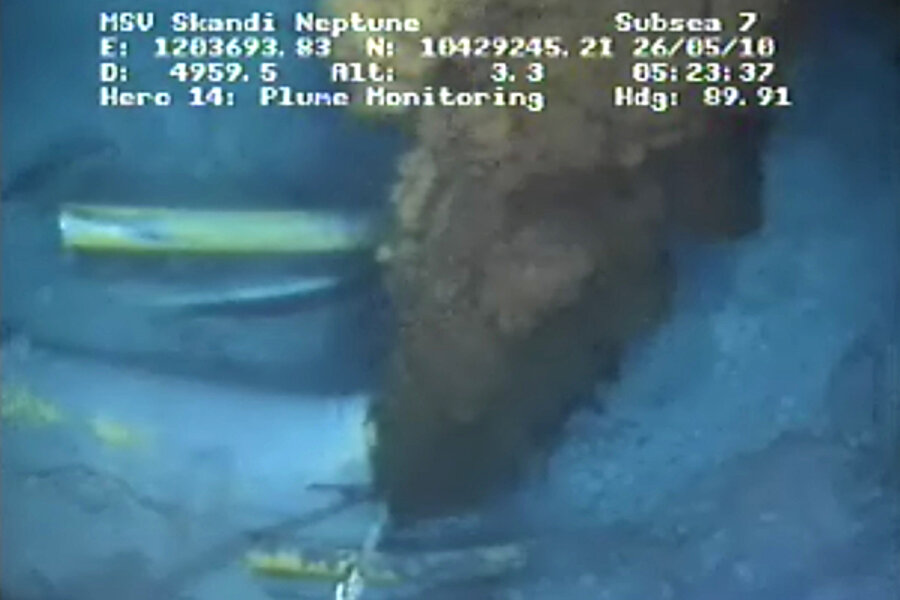
                          BP has observed "large amounts" of mud escaping out of the riser pipe. Although the company had ceased pumping Thursday, mud could be seen shooting out of four holes in the riser pipe on the live video captured by undersea cameras and posted on BP's website. Pressure from the well was pushing the mud out, Suttles said.

                          Mud traveling through the riser pipe instead of into the well is a concern not only for the success of the top kill procedure, but also because the mud, which contains solid materials, could erode the pipe, causing more leaks.

                          Suttles said there is no indication that has happened.

                          "Today, we think that the visible observations aren't creating any new leaks at this point," he said, though he added that vision of the pipe has been obscured by the large plumes caused by the mud as it escapes.

                          BP will supplement the mud with "bridging agents" in an effort to keep the mud inside the pipe. The next round of pumping could also include a "junk shot," the high-velocity shooting of debris, such as tennis balls and pieces of rubber tire, into the well to clog it.

                          "The purpose of using a bridging material or junk shot ensures that the mud goes down the wellbore instead of out of the riser," Suttles said. "If bridging agents and junk shots do its purpose, there would be less mud coming out."

                          The company has also ordered 15,000 more barrels of mud to add to the 50,000 barrels initially onsite. Suttles said he did not know how much mud had been pumped into the well or how much had escaped.

                          If the effort succeeds, BP will follow the top kill with cement to seal the well. If it is not successful, BP will immediately try to contain the flow using a cap and suction tube, while it readies another attempt at stopping the flow.

                          Comment


                          • #43
                            Re: Deepwater Horizon oil spill disaster- Update on BP's attempt to stop the oil leaks

                            The New York Times

                            BP Resumes Work to Plug Oil Leak After Facing Setback

                            By CLIFFORD KRAUSS and JOHN M. BRODER
                            Published: May 27, 2010


                            excerpt:

                            "At a hearing in New Orleans, the highest ranking official on the Deepwater Horizon testified that he had a disagreement with BP officials on the rig before the explosion.

                            Jimmy Harrell, a manager who was in charge of the rig, owned by Transocean, said he had expressed concern
                            that BP did not plan to conduct a pressure test before sealing the well closed.

                            It was unclear from Mr. Harrell?s testimony whether the disagreement took place on the day of the explosion or the previous day.

                            The investigative hearings have grown increasingly combative. Three scheduled witnesses have changed their plans to testify, according to the Coast Guard. Robert Kaluza, a BP official on the rig on the day of the explosion, declined to testify on Thursday by invoking his Fifth Amendment right not to incriminate himself."

                            Comment


                            • #44
                              Re: Deepwater Horizon oil spill disaster- Update on BP's attempt to stop the oil leaks

                              BP's ex-CEO, Lord Browne, published an autobiography in February.

                              http://www.guardian.co.uk/business/2...browne-memoirs

                              Lord Browne has admitted he stayed at BP too long because he had become obsessed with running the oil group. He has also suggested in his revealing memoirs published this week that his arrogance and a culture of complacency contributed to BP's failure to prevent a huge oil spill in Alaska.
                              _____________________________________________

                              Ask Congress to Investigate COVID Origins and Government Response to Pandemic.

                              i love myself. the quietest. simplest. most powerful. revolution ever. ---- nayyirah waheed

                              "...there’s an obvious contest that’s happening between different sectors of the colonial ruling class in this country. And they would, if they could, lump us into their beef, their struggle." ---- Omali Yeshitela, African People’s Socialist Party

                              (My posts are not intended as advice or professional assessments of any kind.)
                              Never forget Excalibur.

                              Comment


                              • #45
                                Re: Deepwater Horizon oil spill disaster- Update on BP's attempt to stop the oil leaks

                                Observation: See BBC news report and pause the initial frame of the mud leakage coming out of (not sure if this is the riser or the well head) at
                                President Barack Obama pledges to triple the manpower in coastal areas hit by the Gulf oil spill as he tours affected areas.


                                Then compare and contrast to the webcam feed


                                2 Observations


                                1) It appears to me that whilst the left hand leakage is mud there is still a dark near black plume second in from the right - which would appear to be oil rather than mud

                                2) An additional leak (at least one) to the left has appeared and I suspect another behind that

                                I am not so sure this bodes well - they canot do a junk shot until the oil has been stopped, a necessary precursor to adding concrete

                                Comment

                                Working...
                                X