Check out the FAQ,Terms of Service & Disclaimers by clicking the
link. Please register
to be able to post. By viewing this site you are agreeing to our Terms of Service and Acknowledge our Disclaimers.
FluTrackers.com Inc. does not provide medical advice. Information on this web site is collected from various internet resources, and the FluTrackers board of directors makes no warranty to the safety, efficacy, correctness or completeness of the information posted on this site by any author or poster.
The information collated here is for instructional and/or discussion purposes only and is NOT intended to diagnose or treat any disease, illness, or other medical condition. Every individual reader or poster should seek advice from their personal physician/healthcare practitioner before considering or using any interventions that are discussed on this website.
By continuing to access this website you agree to consult your personal physican before using any interventions posted on this website, and you agree to hold harmless FluTrackers.com Inc., the board of directors, the members, and all authors and posters for any effects from use of any medication, supplement, vitamin or other substance, device, intervention, etc. mentioned in posts on this website, or other internet venues referenced in posts on this website.
We are not asking for any donations. Do not donate to any entity who says they are raising funds for us.
Announcement
Collapse
No announcement yet.
Europe - 19 dead, 2000+ infected, 500 severe cases of E-coli - EHEC STEC hemolytic uremic syndrome
Re: Rising number of acute EHEC-infections (STEC) in Germany (May 22, 2011)
Two Spanish cucumbers contaminated with different EHEC-strain
Two out of three Spanish cucumbers found in Hamburg were infected with a different EHEC-strain.
This strain doesn't match the strain found in EHEC patients in Hamburg hospital.
Suche nach Herkunft der Erregers
Gurken waren mit anderem EHEC-Stamm kontaminiert
Die Hamburger Gesundheitsbehörden tappen bei der Suche nach der Herkunft der lebensgefährlichen EHEC-Erreger weiter im Dunkeln.
"Nach wie vor ist die Quelle nicht identifziert", sagte Gesundheitssenatorin Cornelia Prüfer-Storcks. Zwei der in Hamburg entdeckten vier kontaminierten Gurken aus Spanien trügen nach neuesten Untersuchungen einen anderen EHEC-Bakterientyp als jenen, der im Darm erkrankter Hamburger Patienten gefunden worden sei. Damit sei die Quelle der schweren Erkrankungen mit dem Hämolytisch-Urämischen Syndrom (HUS) weiter unklar.
Das bedeute aber nicht, dass diese Gurken ungefährlich seien, sagte Prüfer-Stocks. Sie trügen einen EHEC-Erreger und könnten damit auch das sogenannte HUS auslösen, das zu akutem Nierenversagen führen kann.
Re: Rising number of acute EHEC-infections (STEC) in Germany (May 22, 2011)
Lab tests clear Spanish cucumbers in German deaths
May 31, 2011,
Hamburg/Brussels/Madrid - Spanish cucumbers suspected of causing 16 deaths in Europe have been cleared in laboratory tests, German scientists said Tuesday, leaving the source of a deadly E coli bacterium a mystery.
Laboratory tests established that the organically grown cucumbers were soiled with E coli bacteria, but not the virulent strain of enterohaemorrhagic Escherichia coli (EHEC) found in more than 1,000 people who have fallen ill in Germany and nearby countries.
'The source of the infection remains unidentified,' said Cornelia Pruefer-Storcks, health minister of the German city-state of Hamburg where the lab tests on the two sets of samples were conducted.
She recommended that people avoid eating lettuce, cucumbers and tomatoes until the cause had been discovered.
Re: Rising number of acute EHEC-infections (STEC) in Germany (May 22, 2011)
Wednesday June 1
Severity of Europe E. coli outbreak stuns experts
BERLIN: The foodborne bacterial outbreak that has hit Germany and other European nations is unlike anything Western experts have seen: 16 dead and more than 1,000 sick, including nearly 400 suffering severe and potentially fatal symptoms. But several days into the health threat, scientists remain unsure what produce - and what country - is responsible.
Investigators across Europe were frantically trying to determine the scope of the contamination by an unusual strain of the common E. coli germ - and where in the long journey from farm to grocery store the contamination occurred. German authorities pointed to a few cucumbers from Spain, but further tests showed that those vegetables, while contaminated, did not cause the outbreak.
Re: Europe - 16 dead, 1000+ infected, 400 severe cases of E-coli - EHEC STEC hemolytic uremic syndrome
June 1, 2011
German health officials report 365 new cases of people sickened in bacterial outbreak
By David Rising, The Associated Press
BERLIN ? The number of people reported sick in Germany from a foodborne bacterial outbreak that has already killed 16 spiked over the last 24 hours, with nearly 100 more people suffering from severe and potentially fatal symptoms, the national disease control centre said Wednesday.
Agriculture Minister Ilse Aigner said scientists were working nonstop to find the source of the unusual strain of the E. coli bacteria that is believed to have been spread in Europe on tainted vegetables ? and where in the long journey from farm to grocery store the contamination occurred.
Re: Europe - 16 dead, 1000+ infected, 470 severe cases of E-coli - EHEC STEC hemolytic uremic syndrome
First confirmed EHEC case in the Czech Republic
Prague - Czech health officials on Tuesday confirmed the country's first case of an E coli epidemic that has been radiating from Germany over the last week.
The American tourist had just arrived in the Central European country after a trip to northern Germany, where she had eaten vegetable salads.
She is being treated at the infectious disease ward of a Prague hospital.
The ongoing outbreak of enterohaemorrhagic Escherichia coli (EHEC) has claimed 16 people across Europe.
Re: Europe - 16 dead, 1000+ infected, 470 severe cases of E-coli - EHEC STEC hemolytic uremic syndrome
European food outbreak soars; mystery deepens
June 1, 2011 (BERLIN) -- The number of people hit by a massive European outbreak of foodborne bacterial infections is one third higher than previously known and a stunningly high number of patients suffer from a potentially deadly complication than can shut down their kidneys, officials said Wednesday.
The death toll rose to 17, with German authorities reporting that an 84-year-old woman with the complication had died on Sunday.
Medical authorities appeared no closer to discovering either the source of the infection or the mystery at the heart of the outbreak: why the unusual strain of the E. coli bacteria appears to be causing so many cases of hemolytic uremic syndrome, which attacks the kidneys and can cause seizures, strokes and comas.
"This particular strain we're dealing with now seems to be unique," said Dr. Hilde Kruse, program manager for food safety at WHO Europe:
Germany's national health agency said 1,534 people in the country had been infected by EHEC, a particularly deadly strain of the common bacteria found in the digestive systems of cows, humans and other mammals. The Robert Koch Institute had reported 1,169 a day earlier.
The outbreak has hit at least nine European countries but virtually all of the sick people either live in Germany or recently traveled there.
The Robert Koch Institute said 470 people in Germany were suffering from hemolytic uremic syndrome, or HUS, a number that independent experts called unprecedented in modern medical history. HUS normally occurs in 10 percent of EHEC infections, meaning the number seen in Germany could be expected in an outbreak three times the size being currently reported.
That discrepancy could indicate that a vast number of cases haven't been reported because their symptoms are relatively mild, medical experts said.
..
"Hundreds of tests have been done and the responsible agencies ... have determined that most of the patients who have been sickened ate cucumbers, tomatoes and leaf lettuce and primarily in northern Germany," Aigner said on ARD television. "The states that have conducted the tests must now follow back the delivery path to see how the cucumbers, or tomatoes or lettuce got here."
Re: Europe - 17 dead, 1000+ infected, 470 severe cases of E-coli - EHEC STEC hemolytic uremic syndrome
Five infected with deadly bacteria: Dutch health authorities
At least five Dutch citizens were infected with the mysterious but deadly bacteria that has so far killed 17 people in Europe, the country's health ministry said Wednesday.
"Until now five patients in the Netherlands have been confirmed as having the EHEC bacteria," it said in a statement, referring to enterohaemorrhagic E. coli's more common acronym.
Four of the five were also suffering from haemolytic uraemic syndrome (HUS), a disease that causes bloody diarrhoea, serious liver damage and possible death.
"All five patients contracted the disease while visiting Germany," the statement said, adding "apart from these five there are other ill people being tested for the EHEC infection."
A total of 16 people have now died in Germany and one in Sweden as a result of contamination by the bacteria which has sickened hundreds more since mid-May.
Confirmed cases of the full-blown HUS has risen to 470 from 373 reported on Tuesday, the Robert Koch Institute, Germany's national disease centre, said Wednesday.
These figures relate to official numbers for Tuesday and Monday respectively.
Re: Europe - 17 dead, 1000+ infected, 470 severe cases of E-coli - EHEC STEC hemolytic uremic syndrome
The German authorities confirmed to the Dutch authorities: no EHEC-bacteria O104 (the current rampant strain in Germany) were found on any cucumbers or on any other Dutch or European vegetable......
Duitse laboratoria treffen geen EHEC-bacterie aan op Europese groenten
Nieuwsbericht | 01-06-2011
De Duitse autoriteiten hebben Nederland laten weten dat op geen enkele onderzochte komkommers en andere groenten uit Europa de EHEC-bacterie is aangetroffen. In Duitsland zijn inmiddels 9 mensen overleden aan de EHEC-bacterie en liggen er bijna 400 personen in het ziekenhuis.
Aanvankelijk wezen de Duitsers groenten zoals komkommers, tomaten en sla aan als besmettingsbron. Onderzoek door Duitse laboratoria wijst nu uit dat deze aanname onjuist is gebleken.
De Duitsers voegden daar voor Nederland aan toe dat op Nederlandse komkommers en tomaten geen enkele pathogene stof is aangetroffen.
Germany's _E. coli_ epidemic, which has killed as many as 15 people
so far [16 now -- see [1] above], has alarmed doctors, who have never
seen such an aggressive intestinal bacterium before. Epidemiologists
are desperately searching for the origin of the deadly bacteria.
The eeriest thing of all, according to Rolf Stahl, is the way patients change. "Their awareness becomes blurred, they have problems finding words, and they don't quite know where they are," says Stahl. And then there is this surprising aggressiveness. "We are dealing with a completely new clinical picture," he notes.
Stahl, a 62-year-old kidney specialist, has been the head of the Third Medical Clinic and Polyclinic at the University Medical Center Hamburg-Eppendorf (UKE) for almost 18 years. "But none of us doctors has ever experienced anything quite like this," he says. His staff has been working around the clock for the last week or so. "We decide at short notice who can go and get some sleep."
But Stahl only sees the most severe cases, those in which EHEC [enterohemorrhagic _E. coli_] also attacks the blood, kidneys and brain. These patients suffer from a life-threatening complication known as hemolytic-uremic syndrome (HUS). About 10 days after the diarrhea begins, the red blood cells suddenly disintegrate, blood clotting stops working, and the kidneys fail. In many cases patients need dialysis to stay alive. "The situation is deteriorating dramatically for our patients," says Stahl.
In Germany, about 60 people a year contract hemolytic-uremic syndrome
after being infected with EHEC. Last week [week of 23 May 2011], there
were as many cases in a single day. According to the Robert Koch
Institute (RKI), the national German institution responsible for
disease control and prevention, there were 276 HUS patients in German
hospitals by Fri 27 May 2011. By Tue 31 May 2011, there were 373
confirmed cases of HUS across Germany. As many as 15 people [16 -- see
[1] above] may have died from EHEC in Germany so far in the current
outbreak. Cases have also been reported in Sweden, Denmark, Britain,
Austria, and the Netherlands.
The story of the outbreak began in Stahl's clinic. When the 1st
patient suspected of having contracted HUS was admitted there on a
Wednesday evening 2 weeks ago, none of the doctors had any idea what
they were facing. "We weren't even thinking of EHEC at first," says
Stahl, "because it normally only affects children." In adults, on the
other hand, HUS can also be caused by genetic defects and autoimmune
diseases, or as a side effect of cancer treatment. By the next day,
however, there were suddenly 7 or 8 cases on the ward, and the
laboratory reported that they were all infected with EHEC. Hamburg
promptly notified the Robert Koch Institute.
The process that began at that point and reached its preliminary
climax at the end of last week [week of 23 May 2011] with the closing
of 2 vegetable production operations in Spain is an example of
impressive epidemiological detective work. It involves close
cooperation among vigilant doctors, epidemiologists thinking
practically, and detail-oriented laboratory scientists.
For the disease control experts at the RKI, it was primarily a matter
of addressing 2 tasks simultaneously and as quickly as possible: to
find the contaminated food products and to determine the type of
bacterium involved.
Helge Karch, the director of the RKI's EHEC consulting laboratory at the Munster University Hospital in western Germany, has devoted almost his entire life as a researcher to EHEC bacteria. "But I've never encountered something like this," he says. The 1st stool sample
arrived in his lab on Monday [23 May 2011]. The 1st cases had already
appeared in the state of North Rhine-Westphalia by then. Karch's staff
members began their analysis right away. The result was clear by
Wednesday evening, 25 May 2011: It was the extremely rare serotype
O104:H4.
After searching through a database for medical journals, Karch found
only one article under the search term "O104:H4": a case study from
Korea. In the Korean case, as in most of the German cases, an adult
woman had contracted EHEC, which is completely atypical for EHEC.
Karch speculated over why the disease wasn't happening in children, as is normally the case, but only in adults. And why was the infection striking more people that ever before in Germany? Karch and others speculate that the problem could lie in the pathogen itself. Perhaps the genetic material of this rare bacterium has mutated again, so that its toxin or its bond to the intestinal cells it damages has become stronger. Doctors hope that a complete sequencing of the genome, which is now being performed, will offer some answers.
[Byline: Veronika Hackenbroch, Samiha Shafy, Frank Thadeusz]
Spanish cucumbers ruled out as source in German E. coli outbreak
By BNO News
BERLIN, GERMANY (BNO NEWS) -- Germany's mysterious E. coli outbreak, which has affected over 1,000 people and killed at least 16, is not getting any clearer as tests ruled out Spanish cucumbers as sources of the outbreak.
According to an announcement by the European Union (EU) on Wednesday, the latest results of the tests on cucumber samples, carried out by the competent authorities of both Germany and Spain, "showed that the Spanish vegetable is not responsible for the Shiga toxin-producing E. Coli (STEC) outbreak affecting Germany and other Member States." ....
"...there’s an obvious contest that’s happening between different sectors of the colonial ruling class in this country. And they would, if they could, lump us into their beef, their struggle." ---- Omali Yeshitela, African People’s Socialist Party
(My posts are not intended as advice or professional assessments of any kind.) Never forget Excalibur.
Re: Europe - 17 dead, 1000+ infected, 470 severe cases of E-coli - EHEC STEC hemolytic uremic syndrome
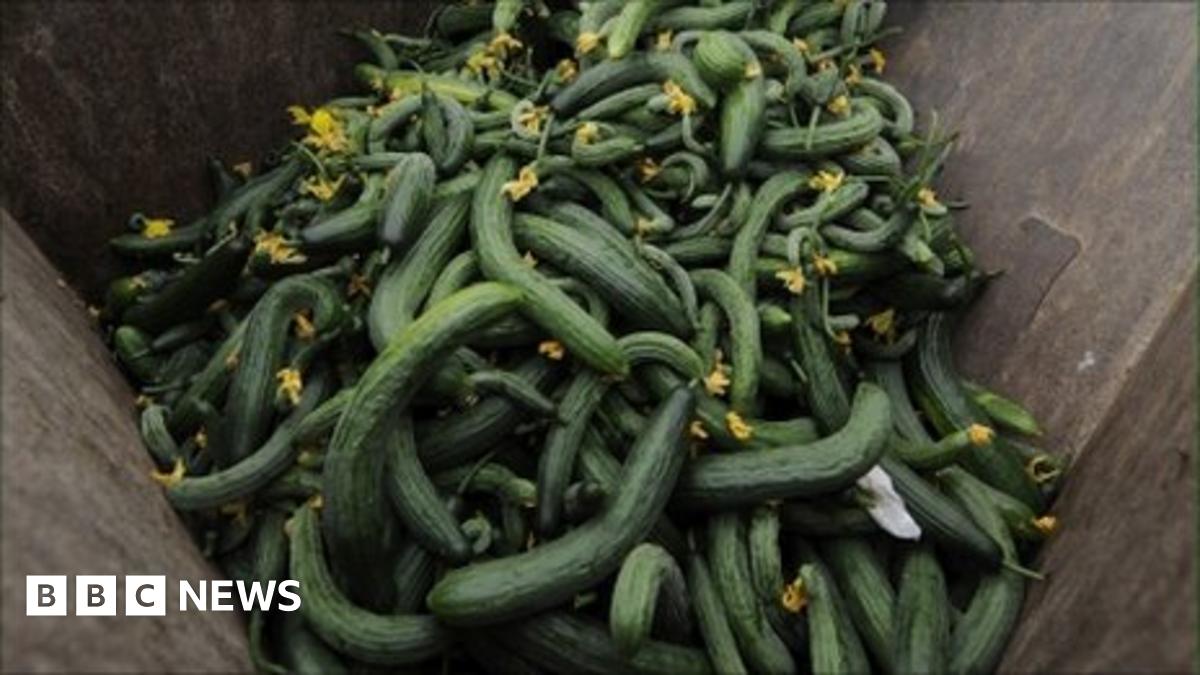
German cucumber E.coli outbreak 'may last months'
The head of the German public health body tackling a deadly E.coli outbreak says it may be months before it stops.
Reinhard Burger, president of the Robert Koch Institute, told the BBC "we may never know" the infections' source.
He expressed sympathy for Spanish farmers affected by the false charge that their cucumbers were to blame.
More than 1,500 people have been infected by enterohaemorrhagic E.coli (EHEC), which can cause the deadly haemolytic-uraemic syndrome (HUS).
Seventeen people have died - 16 of them in Germany and one in Sweden.
Spread to US
At least 365 new E.coli cases were reported on Wednesday, a quarter of them involving HUS, a condition associated with bloody diarrhoea and kidney failure, the Robert Koch Institute said.
The new cases include two in the US, both of whom had recently travelled to Hamburg, where many of the cases are clustered.
Professor Burger said it was impossible to say how long before the last case would appear:
"The number [of cases] will come down but how long it will take I am not sure. It could be weeks, months," he told the BBC.
The length of time would depend on whether infected food was still in warehouses, and whether the original source was still active, he said.
Re: Europe - 17 dead, 1000+ infected, 470 severe cases of E-coli - EHEC STEC hemolytic uremic syndrome
The BBC article makes it clear that all virtually all the cases in Europe and the U.S. have been in people who either live in or have traveled to Germany recently. (I wasn't sure about that until reading that article.)
"...there’s an obvious contest that’s happening between different sectors of the colonial ruling class in this country. And they would, if they could, lump us into their beef, their struggle." ---- Omali Yeshitela, African People’s Socialist Party
(My posts are not intended as advice or professional assessments of any kind.) Never forget Excalibur.
Re: Europe - 17 dead, 1000+ infected, 470 severe cases of E-coli - EHEC STEC hemolytic uremic syndrome
After searching through a database for medical journals, Karch found
only one article under the search term "O104:H4": a case study from
Korea. In the Korean case, as in most of the German cases, an adult
woman had contracted EHEC, which is completely atypical for EHEC.
Yonsei Med J. 2006 Jun 30;47(3):437-9.
A case of hemolytic uremic syndrome caused by Escherichia coli O104:H4.
Bae WK, Lee YK, Cho MS, Ma SK, Kim SW, Kim NH, Choi KC.
Source
Department of Internal Medicine, Chonnam National University Medical School, Dong-gu, Gwangju 501-757, Korea.
Abstract
A 29-year-old woman presented with bloody diarrhea, abdominal pain, hemolytic anemia, thrombocytopenia, and acute renal failure. She was diagnosed with Escherichia coli O104:H4-associated hemolytic-uremic syndrome (HUS) and treated with plasmapheresis and hemodialysis for 3 weeks. She recovered without sequelae. To the best of our knowledge, this is the first report of Escherichia coli O104:H4-associated HUS in Korea. We recommend that Escherichia coli O104:H4, as well as the more common O157:H7, be considered in the diagnosis of bloody diarrhea-associated HUS.
PMID:
16807997
[PubMed - indexed for MEDLINE]
PMCID: PMC2688167

 Tweet
Tweet



Comment