Announcement

Collapse
No announcement yet.

Worldwide: 24 confirmed cases due to novel animal nCoV coronavirus - 16 fatalities - September 20, 2012 - May 2, 2013

Collapse
X
 
  • Filter
  • Time
  • Show
Clear All
new posts

  • Re: Saudi Arabia: 3 cases, 2 deaths due to novel animal coronavirus

    Began to regain consciousness and talking with his companions
    Reversing the spread of "Corona" in the body of the citizen
    Brother of the patient's flag: raise breathing apparatus within 10 days
    Doctors assured that the patient exceeded the worst
    Patient out of the hospital within two week


    Brother of the patient revealed the country infected with "Corona" that doctors treating the patient in London confirmed that the virus has subsided in the patient's body significantly and that his health condition has improved significantly .. Expecting to be removing a respirator from a patient within 10 days.
    And renewed thanks and gratitude to His Highness Sheikh Hamad Bin Khalifa Al-Thani, the Emir and HH Sheikh Tamim bin Hamad Al Thani, Crown Prince on assuming the costs for treatment and follow up the case of his brother.

    The brother of the patient to the flag, that his brother began yesterday in preponderating gradual and restore consciousness, where he met the Issaahbunh in the room of his relatives and grabbed the hands of his sons and talk to them in simple words, which he described doctors as an indicator of the significant improvement in the health status of the patient.

    He added: medical team for my brother assured us yesterday that the virus "Corona" ended its full body and began to recede and all improvement indicators are increasing day after the other in terms of the return of all members of the body to work efficiently and return the proportion of oxygen in the blood to normal, confirming that the patient exceeded the worst stage of the disease.

    He continued: the medical team explained to us all the details of the therapeutic process, which is currently, which has become now limited to treatment of all complications and adverse effects of the virus on the body and suggested that it Almrahj if it continued positive indicators as they are to come out the patient from the hospital within two weeks, but will remain in London as a period of convalescence and follow-up has not yet been determined.

    He explained that officials of the Supreme Council of Health follow now the health status of my brother, but said he was Libenge on the Council to send a medical team to accompany the situation and follow-up phases of treatment and techniques adopted by the hospital in Britain and contributed to save his life, even as a reference on how to deal with the virus, "Corona "New case of the emergence of other cases, particularly that his brother is the only case in the world hit by the virus and treated him.

    The World Health Organization announced that a deadly new virus from the same family as the virus that causes Severe Acute Respiratory Syndrome "SARS" does not spread easily among humans apparently. In the latest statement on the virus, WHO said the United Nations was working with international partners to develop a better perception of the risk posed by the virus to public health.

    She said: "It seems the information available so far that the virus coronal new can not pass easily from one person to another .. Because of the severity of the two cases confirmed laboratories injuries WHO continues to monitor the situation in order to provide the Member States ways to deal with it as well as the experience and appropriate assistance."

    According to the medical instructions issued by the World Health Organization for its Member States the 149 state that the workers in the medical field to alert anyone showing symptoms of infection severe respiratory and call his treatment in the hospital and was in the Middle East by monitoring the virus or was connection with the case confirmed or suspected during the previous ten days. The organization did not recommend travel restrictions because of the new virus, but said it was working closely with the Saudi authorities on sanitary measures during the Hajj season.

    He said experts in the health sector that progress has already been achieved in defining the nature of the new virus and its genetic composition and in the development of accurate diagnostic tests and specific. The organization said it is working with laboratories in several countries to make these tests available as soon as possible.

    Confirmed that the press conference was to raise awareness of the virus and not talk about the patient
    Board of Health: constant monitoring of the state of the patient, "Corona"
    DOHA -:

    The Supreme Council of Health that the continuous follow-up of the patient's condition country infected with "Corona", which addresses one of the hospitals in the UK, through the Department of treatment abroad for necessary action towards the patient.

    The Supreme Council of Health, in response to a report published by the flag on the evolution of the patient's condition, that coordination continues to therapeutic level by specialists Hospital Hamad General doctors intensive care unit in London and under the supervision of a medical office there, where they are raising the medical reports and regularly about the patient's condition, he was most recently on September 26, a day before one of the published flag where the report included some positive developments.

    The Council noted that the Hamad General Hospital has to provide the maximum possible therapeutic service to the patient during the period he was at the hospital until the moment of his .. Adding that cause of the disease was discovered the day after the patient's arrival to London, and this is due to the fact that the virus is not known in advance.

    He said that the press conference of the Council on September 24 was designed to deliver information about the disease formally to avoid rumors and community awareness by and procedures precautionary other, as new diseases or incident that may pose a threat to the health of the individual and society, not to talk about the patient or how interest in it, where it is the inherent right of every citizen and resident.

    And other details that have been published, the Board considered it things can be pursued between health and the patient's family through customary channels, and to safeguard his privacy and the rights of patients .. The following is the text of a reply:

    / Saleh bin Afassan Kuwari esteemed

    Editor of The Peninsula glue

    Peace be upon you and God's mercy and blessings,

    Guide you the Supreme Council of Health presents his compliments and large appreciates your efforts in serving the nation and the citizen, and would like to clarify the following:

    Referring to the subject contained the esteemed Bgeridtkm issued on Thursday, September 27, the number (11100) on the development of "case patient Corona"

    We would like to clarify the following:

    He has Hamad General Hospital to provide maximum therapeutic service to the patient during the period he was at the hospital until the moment of his departure, noting that cause of the disease was discovered the day after the patient's arrival to London, due to the fact that the virus is not known in advance.

    Thus, the press conference held by the Supreme Council of Health dated September 24, was designed to deliver information about the disease formally to avoid rumors and community awareness by and procedures precautionary other being new diseases or incident that may pose a threat to the health of the individual and society, not to talk about the patient itself or how interest in it as this inherent right of every citizen and resident.

    And renew the Supreme Council of Health emphasized that the through management treatment abroad work necessary to the patient and that coordination continues to therapeutic level by specialists Hospital Hamad General doctors intensive care unit in London and under the supervision of a medical office there by raising the medical reports and regularly, most recently on September 26 - one day before the publication of the news in your newspaper and referred to in this Todahana - where the report included some positive developments.

    As regards other details mentioned in the news sees the Supreme Council of Health as things can be pursued between health and the patient's family through customary channels and to safeguard his privacy and the rights of patients.

    This is necessary clarification,

    Please accept our sincere greetings and appreciation.

    http://www.raya.com/news/pages/6f8d9...9-33738f3b7bdc
    CSI:WORLD http://swineflumagazine.blogspot.com/

    treyfish2004@yahoo.com

    Comment


    • Re: Saudi Arabia: 3 cases, 2 deaths due to novel animal coronavirus


      Severe Respiratory Illness Associated with a Novel Coronavirus ? Saudi Arabia and Qatar, 2012
      Early Release
      October 4, 2012 / 61(Early Release);1-2


      CDC is working closely with the World Health Organization (WHO) and other partners to better understand the public health risk presented by a recently detected, novel coronavirus. This virus has been identified in two patients, both previously healthy adults who suffered severe respiratory illness (1,2). The first patient, a man aged 60 years from Saudi Arabia, was hospitalized in June 2012 and died; the second patient, a man aged 49 years from Qatar with onset of symptoms in September 2012 was transported to the United Kingdom for intensive care. He remains hospitalized on life support with both pulmonary and renal failure (3,4). Person-to-person or health-care?associated transmission has not been identified to date (5). Interim case definitions based on acute respiratory illness and travel history were issued by WHO on September 29 and include criteria for "patient under investigation," "probable case," and "confirmed case" (6). This information is current as of October 4. Updates on the investigation and the WHO case definition are available at http://www.who.int/csr/don/en/index.html.

      Coronaviruses are a large, diverse group of viruses that affect many animal species. A few of these viruses cause a wide range of respiratory illness in humans, typically with "common cold" symptoms. Genetic sequence data indicate that this new virus is a beta-coronavirus similar to bat coronaviruses, but not similar to any other coronavirus previously described in humans, including the coronavirus that caused severe acute respiratory syndrome (SARS) (1). Comparison of viral genetic sequences from the two patients indicated that the two viruses are closely related. Treatment is supportive because no specific therapy has been shown to be effective.

      WHO and CDC have not issued any travel alerts at this time. The risk to U.S. residents traveling in the region currently is estimated to be low. For persons traveling to Saudi Arabia to participate in the Hajj, scheduled for October 24?29, 2012, requirements and recommendations remain unchanged and can be found at http://www.cdc.gov/features/Hajj.

      Persons who develop acute respiratory illness within 10 days after returning from Saudi Arabia or Qatar (excluding persons who only passed through airports) should consult a physician and mention their recent travel. Persons with acute severe lower respiratory illness requiring hospitalization should be evaluated using the guidance at the CDC coronavirus website (http://www.cdc.gov/coronavirus/ncv), which is based on the WHO case definition. Persons whose respiratory illness remains unexplained and who meet the WHO criteria for "patient under investigation" should be reported immediately to CDC through state and local health departments. At present, testing of specimens for the novel coronavirus will be conducted by CDC; widely available diagnostic tests for coronaviruses are not suitable for detecting this new virus.

      Recommendations and guidance on the case definitions, infection control including personal protective equipment, case investigation, and specimen collection and shipment, are available at the CDC coronavirus website. Because of the possibility of frequent updates as new information becomes available, readers are encouraged to consult the CDC coronavirus website for current information. State and local health departments with questions should contact the CDC Emergency Operations Center (770-488-7100).

      Reported by
      Div of Viral Diseases, National Center for Immunization and Respiratory Diseases; Div of Healthcare Quality Promotion, Div of Global Migration and Quarantine, National Center for Emerging and Zoonotic infectious Diseases; Div of Global Disease Detection and Emergency Response, Center for Global Health; Eyal Leshem, MD, EIS Officer, CDC. Corresponding contributor: Eyal Leshem, eleshem@cdc.gov, 404-639-7251.

      References
      1.Corman VM, Eckerle I, Bleicker T, et al. Detection of a novel human coronavirus by real-time reverse-transcription polymerase chain reaction. Euro Surveill 2012;17(39).
      2.Danielsson N, on behalf of the ECDC Internal Response Team, Catchpole M. Novel coronavirus associated with severe respiratory disease: case definition and public health measures. Euro Surveill 2012;17(39).
      3.Bermingham A, Chand MA, Brown CS, et al. Severe respiratory illness caused by a novel coronavirus, in a patient transferred to the United Kingdom from the Middle East, September 2012. Euro Surveill 2012;17(40).
      4.European Centre for Disease Prevention and Control (ECDC). Rapid risk assessment: severe respiratory disease associated with a novel coronavirus. Stockholm, Sweden: ECDC; 2012. Available at http://ecdc.europa.eu/en/publication...al20120924.pdf . Accessed October 4, 2012.
      5.Pebody RG, Chand MA, Thomas HL, et al. The United Kingdom public health response to an imported laboratory confirmed case of a novel coronavirus in September 2012. Euro Surveill 2012;17(40).
      6.World Health Organization. Global alert and response (GAR): revised interim case definition?novel coronavirus. Geneva, Switzerland: World Health Organization; 2012. Available at http://www.who.int/csr/disease/coron.../en/index.html. Accessed October 4, 2012.

      Comment


      • Re: Saudi Arabia: 3 cases, 2 deaths due to novel animal coronavirus

        There is starting to be a possibility that we are missing a large number of milder cases. Or, given the negative test results so far, is it possible that the novel virus is not the cause of the severe illness we are seeing (perhaps the patient also had influenza, say) and is a harmless background detection? Or could the man have had two pathogens, the severe novel coronavirus, and something else milder, more common, and more contagious?

        There appears to be too many symptomatic contacts at this point, IMO.


        UK experts share new details on novel coronavirus case
        Lisa Schnirring Staff Writer


        Oct 4, 2012 (CIDRAP News) – Clinicians and scientists in the United Kingdom who are treating a Qatari man infected with a novel coronavirus issued new reports on their investigations today, with fresh details such as that the man had indirect exposure to camels and sheep in his home country.

        The two reports appear in the latest issue of Eurosurveillance. One focuses mainly on the patientÕs illness course, the epidemiological investigation, and the public health response, and the other describes clinical findings, diagnostic testing, and the analysis of the virus, which has been named hCoV-EMC.

        Both reports credited a Saudi Arabian doctorÕs ProMED Mail post about a patient from Saudi Arabia who died in June from the same coronavirus, which they said raised suspicions about the unexplained fever and respiratory infection in the Qatari man, who had traveled recently to Saudi Arabia. ProMED Mail is the online reporting system of the International Society for Infectious Diseases.

        In a related development, the US Centers for Disease Control and Prevention (CDC) issued a report on the new coronavirus today and addressed travel issues, especially those related to the upcoming Hajj pilgrimage in Saudi Arabia, which takes place from Oct 24 through 29.

        According to the first report, the 49-year-old man, who has been treated in the United Kingdom since Sep 12, was in Saudi Arabia with a group in the first weeks of August, where he and several others experienced rhinorrhea and fever. He returned to Qatar on Aug 18, and his respiratory symptoms got better 3 days later.

        In Qatar he spent time on a farm where he keeps camels and sheep, though he reportedly had no direct contact with them.

        On Sep 3 he reported mild respiratory symptoms, which later worsened, and he was hospitalized 6 days later for bilateral pneumonia. When he didnÕt improve, he was flown to London for intensive care unit (ICU) treatment, where his health team found renal impairment. The man was transferred to another London hospital on Sep 20—the same day as the ProMED post—when his condition deteriorated further.

        In light of the ProMED post, the patientÕs UK health team the next day tested him and got positive results on a pan-coronavirus assay. Genetic sequencing the following day revealed that the manÕs virus was closely related to the novel coronavirus that killed the Saudi Arabian man.

        Health officials immediately isolated the man in a negative-pressure single room, instituted a full personal protective equipment protocol, and worked up case and close-contact definitions to start looking for other possible cases. They monitored close contacts for 10 days after exposure.

        The authors wrote that the man was probably infected in Qatar, since he was there 16 days before his most recent respiratory illness, and they noted that the earlier mild illness he had had in Saudi Arabia resolved 2 weeks before his most recent illness onset. Noting 95% of SARS (severe acute respiratory syndrome) cases had an incubation period of less than 10 days, they said that unless hCoV-EMC has an unusual biphasic feature or a very long incubation period, Qatar was the probable site of the manÕs exposure.

        Investigation identified 64 people who had been in close contact with the man during his medical stay in the UK. So far, none have had severe respiratory infections, but 13 had mild symptoms that resolved. A hospitalized patient who got sick after possible contact with the man was tested, with negative results. The new virus hasnÕt been detected in any of 10 symptomatic healthcare worker contacts who were tested as of today.

        In addition, four possible cases in people with a recent history of travel to Saudi Arabia were found in the UK. Samples, available for three of them, were negative. An investigation is ongoing in the illness of the fourth patient, who died in early September.

        So far there is no confirmed evidence of ongoing person-to-person spread of the virus.

        However, UK officials pointed out that a severe respiratory illness outbreak in the Middle East was reported earlier this year, and said further investigation is needed to determine if a new coronavirus has been circulating more widely in the area or if it recently made the jump from an animal reservoir. They cited an outbreak of severe respiratory disease at a hospital in Jordan that sickened 11 people, including 8 healthcare workers.

        A brief report on the outbreak appeared in a May 4 communicable disease threat report from the European Centre for Disease Prevention and Control. One nurse who had underlying medical conditions died. The Jordanian health ministry suspected the source of the infections was viral, though lab results werenÕt available at the time.

        Diagnostic testing and sequencing clues
        In the second ECDC report today, UK officials described the care the patient received in Qatar, along with his illness course so far and testing that has been conducted during his hospitalization in London.

        The patient has been on dialysis for renal failure since Sep 14, and on Sep 20 his medical team placed him on extracorporeal membrane oxygenation (ECMO). They added that as of Oct 2 his condition is stable, but dependent on ECMO.

        At first, his medical team suspected a viral source, but samples were negative on extensive influenza tests. Genetic sequencing on a small segment enabled them to develop a new real-time RT-PCR assay that they tested on novel coronavirus tissue cultures and clinical samples from the patient.

        Though more extensive sequencing is needed on the virus obtained from the patient, they said their communications with the Dutch lab that sequenced the virus found in the Saudi Arabian man who died suggests that the two samples are nearly identical.

        CDC addresses travel risks, resources for physicians
        Meanwhile, the CDC said it was working closely with the World Health Organization (WHO) and other partners to better understand the health risk posed by the new coronavirus, according to an early-release report today in Morbidity and Mortality Weekly Report (MMWR).

        The CDC said neither it nor the WHO has issued any travel alerts; the agency estimated that the risk to US residents traveling in the region is low and emphasized that the recommendations for the Hajj have not changed.

        The agency urged people who get sick with an acute respiratory illness within 10 days of returning from Saudi Arabia or Qatar, except for just passing through an airport, see their doctors and report the travel. Physicians who evaluate patients with the travel history and severe lower respiratory tract infections should consult guidance on the CDCÕs coronavirus Web site, which is based on the WHOÕs case definition.

        Because widely available diagnostic tests for coronaviruses arenÕt suitable for detecting the new virus, the CDC said for now it will be conducting tests for the new virus.

        Pebody RG, Chand MA, Thomas HL, et al. The United Kingdom public health response to an imported laboratory confirmed case of a novel coronavirus in September 2012. Eurosurveill 2012 Oct 4;17(40):[Full text]

        Bermingham A. Chand MA, Brown CS, et al. Severe respiratory illness caused by a novel coronavirus in a patient transferred to the United Kingdom from the Middle East, September 2012. Eurosurveill 2012 Oct 4;17(40):[Full text]

        Comment


        • Re: Saudi Arabia: 2 confirmed cases (1 fatal) due to novel animal coronavirus - additional suspect cases under investigation including 10 symptomatic HCW

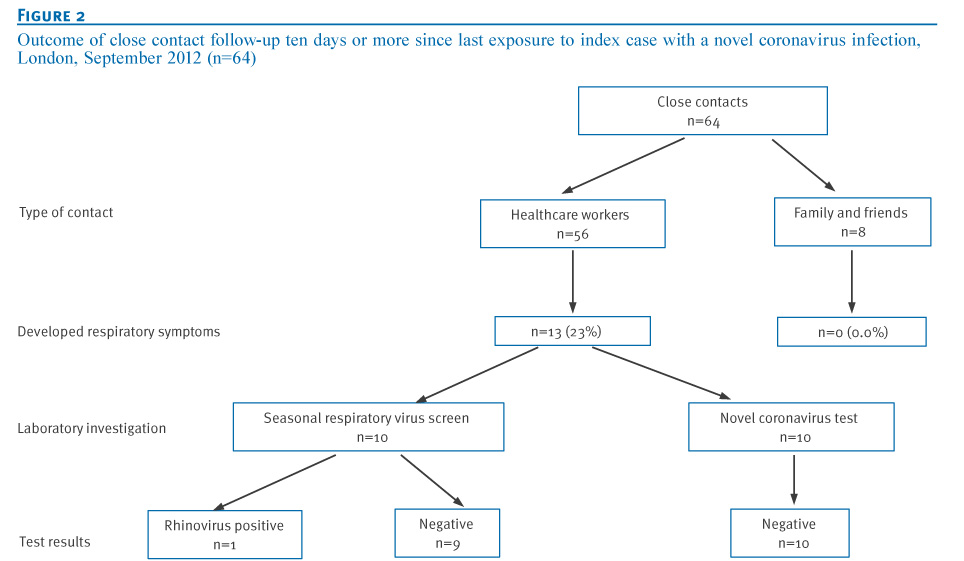
          On 22 September 2012, a novel coronavirus, very closely related to that from a fatal case in Saudi Arabia three months previously, was detected in a previously well adult transferred to intensive care in London from Qatar with severe respiratory illness. Strict respiratory isolation was instituted. Ten days after last exposure, none of 64 close contacts had developed severe disease, with 13 of 64 reporting mild respiratory symptoms. The novel coronavirus was not detected in 10 of 10 symptomatic contacts tested.


          Eurosurveillance, Volume 17, Issue 40, 04 October 2012
          Rapid communications
          The United Kingdom public health response to an imported laboratory confirmed case of a novel coronavirus in September 2012
          R G Pebody ()1, M A Chand1, H L Thomas1,2,3, H K Green1, N L Boddington1, C Carvalho1,3, C S Brown1, S R Anderson1, C Rooney1, E Crawley-Boevey1, D J Irwin1, E Aarons4, C Tong4, W Newsholme4, N Price4, C Langrish4, D Tucker4, H Zhao1, N Phin1, J Crofts1, A Bermingham1, E Gilgunn-Jones1, K E Brown1, B Evans1, M Catchpole1, J M Watson1
          1.Health Protection Agency (HPA), London, United Kingdom
          2.Field Epidemiology Training Programme (FETP), Health Protection Agency, London, United Kingdom
          3.European Programme for Intervention Epidemiology Training (EPIET), European Centre for Disease Prevention and Control, (ECDC), Stockholm, Sweden
          4.Guy?s and St Thomas? NHS Foundation Trust and King?s Health Partners, London, United Kingdom

          --------------------------------------------------------------------------------

          Citation style for this article: Pebody RG, Chand MA, Thomas HL, Green HK, Boddington NL, Carvalho C, Brown CS, Anderson SR, Rooney C, Crawley-Boevey E, Irwin DJ, Aarons E, Tong C, Newsholme W, Price N, Langrish C, Tucker D, Zhao H, Phin N, Crofts J, Bermingham A, Gilgunn-Jones E, Brown KE, Evans B, Catchpole M, Watson JM. The United Kingdom public health response to an imported laboratory confirmed case of a novel coronavirus in September 2012. Euro Surveill. 2012;17(40):pii=20292. Available online: http://www.eurosurveillance.org/View...rticleId=20292

          Date of submission: 27 September 2012

          --------------------------------------------------------------------------------

          On 22 September 2012, a novel coronavirus, very closely related to that from a fatal case in Saudi Arabia three months previously, was detected in a previously well adult transferred to intensive care in London from Qatar with severe respiratory illness. Strict respiratory isolation was instituted. Ten days after last exposure, none of 64 close contacts had developed severe disease, with 13 of 64 reporting mild respiratory symptoms. The novel coronavirus was not detected in 10 of 10 symptomatic contacts tested.


          --------------------------------------------------------------------------------

          The outbreak of Severe Acute Respiratory Syndrome (SARS) in 2003, which led to 8,422 cases and 916 deaths worldwide [1], highlighted the potential for newly emerging zoonotic coronaviruses to transmit from person to person, especially in healthcare settings, and to cause severe human illness.

          On 22 September 2012, the Health Protection Agency (HPA) in London, United Kingdom (UK), confirmed infection with a novel coronavirus in a patient in a London hospital who had been transferred from Qatar 11 days previously. This patient represents the second confirmed case of severe acute respiratory illness caused by this novel coronavirus. The first case was identified in a Saudi Arabian national who died in June 2012 [2,3]. We describe the exposure history, the public health response and follow-up of close contacts of the case in London.

          Case exposure history and laboratory investigations

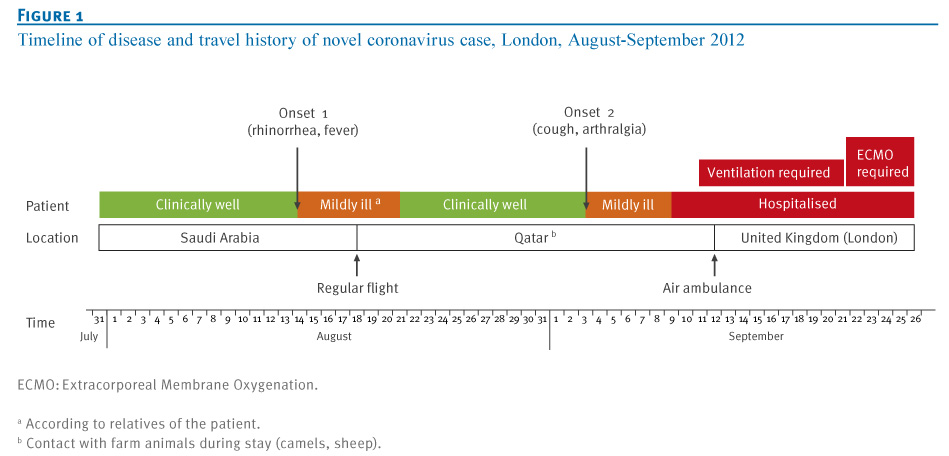
          The case is a previously well 49 year-old male, who travelled to Saudi Arabia from 31 July to 18 August 2012, where he, and several of his travelling companions, developed rhinorrhoea and fever (Figure 1). On 18 August he travelled to Qatar, where his respiratory symptoms resolved three days later. While in Qatar, he spent time on a farm, where he keeps camels and sheep, although no direct contact with these animals was reported.

          On 3 September, he reported a mild respiratory illness. Six days later, he required hospitalisation due to development of bilateral pneumonia. His condition worsened and he subsequently required intubation and ventilation. On 12 September, he was transferred by air ambulance to an intensive care unit in London, where acute renal impairment was also detected. Due to further deterioration, he was transferred to another London hospital on 20 September [3].

          Following the report on proMED on 20 September 2012 [2] of the detection of a novel coronavirus (until further taxonomic denomination herewith referred to as hCoV-EMC) in a Saudi Arabian patient who had died from severe respiratory illness and renal failure, and as no diagnosis had been established despite investigations for common causes of pneumonia and pathogens endemic to the Middle East, the patient in London was investigated for novel coronavirus infection. On 21 September, a coronavirus was detected in respiratory tract samples using a pan-coronavirus PCR assay, and on 22 September sequencing of the PCR amplicon showed a sequence very closely related to the hCoV-EMC detected in the earlier patient from Saudi Arabia [4]. The virus belongs to the genus beta-coronavirus, with closest relationship to bat coronaviruses [4].

          Figure 1. Timeline of disease and travel history of novel coronavirus case, London, August to September 2012


          Public health management

          The identification of a novel coronavirus of the same group as the SARS-CoV, with two clinically severe human cases including one fatality, led to a public health response being mounted to isolate the case, identify and test close contacts and to prevent onward transmission. Once the patient was found to have a novel coronavirus infection, he was isolated in a negative-pressure single room, and full personal protective equipment (PPE), including gowns, gloves, eye protection and high filtration masks were worn by staff and other contacts. Interim case and close contact definitions were developed [5].

          A possible case was defined as any person with acute respiratory syndrome which includes fever (≥38? C) or history of fever and cough requiring hospitalisation or with suspicion of lower airway involvement (clinical or radiological evidence of consolidation) not explained by another infection or aetiology with history of either travel to or residence in Saudi Arabia or Qatar or close contact with a confirmed case in the ten days before onset of illness

          A close contact was defined as the following persons

          ?Healthcare and social care workers: worker who provided direct clinical or personal care or examination of a symptomatic confirmed case or within close vicinity of an aerosol generating procedure AND who was not wearing full personal protective equipment (PPE) at the time. Full PPE is defined as correctly fitted high filtration mask (FFP3), gown, gloves and eye protection.
          ?Household: any person who has had prolonged face-to-face contact with the confirmed case(s) any time during the illness after onset in a household setting.
          ?Other close contacts: any person who has had prolonged face-to-face contact with a confirmed case while symptomatic in any other enclosed setting and not wearing a mask e.g. school, visitor to the hospital to the bed side of a symptomatic confirmed case.
          These definitions were used as the basis for identifying further possible cases and contacts. Guidelines were developed on the investigation and public health management of these cases and their close contacts.

          Identification and follow-up of individuals who had close contact with the case at any time during his symptomatic period from entry into the UK up until implementation of full isolation on 21 September (including healthcare workers and family), was rapidly initiated by HPA staff and staff from the London hospitals? Infection Control Teams. Close contacts were followed up for a period of 10 days since the date of last exposure to the index case. If contacts developed respiratory illness in this period, they were asked to self-isolate in their homes (or were isolated in hospital if requiring admission).

          The hospital in Qatar was informed to allow them to initiate appropriate follow-up for those who had been in contact with the patient.

          HPA rapidly developed and published advice to health professionals, the public and travellers [5]. The case was immediately reported under the International Health Regulations to the World Health Organisation and through the European Union Early Warning and Response System (EWRS). Extensive laboratory work was undertaken to characterise the virus and develop new diagnostic tools [3].

          Initial epidemiological investigation and preliminary findings

          Close contacts of the case were followed up to determine the transmissibility of this novel coronavirus. This included collection of information on clinical illness, virological swabbing of contacts they had respiratory symptoms and collection of paired sera from all contacts to determine if there was evidence of recent infection.

          It is likely that the patient?s infection was acquired in Qatar as he was in Qatar for the 16 days prior to the onset of his most recent respiratory illness in September. The earlier mild upper respiratory tract infection, which began during his visit to Saudi Arabia, resolved two weeks before onset of the present illness.

          By 4 October, tracing of contacts had identified 64 persons, among healthcare workers, family and friends, who were reported to have been in close contact with the confirmed case while he was symptomatic in the UK (Figure 2). Ten days after the date of last respective exposure, none of the close contacts had developed severe respiratory disease requiring hospital admission. Interim results have identified thirteen close healthcare worker contacts with mild, self-limiting respiratory symptoms. These contacts were self-isolated in their homes until asymptomatic. In addition, one hospitalised patient who had potential contact with the case and subsequently became unwell was identified and subsequently tested negative using a pan-coronavirus assay [4]. The novel coronavirus has not been detected in any of the ten symptomatic healthcare worker contacts tested by 4 October 2012.

          Four possible cases with a history of recent travel from Saudi Arabia or Qatar have also been identified and investigated in the UK since active case finding was commenced. Although the likelihood of novel coronavirus infection in any of these was considered low, strict infection control measures were taken. For three of them, samples were available and the novel coronavirus was not detected. A fourth case, who died at the beginning of September, remains under investigation.

          Figure 2. Outcome of close contact follow-up ten days or more since last exposure to index case with a novel coronavirus infection, London, September 2012 (n=64)


          Public health implications

          We present a case of severe respiratory illness resulting from a novel coronavirus acquired in the Middle East. The clinical picture is similar to that of a case previously described from Saudi Arabia and caused by a closely related virus. Although cases of SARS, for which the causative agent SARS-CoV is in the same group of coronaviruses, were reported with incubation periods beyond 10 days, 95% were reported to have an incubation period of less than 10 days [6]. In the light of this, the case of novel coronavirus that we report appears to have been acquired in Qatar based on the known time course of the patient?s infection and other available information, unless the illness had an unusual biphasic nature or a very long incubation period.

          After 10 days of follow-up, there has been no confirmed evidence of ongoing person-to-person transmission resulting in severe disease or milder laboratory confirmed infection among close contacts, despite extensive active contact tracing. Completion of case-contact investigation, including serological testing when available, will determine whether mild or asymptomatic infection among close contacts has occurred. In addition, serological investigation in the countries of origin of the two confirmed cases should be considered to look for evidence of possible previous infection in the general population. Studies in animals are also necessary to determine whether there is an animal reservoir for this infection and what it might be.

          Early detection and investigation of cases of severe respiratory illness among travellers returning from countries where infection with novel coronavirus has been reported and their close contacts will support the further elucidation of the epidemiological characteristics of this novel virus. An outbreak of severe respiratory illness of unknown aetiology was reported from the Middle East earlier in 2012 [7]. Work needs to be undertaken to determine if a novel coronavirus has been circulating more widely in the general population in the Middle East already for some time or if the virus was more recently introduced from an unknown animal reservoir.


          --------------------------------------------------------------------------------
          References


          1.World Health Organization (WHO). WHO final summary SARS, 15 August 2003: Summary table of SARS cases by country, 1 November 2002 - 7 August 2003. Geneva; WHO; 2003. Avaliable from: http://www.who.int/csr/sars/country/.../en/index.html
          2.ProMED-mail. Novel coronavirus - Saudi Arabia: human isolate. Archive Number: 20120920.1302733. September 20 September 2012. Available from: http://www.promedmail.org/?p=2400:1000
          3.Corman VM, Eckerle I, Bleicker T, Zaki A, Landt O, Eschbach-Bludau M, et al. Detection of a novel human coronavirus by real-time reverse-transcription polymerase chain reaction. Euro Surveill. 2012;17(39):pii=20285. Available from: http://www.eurosurveillance.org/View...rticleId=20285
          4.Bermingham A, Chand MA, Brown CS, Aarons E, Tong C, Langrish C, et al. Severe respiratory illness caused by a novel coronavirus, in a patient transferred to the United Kingdom from the Middle East, September 2012. Euro Surveill. 2012;17(40):pii=20290. Available from: http://www.eurosurveillance.org/View...rticleId=20290
          5.Health protection Agency (HPA). Algorithm for investigation and management of possible cases of severe acute respiratory illness associated with a novel coronavirus. London; HPA; 2012. Available from: http://www.hpa.org.uk/webw/HPAweb&Pa.../1317136202637
          6.Lessler J, Reich NG, Brookmeyer R, Perl TM, Nelson KE, Cummings DA. Incubation periods of acute respiratory viral infections: a systematic review. Lancet Infect Dis. 2009; 9(5):291-300.
          7.European Centre for Disease Prevention and Control (ECDC). Communicable Disease Threats Report (Week 18, 29 April-5 May 2012). Stockholm: ECDC; 2012. Available from: http://ecdc.europa.eu/en/publication...May%202012.pdf

          Comment


          • Re: Saudi Arabia: 2 confirmed cases (1 fatal) due to novel animal coronavirus - additional suspect cases under investigation including 10 symptomatic HCW

            One of the 10 ill HCW has tested positive for a seasonal rhinovirus:


            There is also a timeline indicating that the earlier, milder illness occurred between August 14 and 20, and he was ill when he flew from Saudi Arabia to Qatar:


            Judging by the fact that all the ill contacts are HCW (and not his family, who are all listed as asymptomatic), it really is possible that the illness in HCW could be caused by an unrelated rhinovirus contracted elsewhere.

            Comment


            • Re: Saudi Arabia: 2 confirmed cases (1 fatal) due to novel animal coronavirus - additional suspect cases under investigation including 10 symptomatic HCW

              Apparently, three samples from the patient, taken from different locations in his body on different days have tested positive for the novel coronavirus, and no other pathogens have come back positive, despite repeated testing:


              The list of excluded agents is at the link above (I can't copy it) but is extremely impressive and includes rhinovirus.

              Comment


              • Re: Saudi Arabia: 2 confirmed cases (1 fatal) due to novel animal coronavirus - additional suspect cases under investigation including 10 symptomatic HCW

                [Source: Health Protection Agency, United Kingdom, full page: (LINK).]
                Update on acute respiratory illness associated with a new coronavirus

                9 October 2012


                In two reports published in Eurosurveillance on 4 October 2012, the Health Protection Agency (HPA) confirms that since the first case of severe respiratory illness associated with a new type of coronavirus was reported on 22 September 2012, there have been no new, cases reported in the UK. The patient being treated in the UK with confirmed coronavirus infection continues to receive intensive care treatment in a London hospital.

                Professor John Watson, head of the respiratory diseases department at the HPA, said:

                ?Around 50 to 60 healthcare workers, family and friends who were in close contact with the patient have been identified and, to date, none have had severe illness and none have confirmed evidence of infection.

                ''Although this is reassuring, further work is being undertaken, including the testing of blood samples from these contacts, to determine whether mild or asymptomatic infection occurred.?

                An extensive suite of materials for healthcare workers relating to the investigation and management of confirmed or possible cases was prepared by the HPA along with infection control and other general advice for staff who may be involved in receiving and caring for patients.

                An alert was also issued by the Department of Health to all NHS staff with advice to help maintain increased vigilance for illness caused by this virus and the HPA is continuing to work with international authorities including the World Health Organization and the European Centre for Disease Control to investigate this infection.

                Professor Watson, continued: "As we are still aware of only two cases worldwide and have no evidence of ongoing transmission, we are not offering any specific advice for the public or returning travellers.

                ?Travellers returning from the Middle East with mild respiratory symptoms are most likely to have a common respiratory illness such as a cold. However, if symptoms worsen or a patient develops shortness of breath, medical advice should be sought from the GP or NHS Direct. Returning travellers should mention which countries in the Middle East they have visited.

                ?The HPA will continue its respiratory surveillance and will remain alert to unusual respiratory infections. We will continue to work closely with health colleagues globally to ensure all information about severe acute respiratory infections is shared and followed up.?

                Ends


                Notes for editors:
                1. Laboratory confirmed cases to date: UK: 1 Saudi Arabia:1
                2. The full epidemiological report is available from the Eurosurveillance website.
                3. The full microbiology report is available from the Eurosurveillance website.
                4. For further information, see the HPA?s Q&A on this topic.
                5. A suite of information has also been produced for health professionals is available from the HPA website.
                6. The Health Protection Agency is an independent UK organisation that was set up by the government in 2003 to protect the public from threats to their health from infectious diseases and environmental hazards. In April 2013 the Health Protection Agency will become part of a new organisation called Public Health England, an executive agency of the Department of Health. To find out more, visit our website: www.hpa.org.uk or follow us on Twitter @HPAuk.
                7. For more information please contact the national HPA press office at Colindale on 0208 327 7901 or email colindale-pressoffice@hpa.org.uk . Out of hours the duty press officer can be contacted on 0208 200 4400.
                Last reviewed: 9 October 2012
                - -------

                Comment


                • Re: Saudi Arabia: 2 confirmed cases (1 fatal) due to novel animal coronavirus - additional suspect cases under investigation including 10 symptomatic HCW

                  The new coronavirus Unlike SARS, no such cases in China

                  BEIJING, Oct. 10 - The Ministry of Health held a regular press conference today to introduce the situation of the elderly health, Health Ministry spokesman Deng Haihua said in response to a reporter's questions about the prevention and control of novel coronavirus, there is no evidence to show that the new coronavirus infection has caused the spread between the staff far no reports of new cases of coronary disease.

                  A reporter's question, the coronavirus previously sent a notice to strengthen the investigation and I would like to ask what to do next to strengthen the prevention and control of?

                  Deng Haihua pointed out that, in September, Saudi Arabia and the United Kingdom has reported that the two cases of novel coronavirus virus-induced bulk in cases of infection, the World Health Organization has confirmed that this new coronavirus virus and the 2003 epidemic of the SARS virus is not the same as the, currently also no evidence that has caused the spread between the staff. So far, China has not reported new cases of coronary disease, and the global no new cases of infection.

                  Outside after the outbreak, the Ministry of Health attaches great importance to set up the novel coronavirus prevention and control of emergency leading group, responsible for directing and coordinating the work within the health system, including the collection of related information, such as etiology, disease prevention and control, health treatment, etc. of information processing and finishing, organize experts to conduct a risk assessment. Guidance at the same time carried out throughout the novel coronavirus infection cases of monitoring, investigation and reporting.

                  Deng Haihua said, the Chinese Center for Disease Control now has with the laboratory capacity and disease control agencies and the inspection and quarantine authorities of the country's 32 provincial and 131 port cities, including 400 network laboratories for laboratory testing of coronavirus technical training. Ministry of Health during the two led the establishment of an inter-departmental coordination mechanism of the response to the new coronavirus epidemic across the region, to develop a program of work, contingency plans and clinics technical guide, and with the State General Administration of Quality Supervision, Inspection and Quarantine, the State Bureau of Religious Affairs to develop the ports and Hajj epidemic prevention and control plans, and actively implement the relevant measures.

                  International travel health tips on the website of the China Disease Prevention and Control Center released a new coronavirus. The Ministry of Health will further strengthen the cooperation between the departments, in accordance with the requirements of the plan, the implementation of prevention and control measures to further improve the relevant technical solutions, while strengthening the training and drills and guidance throughout, especially pilgrimage personnel entry and exit port city health department to do preparations for epidemic preparedness and response.

                  Deng Haihua also pointed out that the Hong Kong Special Administrative Region reported suspected cases have now been excluded, diagnosed with influenza A (H1N1). (According to the Chinese network text live finishing)

                  Comment


                  • Re: Saudi Arabia: 2 confirmed cases (1 fatal) due to novel animal coronavirus - additional suspect cases under investigation including 10 symptomatic HCW


                    The New Coronavirus: Uncertainty, And How To Talk About It
                    By Maryn McKenna
                    October 17, 2012 | 5:10 pm | Categories: Science Blogs, Superbug

                    Have we dodged a bullet? Or is the other shoe yet to drop?

                    The uncertainty over the novel coronavirus which was recognized last month is captured in a research report and editorial just released this evening by the New England Journal of Medicine. (I believe these are the first peer-reviewed papers on the new organism, though it has several times been written up in the European CDC’s bulletin, EuroSurveillance.) The papers are a treatment report and analysis of the first known case, the 60-year-old Saudi man who died in June, and an examination of the larger issues raised by this case and the second known one, which occurred in Qatar and London in September.

                    more at above link...
                    Last edited by sharon sanders; October 17, 2012, 09:03 PM. Reason: shortened

                    Comment


                    • Saudi Arabia: 2 confirmed cases (1 fatal) due to novel animal coronavirus - additional suspect cases under investigation including 10 symptomatic HCW

                      Isolation of a Novel Coronavirus from a Man with Pneumonia in Saudi Arabia

                      Ali Moh Zaki, M.D., Ph.D., Sander van Boheemen, M.Sc., Theo M. Bestebroer, B.Sc., Albert D.M.E. Osterhaus, D.V.M., Ph.D., and Ron A.M. Fouchier, Ph.D.

                      October 17, 2012DOI: 10.1056/NEJMoa1211721
                      Share:

                      Abstract

                      A previously unknown coronavirus was isolated from the sputum of a 60-year-old man who presented with acute pneumonia and subsequent renal failure with a fatal outcome in Saudi Arabia. The virus (called HCoV-EMC) replicated readily in cell culture, producing cytopathic effects of rounding, detachment, and syncytium formation. The virus represents a novel betacoronavirus species. The closest known relatives are bat coronaviruses HKU4 and HKU5. Here, the clinical data, virus isolation, and molecular identification are presented. The clinical picture was remarkably similar to that of the severe acute respiratory syndrome (SARS) outbreak in 2003 and reminds us that animal coronaviruses can cause severe disease in humans.

                      Comment


                      • Re: Saudi Arabia: 2 confirmed cases (1 fatal) due to novel animal coronavirus - additional suspect cases under investigation including 10 symptomatic HCW

                        The entire article is worth reading here:

                        The novel coronavirus found in the Middle East earlier this year probably came to humans from bats, though whether it travelled through another species before infecting people is unclear, a new report suggests.


                        [snip]


                        While Fouchier mentioned the possibility of spread from person to person, at this point the suspicion is that the men were probably infected by animals. Both are reported to have had contact with some animals, including sheep and camels in the case of the man from Qatar.

                        Public health authorities have been investigating whether friends and family of the cases or health-care workers who came in contact with them developed symptoms, but so far it appears that the virus has not spread from those two cases.

                        In fact, in the journal report the authors reveal that the microbiologist in Saudi Arabia who was trying to puzzle out the source of the man's infection has developed a test that can detect antibodies to the virus in blood samples.

                        Dr. Ali Mohamed Zaki, of Dr. Soliman Fakeeh Hospital in Jeddah, tested 2,400 blood samples from people who came to the hospital for treatment from 2010 to 2012. None of them contained antibodies to the virus. Zaki is one of the authors of the New England Journal paper.

                        His data support the idea that this may be an animal virus that is occasionally spilling over into people, not a human virus that just hasn't been spotted before, Fouchier said.


                        Whether there have been or will be more cases of the virus is a question without an answer at this point -- though Fouchier suggested chances are good there will be.

                        "Personally I do think that we are going to find a few more cases. Because these two cases were three months apart and I do not think that our diagnostic capacity is such that we would detect two out of two cases in the world," he said.

                        "I'm guessing that we are going to find a few more cases and I hope it's going to be just a few."

                        [snip]

                        Fouchier said samples from suspected cases are still coming into his laboratory.

                        In fact, he was waiting Wednesday for samples from Lebanon. Given the fact that it's currently the start of the season for respiratory illnesses in the Middle East, his lab may find a lot of influenza in the samples, he admitted.

                        Interestingly, the report notes that the Saudi man who died also had a mix of bacterial infections over the course of his illness. Acinetobacter and Staphylococcus aureus were isolated from his airways, as was Klebsiella pneumoniae, which can cause serious respiratory illness.

                        Could a bacterial co-infection explain the severity of the man's illness? Fouchier said it is possible, but the bacteria were susceptible to antibiotics and the man was treated aggressively with anti-bacterial drugs.

                        "We certainly cannot exclude that these bacteria have played a role in the disease, but what is really unusual that you find this coronavirus in the lower airways," he said
                        .

                        "So it is quite likely that this lower airway coronavirus is a key in this disease. But it's absolutely true that bacterial co-infections or super-infections can explain this clinical picture quite well as well."

                        Comment


                        • Re: Saudi Arabia: 2 confirmed cases (1 fatal) due to novel animal coronavirus - additional suspect cases under investigation

                          Read the whole article.


                          [snip]

                          As for Zaki, he will also continue work on the novel coronavirus. But not in Saudi Arabia.

                          This is not the first time Zaki had discovered a new virus in Saudi Arabia and, in 1994, he was the first scientist to isolate dengue fever in the country. He found another virus, a tick-borne virus that killed two young butchers, in 1995 (likely CCHF - alert).

                          But this time around, Zaki said his discovery has made the Saudi Arabian ministry of health “very angry.”

                          “They were very aggressive with me. They sent a team to investigate me,” he said. “And now they force the hospital administration to force me to resign.”


                          A spokesperson for the hospital, however, said in an email that Dr. Zaki is still employed there. She did not respond to follow-up questions seeking clarification.

                          Zaki is back in his homeland, Egypt. He said he will now help the Egyptian government test sick people returning from the hajj, the annual Islamic pilgrimage to the holy city of Mecca in Saudi Arabia, which begins Thursday.

                          [snip]

                          Comment


                          • Re: Saudi Arabia: 2 confirmed cases (1 fatal) due to novel animal coronavirus - additional suspect cases under investigation

                            The entire article above is the text of the ProMED post here:


                            with the unusual title "Collateral Damage" and the following moderator comment:

                            The above newswire presents a very interesting "behind the scenes" account of events to date related to the identification of a novel coronavirus identified in a fatal severe respiratory disease with renal failure patient in Saudi Arabia, and a similar clinical syndrome in a patient with probable exposure in Qatar, presently hospitalized in the United Kingdom for intensive therapy.

                            If the information given in the above article is valid, that the identifying scientist has had negative professional consequences as a result of releasing this information to the scientific community through a post on ProMED-mail, it is an unfortunate situation. As a result of the dissemination of information through ProMED-mail, a 2nd case was identified. This led to the activation of an international public health alert and response network, and investigations are underway to identify the extent of possible background infection rates with this novel coronavirus in the region. Given the upcoming mass gathering that will involve approximately 2-3 million people from all over the world, the possibility of an outbreak of disease caused by a novel coronavirus is a serious concern. The need for the international community to be aware of this novel coronavirus -- on a laboratory, epidemiologic, and clinical level -- is obvious, and not reporting on this could potentially have led to a repeat of 2003's experience with SARS. - Mod.MPP

                            Comment


                            • Re: Saudi Arabia: 2 confirmed cases (1 fatal) due to novel animal coronavirus - additional suspect cases under investigation

                              The story is getting more bizarre. The original source here appears to be a letter from a Saudi public health official to ProMED. The text I have underlined is a bit odd, and might be a response of some kind to the previous ProMED post with "collateral damage" in the title.

                              Published Date: 2012-10-22 20:57:04
                              Subject: PRO/AH/EDR> Novel coronavirus - Saudi Arabia (14): KSA MOH
                              Archive Number: 20121022.1358297

                              NOVEL CORONAVIRUS - SAUDI ARABIA (14): KINGDOM OF SAUDI ARABIA, MINISTRY OF HEALTH
                              ************************************************** ********************************
                              A ProMED-mail post
                              ProMED: Your 24/7 early warning system for emerging infectious diseases worldwide. Subscribe now to search alerts.

                              ProMED-mail is a program of the
                              International Society for Infectious Diseases
                              The International Society for Infectious Diseases advances research, education, and global outbreak response worldwide.


                              Date: 22 Oct 2012
                              From: Ziad Memish [edited]


                              It has not been so very long ago that Canada suffered a significant economic downturn caused by a new infectious disease. The year was 2003, the location was Toronto, home of the Toronto Star, and the agent was another novel coronavirus, SARS.

                              Collateral damage in this situation was multilateral, and ultimately Canada's GDP suffered as travel restrictions were imposed, conferences were cancelled, and trade restrictions followed. Initial panic fueled by incomplete, even hysterical reporting did eventually settle, however there was minimal follow-up by the lay press, even after timely scientific investigations showed a limited attack rate and lower than expected case fatality rates.

                              International health authorities have learned through difficult experiences, both with SARS and with pandemic influenza of 2009, that messaging must be coordinated, balanced and responsible.

                              While we agree that ProMED-mail performs a valuable service to the public health community by communicating early messages of potentially transmissible disease, its readers also depend on knowledgeable editors and moderators to balance the message. Unfortunately, my ministry was not contacted by the Toronto Star nor by ProMED-mail's moderator to discuss pending reports of our novel coronavirus. ProMED-mail's readership has been left in the dark about internal reporting mechanisms that were either intentionally or inadvertently circumvented in this situation.

                              We do trust ProMED-mail's editors and moderators will remember that our Ministry of Health bears ultimate responsibility for managing contagious disease within and even outside our boundaries. We take seriously our responsibilities to our citizens and our guests. This time of year, we assume an enormous responsibility to our Hajj pilgrims visiting Mecca, and then to the world community as our guests return home. We invite our friends and colleagues to stay tuned; we invite ProMED-mail to collaborate with us to balance public health reporting. As of now, the full story has yet to be told.

                              --
                              Ziad A Memish, MD, FRCP (Can), FRCP (Edin), FRCP (Lond), FACP
                              Deputy Minister for Public Health
                              Director WHO Collaborating Center for Mass Gathering Medicine
                              Ministry of Health
                              Professor, College of Medicine
                              Alfaisal University
                              Riyadh 11176
                              Kingdom of Saudi Arabia


                              [ProMED-mail would like to thank Dr. Memish and the Ministry of Health of the Kingdom of Saudi Arabia (KSA) for their contribution. We eagerly look forward to future reports from the KSA on the unfolding story on the novel coronavirus, including results of laboratory and epidemiologic investigations. - Mod.MPP]

                              Comment


                              • Re: Saudi Arabia: 2 confirmed cases (1 fatal) due to novel animal coronavirus - additional suspect cases under investigation

                                Saudi Arabia imposes a 100% censorship of all information. This is a complaint letter.

                                Comment

                                Working...
                                X