Global Trend of Influenza-like Illness (ILI) Incidence among population.
Manual Translation by IOH.
Readers can find further informations and details about Italian epidemic surveillance done by CIRI (Centro Interuniversitario per lo Studio dell'Influenza) following this LINK. EDITED.
Data reported below, showes the incidence of influenza-like illness among general population, from the data collected by sentinel (family) doctors participants to surveillance network.
Figures are tabulated in relation to: surveillance season, week, class-age and are intended as per 1,000 inhabitants.
Highest Incidence of ILI is among 0-4 class-age population (523 x 100,000 inhab.) and sustained even among over 65 population despite extensive vaccination coverage.
RED figures indicate an increasing incidence, whereas BLUE figures a decreasing one.
-
-----
__________________
GIMI69 (IRONOREHOPPER)
--
People come and go, but the creative force of great historical events, as well as important ideas and actions remain. (Aleksandr Romanovic Lurija, 1976)
-- A TIME'S MEMORY (Blog) ATTRAVERSO QUESTI GIORNI (Blog) tracciatore_traccia@libero.it
Colorado influenza summary - Week ending 12/27/08 INFLUENZA ACTIVITY
Gradually increasing level of influenza activity, especially in El Paso County, based on the number of hospitalizations and increasing sentinel laboratory positivity.
Local activity was reported to CDC for the first time this season. INFLUENZA-LIKE ILLNESS SURVEILLANCE FROM KAISER PERMANENTE (DENVER METRO REGION)
0.9% - week ending 12/13/08
0.8% - week ending 12/20/08
0.9% - week ending 12/27/08
NOTE: The inter-season range from June through September was 0.4% - 0.8%. REPORTED INFLUENZA-ASSOCIATED HOSPITALIZATIONS
1 - week ending 12/13/08
1 - week ending 12/20/08 3 - week ending 12/27/08
7 (Cumulative 10/04/08 – 12/27/08) TYPE AND STRAIN INFORMATION (CUMULATIVE 12/02/08 – 12/27/08)
Type A Influenza = 20
• Subtype H3 = 11
• Subtype H1 = 7
Type B Influenza = 1
NOTE: Type and strain information is based on direct fluorescent antibody (DFA), RT-PCR and viral culture results. Results included in strain surveillance do not necessarily represent hospitalizations and should not be regarded as cases. SENTINEL LABORATORY SURVEILLANCE
Based on 15 reporting labs, 386 specimens were tested for influenza of which 21 (5.4%) were positive for A. REPORTS OF OUTBREAKS OF INFLUENZA
There were no influenza outbreaks reported in the past week.
Influenza activity continues to be widespread across the UK. GP consultation rates remained above the threshold
levels in England and Scotland in week 01/09. In England the rate has increased from week 52/08 to week 01/09 but
is lower than the week 51/08 peak; data from week 01/09 is also incomplete due to the new year bank holiday so it is
difficult to interpret. In Scotland the consultation rate has increased and in Wales it has decreased and has remained
below baseline. In Northern Ireland the consultation rate has increased to a similar level to the peak of week 51/08
but thresholds have not yet been set. No data was available from the Centre for Infections’ Respiratory Virus Unit
(RVU) for week 01/09. So far this season (up to week 52/08) 726 influenza positive specimens have been reported
from RVU; 45 (6.2%) influenza A (H1), 658 (90.6%) influenza A (H3) and 23 (3.2%) influenza B. Other NHS and HPA
laboratories in England and Wales reported 200 influenza A, and one influenza B positive specimen in week 01/09.
Fifty-five Scottish and 45 Northern Irish influenza positive specimens were reported in week 01/09. Eight outbreaks of
respiratory illness were reported recently in care homes, a school and two hospital units in England. The proportion
of people over 65 years who have received this season’s influenza vaccine was 72% in week 50/08, and 44.2% in
those aged under 65 years in risk groups. Characterisation of 218 influenza viruses since week 40/08 by RVU have
shown that the majority of circulating strains are well-matched by the current influenza vaccine. Influenza activity is
reported to be increasing throughout the rest of Europe with one country reporting ‘ high’ level and six countries
reporting ‘medium’ levels of influenza activity in week 51/08.
England and Wales
Royal College of General Practitioners
( http://www.rcgp.org.uk/bru/index.asp)
Covered in this report:
Data, except that from ONS, MOSA and non-UK sources: 29/12/08 - 04/01/09 (Week 01, 2009 )
Data from ONS, MOSA and non-UK sources: 22/12/08 - 28/12/08 (Week 52, 2008)
** RCGP incidence rates in this report only refer to first or new episodes of infection diagnosed by a GP.
Forty influenza A (H1) specimens have been tested for anti-viral drug resistance since week 40/08, 39 of these were
resistant to oseltamivir and all were sensitive to zanamivir and amantadine. One hundred and one influenza A (H3)
specimens have been found resistant to amantadine, of these 74 have been tested and found sensitive to oseltamivir
and zanamivir. Two influenza B specimens have been tested so far and were sensitive to oseltamivir and zanamivir.
[Manual Translation by IOH. Readers can find original PDF document following this LINK. EDITED.]
-- ITALY
During this surveillance week, thirty-six samples have been collected by network laboratories.
Among them, seventeen were influenza positive; of these 11 were A/H3N2 (4 isolated by Genoa University and 7 by Parma University) and 6 were type A unsubtyped, (by Lecce University).
In the table below, cumulative virological data are reported since the strart of surveillance activities (week 46-08) to date (week 1-09).
- Europe: Influenza virus circulation is reported increasing during this last surveillance week. The most higher incidence has been reported in the North East part of Europe. Of 658 samples collected, 447 were influenza positive. Of these, 429 were type A (154 H3, 8 H1 and 267 unsubtyped) whereas only 18 were type B.
Preliminary antigenic characterization of circulating influenza A showed that they are closely related to seasonal influenza vaccines reference strains.
-- USA: Influenza virus circulation is increasing. This week 2,610 samples have been collected. Of these, 130 (5%) were influenza positive. 105 were influenza A (18 H1, 4 H3 and 83 unsubtyped). 25 were influenza B.
All influenza viruses have been characterized as closely related to this year seasonal vaccines reference strains.
People come and go, but the creative force of great historical events, as well as important ideas and actions remain. (Aleksandr Romanovic Lurija, 1976)
-- A TIME'S MEMORY (Blog) ATTRAVERSO QUESTI GIORNI (Blog) tracciatore_traccia@libero.it
The map presents the intensity of influenza activity and the geographical spread as assessed by each of the networks in EISS.
Clicking on the map will, if available, take you through to the national web site. If 'regional' activity is reported, a pop-up text box will appear which describes the activity in greater detail.
Clicking on England and France will provide you with regional data.
A = Dominant virus A H1N1 = Dominant virus A(H1N1) H3N2 = Dominant virus A(H3N2) H1N2 = Dominant virus A(H1N2) B = Dominant virus B A & B = Dominant virus A & B
Low = no influenza activity or influenza at baseline levels Medium = usual levels of influenza activity High = higher than usual levels of influenza activity Very high = particularly severe levels of influenza activity
No activity = no evidence of influenza virus activity (clinical activity remains at baseline levels) Sporadic = isolated cases of laboratory confirmed influenza infection Local outbreak = increased influenza activity in local areas (e.g. a city) within a region,
or outbreaks in two or more institutions (e.g. schools) within a region. Laboratory confirmed. Regional activity = influenza activity above baseline levels in one or more regions with
a population comprising less than 50% of the country's total population. Laboratory confirmed. Widespread = influenza activity above baseline levels in one or more regions with a population
comprising 50% or more of the country's population. Laboratory confirmed.
Finland : Where available, the epidemiological data are provided by a health-care district in
South-Western Finland (the health-care district serves 54,000 inhabitants i.e. approximately one
percent of the Finnish population).
Network comments (where available)
Estonia
The first influenzaviruses of this season have been detected from non-sentinel specimens (inflA&B) in Estonia. Italy
A total of 11 A/H3N2 influenza isolates have been reported during this week. Furthermore, 6 A viruses, still not subtyped, have been identified. Sweden
Only a few helth units have reported due to Christmas holidays. Switzerland
An increase of the activity has been observed. Influenza A (H3N2) viruses have been detected in majority until now. 4 influenza A (H3N2) have been characterized as antigenically related to the vaccine strain influenza A/Brisbane/10/2007.
Intensity: Low = no influenza activity or influenza activity at baseline level; Medium= usual levels of influenza activity; High = higher than usual levels of influenza activity; Very high = particularly severe levels of influenza activity. Percentage positive: percentage of sentinel swabs that tested positive for influenza A or B Dominant type: this assessment is based on data from sentinel and non-sentinel sources ARI: acute respiratory infection ILI: influenza-like illness Population: per 100,000 population
The bulletin text was written by an editorial team at the European Centre for Disease Prevention and Control (ECDC) and the Community Network of Reference Laboratories for Human Influenza in Europe (CNRL). Team members are Flaviu Plata, Phillip Zucs and Bruno Ciancio from ECDC, and Adam, Meijer Rod Daniels Alan Hay and Maria Zambon from CNRL. The bulletin text was reviewed by Olav Hungnes (Norwegian Institute of Public Health, Oslo, Norway), and Anne Mazick (Statens Serum Institut, Copenhagen, Denmark) on behalf of the EISS members.
Neither the European Centre for Disease Prevention and Control (ECDC), nor any person acting on his behalf is liable for the use that may be made of the information contained in this bulletin. Maps and commentary used in this Bulletin do not imply any opinions whatsoever of ECDC or its partners on the legal status of the countries and territories shown or concerning their borders.
Influenza activity increasing across Western/Central Europe.
Summary: In week 01/2009, influenza activity continued to increase with most countries in western and central Europe reporting influenza activity of medium intensity. The majority of the viruses typed/subtyped were influenza A (H3) which continue to be the predominant influenza viruses circulating in Europe. Given the continuing increase in influenza activity, vaccination of those designated as “at risk” remains recommended.
Epidemiological situation - week 01/2009: For the intensity indicator, the national network levels of influenza-like illness (ILI) and/or acute respiratory infection (ARI) were high in Portugal and Ireland. Medium intensity activity was reported in 11 countries (Austria, Denmark, France, Germany, Italy, Luxembourg, Spain, Sweden, Switzerland, the Netherlands and UK (England and Northern Ireland)), with all except UK reporting increasing trends. The remaining 15 countries providing data reported low intensity. For the geographical spread indicator, widespread influenza activity occurred in Denmark, France, Italy, Portugal, Sweden and UK (England and Northern Ireland), while regional activity was reported in Germany, Spain, the Netherlands and the UK (Wales). Local activity was observed in Luxembourg and Switzerland, and sporadic activity was reported in nine countries (Austria, Belgium, Czech Republic, Estonia, Ireland, Latvia, Slovakia, Slovenia and UK (Scotland)) while no activity was apparent in the other seven countries reporting for week 01/2009. Definitions for the epidemiological indicators can be found here.
Cumulative epidemiological situation – 2008-2009 season (weeks 40/2008-01/2009): The majority of western and central European countries participating in influenza surveillance are now reporting medium intensity of influenza with increasing trends and regional/widespread activity. The first countries to report high intensity of influenza activity were Portugal (since week 51/2008) and Ireland (since week 52/2008). Medium intensity activity has been reported in the UK (England and Northern Ireland) (since week 49/2008), Spain (since week 51/2008), France and Italy (since week 52/2008) and Austria, Denmark, Germany, Sweden, Switzerland and the Netherlands (in week 01/2009). All other countries are reporting influenza activity of low intensity. Generally, the highest consultation rates have been reported for the 0-4 age group, but Ireland, Switzerland and UK (Scotland) have reported high ILI consultation rates in the 15-64 age group, whilst Portugal and UK (England, Northern Ireland and Wales) have reported their highest rates amongst both the 15-64 age group and those aged 65 years and over.
Virological situation - week 01/2009: The total number of respiratory specimens collected by sentinel physicians in week 01/2009 was 662, of which 239 (36.1%) were positive for influenza virus: 221 type A (141 subtype H3, five subtype H1 and 75 not subtyped) and 18 type B. In addition, 531 non-sentinel source specimens (e.g. specimens collected for diagnostic purposes in hospitals) were reported positive for influenza virus: 522 type A (52 subtype H3, three subtype H1 and 467 not subtyped) and nine type B. Overall, across Europe detection of influenza viruses was reported from 19 of 26 countries providing virological data for week 01/2009 and included the first influenza detections in Estonia this season.
Cumulative virological situation – 2008-2009 season (weeks 40/2008-01/2009): Of 3918 virus detections (sentinel and non-sentinel) since week 40/2008, 3754 were type A (1534 subtype H3, 117 subtype H1 and 2103 not subtyped) and 164 were type B. Based on the antigenic and/or genetic characterisation of 362 influenza viruses, 313 were reported as A/Brisbane/10/2007 (H3N2)-like, 27 as A/Brisbane/59/2007 (H1N1)-like, 12 as B/Florida/4/2006-like (B/Yamagata/16/88 lineage) and 10 as B/Malaysia/2506/2004-like (B/Victoria/2/87 lineage) (click here). Available data indicate that, with the exception of the B/Victoria lineage, the circulating viruses are similar to the three components (A/H1N1, A/H3N2 and B/Yamagata lineage) in the current influenza vaccine.
Data relating to influenza antiviral-susceptibility testing is unchanged compared to week 52/2008.
Comment: Two countries are now reporting influenza activity of high intensity. Eleven are reporting medium intensity with all except one of these reporting an increasing trend in week 01/2009. These 13 countries are located predominantly in western/central Europe. Most eastern European countries have continued to report influenza activity of low intensity. The proportion of sentinel specimens testing positive for influenza virus has declined from 51.5% in week 52/2008 to 36.1% in week 01/2009. Consultation rates for week 01/2009 should, however, be interpreted with caution since this week spans the New Year holiday period when access to primary care and patient swabbing procedures is likely to have been sub-optimal.
Background: The Weekly Electronic Bulletin presents and comments on influenza activity in the 30 European countries that are members of EISS. Of these countries, 25 reported both clinical and virological data, four reported clinical data only and one reported virological data only to EISS in week 01/2009. The spread of influenza virus strains and their epidemiological impact in Europe are being monitored by EISS under the aegis of the European Centre for Disease Prevention and Control in Stockholm (Sweden) in collaboration with the WHO Collaborating Centre in London (UK).
Other bulletins: The EISS bulletin is prepared using reports from GP consultations and other sources, depending on individual country arrangements. It is important to recognise that different health care systems and types of measurement should also be considered when assessing the impact of influenza. To view national/regional bulletins in Europe and other bulletins from around the world, please click here.
Map
The map presents the intensity of influenza activity and the geographical spread as assessed by each of the networks in EISS.
Clicking on the map will, if available, take you through to the national web site. If 'regional' activity is reported, a pop-up text box will appear which describes the activity in greater detail.
Clicking on England and France will provide you with regional data.
A = Dominant virus A H1N1 = Dominant virus A(H1N1) H3N2 = Dominant virus A(H3N2) H1N2 = Dominant virus A(H1N2) B = Dominant virus B A & B = Dominant virus A & B
Low = no influenza activity or influenza at baseline levels Medium = usual levels of influenza activity High = higher than usual levels of influenza activity Very high = particularly severe levels of influenza activity
No activity = no evidence of influenza virus activity (clinical activity remains at baseline levels) Sporadic = isolated cases of laboratory confirmed influenza infection Local outbreak = increased influenza activity in local areas (e.g. a city) within a region,
or outbreaks in two or more institutions (e.g. schools) within a region. Laboratory confirmed. Regional activity = influenza activity above baseline levels in one or more regions with
a population comprising less than 50% of the country's total population. Laboratory confirmed. Widespread = influenza activity above baseline levels in one or more regions with a population
comprising 50% or more of the country's population. Laboratory confirmed.
Finland : Where available, the epidemiological data are provided by a health-care district in
South-Western Finland (the health-care district serves 54,000 inhabitants i.e. approximately one
percent of the Finnish population).
Network comments (where available)
Estonia
The first influenzaviruses of this season have been detected from non-sentinel specimens (inflA&B) in Estonia. Italy
A total of 11 A/H3N2 influenza isolates have been reported during this week. Furthermore, 6 A viruses, still not subtyped, have been identified. Sweden
Only a few helth units have reported due to Christmas holidays. Switzerland
An increase of the activity has been observed. Influenza A (H3N2) viruses have been detected in majority until now. 4 influenza A (H3N2) have been characterized as antigenically related to the vaccine strain influenza A/Brisbane/10/2007.
Intensity: Low = no influenza activity or influenza activity at baseline level; Medium= usual levels of influenza activity; High = higher than usual levels of influenza activity; Very high = particularly severe levels of influenza activity. Percentage positive: percentage of sentinel swabs that tested positive for influenza A or B Dominant type: this assessment is based on data from sentinel and non-sentinel sources ARI: acute respiratory infection ILI: influenza-like illness Population: per 100,000 population
The bulletin text was written by an editorial team at the European Centre for Disease Prevention and Control (ECDC) and the Community Network of Reference Laboratories for Human Influenza in Europe (CNRL). Team members are Flaviu Plata, Phillip Zucs and Bruno Ciancio from ECDC, and Adam, Meijer Rod Daniels Alan Hay and Maria Zambon from CNRL. The bulletin text was reviewed by Olav Hungnes (Norwegian Institute of Public Health, Oslo, Norway), and Anne Mazick (Statens Serum Institut, Copenhagen, Denmark) on behalf of the EISS members.
Neither the European Centre for Disease Prevention and Control (ECDC), nor any person acting on his behalf is liable for the use that may be made of the information contained in this bulletin. Maps and commentary used in this Bulletin do not imply any opinions whatsoever of ECDC or its partners on the legal status of the countries and territories shown or concerning their borders.
ECDC concludes that vaccination of risk groups and health care workers should be further strengthened as seasonal influenza spreads across the European Union
Up to the last week of December a number of countries in Western and Southern Europe reported consultation rates per 100,000 population for influenza like illness (ILI) or acute respiratory infections (ARI) above threshold levels usually seen outside the winter period.
In three of these countries: Ireland, Portugal and UK consultations rates were higher than those observed at the peak of the previous two seasons[1]
Most of the viruses identified so far this season are influenza A(H3N2), the subtype associated with moderately severe epidemics last season (2007/8) in North America and in parts the Southern Hemisphere in their winter season in 2008[2, 3]. Experience from previous epidemics indicates that on a case by case basis influenza A(H3N2) subtype causes more severe illness than A(H1N1) subtype or influenza B viruses[4].
Based on the antigenic and/or genetic characterisation data available so far the reports indicate a good match of the viruses tested to the strains included in the current influenza vaccine[1]. Hence the current vaccine is likely to work well in protecting those immunised this year or at least reducing the severity of the influenza they experience.
A west to east spread of influenza epidemics in Europe has been seen in most, though not all recent winters [5]. Hence it is more likely than not that in the coming weeks influenza will continue to spread to, or intensify in Central, Eastern and Northern European countries. Weekly updates are available on the ECDC and EISS websites.
In the light of the early experience of influenza epidemics and the assumed spread across Europe in the coming weeks, ECDC is advising authorities to consider further strengthening their immunisation campaigns with a view to ensuring vaccination is offered to all those for whom they recommend it, notably people with chronic diseases, elderly people (in line with WHO recommendations) and health care workers. [6-9].
Background: Surveillance of seasonal influenza in Europe is based on reporting of influenza viruses detected by laboratories and networks of sentinel doctors (mostly general practitioners) reporting rates of people consulting with influenza like illness (ILI) or acute respiratory infections (ARI). The latter clinical surveillance takes place each winter between week 40 of one year and week 20 of the following year. From a subset of ILI/ARI cases clinical specimens are also collected for virological testing for influenza virus and some other viruses. This surveillance was developed in Europe as the European Influenza Surveillance Scheme (now overseen by ECDC) [10] and contribute to the Global Influenza Surveillance Network of WHO[11].
References
[1] EISS. Weekly Electronic Bulletin: Influenza season started in seven countries of Western/Southern Europe. 2009 1st January 2009;Week 52 : 22/12/2008-28/12/2008.
[2] Australian Department of Health and Ageing. Australian influenza report - all reports for 2008.
[3] Influenza activity--United States and worldwide, 2007-08 season. MMWR. 2008 Jun 27;57(25):692-7. http://www.cdc.gov/mmwr/preview/mmwrhtml/mm5725a5.htm
[4] Nicholson KG, Wood JM, Zambon M. Influenza. Lancet. 2003 Nov 22;362(9397):1733-45.
[5] Paget J, Marquet R, Meijer A, van der Velden K. Influenza activity in Europe during eight seasons (1999-2007): an evaluation of the indicators used to measure activity and an assessment of the timing, length and course of peak activity (spread) across Europe. BMC infectious diseases. 2007;7:141. http://www.biomedcentral.com/1471-2334/7/141
[6] World Health Assembly Resolution Prevention and control of influenza pandemics and annual epidemics WHA 2003.56:19.
[7] Mereckiene J, Cotter S, Weber JT, Nicoll A, Levy-Bruhl D, Ferro A, et al. Low coverage of seasonal influenza vaccination in the elderly in many European countries. Euro Surveill. 2008 Oct 9;13(41).
[8] VENICE & ECDC National Seasonal Influenza Vaccination Survey in Europe, 2007 VENICE Project April 2008 http://venice.cineca.org/Influenza_S...eport_v1.0.pdf
[9] Nicoll A, Ciancio B, Tsolova S, Blank P, Yilmaz C. The scientific basis for offering seasonal influenza immunisation to risk groups in Europe. Euro Surveill. 2008 Oct 23;13(43). http://www.eurosurveillance.org/View...rticleId=19018
[10] European Influenza Surveillance Scheme (EISS).
[11] WHO Global Influenza Surveillance Network.
-
------
__________________
GIMI69 (IRONOREHOPPER)
--
People come and go, but the creative force of great historical events, as well as important ideas and actions remain. (Aleksandr Romanovic Lurija, 1976)
-- A TIME'S MEMORY (Blog) ATTRAVERSO QUESTI GIORNI (Blog) tracciatore_traccia@libero.it
2008-2009 Influenza Season Week 53 ending January 3, 2009 (All data are preliminary and may change as more reports are received.) Synopsis:
During week 53 (December 28, 2008 – January 3, 2009), influenza activity in the United States remained at approximately the same level as in the previous week.
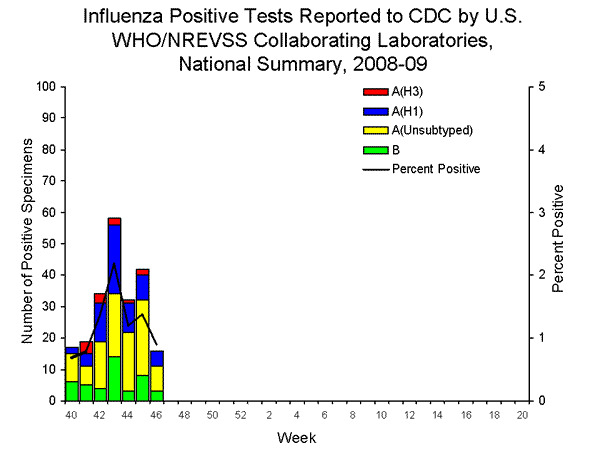
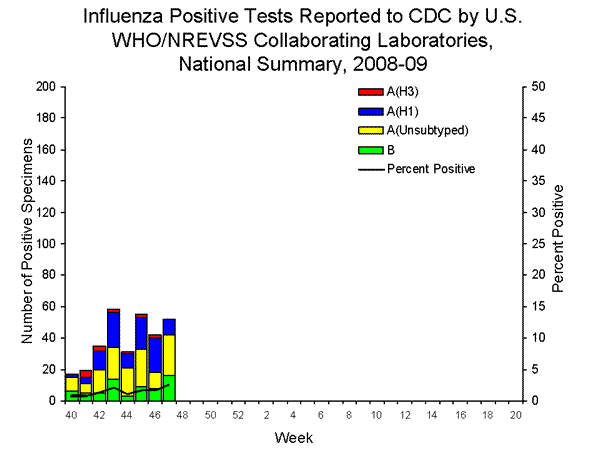
Seventy-nine (3.2%) specimens tested by U.S. World Health Organization (WHO) and National Respiratory and Enteric Virus Surveillance System (NREVSS) collaborating laboratories and reported to CDC/Influenza Division were positive for influenza.
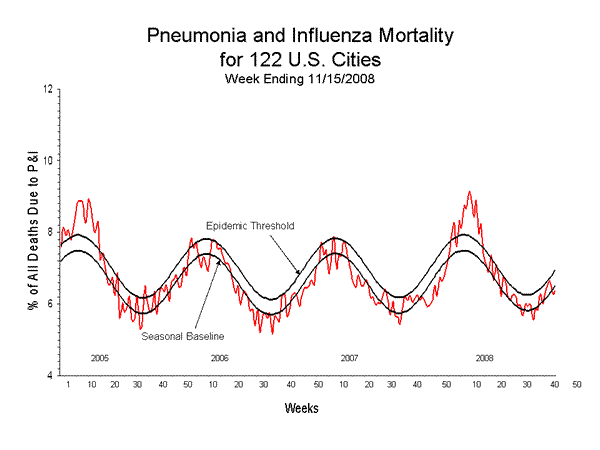
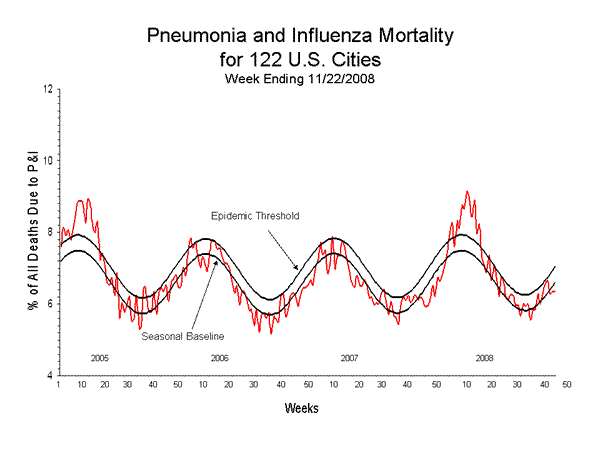
The proportion of deaths attributed to pneumonia and influenza (P&I) was below the epidemic threshold.
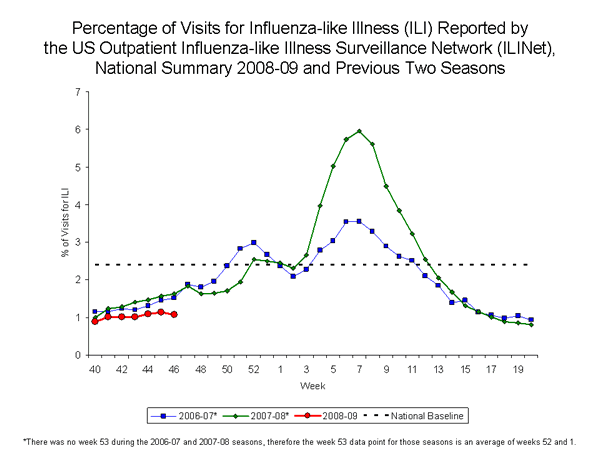
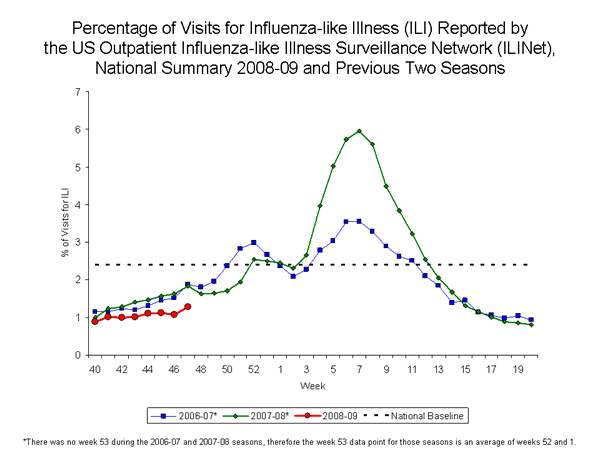
The proportion of outpatient visits for influenza-like illness (ILI) was below national and region-specific baseline levels.
Four states reported regional activity; 11 states reported local influenza activity; the District of Columbia and 30 states reported sporadic influenza activity; and five states reported no influenza activity.
National and Regional Summary of Select Surveillance Components
Region
Data for current week
Data cumulative for the season
Out-patient ILI*
% positive for flu†
Number of jurisdictions reporting regional or widespread activity‡
A (H1)
A (H3)
A Unsub-typed
B
Pediatric Deaths
Nation
Normal
3.2 %
4 of 51
368
42
542
221
1
New England
Normal
2.0 %
1 of 6
6
2
19
5
0
Mid-Atlantic
Normal
2.3 %
1 of 3
20
4
30
15
0
East North Central
Normal
5.6 %
0 of 5
13
2
17
8
0
West North Central
Normal
1.7 %
0 of 7
15
3
26
10
1
South Atlantic
Normal
3.9 %
2 of 9
23
1
126
85
0
East South Central
Normal
1.3 %
0 of 4
1
0
0
4
0
West South Central
Normal
6.4 %
0 of 4
64
1
198
71
0
Mountain
Normal
4.4 %
0 of 8
15
22
51
6
0
Pacific
Normal
3.3 %
0 of 5
211
7
75
17
0
* Elevated means the % of visits for ILI is at or above the national or region-specific baseline
† National data is for current week; regional data is for the most recent three weeks.
‡ Includes all 50 states and the District of Columbia U.S. Virologic Surveillance:
WHO and NREVSS collaborating laboratories located in all 50 states and Washington D.C. report to CDC the number of respiratory specimens tested for influenza each week. The results of tests performed during the current week and cumulative totals for the season are summarized in the table below.
Week 53
Cumulative for the Season
No. of specimens tested
2,488
52,199
No. of positive specimens (%)
79 (3.2%)
1,173 (2.3%)
Positive specimens by type/subtype
Influenza A
70 (88.6%)
952 (81.2%)
A (H1)
10 (14.3%)
368 (38.7%)
A (H3)
5 (7.1%)
42 (4.4%)
A (unsubtyped)
55 (78.6%)
542 (56.9%)
Influenza B
9 (11.4%)
221 (18.8%)
The District of Columbia and 42 states from all nine surveillance regions have reported laboratory-confirmed influenza this season. Three states account for 794 (67.7%) of the 1,173 reported influenza viruses.
CDC has antigenically characterized 110 influenza viruses [68 influenza A (H1), 13 influenza A (H3) and 29 influenza B viruses] collected by U.S. laboratories since October 1, 2008.
All 68 influenza A (H1) viruses are related to the influenza A (H1N1) component of the 2008-09 influenza vaccine (A/Brisbane/59/2007). All 13 influenza A (H3N2) viruses are related to the A (H3N2) vaccine component (A/Brisbane/10/2007).
Influenza B viruses currently circulating can be divided into two distinct lineages represented by the B/Yamagata/16/88 and B/Victoria/02/87 viruses. Nine influenza B viruses tested belong to the B/Yamagata lineage and are related to the vaccine strain (B/Florida/04/2006). The remaining 20 viruses belong to the B/Victoria lineage and are not related to the vaccine strain. Seventeen of the 20 viruses belonging to the B/Victoria lineage were from two states.
Data on antigenic characterization should be interpreted with caution given that:
Few U.S. isolates are available for testing because of limited influenza activity thus far.
The majority of viruses antigenically characterized to date come from only three states and may not be nationally representative.
Antigenic characterization data is based on hemagglutination inhibition (HI) testing using a panel of reference ferret antisera and results may not correlate with clinical protection against circulating viruses provided by influenza vaccination.
Annual influenza vaccination is expected to provide the best protection against those virus strains that are related to the vaccine strains, but limited to no protection may be expected when the vaccine and circulating virus strains are so different as to be from different lineages, as is seen with the two lineages of influenza B viruses. Antiviral Resistance:
Since October 1, 2008, 88 influenza A (H1N1), 14 influenza A (H3N2), and 40 influenza B viruses from 25 states have been tested for resistance to the neuraminidase inhibitors (oseltamivir and zanamivir). Eighty-eight influenza A (H1N1) and 14 influenza A (H3N2) viruses from 23 states have been tested for resistance to the adamantanes (amantadine and rimantadine). The results of antiviral resistance testing performed on these viruses are summarized in the table below.
Isolates tested (n)
Resistant Viruses,
Number (%)
Isolates tested (n)
Resistant Viruses, Number (%)
Oseltamivir
Zanamivir
Adamantanes
Influenza A (H1N1)
88
86 (98%)
0 (0)
88
0 (0%)
Influenza A (H3N2)
14
0 (0)
0 (0)
14
14 (100%)
Influenza B
40
0 (0)
0 (0)
N/A*
N/A*
*The adamantanes (amantadine and rimantadine) are not effective against influenza B viruses.
With low levels of influenza activity thus far in the 2008-09 season in the United States, overall numbers of virus specimens and the number of states that have submitted specimens for testing is limited. The limited number and geographic diversity of specimens tested for antiviral resistance, as well as the uncertainty regarding which influenza virus types or subtypes will predominate during the season, make it too early to make an accurate determination of the prevalence of influenza viruses resistant to oseltamivir nationally or regionally at this time. CDC has solicited a representative sample of viruses from WHO collaborating laboratories in the United States, and more specimens are expected as influenza activity increases. Pneumonia and Influenza (P&I) Mortality Surveillance
During week 53, 7.0% of all deaths reported through the 122-Cities Mortality Reporting System were due to P&I. This percentage is below the epidemic threshold of 7.6% for week 53.
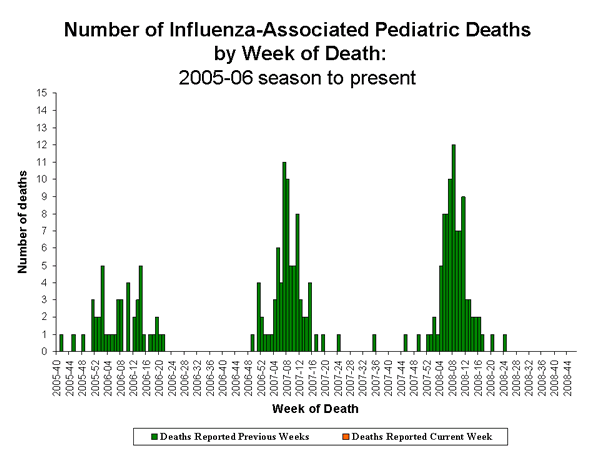
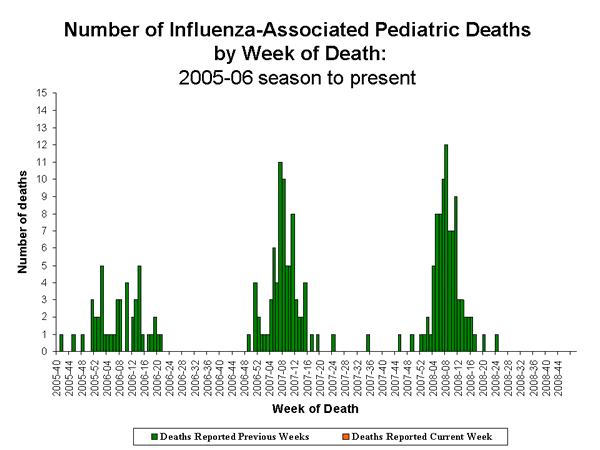
No influenza-associated pediatric deaths were reported during week 53. A total of one influenza-associated pediatric death occurring during the 2008-09 season has been reported.
Laboratory-confirmed influenza-associated hospitalizations are monitored in two population-based surveillance networks: the Emerging Infections Program (EIP) and the New Vaccine Surveillance Network (NVSN).
No influenza-associated hospitalizations have been reported from the New Vaccine Surveillance Network this season.
During October 1, 2008 – January 3, 2009, preliminary laboratory-confirmed influenza-associated hospitalization rates reported by the EIP for children aged 0-4 years and 5-17 years were 0.3 per 10,000 and 0.01 per 10,000, respectively. For adults aged 18-49 years, 50-64 years, and = 65 years, the rates were 0.03 per 10,000, 0.05 per 10,000, and 0.2 per 10,000, respectively.
During week 53, 1.8% of patient visits reported through the U.S. Outpatient Influenza-like Illness Surveillance Network (ILINet) were due to influenza-like illness (ILI). This percentage is less than the national baseline of 2.4%. On a regional level, the percentage of visits for ILI ranged from 0.2% to 4.6%. All nine surveillance regions reported percentages of visits for ILI below their respective region-specific baselines.
During week 53, the following influenza activity was reported:
Regional influenza activity was reported by four states (Maryland, New Hampshire, New Jersey, and North Carolina).
Local influenza activity was reported by 11 states (Arizona, Colorado, Connecticut, Florida, Hawaii, Maine, Massachusetts, Pennsylvania, Texas, Virginia, and Wisconsin).
Sporadic activity was reported in the District of Columbia and 30 states (Alaska, California, Delaware, Georgia, Idaho, Illinois, Indiana, Iowa, Kansas, Louisiana, Michigan, Minnesota, Mississippi, Missouri, Montana, Nebraska, Nevada, New York, North Dakota, Ohio, Oregon, Rhode Island, South Carolina, South Dakota, Tennessee, Utah, Vermont, Washington, West Virginia, and Wyoming).
No influenza activity was reported in five states (Alabama, Arkansas, Kentucky, New Mexico, and Oklahoma).
--------------------------------------------------------------------------------
A description of surveillance methods is available at: http://www.cdc.gov/flu/weekly/fluactivity.htm
http://www.phac-aspc.gc.ca/fluwatch/.../index-eng.php Overall influenza activity in Canada remains low; an influenza outbreak in a hospital was reported in Ontario During week 53, influenza activity in Canada remained low overall with the majority of the influenza surveillance regions still reporting no activity. Sixteen regions (in BC, AB, ON & QC) reported sporadic influenza activity and localized activity was reported in 2 regions (central region in AB and in Toronto, ON) (see map). Note that no data for 2 regions in SK were received this week. Eighty-seven specimens tested positive for influenza in Canada this week (percentage positive = 3.3%; 87/2,633) (see table). The majority of influenza virus detections to date this season were influenza A viruses (54% or 165/304); however influenza B detections have slowly increased over the last several weeks. In week 53, the ILI consultation rate increased to 23 ILI consultations per 1,000 patient visits (see ILI graph), however it remains below the expected range for this week. The sentinel response rate was low at 37%. An outbreak of influenza in a hospital in ON was reported in week 53. Other Respiratory Viruses: RSV detections for Canada as a whole continue to increase while detections for adenoviruses and parainfluenza viruses remain at fairly low levels (see graph). Antigenic Characterization:
Since 1 September 2008, the NML has antigenically characterized 33 influenza viruses: 10 influenza A/Brisbane/59/2007(H1N1)-like (from BC, AB, ON & NS), 1 influenza A/Brisbane/10/2007(H3N2)-like (from BC), 3 influenza B/Florida/4/2006-like (from ON and AB) and 19 B/Malaysia/2506/2004-like (from ON and AB). A/Brisbane/59/2007(H1N1), A/Brisbane/10/2007(H3N2) and B/Florida/4/2006 are the influenza A and influenza B components recommended for the 2008-09 influenza vaccine. B/Malaysia/2506/2004 was the influenza B component for the 2007-2008 season vaccine (see pie chart). Antiviral Resistance: Results from the NML:
Since the start of the season, the NML has tested 11 influenza A isolates (6 H1N1 and 5 H3N2) for amantadine resistance. All of the H1N1 isolates were susceptible; however all of the H3N2 isolates were resistant to amantadine (resistance = 100% or 5/5). The resistant isolates were from ON, AB and BC.
The NML has also tested 24 influenza isolates (5 A/H1N1, 2 A/H3N2 & 17 B) for oseltamivir (Tamiflu) resistance. All of the A/H3N2 and B isolates were sensitive; however all of the A/H1N1 isolates were resistant to oseltamivir due to the H274Y mutation (resistance = 100% or 5/5). The resistant isolates were from NS, ON and BC.
All 22 influenza isolates (3 A/H1N1, 2 A/H3N2 & 17 B) tested for zanamivir resistance to date were sensitive to zanamivir. Oseltamivir resistance findings from Provincial laboratories:
To date this season, 24 influenza isolates in BC have been sub-typed as A/H1 and were assessed genotypically for oseltamivir resistance using an SNP assay. Eighteen isolates tested positive for the H274Y mutation (resistance = 100% or 18/18), with the other 6 specimens still pending confirmatory testing. Influenza-associated Paediatric Hospitalizations:
No laboratory-confirmed influenza-associated paediatric hospitalizations have been reported through the Immunization Monitoring Program Active (IMPACT) network for the 2008-09 season. International:
WHO: During the weeks 51 to 52, the overall level of influenza activity in the world began to increase in some countries in Europe. Activity in many other countries remained low. The majority of viruses identified this season have been influenza A (H3N2).
EISS: Influenza activity continued to increase with most countries in western and central Europe reporting influenza activity of medium intensity. Most of the influenza virus detections so far have been for influenza A viruses of which the majority were A(H3). Of the 56 A(H3N2) isolates that were also tested for adamantanes susceptibility, all were resistant. Of the 30 A(H1N1) virus isolates tested for resistance against neuraminidase inhibitors, 29 were resistant to oseltamivir (resistance=97%), but all were sensitive to zanamivir.
Human Avian Influenza: Since 6 January 2009, the WHO has reported two new cases of human H5N1 avian influenza infection. The first case was an 8-year-old female from Thanh Hoa province, Vietnam who developed symptoms on 27 December 2008, was hospitalized on 2 January 2009 and is currently in a stable condition. The second case was a 19-year-old female from Chaoyang District, Beijing, China who developed symptoms on 24 December 2008, was hospitalized and died on 5 January 2009. Both cases had contact with poultry prior to their illness.
Total number of influenza tests performed and number of positive tests by province/territory of testing laboratory, Canada, 2008-2009
Province of
reporting
laboratories
Report Period:
December 28, 2008 to January 3, 2009
Season to Date:
August 24, 2008 to January 3, 2009
Total #
Influenza
Tests
# of Positive Tests
Total #
Influenza
Tests
# of Positive Tests
Influenza A
Influenza B
Total
Influenza A
Influenza B
Total
NL
21
0
0
0
183
0
0
0
PE
7
0
0
0
67
0
0
0
NS
18
0
0
0
288
1
0
1
NB
20
0
0
0
196
0
0
0
QC
763
9
1
10
7081
52
4
56
ON
919
5
37
42
9002
23
73
96
MB
49
0
0
0
840
0
0
0
SK
128
0
0
0
1402
0
0
0
AB
654
20
6
26
8074
42
61
103
BC
54
9
0
9
699
47
1
48
Canada
2633
43
44
87
27832
165
139
304
Specimens from NT, YT, and NU are sent to reference laboratories in other provinces. Note: Cumulative data includes updates to previous weeks; due to reporting delays, the sum of weekly report totals do not add up to cumulative totals. Abbreviations: Newfoundland/Labrador (NL), Prince Edward Island (PE), New Brunswick (NB), Nova Scotia (NS), Quebec (QC), Ontario (ON), Manitoba (MB), Saskatchewan (SK), Alberta (AB), British Columbia (BC), Yukon (YT), Northwest Territories (NT), Nunavut (NU) Respiratory virus laboratory detections in Canada, by geographic regions, are available weekly on the following website:
<http://www.phac-aspc.gc.ca/bid-bmi/dsd-dsm/rvdi-divr/index-eng.php>
Number of influenza surveillance regions† reporting widespread or localized influenza activity, Canada, by report week, 2008-2009 (N=54)
† sub-regions within the province or territory as defined by the provincial/territorial epidemiologist. Graph may change as late returns come in.
Influenza Activity Level by Provincial and Territorial
Influenza Surveillance Regions, Canada,
December 28, 2008 to January 3, 2009 (Week 53)
Influenza tests reported and percentage of tests positive, Canada, by report week, 2008-2009
Percent positive influenza tests, compared to other respiratory viruses, Canada, by reporting week, 2008-2009
Influenza strain characterization, Canada, cumulative, 2008-2009 influenza season by the Respiratory Viruses Section at the National Microbiology Laboratory
[N=33]
{Strain characterization, number identified, per cent of total number} NACI recommends that the trivalent vaccine for the 2008-2009 season in Canada contain
A/Brisbane/59/2007 (H1N1)-like virus; an A/Brisbane/10/2007 (H3N2)-like virus; and a B/Florida/4/2006-like virus.
Influenza-like illness (ILI) consultation rates, Canada, by report week,
2008-2009 compared to 1996/97 through to 2007/08 seasons
Note: No data available for mean rate in previous years for weeks 19 to 39 (1996-1997 through 2002-2003 seasons).
Number of New Outbreaks in Long Term Care Facilities, Canada, by Report Week, 2008-2009
95 influenza viruses were isolated until the 50th week in 2008-2009 season.
82 viruses were identified as A/H1 type and 13 viruses were identified as A/H3 type
322 influenza viruses were isolated until the 51th week in 2008-2009 season.
296 viruses were identified as A/H1 type and 26 viruses were identified as A/H3 type
815 influenza viruses were isolated until the 52th week in 2008-2009 season.
767 viruses were identified as A/H1 type, 46 viruses were identified as A/H3 type and 2 viruses were identified as B type.
The above comments are from the Korean CDC reports for weeks 50, 51, and 52. The proportion of patients visiting sentinel physicians for influenza like illness rose to 15.39%, which was significantly above the 2.6% baseline. The levels for this season and last season are graphically represented in the week 52 report.
Although the reports do not indicate the frequency of Tamiflu resistance, recent reports from Japan describe influenza forced closing of elementary schools in October and November due to Tamiflu resistant H1N1. A recent WHO report on H274Y frequencies in initial weeks of the influenza season in the northern hemisphere indicated that 13/14 H1N1 in Japan were Tamiflu resistant and all isolates from the school closings were Tamiflu resistant. Three isolates from Sendai, Japan matched each other as well as the dominant sub-clade circulating the United States (HI, TX, PA), and all had H274Y in NA and A193T on HA. In the United States, Tamiflu resistance levels in H1N1 are at 98%, indicating most isolates are from the same sub-clade, as seen in the HA and NA sequences released by the CDC in the United States.
The school closing sin Japan and the explosion of cases in South Korea support an aggressive H1N1 that is resistant to Tamiflu.
More information on resistance and sequences from the isolates in South Korea would be useful.
.
__________________
"The next major advancement in the health of American people will be determined by what the individual is willing to do for himself"-- John Knowles, Former President of the Rockefeller Foundation
The influenza activity in Hong Kong
remained at low level.
For the week ending 3 Jan 2009
(week 1), the average consultation rates for
ILI among sentinel private doctors (Figure
1) and general outpatient clinics (Figure 2)
were 28.1 and 2.9 (per 1,000 consultations)
respectively. In the same week, 0.68% of
children in the sentinel child care centres
(Figure 3) and 0.14% of residents in the
sentinel residential care homes for the
elderly (Figure 4) had fever. The
consultation rate for ILI among chinese
medicine practitioners (Figure 5) was 6.19
per 1,000 consultations.
Influenza detection was 30 in week 1.
Laboratory surveillance detected 15
influenza A (H1N1) viruses, 5 influenza A
(H3N2) viruses and 9 influenza B viruses
(Figure 6).
In week 1, there were no influenza
outbreaks (Figure 7). In the first 5 days of
week 2 (as of 8 Jan 2009), there were no
confirmed influenza outbreaks.
In week 1, hospital admission rate due
to influenza for the elderly 65 years old or
above was 0.05 (per 10,000 people in the
age group) (blue line in Figure 8) and that
for children aged 0 to 4 years was 0.41 (per
10,000 people in the age group) (red line in
Figure 8).
For the week ending 3 Jan 2009, no
children aged 12 years or below were
reported to have severe complications
[To see all the details about current influenza season virologic surveillance in Italy performed by CIRI, please follow this link: http://www.influciri.it/frlato1_1.html - IOH]
__________________
GIMI69 (IRONOREHOPPER)
--
People come and go, but the creative force of great historical events, as well as important ideas and actions remain. (Aleksandr Romanovic Lurija, 1976)
-- A TIME'S MEMORY (Blog) ATTRAVERSO QUESTI GIORNI (Blog) tracciatore_traccia@libero.it
More details and background information about epidemiological and virological surveillance activities performed by CIRI (Centro Interuniversitario per lo Studio dell'Influenza) are available following the above URL address.
Graphs and tables are based upon data elaborated from informations collected by family doctors' participants to epidemiological surveillance.
Curves indicate ILI and ARI incidence among population tabulated for epidemic season, surveillance week and classes of age.
Incidence of ILIs continue to grow and it is at highest rate in 0-4 class-age (6,04 per 1,000), followed by 5-14 (4.38x1,000) and young adults (4.03x1,000).
Since the start of surveillance activities, the overwhelming majority of viruses collected were Type A subytpe H3N2, lineage Brisbane/10/07, reference strain for current influenza vaccines.
-
-----
__________________
GIMI69 (IRONOREHOPPER)
--
People come and go, but the creative force of great historical events, as well as important ideas and actions remain. (Aleksandr Romanovic Lurija, 1976)
-- A TIME'S MEMORY (Blog) ATTRAVERSO QUESTI GIORNI (Blog) tracciatore_traccia@libero.it
Pennsylvania Influenza Cases confirmed by the Bureau of Laboratories
(as of 01/10/2009)
District (#)
County
Subtype
Oseltamivir Resistance (Yes or No)
NW (4)
Erie
1, A(H1N1)
Yes
Warren
2, A(H3N2)
Results pending
Warren
1 A(not typed)
Results pending
NE (15)
Lehigh
1, A(H1N1)
Yes
Luzerne
1, Influenza B
Results pending
Bethlehem
4, A(H3N2)
Results pending
Bethlehem
1, A(H1N1)
Results pending
Allentown
2, A(H3N2)
Results pending
Northampton
5, A(H1N1)
Results pending
Northampton
1, A(H3N2)
Results pending
NC (6)
Centre
2, A(H1N1)
Results pending
Centre
2, Influenza B
Results pending
Montour
2, A(H1N1)
Results pending
SE (6)
Chester
1, A (H3N2)
Results pending
Berks
3, A(H1N1)
Results pending
Bucks
1, A(H1N1)
Yes
SC (1)
Blair
1, A(H1N1)
Results pending
SW (2)
Butler
1, A(H1N1)
Results pending
Allegheny
1, A(H1N1)
Results pending
Results in the table above are based on tests done on a few specimens that are submitted to the State lab by physicians, hospitals and nursing homes. The State lab sends subtyped flu isolates to CDC for further testing.
In the table below are represented cumulative virological results of the initial surveillance weeks since the start of season (week 46-08) to date (week 2-09).
- Europe
The circulation of influenza viruses continues to rise in this latest surveillance week; more intense activity has been reported in the Central and Western EU Member States.
Of 1193 collected samples, 743 were influenza A positive (193 H3, 8 H1 and 542 unsubtyped); 27 were influenza B positive.
Influenza A(H3N2) viruses are to date the predominant strains.
People come and go, but the creative force of great historical events, as well as important ideas and actions remain. (Aleksandr Romanovic Lurija, 1976)
-- A TIME'S MEMORY (Blog) ATTRAVERSO QUESTI GIORNI (Blog) tracciatore_traccia@libero.it
The map presents the intensity of influenza activity and the geographical spread as assessed by each of the networks in EISS.
Clicking on the map will, if available, take you through to the national web site. If 'regional' activity is reported, a pop-up text box will appear which describes the activity in greater detail.
Clicking on England and France will provide you with regional data.
A = Dominant virus A H1N1 = Dominant virus A(H1N1) H3N2 = Dominant virus A(H3N2) H1N2 = Dominant virus A(H1N2) B = Dominant virus B A & B = Dominant virus A & B
Low = no influenza activity or influenza at baseline levels Medium = usual levels of influenza activity High = higher than usual levels of influenza activity Very high = particularly severe levels of influenza activity
No activity = no evidence of influenza virus activity (clinical activity remains at baseline levels) Sporadic = isolated cases of laboratory confirmed influenza infection Local outbreak = increased influenza activity in local areas (e.g. a city) within a region,
or outbreaks in two or more institutions (e.g. schools) within a region. Laboratory confirmed. Regional activity = influenza activity above baseline levels in one or more regions with
a population comprising less than 50% of the country's total population. Laboratory confirmed. Widespread = influenza activity above baseline levels in one or more regions with a population
comprising 50% or more of the country's population. Laboratory confirmed.
Finland : Where available, the epidemiological data are provided by a health-care district in
South-Western Finland (the health-care district serves 54,000 inhabitants i.e. approximately one
percent of the Finnish population).
Network comments (where available)
Italy
During this last week, a slight increase in the number of collected samples has been observed. Out of 100 samples tested, 30 resulted positive for influenza A (11 subtyped as H3N2). Sweden
We had a medium level of inluenza actvity among ILI cases BUT a hig level of non-sentinel laboratory diagnoses during the week 2. Switzerland
Medical consultations and influenza virus detection rate increased a lot this week.
Intensity: Low = no influenza activity or influenza activity at baseline level; Medium= usual levels of influenza activity; High = higher than usual levels of influenza activity; Very high = particularly severe levels of influenza activity. Percentage positive: percentage of sentinel swabs that tested positive for influenza A or B Dominant type: this assessment is based on data from sentinel and non-sentinel sources ARI: acute respiratory infection ILI: influenza-like illness Population: per 100,000 population
The bulletin text was written by an editorial team at the European Centre for Disease Prevention and Control (ECDC) and the Community Network of Reference Laboratories for Human Influenza in Europe (CNRL). Team members are Flaviu Plata, Phillip Zucs and Bruno Ciancio from ECDC, and Adam, Meijer Rod Daniels Alan Hay and Maria Zambon from CNRL. The bulletin text was reviewed by Olav Hungnes (Norwegian Institute of Public Health, Oslo, Norway), and Anne Mazick (Statens Serum Institut, Copenhagen, Denmark) on behalf of the EISS members.
Neither the European Centre for Disease Prevention and Control (ECDC), nor any person acting on his behalf is liable for the use that may be made of the information contained in this bulletin. Maps and commentary used in this Bulletin do not imply any opinions whatsoever of ECDC or its partners on the legal status of the countries and territories shown or concerning their borders.
Medium influenza activity in most European countries
Summary: In week 02/2009, influenza activity continued to spread across Europe with most countries now reporting medium intensity. Some eastern and north-eastern countries reported low level influenza intensity. In Portugal the epidemic has passed its peak. The majority of the viruses typed/subtyped were influenza A (H3) which continues to be the predominant influenza virus circulating in Europe. Vaccination of risk groups according to national recommendations remains indicated.
Epidemiological situation - week 02/2009: For the intensity indicator, the national network levels of influenza-like illness (ILI) and/or acute respiratory infection (ARI) were high in Ireland and Switzerland, medium in 17 countries and low in the other nine countries and one part of the UK (Wales) that reported this indicator.
Of the 19 countries that reported medium to high influenza activity this week, seven (Belgium, Bulgaria, Greece, Norway, Poland, Slovenia and Scotland in the UK) did so for the first time during the current season. For the geographical spread indicator, widespread influenza activity was reported in 14 countries, regional activity in two countries and one part of the UK (Wales), local activity in two countries and sporadic activity in the remaining 5 countries and one part of the UK (Scotland).
Eight of the nine countries reporting low intensity during week 02/2009 are located in the eastern and north-eastern part of Europe. Consultation rates for ILI in Portugal peaked in week 52 and have decreased since then. Definitions for the epidemiological indicators can be found here.
Cumulative epidemiological situation – 2008-2009 season (weeks 40/2008-02/2009): Consultation rates for ILI and/or ARI above baseline levels were first reported in Portugal, Ireland and parts of the UK (England and Northern Ireland) in week 49/2008. Subsequently consultations rates rose above baseline levels in Spain (week 51/2008), France and Italy (week 52/2008), Austria, Denmark, Germany, Sweden, Switzerland and the Netherlands (week 01/2009) and in Belgium, Bulgaria, Greece, Norway, Poland, Slovenia and Scotland in the UK (week 02/2009). High influenza intensity was first reported in Portugal (week 51/2008), Ireland (week 01/2009), and Switzerland (week 02/2009). Portugal is the first country that has passed its peak influenza activity, as since week 52 the consultation rates have continuously decreased. Generally, the highest consultation rates have been reported for the 0-4 age group, but Ireland, UK and Norway have reported their highest ILI consultation rates in the 15-64 age group.
Virological situation - week 02/2009: The total number of respiratory specimens collected by sentinel physicians in week 02/2009 was 1448, of which 573 (39.6%) were positive for influenza virus: 543 type A (262 subtype H3, seven subtype H1 and 274 not subtyped) and 30 type B. In addition, 702 non-sentinel source specimens (e.g. specimens collected for diagnostic purposes in hospitals) were reported positive for influenza virus: 686 type A (98 subtype H3, four subtype H1 and 584 not subtyped) and 16 type B.
Cumulative virological situation – 2008-2009 season (weeks 40/2008-02/2009): Of 5693 virus detections (sentinel and non-sentinel) since week 40/2008, 5474 were type A (2128 subtype H3, 141 subtype H1 and 3205 not subtyped) and 219 were type B. Based on the antigenic and/or genetic characterisation of 374 influenza viruses, 321 were reported as A/Brisbane/10/2007 (H3N2)-like, 32 as A/Brisbane/59/2007 (H1N1)-like, seven as B/Florida/4/2006-like (B/Yamagata/16/88 lineage) and 14 as B/Malaysia/2506/2004-like (B/Victoria/2/87 lineage) (click here).
More countries have reported on antiviral susceptibility based on genotyping (Norway, Spain, Sweden), phenotyping (Italy) or both techniques (UK). All 93 influenza A(H3N2) and three influenza B viruses tested were sensitive to oseltamivir and zanamivir. Of these, the 88 A(H3N2) viruses tested were resistant to M2 inhibitors.Fifty-one of 52 influenza A(H1N1) viruses analysed (98%) were resistant to oseltamivir but all those tested were sensitive to zanamivir, while 23 of these tested were sensitive to M2 inhibitors.
Comment: Most European countries are now experiencing influenza activity of medium intensity. Only a limited number of countries mostly in the east and north-east of Europe are still reporting low influenza activity this season. A much higher number of sentinel specimens has been collected for virological testing during the current week as compared to the previous, and the proportion testing positive for influenza remained high (39.6%).
So far type A (H3) has been the dominant influenza virus circulating in Europe. Available data indicate that, with the exception of the B/Victoria lineage, the majority of circulating viruses are similar to the three components (A(H1N1), A(H3N2) and B/Yamagata lineage) included in the current influenza vaccine.
As of week 51, eleven samples were found to be positive by viral culture for influenza AH1 and
influenza B. Rapid and culture results by county are displayed below.
Week 40 to Week 51 Week 49, 50, 51
County
A RapBid * A/ Culture* Rapid* Culture*
B
A
H1
A
H3
A
UNK
B A B A/B A H1 A
H3
A
UNK
B
Atlantic County
0 0 0 0 0 0 0 0 0 0 0 0 0 0
Bergen County
2 0 0 1 0 0 0 2 0 0 1 0 0 0
Burlington County
6 0 0 0 0 0 0 5 0 0 0 0 0 0
Camden County
0 0 0 0 0 0 0 0 0 0 0 0 0 0
Cape May County
0 0 0 0 0 0 0 0 0 0 0 0 0 0
Cumberland County
0 0 0 0 0 0 0 0 0 0 0 0 0 0
Essex County
10 4 4 0 0 0 0 1 0 1 0 0 0 0
Gloucester County
0 0 0 0 0 0 0 0 0 0 0 0 0 0
Hudson County
1 1 0 1 0 0 0 1 1 0 1 0 0 0
Hunterdon County
0 0 7 4 0 0 0 0 0 6 4 0 0 0
Mercer County
1 0 0 0 0 0 0 0 0 0 0 0 0 0
Middlesex County
1 0 0 3 0 0 0 1 0 0 3 0 0 0
Monmouth County
8 0 3 0 0 0 0 3 0 0 0 0 0 0
Morris County
0 0 0 0 0 0 0 0 0 0 0 0 0 0
Ocean County
0 0 0 0 0 0 0 0 0 0 0 0 0 0
Passaic County
5 1 0 0 0 0 0 3 1 0 0 0 0 0
Salem County
0 0 0 0 0 0 0 0 0 0 0 0 0 0
Somerset County
0 0 0 0 0 0 0 0 0 0 0 0 0 0
Sussex County
3 1 0 0 0 0 0 2 1 0 0 0 0 0
Union County
0 1 0 1 0 0 1 0 0 0 1 0 0 0
Warren County
0 0 0 0 0 0 0 0 0 0 0 0 0 0
Unknown
0 0 0 0 0 0 0 0 0 0 0 0 0 0
State Total
37 8 14 10 0 0 1 18 2 7 10 0 0 0
*Rapid data is acquired from facilities reporting rapid influenza tests via NREVSS or CDRSS ILI module. Culture
results are obtained from the LIMS system at PHEL, hospital viral culture laboratories via NREVSS or commercial
laboratories reporting in CDRSS.
2008-2009 Influenza Season Week 1 ending January 10, 2009 (All data are preliminary and may change as more reports are received.) Synopsis:
week 1 (January 4-10, 2009), overall influenza activity in the United States remained relatively low, but increased compared to previous weeks.
Two hundred forty-two (7.1%) specimens tested by U.S. World Health Organization (WHO) and National Respiratory and Enteric Virus Surveillance System (NREVSS) collaborating laboratories and reported to CDC/Influenza Division were positive for influenza.
The proportion of deaths attributed to pneumonia and influenza (P&I) was below the epidemic threshold.
The proportion of outpatient visits for influenza-like illness (ILI) was below national and region-specific baseline levels.
One state reported widespread influenza activity, five states reported regional activity; 10 states reported local influenza activity; the District of Columbia, Puerto Rico and 33 states reported sporadic influenza activity; and one state reported no influenza activity.
National and Regional Summary of Select Surveillance Components
Region
Data for current week
Data cumulative for the season
Out-patient ILI*
% positive for flu†
Number of jurisdictions reporting regional or widespread activity‡
A (H1)
A (H3)
A Unsub-typed
B
Pediatric Deaths
Nation
Normal
7.1 %
6 of 51
489
59
801
277
0
New England
Normal
2.9 %
1 of 6
12
3
25
6
0
Mid-Atlantic
Normal
3.2 %
2 of 3
38
7
63
20
0
East North Central
Normal
11.5 %
0 of 5
26
3
29
11
0
West North Central
Normal
2.7 %
0 of 7
25
5
32
13
0
South Atlantic
Normal
4.5 %
2 of 9
42
5
152
102
0
East South Central
Normal
1.2 %
0 of 4
2
0
0
5
0
West South Central
Normal
7.0 %
0 of 4
65
1
287
90
0
Mountain
Normal
9.5 %
1 of 8
24
25
125
7
0
Pacific
Normal
4.8 %
0 of 5
255
10
88
23
0
* Elevated means the % of visits for ILI is at or above the national or region-specific baseline
† National data is for current week; regional data is for the most recent three weeks.
‡ Includes all 50 states and the District of Columbia U.S. Virologic Surveillance:
WHO and NREVSS collaborating laboratories located in all 50 states and Washington D.C. report to CDC the number of respiratory specimens tested for influenza each week. The results of tests performed during the current week and cumulative totals for the season are summarized in the table below.
Week 1
Cumulative for the Season
No. of specimens tested
3,394
59,462
No. of positive specimens (%)
242 (7.1%)
1,626 (2.7%)
Positive specimens by type/subtype
Influenza A
214 (88.4%)
1,349(83.0%)
A (H1)
47 (22.0%)
489 (36.2%)
A (H3)
11 (5.1%)
59 (4.4%)
A (unsubtyped)
156 (72.9%)
801 (59.4%)
Influenza B
28 (11.6%)
277 (17.0%)
The District of Columbia and 44 states from all nine surveillance regions have reported laboratory-confirmed influenza this season.
CDC has antigenically characterized 158 influenza viruses [93 influenza A (H1), 13 influenza A (H3) and 52 influenza B viruses] collected by U.S. laboratories since October 1, 2008.
All 93 influenza A (H1) viruses are related to the influenza A (H1N1) component of the 2008-09 influenza vaccine (A/Brisbane/59/2007). All 13 influenza A (H3N2) viruses are related to the A (H3N2) vaccine component (A/Brisbane/10/2007).
Influenza B viruses currently circulating can be divided into two distinct lineages represented by the B/Yamagata/16/88 and B/Victoria/02/87 viruses. Seventeen influenza B viruses tested belong to the B/Yamagata lineage and are related to the vaccine strain (B/Florida/04/2006). The remaining 35 viruses belong to the B/Victoria lineage and are not related to the vaccine strain. Thirty of the 35 viruses belonging to the B/Victoria lineage were from two states.
Data on antigenic characterization should be interpreted with caution given that:
Few U.S. isolates are available for testing because of limited influenza activity thus far.
The majority of viruses antigenically characterized to date come from only three states and may not be nationally representative.
Antigenic characterization data is based on hemagglutination inhibition (HI) testing using a panel of reference ferret antisera and results may not correlate with clinical protection against circulating viruses provided by influenza vaccination.
Annual influenza vaccination is expected to provide the best protection against those virus strains that are related to the vaccine strains, but limited to no protection may be expected when the vaccine and circulating virus strains are so different as to be from different lineages, as is seen with the two lineages of influenza B viruses. Antiviral Resistance:
Since October 1, 2008, 103 influenza A (H1N1), 23 influenza A (H3N2), and 61 influenza B viruses from 25 states have been tested for resistance to the neuraminidase inhibitors (oseltamivir and zanamivir). One hundred three influenza A (H1N1) and 23 influenza A (H3N2) viruses from 23 states have been tested for resistance to the adamantanes (amantadine and rimantadine). The results of antiviral resistance testing performed on these viruses are summarized in the table below.
Isolates tested (n)
Resistant Viruses,
Number (%)
Isolates tested (n)
Resistant Viruses, Number (%)
Oseltamivir
Zanamivir
Adamantanes
Influenza A (H1N1)
103
101 (98%)
0 (0)
103
1 (1%)
Influenza A (H3N2)
23
0 (0)
0 (0)
23
23 (100%)
Influenza B
61
0 (0)
0 (0)
N/A*
N/A*
*The adamantanes (amantadine and rimantadine) are not effective against influenza B viruses.
With low levels of influenza activity thus far in the 2008-09 season in the United States, overall numbers of virus specimens and the number of states that have submitted specimens for testing is limited. The limited number and geographic diversity of specimens tested for antiviral resistance, as well as the uncertainty regarding which influenza virus types or subtypes will predominate during the season, make it too early to make an accurate determination of the prevalence of influenza viruses resistant to oseltamivir nationally or regionally at this time. CDC has solicited a representative sample of viruses from WHO collaborating laboratories in the United States, and more specimens are expected as influenza activity increases. Pneumonia and Influenza (P&I) Mortality Surveillance
During week 1, 6.9% of all deaths reported through the 122-Cities Mortality Reporting System were due to P&I. This percentage is below the epidemic threshold of 7.7% for week 1.
No influenza-associated pediatric deaths were reported during week 1. The pediatric death that was reported from Minnesota during week 52 was later reclassified by the state as not due to influenza. No influenza-associated pediatric deaths have been reported during the 2008-09 season.
Laboratory-confirmed influenza-associated hospitalizations are monitored in two population-based surveillance networks: the Emerging Infections Program (EIP) and the New Vaccine Surveillance Network (NVSN).
No influenza-associated hospitalizations have been reported from the New Vaccine Surveillance Network this season.
During October 1, 2008 – January 3, 2009, preliminary laboratory-confirmed influenza-associated hospitalization rates reported by the EIP for children aged 0-4 years and 5-17 years were 0.3 per 10,000 and 0.01 per 10,000, respectively. For adults aged 18-49 years, 50-64 years, and = 65 years, the rates were 0.03 per 10,000, 0.05 per 10,000, and 0.2 per 10,000, respectively.
During week 1, 1.4% of patient visits reported through the U.S. Outpatient Influenza-like Illness Surveillance Network (ILINet) were due to influenza-like illness (ILI). This percentage is less than the national baseline of 2.4%. On a regional level, the percentage of visits for ILI ranged from 0.3% to 2.2%. All nine surveillance regions reported percentages of visits for ILI below their respective region-specific baselines.
The increase in the percentage of patient visits for ILI over the previous weeks may have been influenced by a reduction in routine health care visits during the holiday season, as has occurred in previous seasons.
During week 1, the following influenza activity was reported:
Widespread influenza activity was reported by one state (Virginia).
Regional influenza activity was reported by five states (Colorado, New Hampshire, New Jersey, New York, and North Carolina).
Local influenza activity was reported by 10 states (Arizona, Connecticut, Florida, Hawaii, Illinois, Maryland, Massachusetts, Montana, Pennsylvania, and Texas).
Sporadic activity was reported in the District of Columbia, Puerto Rico, and 33 states (Alaska, Arkansas, California, Delaware, Georgia, Idaho, Indiana, Iowa, Kansas, Kentucky, Louisiana, Maine, Michigan, Minnesota, Mississippi, Missouri, Nebraska, Nevada, New Mexico, North Dakota, Ohio, Oklahoma, Oregon, Rhode Island, South Carolina, South Dakota, Tennessee, Utah, Vermont, Washington, West Virginia, Wisconsin, and Wyoming).
No influenza activity was reported in one state (Alabama).
--------------------------------------------------------------------------------
A description of surveillance methods is available at: http://www.cdc.gov/flu/weekly/fluactivity.htm
The reader is responsible for discerning the validity, factuality or implications of information posted here, be it fictional or based on real events. Moderators on this forum make every effort to review the material posted on this site however, it is not realistically possible for our staff to manually review each post.
The content of posts on this site, including but not limited to links to other web sites, are the expressed opinion of the original authors or posters and are not endorsed by, or representative of the opinions of, the owners or administration of this website. The posts on this website are the opinion of the specific author or poster and should not be construed as statements of advice or factual information.
Not all posts on this website are intended as truthful or factual assertion by their authors. NO posts on this website should be considered factual information on face value alone. Users are encouraged to USE DISCERNMENT and do their own follow up research while reading and posting on this website. FluTrackers.com Inc. reserves the right to make changes to, corrections and/or remove entirely at any time posts made on this website without notice. In addition, FluTrackers.com Inc. disclaims any and all liability for damages incurred directly or indirectly as a result of a post on this website.
This site is provided "as is" without warranty of any kind, either expressed or implied. You should not assume that this site is error-free or that it will be suitable for the particular purpose which you have in mind when using it. In no event shall FluTrackers.com Inc. be liable for any special, incidental, indirect or consequential damages of any kind, or any damages whatsoever, including, without limitation, those resulting from loss of use, data or profits, whether or not advised of the possibility of damage, and on any theory of liability, arising out of or in connection with the use or performance of this site or other documents which are referenced by or linked to this site.
Finally, FluTrackers.com Inc. reserves the right to delete, correct, or make changes to any post on this website without notice at any time for any reason.
Fair Use Notice:
This site may contain copyrighted material the use of which has not always been specifically authorized by the copyright owner. Users may make such material available in an effort to advance awareness and understanding of issues relating to public health, civil rights, economics, individual rights, international affairs, liberty, science & technology, etc. We believe this constitutes a 'fair use' of any such copyrighted material as provided for in section 107 of the US Copyright Law. In accordance with Title 17 U.S.C.Section 107, the material on this site is distributed to those who have expressed a prior interest in receiving the included information for research and educational purposes.
In accordance with industry accepted best practices we ask that users limit their copy / paste of copyrighted material to the relevant portions of the article you wish to discuss and no more than 50% of the source material, provide a link back to the original article and provide your original comments / criticism in your post with the article. Please remember you are responsible for what you post on the internet and you could be sued by the original copyright holder if you do not honor these rules.
If you are a legal copyright holder or a designated agent for such and you believe a post on this website falls outside the boundaries of "Fair Use" and legitimately infringes on yours or your clients copyright
we may be contacted concerning copyright matters at:
FluTrackers.com Inc.
c/o Sharon Sanders
1676 Hibiscus Avenue
Winter Park, Florida 32789
Phone: 407-406-3037
E-Mail: flutrackers@earthlink.net
In accordance with section 512 of the U.S. Copyright Act our contact information has been registered with the United States Copyright Office. "Safe Harbor" noticing procedures as outlined in the DMCA apply to this website concerning all 3rd party posts published herein.
If notice is given of an alleged copyright violation we will act expeditiously to remove or disable access to the material(s) in question.
All 3rd party material posted on this website is the copyright of the respective owners / authors. FluTrackers.com Inc. makes no claim of copyright on such material.
For more information please visit:
http://www.law.cornell.edu/uscode/17/107.shtml
Please be aware any communications sent complaining about a post on this website may be posted publicly at the discretion of the administration.
FluTrackers Does Not Provide Any Medical Advice:
FluTrackers, Inc. does not provide medical advice. Information on this web site is collected from various internet resources, and the FluTrackers board of directors makes no warranty to the safety, efficacy, correctness or completeness of the information posted on this site by any author or poster.
The information collated here is for instructional and/or discussion purposes only and is NOT intended to diagnose or treat any disease, illness, or other medical condition. Every individual reader or poster should seek advice from their personal physician/healthcare practitioner before considering or using any interventions that are discussed on this website.
By continuing to access this website you agree to consult your personal physican before using any interventions posted on this website, and you agree to hold harmless FluTrackers.com Inc., the board of directors, the members, and all authors and posters for any effects from use of any medication, supplement, vitamin or other substance, device, intervention, etc. mentioned in posts on this website, or other internet venues referenced in posts on this website.
By using and/or accessing this site, either passively or actively, you are agreeing to all of the above conditions. Also, by using and/or accessing this site, either passively or actively, you agree to conduct all business and legal affairs related to this website in the jurisdiction of Flutrackers.com Inc. which is registered in Central Florida, USA.
These Disclaimers are subject to change at anytime.
Email the Webmaster with questions or comments about this site at flutrackers@earthlink.net