

Gert van der Hoek
In Memoriam - Editor, Senior Moderator
Am J Clin Nutr. 2020 Apr 28 : nqaa095.
Published online 2020 Apr 28. doi: 10.1093/ajcn/nqaa095
PMCID: PMC7197590
PMID: 32342979
Jinsong Zhang,[SUP]1[/SUP]Ethan Will Taylor,[SUP]2[/SUP]Kate Bennett,[SUP]3[/SUP]Ramy Saad,[SUP]4[/SUP] and Margaret P Rayman[SUP]5[/SUP]
Dear Editor:
Potentially relevant to the recent appearance of COVID-19 in China is the fact that there is a belt of selenium deficiency running from northeast to southwest in the country and, indeed, China has populations that have both the lowest and the highest selenium status in the world (1). A set of interesting studies published by the Beck laboratory in the 1990s showed that host selenium deficiency increased the virulence of RNA viruses such as coxsackievirus B3 and influenza A (2, 3). Passage through a selenium-deficient animal that was unable to produce sufficient antioxidant selenoproteins for its own protection resulted in the virus mutating to a virulent form that caused more severe pathology (2, 3). Those findings shed light on a human selenium-deficiency disease, a cardiomyopathy known as Keshan disease, named after the area in northeast China where it was endemic. The disease showed a seasonal variation, suggesting a viral cofactor that was later identified as coxsackievirus B3 (2). When the population was supplemented with selenium, the incidence of Keshan disease decreased dramatically (1, 2).
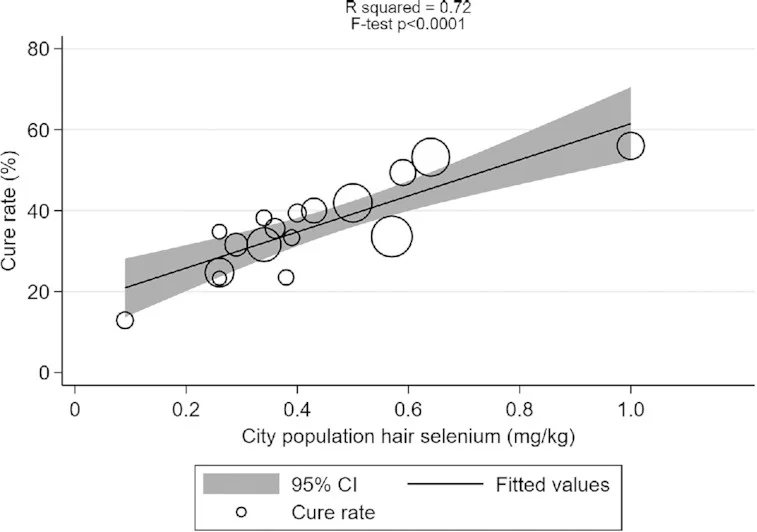
Significant clinical benefits of selenium supplementation have also been demonstrated in other viral infections, as reviewed previously (4, 5), including HIV-1 [where a negative correlation between selenium status and mortality has been established (1, 6)]; in liver cancer linked to hepatitis B; and in patients with “epidemic hemorrhagic fever” that was successfully treated with oral sodium selenite, giving an overall 80% reduction in mortality (4, 7). As such, selenium appears relevant to a number of evolutionarily distinct viruses, via potential immunomodulatory effects that are fully consistent with the many essential roles of selenium in the immune system (2) and its ability (especially in deficiency) to influence viral mutation and evolution (3). These and other studies prompted us to hypothesize that selenium status was associated with COVID-19 disease outcome in China.
LINK TO FULL ARTICLE
Published online 2020 Apr 28. doi: 10.1093/ajcn/nqaa095
PMCID: PMC7197590
PMID: 32342979
Jinsong Zhang,[SUP]1[/SUP]Ethan Will Taylor,[SUP]2[/SUP]Kate Bennett,[SUP]3[/SUP]Ramy Saad,[SUP]4[/SUP] and Margaret P Rayman[SUP]5[/SUP]
Dear Editor:
Potentially relevant to the recent appearance of COVID-19 in China is the fact that there is a belt of selenium deficiency running from northeast to southwest in the country and, indeed, China has populations that have both the lowest and the highest selenium status in the world (1). A set of interesting studies published by the Beck laboratory in the 1990s showed that host selenium deficiency increased the virulence of RNA viruses such as coxsackievirus B3 and influenza A (2, 3). Passage through a selenium-deficient animal that was unable to produce sufficient antioxidant selenoproteins for its own protection resulted in the virus mutating to a virulent form that caused more severe pathology (2, 3). Those findings shed light on a human selenium-deficiency disease, a cardiomyopathy known as Keshan disease, named after the area in northeast China where it was endemic. The disease showed a seasonal variation, suggesting a viral cofactor that was later identified as coxsackievirus B3 (2). When the population was supplemented with selenium, the incidence of Keshan disease decreased dramatically (1, 2).
Significant clinical benefits of selenium supplementation have also been demonstrated in other viral infections, as reviewed previously (4, 5), including HIV-1 [where a negative correlation between selenium status and mortality has been established (1, 6)]; in liver cancer linked to hepatitis B; and in patients with “epidemic hemorrhagic fever” that was successfully treated with oral sodium selenite, giving an overall 80% reduction in mortality (4, 7). As such, selenium appears relevant to a number of evolutionarily distinct viruses, via potential immunomodulatory effects that are fully consistent with the many essential roles of selenium in the immune system (2) and its ability (especially in deficiency) to influence viral mutation and evolution (3). These and other studies prompted us to hypothesize that selenium status was associated with COVID-19 disease outcome in China.
LINK TO FULL ARTICLE