• FluTrackers.com Inc. does not provide medical advice. Information on this web site is collected from various internet resources, and the FluTrackers board of directors makes no warranty to the safety, efficacy, correctness or completeness of the information posted on this site by any author or poster. The information collated here is for instructional and/or discussion purposes only and is NOT intended to diagnose or treat any disease, illness, or other medical condition. Every individual reader or poster should seek advice from their personal physician/healthcare practitioner before considering or using any interventions that are discussed on this website. By continuing to access this website you agree to consult your personal physican before using any interventions posted on this website, and you agree to hold harmless FluTrackers.com Inc., the board of directors, the members, and all authors and posters for any effects from use of any medication, supplement, vitamin or other substance, device, intervention, etc. mentioned in posts on this website, or other internet venues referenced in posts on this website.
  • We are not asking for any donations. Do not donate to any entity who says they are raising funds for us.

Cambodia: Confirmed two H5N1 avian flu cases, one died (11 yr. old female), the other case is her father, in Prey Veng Province - February 22, 2023+

A second case of bird flu has been isolated at Sithor Kandal District Hospital, while normal health has not changed, but doctors continue to monitor closely (Video inside)
2023-02-24 03:25 pm


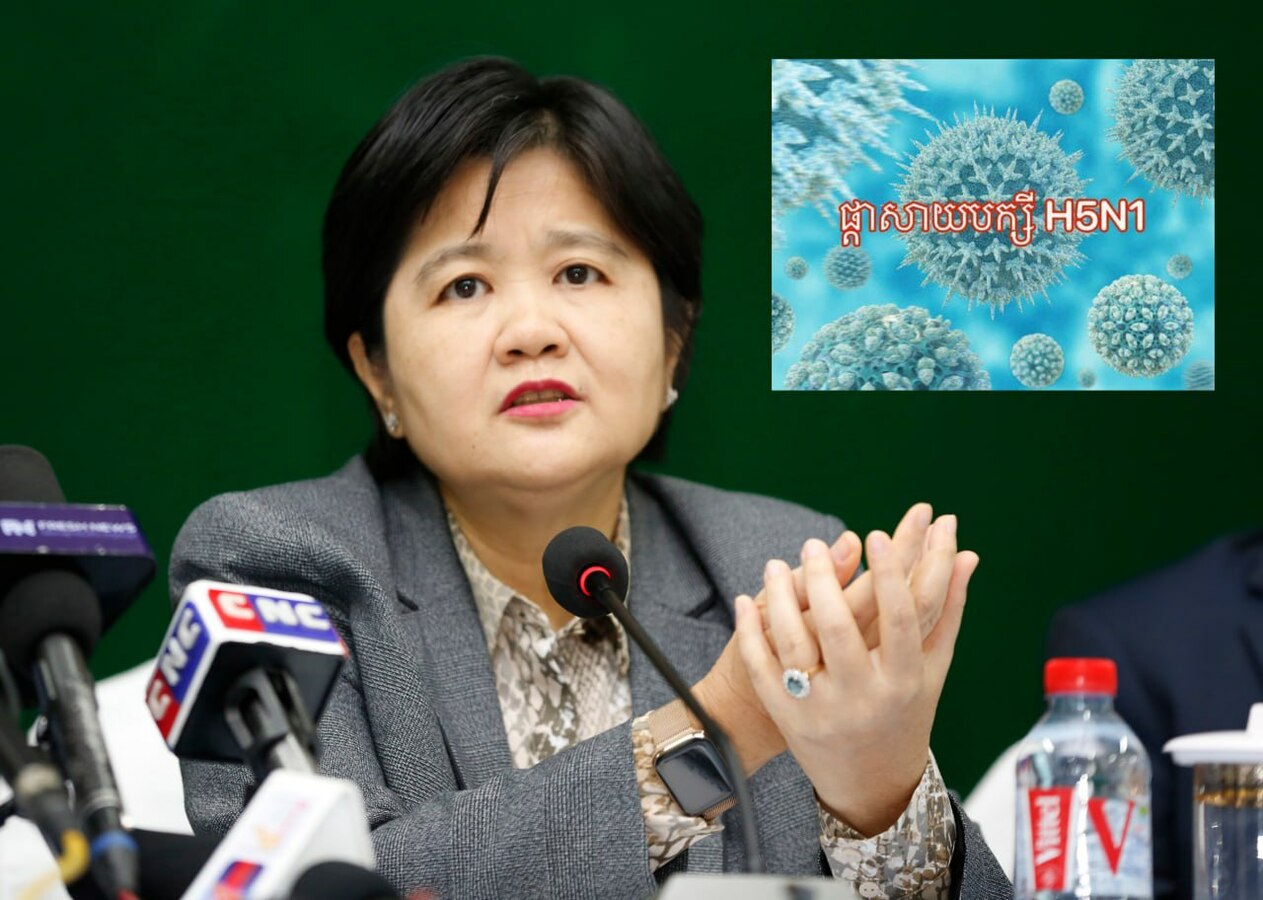
(Phnom Penh): Ms. Youk Sambath, Secretary of State of the Ministry of Health, told Fresh News on the afternoon of February 24, 2023 that the second case of bird flu was treated and hospitalized. Referral to Sithor Kandal District, Prey Veng Province, under the close supervision of a team of doctors.

A senior health ministry official added that the situation for bird flu patients was "normal" and that doctors had begun treating patients with the H5N1 virus with antiviral drugs. In the next five days, the team will take a sample to the laboratory to confirm the progression of the disease.

Ms. Yok Sambath stated, "I would like to inform you that the patient, who is the second case that we found, the provincial doctors brought the patient to Sithor Kandal Hospital because the patient did not have any symptoms. Notice, and under the close supervision and care of the medical team in Sithor Kandal district. "After a period of follow-up by a doctor, we will check for the virus again."

.....:tiphat:https://freshnewsasia-com.translate...tr_sl=km&_x_tr_tl=en&_x_tr_hl=en&_x_tr_pto=sc
 
If the father didn’t have any symptoms, does that mean the other 4 showing symptoms make a total of 5?
I need more info :mad:
 
Translation Google

Avian flu: renewed vigilance after human cases in Asia

By Le Figaro with AFP
Published just now

The situation related to avian flu " is worrying ", estimated Friday a person in charge of the WHO, the epidemiologist Sylvie Briand. A Cambodian, whose little girl died of avian flu , has also just tested positive. The announcement worries the World Health Organization (WHO) , which warns however that it is too early to evoke a transmission between humans.

This is the first time the agency has expressed this level of concern since the start of the current outbreak of avian flu, which is caused by the H5N1 virus and has led to the culling of tens of millions of birds worldwide. For more than one year. However, the WHO does not change its position as to the risk for humans. It remains " weak ", because no element has yet proven a greater danger of seeing a new pandemic emerge after the Covid .

Transmission between humans?

Recent news explains WHO's fears. In Cambodia, an eleven-year-old girl died a few days ago of avian flu. The child, from a remote village in the province of Prey Veng (Southeast), fell ill in mid-February with symptoms of fever, cough and dry throat. She died less than a week later at a children's hospital in the capital Phnom Penh, the kingdom's first bird flu-related death in nine years.

It is not this tragedy which, in itself, explains the concerns of the experts: the sporadic cases are well documented in humans - just under 900 for 20 years - and, if they are very deadly, they are usually caused by direct transmission from a bird. The novelty here is the announcement this Friday by the Cambodian authorities that the girl's father has also tested positive for H5N1. This opens up the hypothesis of transmission between humans and, therefore, potentially a risk of an epidemic. “ We inevitably wonder what happened: could the first case have transmitted the disease to other humans? “, admitted Sylvie Briand, responsible for the prevention of pandemics within the WHO.

Ongoing investigations

Still, “ for the moment, it is too early to know if it is a transmission between humans or if it is linked to common exposure to the same environment ”, she nuanced. One can, in fact, widely imagine that both the father and the daughter were contaminated through contact with animals. In any case, dead wild birds were found near a lake near the village where the affected family lives.

The situation therefore remains uncertain and the WHO is closely monitoring the investigations carried out in Cambodia to trace the origin of the cases. In the event that transmission is confirmed between humans, the agency promises that a series of measures would be ready to be immediately implemented to prevent a spread. It would first be a question of " treating (and) isolating " the declared cases, identifying the people who have been in contact with them and administering antivirals to them, detailed Sylvie Briand. “ And of course, we will consider a possible extension of contamination, by preparing neighboring regions and countries ” for the possibility of transmission between humans, she added.

Vigilance without alarmism

The Cambodian cases add to other evidence that has recently raised concerns that the virus could cause outbreaks beyond just birds. In Spain, a farm of 50,000 mink had to be slaughtered after multiple cases of avian flu. In Russia, seals have tested positive for the disease, after 2,500 of them were found dead near the Caspian Sea.

In both cases, particularly in Spain, it is suspected that the infection took place between mammals. But this hypothesis remains to be confirmed and many experts call for vigilance without alarmism. “ The risk remains very low for humans, but it is important to continue to monitor the circulation of the virus in birds and mammals, doing everything to reduce the number of infections”, virologist Jonathan Ball reacted to Friday. of the Science Media Center.

https://www.lefigaro.fr/flash-actu/...ilance-apres-les-cas-humains-en-asie-20230224
 
Dr. Yuk Sambath: The results of the H5N1 test confirmed by the Institut Pasteur and the Institute of Public Health, 29 tests that affect the dead are all negative (Video inside)
2023-02-26 08:20 am


(Phnom Penh): Dr. Yok Sambath, Permanent Secretary of the Ministry of Health, told Fresh News this morning, February 26, 2023, that the H5N1 test results confirmed by the Institut Pasteur and the Institute. Public health last night, a total of 29 tests that affected the dead were all negative, including the control check The patient's father, too.

"Despite the negative results of all the bird flu cases, all of our officials continue to work with local authorities, not just in Prey Veng, we educate all over the country," he said. To raise awareness and disseminate bird flu education spots on television, community and social media.

"In addition, our emergency response officers are continuing to monitor Prey Veng, as well as other provinces, to make sure that the disease does not spread to other provinces, so we have tested directly on stakeholders and the results Is negative, including the father who transmitted his daughter by counting the virus in the body, he is now negative, and others we are continuing to research and educate people to implement health measures. "Consistent." This is according to the additional confirmation of Dr. Yok Sambath.

Please be informed that the Ministry of Health has found a case of bird flu in Prey Veng province, born to an 11-year-old 6-month-old girl living in Roleang village, Romlech commune, Sithor Kandal district, Prey Veng province, who died on February 22, 2023

Following the discovery of the bird flu case, the Ministry of Health's emergency response team worked closely with veterinarians to investigate the source of the virus in both animals and humans, identify suspected cases and victims, and take action. Prevent transmission to others, both in the community and at festivals. In addition, the emergency response team has taken measures to educate the people.:tiphat:https://m-freshnewsasia-com.transla...km&_x_tr_tl=en&_x_tr_hl=en&_x_tr_pto=sc​​​​​​
 
I guess they'll be rescinding the warning.:tiphat:

February 26, 2023
[FONT="Droid Serif" !important][COLOR=#323232]Southern Vietnam put on bird flu alert after Cambodia outbreak[/COLOR][/FONT][/B][/SIZE]

The Pasteur Institute in Ho Chi Minh City has sounded a bird flu alert to southern localities after more than 10 human cases were reported in Cambodia, including two deaths.
[SIZE=18px][FONT=Droid Serif][COLOR=#323232]The warning came Friday as Cambodia's Prey Veng Province bordering southern Vietnam reported two human infections of H5N1, including one death, and several suspected cases.[/COLOR][/FONT][/SIZE]
[SIZE=18px][FONT=Droid Serif][COLOR=#323232]Cambodian authorities Thursday reported the death of an 11-year old girl and began testing 12 people who had come into contact with her. Her father has also tested positive.[/COLOR][/FONT][/SIZE]
[SIZE=18px][FONT=Droid Serif][COLOR=#323232]The World Health Organization said it was in close contact with the Cambodian authorities about the situation. It has expressed concern as the father's result raised fears of human-to-human transmission.[/COLOR][/FONT][/SIZE]
[SIZE=18px][FONT=Droid Serif][COLOR=#323232]Dr Nguyen Vu Thuong, deputy di//...:tiphat:[/COLOR][/FONT][/SIZE]https://www-khmertimeskh-com.translate.goog/501245455/southern-vietnam-put-on-bird-flu-alert-after-cambodia-outbreak/?_x_tr_sl=km&_x_tr_tl=en&_x_tr_hl=en&_x_tr_pto=sc


​​​​​​
[SIZE=13px][COLOR=#323232][FONT=open sans]February 26, 2023[/FONT][/COLOR][/SIZE]
[SIZE=16px][B][COLOR=#323232][URL="https://www-khmertimeskh-com.translate.goog/501245434/thailand-urges-monitoring-of-bird-flu-virus-after-death-of-cambodian-girl/?_x_tr_sl=km&_x_tr_tl=en&_x_tr_hl=en&_x_tr_pto=sc"]Thailand urges monitoring of bird flu virus after death of Cambodian girl[/URL][/COLOR]


An 11-year-old girl has died of bird flu in eastern Cambodia, prompting a call for increased disease monitoring by government health agencies.
In response to the incident, Dr. Anan Jongkaewwattana, a virologist at the National Center for Genetic Engineering and Biotechnology, urged the government, through a Facebook post, to increase its monitoring of the H5N1 virus, commonly known as bird flu...:tiphat:https://www-khmertimeskh-com.translate.goog/501245434/thailand-urges-monitoring-of-bird-flu-virus-after-death-of-cambodian-girl/?_x_tr_sl=km&_x_tr_tl=en&_x_tr_hl=en&_x_tr_pto=sc
 
CDC
H5N1 Update: Two Human H5N1 Cases in Cambodia


Español | Other Languages | Print
February 25, 2023Two human infections with avian influenza A H5N1 (H5N1 bird flu) have been reported by Cambodia. These cases are thought to be a result of exposure to infected birds/poultry. An investigation to try to confirm the source of the infections and detect any potential additional cases is ongoing. Based on preliminary genetic sequencing done in country, the Cambodian Ministry of Health has identified these viruses as being H5 clade 2.3.2.1c, which have circulated in Cambodia among birds/poultry for many years. These viruses have resulted in rare sporadic human infections in the past, but these two cases are the first such infections reported in Cambodia since 2014. The 2.3.2.1c viruses in Cambodia are different from H5N1 viruses currently circulating in wild birds and poultry in the United States and other countries, which are H5 clade 2.3.4.4b.

The cases in Cambodia occurred in a child, who died, and her father, who reported a fever and cough. No additional H5N1 cases have been identified at this time. To date, no indication of person-to-person spread has been found. There is no indication at this time that these two human cases of H5N1 in Cambodia pose a threat to the U.S. public.
What CDC is Doing


The Cambodian Ministry of Health and other global public health officials are leading the investigation into these two human cases with support from in-country CDC staff and a CDC rapid response team. Investigation efforts include contact tracing, monitoring and/or testing of close contacts including health care workers who cared for the two patients, and testing of animals in the village. CDC also is providing testing materials and reagents. CDC will continue to work with the Cambodian Ministry of Health and will provide updates as needed.
Risk and Prevention Measures in the U.S.


For the United States, the ongoing outbreaks of 2.3.4.4b clade H5N1 bird flu in wild birds and poultry with sporadic spillover events into some mammals remains mainly an agricultural issue. The current risk to the general public from bird flu viruses remains low; however, it is important to remember that risk depends on exposure, and people with more exposure might have a greater risk of infection. People who have job-related or recreational exposures to infected birds or sick or dead mammals are at higher risk of infection and should take appropriate prevention measures. CDC also has guidance for clinicians on monitoring, testing, and antiviral treatment for patients with bird flu virus infections.

People should avoid contact with poultry, and wild birds and mammals that appear ill or are dead and avoid contact with surfaces that appear to be contaminated with feces from wild birds and mammals, or domestic poultry. Observe wild birds and mammals only from a distance, if possible. Wild birds and mammals can be infected with bird flu viruses without always appearing sick. If you must handle wild birds and mammals or sick or dead poultry, minimize direct contact by wearing gloves and wash your hands with soap and water after touching them. If available, wear respiratory protection such as a medical facemask and eye protection such as goggles.

The U.S. poultry industry has strict health and safety standards, including regular monitoring for bird flu. It is safe to eat properly handled and cooked poultry and poultry products in the U.S. The proper handling and cooking of poultry and eggs to an internal temperature of 165˚F kills bacteria and viruses, including H5 viruses.

The U.S. Department of Interior and USDA APHIS are the lead federal agencies for H5N1 in birds, poultry, and animals in the U.S. They are respectively responsible for outbreak investigation and control of bird flu in wild birds and in domestic poultry. CDC is the lead federal agency on the human health side.

CDC has been actively working on the domestic H5N1 situation since the initial detection of H5N1 in U.S. wild birds and poultry in early 2022. This includes preparing for the possibility that H5N1 viruses circulating in birds in the United States and in other countries gain the ability to easily infect and spread between people. This includes ensuring that there are prevention and treatment tools, in addition to testing capacity.

CDC’s existing influenza surveillance systems are well-equipped to rapidly detect cases of avian influenza A virus infection, including H5N1 virus, in people. CDC’s influenza virus tests, which can detect both seasonal and novel influenza A viruses, are used in all 50 U.S states and globally. Additionally, there are CDC diagnostic tests that specifically detect the current H5 viruses, which are available in public health laboratories in all 50 U.S. states and international laboratories.

An H5 candidate vaccine virus (CVV) produced by CDC is identical or nearly identical to the hemagglutinin (HA) protein of recently detected clade 2.3.4.4b H5N1 viruses in birds and mammals (including a 2022 H5 outbreak in mink in Spain) and could be used to produce a vaccine for people, if needed, and which would provide good protection. This H5 CVV is available and has been shared with vaccine manufacturers. Because flu viruses are constantly changing, CDC continually analyses viruses to identify genetic changes that suggest these viruses might spread more easily to and between people, and cause serious illness in people, or for changes that suggest reduced susceptibility to antivirals, as well as changes in the virus that might mean a new vaccine virus should be developed.

CDC, along with state and local public health partners, also continues to actively monitor people who have been exposed to infected birds and poultry for 10 days after exposure. To date, public health departments have monitored more than 6,300 people in more than 50 jurisdictions who were exposed to birds/poultry infected with H5N1 virus. Of these, more than 160 people showed symptoms and subsequently were tested for novel influenza A and seasonal flu viruses along with other respiratory viruses. H5N1 virus genetic material has been only detected in a respiratory specimen from one person in Colorado.

Additional information on protective actions around birds, including what to do if you find a dead bird, is available. CDC also has guidance for specific groups of people with exposure to poultry, including poultry workers and people responding to poultry outbreaks. CDC will continue to provide further updates to the situation and update guidance as needed.

Human infections with avian influenza viruses are rare but can happen following exposure to infected birds/poultry. Even more rarely, some limited, non-sustained person-to-person spread has happened. More information about avian influenza is available on the CDC website.
:tiphat: https://www.cdc.gov/flu/avianflu/human-cases-cambodia.htm
 
Last edited by a moderator:

Jurre Y Siegers, PhD
@jurreysi
·
3h
The full genome sequence of the human #H5N1 case in #Cambodia has now been uploaded to
@GISAID
under isolate ID: EPI_ISL_17024123
Quote Tweet
RW9JXL26_mini.jpg

Erik Karlsson
@E_A_Karlsson
·
5h
Happy to announce that the full genome sequence of the Cambodian #H5N1 #avianflu case is now available on @GISAID. This has been an incredible effort by a number of people: (1/)
Show this thread
2
11
31


Erik Karlsson
@E_A_Karlsson
·
5h
Replying to
@E_A_Karlsson
We were able to go from original sample to full genome sequence in <24 hours using iMS-PCR from
@peter_thielen
from
@JHUAPL
on
@oxfordnanopore
#ONT technology
@nanopore
#nanopore using capacity developed before and during the #COVID19 pandemic (2/)

1
22
79

5,869
Erik Karlsson
@E_A_Karlsson
·
5h
This information is critical in our understanding of this case as Clade 2.3.2.1c #avianinfluenza viruses have been endemic in Southeast Asia for ~10 years and human-human transmission ability has not been established. (3/)
1
10
57

4,735
Erik Karlsson
@E_A_Karlsson
·
5h
This would only be possible through the massive work and collaboration between all people involved: especially MoH,
@NIPHCambodia
, C-CDC, MAFF/GDAHP/NAHPRI, MoE,
@CDCgov
,
@WHO
(
@WHOWPRO
),
@FAOCambodia
#ECTAD (
@FAOAsiaPacific
), and
@PasteurCambodia
(4/)
3
7
45

6,887
Erik Karlsson
@E_A_Karlsson
·
5h
A special thank you to many others who work with us on #AIV and human flu from #GISRS,
@CDCFlu

@TheCrick

@StJudeResearch

@HKU_Pasteur

@dukenus
and especially to
@jurreysi
and others in the Virology Unit at
@PasteurCambodia
who are not on Twitter (5/).
 
Translation Google

Health official: 29 samples involved in H5N1 bird flu, all negative test results

Sok Reaksa | Publication date 26 February 2023 | 18:09 ICT

According to the Permanent Secretary of the Ministry of Health, Ms. Youk Sambath, according to the confirmation from the Institut Pasteur and the Institute of Public Health on the night of February 26, the sample A total of 29 H5N1 tests were performed, all of which were negative for those who had been in contact with the deceased, including your father. Disease, too. "We tested directly on the people involved and the results were negative, including the father who transmitted the virus to his daughter by counting the virus," she said. At least now he is negative, and others we are continuing to research and educate people to implement health measures consistently.

She said that despite the negative results of all bird flu, all officials and relevant authorities continue to work carefully with local authorities. Across the country by educating people to be aware and disseminating bird flu education spots on community television and social media.

Prey Veng provincial information director Nhem Saukry said on February 26 that health officials and authorities were still monitoring the area. H5N1 bird flu on a regular basis to prepare for a medical response when an abnormality occurs. He added that a father infected with the H5N1 bird flu was being treated at a hospital and was recovering well. Careful care by a team of doctors.

He said that the H5N1 patient who was being treated at Sithor Kandal District Referral Hospital on the morning of February 26, 2023, he returned to normal health. And the case of H5N1 bird flu that occurred in Roleang village, Romchek commune, Sithor Kandal district, Prey Veng province, as of February 26, has not spread to the village The other.

Secretary of State for the Ministry of Health, Ms. O Vandin, said that in this regard, the working group of the Ministry of Health is working closely with the Prey Veng provincial authorities as well as the Department of Health. Prey Veng province, as well as veterinary officials to conduct a series of surveys and searches for affected people.

"First of all, we are looking for the person who touched the girl who lost her life and found the girl's father with the H5N1 virus," she said. "We must continue to look for those who are in contact with this 49-year-old man."

Ms. Ou Vandin said that health officials and relevant authorities also provide health education to people living at the scene to be careful and Report to the authorities in case of any suspicion.

She also reiterated her call on people to be careful, especially to avoid contact with poultry, to know how to protect themselves. Wear gloves to clean your hands, as frequent hand washing is still important to help protect yourself from infection.​

An 11-year-old girl died of H5N1 bird flu on February 22, 2023 in Roleang village, Romchek commune, Sithor Kandal district, Prey Veng province. .

https://www.postkhmer.com/national/2023-02-26-1809-247400.html
 
Avian Influenza A (H5N1) - Cambodia

26 February 2023

Situation at a glance


On 23 February 2023, the Cambodia International Health Regulations (IHR) National Focal Point (NFP) reported one confirmed case of human infection with avian influenza A (H5N1) virus to WHO. A second case, a family contact of the first case, was reported on 24 February 2023. An outbreak investigation is ongoing including determining the exposure of these two reported cases to the virus.


These are the first two cases of avian influenza A (H5N1) reported from Cambodia since 2014. In December 2003, Cambodia reported an outbreak of Highly Pathogenic Avian Influenza (HPAI) H5N1 for the first time affecting wild birds. Since then, and until 2014, human cases due to poultry-to-human transmission have been sporadically reported in Cambodia.

H5N1 infection in humans can cause severe disease, has a high mortality rate, and is notifiable under IHR (2005).

Description of the cases

On 23 February 2023, the IHR NFP of Cambodia notified WHO of a confirmed case of human infection with avian influenza A (H5N1) virus. The case was an 11-year-old girl from Prey Veng province, in the south of Cambodia. On 16 February 2023, the case developed symptoms and received treatment at a local hospital. On 21 February 2023, the case was admitted to the National Pediatric Hospital with severe pneumonia. A sample was collected the same day through the severe acute respiratory infection (SARI) sentinel system and tested positive for avian influenza A (H5N1) virus by the reverse transcriptase-polymerase chain reaction (RT-PCR) at the National Institute of Public Health on the same day. The sample was also sent to Institute Pasteur Cambodia, the National Influenza Center, which confirmed the finding. The patient died on 22 February 2023. Cambodia shared the genetic sequence data of the virus from the index case through the publicly accessible database GISAID. Virus sequencing shows the H5N1 virus belongs to clade 2.3.2.1c, and similar to the 2.3.2.1c clade viruses circulating in poultry in southeast Asia since 2014.

A total of twelve close contacts (eight asymptomatic close contacts and four symptomatic who met the suspected case definition) of the index case were identified and samples were collected and tested. Laboratory investigations confirmed the second case on 23 February 2023, the father of the index child. The father, who is asymptomatic, is in isolation at the referral hospital. The eleven other samples tested negative for A (H5N1) and SARS-CoV-2.

As of 25 February 2023, a total of 58 cases of human infection with avian influenza A (H5N1) virus have been reported in Cambodia since 2003, including 38 deaths (CFR 66%); nine cases and seven deaths between 2003 to 2009 and 47 cases and 30 deaths between 2010 to 2014 were reported.

Public health response


A joint animal-human health investigation is underway in the province of the index case to identify the source and mode of transmission. Additionally, a high-level government response is underway to contain any further spread of the virus.

WHO risk assessment


These are the first human infections reported in Cambodia since 2014. Human infection can cause severe disease and has a high mortality rate. Almost all Influenza A (H5N1) infection cases in people have been associated with close contact with infected live or dead birds, or Influenza A (H5N1)-contaminated environments. Based on evidence so far, the virus does not infect humans easily and spreads from person-to-person appears to be unusual. An outbreak investigation is ongoing including identifying the source of exposure of the two reported cases to the virus.

Since the virus continues to be detected in poultry populations, further human cases can be expected.

Whenever avian influenza viruses are circulating in poultry, there is a risk for sporadic infection or small clusters of human cases due to exposure to infected poultry or contaminated environments. From 2003 to 25 February 2023, a total of 873 human cases of infection with influenza A (H5N1) and 458 deaths have been reported globally from 21 countries.

Public health measures from both the human and animal health agencies have been implemented including monitoring of contacts of the laboratory-confirmed cases. While further characterization of the virus from these human cases is pending, available epidemiological and virological evidence suggest that current A(H5) viruses have not acquired the ability of sustained transmission among humans, thus the likelihood of sustained human-to-human spread is low. Based on available information so far, WHO assesses the risk to the general population posed by this virus to be low.

The risk assessment will be reviewed as needed as further epidemiological or virological information becomes available.

Vaccines against avian influenza A (H5N1) for human use have been developed for pandemic use but are not widely available. WHO, through its Global Influenza Surveillance and Response System (GISRS) monitors the evolution of the virus, conducts risk assessment, and recommends the development of additional new candidate vaccine viruses for pandemic preparedness purposes.

Close analysis of the epidemiological situation, further characterization of the most recent viruses (human and poultry) and serological investigations are critical to assess associated risk and to adjust risk management measures promptly.

WHO advice


Given reports of sporadic influenza A (H5N1) cases in humans, the widespread circulation in birds and the constantly evolving nature of influenza viruses, WHO continues to stress the importance of global surveillance to detect and monitor virological, epidemiological, and clinical changes associated with emerging or circulating influenza viruses that may affect human (or animal) health and timely virus sharing for risk assessment.

When avian influenza viruses are circulating in an area, people involved in high-risk tasks such as sampling sick birds, culling, and disposing of infected birds, eggs, litter and cleaning of contaminated premises should be provided with and trained in the proper use of appropriate personal protective equipment. All persons involved in these tasks should be registered and monitored closely by local health authorities for seven days following the last day of contact with infected poultry or their environments.

In the case of a confirmed or suspected human infection caused by a novel influenza virus with pandemic potential, including a variant virus, a thorough epidemiologic investigation (even while awaiting the confirmatory laboratory results) of history of exposure to animals, of travel, and contact tracing should be conducted. The epidemiological investigation should include early identification of unusual respiratory events that could signal person-to-person transmission of the novel virus and clinical samples collected from the time and place that the case occurred should be tested and sent to a WHO Collaboration Centre for further characterization.

Currently, there is no vaccine widely available to protect against avian influenza in humans. WHO recommends that all people involved in work with poultry or birds should have a seasonal influenza vaccination to reduce the potential risk of reassortment.

Travelers to countries with known outbreaks of animal influenza should avoid farms, contact with animals in live animal markets, entering areas where animals may be slaughtered, or contact with any surfaces that appear to be contaminated with animal faeces. General precautions include regular hand washing and good food safety and food hygiene practices. Should infected individuals from affected areas travel internationally, their infection may be detected in another country during travel or after arrival. If this were to occur, further community-level spread is considered unlikely as on the basis of available information, this virus has not acquired the ability to transmit easily among humans.

WHO advises against the application of any travel or trade restrictions based on the current information available on this event. WHO does not advise special traveler screening at points of entry or restrictions with regard to the current situation of influenza viruses at the human-animal interface.

All human infections caused by a novel influenza subtype are notifiable under the International Health Regulations (IHR) and State Parties to the IHR (2005) are required to immediately notify WHO of any laboratory-confirmed case of a recent human infection caused by an influenza A virus with the potential to cause a pandemic. Evidence of illness is not required for this report.

Further information
...
https://www.who.int/emergencies/disease-outbreak-news/item/2023-DON445

 
February 27, 2023
H5N1 Avian Influenza Patients and Examiners Confirm Negative Test Results

...Ly Sovann, spokesman for the Ministry of Health and head of the fight against infectious diseases, told Khmer Times yesterday: So far, the ministry has found 25 more people affected by the disease, but No confirmed cases of H5N1 bird flu, while father-son transmission Females have also been negatively diagnosed with H5N1 bird flu.

He said that although they had been confirmed to be H5N1-negative, the ministry continued to monitor the health of They are being cared for. Their health condition is now without significant respiratory symptoms...
.......Seng Panharith, director of the Prey Veng provincial health department, confirmed that a girl had died from a flu attack. H5N1 bird in Prey Veng province after his family used dead chickens for food ..."Officials came down to find that there were a lot of dead chickens in the area," he said..

:tiphat:https://www.khmertimeskh.com/501245932/អនកជងនងអនកប/
 
Health of Ms. O Vandin: The H5N1 bird flu situation is under control, but caution must be exercised
25 seconds ago on Monday, February 27, 2023 by KC Virak


Dr. O Vandin, Secretary of State and Spokesperson of the Ministry of Health, informed Cambodia Thmey on the afternoon of February 27, 2023 that the situation of H5N1 bird flu in Roleang village, Romlech commune, Sithor Kandal district, Prey Veng province, Cambodia is now under Management already.


Dr. O Vandin confirmed that only two cases of H5N1 have been detected as of February 26, 2023, confirmed by the laboratory. A girl (11 years and 6 months old) has died and her father has been diagnosed with the H5N1 virus at a district hospital.


Dr. O Vandin added: "After treating him, his extra specimen was tested and a negative result was received on the morning of February 27, 2023, but he was still in the hospital to finish. His treatment course follows the protocol of drug use. A total of 29 samples (16 directly affected and 13 flu-like patients) collected by the research team were tested in the laboratory with all negative results...:tiphat:https://www.kampucheathmey.com/health/470973
 
Health Senior Official: Situation Of H5N1 In Roleang Village Under Control

Release Date February 27, 2023

AKP Phnom Penh, February 27, 2023 -

The situation of avian influenza (H5N1) in Roleang village, Romleach commune, Sithor Kandal district, Prey Veng province, is now under control, affirmed on Monday HE Dr. Or Vandine, Secretary of State and Spokesperson of the Ministry of Health.

Only two cases of H5N1 have been detected and confirmed by the lab, she wrote, adding that a girl (11 years old and 6 months) passed away and her father confirmed positive for H5N1 is under the medical care and treatment in district hospital.

“After treating him, his additional sample was tested and got negative result as I received the information this morning of Feb. 27, 2023, but he is still in hospital to complete his treatment course according to the drug usage's protocol, ”she continued.

A total of 29 samples - 16 closed contacts and 13 illness like influenza (ILI) - collected by the investigation team have been tested by the laboratory with all negative results, she pointed out.

HE Dr. Or Vandine took the opportunity to re-appeal to the public to implement precaution measures by regularly washing hands with soap and water, not to touch or stay away from sick or dead poultry, eat well cooked foods ...

"Any suspect, kindly report to a local health authority or if any suspected signs and symptoms, please seek medical examination at a hospital nearby or call 115," she said.

The two confirmed human cases of H5N1 are the first cases reported in Cambodia since 2014, according to the World Health Organization (WHO) in Cambodia.

photo_2023-02-27_15-13-57.jpg

By Phen Rattanak

https://www.information.gov.kh/articles/98482
 
Girl who died of bird flu did not have widely-circulating variant

Scientist who sequenced the virus isolated from Cambodian girl says it is not the strain causing mass deaths in birds globally.
  • Smriti Mallapaty
  • The Cambodian girl who died of H5N1 this month did not have the worrisome 2.3.4.4b virus
An 11-year-old girl in southern Cambodia who died last week after being infected with avian influenza A (H5N1) had a different strain than the one causing mass deaths in wild and domestic birds globally, says the scientist who led the effort to sequence viral samples from the girl. Scientists were initially concerned that the girl might have been infected with the widely circulating virus that is now spreading in some mammal species and has infected a handful of people since 2020.

Erik Karlsson, a virologist at the Pasteur Institute of Cambodia in Phnom Penh, spoke to Nature about how he and his colleagues sequenced the full genome of the virus sample from the young girl in less than a day before sharing the data on the public repository GISAID. He says the sequenced virus belongs to a group that has been found in chickens and ducks in the region for at least a decade, although the girl is the first person to be detected with H5N1 in the country in nine years.

The Cambodian Ministry of Health has swabbed 12 of her close contacts, and only her 49-year-old father has tested positive. H5N1 infections typically occur in people who have been in close contact with poultry, and so far, there is no evidence that this strain has spread between people. Investigations into how the girl was exposed to the virus are underway.
When did you receive the virus sample from the young girl?


The sample was first tested at the National Institute of Public Health in Phnom Penh, and then transferred to us. We received the sample at about 5 p.m. on 22 February, and it was sequenced within 24 hours. This really exemplifies the way that the COVID-19 pandemic has increased our capacity to sequence and share data very quickly.

The viral load in the sample was high enough that we could amplify the whole influenza genome in one go. If the viral load had been low, which is often the case, we would have had to wait about three days to grow it in cells or eggs to get enough virus to sequence. Our focus has been to get the virus sequenced and into the public domain as fast as possible.


What have you learnt from the sequence?


The virus belongs to clade 2.3.2.1c, which is an endemic strain in the region. It is the same strain that resulted in a number of infections in people in 2013 and 2014 in Cambodia, and it has been detected intermittently in poultry ever since then, including in chickens in live bird markets.

Everyone was quite concerned that the girl might have had the strain 2.3.4.4b, which is circulating around the world and causing major problems in Europe, North America and South America right now. 2.3.4.4b is a new viral clade, and we don’t know a lot about it.

Researchers have been monitoring 2.3.2.1c for quite some time, and have information on it to make reasonable judgments about its transmissibility and pathogenicity. But anytime there is a zoonotic spillover, we must treat it with the utmost importance.

What is worrisome about zoonotic spillovers?
Viruses, especially RNA viruses such as influenza, are extremely promiscuous and will quickly adapt to a new hos....:tiphat:https://www.nature.com/articles/d41586-023-00585-1​​​​​​
 
MoH reports recovery of four bird flu patients

Khmer Times
Secretary of State Youk Sambath announced to local news that four people who were infected with bird flu had recovered and are no longer showing symptoms of the disease.:rolleyes:
Sambath said that the patients’ samples were taken by doctors yesterday morning to be tested at the Institut Pasteur du Cambodge (IPC) and National Institute of Public Health, If tests results come back negative today, they will be allowed to return home to quarantine for three days
.

The Secretary of State for the Ministry of Health added that in case of any changes, the medical team will review their samples.

Following the first case discovered on February 22, the Ministry of Health’s emergency response team found 12 people who had been in contact with the girl infected with the bird flu.:tiphat:https://www.khmertimeskh.com/501246734/moh-reports-recovery-of-four-bird-flu-patients/​​​​​​
 
Back
Top Bottom