• FluTrackers.com Inc. does not provide medical advice. Information on this web site is collected from various internet resources, and the FluTrackers board of directors makes no warranty to the safety, efficacy, correctness or completeness of the information posted on this site by any author or poster. The information collated here is for instructional and/or discussion purposes only and is NOT intended to diagnose or treat any disease, illness, or other medical condition. Every individual reader or poster should seek advice from their personal physician/healthcare practitioner before considering or using any interventions that are discussed on this website. By continuing to access this website you agree to consult your personal physican before using any interventions posted on this website, and you agree to hold harmless FluTrackers.com Inc., the board of directors, the members, and all authors and posters for any effects from use of any medication, supplement, vitamin or other substance, device, intervention, etc. mentioned in posts on this website, or other internet venues referenced in posts on this website.
  • We are not asking for any donations. Do not donate to any entity who says they are raising funds for us.

China - Original COVID-19 coronavirus news thread: weeks 1 - 4 (December 30, 2019 - January 25, 2020)

Source: http://www.chinanews.com/sh/2020/01-23/9067714.shtml

Google translation:
Free refund for Wuhan trips: Heli epidemic prevention is a social consensus
January 23, 2020 03:59 Source: Beijing News

Free refunds for Wuhan trips: Heli epidemic prevention is a social consensus

■ Observer

When there is a special policy in a special period, in the face of the epidemic, it is necessary for all sectors of society to take up social responsibilities, work together to fight against the virus.

Near the Spring Festival, a new pneumonia epidemic has arrived unexpectedly. In order to deal with the virus and avoid going to areas with a large flow of people, try not to go to Wuhan, where the epidemic is more serious, without emergency affairs, and it has become the consensus of all sectors of society to fight against the epidemic. And for some travelers who have already booked tickets to Wuhan, should they be refunded? It is estimated that in the past two days, many people encountered this little trouble. Wuhan is one of the largest transportation hubs in China. Passenger traffic during the Spring Festival can be imagined. However, this little worry has been resolved.

On January 21, the Civil Aviation Administration issued a notice requesting all transportation airlines to request refunds for passengers who have purchased tickets for flights to Wuhan for free; free of charge for refunds of train tickets to and from Wuhan and high-speed rail tickets . On the same day, Ctrip, Feizhu, Qunar.com, Meituan.com and other online travel platforms also said that during the Spring Festival, hotels, tickets, and car orders in Wuhan will be canceled without loss.

当 When there are special practices in special times, this not only reflects the commercial flexibility of the management department and the enterprise platform, but also reflects the emergency response capabilities of the business. Companies that have a sense of market and business intelligence will do something.

The spread of the epidemic is irrespective of the region and the population. The fight against the epidemic requires the cooperation of the entire society. This also requires that all walks of life, whether individuals or institutions, enterprises, platforms, contribute their own strength. Do what you can in your own professional and professional fields.

Moreover, we analyze the phenomenon of refunds in this special situation, and it is easy to sort out a logical line: Many people's refunds are not due to personal reasons, but the special circumstances have changed, so that individuals have to make refunds accordingly. Strain. It would be unreasonable for individuals to bear the cost caused by this objective factor.

许多 For many travelers with insufficient economic conditions or conservative consumption habits, the refund fee of tens of dollars may be the last weight that prompted him to make a "gritted tooth" decision. And if there is no worry about the refund fee, it looks like a straw is placed on the balance of choice. Without loss, it simply gives up travel.

To some extent, the requirements of the Civil Aviation Administration are also a measure of benefiting the people; the choice of enterprises is a kind of responsible performance, which is also part of social responsibility. Lost a portion of the "rebate fee" income, but won consumer praise and social praise.

From the perspective of the managers, through this move, they are also expressing a position: to comfort and guide people to try not to go to Wuhan and try not to go out in Wuhan.

Not only long-distance travel service companies, but also e-commerce platforms have announced that all merchants selling masks on its platform will not allow price increases and provide special official subsidies for mask products; online car companies also start emergency plans In addition to similar cancellation-free measures, there have also been measures to distribute masks and disinfectant solutions to Wuhan's ride-hailing drivers.

All these reflect the market rationality of the enterprise. If you do it, you will get extra points. If you do n’t do it, you may get spit out. Why not? And other industries such as shopping malls, restaurants, cinemas and other crowds can also have corresponding "supernormal" measures to cooperate with epidemic prevention and control.

In front of the epidemic, social responsibility is the best advertising marketing. This is an exam and a test.
 
Academician Li Lanjuan: The new type of coronavirus is afraid of alcohol intolerance to high temperature. At present, the mortality rate is lower than that of H7N9.

Red Star News
Follow on APP
2020-01-22 18:35 Source: Surging News ? Surging ? Media
...

Reporter: For patients with pneumonia infected by the new coronavirus, is there a specific medicine for treatment?
Academician Li Lanjuan: At present, there are no specific antiviral drugs. The treatment is mainly symptomatic treatment, giving patients a certain amount of nutrition, a certain rest, and symptomatic treatment, including the patient's water and electrolyte testing, because these patients are prone to hypoxemia after illness It is pneumonia, so to supplement it with oxygen and so on, the National Health and Medical Commission has already issued a guideline for clinical treatment.

Reporter: How to treat severe patients?
Academician Li Lanjuan: For critically ill patients, we have a good experience in H7N9, called the fourth antibody and second balance. The first is antiviral therapy, the second is antishock therapy, the third is antihypoxemia and multiple organ failure, and the fourth is anti-secondary infection. There are two more balances. The first balance is to maintain the balance of water, electrolyte, acid and base. The second is the microecological balance. After virus infection, there is often a microecological imbalance that leads to secondary infection of bacteria. Therefore, the microecological balance can reduce secondary infections. Therefore, this set of schemes and methods is very effective in the treatment of severe patients with new coronavirus infection.

Reporter: Compared with the H7N9 avian influenza virus of the year, which is newer coronavirus, which one is more serious after it has developed into a severe disease? What's the difference?
Academician Li Lanjuan: The severe incidence of H7N9 is higher than that of pneumonia infected by the new coronavirus. The early incidence of severe H7N9 is between 40% and 50%, which is very high. Of course, after we had a rescue, we also reduced it to a dozen percent, which dropped sharply. There was still such a high mortality rate.
At this outbreak, the number of people who have become ill is already quite large, but the number of deaths is still relatively small. Of course, it is estimated that the number of critically ill patients will increase in the later stage. We need to step up efforts to improve treatment. Look, its mortality rate is lower than H7N9.

Reporter: How long is the incubation period of the new coronavirus? After a person is infected, what other symptoms do they have besides fever? How to judge if it belongs to a new type of coronavirus?
Academician Li Lanjuan: When coronavirus is in SARS, the incubation period is up to 14 days. This time, according to the current patient statistics, it is estimated to be within 10 days.
However, this new type of coronavirus infection has great differences among different people after infection. Some patients have a relatively long incubation period after infection, and they develop onset in two or three days. The longest is 10 days. We estimate the incubation period to be slightly longer and set it to 14 days.

The reporter asked: Is it contagious during the incubation period?
Academician Li Lanjuan: The incubation period may now also be contagious, so this point needs to be taken very seriously, because now I also understand the situation of some patients, the patients themselves do not have fever, and those who have contacted him in the early stage have fever. People may also have infections and fevers later.
...
Reporter: Is oseltamivir useful for this new coronavirus?
Academician Li Lanjuan: Oseltamivir is effective against general influenza viruses, but it is estimated that this coronavirus will not show any effect.

Reporter: Previously, the transmission characteristics from person to person were suggested. Can you give a reminder to the citizens' daily prevention?
Academician Li Lanjuan: Because this is a new disease, we have not done in-depth research, but according to theoretical experience, this is an infectious disease of the respiratory tract. This is relatively clear. Therefore, the transmission through the respiratory tract is relatively certain. It is mainly caused by inflammation in the lungs. After pneumonia, the virus must first reproduce in the lungs and spread through the respiratory tract and saliva. Of course, we are still researching the spread of feces and blood. This work is still being studied.
...
Reporter: Can you tell us about the course of development of patients infected with the new coronavirus? Are most patients mild or severe?
Academician Li Lanjuan: Because this is a new infectious disease, we are still doing clinical observation. According to what we know now, different people have different conditions, and the course of development is also different. In general, there is a fever and mild dry cough after the infection, not a lot of sputum, and then a shadow in the lungs.
Generally, the lung shadow of most patients will be treated after treatment. The nucleic acid test is negative for 2 times, and they can be discharged. A few people will be hypoxic, hypoxemia, and even respiratory failure to be rescued, but this is a minority. . There are also very few patients who are more ill and have respiratory failure within two or three days, becoming severe.
So overall, most patients are mild and moderate. What is the proportion of severity? We have not done detailed statistics on this matter, and we need a certain number of patients to calculate the results.

Reporter: Who are the susceptible people for this new type of coronavirus?
Academician Li Lanjuan: All people are susceptible. The elderly, those with low immune function, and those with chronic diseases are more susceptible to infection or become more severe. Therefore, those with poor immune function, the elderly, etc. should pay more attention to protection.
...
Reporter: H7N9 was not warmed until May, but the epidemic situation slowly came down. What do you think of the new coronavirus infection, what is its future development trend?
Academician Li Lanjuan: When the weather is hot in May and June, the virus is likely to decrease, and virus infections are likely to occur around the Spring Festival and winter and spring. This is also an objective law in nature.
...
Reporter: Will the virus mutate in the later period?
Academician Li Lanjuan: Of course it will mutate. The virus is constantly mutating. This newly infected virus is also the result of the mutation of the virus. It will change again in the future, and the change will be eternal.

Reporter: Will the virus mutate more severely?
Academician Li Lanjuan: It may become more powerful, or it may become lighter. Both of these may have both. We need to continue to observe the changes of the virus.
...
Reporter: Yesterday, I saw that a doctor from an expert group was also infected. Are the front-line medical personnel at high risk of infection?
Academician Li Lanjuan: The new type of coronavirus is a human-to-human feature, and medical personnel are the first to be infected.
...
Reporter: Even for patients who have developed into severe cases, our previous experience with the four-antibody and second-balance treatment of H7N9 can still treat them well, right?
Academician Li Lanjuan: Our four-antibody-two-balance treatment plan is also useful for the treatment of patients with severe pneumonia infected by the new coronavirus.
...

https://h5.newaircloud.com/detailArticle/10277598_32646_hzxw.html?mobile=1&source=1
 
Source: https://news.sina.com.cn/c/2020-01-2...k5898982.shtml

Google translation:

Wang Guang, a member of the national expert team, has improved his illness and analyzed the cause of his infection

Ebara Title: Wang Guang, a member of the National Expert Team, is getting better, analyzing the cause of his infection

(Observer.net) At 11 pm on January 22, Wang Guangfa, a member of the National Expert Group who had previously been suspected of new coronavirus infection and pneumonia, was treated in isolation, and director of the Department of Respiratory Medicine, Peking University First Hospital, posted a post on Weibo saying his condition It has improved, and after a day of treatment, the fever has subsided.

In the article, Wang Guangfa first explained this controversial "preventable and controllable" argument. He said the epidemic is preventable and controllable and will eventually be controlled. "It's just that society has to pay more for this, including affection, affection, health and economics. The key is that we have to tailor policies to local conditions."

Then he also analyzed the cause of his onset, saying that the earliest symptom that he appeared after returning to Beijing was conjunctivitis of the left lower eyelid. Therefore, it was suspected that the virus entered the conjunctiva first and then reached the whole body. "If this speculation holds, my protective blind spot is not wearing protective glasses."

It is understood that Wang Guangfa is a member of the expert group on pneumonitis associated with a new type of coronavirus, and has traveled to Wuhan with the expert group of the National Health Commission.

Wang Guangfa entered the Department of Medicine of Beijing Medical University in 1981. He went to Japan for further studies in 1995. In 1998, he served as Deputy Director of Respiratory Medicine at Peking University First Hospital. He obtained a master's and doctoral degree from Peking University. During the SARS epidemic in 2003, Wang Guangfa has been fighting on the front line of SARS since the beginning of March of that year, and served as the chief examiner and expert team leader of SARS at Peking University First Hospital. He is fully responsible for SARS treatment and SARS in the hospital. Preparation of ward.

The following is the full text of Wang Guangfa's Weibo:

I finally got better, thank you for your concern, support and help to me. After 1 day of treatment, I finally have no fever today and am very happy. I also have the spirit to browse WeChat, SMS and online messages. It's really moving. So much prayer, blessing, and encouragement accounted for most of the messages left by acquaintances and acquaintances. I really want to thank everyone for their kindness and care. Of course, some people have also questioned, including some Hong Kong media, "Don't you say that it is preventable and controllable? You got it, can you control it?" You are a national expert who is infected. Is there a defect in protection? ". Today, my condition has improved. I have also considered these issues from a technical perspective. I want to communicate with netizens below.

1. Is the epidemic really preventable and controllable?

The answer is yes, and the epidemic will eventually be controlled. However, the measures to achieve epidemic control are different at different stages of the epidemic. Today's epidemic control is different in Wuhan and other regions. In the early stage of the epidemic, the treatment measures for the South China seafood market were rapid and effective, and the pathogen was identified initially. This is undoubtedly a huge improvement over the 2003 SARS epidemic. With the identification of the etiology, nucleic acid diagnostic methods were developed quickly. Although the sensitivity and specificity of the test had been debated at the expert level, this undoubtedly provided a strong guarantee for epidemic control. Regarding the infectivity of the disease and the susceptibility of the population, we did not have data to confirm it at the time, so we cannot forget whether the judgment is strong or weak. Before I returned to Beijing, I went to various hospitals to visit the clinic and realized that the epidemic situation had indeed deteriorated significantly. But it is still preventable and controllable, but society has to pay more for this, including affection, affection, health and economy. The key is that we have to act according to local conditions.

2, how did I get infected?

This is a question I have been asking myself since I got sick. I sorted out my trajectory and details in Wuhan. Most likely it is two nodes. The first was to go to Jinyintan Hospital in Wuhan the next day to see ICU, just in time for intubation. I have a close contact. However, they are fully armed and wearing splash screens, and the possibility of infection is extremely small. Another node is the fever clinics and temporary isolation wards that went to several hospitals 2 days before returning to Beijing. Some hospitals have crowded fever clinics, and there may be patients with new coronavirus pneumonia. Of course, we are also highly alert and are all wearing N95 masks to enter. In retrospect, infections are most likely to be diagnosed during fever.

I suddenly realized that we were not equipped with protective glasses.

An important clue is that the earliest symptom that appeared after I returned to Beijing was conjunctivitis of the left lower eyelid, which was very mild. Kata symptoms and fever developed after 2-3 hours. Based on the cases I have seen, no conjunctivitis has first appeared. At that time, I also used this as a basis to exclude myself from neocoronavirus pneumonia and to think more about influenza. However, the anti-flu treatment was ineffective, the fever was intermittent, and finally a new coronavirus nucleic acid test was performed, which showed positive.

This shows that my conjunctivitis is probably also caused by new coronavirus, and it is the first occurrence of local conjunctiva.

Therefore, it is highly suspected that the virus enters the conjunctiva first, and then reaches the whole body. If this speculation holds, my protective blind spot is not wearing protective glasses.
 
Last edited by a moderator:
Source: http://www.bjnews.com.cn/news/2020/01/23/678247.html


2020-01-23 08:19:16

A total of 571 cases of pneumonia diagnosed with new coronavirus infection have been reported in China

According to CCTV News client news, as of 24:00 on January 22, the National Health Commission has received a total of 571 confirmed cases of pneumonia of new coronavirus infection in 25 provinces (autonomous regions, municipalities) in China, including 95 severe cases and 17 deaths. Examples (all from Hubei Province). A total of 393 suspected cases were reported in 13 provinces (autonomous regions and municipalities).


At 00:00 on the 22nd, 24 provinces (autonomous regions and municipalities) reported 131 new confirmed cases and 8 new deaths, of which 5 were males and 3 were females, with the exception of 1 except 53 years old, and the rest were 65 Elderly people over 5 years old and 5 cases over 80 years old have chronic and basic diseases such as postoperative cancer, liver damage, hypertension, coronary heart disease, diabetes, and Parkinson. 13 provinces (autonomous regions and municipalities) reported 257 new suspected cases. A total of 25 provinces (autonomous regions and municipalities) reported epidemics nationwide, and 4 provinces including Hebei, Liaoning, Jiangsu and Fujian were added.


Confirmed cases reported overseas: 1 case in Hong Kong, China, 1 case in Macau, 1 case in Taiwan, China; 1 case in the United States, 1 case in Japan, 3 cases in Thailand, and 1 case in South Korea.


At present, 5897 close contacts have been traced, 969 people have been released from medical observation, and 4928 people are still receiving medical observation.


Edit Yang Li

Source: CCTV News Client

Original title: National Health Commission: 571 cases of pneumonia diagnosed with new coronavirus infection have been reported in China
 
Government report:


Epidemic situation of new coronavirus infection on January 23, 2020

Published: 2020-01-23Source : Health Emergency Office

As of 24:00 on January 22, our committee had received a total of 571 confirmed cases of pneumonia of new coronavirus infection in 25 provinces (autonomous regions, municipalities) in China, including 95 severe cases and 17 deaths (all from Hubei Province).

A total of 393 suspected cases were reported in 13 provinces (autonomous regions and municipalities).
  At 00:00 on the 22nd, 24 provinces (autonomous regions and municipalities) reported 131 new confirmed cases and 8 new deaths, of which 5 were males and 3 were females, with the exception of 1 except 53 years old, and the rest were 65 Elderly people over 5 years old and 5 cases over 80 years old have chronic and basic diseases such as postoperative cancer, liver damage, hypertension, coronary heart disease, diabetes, and Parkinson. 13 provinces (autonomous regions and municipalities) reported 257 new suspected cases. A total of 25 provinces (autonomous regions and municipalities) reported epidemics nationwide, and 4 provinces including Hebei, Liaoning, Jiangsu and Fujian were added.
  Confirmed cases reported overseas: 1 case in Hong Kong, China, 1 case in Macau, 1 case in Taiwan, China; 1 case in the United States, 1 case in Japan, 3 cases in Thailand, and 1 case in South Korea.
  At present, 5897 close contacts have been traced, 969 people have been released from medical observation, and 4928 people are still receiving medical observation.


Introduction of 17 deaths


  1. Zeng XX, male, 61 years old, has a history of liver cirrhosis and myxoma. Fever started on December 20, 2019, with cough and weakness. She was hospitalized in the Department of Respiratory Medicine of Wuhan Puren Hospital on the 27th, transferred to the ICU on the 28th, was endowed with mechanical intubation on the 30th, and transferred to the ICU of Jinyintan Hospital on the 31st; Shock coma when entering. On January 1, ECMO support, anti-infection, anti-shock, and corrective acid symptomatic supportive treatment. At 20:47 on January 9, the heart rate of the patient suddenly became zero, and the ECMO blood flow rate decreased rapidly to 0.2 liters / minute. Rescue immediately. By 23:13, the heart rate was still 0, and clinical death was announced.
  2. Xiong XX, male, 69 years old, was admitted to Wuhan Red Cross Hospital for 2 days due to fever and cough for 4 days, and exacerbated with dyspnea. On January 3, 2020, a tracheal intubation was connected to a ventilator to assist breathing. Myocardium The enzyme profile persists. Transferred to Jinyintan Hospital on January 4. Admission diagnosis was acute respiratory distress syndrome, respiratory failure, severe pneumonia, unconsciousness, pleural effusion, and aortic atherosclerosis. A CT scan of the patient's chest revealed large ground-glass opacities in both lungs. ECG: ST segment changes. After admission, he was treated with intensive care, ventilator-assisted breathing, prone ventilation, and symptomatic and supportive treatments such as CRRT, anti-infection, and liver protection. His condition did not improve. Septic shock, microcirculation failure, coagulation dysfunction, and internal environment disorders Sexual aggravation. At 00:15 on January 15, the patient's heart rate dropped to 0, and norepinephrine, epinephrine, pituitary, and dopamine were continuously pumped into the anti-shock therapy. The patient failed to recover spontaneous breathing and heartbeat until 0:45. The electrocardiogram at the bedside showed total cardiac arrest, and clinical death was declared.
  3. Wang XX, male, 89 years old, has a history of hypertension, cerebral infarction, and cerebral softening. Due to urinary incontinence, she was referred to the Department of Urology, Tongji Hospital on January 5, 2020, and was transferred to the emergency department on January 8 due to drowsiness and unconsciousness. The examination revealed lung infection (viral pneumonia) and acute respiratory failure. On January 8th, a physical examination revealed that the patient had 77mmHg and showed hypoxia. Lung CT showed double lung patch shadow, bilateral pleural effusion, and pleural adhesion. Blood routine showed a progressive increase in white blood cell count and a low lymphocyte count. On January 9th, he was transferred to the outpatient clinic for emergency treatment and was given symptomatic supportive treatment. On January 13, the ventilator was assisted with positive pressure ventilation. Drowsiness occurred on January 14th. With ventilator-assisted ventilation, blood oxygen saturation fluctuated between 50% and 85%. Entered the Infectious Diseases Ward on January 15. Before transfer at 10:30 on January 18, Bp140 / 78mmHg, SPO2 85% under non-invasive ventilator-assisted ventilation. During the transfer, the patient suffered a respiratory arrest, continued rescue for 2 hours, and the treatment was invalid. The clinical death was announced at 13:37 on January 18, 2020.
  4. Patient Chen X, male, 89 years old, had previous hypertension, diabetes, coronary heart disease, frequent premature ventricular contractions, and coronary stent implantation. The patient developed symptoms on January 13, 2020. There was no obvious inducement of asthma 4 hours before the consultation, and he felt dyspnea and no fever. On January 18, she went to the emergency department of Wuhan Union Medical College for treatment due to severe breathing difficulties. The patient was old and had a positive pathogenic examination of Chlamydia pneumoniae, no A and B flow, a new coronavirus positive, and CT of the lung: typical changes in viral pneumonia. At 23:39 on January 19, 2020, his condition deteriorated, and the rescue died.
  V. Li XX, male, 66 years old, previously had COPD, hypertension, type 2 diabetes, chronic renal insufficiency, ascending aortic artificial aorta replacement in 2007, abdominal aortic stent placement in 2017, Cholecystectomy, multiple organ damage. The patient was admitted to Wuhan Iron and Steel General Hospital on January 16, 2020 for 6 days due to intermittent cough, headache, fatigue and fever. Chest CT on January 16 showed bilateral pneumonia, fibrosis of the left upper lung, and nodules of the left upper lung. Dyspnea occurred on January 17 and blood gas analysis revealed type 1 respiratory failure. Symptoms such as oxygen inhalation, anti-infection, anti-virus, and sputum treatment were given. At 10:10 on January 20, the patient suddenly reduced the finger pulse oxygen to 40%. He had been given non-invasive ventilator-assisted ventilation. The patient was again informed of severe respiratory failure, and asked again whether to undergo tracheal intubation. . At 10:35 on January 20, the condition deteriorated and the rescue died.
  6. Wang XX, male, 75 years old, was admitted to Wuhan Fifth Hospital at 17:19 on January 11, 2020 due to fever with cough, sputum for 5 days, and vomiting for 2 days. Previous history of hypertension and hip arthroplasty. The admission temperature was 38.2 ? C, accompanied by fatigue, anorexia, cough, nasal congestion, dizziness, and headache. There was no obvious chills, chills, and sore muscles and joints. A CT of the chest revealed an interstitial lung infection.
  After being admitted to the hospital, she was in critical condition and was given oxygen, anti-infection, anti-virus, phlegm, fever, and fluid rehydration as appropriate. The patient's condition worsened progressively, and she was transferred to the ICU on January 15 for mechanical ventilation. At 11:30 on January 20, the family members expressed their understanding of the condition and are now required to stop the ventilator and pull out the tracheal tube for observation. The tracheal intubation ventilator assisted breathing and CPR rescue are no longer required. He was pronounced dead at 11:25 on January 20.
  7. Yin XX, female, 48 years old, had previous diabetes and cerebral infarction. On December 10, 2019, there was no cause of fever (38 ? C), sore body and fatigue, and cough and sputum gradually appeared. Anti-infective treatment in primary hospitals did not improve for 2 weeks. On December 27th, chest tightness and shortness of breath occurred. After the activity, it was obvious. Tongji Hospital was given non-invasive ventilation and conventional anti-infective treatment. The condition still worsened. On December 31st, she was transferred to Jinyintan Hospital and given symptomatic treatments such as high-flow oxygen inhalation of nasal catheter. Hypoxia condition has not improved significantly, and the condition is still worsening. On January 14, 2020, chest CT showed diffuse mechanized changes in both lungs, some with traction bronchiectasis, especially in the lower lungs. At 11:50 on January 20th, tracheal intubation was performed, and analgesia and sedation were given. The terminal oxygen saturation and blood pressure continued to decline, and then the heart rate decreased. Eventually, the rescue failed.
  8. Liu XX, male, 82 years old, was admitted to Wuhan Fifth Hospital at 15:41 on January 14, 2020 due to chills and soreness in the whole body for 5 days. She was given ECG monitoring, non-invasive ventilator assisted breathing, anti-infection, anti-virus and symptomatic treatment. On January 19, he had unclear speech, and his left limb was weak. Considering a stroke, the disease progressed, and respiratory failure continued to worsen. At 00:30 on January 21, the patient's sudden heart rate decreased progressively, the heart sounds were not heard, the aortic pulse disappeared, and he was rescued immediately. The family members still refused mechanical ventilation of the intubation and continued rescue. The heart rate remained unrecovered. The clinic was announced at 1:18 death.                                                              
  Nine, Luo XX, male, 66 years old, no inducement cough on December 22, 2019, mainly dry cough, no fever; December 31, chest tightness, shortness of breath, obvious after the activity, went to the central hospital for treatment; 2020 He was transferred to Jinyintan Hospital on May 2nd, and his imaging findings showed diffuse lung lesions with "white lung-like" changes. After admission, symptomatic treatment such as nasal high-flow oxygen was given. Refractory hypoxemia is difficult to correct. At 10:00 on January 12, the tracheal intubation ventilator assisted breathing, sedation, body temperature of 36.7 ? C, respiratory distress, and continued active antibacterial treatment. On the day, the oxygenation of the patient did not improve significantly. The inspiratory oxygen concentration of the ventilator had been reduced to about 50%, and the partial pressure of arterial oxygen was 80mmHg. The patient had a long course of disease, extremely poor immune function, and there was a risk of septic shock. At 9:50 on January 21, the rescue failed.
  X. Zhang XX, male, 81 years old, was admitted to Wuhan First Hospital on January 18, 2020 due to fever for 3 days. Admission to the chest CT showed infectious lesions in both lungs. Considering viral pneumonia, the patient's renal function and pulmonary infection continued to worsen. On the morning of January 22, 2020, consciousness gradually appeared, and the respiratory heart rate and blood pressure continued to decline. He refused rescue measures such as chest compressions and tracheotomy. The patient stopped breathing at 10:56 on January 22 and declared clinical death.
  Eleven, Zhang XX, female, 82 years old, has a history of Parkinson's disease for 5 years, orally takes Medopa. Onset on January 3, 2020, he was diagnosed with "viral pneumonia and respiratory failure" on January 6 at the Integrated Traditional Chinese and Western Medicine Hospital of Hubei Province due to "fever, cough, chest tightness and fatigue". He was transferred to Wuhan Jinyintan Hospital on January 20, and his condition was progressively worsened. On January 22, he was treated with tracheal intubation ventilator to support treatment, and his respiratory failure did not improve. On January 22, 2020, he was declared invalid by rescue at 18:00. .
  Twelve, week XX, male, 65 years old, January 11, 2020 due to shortness of breath accompanied by fatigue for 3 days, increased 3 days into Wuhan First Hospital. At the time of admission, the patient had difficulty breathing, chest tightness, shortness of breath, and acute illness. He was diagnosed with severe pneumonia, acute respiratory failure, and liver damage. At 19:00 on January 21, a decrease in heart rate and blood pressure, disappearance of light reflection by both pupils, and immediate treatment of tracheal intubation, artificial chest compressions, cardiac strengthening and other treatments. At 19:54, the autonomic rhythm was not restored, and clinical death was declared.
  Thirteen, Hu XX, female, 80 years old, became ill on January 11, 2020. He was admitted to China Resources Wuhan Iron & Steel General Hospital on January 18, 2020 due to fever, cough, wheezing, and dyspnea. He was transferred to Wuhan Jinyintan Hospital on January 20, 2020 because of a new coronavirus positive. He has a history of hypertension for more than 20 years, a history of diabetes for more than 20 years, and a history of Parkinson's disease. After admission, she was in critical condition, intensive care, anti-infection, ventilator-assisted breathing, and symptomatic supportive treatment. However, the patient's condition did not improve, persistent hypoxemia, unconsciousness, mechanical ventilator-assisted breathing, invalidated after rescue at 16:00 on January 22, 2020, and clinical death was declared.
  14. Lei XX, male, 53 years old. He had been treated in a community hospital for fever in early January, but it was not effective after a few days of treatment, and fever, cough, and chest tightness worsened. On January 13, 2020, he went to the emergency department of Tongji Hospital. CT showed bilateral lung infection and respiratory failure. He was critically ill on January 18 and was treated with non-invasive ventilator support. On January 20, 2020, he was transferred to Wuhan Jinyintan Hospital for isolation and treatment. . He was admitted to hospital with anti-infection and anti-shock, ventilator-assisted respiratory support treatment, and the patient's condition did not improve. Respiratory failure continued to worsen. At 4 o'clock on January 21, the rescue was invalid, and clinical death was declared.
  XV. Wang XX, male, 86 years old, was admitted to Xinhua Hospital on January 9, 2020 due to fatigue for one week. No fever, diabetic hypertension, and colon cancer 4 years after surgery. After admission, CT of the lungs showed multiple ground glass shadows in both lungs, obvious hypoxia, difficulty in eating, rapid breathing, and lethargy. The family refused to be intubated and only inhaled oxygen through the nose. At 17:50 on January 21, 2020, the heartbeat stopped breathing and declared clinical death.
  16. Yuan XX, female, 70 years old. On January 13, 2020, the city's No. 1 Hospital was owing to the continued high fever. At the time of admission, he had blurred consciousness, acute illness, weakened heart sounds, and thick breathing sounds in both lungs. Imaging results showed severe pulmonary infection. Consider severe pneumonia with severe respiratory failure. That is, symptomatic treatment such as active anti-infection and oxygen inhalation is given, but respiratory failure is difficult to correct. The patient was pronounced dead on January 21, 2020 due to respiratory failure.
  17. Zhan XX, male, 84 years old. The patient was admitted to the Fifth Hospital of the City for 3 days due to fever, cough and wheezing at 17: 4 on January 9, 2020. Previous history of chronic bronchitis, unstable angina pectoris, coronary stenting, hypertension, gastrointestinal bleeding, renal insufficiency, hyperlipidemia, hyperuricemia, lacunar cerebral infarction. Due to the exacerbation of the disease and persistent high fever, the patient was transferred to the ICU on January 18th for anti-infection and symptomatic supportive treatment. At 10:16 on January 22, the patient stopped breathing, his heart rate gradually slowed down, and clinical death was announced at 10:52.


http://www.nhc.gov.cn/yjb/s3578/202001/5d19a4f6d3154b9fae328918ed2e3c8a.shtml
 
Source: https://www.cnn.com/2020/01/22/heal...irus-outbreak-conversation-partner/index.html

Snakes could be the source of the Wuhan coronavirus outbreak
By Haitao Guo, Guangxiang "George" Luo and Shou-Jiang Gao, The Conversation
Updated 7:26 PM ET, Wed January 22, 2020

(CNN)Snakes -- the Chinese krait and the Chinese cobra -- may be the original source of the newly discovered coronavirus that has triggered an outbreak of a deadly infectious respiratory illness in China this winter.

The many-banded krait (Bungarus multicinctus), also known as the Taiwanese krait or the Chinese krait, is a highly venomous species of elapid snake found in much of central and southern China and Southeast Asia...
 
[h=1]nCoV’s relationship to bat coronaviruses & recombination signals (no snakes)[/h] Novel 2019 coronavirus
Jan 22
1 / 2
Jan 22
36m ago
David L Robertson

david.l.robertson
1
14h
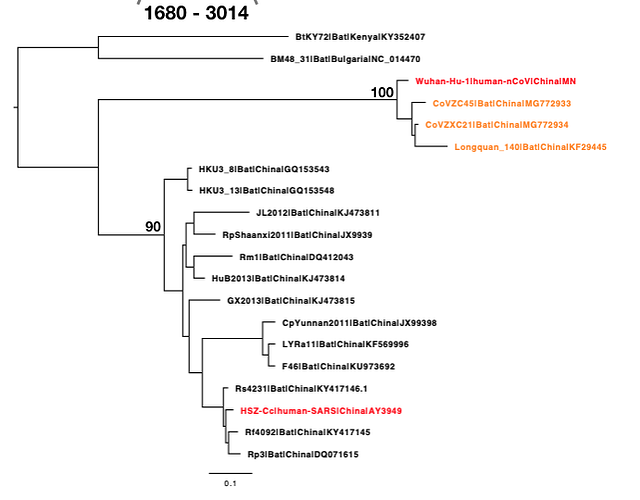
With Xiaowei Jiang at XJTLU we’ve carried out a preliminary evolutionary analysis to characterise the evolutionary origins of the Wuhan virus, nCoV. Focus of our analysis is on the Wuhan-Hu-1 virus (accession no. MN908947, released on GenBank by Shanghai Public Health Clinical Center and School of Public Health, Fudan University, Shanghai, China) as all nCoV cluster together so will share the same evolutionary ancestry. It’s clear from phylogenetic analysis the new human virus is most closely related to bat coronaviruses in the Betacoronaviruses genera. While this is apparent from both the previously reported BLAST and full-genome phylogenetic analysis the closest related bat viruses (CoVZC45 and CoVZXC21) are in fact recombinants with shared breakpoints either side of ORF1b:


nCoV-recombination-analysis

nCoV-recombination-analysis1528?1138 469 KB


The phylogenetic clustering of the Wuhan-Hu-1 virus is consistently as a sister group to the SARS-related bat coronaviruses. Interestingly, a third bat coronavirus (Longquan_140) is a recombinant involving the Wuhan virus lineage in part of ORF1a.


1680-3014

1680-3014692?540 50.6 KB


This analysis has detected three bat coronavirus recombinants (two with shared breakpoints) involving the nCoV lineage indicating greater diversity in the Chinese Sarbecovirus group than previously appreciated. The clustering of the related Sarbecovirus viruses from Kenya and Europe suggest the Wuhan virus is still part of the Sabecovirus sub-genre, and these recombination events probably occurred in bats. Although. given the propensity of coronaviruses to switch hosts, involvement of another species cannot be discounted. There is also a very good chance that a non-bat intermediate species is responsible for the beginning of the current outbreak in Wuhan. Given the tight clustering of the nCoV viruses in phylogenetic trees it seems most likely one event has occurred.

Several of these bat coronaviruses have been previously detected to be recombinant under-scoring the importance of doing appropriate analysis when analysing these viruses using phylogenetic methods. Recombination, in this case between divergent coronaviruses circulating in bats, violates our assumption of a single evolutionary tree and so needs to be considered carefully when inferring coronavirus evolution from complete genome alignments. We’re looking into the patterns of breakpoints to see if there’s any clues to the significance (or not) of these recombination events.

We’d like to thank the researchers and health professionals for making the nCoV data available. Credit also needs to be given to the surveillance projects for generating the data that is now available for comparison and to the software developers for making the tools we’ve used freely available: FigTree, available at: http://tree.bio.ed.ac.uk/software/figtree/; 9 GARD, available at http://www.hyphy.org 5; MAFFT, available at https://mafft.cbrc.jp/alignment/software/; 4 PhyML, available at http://www.atgc-montpellier.fr/phyml/; 5 and RDP4, available at http://www.atgc-montpellier.fr/phyml/ 5.

http://virological.org/t/ncovs-relationship-to-bat-coronaviruses-recombination-signals-no-snakes/331
 
Source: http://news.china.com.cn/txt/2020-01/23/content_75642508.htm

China announces 丨 3 new cases of pneumonia confirmed by new coronavirus infection in Guangxi
Published: 2020-01-23 08:39:04 | Source: China Network | Author: Wu Jia Tong

China Net, January 23rd According to the Health and Health Committee of the Guangxi Zhuang Autonomous Region, as of 1 am on the 23rd, three new cases of pneumonia confirmed by a new coronavirus infection were reported in Guangxi.

Patient Xu, male, 63 years old, a citizen of Wuhan, developed symptoms such as cough and fever on the 14th, arrived in Beihai City on the 20th, went to the local hospital for treatment on the 21st, and was transferred to Beihai designated hospital for isolation and treatment on the 22nd. Coronavirus positive.

Patient Jingmou, female, 62 years old, a citizen of Wuhan. She developed symptoms such as low fever and cough on January 9th. She went to Beihai on the 15th and went to a designated hospital in Beihai on the 21st and was hospitalized. On the 22nd, the laboratory tested positive for new coronavirus .

Patient Huang, male, 49 years old, living in Wuhan for a long time, went to Liuzhou from January 20, and developed fever symptoms on January 21, and was admitted to Liuzhou designated hospital for isolation and treatment. On January 22, the laboratory tested positive for a new coronavirus nucleic acid. .

At present, Guangxi Zhuang Autonomous Region has reported a total of 5 confirmed cases of pneumonitis with new coronavirus infection (3 in Beihai, 1 in Wuzhou, and 1 in Liuzhou), all of which have a history of residence, work or contact history in Wuhan. All patients were treated in isolation at designated hospitals, and a total of 94 close contacts were receiving medical observation. From January 21 to 22, 17 suspected cases were ruled out by laboratory tests in the autonomous region.

(Edit: Wu Jiayu)
 
Source: http://www.hlj.chinanews.com/hljnews/2020/0123/53867.html


Google translation:

Mudanjiang City confirms 1 confirmed case of imported pneumococcal infection
News Source: Heilongjiang Daily | Release Date Time: January 23, 2020 08:43

1On January 23, 2020, the National Health and Health Commission confirmed the first confirmed case of pneumonia due to imported new coronavirus infection in Heilongjiang Province. The patient was a 69-year-old male from Mudanjiang. After returning from Wuhan City to Mudanjiang City on January 12, she was isolated and treated at Mudanjiang Second Hospital due to fever, cough, sputum and fatigue. At present, the patient is seriously ill and is now in full care. The patient's close contacts are under medical observation and are currently normal.

Mudanjiang Municipal Health and Health Committee

January 23, 2020
[Edit: Li Xiangmei]
 
Source: http://industry.caijing.com.cn/20200123/4640261.shtml

Google translation:

Rizhao City, Shandong Province admitted to two patients with preliminary detection of novel coronavirus nucleic acid
This article comes from CCTV News 2020-01-23 08:56:58

In the early morning of January 23, the official website of Rizhao City Health and Health Committee released the news: On January 22, Rizhao City treated two patients, one from Wuhan and one who was a close contact with a confirmed case. After preliminary testing in the laboratory, both were positive for the new coronavirus nucleic acid, and the patient specimens have been sent to the provincial professional institutions for review in accordance with regulations. Once the diagnosis is confirmed, they will be announced to the public in time. The Rizhao Municipal Health Committee is implementing relevant measures in accordance with regulations.

(CCTV reporter Dou Xiaolei)
 
Source: http://news.cnstock.com/news,bwkx-202001-4482057.htm

Google translation:

7 new cases of pneumonia confirmed by new coronavirus infection in Shanghai
2020-01-23 09:04:52 Source: Shanghai Securities News ? China Securities Network Author:

Shanghai Securities News China Securities News According to Shanghai ’s WeChat public account news on January 23, the Shanghai Health and Medical Commission announced this morning (23) that from January 22 to 04:00, 7 new cases of coronavirus were added in Shanghai. The confirmed cases of infected pneumonia have been treated in isolation at designated hospitals. Among the patients, 4 were males and 3 were females, all of which were associated with Wuhan epidemiology. Among them, a 88-year-old male patient with cardiopulmonary insufficiency was in critical condition. Close contacts are receiving medical observation.

As of 24:00 on January 22, a total of 16 confirmed cases were found in Shanghai, of which one was critically ill and the remaining 15 were in stable condition. Another 22 suspected cases are under investigation.
 
Macao announces 2nd case:


Government report -

Macao confirmed second case of new coronavirus in Wuhan

source: Department of Health (SS) Release date: January 23, 2020 09:47 The Health Bureau said that Macao confirmed the second case of Wuhan's new coronavirus. The 66-year-old male, a tourist from Wuhan, was detected by the health bureau quarantine staff as having fever and temperature when entering Macau through the checkpoint yesterday (22). At 38.7 degrees, he was rushed to the special emergency department of Earl General Hospital for further examination. After testing, he tested positive for the new coronavirus. Details of the confirmed case will be announced at a press conference at 11:00 this morning.

https://www.gov.mo/zh-hant/news/314906/
 
[h=1]Three new cases of pneumonia confirmed by new coronavirus infection in Sichuan[/h] Published: 2020-01-23 10:41:34 | Source: China News | Author: Anonymous
More News Enter News Center

China News Service, January 23rd. According to the official Weibo of the Sichuan Provincial Health and Health Committee on the 23rd, three new cases of pneumonia confirmed by imported new coronavirus infection have been added in Sichuan Province.

Patient Yang, a 50-year-old male, returned to Chengdu from Wuhan on January 13. On January 18, he went to a hospital in Chengdu for fever, cough, dyspnea and other symptoms, and the hospital was admitted for isolation.

Patient Wu, a 48-year-old male, returned to Chengdu from Wuhan on January 10. On January 18, he went to a hospital in Chengdu because of fever, and the hospital was admitted for isolation.

Patient Du, a 36-year-old male, arrived in Wuhan from January 17th. On January 18, he was treated in a physical clinic in Dazhou due to fever and fatigue. He went to a hospital on the 20th, and the hospital was isolated.

In accordance with the "Pneumonitis Diagnosis and Treatment Program for New Coronavirus Infection" (trial version 2), based on the clinical manifestations of the cases, combined with epidemiological history and laboratory test results, the provincial expert group confirmed that these 3 cases were imported new coronavirus Infected pneumonia cases.

As of 8:00 on January 23, Sichuan has reported 8 confirmed cases of pneumonitis with new coronavirus infection (including 4 in Chengdu, 2 in Mianyang, 1 in Guang'an, and 1 in Dazhou), and 4 suspected cases (2 in Chengdu). , Suining 1 case, Guangan 1 case), the above 12 people were treated in designated medical institutions, the condition is stable. Medical observations have been carried out on close contacts, and currently there are no abnormalities such as fever.

http://news.china.com.cn/2020-01/23/content_75643380.htm
 
Epidemic situation of new coronavirus infection in Guangdong Province on January 23, 2020


Time: 2020-01-23 10:45:58 source: this website
  At 04:00 on January 22, 2020, Guangdong Province reported 6 new confirmed cases of pneumonia due to new coronavirus infection. among them:

  Zhongshan and Zhaoqing each had 1 case as the first confirmed case. Among the newly confirmed cases in the other two cities, 3 were in Guangzhou and 1 in Shenzhen.

  As of 24:00 on January 22, Guangdong Province had reported a total of 32 confirmed cases of pneumonitis with new coronavirus infection, 12 severe cases, 3 critical cases, and no deaths. among them:

  Among the confirmed cases, 5 were in Guangzhou, 15 in Shenzhen, 4 in Zhuhai, 1 in Foshan, 2 in Shaoguan, 1 in Huizhou, 1 in Zhongshan, 2 in Zhanjiang, and 1 in Zhaoqing. Among the severe cases, 8 were in Shenzhen, Zhuhai, One in Foshan, one in Shaoguan, and one in Huizhou. Among the critical cases, two were in Shenzhen and one in Zhuhai.

  At present, 212 close contacts have been traced, all of them under medical observation.

  Among the 32 confirmed cases in our province, 17 were males and 15 were females, aged between 10 and 81 years. Among them, 28 cases had a history of living or traveling in Hubei before onset, and 4 cases had no Hubei before onset. Residents' history or travel history, but they are all family members of imported cases in Hubei. A total of 6 cluster epidemics were found, all of which were clusters of families, involving 17 cases and no medical staff.

http://wsjkw.gd.gov.cn/zwyw_yqxx/con...t_2878571.html
 
We already have both Hong Kong cases listed as positive. Here is an article sourced back to government media. The CHP website is not updated. Even their chart is not updated. Not sure what is going on.

[h=1]Hong Kong Department of Health Centre for Health Protection: 2 cases tested positive for new coronavirus[/h] January 23, 2020 11:14 Source: CCTV News Client


  The Hong Kong Centre for Health Protection announced that a total of 135 suspected cases meeting the reporting criteria have been received so far, of which 97 have been ruled out of the new coronavirus infection and have been discharged from hospital.

The remaining 38 remain in hospital,

of which 2 have preliminary test results on the new coronavirus Positive. (Reporter Luo Wei)

http://www.ce.cn/xwzx/gnsz/gdxw/202001/23/t20200123_34181513.shtml
 
And...a new province...Jilin:

[h=3]National Health and Health Commission confirms the first confirmed case of pneumonia in our province with imported new coronavirus infection[/h]
  • Source: Jilin Provincial Health Committee
  • Release time: 2020-01-23
  On January 22, a suspected case returning home from Wuhan in Changchun was assessed and confirmed by the State Health and Health Commission as the first confirmed case of pneumonia imported from our country with a new coronavirus infection.

  The patient was a 42-year-old female. She returned from Wuhan on January 19 due to fever and cough to a designated medical institution. The medical institution highly suspected that it was a suspected case and treated it in isolation. After reviewing the laboratory of the Chinese Center for Disease Control and Prevention, combined with the clinical manifestations and epidemiological history of the patient, the diagnostic expert group of the National Health and Health Commission evaluated and confirmed that it was a confirmed case of pneumonia with new coronavirus infection. At present, the patient's condition is stable. Medical observation has been carried out on those who have been in close contact with him, and no abnormalities such as fever have been found.

  The Jilin Provincial Party Committee and Provincial Government attach great importance to the prevention and control of pneumonia outbreaks of new coronavirus infection, strengthen the leadership of epidemic prevention and control organizations, strictly implement territorial responsibilities and departmental responsibilities, and take strict work discipline. The health and health department has strengthened prevention and control throughout the entire process, all fields, and all hours. The province has set up provincial, city and county three-level medical treatment expert groups to determine 68 new-type coronavirus-infected pneumonia designated treatment medical institutions, and 131 medical institutions have launched fever clinics. , Refining and realizing early detection, early reporting, early isolation, early treatment and centralized cases, centralized experts, centralized resources, and centralized treatment measures, fully block input and prevent proliferation.

  Experts suggest that winter and spring are the seasons when respiratory infectious diseases are high, and also the period when viral pneumonia is high. It is hoped that the general public will do a good job of personal hygiene protection, wear a mask when going out, maintain hand hygiene, and maintain indoor sanitation and air circulation. If you have fever or respiratory infection symptoms, please go to a local medical institution for a hot clinic in time.

http://wsjkw.jl.gov.cn/xwzx/xwfb/202001/t20200123_6598562.html
 
[h=1]Fujian reports 3 new cases of pneumonia with imported new coronavirus infection[/h] Published: 2020-01-23 11:31:42 | Source: Xiamen Daily | Author: Anonymous
More News Enter News Center

At 11:00 on January 23, 2020, Fujian Province reported three new cases of pneumonia with imported new coronavirus infection. Among them: Xiamen City, Quanzhou City, and Ningde City each reported one confirmed case, all of which were the first confirmed cases.

The new patients are returnees from Wuhan. At present, the patients are in stable condition and are being treated in isolation. The close contacts tracked are undergoing medical observation.

MmIw-innckcf1394581.png


http://news.china.com.cn/2020-01/23/content_75643593.htm
 
Three new cases of pneumonia confirmed by new coronavirus infection in Hunan Province

Source: New Hunan Client. Health Highlights
2020-01-22 17:50:48
Hunan Daily ? New Hunan Client January 22 (Reporter Duan Hanmin) On January 22, Hunan province added 3 new cases of pneumonia diagnosed with a new type of coronavirus infection. All patients were from Hecheng District, Huaihua City.

Patient Yang Moumou, female, 35 years old, Li Moumou, female, 40 years old, Peng Moumou, male, 30 years old, three of them were colleagues of the same company. Yang Moumou and Li Moumou visited Wuhan in late December, and Peng Moumou is a close contact with one of them. At present, three patients are in stable condition and are being treated in isolation at the designated hospital in Huaihua City. The local health and other departments have followed up and followed up the close contacts. The close contacts have no abnormalities such as fever.

The Hunan Provincial Party Committee and the Provincial Government attach great importance to the prevention and control of pneumonia outbreaks of new coronavirus infections, and organized all relevant departments, cities and states to cooperate in joint prevention and control. The health and health department strictly implements the system of pre-screening and triage of medical institutions, sending out hotspots, synchronizing the work of case isolation, epidemiological investigation, detection and diagnosis, and close contact follow-up management, and goes all out to fight the epidemic. To effectively protect the lives of the people.

Those who have recent residence, travel history, and close contact history in Wuhan. If they have fever, cough, or respiratory infections, they must go to the nearest designated medical institution.


https://m.voc.com.cn/wxhn/article/202001/20200122175048590.html?from=timeline&isappinstalled=0
 
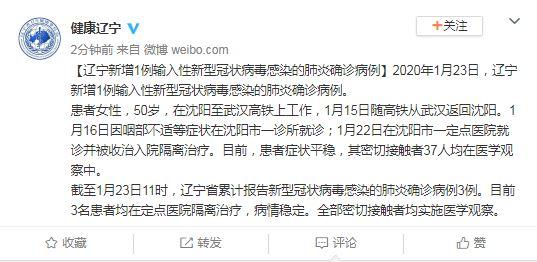
[h=1]New confirmed pneumonia case of imported new coronavirus infection in Liaoning[/h] 2020-01-23 11:56:26  China News Network
  China News Service, January 23, according to the official Weibo news of the Liaoning Provincial Health and Health Commission, on January 23, 2020, Liaoning added one new confirmed case of pneumonia imported with new coronavirus infection.

20200123115628595279389.jpg


  Screenshot of Liaoning Provincial Health and Health Commission Weibo

  The female patient, 50 years old, worked on the Shenyang-Wuhan high-speed rail and returned to Shenyang from Wuhan with the high-speed rail on January 15. He was treated at a clinic in Shenyang for symptoms of pharynx on January 16; he was admitted to a certain hospital in Shenyang on January 22 and was admitted to hospital for isolation and treatment. At present, the patient's symptoms are stable, and 37 of his close contacts are under medical observation.

  As of 11:00 on January 23, Liaoning Province had reported 3 confirmed cases of pneumonia due to new coronavirus infection. At present, all three patients are treated in isolation at designated hospitals, and their condition is stable. All close contacts were medically observed.

http://news.workercn.cn/32843/202001/23/200123115628638.shtml
 
Hubei government announcement -


444 cases of pneumonia diagnosed with new coronavirus infection in the province


2020-01-23 10:01  |  Hubei Daily


On January 22, our province held a press conference on the prevention and control of pneumonia outbreaks of new coronavirus infections. As of 20:00 on January 22, Hubei Province has reported a total of 444 cases of pneumonitis infected by new-type coronavirus (from 00:00 to 20:00 on January 22, 69 new cases of pneumonitis infected by new-type coronavirus were newly added in Hubei Province, of which new (62 cases increased, 8 cases died; 6 cases increased in Jingzhou City, 1 case increased in Jingmen City), 28 cases have been cured and 17 patients have been discharged. At present, 399 patients are still being treated in the hospital, of which 71 cases are critically ill and 24 cases are critically ill. They are all under isolation treatment at designated medical institutions. A total of 2,556 close contacts have been tracked, 863 people have been released from medical observation, and 1693 people are still receiving medical observation.

Yang Yunyan, deputy governor and deputy commander of the provincial pneumonia prevention and control command of the new type of coronavirus infection, attended the press conference and introduced the province's prevention and control work.

Since January 2, the Provincial Party Committee and the Provincial Government have held a number of special meetings to analyze and determine the situation of the epidemic situation, and study the disposal of the epidemic situation. The provincial government has set up a leading group and a special working class to coordinate and dispatch the epidemic prevention and control work, to discuss daily and report daily to study and solve major problems. The Provincial Health and Health Committee and Wuhan Municipal Government established the frontline command for epidemic situation disposal, established a joint epidemic handling mechanism, and dealt with various specific problems in a timely manner. Save patients' lives first, focus on the best medical resources in the province, and organize medical treatment. From January 12, all confirmed cases in the hospital will be transferred to Wuhan Jinyintan Hospital for centralized treatment. Establish a provincial and municipal joint medical expert group to draw authoritative experts from Tongji Hospital, Xiehe Hospital, Provincial People's Hospital, and Zhongnan Hospital to take a responsible and responsible approach to strengthen the treatment of critically ill patients.

Under the guidance of the National Health Commission, it actively organized and implemented epidemiological investigations, specimen collection and inspection, source tracing, monitoring and analysis, and timely grasped the research and judgment and evaluation of virus mutations.

From January 14th, the temperature of passengers departing from Han will be tested at the airports, stations and terminals in Wuhan. "Daily disinfection" and "Ventilation per shift" of public transportation in the city. The South China Seafood Market will be closed for remediation from January 1st, and a centralized and specialized remediation of the Wuhan agricultural (market) market and various business establishments will be carried out to eliminate the relevant markets and the living environment of hospitals, patients and close contacts. Cumulative disinfection area is 304010 square meters. Wuhan launched a patriotic sanitary campaign in winter and spring with the theme of "renovating the environment, cleaning homes, and welcoming the festival". It cleared 309 tons of garbage, used 48,550 rodent control facilities, and put 860 kg of rat medicine.

In addition, our province also strengthened information disclosure and public opinion guidance. The situation report and authoritative interpretation were published on the official website of Wuhan Municipal Health and Health Commission, and the epidemic situation information was released on a regular basis. The mainstream media, new media, and self-media are used to continuously publish health science popularization knowledge and improve the people's awareness of self-protection.

At present, the situation of epidemic prevention and control in our province is still very grim. The number of confirmed cases in Wuhan has increased rapidly, and confirmed cases have been reported in many places inside and outside the province. The virulence of the virus still needs to be continuously observed and evaluated, and the infectivity is still uncertain. In addition, the Spring Festival is approaching and the dense movement of personnel does not rule out the possibility of a continuous increase in the number of cases and outbreaks. The situation is changing rapidly, which brings great challenges to prevention and control.

According to the decision-making and deployment of the Party Central Committee and the State Council, our province has comprehensively strengthened the ideas, strategies and measures for the next step of epidemic prevention and control: the establishment of the provincial pneumococcal infection prevention of new coronavirus infection by the provincial party committee and the chief person in charge of the provincial government. Control headquarters, set up special classes to comprehensively coordinate the prevention and control of the epidemic situation; initiate the second-level response to public health emergencies in the province, and establish prevention and control leadership agencies in various places to mobilize all-out; in accordance with "law, regulations, territorial management, The principles of improving the mechanism, responding reasonably, relying on science, being powerful and effective, being open and transparent, and seeking truth from facts, and implementing internal non-proliferation and external prevention export measures. (Hu Man Longhua)


http://wjw.hubei.gov.cn/fbjd/dtyw/20..._2014421.shtml
 
Back
Top Bottom