Pathfinder
Editor, Senior Moderator
Ituri -
More than 1,000 displaced students are exposed to a lack of water and Ebola prevention equipment in Bunia
Published on Fri, 04/09/2026 - 15:03 | Modified on Fri, 04/09/2026 - 15:06
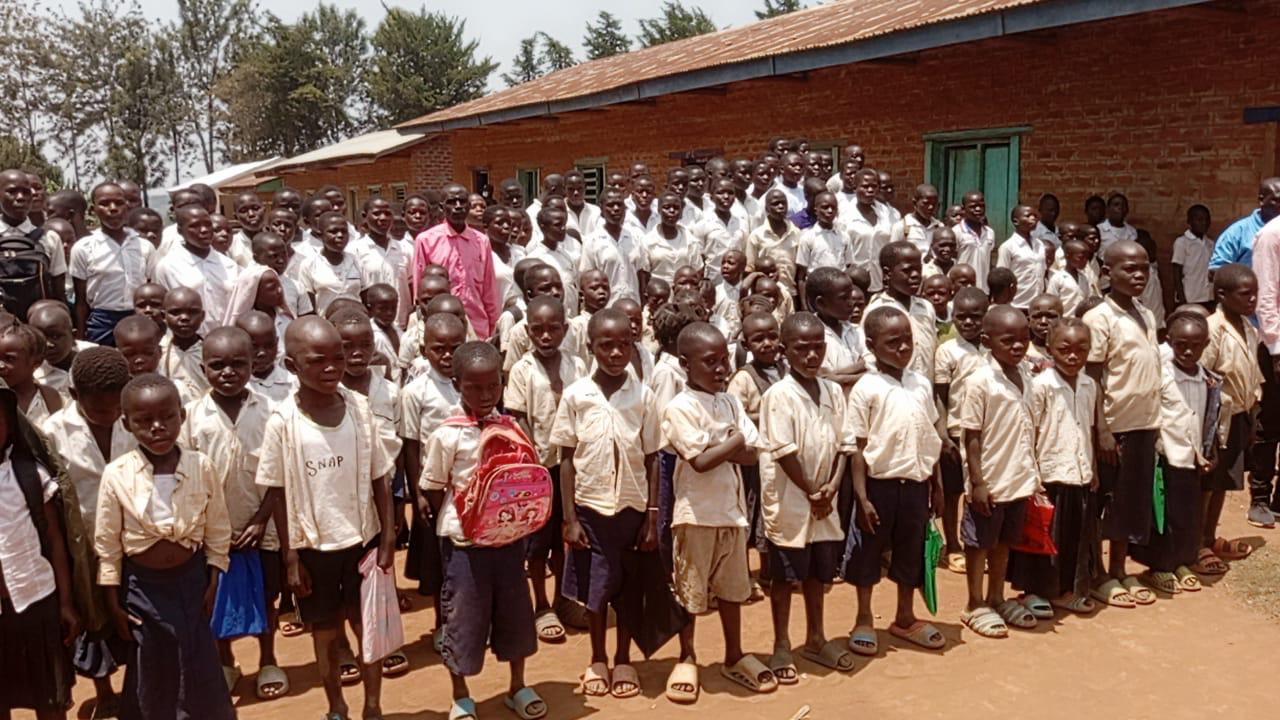
Saint-Luc School, located on the Kigonze displaced persons site in Bunia, is hosting 1,100 students this year, more than three times its capacity. This overcrowding, combined with a lack of water and preventative equipment, is raising concerns about the risk of the Ebola virus disease spreading.
Radio Okapi reporters who visited the school on Friday, September 4th, observed that in some classrooms, nearly one hundred students were attending lessons in the same room. Up to four children could be sharing a single small bench, which complicates the implementation of preventative measures.
A lack of water and supplies
The school has some handwashing facilities, but its water supply remains insufficient. According to the administration, the school receives only two jerrycans of water per day, drawn from the displaced persons' site, which is itself facing a shortage.
Students are therefore unable to wash their hands regularly after using the toilet or during recess. The school also lacks a contactless thermometer and hand sanitizer.
Call for intervention
The school administration believes that these conditions increase the risks for students and teachers, while suspected and confirmed cases of Ebola have been reported at the Kigonze site.
She calls on the government and humanitarian partners to intervene to strengthen prevention measures and improve learning conditions.
Similar difficulties are reported in other schools hosting displaced children on the outskirts of Bunia and in several territories of Ituri.
The Ebola response team and the provincial government have not yet responded to these concerns.
 www.radiookapi.net
More than 1,000 displaced students are exposed to a lack of water and Ebola prevention equipment in Bunia
Published on Fri, 04/09/2026 - 15:03 | Modified on Fri, 04/09/2026 - 15:06
Saint-Luc School, located on the Kigonze displaced persons site in Bunia, is hosting 1,100 students this year, more than three times its capacity. This overcrowding, combined with a lack of water and preventative equipment, is raising concerns about the risk of the Ebola virus disease spreading.
Radio Okapi reporters who visited the school on Friday, September 4th, observed that in some classrooms, nearly one hundred students were attending lessons in the same room. Up to four children could be sharing a single small bench, which complicates the implementation of preventative measures.
A lack of water and supplies
The school has some handwashing facilities, but its water supply remains insufficient. According to the administration, the school receives only two jerrycans of water per day, drawn from the displaced persons' site, which is itself facing a shortage.
Students are therefore unable to wash their hands regularly after using the toilet or during recess. The school also lacks a contactless thermometer and hand sanitizer.
Call for intervention
The school administration believes that these conditions increase the risks for students and teachers, while suspected and confirmed cases of Ebola have been reported at the Kigonze site.
She calls on the government and humanitarian partners to intervene to strengthen prevention measures and improve learning conditions.
Similar difficulties are reported in other schools hosting displaced children on the outskirts of Bunia and in several territories of Ituri.
The Ebola response team and the provincial government have not yet responded to these concerns.
Plus de 1 000 élèves déplacés exposés au manque d’eau et d’équipements de prévention contre Ebola à Bunia
L’école Saint-Luc, installée sur le site des déplacés de Kigonze à Bunia, accueille cette année 1 100 élèves, soit plus de trois fois sa capacité d’accueil. Cette surpopulation, combinée au manque d’eau et d’équipements de prévention, suscite des inquiétudes face au risque de propagation de la...
www.radiookapi.net










 A VIRUS THAT IS SPREADING IN THE DRC
 THE VIRUS REACHES UBANGI
 THE VIRUS SPREADS OUTSIDE THE DRC