• FluTrackers.com Inc. does not provide medical advice. Information on this web site is collected from various internet resources, and the FluTrackers board of directors makes no warranty to the safety, efficacy, correctness or completeness of the information posted on this site by any author or poster. The information collated here is for instructional and/or discussion purposes only and is NOT intended to diagnose or treat any disease, illness, or other medical condition. Every individual reader or poster should seek advice from their personal physician/healthcare practitioner before considering or using any interventions that are discussed on this website. By continuing to access this website you agree to consult your personal physican before using any interventions posted on this website, and you agree to hold harmless FluTrackers.com Inc., the board of directors, the members, and all authors and posters for any effects from use of any medication, supplement, vitamin or other substance, device, intervention, etc. mentioned in posts on this website, or other internet venues referenced in posts on this website.
  • We are not asking for any donations. Do not donate to any entity who says they are raising funds for us.

DRC – 17th Ebola Outbreak (Bundibugyo virus) - Concerns over reliability of Government reported cumulative cases and deaths - May 2026+

Translation Google

Ebola in Haut-Uélé: 253 confirmed cases, including 129 deaths and 57 recoveries

September 7, 2026

Kisangani, September 7, 2026 (ACP).- 253 confirmed cases of Ebola virus disease (EVD), including 129 deaths and 57 recoveries, have been recorded in Haut-Uélé, Northeast of the Democratic Republic of Congo (DRC) as of September 6, the head of the provincial Health division indicated on Monday in Kisangani, during a meeting organized by the governorate.

"The disease is really here, but there is hope: when you arrive in time for treatment, it is possible to recover ," said Patrick Banza, calling on the population to quickly report suspected cases and to seek treatment without delay.

According to the data presented, six of the thirteen health zones in Haut-Uélé are affected by the epidemic. Isiro has 90 cases, including 41 deaths, Wamba 83 cases and 50 deaths, Pawa 46 cases and 24 deaths, while Boma has 30 cases and 12 deaths.

The health zones of Rungu and Gombari each recorded two cases, with one death in each zone. The provincial health official specifically mentioned patients from PK51, in the Nya-Nya health zone, some of whom arrived in critical condition at treatment facilities.

The situation remains mixed, however. Gombari had gone 17 days without a new case, Rungu four days, Isiro one day, and Boma three days. In contrast, Wamba and Pawa had reported new cases the day before the presentation, according to the data provided.

The provincial health division chief explained that the 51% fatality rate is mainly due to delays in reporting and treating patients at the beginning of the epidemic, with many patients arriving at health facilities at an advanced stage of the disease.

He also stressed the role of youth in the response, this category representing a significant segment of the working population whom he called upon to contribute to awareness, early detection of cases and compliance with prevention measures.

The presentation of this epidemiological situation took place during a meeting organized on Monday at the Alliance Française hall in Kisangani, where the governor of Haut-Uélé, Jean Bakomito Gambu, spoke with people from his province living in Tshopo about the national dialogue initiated by the President of the Republic, as well as about the mobilization around the online signature demanding justice for the genocides committed in the DRC.

ACP/Kis/L/AB

 
Screenshots:
1788960154547.webp

1788960195413.webp

1788960246983.webp

1788960292455.webp

...
1788960374713.webp

...
1788960552661.webp

1788960615538.webp

...
1788961201058.webp


1789052167295.webp

Statement from the Humanitarian Coordinator in the DRC - Humanitarian Fund in the DRC - Second contribution from the United States Government – September 2026​

Attachments​

...
I thank the United States government for its second contribution of $225 million to the Humanitarian Fund in the DRC (HF DRC), which will provide life-saving humanitarian assistance to nearly one million people. This contribution comes at a time when humanitarian needs are increasing while funding is decreasing.

These resources are committed through three consecutive and complementary allocations, all aligned with the revised 2026 Humanitarian Response Plan which refocuses objectives on the most severe needs.

The initial allocation of $38.3 million addressed the emergency created by the Ebola outbreak. It rapidly mobilized existing operational partners to support the response, adapt ongoing humanitarian interventions, and maintain the continuity of essential services in affected or high-risk areas.

The second allocation, of $142 million, aims to maintain the continuity of vital humanitarian assistance in the face of significant funding gaps. It prioritizes support for critical humanitarian pipelines, the pre-positioning and availability of essential supplies, and multi-purpose cash transfers where market and operational conditions permit. The objective is to prevent disruptions in assistance and maintain partners' capacity to respond rapidly and at scale.

The third allocation, amounting to $38.3 million, targets critical needs that remain insufficiently met despite previous allocations, CERF funding and other available resources.

The combination of U.S. funding and other resources allows for a complementary response to the most urgent humanitarian needs. In addition to the $225 million provided by the U.S. government, there is $40.5 million from the CERF and $36 million from other contributions to the DRC Humanitarian Fund. In total, more than $300 million was mobilized between June and September 2026 to address the most critical humanitarian needs, including those related to the Ebola virus disease outbreak.

September 9, 2026

 
1789145735674.webp

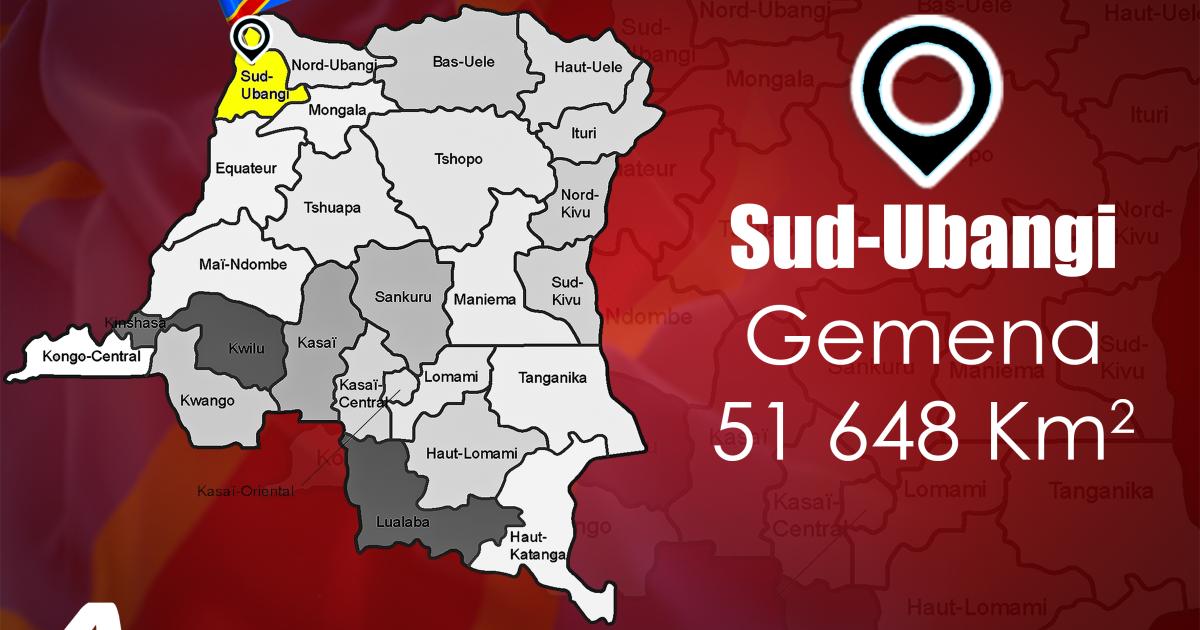
Sud-Ubangi

/https://en.wikipedia.org/wiki/Sud-Ubangi
-------------------------------------------------------------------------

Translation Google

Ebola in DRC: South Ubangi, the seventh province affected after recording a case in Gwaka

Fri 11/09/2026 - 13:01

The Bundibugyo strain of Ebola virus disease continues to spread in the Democratic Republic of Congo, now reaching South Ubangi, which has become the seventh affected province. In a statement released on Thursday, September 10, the interim governor of South Ubangi announced a confirmed case in Gwaka, in the Bulu health zone.

According to health sources, it is a 23-year-old man who left Kamanyola in South Kivu and died at the Miluna health center in Gwaka located in the Budjala territory after his condition worsened in Akula.

"Following investigations carried out by the health services and the results of analyses carried out by the INRB on the sample from the Bulu health zone, confirming the presence of Ebola Bundibugyo Virus, I officially declare the Ebola epidemic in the South Ubangi Province," said Jean Réne Galekwa Vundake, interim governor of South Ubangi.

To this end, the interim governor calls on residents to remain calm and urges them to strictly adhere to preventive measures to curb the spread of the Ebola virus disease.
...
Grace GUKA


----------------------------------------------------------------------------------------
1789146710902.webp

Images translated by Google
1789146832218.webp

1789146918442.webp

9:40 AM · Sep 11, 2026
 
Last edited:
Related to the post above (#467)
1789150180313.webp

Translated from French
#rdc 🚨 EBOLA ALERT - SUD-UBANGI

I confirm: the suspected case in Budjala is now POSITIVE for the Bundibugyo Ebola virus.

A 23-year-old man deceased in Gwaka.

We must shift from alert to immediate response.

BUDJALA - On September 8, the Provincial Health Division (SPOTREP no. 01) reported a suspected case at Gwaka Mission, Bulu Health Zone.

Today, September 10, additional analyses confirm: positive for Bundibugyo Ebola type (BDBV).

Who is the patient?

Male, 23 years old, departed from Kamanyola (South Kivu).

Symptoms: fever 38°C, bloody vomiting, bloody stools, severe asthenia, dyspnea, abdominal pain.

Deceased at the Miluna medical center in Gwaka after worsening in Akula.

What is concerning: HIS ITINERARY over 3 weeks.

Kamanyola → Rwanda → Uganda → Aru → Bunia → Kisangani → Bumba → Lisala → Akula → Gwaka.

Interprovincial + river travel. Very high number of potential contacts.


Even before this confirmation, Sud-Ubangi had already classified the risk as "HIGH".

Why?
- Intense river travel
- Limited infection prevention capacities
- Healthcare personnel highly exposed
- Urgent need for logistical support

The absolute priority now: TRACK DOWN ALL CONTACTS.

According to the SPOTREP:
- Family of the deceased
- Passengers and crew of the canoe
- Caregivers
- People who handled the body
- Any direct contact with biological fluids

Recommended and urgent measures:
1. Daily follow-up of contacts for 21 days
2. Active search for cases in Akula and Gwaka Mission
3. Strengthening surveillance at river entry points
4. Deployment of multidisciplinary team + PPE + sampling kits

I call for:
NO PANIC
NO RUMORS
NO STIGMATIZATION

But MAXIMUM VIGILANCE.

Populations of Gwaka-Miluna, Kuma-Mongala, Budjala, Sud-Ubangi: avoid any contact with blood/fluids, do not handle a suspected body without protection.

Report any symptoms immediately.

I appeal to traditional chiefs, religious denominations, caregivers, media, youth and women's associations: spread the right information. You are on the front lines.

Every hour counts to prevent an imported case from becoming local transmission.

I await a rapid official communication from the national health authorities and the effective deployment of the response.

For Sud-Ubangi, the emergency is here.

Dr Jean-Jacques Mbungani
National Deputy elected from Budjala

12:43 PM · Sep 10, 2026

-----------------------------------------------------------------
Translation Google

South Ubangi officially affected by Ebola

Friday, September 11, 2026 - 1:07 PM

The Ebola epidemic was officially declared in the province of South Ubangi by the interim Governor, Professor Jean-René Galekwa Vundawe, on Thursday, September 10, 2026.

According to the results of analyses carried out by the National Institute of Biomedical Research (INRB), a 21-year-old died on September 9th from Ebola virus disease in the Gbulu health zone.

The patient had traveled from Kamanyola in South Kivu province, passing through Rwanda, Uganda, Aru and Bunia in Ituri, and then Kisangani in Tshopo province, where he began treatment after feeling unwell. From Kisangani, he boarded the "Gbadolite" boat to continue his journey. Upon arriving in Lisala in Mongala province, he was admitted to a health facility for two days before boarding the same boat again to Akula. There, he was treated at a health center, and as his condition deteriorated, he was transferred to Miluna Gwaka Hospital in the Gbulu health zone for further treatment. The aforementioned health facility collected a sample and sent it to the INRB (National Institute of Biomedical Research), which, after analysis, confirmed that the patient was carrying the Ebola virus.

"Following the investigations carried out by the health services and the result of the analyses carried out by the INRB on the sample from the Gbulu health zone confirming the presence of the Ebola Bundibugyo virus, I officially declare the Ebola epidemic in the province of South Ubangi," said the interim Governor, Professor Jean-René Galekwa Vundawe.

It should be noted that 38 contacts have been quarantined following the death of this patient. Authorities are urging the population to adhere to preventative measures to stop the spread of Ebola virus disease in the South Ubangi province of northwestern Democratic Republic of Congo.

César Augustin Mokano Zawa, in Gemena

 
Translation Google
Ebola in the DRC: the epidemic is "under control," assures the response team

Published on Fri, 11/09/2026 - 17:36 | Modified on Fri, 11/09/2026 - 17:36

Four months after the official declaration of the Ebola epidemic in the Democratic Republic of Congo, the response team believes that the disease is now "under control"; while calling for continued vigilance.

The peak of the epidemic has now passed, the curve is on the downward slope, and the number of daily cases as well as confirmed deaths are decreasing. This was reported by the response team on Thursday, September 10, 2026, in Kinshasa, during a new technical meeting to assess the response, chaired by Prime Minister Judith Suminwa Tuluka.

The report presented on this occasion indicates a decrease in transmission, including in areas previously considered to be epicenters of the epidemic.

“ Looking at the epidemiological data, especially the epidemic curve, we can see that we have passed the peak and that the curve is in its downward phase ,” explained Professor Placide Mbala, virologist at the University of Kinshasa and head of the research pillar within the response.

More than 70,000 doses of vaccine already received

On the health front, the response continues against a backdrop of strengthened vaccine research. " We have already started vaccinating. For this, we have already received more than 70,000 doses of vaccine ," indicated the Minister of Health, Roger Kamba.

Meanwhile, scientific teams are continuing analyses to measure the actual effectiveness of the vaccine on the Bundibugyo strain.

Despite these encouraging signs, experts are urging caution. " We remain cautious because we will have to wait a few more weeks to see the actual effects of the various measures we have put in place ," stressed Placide Mbala.

A seventh province affected by Ebola

This announcement comes as the virus continues to circulate in the Democratic Republic of Congo (DRC). On Thursday, September 10, the interim governor of South Ubangi, Jean-René Galekwa Vundawe, announced the confirmation of a case of Ebola virus disease in the Gbulu health zone, following the results of analyses carried out by the National Institute of Biomedical Research (INRB).

South Ubangi thus becomes the seventh province affected by the Ebola epidemic in the DRC, after Ituri, North Kivu, Haut-Uele, Tshopo, South Kivu and Bas-Uele, according to the authorities.

In its latest epidemiological bulletin, dated September 8, 2026, the Presidential Ebola Task Force indicated that more than 6,600 confirmed cases and more than 3,000 deaths related to Ebola virus disease had been recorded in fifteen weeks in the DRC.

The report also stated that the case fatality rate had reached 48.1%.

-------------------------------------------------------------------------------------------------
1789232649077.webp

1789232687166.webp

...
10:28 AM · Sep 11, 2026
 
Translation Google
24 confirmed cases of Ebola virus disease recorded in Tshopo

September 11, 2026

Kisangani, September 11, 2026 (ACP).- The epidemiological situation of the Ebola virus disease in the province of Tshopo, in the North-East of the Democratic Republic of Congo (DRC), reports a cumulative total of 24 confirmed cases, according to the latest available report presented by the health authorities and consulted Friday by the ACP.

“Of the 24 confirmed cases, 14 patients are currently alive, including three health workers. The report also indicates nine people have recovered and 10 have died. One probable case has also been reported and is being monitored by health teams,” said Dr. Franck Mebwa, team leader for the Ebola response operations.

He gave the breakdown of confirmed cases by sex, there are six women and 18 men, according to the head of the Ebola response operations team of the provincial health division, the case fatality rate is 42%.

He indicated that seven (7) of the province's 23 health zones are still affected, namely the Bafwasende, Wanierukula, Kabondo, Makiso-Kisangani, Mangobo, Tshopo, and Lubunga health zones. Additionally, 20 of the province's 442 health areas are affected, representing 5%.

Furthermore, Dr. Mebwa revealed that 83% of intact individuals are being monitored, but the majority of them are never seen by the response teams.

"The teams are continuing the search," he reassured, also noting that the Lubunga health zone has not reported a new positive case for 79 days.

On the other hand, the Tshopo health zone has had 29 days and as for the Wanierukula health zone, it has been 42 days since this health entity recorded the last case.

Health authorities are continuing epidemiological surveillance, care for affected individuals, and contact tracing as part of the response to Ebola virus disease, a serious viral infection requiring rapid medical care and rigorous infection prevention and control measures to limit its spread.

ACP/KIS/B

 
North Kivu -

Translation Google
Ebola: The Ebola virus disease situation is worrying (Damien Mama)

September 11, 2026

Beni, September 11, 2026 (ACP) - The epidemiological situation of the Ebola virus disease was deemed worrying on Friday in Beni, North Kivu, by the Deputy Special Representative of the UN Secretary-General and Resident Humanitarian Coordinator in the Democratic Republic of Congo (DRC), during a press briefing held at the end of his first visit to this province.

"The situation is worrying because the epidemiological curve is rising and we absolutely must do everything to prevent the epicenter from moving from Ituri to North Kivu," said Damien Mama.

On this occasion, the UN official called on the entire community of North Kivu to engage in the fight against the Ebola virus disease, which spares no one and kills everyone regardless of nationality, race, or quality.

“The success of the fight against Ebola virus disease fundamentally depends on community engagement. What I saw yesterday at the Ebola Treatment Center is encouraging, but much more is needed. The conditions for patient care are good. They have a humane approach that allows them not only to treat patients but also to welcome them with dignity,” said the Deputy Special Representative of the UN Secretary-General in the DRC.

Damien Mama argued that each health zone affected by Ebola virus disease should have an Ebola treatment center to avoid infected people having to travel long distances for fear of spreading the disease along their routes.

“Sixteen health zones are affected in North Kivu and each of these health zones needs to have an Ebola Treatment Center to break the chain of transmission,” suggested Damien Mama.

On a service mission to North Kivu, specifically to Beni, the Deputy Special Representative of the Secretary-General of the United Nations and Humanitarian Coordinator in the DRC carried out numerous activities in Beni, including interviews with the provincial, health and judicial authorities of the province of North Kivu.

All these discussions revolved around the prospects for a holistic response to the Ebola virus disease that has been raging in Ituri and North Kivu for almost four months.

ACP/AK/kms

 
Ituri -

1789310783237.webp

Google map
----------------------------------------------------------------------

Translation Google

Ebola response: Mandima health zone faces resource challenges, Mambasa civil society raises the alarm

16 hours ago RMBB

Civil society groups in Mambasa are raising the alarm about the difficulties hindering the Ebola response in the Mandima health zone. The group is calling for an urgent increase in health, logistical, and financial resources.

According to Mungeni Yuma Imurani, territorial coordinator of the civil society organization Forces Vives de Mambasa, as of Saturday, September 12, 2026, the Mandima Health Zone had reported 44 confirmed cases of Ebola virus disease, including 29 deaths and seven recoveries. Four patients remain hospitalized, while three others have reportedly escaped from treatment.

In an alert published on Saturday, September 12, 2026, this civil society actor indicated that of the 18 health areas in the zone, 10 are affected, representing approximately 55%. The Mandima health area, which houses the General Referral Hospital, alone accounts for 11 confirmed cases.

The coordinator of civil society in Mambasa deplores, in particular, the absence of an Ebola Treatment or Transit Center, the lack of ambulances, the insufficient infection prevention and control equipment, as well as the shortage of medical supplies and means of transport for response teams. Mungeni Yuma Imurani also points out the lack of nutritional support and mental health services, the low motivation of some service providers, and the persistence of community resistance.

Faced with these difficulties, Mungeni Yuma Imurani calls on the authorities and health and humanitarian partners to rapidly strengthen the resources devoted to the response, in order to improve the care of the sick, protect providers and strengthen community support for the response.

Jonas Aristote Sabuni


-----------------------------------------------------------------------------------------------------
1789311155053.webp

Djugu

Google map
----------------------------------------------------

Ebola in Djugu: three confirmed cases at the Savo Plain displacement site

Published on Sun, 13/09/2026 - 06:45 | Modified on Sun, 13/09/2026 - 06:45

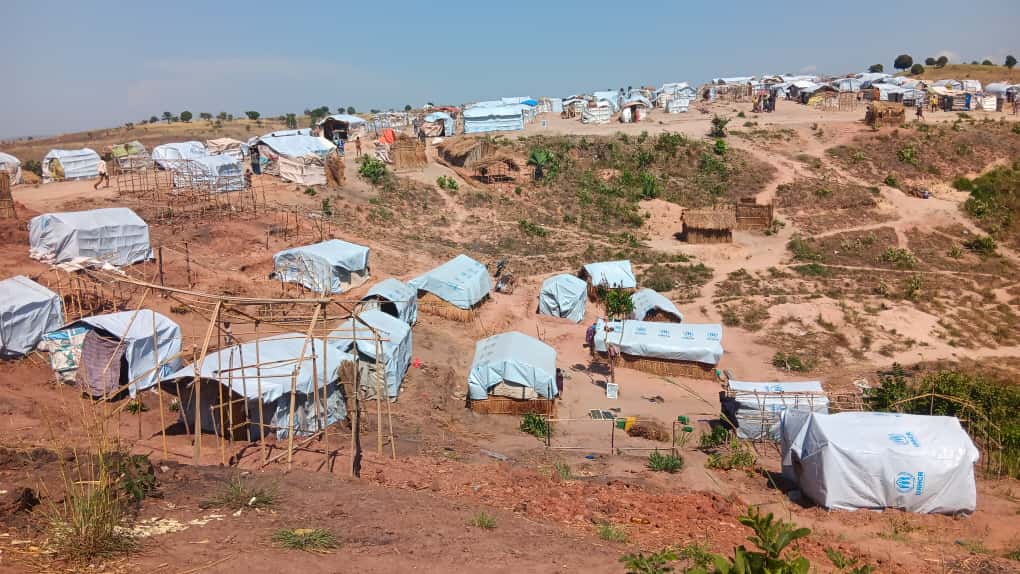
Three confirmed cases of Ebola virus disease have been recorded at the displacement site in the Savo Plain, in the Djugu territory of Ituri province. This site hosts more than 70,000 people living in precarious conditions characterized by overcrowding, limited access to basic services, and inadequate prevention measures. This situation raises fears of a rapid spread of the epidemic.

The three people exhibiting Ebola symptoms were transferred to Fataki Hospital, where tests confirmed their infection. Response teams have begun tracing individuals who may have been in contact with the patients to limit the spread of the virus.

The Savo Plain site is home to over 70,000 displaced people living in overcrowded conditions. Shelters are overcrowded , with sometimes five to ten people sharing a single space. Handwashing facilities remain inadequate, and access to healthcare remains difficult.

The sick are being evacuated to the hospital in Fataki, located about twenty kilometers from the site. Despite the support of Doctors Without Borders (MSF) and Medair, the needs remain significant.

Emmanuel Ndalo, head of the displaced persons committee, calls on the authorities and humanitarian partners to strengthen the response resources:

“Here in the Savo plain, living conditions remain very difficult. Vulnerable people live in truly inhumane conditions. They constantly need support. There are not enough jerrycans or buckets for handwashing. The inhabitants make do with what they have.”

Meanwhile, site managers are continuing awareness campaigns on preventive measures to reduce the risk of disease transmission.


Ituri -​

1789313681198.webp

Bunia
Google map
---------------------------------------------------------------------------
Translation Google

Ebola in Bunia: four students infected, one death​

Published on Fri, 11/09/2026 - 05:26 | Modified on Fri, 11/09/2026 - 08:07

Four positive cases of Ebola virus disease, including one death, have been recorded among students at two schools in Bunia (Ituri). In response to this situation, the provincial education committee, the provincial health division, and their partners met to assess the evolution of the outbreak and define the measures to be implemented.

At the Ebenezer School Complex, three cases have been confirmed. These include two second-grade students, one of whom has died, and an eighth-grade student. The latter two cases involve members of the same family.

The fourth case was reported at Maranatha Primary School.
The student in question is in the second grade. This school, originally located in the Nizi subdivision of Djugu territory, was relocated to Bunia.

Following a meeting between education sector stakeholders, health authorities, and their partners, several urgent measures were adopted. These include monitoring students who have been in contact with classmates who tested positive, as well as strengthening prevention and hygiene measures in the affected schools.

Continuation of school activities

According to the director of the Ituri 1 educational province, Yvon Abwasey Mouke, schools remain open and academic activities are continuing normally:

Schools remain open, and activities continue. Prevention and hygiene measures are being reinforced in these two schools. The Provincial Health Division team remains present in these two schools to monitor the health of children who were in close contact with those affected by the disease .”

Furthermore, school authorities indicate that another student from a secondary school died of Ebola during the holidays.

For now, distance learning, recommended by the Ministry of Education, has not yet been implemented throughout Ituri province, considered the epicenter of the epidemic. Authorities are prioritizing the strengthening of preventative measures and contact tracing in affected schools.

 
Translation Google

South Ubangi: More than 300 doses of Ebola vaccine dispatched (Minister of Health)

September 14, 2026

Kinshasa, September 14, 2026 (ACP) - More than 300 doses of vaccines have been sent to the province of South Ubangi in the northwest of the Democratic Republic of Congo to ensure the response against the Ebola virus disease in this province, the Minister of Public Health announced on Monday.

“… We sent more than 300 doses of vaccines because we know the number of people we are going to vaccinate, we sent the medicines ,” said Dr. Roger Samuel Kamba, Minister of Health.

" For now we know practically all the contacts, those who took care of him and those who were with him on the boat. Our teams left this morning to go and take care of all the contact cases that we have already listed, treated and possibly vaccinated ," he added.

He stated that the case detected in the South Ubangi province was not locally transmitted. The infected individual is a 23-year-old man who was traveling.

" This is a case that unfortunately happened in South Ubangi, a 23-year-old man who left Kamanyola in South Kivu and... accompanied by his sister-in-law and his sister-in-law's child, and who, having passed through Rwanda, Uganda and entered the country through Ituri, Bunia and passing through Kisangani and finally, arrived in Akula on September 3 and died from Ebola ," he explained.

The minister indicated that this young man began to show signs of Ebola virus disease while he was on the boat heading to Lisala.

Since this is an imported case, Dr. Kamba indicated that the response will be based on the strategy used in the provinces of Tshopo and Bas-Uele, which consists of treating the sick and those in contact to prevent the spread.

“ Today we can say that we can control this epidemic because we have no local cases, even though those who go to provide care could develop the disease. Our teams are arriving today to implement the same strategy as in Tshopo and thus potentially stop the spread ,” he explained.

Faced with this situation, the minister invited village chiefs to report cases of Ebola virus disease to health facilities to prevent any spread.

He also urged the population to conduct safe burials for their loved ones, avoiding touching the corpses. ACP/Daw.

 
Translation Google

Community deaths further complicate the Ebola response in Bule, Ituri

Published on Mon, 14/09/2026 - 05:13 | Modified on Mon, 14/09/2026 - 05:41

Community deaths remain one of the main challenges in the Ebola response in rural areas of Ituri. In Bule, in the Fataki health zone of Djugu territory, health officials are raising the alarm about the difficulties hindering patient care.

According to a health official contacted by Radio Okapi on Sunday, September 13, 2026, several community deaths are recorded daily in this area. Health teams are experiencing particular difficulties in securing bodies, collecting necessary samples, and organizing dignified and safe burials.

Managing suspected cases also faces significant constraints. Only one ambulance is available for patient evacuation in the area. Due to insecurity, it can only operate during the day. Patients arriving in the evening sometimes have to wait until the following day before being transferred to the Fataki treatment center.

This situation is fueling tensions within the community. Some health workers report being accused by certain residents. Response teams have even been attacked.

Faced with these difficulties, health officials are advocating for the establishment of a transit or treatment center in Bule. Such a facility would allow for the stabilization of patients and ensure they receive care before a possible transfer to Fataki.

 
Back
Top Bottom