• FluTrackers.com Inc. does not provide medical advice. Information on this web site is collected from various internet resources, and the FluTrackers board of directors makes no warranty to the safety, efficacy, correctness or completeness of the information posted on this site by any author or poster. The information collated here is for instructional and/or discussion purposes only and is NOT intended to diagnose or treat any disease, illness, or other medical condition. Every individual reader or poster should seek advice from their personal physician/healthcare practitioner before considering or using any interventions that are discussed on this website. By continuing to access this website you agree to consult your personal physican before using any interventions posted on this website, and you agree to hold harmless FluTrackers.com Inc., the board of directors, the members, and all authors and posters for any effects from use of any medication, supplement, vitamin or other substance, device, intervention, etc. mentioned in posts on this website, or other internet venues referenced in posts on this website.
  • We are not asking for any donations. Do not donate to any entity who says they are raising funds for us.

DRC - Anthrax 2026

Pathfinder

Editor, Senior Moderator
1789777681199.webp

Boga
Google Map
----------------------------------------------------------
Translation Google

Ituri Anthrax: 90 samples taken in Boga awaiting laboratory analysis (Head of Provincial Fisheries and Livestock Division)

September 18, 2026

Bunia, September 18, 2026 (ACP).- Ninety (90) samples taken from cattle, pigs and suspected persons in the Tchabowe and Burassi health areas, Boga health zone, in Ituri, in the North-East of the Democratic Republic of Congo (DRC), are awaiting analysis to confirm or refute suspicions of anthrax, according to Friday the provincial division of Fisheries and Livestock.

" The 90 samples were taken from animals and suspected human cases. They are currently awaiting laboratory analysis in Kinshasa to confirm or refute suspicions of anthrax ," said Fiston Kabaseke, head of the provincial Fisheries and Livestock division, at the opening of a training session for veterinary agents and multi-sectoral actors in Bunia.

He explained that the samples were packaged in accordance with biosecurity standards before being sent to the laboratories in Bunia, and then to the reference veterinary laboratories in Kinshasa for serological and genomic analyses.

In this context, he reassured, " the competent services are strengthening epidemiological surveillance in livestock areas, in particular through the training of agents on the recognition of clinical signs, the notification of diseases and the investigation of outbreaks ."

Mr. Kabaseke argued that this training will address data collection, biosecurity measures, and strategies for preventing and controlling diseases that may simultaneously affect animals and humans.

To this end, he stressed the need for close collaboration between veterinary, health and environmental services, in accordance with the " One Health " approach.

Mr. Kabaseke called on participants to increase the speed of alert notification, in order to promote early detection and appropriate response in the event of disease confirmation.

In French-speaking medical circles, anthrax refers to a serious skin infection characterized by multiple boils, or, using the English term, anthrax (or bacterial anthrax). It is a zoonosis (an animal disease transmissible to humans) caused by Bacillus anthracis.

Cutaneous form: Represents more than 95% of worldwide cases; it manifests as a black lesion or pustule and has a mortality rate of 10 to 20% without treatment.

Pulmonary form (inhalation): the rarest and most serious; it causes acute respiratory distress and is almost always fatal without rapid intervention.

Gastrointestinal form: occurs after the ingestion of contaminated undercooked meat, causing severe pain and digestive problems, it is reported.

ACP/ JHB

 
Translation Google

North Kivu: Health alert after the discovery of hippopotamus carcasses in a river

September 25, 2026

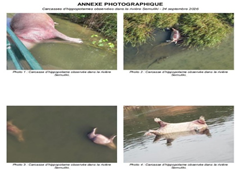
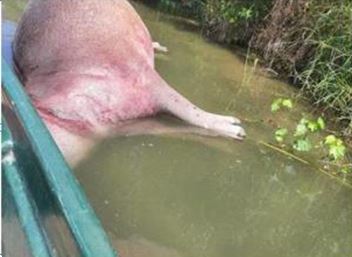
Kinshasa, September 25, 2026 (ACP).- A health alert has been issued to the population living near Virunga National Park by the Congolese Institute for Nature Conservation (ICCN), in a statement released Friday by ACP, following the recent discovery of several hippopotamus carcasses in the Semuliki River in North Kivu, in the East of the Democratic Republic of Congo (DRC).

" The provincial directorate of the Congolese Institute for Nature Conservation (ICCN) in North Kivu, in collaboration with the competent health authorities, informs the riverside populations of the recent discovery of several hippopotamus carcasses in the Semuliki River ," it read.

According to the press release, this situation calls for particular vigilance on the part of local communities, especially because of the anthrax outbreak recorded in April 2025 in the Lake Edward area.

At this stage, the source specified, the cause of death of these large mammals has not yet been established, but laboratory analyses are currently underway to determine the exact origin.


Pending these biological results and as a purely precautionary measure, the wildlife management body invites the inhabitants of this part of the country to strictly respect a series of health guidelines, including the formal prohibition of touching, moving, cutting or consuming the meat of an animal found dead or sick, even if it is cooked, dried or smoked.

Furthermore, the ICCN Provincial Directorate urges local populations to keep children and livestock away from the affected areas, to avoid using water near the carcasses and to immediately report any unusual mortality to veterinary services and Park agents.

She also called for prompt consultation with a health facility in case of suspicious symptoms. ACP/FN

-------------------------------------------------------------------------------------
Friday, September 25, 2026
By Kethia Rugamika

North Kivu: Several hippos found dead in the Semuliki

The provincial directorate of the Congolese Institute for Nature Conservation (ICCN) is calling on riverside populations to be vigilant, pending the results of analyses following the discovery of hippopotamus carcasses in the Semuliki River.

In an official statement published on September 24, 2026, the ICCN indicated that the cause of death of these hippos is not yet known.

The ICCN points out that this situation is occurring in a context marked by an episode of bacterial anthrax, also known as anthrax, already recorded in the region in April 2025.

While awaiting the results, the ICCN is asking the public not to touch, move, or open the carcasses. It is also forbidden to consume, sell, buy, or transport the meat of any animal found dead or sick.

"Do not touch, move, cut, open, bury or burn the carcasses. Do not consume, buy, sell or transport the meat of an animal found dead or sick, even cooked, dried or smoked," the statement insists.

Residents are also advised to avoid using water located near carcasses, to keep children and animals away, and to promptly report any new carcasses to local authorities, veterinary services or ICCN agents.

The ICCN asks riverside populations to remain calm and vigilant and to respect these precautionary measures until new directives are published.

 
Translation Google

Bacterial anthrax, the cause of death for hippos on the Semuliki River (Congolese Institute for Nature Conservation)

September 30, 2026

Kinshasa, September 30, 2026 (ACP) - Bacterial anthrax, known as "Anthrax", has been confirmed as the cause of death of the hippos on the Semuliki River in North Kivu, following analyses carried out jointly by the veterinary doctors of Virunga doctors and the teams of a public establishment, according to a press release received Tuesday by ACP.

" The analyses carried out jointly by the veterinary doctors of Virunga Doctors and the teams of the Congolese Institute for Nature Conservation (ICCN) have confirmed that the death of the hippos found in the Semuliki River is due to bacterial anthrax, " read the statement from the Provincial Division of this public technical and scientific establishment in North Kivu.

" A response protocol has been put in place and is currently being implemented in order to control the situation as quickly as possible ," he added.

This document emphasized that this disease can be transmitted to humans through contact with an animal found dead or sick, or through the consumption of its meat.

Therefore, the source emphasizes that the previously announced precautionary measures remain in effect. These include, among other things, not touching, moving, cutting, burying, or burning carcasses; not consuming, buying, selling, or transporting the meat of an animal found dead or sick; keeping children, livestock, and pets away from carcasses; and avoiding the use of nearby water.

Therefore, local populations have been asked to remain calm and vigilant as the ICCN and its partners continue to monitor the situation and may communicate any new directives in due course.

It should be noted that this news follows an initial official communication from the ICCN published on September 24, which reported the suspicious discovery of several hippopotamus carcasses floating on the waters of the Semuliki River and already prohibited any handling or consumption by local communities.

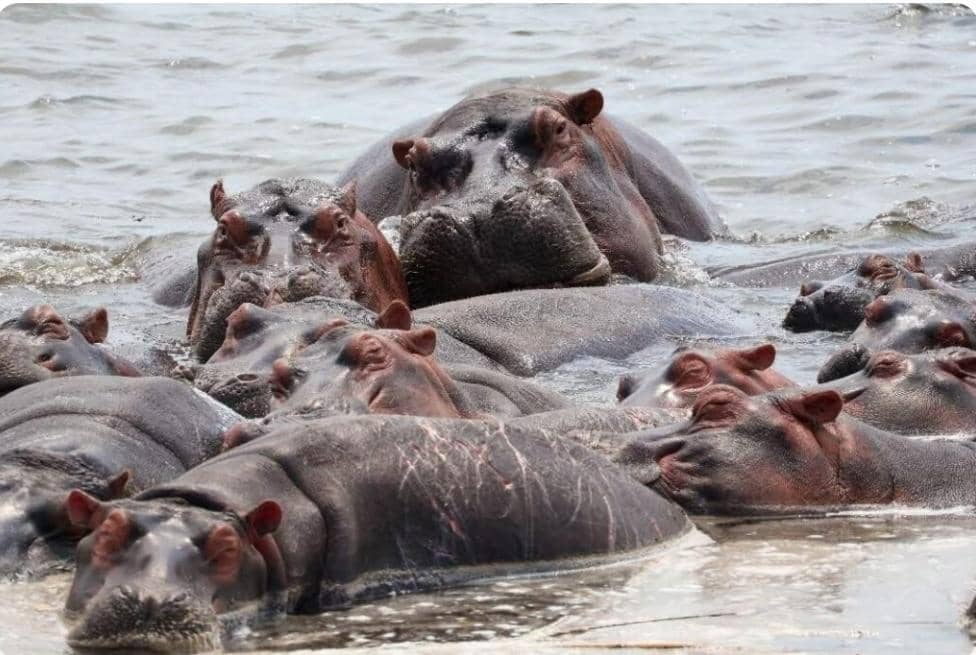
Several hippopotamus carcasses have been discovered in the Semuliki River, within Virunga National Park, in North Kivu, in the east of the Democratic Republic of Congo (DRC).

These new deaths come a month after a case of anthrax was confirmed in the Vitshumbi fishing enclave on August 14, 2026, by the Kibirizi Health Zone, following the discovery of a hippopotamus carcass on August 8.

ACP/Fe./E.

------------------------------------------------------------------------------------------
1790776700694.webp

(Image translated by Google)

1790776615873.webp

5:33 PM · Sep 29, 2026
 
Back
Top Bottom