• FluTrackers.com Inc. does not provide medical advice. Information on this web site is collected from various internet resources, and the FluTrackers board of directors makes no warranty to the safety, efficacy, correctness or completeness of the information posted on this site by any author or poster. The information collated here is for instructional and/or discussion purposes only and is NOT intended to diagnose or treat any disease, illness, or other medical condition. Every individual reader or poster should seek advice from their personal physician/healthcare practitioner before considering or using any interventions that are discussed on this website. By continuing to access this website you agree to consult your personal physican before using any interventions posted on this website, and you agree to hold harmless FluTrackers.com Inc., the board of directors, the members, and all authors and posters for any effects from use of any medication, supplement, vitamin or other substance, device, intervention, etc. mentioned in posts on this website, or other internet venues referenced in posts on this website.
  • We are not asking for any donations. Do not donate to any entity who says they are raising funds for us.

DRC - Ebola outbreak in North Kivu and Ituri: July 30, 2018+

[h=1]Ebola virus disease ? Democratic Republic of the Congo[/h] Disease outbreak news: Update
8 November 2018


As the Ebola virus disease (EVD) outbreak enters the fourth month since declaration, and case numbers surpass 300, substantial progress has been achieved in all aspects of the response. Nevertheless, there remains a challenging road ahead to control intense transmission in the city of Beni and emerging hotspots in villages around Beni and Butembo. Security incidents and pockets of community resistance continue to impact civilians and frontline workers, requiring the response to continually adapt to the situation. The UN is committed to staying and supporting the Ministry of Health (MoH), and confident that the outbreak can be contained. This week, the WHO Director-General, UN Under-Secretary-General for peacekeeping, and WHO Deputy Director-General (DDG) Emergency Preparedness and Response travelled to the Democratic Republic of the Congo to review how further support can be offered to strengthen the response.
Over the past week (31 October ? 6 November), 29 new confirmed EVD cases were reported: 15 from Beni, seven from Butembo, four from Kalunguta, two from Mabalako, and one from Vuhovi. The two cases reported in Mabalako were a mother and her new-born child, residing and infected in Beni, but sought treatment at the Mabalako Ebola treatment centre (ETC). Three health workers from health posts in Beni and Kalunguta were among the newly infected; 28 health workers have been infected to date. Ten additional survivors were discharged from the Beni ETC and reintegrated into their communities; 88 patients have recovered to date.
As of 6 November, 308 EVD cases (273 confirmed and 35 probable), including 189 deaths (154 confirmed and 35 probable)1, have been reported in eight health zones in North Kivu Province and three health zones in Ituri Province (Figure 1). While fewer cases were reported from Beni this week, new cases continue to be detected daily here and elsewhere, and delays in case detection persist; therefore, trends in weekly incidence must be interpreted cautiously (Figure 2).
The risk of the outbreak spreading to other provinces in the Democratic Republic of the Congo, as well as to neighbouring countries, remains very high. Over the course of the past week, alerts have been reported from the South Sudan, Uganda and Yemen; EVD has been ruled out for all alerts to date. Uganda (geographically closest to outbreak affected areas), continues to intensify preparedness activities, and this week began to vaccinate health and frontline workers at priority health facilities.
[h=4]Figure 1: Confirmed and probable Ebola virus disease cases by health zone in North Kivu and Ituri provinces, Democratic Republic of the Congo, data as of 6 November 2018 (n=308)[/h]
figure1_20181108.png


[h=4]Figure 2: Confirmed and probable Ebola virus disease cases by week of illness onset, data as of 6 November 2018 (n=303)*[/h]
figure2_20181108.png


*Onset date unknown for five cases. Data in recent weeks are subject to delays in case confirmation and reporting, as well as ongoing data cleaning ? trends during this period should be interpreted cautiously.
[h=3]Public health response[/h] The MoH continues to strengthen response measures, with support from WHO and partners. Priorities include coordinating the response, surveillance, contact tracing, laboratory capacity, infection prevention and control (IPC), clinical management of patients, vaccination, risk communication and community engagement, psychosocial support, safe and dignified burials (SDB), cross-border surveillance and preparedness activities in neighbouring provinces and countries.
  • Surveillance: Demonstrated impacts are being observed following renewed efforts and improved systems by field teams to overcome challenges in case and contact detection, investigation, and data analytics. Though a large proportion of new cases reported in Beni during the past week and earlier were not listed as contact at the time of reporting, investigators have retrospectively elucidated the transmission chains for the majority of cases. Meanwhile, contact tracing continues with almost 18 000 contacts registered since the start of the outbreak, of which 5430 remain under surveillance as of 6 November.2 Follow-up rates over the past week ranged from 91-94% in total across all health areas.
  • Vaccination: As of 31 October, 174 vaccination rings have been defined, in addition to 38 rings of health and frontline worker. To date, 27 360 eligible and consented people have been vaccinated, including 9106 health and frontline workers and 7256 children.
  • Clinical management and IPC: Activities are ongoing in both clinical management and IPC and are supported by several partners in the field. Almost all newly confirmed patients admitted to ETCs receive therapeutics. There remain ongoing challenges with delayed recognition of cases and referral to ETCs, which are often occurring only after a patient has visited a number of health facilities. Some patients die before reaching ETCs or shortly after arrival due to late presentation in illness course. In rare instances, therapeutics may need to be withheld due to a very poor prognosis. Several IPC activities such as decontamination of health care facilities and households, and IPC trainings are ongoing. Breaches in various aspects of IPC practices remain an important reason for continuing transmission. Several activities are ongoing in the field to address these concerns.
  • Risk communication, community engagement, and social mobilization: Priorities are regularly reviewed to address the evolving challenges and needs. In addition to continuing the focus on community ownership, the work will centre around prevention of the virus infection in formal and information health care facilities and in supporting community surveillance. Feedback to concerns raised by the community through door-to-door visits, focused group discussions and knowledge, attitudes and practices (KAP) surveys are being systematically collected and addressed. This week, advocacy meetings are held with local pharmacies in Butembo, with traditional healer in Butsili and follow-up discussions on Ebola sensitization are held with community leaders and women?s groups in Beni. Community dialogue sessions were also held in Katwa.
  • Safe and dignified burial (SDB): Capacity is provided both by Red Cross (RC) and Civil Protection (CP) teams. As of 7 November, a total of 458 SDB alerts were received, of which 389 (85%) were responded to successfully. The number of alerts of community deaths is fewer than expected, especially in Butembo and Beni; suggesting underreporting of community deaths. Harm Reduction approach to manage burials in areas non-accessible by SDB teams, as well as implementation of Rapid Diagnostic Test (RDT) for deceased, are being reviewed. There is a continuous need to sensitise communities, opinion leaders and authorities (e.g. police and military) on SDB to mitigate resistance.
  • Point of Entry (PoE): As of 6 November, health screening has been established at 67 PoEs. Over 13.2 million travellers have been screened, over 17 500 means of transport have been decontaminated and 100 alerts have been notified (19 were validated and one was confirmed for EVD). Out of 13.8 million travellers who passed through these POEs, 91% washed hands and 83% were sensitized about EVD. A workshop to revise operation procedures for PoE activities is planned for 12-14 November.
  • Laboratory capacity: Diagnostic testing capability has continued to expand as cases spread to new geographic areas. Five field Ebola laboratories providing near-patient testing have been established in Beni, Mutembo, Goma, Mangina and Tchomia; these are in addition to the national laboratory in Kinshasa. Testing volumes have increased in the past week; 438 samples tested in the week ending 28 October which is 30% more than the previous week.
  • Preparedness and operational readiness: Ministry of Health deployed 56 preparedness officers (43 national government experts and 13 WHO consultants) this week to ten high risk provinces around North Kivu to scale up operational readiness capacities and rapid response teams for IPC, risk communications, surveillance, points of entry screening, and coordination. Operational readiness actions continue to be strengthened in the nine neighbouring countries, with enhanced efforts in Uganda, South Sudan, Rwanda and Burundi. The implementation of the contingency plans for EVD readiness are underway in collaboration with partners. Twelve experts were deployed in South Sudan to enhance the efforts of readiness in Nimule, Yei and Yambio.
[h=3]Partners[/h] To support the MoH, WHO is working intensively with a wide range of multisectoral and multidisciplinary regional and global partners and stakeholders for EVD response, research and urgent preparedness, including in neighbouring countries. Among the partners are a number of UN agencies and international organizations including: European Civil Protection and Humanitarian Aid Operation (ECHO); International Organization for Migration (IOM); UK Public Health Rapid Support Team; United Nations Children?s Fund (UNICEF); UN High Commission on Refugees (UNHCR); World Bank and regional development banks; World Food Programme (WFP) and UN Humanitarian Air Service (UNHAS); UN mission and UN Department of Safety and Security (UNDSS); Inter-Agency Standing Commission; United Nations Office for the Coordination of Humanitarian Affairs (OCHA); and the United Nations Population Fund (UNFPA); Africa Centres for Disease Control; US CDC; UK Department for International Development (DFID); United States Agency for International Development (USAID); Adeco Federaci?n (ADECO); Association des femmes pour la nutrition ? assisse communautaire (AFNAC); Alliance for International Medical Action (ALIMA); CARITAS DRC; CARE International; Centre de promotion socio-sanitaire (CEPROSSAN); Cooperazione Internationale (COOPE); Catholic Organization for Relief and Development Aid (CORDAID/PAP-DRC); International Medical Corps; International Rescue Committee (IRC); Intersos ? Organizzatione Umanitaria par l?Emergenza (INTERSOS); MEDAIR; M?decins Sans Fronti?res (MSF); Oxfam International; Red Cross of the Democratic Republic of Congo, with the support of the International Federation of Red Cross and Red Crescent Societies (IFRC) and International Committee of the Red Cross (ICRC); Samaritan?s Purse; Save the Children (SCI); Global Outbreak Alert and Response Network (GOARN), Emerging and Dangerous Pathogens Laboratory Network (EDPLN), Emerging Disease Clinical Assessment and Response Network (EDCARN), technical networks and operational partners, and the Emergency Medical Team Initiative (EMT). GOARN partners continue to support the response through deployment for response and readiness activities in non-affected provinces and in neighbouring countries and to different levels of WHO.
[h=3]WHO risk assessment[/h] This outbreak of EVD is affecting north-eastern provinces of the country, which border Uganda, Rwanda and South Sudan. Potential risk factors for transmission of EVD at the national and regional levels include: transportation links between the affected areas, the rest of the country, and neighbouring countries; the internal displacement of populations; and the displacement of Congolese refugees to neighbouring countries. The country is concurrently experiencing other epidemics (e.g. cholera, vaccine-derived poliomyelitis, malaria), and a long-term humanitarian crisis. Additionally, the security situation in North Kivu and Ituri at times limits the implementation of response activities. WHO?s risk assessment for the outbreak is currently very high at the national and regional levels; the global risk level remains low. WHO continues to advise against any restriction of travel to, and trade with, the Democratic Republic of the Congo based on currently available information.
As the risk of national and regional spread is very high, it is important for neighbouring provinces and countries to enhance surveillance and preparedness activities. The IHR Emergency Committee has advised that failing to intensify these preparedness and surveillance activities would lead to worsening conditions and further spread. WHO will continue to work with neighbouring countries and partners to ensure that health authorities are alerted and are operationally prepared to respond.
[h=3]WHO advice[/h] International traffic: WHO advises against any restriction of travel and trade to the Democratic Republic of the Congo based on the currently available information. There is currently no licensed vaccine to protect people from the Ebola virus. Therefore, any requirements for certificates of Ebola vaccination are not a reasonable basis for restricting movement across borders or the issuance of visas for passengers leaving the Democratic Republic of the Congo. WHO continues to closely monitor and, if necessary, verify travel and trade measures in relation to this event. Currently, no country has implemented travel measures that significantly interfere with international traffic to and from the Democratic Republic of the Congo. Travellers should seek medical advice before travel and should practice good hygiene.
...

http://www.who.int/csr/don/08-november-2018-ebola-drc/en/
 
NOVEMBER 8, 2018 / 8:00 PM / UPDATED 14 HOURS AGO

U.S. concerned about Ebola outbreak in Congo conflict zone: official

Lesley Wroughton
3 MIN READ

WASHINGTON (Reuters) -
...
?We are absolutely concerned about the ongoing outbreak in the Democratic Republic of Congo,? the senior USAID official, who is working with response teams, told Reuters.
...
?It is occurring in an area of active conflict, so physical insecurity is a persistent challenge and complication to the ongoing response efforts,? the official said, speaking on condition of anonymity.

?At this point we are not seeing cases spread across any incredibly large geographic area,? the official said, adding that most cases were in the city of Beni and increasingly in nearby Butembo.
...
The USAID official said the United States had deployed over two dozen technical experts to the country to work with Congo?s health ministry since the outbreak was first reported in August.

Since then, the United States had also deployed disaster and health experts from USAID and the U.S. Centers for Disease Control and Prevention.

The official declined to give specifics about responses and funding because of the security threat from armed groups.
...

Reporting by Lesley Wroughton; Editing by Leslie Adler

https://www.reuters.com/article/us-...in-congo-conflict-zone-official-idUSKCN1NE05Q
 
FDA authorizes emergency use of first Ebola fingerstick test with portable reader

For Immediate Release
November 9, 2018

Release

Today, the U.S. Food and Drug Administration announced that an emergency use authorization (EUA) has been issued for a rapid, single-use test for the detection of Ebola virus (Zaire ebolavirus). This is the second Ebola rapid antigen fingerstick test available under EUA, but the first that uses a portable battery-operated reader, which can help provide clear diagnostic results outside of laboratories and in areas where patients are likely to be treated.

The test, called the DPP Ebola Antigen System, is used with blood specimens, including capillary ?fingerstick? whole blood, from individuals with signs and symptoms of Ebola virus disease (EVD) in addition to other risk factors, such as living in an area with large numbers of EVD cases and/or having contact with other individuals exhibiting signs and symptoms of EVD.

?The scourge of Ebola tragically demonstrates that we?re a global community when it comes to public health protection. Infectious disease doesn?t recognize nation states. Bacteria and viruses don?t respect territorial boundaries. It takes a sustained, robust and globally coordinated effort to protect our nation and the global community from various infectious disease threats. We?re all in this together. To that end, our FDA team of experts in drugs, vaccines and diagnostics continue to collaborate with our Federal, international and industry partners to employ our collective expertise, experiences from previous incidents, and resources to assist in the global response to the Ebola outbreak in the Democratic Republic of Congo,? said FDA Commissioner Scott Gottlieb, M.D. ?This EUA is part of the agency?s ongoing efforts to help mitigate potential, future threats by making medical products that have the potential to prevent, diagnosis or treat available as quickly as possible. We?re committed to helping the people of the DRC effectively confront and end the current Ebola outbreak. By authorizing the first fingerstick test with a portable reader, we hope to better arm health care providers in the field to more quickly detect the virus in patients and improve patient outcomes.?
...
https://www.fda.gov/NewsEvents/Newsroom/PressAnnouncements/ucm625502.htm
 
Translation Google


EPIDEMIOLOGICAL SITUATION IN THE PROVINCES OF NORTH KIVU AND ITURI

Friday, November 9, 2018

The epidemiological situation of the Ebola Virus Disease dated November 8, 2018 :
A total of 319 cases of haemorrhagic fever were reported in the region, of which 284 confirmed and 35 probable.
Of the 284 confirmed, 163 died and 97 are cured . The others are hospitalized in the different Ebola Treatment Centers (ETCs) installed.
52 suspected cases under investigation.
7 new confirmed cases, including 3 in Beni, 2 in Butembo, 1 in Kyondo and 1 in Vuhovi.
A new confirmed case has been identified in a new Kyondo Health Zone, located next to Butembo Health Zone. The investigations are in progress.
7 new deaths of confirmed cases, including 3 in Beni, 2 in Butembo, 1 in Kyondo and 1 in Mutwanga.
6 new people healed, including 5 in Beni and 1 in Butembo.

...
Message from His Excellency the Minister of Health

On Friday, November 9, 2018, the Ebola Virus Disease epidemic in the provinces of North Kivu and Ituri just exceeded that of the first epidemic recorded in 1976 in Yambuku. the province of Ecuador. To date, 319 cases and 233 deaths have been recorded.

At the sight of these figures, my thoughts and prayers go to the hundreds of bereaved families, the hundreds of orphans, and the missing families.

At the heart of this unprecedented response are hundreds of men and women who have been working tirelessly for more than three months in a difficult and volatile environment to prevent this epidemic from spreading to other provinces in the Democratic Republic of Congo. Congo and neighboring countries.

No other epidemic in the world has been as complex as the one we are currently experiencing. Since their arrival in the region, the response teams have faced threats, physical assaults, repeated destruction of their equipment, and kidnapping. Two of our colleagues in the Rapid Response Medical Unit even lost their lives in an attack.

Yet, despite the risks and with the support of a majority of the population, our agents continue to do their job with passion and dedication to protect the Nation and the world.

Among their achievements, we particularly remember the vaccination, including in red areas, of more than 27,000 high-risk contacts, at least half of which could have developed the disease. Without the prompt and effective intervention of national and international experts, it is a drama of considerable magnitude that we would be experiencing at the moment. For this courage, they deserve all our gratitude.

However, this epidemic remains dangerous and unpredictable, and we must not let our guard down. We must continue to pursue a very dynamic response that requires permanent readjustments and real ownership at the community level.

We are writing a new page in history and public health. It is with the cooperation and the commitment of all, the Government, the international community, and especially the population, that we will overcome this epidemic.

Thank you.
...
https://us13.campaign-archive.com/?u=89e5755d2cca4840b1af93176&id=5458d53cfd
 
Translation Google
[TABLE="class: templateContainer, border: 0, cellpadding: 0, cellspacing: 0, width: 600"]
[TR]
[TD] [TABLE="class: mcnImageBlock, border: 0, cellpadding: 0, cellspacing: 0, width: 100%"]
[TR]
[TD="class: mcnImageBlockInner"] [TABLE="class: mcnImageContentContainer, align: left, border: 0, cellpadding: 0, cellspacing: 0, width: 100%"]
[TR]
[TD="class: mcnImageContent"]
17347356-dd33-47d4-bf0b-d3ef85029537.png
[/TD]
[/TR]
[/TABLE]
[/TD]
[/TR]
[/TABLE]
[TABLE="class: mcnBoxedTextBlock, border: 0, cellpadding: 0, cellspacing: 0, width: 100%"]
[TR]
[TD="class: mcnBoxedTextBlockInner"] [TABLE="class: mcnBoxedTextContentContainer, align: left, border: 0, cellpadding: 0, cellspacing: 0, width: 100%"]
[TR]
[TD] [TABLE="class: mcnTextContentContainer, border: 0, cellspacing: 0, width: 100%"]
[TR]
[TD="class: mcnTextContent"]DIRECTORATE GENERAL FOR DISEASE CONTROL[/TD]
[/TR]
[/TABLE]
[/TD]
[/TR]
[/TABLE]
[/TD]
[/TR]
[/TABLE]
[/TD]
[/TR]
[TR]
[TD] [TABLE="class: mcnBoxedTextBlock, border: 0, cellpadding: 0, cellspacing: 0, width: 100%"]
[TR]
[TD="class: mcnBoxedTextBlockInner"] [TABLE="class: mcnBoxedTextContentContainer, align: left, border: 0, cellpadding: 0, cellspacing: 0, width: 100%"]
[TR]
[TD] [TABLE="class: mcnTextContentContainer, border: 0, cellspacing: 0, width: 100%"]
[TR]
[TD="class: mcnTextContent"] EPIDEMIOLOGICAL SITUATION IN THE PROVINCES OF NORTH KIVU AND ITURI

Saturday, November 10, 2018


The epidemiological situation of the Ebola Virus Disease dated November 9, 2018 :
  • Since the beginning of the epidemic, the cumulative number of cases is 326, of which 291 confirmed and 35 probable. In total, there were 201 deaths (166 confirmed and 35 probable).
  • Of the 291 confirmed, 166 died and 98 are cured . The others are hospitalized in the different Ebola Treatment Centers (ETCs) installed.
  • 47 suspected cases under investigation.
  • 7 new confirmed cases, including 4 in Beni, 2 in Kalunguta and 1 in Musienene.
  • 3 new deaths of confirmed cases, including 2 in Beni (including 1 postponed from 8 November) and 1 in Musienene.
  • 1 new person healed in Butembo.
[/TD]
[/TR]
[/TABLE]
[/TD]
[/TR]
[/TABLE]
[/TD]
[/TR]
[/TABLE]
[/TD]
[/TR]
[/TABLE]

...
https://us13.campaign-archive.com/?u=89e5755d2cca4840b1af93176&id=4b9848fdef
 
Translation Google
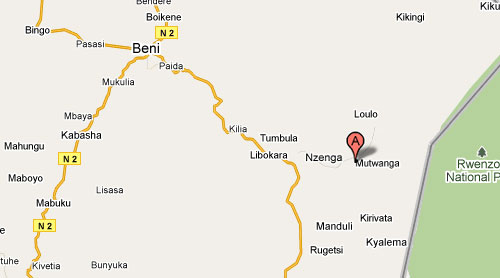
carte-Mutwanga-a-Beni.jpg

Credit: Radio Okapi

----------------------------
Translation Google


BULONGO: A total psychosis in the head of the population after the signal of the very first Ebola case confirmed

Posted on: 10/11/2018 at 16h04min53s

By Radio Moto Butembo-Beni

This situation is observed in the health zone of Mutwanga located largely in Ruwenzori sector since Friday, November 09, 2018. It is consecutive to the signal of the very first confirmed case of Ebola virus disease in Bulongo, Thursday, November 08, 2018. Bulongo is a rural commune located about 10 kilometers east of Mutwanga in the Beni territory.

The news fell like a bitter pill in the ears of thousands of Ruwenzori residents who had not yet heard of Ebola in their area. The first case to be reported in the Mutwanga health zone makes it obvious that the threat of the virus is not to be overlooked, since the Mutwanga health zone touches neighboring Uganda by Kasindi post-border. Kasindi fears, not only for his health, but also for his economy. This is the cry of the local committee to fight against epidemics that calls the team response to the Ebola virus disease to focus its attention on this situation. Kasindi fears that Uganda will close its borders with the DRC once the disease is declared in this commune.

When contacted by the press about this, Mutwanga's Chief Medical Officer of Health acknowledged the seriousness of the danger, but did not want to comment too much on it. The population of this health zone is anxiously awaiting an awareness of this fact, despite the inertia of health actors at this stage.


Posted on: 10/11/2018 at 16h04min53s
By Radio Moto Butembo-Beni

http://radiomotofm.info/lirearticle.php?billet=5023
 
Translation Google [TABLE="class: templateContainer, border: 0, cellpadding: 0, cellspacing: 0, width: 600"]
[TR]
[TD] [TABLE="class: mcnImageBlock, border: 0, cellpadding: 0, cellspacing: 0, width: 100%"]
[TR]
[TD="class: mcnImageBlockInner"] [TABLE="class: mcnImageContentContainer, align: left, border: 0, cellpadding: 0, cellspacing: 0, width: 100%"]
[TR]
[TD="class: mcnImageContent"]
17347356-dd33-47d4-bf0b-d3ef85029537.png
[/TD]
[/TR]
[/TABLE]
[/TD]
[/TR]
[/TABLE]
[TABLE="class: mcnBoxedTextBlock, border: 0, cellpadding: 0, cellspacing: 0, width: 100%"]
[TR]
[TD="class: mcnBoxedTextBlockInner"] [TABLE="class: mcnBoxedTextContentContainer, align: left, border: 0, cellpadding: 0, cellspacing: 0, width: 100%"]
[TR]
[TD] [TABLE="class: mcnTextContentContainer, border: 0, cellspacing: 0, width: 100%"]
[TR]
[TD="class: mcnTextContent"]DIRECTORATE GENERAL FOR DISEASE CONTROL[/TD]
[/TR]
[/TABLE]
[/TD]
[/TR]
[/TABLE]
[/TD]
[/TR]
[/TABLE]
[/TD]
[/TR]
[TR]
[TD] [TABLE="class: mcnBoxedTextBlock, border: 0, cellpadding: 0, cellspacing: 0, width: 100%"]
[TR]
[TD="class: mcnBoxedTextBlockInner"] [TABLE="class: mcnBoxedTextContentContainer, align: left, border: 0, cellpadding: 0, cellspacing: 0, width: 100%"]
[TR]
[TD] [TABLE="class: mcnTextContentContainer, border: 0, cellspacing: 0, width: 100%"]
[TR]
[TD="class: mcnTextContent"] EPIDEMIOLOGICAL SITUATION IN THE PROVINCES OF NORTH KIVU AND ITURI

Sunday, November 11, 2018


The epidemiological situation of the Ebola Virus Disease dated November 10, 2018 :
  • Since the beginning of the epidemic, the cumulative number of cases is 329, of which 294 confirmed and 35 probable. In total, there were 205 deaths (170 confirmed and 35 probable).
  • 38 suspected cases under investigation.
  • 3 new confirmed cases, including 2 in Beni and 1 in Kyondo.
  • 4 new deaths of confirmed cases, including 2 in Beni and 2 in Butembo

5885945b-c9ce-4a0e-ae37-2163326a0bbf.png


Remarks:
  • To avoid that the total number of cases varies (up or down) daily, the suspect cases have been placed in a separate category. Thus, suspect cases with positive laboratory tests will be added to the confirmed category, while negative ones (non-cases) will be removed from the table.
  • The category of probable cases includes all reported deaths for which it was not possible to obtain biological samples for laboratory confirmation. The investigations will determine whether these deaths are related to the epidemic or not.
  • A community death is a death in the community, outside of a licensed health center.
[/TD]
[/TR]
[/TABLE]
[/TD]
[/TR]
[/TABLE]
[/TD]
[/TR]
[/TABLE]
[TABLE="class: mcnBoxedTextBlock, border: 0, cellpadding: 0, cellspacing: 0, width: 100%"]
[TR]
[TD="class: mcnBoxedTextBlockInner"] [TABLE="class: mcnBoxedTextContentContainer, align: left, border: 0, cellpadding: 0, cellspacing: 0, width: 100%"]
[TR]
[TD] [TABLE="class: mcnTextContentContainer, border: 0, cellspacing: 0, width: 100%"]
[TR]
[TD="class: mcnTextContent"]
News of the response


Ebola Survivors Tracking Program
  • At the ninth Ebola outbreak in Equateur Province, the Ministry of Health launched an Ebola survivors follow-up program to provide clinical, biological and psychosocial follow-up for people who have recovered from Ebola. . The Minister of Health, Dr. Oly Ilunga Kalenga, also initiated the establishment of the National Association of Ebola Winners to bring together all survivors in the Democratic Republic of Congo. The national coordinator of the program and association is Dr. Richard Kitenge. Survivors' monitoring centers will be set up in Beni, Butembo and Mangina. The Ministry of Health gives priority to local health personnel in all areas of the program to build local capacity. The survivor monitoring program teams are reviewing the database of all survivors since the start of this tenth outbreak. The Ministry of Health will resume sharing survivor data as soon as this cleanup of the database is complete.
Vaccination
  • Since the start of vaccination on August 8, 2018, 28,727 people have been vaccinated , including 14,966 in Beni, 4,544 in Mabalako, 2,152 in Katwa, 1,663 in Mandima, 1,435 in Butembo, 1,237 in Kalunguta, 732 in Masereka, 434 in Bunia, 355 in Tchomia, 293 in Vuhovi, 258 in Mutwanga, 240 in Komanda, 178 in Oicha, 160 in Musienene and 80 in Kyondo.


[/TD]
[/TR]
[/TABLE]
[/TD]
[/TR]
[/TABLE]
[/TD]
[/TR]
[/TABLE]
[/TD]
[/TR]
[/TABLE]

...
https://us13.campaign-archive.com/?u=89e5755d2cca4840b1af93176&id=3594a8eb5d
 
Source: http://www.who.int/csr/don/15-november-2018-ebola-drc/en/
[h=1]Ebola virus disease ? Democratic Republic of the Congo[/h] Disease outbreak news: Update
15 November 2018

New measures to overcome obstacles in responding to the Ebola virus disease (EVD) outbreak in the Democratic Republic of the Congo are having a positive impact. The Ministry of Health (MoH), WHO and partners continue to be confident that, despite challenges, the outbreak can be contained.
Over the past week (7 ? 13 November), transmission continued in several areas of North Kivu Province, while a geographical expansion of the outbreak to two new health zones (Kyondo and Mutwanga) was observed (Figure 1). The first cases reported from these health zones were exposed through contact with cases in Butembo and Beni, respectively.
During the reporting period, 31 new confirmed EVD cases were reported from Beni, Mutwanga, Kalunguta, Butembo, Vuhovi, Kyondo and Musienene. Four of the new cases were newborn babies and infants aged less than two years, three were children aged between 2 ? 17 years and three were women who were pregnant or breastfeeding. Three health workers from Beni and Butembo were among the newly infected; 31 health workers have been infected to date. Twelve additional survivors were discharged from Beni (nine), Butembo (two) and Mabalako (one) Ebola treatment centres (ETCs) and reintegrated into their communities; 103 patients have recovered to date.
During the past week, a review and reconciliation of case records was conducted. This review resulted in the addition of 14 probable cases, invalidation of 11 past deaths previously reported as probable cases and exclusion of duplicate cases. In addition, some confirmed and probable cases were recategorized to health zones where their infection most likely occurred, as opposed to the location of the ETC where they were admitted.
As of 13 November, 341 EVD cases (303 confirmed and 38 probable), including 215 deaths (177 confirmed and 38 probable)[SUP]1[/SUP], have been reported in 11 health zones in North Kivu Province and three health zones in Ituri Province (Figure 1). The overall trends in weekly case incidence reflect the continuation of community transmission in several cities and villages in North Kivu (Figure 2). Given the expected delays in case detection and ongoing data reconciliation activities, trends, especially in the most recent weeks, must be interpreted cautiously.
The risk of the outbreak spreading to other provinces in the Democratic Republic of the Congo, as well as to neighbouring countries, remains very high. Over the course of the past week, alerts have been reported from South Sudan and Uganda; EVD has been ruled out for all alerts to date. The vaccination of health and frontline workers at priority sites in Uganda began on 7 November, and preparations are ongoing for the vaccination of health and frontline workers in Rwanda and South Sudan.
[h=4]Figure 1: Confirmed and probable Ebola virus disease cases by health zone in North Kivu and Ituri provinces, Democratic Republic of the Congo, data as of 13 November 2018 (n=341)[/h]
figure1_20181115.png


[h=4]Figure 2: Confirmed and probable Ebola virus disease cases by week of illness onset, data as of 13 November 2018 (n=341)*[/h]
figure2_20181115.png


*Data in recent weeks are subject to delays in case confirmation and reporting, as well as ongoing data cleaning ? trends during this period should be interpreted cautiously.
[h=3]Public health response[/h] The MoH continues to strengthen response measures, with support from WHO and partners. Priorities include coordinating the response, surveillance, contact tracing, laboratory capacity, infection prevention and control (IPC), clinical management of patients, vaccination, risk communication and community engagement, psychosocial support, safe and dignified burials (SDB), cross-border surveillance and preparedness activities in neighbouring provinces and countries. To support the MoH, WHO is working intensively with a wide range of multisectoral and multidisciplinary regional and global partners and stakeholders for EVD response, research and urgent preparedness, including in neighbouring countries.
For detailed information about the public health response actions by WHO and partners, see the latest situation reports published by the WHO Regional Office for Africa:
[h=3]WHO risk assessment[/h] This outbreak of EVD is affecting north-eastern provinces of the country, which border Uganda, Rwanda and South Sudan. Potential risk factors for transmission of EVD at the national and regional levels include: transportation links between the affected areas, the rest of the country, and neighbouring countries; the internal displacement of populations; and the displacement of Congolese refugees to neighbouring countries. The country is concurrently experiencing other epidemics (e.g. cholera, vaccine-derived poliomyelitis, malaria), and a long-term humanitarian crisis. Additionally, the security situation in North Kivu and Ituri at times limits the implementation of response activities. WHO?s risk assessment for the outbreak is currently very high at the national and regional levels; the global risk level remains low. WHO continues to advise against any restriction of travel to, and trade with, the Democratic Republic of the Congo based on currently available information.
As the risk of national and regional spread is very high, it is important for neighbouring provinces and countries to enhance surveillance and preparedness activities. The IHR Emergency Committee has advised that failing to intensify these preparedness and surveillance activities would lead to worsening conditions and further spread. WHO will continue to work with neighbouring countries and partners to ensure that health authorities are alerted and are operationally prepared to respond.
[h=3]WHO advice[/h] International traffic: WHO advises against any restriction of travel and trade to the Democratic Republic of the Congo based on the currently available information. There is currently no licensed vaccine to protect people from the Ebola virus. Therefore, any requirements for certificates of Ebola vaccination are not a reasonable basis for restricting movement across borders or the issuance of visas for passengers leaving the Democratic Republic of the Congo. WHO continues to closely monitor and, if necessary, verify travel and trade measures in relation to this event. Currently, no country has implemented travel measures that significantly interfere with international traffic to and from the Democratic Republic of the Congo. Travellers should seek medical advice before travel and should practice good hygiene.
For more information, see:
 
[h=1]CDC Ebola expert on Congo outbreak: 'We're not making any progress'[/h] Pierre Rollin, MD, an Ebola expert with the CDC, said first responders are making little progress in containing the Democratic Republic of Congo's Ebola outbreak, according to NPR.
Here are five things to know:
1. Dr. Rollin, who visited the Congo in October, said typical outbreaks are usually contained within three to four months. However, the Congo's Ebola outbreak is now on its fourth month, with few signs of slowing down.
"It's as if we're just starting [containment efforts] now when in fact we started three months ago," Dr. Rollin told NPR. "We're not making any progress."
2. Dr. Rollin said first responders are having trouble tracking Ebola patients and their contacts, who can set off a new train of disease transmission if they are not detected and treated.
"I was looking at the last 30 days of cases and two-thirds of them were of unknown origin ? so we can't trace them," he told NPR.
3. Further complicating response efforts is the ongoing violence in the outbreak zone, which could get worse during the country's national elections in December, according to Dr. Rollin.
4. Dr. Peter Salama, the World Health Organization's deputy director-general of emergency preparedness and response, on Nov. 13 said he expects the outbreak to continue until the middle of next year.
5. As of Nov. 14, the WHO has identified 344 confirmed and probable Ebola cases linked to the outbreak, along with 202 deaths.

https://www.beckershospitalreview.c...24jv8X4GxEcsPEdASoFTq2mWnUTbPUIjzt7GOw66zhxJE
 
[TABLE="class: templateContainer, border: 0, cellpadding: 0, cellspacing: 0, width: 600"]
[TR]
[TD] [TABLE="class: mcnImageBlock, border: 0, cellpadding: 0, cellspacing: 0, width: 100%"]
[TR]
[TD="class: mcnImageBlockInner"] [TABLE="class: mcnImageContentContainer, align: left, border: 0, cellpadding: 0, cellspacing: 0, width: 100%"]
[TR]
[TD="class: mcnImageContent"]
17347356-dd33-47d4-bf0b-d3ef85029537.png
[/TD]
[/TR]
[/TABLE]
[/TD]
[/TR]
[/TABLE]
[TABLE="class: mcnBoxedTextBlock, border: 0, cellpadding: 0, cellspacing: 0, width: 100%"]
[TR]
[TD="class: mcnBoxedTextBlockInner"] [TABLE="class: mcnBoxedTextContentContainer, align: left, border: 0, cellpadding: 0, cellspacing: 0, width: 100%"]
[TR]
[TD] [TABLE="class: mcnTextContentContainer, border: 0, cellspacing: 0, width: 100%"]
[TR]
[TD="class: mcnTextContent"]DIRECTORATE GENERAL FOR DISEASE CONTROL[/TD]
[/TR]
[/TABLE]
[/TD]
[/TR]
[/TABLE]
[/TD]
[/TR]
[/TABLE]
[/TD]
[/TR]
[TR]
[TD] [TABLE="class: mcnBoxedTextBlock, border: 0, cellpadding: 0, cellspacing: 0, width: 100%"]
[TR]
[TD="class: mcnBoxedTextBlockInner"] [TABLE="class: mcnBoxedTextContentContainer, align: left, border: 0, cellpadding: 0, cellspacing: 0, width: 100%"]
[TR]
[TD] [TABLE="class: mcnTextContentContainer, border: 0, cellspacing: 0, width: 100%"]
[TR]
[TD="class: mcnTextContent"] EPIDEMIOLOGICAL SITUATION IN THE PROVINCES OF NORTH KIVU AND ITURI

Saturday, November 17, 2018


The epidemiological situation of the Ebola Virus Disease dated November 16, 2018 :
  • Since the beginning of the epidemic, the cumulative number of cases is 358, of which 311 are confirmed and 47 are probable. In total, there were 213 deaths (166 confirmed and 47 probable).
  • 57 suspected cases under investigation.
  • 6 new confirmed cases, including 4 in Beni, 1 in Katwa and 1 in Kalunguta.
  • 3 new confirmed cases, including 2 in Beni and 1 in Katwa.

/! \ Cleaning the current database

ff66558e-994b-4447-bcc2-df6522611abf.png


Remarks:
  • To avoid that the total number of cases varies (up or down) daily, the suspect cases have been placed in a separate category. Thus, suspect cases with positive laboratory tests will be added to the confirmed category, while negative ones (non-cases) will be removed from the table.
  • The category of probable cases includes all reported deaths for which it was not possible to obtain biological samples for laboratory confirmation. The investigations will determine whether these deaths are related to the epidemic or not.
  • A community death is a death in the community, outside of a licensed health center.
[/TD]
[/TR]
[/TABLE]
[/TD]
[/TR]
[/TABLE]
[/TD]
[/TR]
[/TABLE]
[TABLE="class: mcnBoxedTextBlock, border: 0, cellpadding: 0, cellspacing: 0, width: 100%"]
[TR]
[TD="class: mcnBoxedTextBlockInner"] [TABLE="class: mcnBoxedTextContentContainer, align: left, border: 0, cellpadding: 0, cellspacing: 0, width: 100%"]
[TR]
[TD] [TABLE="class: mcnTextContentContainer, border: 0, cellspacing: 0, width: 100%"]
[TR]
[TD="class: mcnTextContent"]
News of the response

security
  • On the evening of Friday, November 16, 2018, an armed group made an incursion into Boikene neighborhood, Rwenzori commune, in the city of Beni, with the intention of attacking one of the bases of MONUSCO. The peacekeepers reacted immediately, pushing the rebel group after several hours of clashes, a few meters from the Ebola Response Emergency Operations Center and hotels in which several teams from the response were lodged.
  • This Saturday, November 17, 2018, all field activities were suspended, and the Emergency Operations Center remained closed. All the teams stayed in their respective hotels.
  • Health Minister Oly Ilunga Kalenga deplores the violence that has once again wounded the people of Beni and is slowing the efforts of the response teams to end the Ebola outbreak. The epidemic remains dangerous, especially in Beni. As a result, national and international teams continue to work alongside the population to end the epidemic.
Vaccination
  • Since the start of vaccination on August 8, 2018, 31,713 people have been vaccinated , including 15,901 in Beni, 4,544 in Mabalako, 3,292 in Katwa, 1,663 in Mandima, 1,615 in Butembo, 1,602 in Kalunguta, 732 in Masereka, 434 in Bunia, 355 in Tchomia, 330 in Vuhovi, 292 in Mutwanga, 241 in Kyondo, 240 in Komanda, 210 in Musienene, 178 in Oicha, and 34 in Alimbongo.


[/TD]
[/TR]
[/TABLE]
[/TD]
[/TR]
[/TABLE]
[/TD]
[/TR]
[/TABLE]
[/TD]
[/TR]
[/TABLE]

...
https://us13.campaign-archive.com/?u=89e5755d2cca4840b1af93176&id=d35154a642
 
17 November 2018 - 22H01

Sixteen Ebola WHO staff evacuated amid DR Congo clashes


BENI (DR CONGO) (AFP) -

The World Health Organization (WHO) said Saturday that 16 staff members have been temporarily evacuated from DR Congo's restive eastern city of Beni after a shell hit the building they were staying in.

The incident occurred in the Ebola-plagued region during clashes between UN peacekeepers from the MONUSCO mission and the Allied Democratic Forces (ADF) militia on Friday night.

"It was in exchanges of fire that the house was hit by a shell", Michel Yao, WHO's co-ordinator for Ebola response operations in Beni, told AFP.

No one was injured, he said, adding that it was not known whether the shell came from the militia, the UN peacekeepers or the Congolese army backing them.

The 16 WHO workers, out of a total of 191 in Beni, were "traumatised" and left for the eastern city of Goma on Saturday to "de-stress", Yao said.
...
https://www.france24.com/en/20181117-sixteen-ebola-who-staff-evacuated-amid-dr-congo-clashes
 
Translation Google
[TABLE="class: templateContainer, border: 0, cellpadding: 0, cellspacing: 0, width: 600"]
[TR]
[TD] [TABLE="class: mcnImageBlock, border: 0, cellpadding: 0, cellspacing: 0, width: 100%"]
[TR]
[TD="class: mcnImageBlockInner"] [TABLE="class: mcnImageContentContainer, align: left, border: 0, cellpadding: 0, cellspacing: 0, width: 100%"]
[TR]
[TD="class: mcnImageContent"]
17347356-dd33-47d4-bf0b-d3ef85029537.png
[/TD]
[/TR]
[/TABLE]
[/TD]
[/TR]
[/TABLE]
[TABLE="class: mcnBoxedTextBlock, border: 0, cellpadding: 0, cellspacing: 0, width: 100%"]
[TR]
[TD="class: mcnBoxedTextBlockInner"] [TABLE="class: mcnBoxedTextContentContainer, align: left, border: 0, cellpadding: 0, cellspacing: 0, width: 100%"]
[TR]
[TD] [TABLE="class: mcnTextContentContainer, border: 0, cellspacing: 0, width: 100%"]
[TR]
[TD="class: mcnTextContent"]DIRECTORATE GENERAL FOR DISEASE CONTROL[/TD]
[/TR]
[/TABLE]
[/TD]
[/TR]
[/TABLE]
[/TD]
[/TR]
[/TABLE]
[/TD]
[/TR]
[TR]
[TD] [TABLE="class: mcnBoxedTextBlock, border: 0, cellpadding: 0, cellspacing: 0, width: 100%"]
[TR]
[TD="class: mcnBoxedTextBlockInner"] [TABLE="class: mcnBoxedTextContentContainer, align: left, border: 0, cellpadding: 0, cellspacing: 0, width: 100%"]
[TR]
[TD] [TABLE="class: mcnTextContentContainer, border: 0, cellspacing: 0, width: 100%"]
[TR]
[TD="class: mcnTextContent"] EPIDEMIOLOGICAL SITUATION IN THE PROVINCES OF NORTH KIVU AND ITURI

Sunday 18 November 2018


The epidemiological situation of the Ebola Virus Disease dated November 17, 2018 :
  • Since the beginning of the epidemic, the cumulative number of cases is 366, of which 319 are confirmed and 47 are probable. In total, there were 214 deaths (167 confirmed and 47 probable).
  • 66 suspected cases under investigation.
  • 8 new confirmed cases, including 5 in Beni and 3 in Katwa.
  • 1 new case death confirmed in Katwa.

/! \ Cleaning the current database

b4eeb40d-114a-466c-8562-113d8082e141.png


Remarks:
  • To avoid that the total number of cases varies (up or down) daily, the suspect cases have been placed in a separate category. Thus, suspect cases with positive laboratory tests will be added to the confirmed category, while negative ones (non-cases) will be removed from the table.
  • The category of probable cases includes all reported deaths for which it was not possible to obtain biological samples for laboratory confirmation. The investigations will determine whether these deaths are related to the epidemic or not.
  • A community death is a death in the community, outside of a licensed health center.
[/TD]
[/TR]
[/TABLE]
[/TD]
[/TR]
[/TABLE]
[/TD]
[/TR]
[/TABLE]
[TABLE="class: mcnBoxedTextBlock, border: 0, cellpadding: 0, cellspacing: 0, width: 100%"]
[TR]
[TD="class: mcnBoxedTextBlockInner"] [TABLE="class: mcnBoxedTextContentContainer, align: left, border: 0, cellpadding: 0, cellspacing: 0, width: 100%"]
[TR]
[TD] [TABLE="class: mcnTextContentContainer, border: 0, cellspacing: 0, width: 100%"]
[TR]
[TD="class: mcnTextContent"]
News of the response

security
  • Contrary to what has been reported in some international media, the Ministry of Health has not suspended the Ebola response. Following the attack of a MONUSCO base in the Boikene district, Ruwenzori commune, in the city of Beni, by an armed group on the evening of Friday, November 16, 2018, the field activities in Beni did not take place normally at the beginning of the day on Saturday 17 November. After assessing the security situation, all field activities, except vaccination, were able to resume idling on Saturday afternoon. This Sunday, November 18, the riposte could advance normally to Beni.

[/TD]
[/TR]
[/TABLE]
[/TD]
[/TR]
[/TABLE]
[/TD]
[/TR]
[/TABLE]
[/TD]
[/TR]
[/TABLE]

...
https://us13.campaign-archive.com/?u=89e5755d2cca4840b1af93176&id=5794bf500d
 
WHO statement on latest attacks in the Democratic Republic of the Congo

17 November 2018 Statement Geneva

Following deadly attacks on Friday in the town of Beni, in the Democratic Republic of the Congo, Ebola response activities are continuing.

While all WHO, Ministry of Health and partner staff are safe and accounted for, 16 WHO staff were evacuated to Goma for psychological care after their residence was hit by a shell which did not explode.

Ebola response operations were on-going but limited in Beni on Saturday.

Vaccination was suspended and the operations centre was closed, but teams still went out into the communities to follow up on some alerts of potential cases, to meet contacts and ensure they are still well, and to bring sick people to treatment centres. The treatment centers, which are run by partners, remained operational.

The response was not affected in areas outside Beni. On Sunday, all activities have re-launched, including vaccination.

?WHO will continue to work side-by-side with the ministry and our partners to bring this Ebola outbreak to an end,? said Dr Tedros Adhanom Ghebreyesus, WHO Director-General. ?We honour the memory of those who have died battling this outbreak, and deplore the continuing threats on the security of those still working to end it.?

http://www.who.int/news-room/detail...tacks-in-the-democratic-republic-of-the-congo
 
Translation Google
[TABLE="class: templateContainer, border: 0, cellpadding: 0, cellspacing: 0, width: 600"]
[TR]
[TD] [TABLE="class: mcnImageBlock, border: 0, cellpadding: 0, cellspacing: 0, width: 100%"]
[TR]
[TD="class: mcnImageBlockInner"] [TABLE="class: mcnImageContentContainer, align: left, border: 0, cellpadding: 0, cellspacing: 0, width: 100%"]
[TR]
[TD="class: mcnImageContent"]
17347356-dd33-47d4-bf0b-d3ef85029537.png
[/TD]
[/TR]
[/TABLE]
[/TD]
[/TR]
[/TABLE]
[TABLE="class: mcnBoxedTextBlock, border: 0, cellpadding: 0, cellspacing: 0, width: 100%"]
[TR]
[TD="class: mcnBoxedTextBlockInner"] [TABLE="class: mcnBoxedTextContentContainer, align: left, border: 0, cellpadding: 0, cellspacing: 0, width: 100%"]
[TR]
[TD] [TABLE="class: mcnTextContentContainer, border: 0, cellspacing: 0, width: 100%"]
[TR]
[TD="class: mcnTextContent"]DIRECTORATE GENERAL FOR DISEASE CONTROL[/TD]
[/TR]
[/TABLE]
[/TD]
[/TR]
[/TABLE]
[/TD]
[/TR]
[/TABLE]
[/TD]
[/TR]
[TR]
[TD] [TABLE="class: mcnBoxedTextBlock, border: 0, cellpadding: 0, cellspacing: 0, width: 100%"]
[TR]
[TD="class: mcnBoxedTextBlockInner"] [TABLE="class: mcnBoxedTextContentContainer, align: left, border: 0, cellpadding: 0, cellspacing: 0, width: 100%"]
[TR]
[TD] [TABLE="class: mcnTextContentContainer, border: 0, cellspacing: 0, width: 100%"]
[TR]
[TD="class: mcnTextContent"] EPIDEMIOLOGICAL SITUATION IN THE PROVINCES OF NORTH KIVU AND ITURI

Monday 19 November 2018


The epidemiological situation of the Ebola Virus Disease dated November 18, 2018 :
  • Since the beginning of the epidemic, the cumulative number of cases is 373, of which 326 are confirmed and 47 are probable. In total, there were 216 deaths (169 confirmed and 47 probable) and 108 people cured.
  • 72 suspected cases under investigation.
  • 7 new confirmed cases, including 3 in Beni, 3 in Katwa and 1 in Butembo.
  • 2 new confirmed cases, including 1 in Butembo and 1 in Katwa.
  • 1 new person healed in Beni.

3190bdd5-453c-4d07-93d3-063a6e7d12b5.png


Remarks:
  • To avoid that the total number of cases varies (up or down) daily, the suspect cases have been placed in a separate category. Thus, suspect cases with positive laboratory tests will be added to the confirmed category, while negative ones (non-cases) will be removed from the table.
  • The category of probable cases includes all reported deaths for which it was not possible to obtain biological samples for laboratory confirmation. The investigations will determine whether these deaths are related to the epidemic or not.
  • A community death is a death in the community, outside of a licensed health center.
[/TD]
[/TR]
[/TABLE]
[/TD]
[/TR]
[/TABLE]
[/TD]
[/TR]
[/TABLE]
[TABLE="class: mcnBoxedTextBlock, border: 0, cellpadding: 0, cellspacing: 0, width: 100%"]
[TR]
[TD="class: mcnBoxedTextBlockInner"] [TABLE="class: mcnBoxedTextContentContainer, align: left, border: 0, cellpadding: 0, cellspacing: 0, width: 100%"]
[TR]
[TD] [TABLE="class: mcnTextContentContainer, border: 0, cellspacing: 0, width: 100%"]
[TR]
[TD="class: mcnTextContent"]
News of the response

Press point in Beni
  • On Monday, November 19, 2018, the Coordinator of the response, Dr. Ndjoloko Tambwe Bathe, held a press briefing in Beni to present the evolution of the epidemic and reassure the population of the ongoing commitment of the Ministry of Health and international partners to end the Ebola outbreak in North Kivu province. Despite the evacuation of 20 WHO staff over the weekend, the human resources deployed in Beni remain very important. The Ministry of Health has more than 900 experts in Beni, of which almost 85% are locals who have been trained to participate effectively in all pillars of the response. WHO has 191 national and international consultants who continue to work in Beni. Added to this are the hundreds of other people employed by the other organizations involved in the response. In addition, he recalled that according to the new community-based monitoring approach, it is the local actors who lead more field activities with the technical support of national and international experts.
  • Dr. Bathe also discussed the epidemiological situation in the health zone of Kalunguta, which is a red zone. The spread of the epidemic in the village of Kanihunga was caused by the arrival of a confirmed case from Beni who fled several weeks ago to escape the monitoring teams. The Minister of Health, Dr Oly Ilunga Kalenga, instructed the coordination of the response to provide substantial technical and medical support to all health centers in this area so that they can provide quality care to the population. Thanks to the goodwill of the village leaders who granted access to the response teams, 895 people were vaccinated in the village.
  • In order to contain the epidemic in and around Butembo Health Zone, the coordination decided to send additional intervention teams to the Katwa, Kalunguta and Lubero areas to support local health care providers.
Vaccination
  • Resumption of vaccination in Beni since Sunday, November 18, 2018.
  • Since the start of vaccination on August 8, 2018, 32,108 people have been vaccinated , including 15,962 in Beni, 4,544 in Mabalako, 3,453 in Katwa, 1,663 in Mandima, 1,715 in Butembo, 1,672 in Kalunguta, 732 in Masereka, 434 in Bunia, 359 to Vuhovi, 355 to Tchomia, 292 to Mutwanga, 241 to Kyondo, 240 to Komanda, 234 to Musienene, 178 to Oicha, and 34 to Alimbongo.
[/TD]
[/TR]
[/TABLE]
[/TD]
[/TR]
[/TABLE]
[/TD]
[/TR]
[/TABLE]
[TABLE="class: mcnBoxedTextBlock, border: 0, cellpadding: 0, cellspacing: 0, width: 100%"]
[TR]
[TD="class: mcnBoxedTextBlockInner"] [TABLE="class: mcnBoxedTextContentContainer, align: left, border: 0, cellpadding: 0, cellspacing: 0, width: 100%"]
[TR]
[TD] [TABLE="class: mcnTextContentContainer, border: 0, cellspacing: 0, width: 100%"]
[TR]
[TD="class: mcnTextContent"] Epidemiological Data Summary
Week 46 (12-18 November 2018)


For the week of November 12 to 18, 2018 , we recorded:​
  • 423 suspected cases investigated and tested in the laboratory.
  • 33 new confirmed cases , including 15 in Beni, 10 in Katwa, 6 in Kalunguta and 2 in Butembo.
  • 13 new confirmed cases, including 6 in Beni, 5 in Butembo and 2 in Katwa.
  • 7 probable cases in Kalunguta.
  • 7 new people healed , including 5 in Beni, 1 in Butembo and 1 in Mabalako.
ce65faec-02e5-4e66-a72a-16cab905763f.png

[/TD]
[/TR]
[/TABLE]
[/TD]
[/TR]
[/TABLE]
[/TD]
[/TR]
[/TABLE]
[/TD]
[/TR]
[/TABLE]

...
https://us13.campaign-archive.com/?u=89e5755d2cca4840b1af93176&id=133e4b89be
 
EPIDEMIOLOGICAL SITUATION IN THE PROVINCES OF NORTH KIVU AND ITURI

Wednesday, November 21, 2018
The epidemiological situation of the Ebola Virus Disease dated November 20, 2018 :
  • Since the beginning of the epidemic, the cumulative number of cases is 386, of which 339 are confirmed and 47 are probable. In total, there were 219 deaths (172 confirmed and 47 probable) and 113 people healed.
  • 48 suspected cases under investigation.
  • 13 new confirmed cases, including 7 in Katwa, 2 in Beni, 2 in Kalunguta, 1 in Oicha and 1 in Mutwanga.
  • 2 new deaths of confirmed cases, including 1 in Beni and 1 in Mutwanga.
  • 3 new people healed in Butembo
[TABLE="class: mcnTextContentContainer, align: left, border: 0, cellpadding: 0, cellspacing: 0, width: 100%"]
[TR]
[TD="class: mcnTextContent"]Copyright ? 2018 Ministry of Health of the Democratic Republic of Congo, All rights reserved. [/TD]
[/TR]
[/TABLE]

 
Source: https://reliefweb.int/report/somalia/outbreak-update-cholera-somalia-22-november-2018
[h=1]Ebola virus disease ? Democratic Republic of the Congo[/h] Disease outbreak news: Update
22 November 2018

Containing the ongoing Ebola virus disease (EVD) outbreak in the Democratic Republic of the Congo is a complex and challenging task but WHO remains confident that the outbreak can be successfully contained in collaboration with the Ministry of Health (MoH) and partners.
On 16 November 2018, an armed group attacked the United Nations Organization Stabilization Mission in the Democratic Republic of the Congo (MONUSCO) base in the Boikene District, in the city of Beni, close to the UN Ebola response residences. Response operations in Beni were briefly paused but all activities, including vaccination, resumed by 18 November. WHO condemns the attacks on peacekeepers who are integral to the ongoing efforts to manage the EVD outbreak. WHO will continue to evaluate the situation and risks involved, and remain vigilant about measures to protect responders and civilians.
Health centres have been identified as a source of disease transmission. Medications administered via injections were a notable cause of infection. Current efforts are focused on improving infection prevention and control (IPC) measures, including providing water and products for cleaning, training health providers at informal health centres and encouraging the provisision of medications which do not require injections.
During the reporting period (14 ? 20 November), 36 new confirmed EVD cases were reported from Beni, Mutwanga, Kalunguta, Butembo, Katwa and Oicha while seven probable cases were reported from Kalunguta. Seven of the new cases were newborn babies and infants aged less than two years, six were children aged between 2 ? 17 years and one case was a pregnant woman. Five health workers from Beni and Katwa were among the newly infected; 39 health workers have been infected to date. Ten additional survivors were discharged from Ebola treatment centres (ETCs) in Beni (six) and Butembo (four) and reintegrated into their communities; 113 patients have recovered to date.
As of 20 November, 386 EVD cases (339 confirmed and 47 probable), including 219 deaths (172 confirmed and 47 probable)[SUP]1[/SUP], have been reported in 11 health zones in North Kivu Province and three health zones in Ituri Province (Figure 1). The overall trends in weekly case incidence reflect continued community transmission in several cities and villages in North Kivu (Figure 2). Given the expected delays in case detection and ongoing data reconciliation activities, trends, especially in the most recent weeks, must be interpreted cautiously.
The risk of the outbreak spreading to other provinces in the Democratic Republic of the Congo, as well as to neighbouring countries, remains very high. Over the course of the past week, alerts have been reported from Uganda and Zambia; EVD has been ruled out for all alerts to date.
[h=4]Figure 1: Confirmed and probable Ebola virus disease cases by health zone in North Kivu and Ituri provinces, Democratic Republic of the Congo, data as of 20 November 2018 (n=386)[/h]
figure1_20181122.png


[h=4]Figure 2: Confirmed and probable Ebola virus disease cases by week of illness onset, data as of 20 November 2018 (n=382)*[/h]
figure2_20181122.png


* Onset date unknown for four cases. Data in recent weeks are subject to delays in case confirmation and reporting, as well as ongoing data cleaning ? trends during this period should be interpreted cautiously.
[h=3]Public health response[/h] The MoH continues to strengthen response measures, with support from WHO and partners. Priorities include coordinating the response, surveillance, contact tracing, laboratory capacity, IPC, clinical management of patients, vaccination, risk communication and community engagement, psychosocial support, safe and dignified burials (SDB), cross-border surveillance and preparedness activities in neighbouring provinces and countries. To support the MoH, WHO is working intensively with a wide range of multisectoral and multidisciplinary regional and global partners and stakeholders for EVD response, research and urgent preparedness, including in neighbouring countries.
For detailed information about the public health response actions by WHO and partners, see the latest situation reports published by the WHO Regional Office for Africa:
[h=3]WHO risk assessment[/h] This outbreak of EVD is affecting north-eastern provinces of the country, which border Uganda, Rwanda and South Sudan. Potential risk factors for transmission of EVD at the national and regional levels include: transportation links between the affected areas, the rest of the country, and neighbouring countries; the internal displacement of populations; and the displacement of Congolese refugees to neighbouring countries. The country is concurrently experiencing other epidemics (e.g. cholera, vaccine-derived poliomyelitis, malaria), and a long-term humanitarian crisis. Additionally, the security situation in North Kivu and Ituri at times limits the implementation of response activities. WHO?s risk assessment for the outbreak is currently very high at the national and regional levels; the global risk level remains low. WHO continues to advise against any restriction of travel to, and trade with, the Democratic Republic of the Congo based on currently available information.
As the risk of national and regional spread is very high, it is important for neighbouring provinces and countries to enhance surveillance and preparedness activities. The International Health Regulations (IHR 2005) Emergency Committee has advised that failing to intensify these preparedness and surveillance activities would lead to worsening conditions and further spread. WHO will continue to work with neighbouring countries and partners to ensure that health authorities are alerted and are operationally prepared to respond.
[h=3]WHO advice[/h] International traffic: WHO advises against any restriction of travel and trade to the Democratic Republic of the Congo based on the currently available information. There is currently no licensed vaccine to protect people from the Ebola virus. Therefore, any requirements for certificates of Ebola vaccination are not a reasonable basis for restricting movement across borders or the issuance of visas for passengers leaving the Democratic Republic of the Congo. WHO continues to closely monitor and, if necessary, verify travel and trade measures in relation to this event. Currently, no country has implemented travel measures that significantly interfere with international traffic to and from the Democratic Republic of the Congo. Travellers should seek medical advice before travel and should practice good hygiene.
For more information, see:


Translation Google
[TABLE="class: templateContainer, border: 0, cellpadding: 0, cellspacing: 0, width: 600"]
[TR]
[TD] [TABLE="class: mcnImageBlock, border: 0, cellpadding: 0, cellspacing: 0, width: 100%"]
[TR]
[TD="class: mcnImageBlockInner"] [TABLE="class: mcnImageContentContainer, align: left, border: 0, cellpadding: 0, cellspacing: 0, width: 100%"]
[TR]
[TD="class: mcnImageContent"]
17347356-dd33-47d4-bf0b-d3ef85029537.png
[/TD]
[/TR]
[/TABLE]
[/TD]
[/TR]
[/TABLE]
[TABLE="class: mcnBoxedTextBlock, border: 0, cellpadding: 0, cellspacing: 0, width: 100%"]
[TR]
[TD="class: mcnBoxedTextBlockInner"] [TABLE="class: mcnBoxedTextContentContainer, align: left, border: 0, cellpadding: 0, cellspacing: 0, width: 100%"]
[TR]
[TD] [TABLE="class: mcnTextContentContainer, border: 0, cellspacing: 0, width: 100%"]
[TR]
[TD="class: mcnTextContent"]DIRECTORATE GENERAL FOR DISEASE CONTROL[/TD]
[/TR]
[/TABLE]
[/TD]
[/TR]
[/TABLE]
[/TD]
[/TR]
[/TABLE]
[/TD]
[/TR]
[TR]
[TD] [TABLE="class: mcnBoxedTextBlock, border: 0, cellpadding: 0, cellspacing: 0, width: 100%"]
[TR]
[TD="class: mcnBoxedTextBlockInner"] [TABLE="class: mcnBoxedTextContentContainer, align: left, border: 0, cellpadding: 0, cellspacing: 0, width: 100%"]
[TR]
[TD] [TABLE="class: mcnTextContentContainer, border: 0, cellspacing: 0, width: 100%"]
[TR]
[TD="class: mcnTextContent"] EPIDEMIOLOGICAL SITUATION IN THE PROVINCES OF NORTH KIVU AND ITURI

Friday 23 November 2018


The epidemiological situation of the Ebola Virus Disease dated 22 November 2018 :
  • Since the beginning of the epidemic, the cumulative number of cases is 399, 352 confirmed and 47 probable. In total, there were 228 deaths (181 confirmed and 47 probable) and 118 people healed.
  • 91 suspected cases under investigation.
  • 6 new confirmed cases, including 2 in Beni, 2 in Katwa, 1 in Oicha and 1 in Musienene.
  • 6 new confirmed cases, including 3 in Beni (including 1 postponed from 22/11/2018), 1 in Oicha, 1 in Butembo and 1 in Musienene.
  • 1 new person healed in Beni.
43e8e476-676d-4251-a45b-84f964a802b5.png


/! \ The data presented in this table is subject to further changes after thorough investigations.

Remarks:
  • To avoid that the total number of cases varies (up or down) daily, the suspect cases have been placed in a separate category. Thus, suspect cases with positive laboratory tests will be added to the confirmed category, while negative ones (non-cases) will be removed from the table.
  • The category of probable cases includes all reported deaths for which it was not possible to obtain biological samples for laboratory confirmation. The investigations will determine whether these deaths are related to the epidemic or not.
  • A community death is a death in the community, outside of a licensed health center.
[/TD]
[/TR]
[/TABLE]
[/TD]
[/TR]
[/TABLE]
[/TD]
[/TR]
[/TABLE]
[TABLE="class: mcnBoxedTextBlock, border: 0, cellpadding: 0, cellspacing: 0, width: 100%"]
[TR]
[TD="class: mcnBoxedTextBlockInner"] [TABLE="class: mcnBoxedTextContentContainer, align: left, border: 0, cellpadding: 0, cellspacing: 0, width: 100%"]
[TR]
[TD] [TABLE="class: mcnTextContentContainer, border: 0, cellspacing: 0, width: 100%"]
[TR]
[TD="class: mcnTextContent"]
News of the response

Work meeting in Lubero
  • This Friday, November 23, 2018, the coordination of the response made a short trip to Lubero to participate in a working meeting with the rapid intervention team arrived in the locality on Wednesday, November 21, 2018. Following the increase of cases in the health zone of Butembo and its surroundings, the coordination decided to send additional intervention teams to the areas of Katwa, Kalunguta and Lubero. The role of the teams in Lubero is to strengthen the epidemiological surveillance in a preventive way and to train local health care providers to identify and treat possible cases of Ebola and high-risk contacts from Butembo. Healthcare providers, who accept it, will also be vaccinated.
Vaccination
  • Since the start of vaccination on August 8, 2018, 34,091 people have been vaccinated , including 16,635 in Beni, 4,544 in Mabalako, 4,309 in Katwa, 2,090 in Butembo, 1,751 in Kalunguta, 1,663 in Mandima, 732 in Masereka, 434 in Bunia, 359 to Vuhovi, 355 to Tchomia, 292 to Mutwanga, 241 to Kyondo, 240 to Komanda, 234 to Musienene, 178 to Oicha, and 34 to Alimbongo.


[/TD]
[/TR]
[/TABLE]
[/TD]
[/TR]
[/TABLE]
[/TD]
[/TR]
[/TABLE]
[/TD]
[/TR]
[/TABLE]
...
https://us13.campaign-archive.com/?u=89e5755d2cca4840b1af93176&id=104902cbb9
 
[TABLE="class: templateContainer, border: 0, cellpadding: 0, cellspacing: 0, width: 600"]
[TR]
[TD] [TABLE="class: mcnImageBlock, border: 0, cellpadding: 0, cellspacing: 0, width: 100%"]
[TR]
[TD="class: mcnImageBlockInner"] [TABLE="class: mcnImageContentContainer, align: left, border: 0, cellpadding: 0, cellspacing: 0, width: 100%"]
[TR]
[TD="class: mcnImageContent"]
17347356-dd33-47d4-bf0b-d3ef85029537.png
[/TD]
[/TR]
[/TABLE]
[/TD]
[/TR]
[/TABLE]
[/TD]
[/TR]
[TR]
[TD] [TABLE="class: mcnBoxedTextBlock, border: 0, cellpadding: 0, cellspacing: 0, width: 100%"]
[TR]
[TD="class: mcnBoxedTextBlockInner"] [TABLE="class: mcnBoxedTextContentContainer, align: left, border: 0, cellpadding: 0, cellspacing: 0, width: 100%"]
[TR]
[TD] [TABLE="class: mcnTextContentContainer, border: 0, cellspacing: 0, width: 100%"]
[TR]
[TD="class: mcnTextContent"] MIN HEALTH - PRESS RELEASE - 24 NOVEMBER 2018

The Ethics Committee approves the Randomized Clinical Trial Protocol for Experimental Therapeutic Ebola Treatments


Kinshasa, 24 November 2018 - The Ethics Committee of the School of Public Health of the University of Kinshasa has issued, in its decision ESP / CE / 129/2018, a favorable opinion on the protocol of the randomized clinical trial the feasibility, safety and efficacy of experimental treatments for patients with Ebola Virus Disease (EVD).

Since the beginning of the Ebola outbreak in North Kivu, four therapeutic molecules have been used to treat patients in all established Ebola treatment centers (ETCs), namely mAb 114, ZMapp, Remdesivir and Regeneron.

To date, these four therapeutic treatments have been administered to the majority of Ebola patients in the current compassionate epidemic, or, more formally, under the Emergency Controlled Use Protocol for Unlicensed Interventions. (MEURI). However, the use of therapeutic treatments under this protocol does not provide for the generalization of scientific evidence collected on the efficacy and safety of each of these treatments. In addition, compassionate use is only permitted when there is no clinical trial in progress.

The joint scientific committee has now agreed on a clinical trial protocol. Valuable information on the effectiveness of the treatments obtained in the clinical trial will help develop these treatments on a larger scale to save more lives.

The clinical trial began this week with three of the four therapeutic molecules, namely Zmapp, mAb 114 and Remdesivir, only in the CTE of Beni. In the future, the test could be extended to other sites and include the fourth molecule. For the moment, the other CTEs in place will continue to administer therapeutic treatments on a compassionate basis according to the MEURI protocol.

From a practical point of view, the patient (or their family) will have to give their firm and informed consent to participate in the clinical trial and to benefit from a therapeutic treatment, just as it was the case when compassionate. The major difference is that the choice of treatment administered to the patient will be randomized, that is to say it will no longer be based on a decision of the CTE doctors, but will be done by lottery for avoid any risk of subjectivity.

Patients may refuse to participate in the clinical trial. They will still receive a level of care equal to the participating patients and will continue to benefit from symptomatic treatments (such as rehydration, blood transfusions, blood pressure monitoring) whose benefits remain significant. Patients participating in the clinical trial will continue to be treated in the CTE, symptomatic treatments will always be administered in addition to therapeutic treatments, and will be followed by clinicians until fully recovered.

The number of patients who will participate in the clinical trial during the current outbreak will depend on the evolution of the epidemic and the willingness of patients to participate. Data collected during the North Kivu epidemic alone is unlikely to be sufficient for a complete study and to draw definitive conclusions about the safety and efficacy of these molecules. Thus, the current clinical trial protocol may extend over a five-year period to cover several EVD outbreaks in several affected countries.

Professor Jean-Jacques Muyembe, Director General of the National Institute of Biomedical Research (INRB), and Dr. Richard T. Davey Jr., Deputy Director of the Division of Clinical Research of the National Institute of Allergy and Infectious Diseases (NIAID), are the two Principal Investigators (PI) of this clinical trial.

END
[/TD]
[/TR]
[/TABLE]
[/TD]
[/TR]
[/TABLE]
[/TD]
[/TR]
[/TABLE]
[/TD]
[/TR]
[/TABLE]

...
https://us13.campaign-archive.com/?u=89e5755d2cca4840b1af93176&id=e724fba405

---------------------------------------------------------------
[TABLE="class: templateContainer, border: 0, cellpadding: 0, cellspacing: 0, width: 600"]
[TR]
[TD] [TABLE="class: mcnImageBlock, border: 0, cellpadding: 0, cellspacing: 0, width: 100%"]
[TR]
[TD="class: mcnImageBlockInner"] [TABLE="class: mcnImageContentContainer, align: left, border: 0, cellpadding: 0, cellspacing: 0, width: 100%"]
[TR]
[TD="class: mcnImageContent"]
17347356-dd33-47d4-bf0b-d3ef85029537.png
[/TD]
[/TR]
[/TABLE]
[/TD]
[/TR]
[/TABLE]
[TABLE="class: mcnBoxedTextBlock, border: 0, cellpadding: 0, cellspacing: 0, width: 100%"]
[TR]
[TD="class: mcnBoxedTextBlockInner"] [TABLE="class: mcnBoxedTextContentContainer, align: left, border: 0, cellpadding: 0, cellspacing: 0, width: 100%"]
[TR]
[TD] [TABLE="class: mcnTextContentContainer, border: 0, cellspacing: 0, width: 100%"]
[TR]
[TD="class: mcnTextContent"]DIRECTORATE GENERAL FOR DISEASE CONTROL[/TD]
[/TR]
[/TABLE]
[/TD]
[/TR]
[/TABLE]
[/TD]
[/TR]
[/TABLE]
[/TD]
[/TR]
[TR]
[TD] [TABLE="class: mcnBoxedTextBlock, border: 0, cellpadding: 0, cellspacing: 0, width: 100%"]
[TR]
[TD="class: mcnBoxedTextBlockInner"] [TABLE="class: mcnBoxedTextContentContainer, align: left, border: 0, cellpadding: 0, cellspacing: 0, width: 100%"]
[TR]
[TD] [TABLE="class: mcnTextContentContainer, border: 0, cellspacing: 0, width: 100%"]
[TR]
[TD="class: mcnTextContent"] EPIDEMIOLOGICAL SITUATION IN THE PROVINCES OF NORTH KIVU AND ITURI

Saturday, November 24, 2018


The epidemiological situation of the Ebola Virus Disease dated 23 November 2018 :
  • Since the beginning of the epidemic, the cumulative number of cases is 403, 356 confirmed and 47 probable. In total, there were 231 deaths (184 confirmed and 47 probable) and 120 people healed.
  • 56 suspected cases under investigation.
  • 4 new confirmed cases, 2 in Katwa, 1 in Kalunguta and 1 in Beni.
    • The case confirmed in Musienene reported in the bulletin of November 23, 2018 was reclassified to Butembo after investigations.
  • 3 new deaths of confirmed cases, including 2 in Katwa and 1 in Butembo.
  • 2 new people healed in Butembo.
[/TD]
[/TR]
[/TABLE]
[/TD]
[/TR]
[/TABLE]
[/TD]
[/TR]
[/TABLE]
[/TD]
[/TR]
[/TABLE]

...
https://us13.campaign-archive.com/?u=89e5755d2cca4840b1af93176&id=affd57dff1
 
Translation Google
[TABLE="class: templateContainer, border: 0, cellpadding: 0, cellspacing: 0, width: 600"]
[TR]
[TD] [TABLE="class: mcnImageBlock, border: 0, cellpadding: 0, cellspacing: 0, width: 100%"]
[TR]
[TD="class: mcnImageBlockInner"] [TABLE="class: mcnImageContentContainer, align: left, border: 0, cellpadding: 0, cellspacing: 0, width: 100%"]
[TR]
[TD="class: mcnImageContent"]
17347356-dd33-47d4-bf0b-d3ef85029537.png
[/TD]
[/TR]
[/TABLE]
[/TD]
[/TR]
[/TABLE]
[TABLE="class: mcnBoxedTextBlock, border: 0, cellpadding: 0, cellspacing: 0, width: 100%"]
[TR]
[TD="class: mcnBoxedTextBlockInner"] [TABLE="class: mcnBoxedTextContentContainer, align: left, border: 0, cellpadding: 0, cellspacing: 0, width: 100%"]
[TR]
[TD] [TABLE="class: mcnTextContentContainer, border: 0, cellspacing: 0, width: 100%"]
[TR]
[TD="class: mcnTextContent"]DIRECTORATE GENERAL FOR DISEASE CONTROL[/TD]
[/TR]
[/TABLE]
[/TD]
[/TR]
[/TABLE]
[/TD]
[/TR]
[/TABLE]
[/TD]
[/TR]
[TR]
[TD] [TABLE="class: mcnBoxedTextBlock, border: 0, cellpadding: 0, cellspacing: 0, width: 100%"]
[TR]
[TD="class: mcnBoxedTextBlockInner"] [TABLE="class: mcnBoxedTextContentContainer, align: left, border: 0, cellpadding: 0, cellspacing: 0, width: 100%"]
[TR]
[TD] [TABLE="class: mcnTextContentContainer, border: 0, cellspacing: 0, width: 100%"]
[TR]
[TD="class: mcnTextContent"] EPIDEMIOLOGICAL SITUATION IN THE PROVINCES OF NORTH KIVU AND ITURI

Sunday 25 November 2018


The epidemiological situation of the Ebola Virus Disease dated November 24, 2018 :
  • Since the beginning of the epidemic, the cumulative number of cases is 412, 365 confirmed and 47 probable. In total, there were 236 deaths (189 confirmed and 47 probable) and 120 people healed.
  • 75 suspected cases under investigation.
  • 9 new confirmed cases, including 4 in Beni, 2 in Butembo, 2 in Kalunguta and 1 in Katwa.
  • 5 new deaths of confirmed cases, including 2 in Beni, 2 in Butembo, and 1 in Katwa.
[/TD]
[/TR]
[/TABLE]
[/TD]
[/TR]
[/TABLE]
[/TD]
[/TR]
[/TABLE]
[/TD]
[/TR]
[/TABLE]

...
https://us13.campaign-archive.com/?u=89e5755d2cca4840b1af93176&id=97a997e756
 
Translation Google
[TABLE="class: templateContainer, border: 0, cellpadding: 0, cellspacing: 0, width: 600"]
[TR]
[TD] [TABLE="class: mcnImageBlock, border: 0, cellpadding: 0, cellspacing: 0, width: 100%"]
[TR]
[TD="class: mcnImageBlockInner"] [TABLE="class: mcnImageContentContainer, align: left, border: 0, cellpadding: 0, cellspacing: 0, width: 100%"]
[TR]
[TD="class: mcnImageContent"]
17347356-dd33-47d4-bf0b-d3ef85029537.png
[/TD]
[/TR]
[/TABLE]
[/TD]
[/TR]
[/TABLE]
[TABLE="class: mcnBoxedTextBlock, border: 0, cellpadding: 0, cellspacing: 0, width: 100%"]
[TR]
[TD="class: mcnBoxedTextBlockInner"] [TABLE="class: mcnBoxedTextContentContainer, align: left, border: 0, cellpadding: 0, cellspacing: 0, width: 100%"]
[TR]
[TD] [TABLE="class: mcnTextContentContainer, border: 0, cellspacing: 0, width: 100%"]
[TR]
[TD="class: mcnTextContent"]DIRECTORATE GENERAL FOR DISEASE CONTROL[/TD]
[/TR]
[/TABLE]
[/TD]
[/TR]
[/TABLE]
[/TD]
[/TR]
[/TABLE]
[/TD]
[/TR]
[TR]
[TD] [TABLE="class: mcnBoxedTextBlock, border: 0, cellpadding: 0, cellspacing: 0, width: 100%"]
[TR]
[TD="class: mcnBoxedTextBlockInner"] [TABLE="class: mcnBoxedTextContentContainer, align: left, border: 0, cellpadding: 0, cellspacing: 0, width: 100%"]
[TR]
[TD] [TABLE="class: mcnTextContentContainer, border: 0, cellspacing: 0, width: 100%"]
[TR]
[TD="class: mcnTextContent"] EPIDEMIOLOGICAL SITUATION IN THE PROVINCES OF NORTH KIVU AND ITURI

Monday, November 26, 2018


The epidemiological situation of the Ebola Virus Disease dated November 25, 2018 :
  • Since the beginning of the epidemic, the cumulative number of cases is 419, of which 372 are confirmed and 47 are probable. In total, there were 240 deaths (193 confirmed and 47 probable) and 123 people cured.
  • 59 suspected cases under investigation.
  • 7 new confirmed cases, including 3 in Butembo, 2 in Katwa, 1 in Kalunguta and 1 in Beni.
  • 4 new deaths of confirmed cases, including 1 in Beni, 1 in Butembo, 1 in Katwa and 1 in Kalunguta.
  • 3 new people healed, including 2 in Beni and 1 in Butembo.
[/TD]
[/TR]
[/TABLE]
[/TD]
[/TR]
[/TABLE]
[/TD]
[/TR]
[/TABLE]
[/TD]
[/TR]
[/TABLE]

...
https://us13.campaign-archive.com/?u=89e5755d2cca4840b1af93176&id=248cc081d9
 
Back
Top Bottom