• FluTrackers.com Inc. does not provide medical advice. Information on this web site is collected from various internet resources, and the FluTrackers board of directors makes no warranty to the safety, efficacy, correctness or completeness of the information posted on this site by any author or poster. The information collated here is for instructional and/or discussion purposes only and is NOT intended to diagnose or treat any disease, illness, or other medical condition. Every individual reader or poster should seek advice from their personal physician/healthcare practitioner before considering or using any interventions that are discussed on this website. By continuing to access this website you agree to consult your personal physican before using any interventions posted on this website, and you agree to hold harmless FluTrackers.com Inc., the board of directors, the members, and all authors and posters for any effects from use of any medication, supplement, vitamin or other substance, device, intervention, etc. mentioned in posts on this website, or other internet venues referenced in posts on this website.
  • We are not asking for any donations. Do not donate to any entity who says they are raising funds for us.

Florida - Zika tracking

[FONT=&quot]October 26, 2016[/FONT]
[h=2]Department of Health Daily Zika Update[/h] [FONT=&quot]Contact:
Communications Office
NewsMedia@flhealth.gov
(850) 245-4111
[/FONT]

[FONT=&quot]Tallahassee, Fla.?In an effort to keep Florida residents and visitors safe and aware about the status of the Zika virus, the department will issue a Zika virus update each week day. Updates will include a Zika case count by county and information to keep Floridians informed and prepared. In order to keep the public informed, the department has posted our investigation process here.[/FONT]
[FONT=&quot]There are four new travel associated cases with three in Broward County and one involving a pregnant woman. Please visit our website to see the full list of travel-related cases.[/FONT]
[FONT=&quot]There are nine non-travel associated cases all in Miami-Dade County residents:[/FONT]
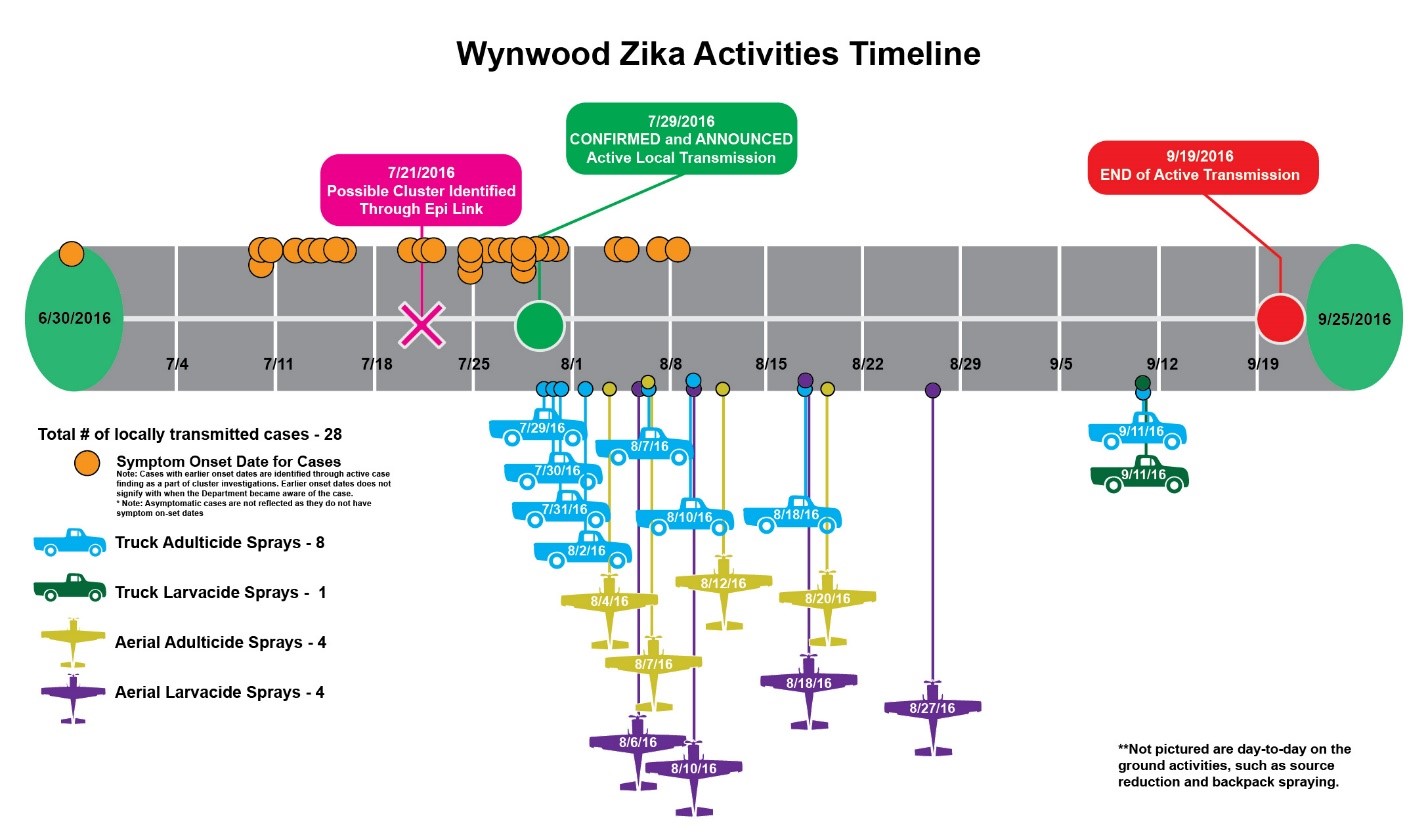
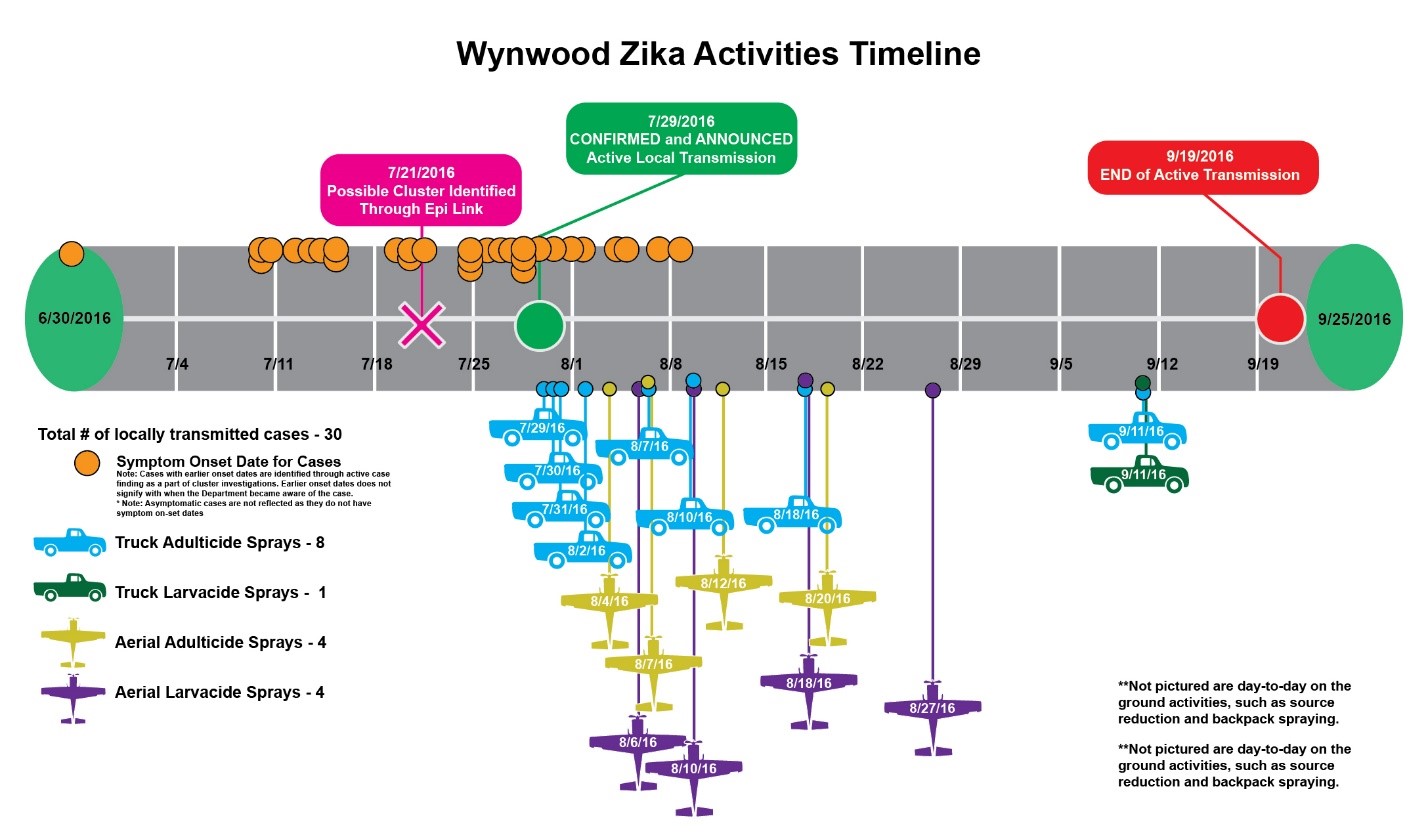
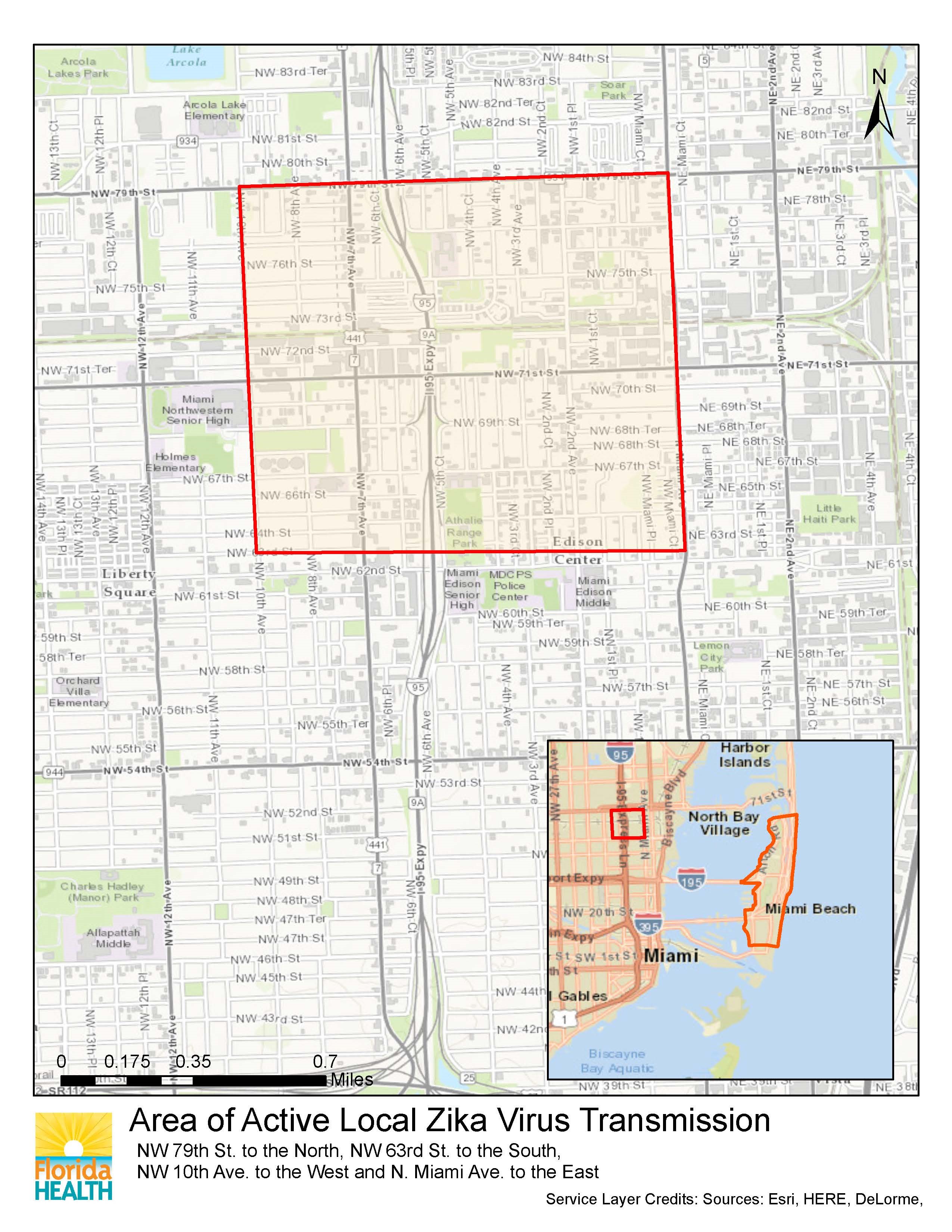
  • One is a case who had exposure in Wynwood with symptom onset in early August. The department just received confirmatory testing from CDC. This case does not impact the lifting of the Zika zone in Wynwood.
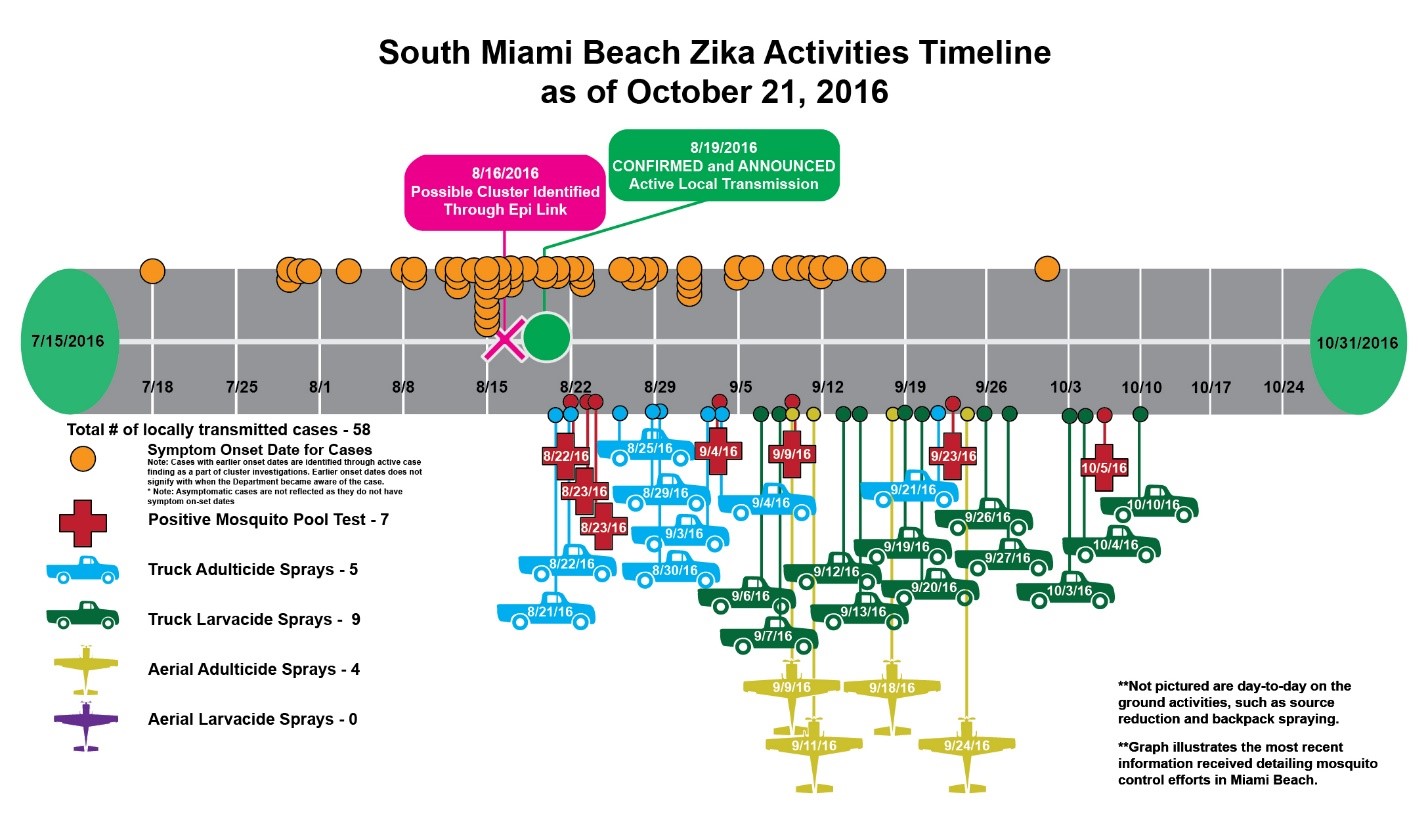
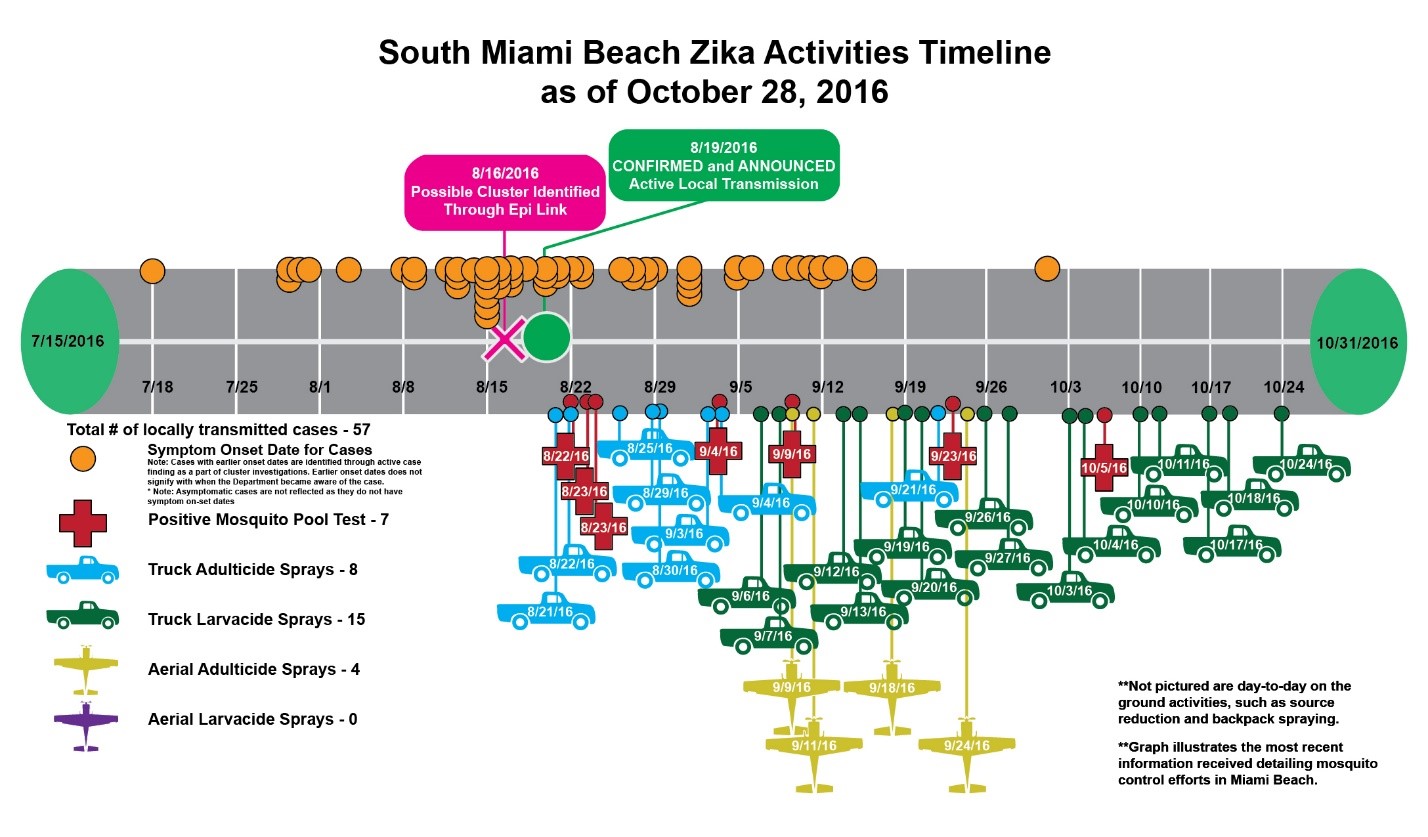
  • One case had exposure in Miami Beach.
  • One case had exposure in Little River.
  • The other six had exposure in Miami-Dade County and the department is investigating where exposure occurred.
[FONT=&quot]Additionally, there is one case who had travel to an area outside of Florida with widespread Zika transmission as well as in Miami, which makes it impossible to determine exactly where exposure occurred. This case is being added to the undetermined category.[/FONT]
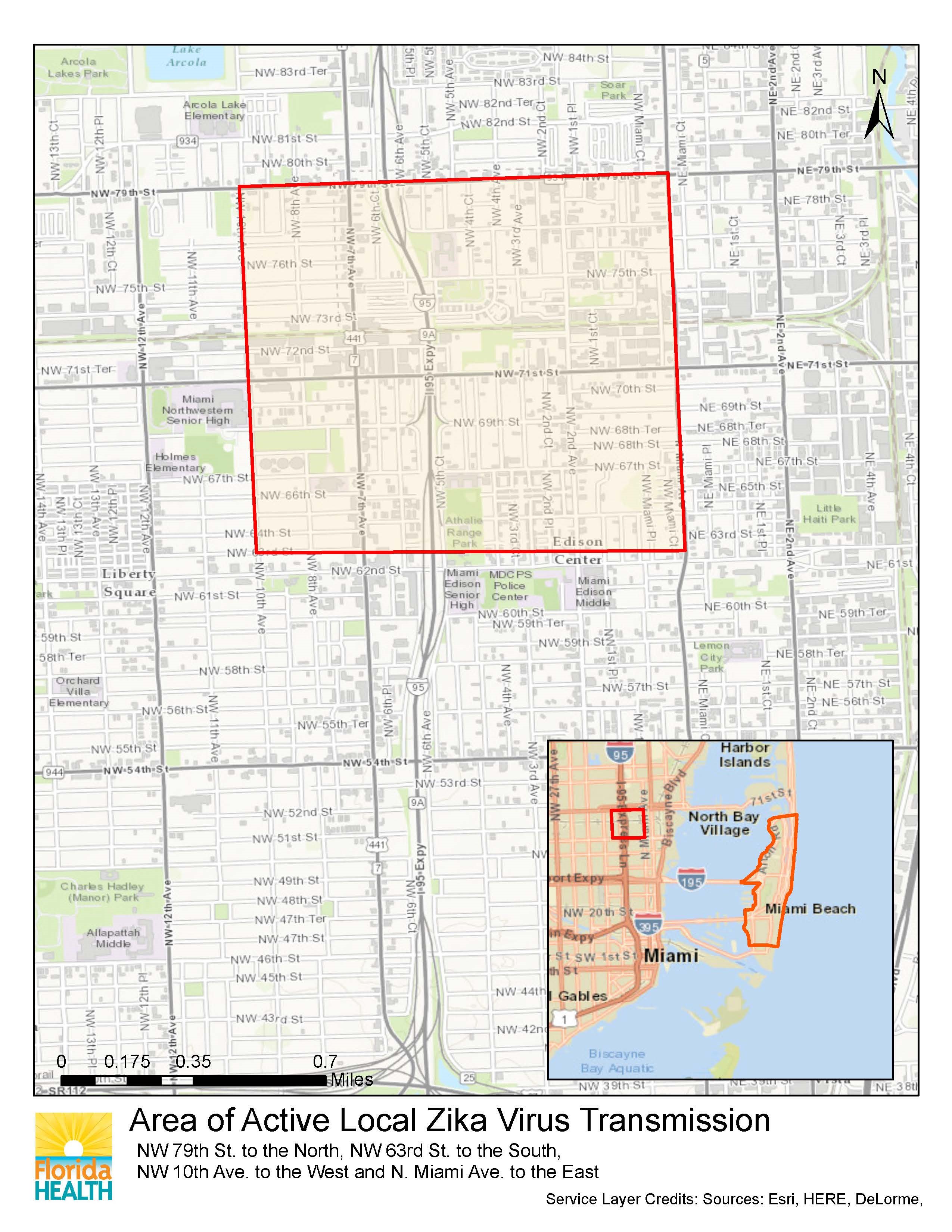
[FONT=&quot]DOH continues door-to-door outreach and targeted testing in Miami-Dade County and mosquito abatement and reduction activities are also taking place around the locations that are being investigated. DOH believes ongoing transmission is only taking place within the identified areas in Miami-Dade County.[/FONT]
[FONT=&quot]One case does not mean ongoing active transmission is taking place. DOH conducts a thorough investigation by sampling close contacts and community members around each case to determine if additional people are infected. If DOH finds evidence that active transmission is occurring in an area, the media and the public will be notified.[/FONT]
[FONT=&quot]For a complete breakdown of non-travel and travel-related Zika infections to-date, please see below.[/FONT]
[TABLE="border: 1, cellpadding: 0, cellspacing: 0"]
[TR]
[TD="width: 397"] Infection Type
[/TD]
[TD="width: 382"] Infection Count
[/TD]
[/TR]
[TR]
[TD="width: 397"] Travel-Related Infections of Zika
[/TD]
[TD="width: 382"] 758
[/TD]
[/TR]
[TR]
[TD="width: 397"] Non-Travel Related Infections of Zika
[/TD]
[TD="width: 382"] 180
[/TD]
[/TR]
[TR]
[TD="width: 397"] Infections Involving Pregnant Women
[/TD]
[TD="width: 382"] 115
[/TD]
[/TR]
[TR]
[TD="width: 397"] Out of State Cases (not Florida Residents)
[/TD]
[TD="width: 382"] 19
[/TD]
[/TR]
[TR]
[TD="width: 397"] Undetermined
[/TD]
[TD="width: 382"] 6
[/TD]
[/TR]
[TR]
[TD="width: 397"] Total
[/TD]
[TD="width: 382"] 1,078
[/TD]
[/TR]
[/TABLE]
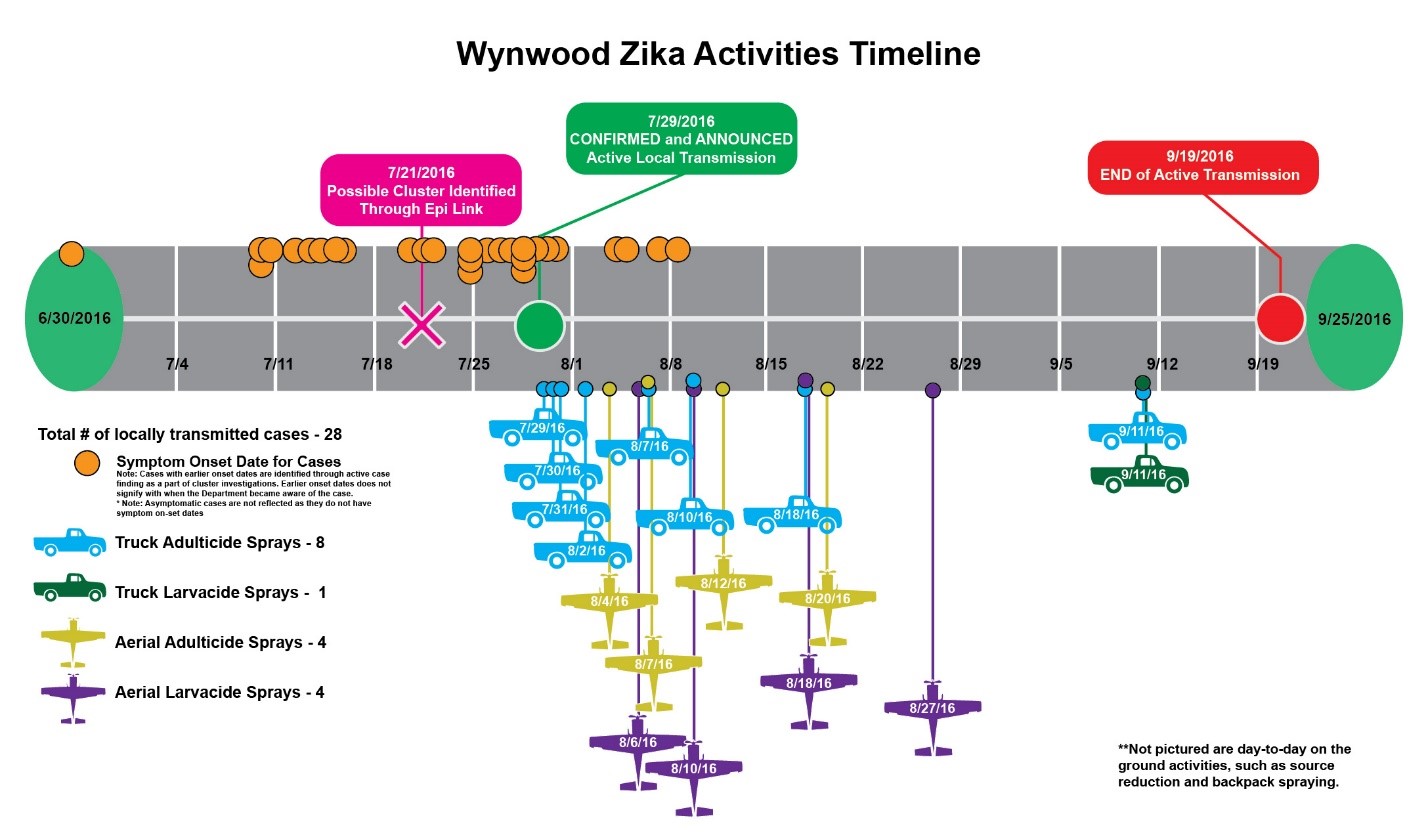
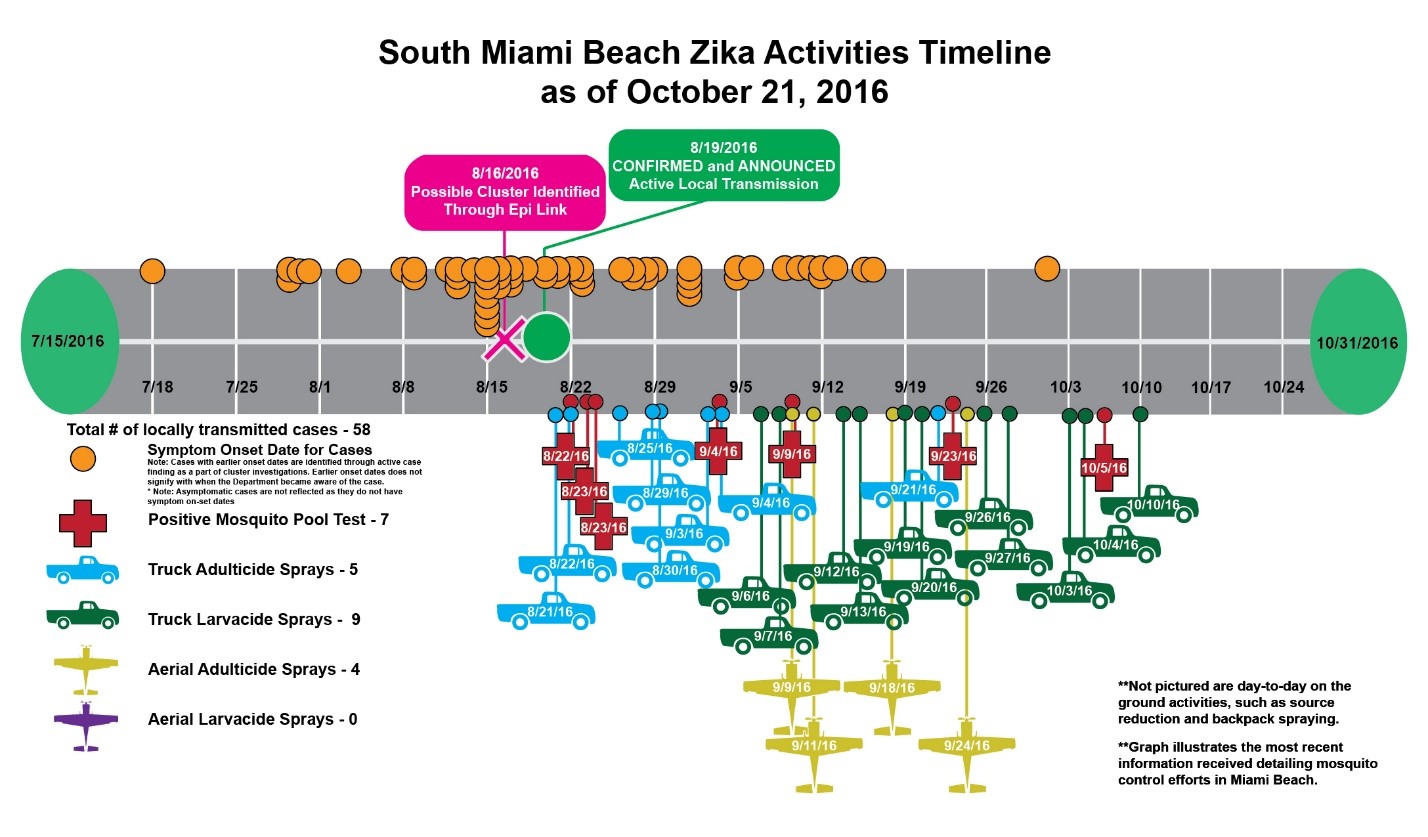
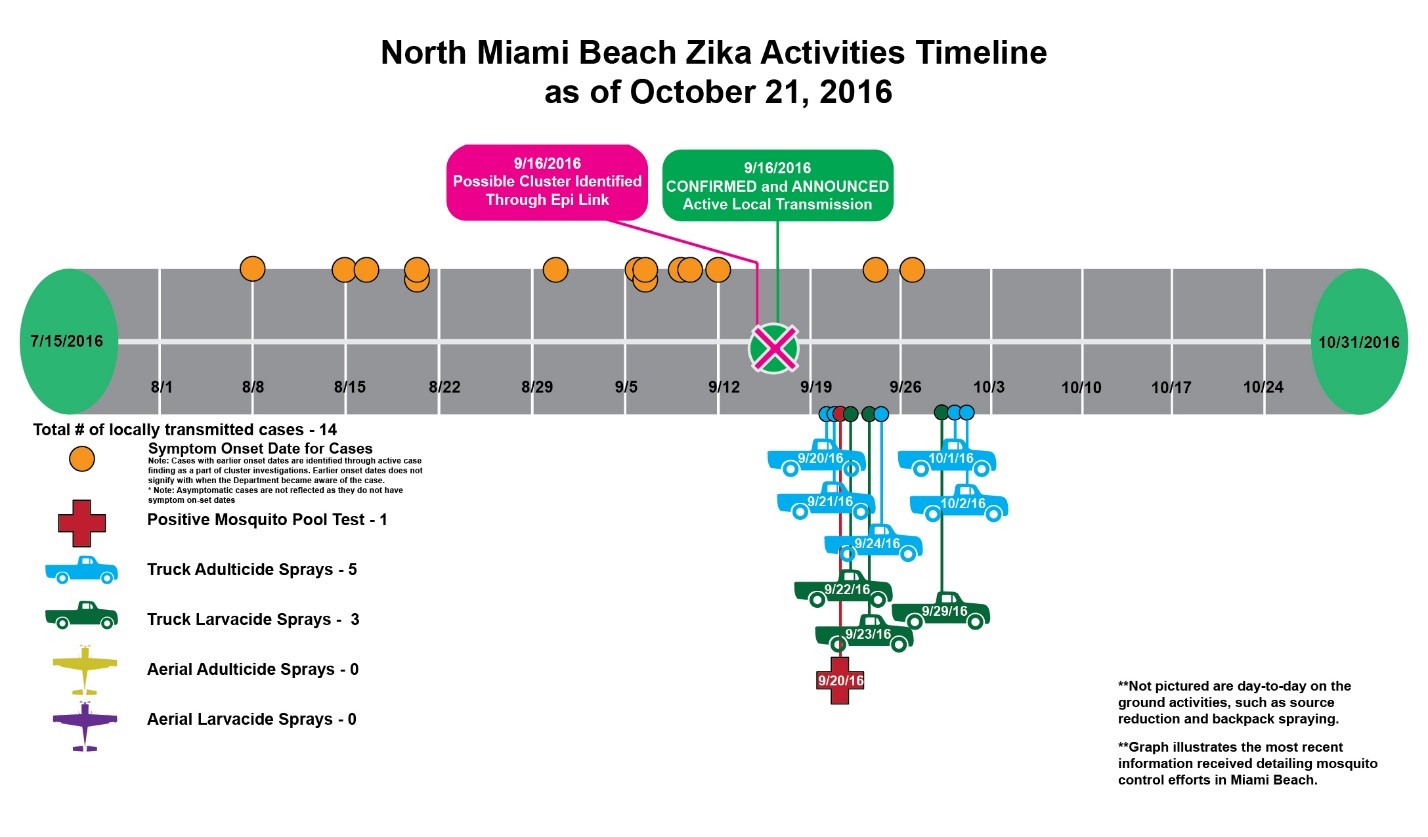
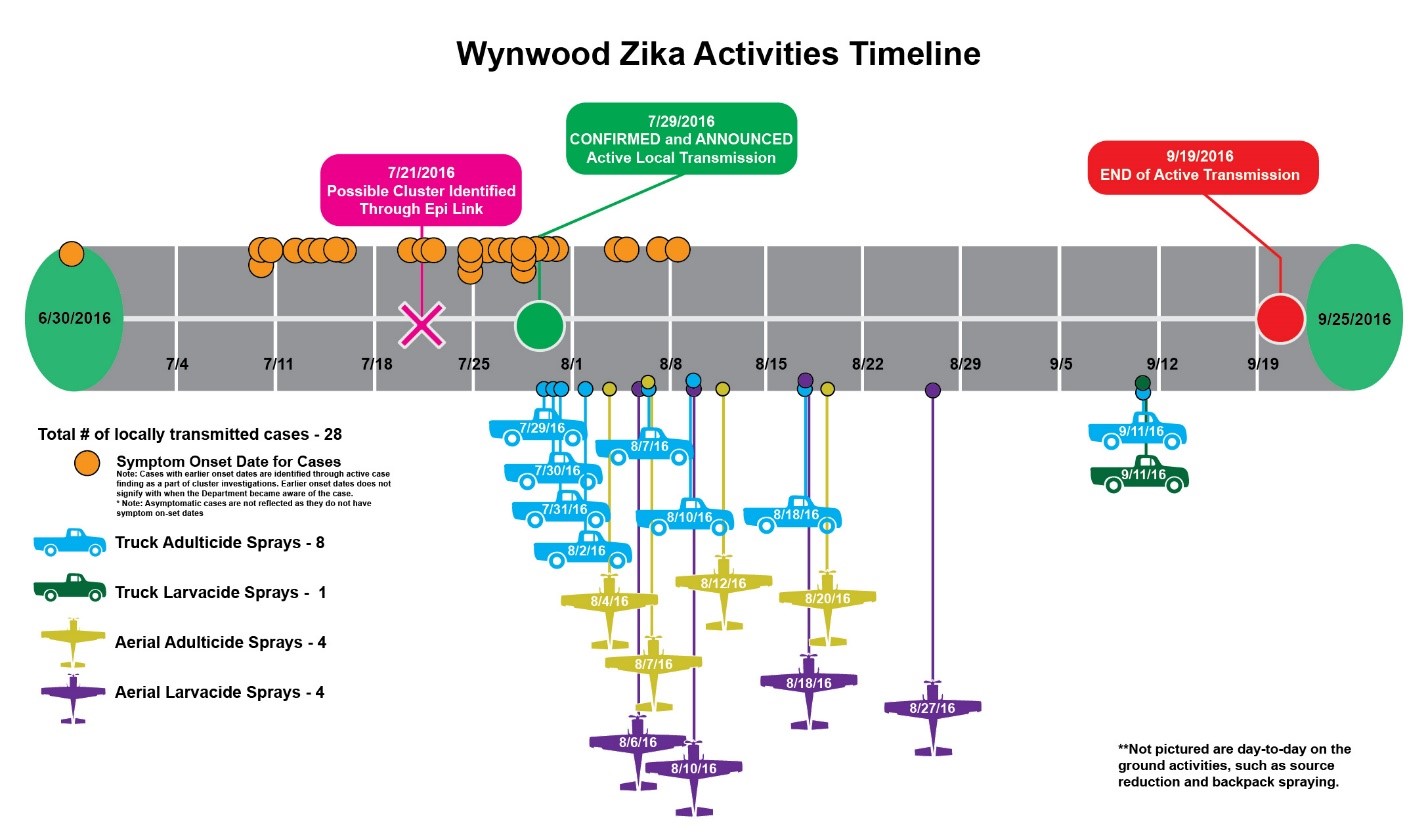
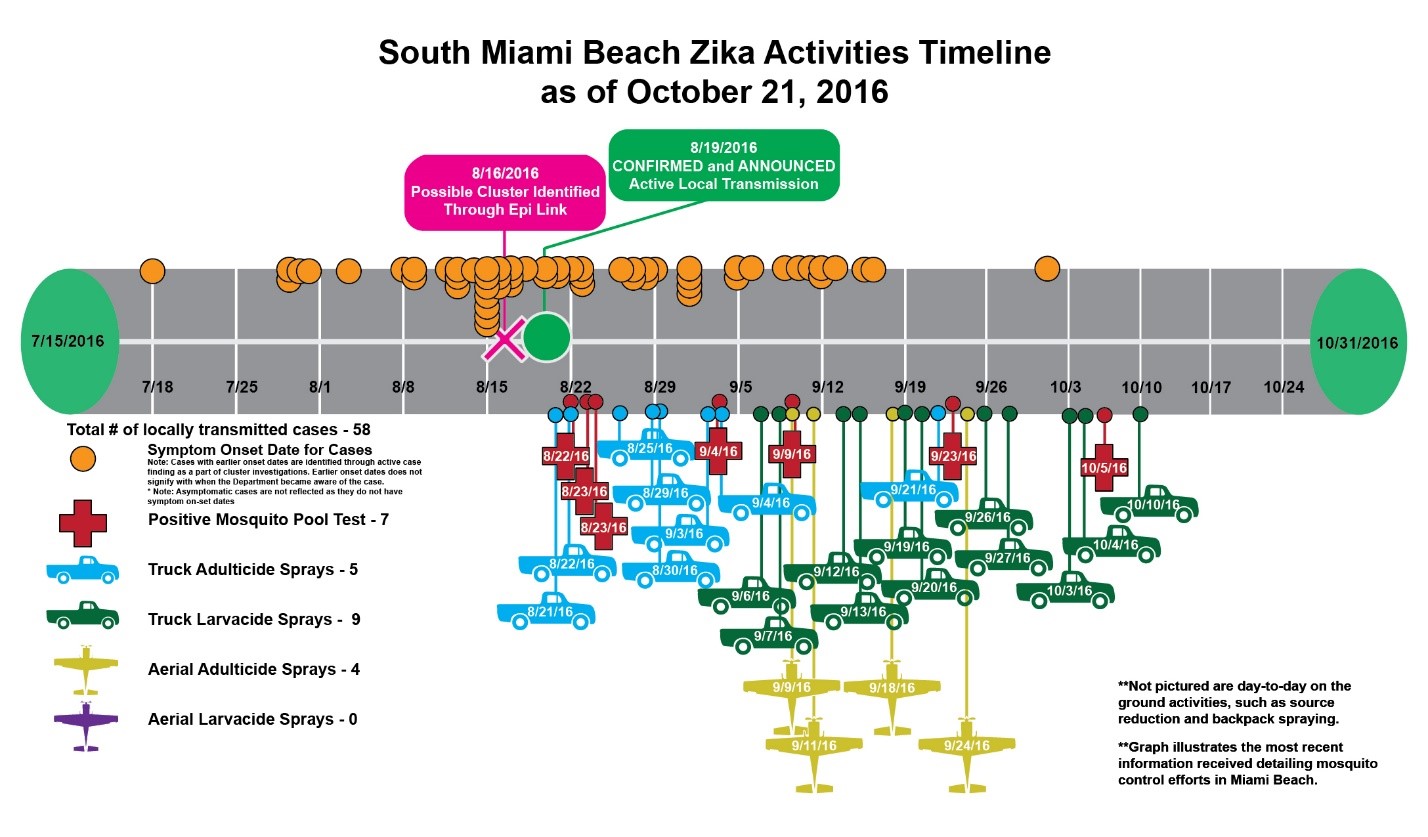
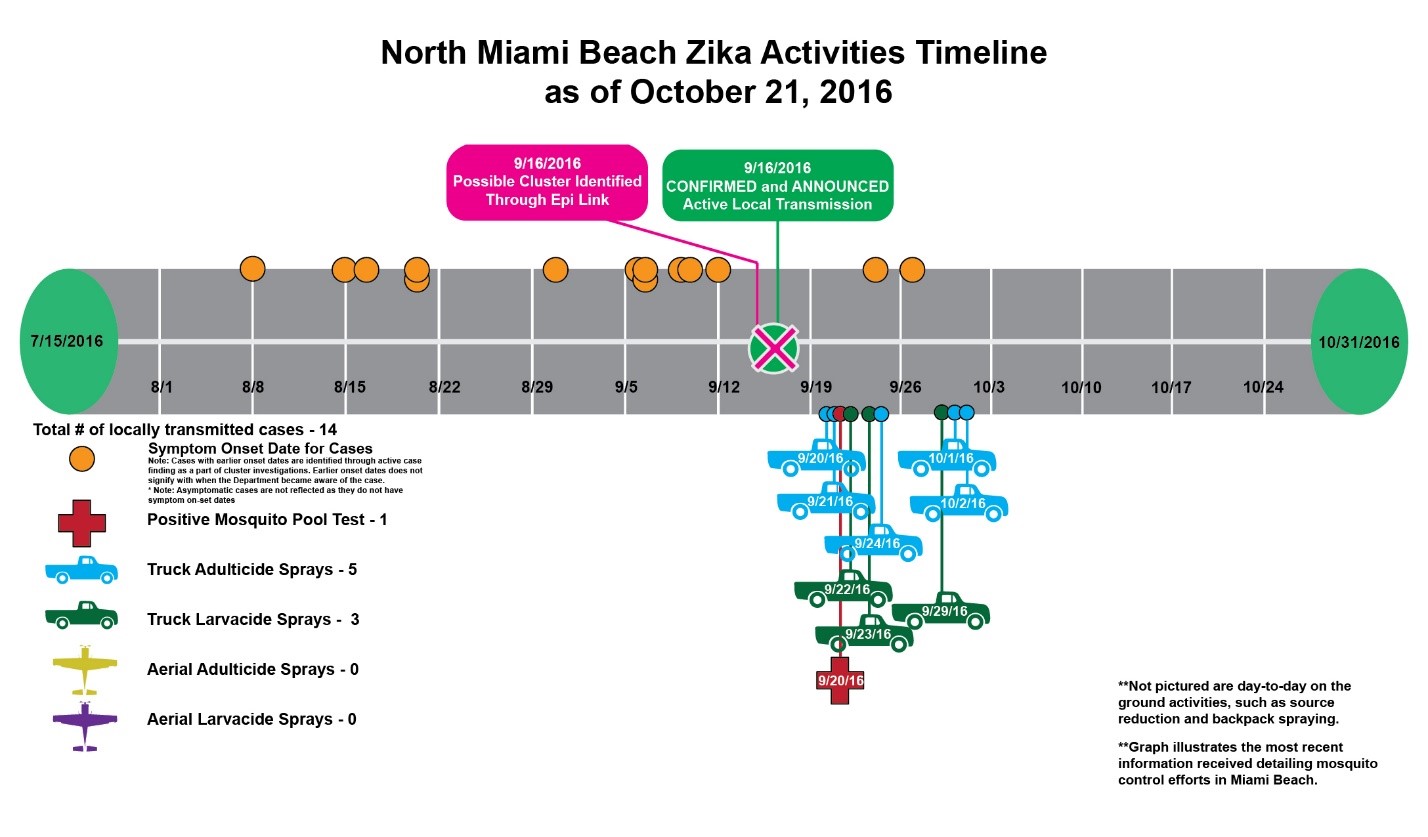
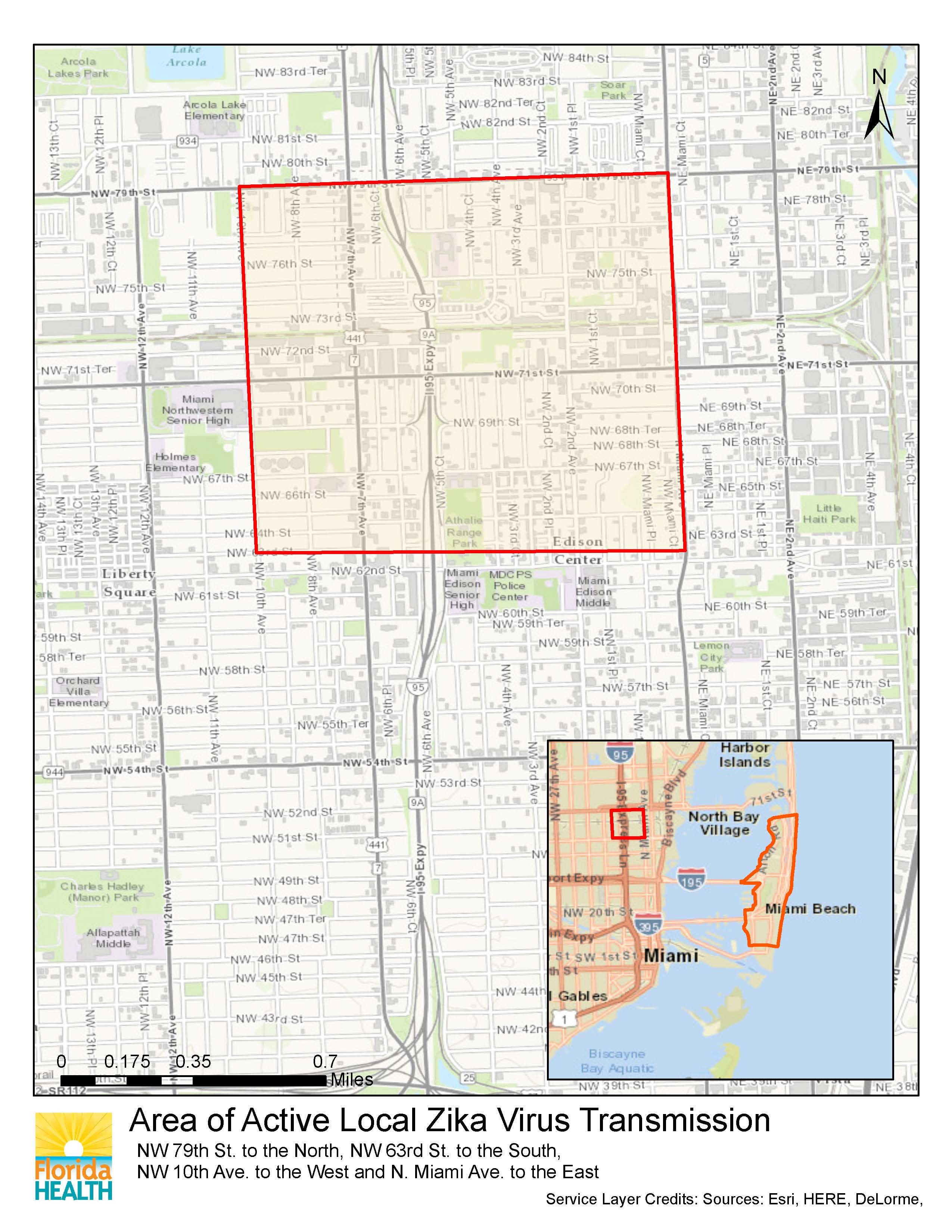
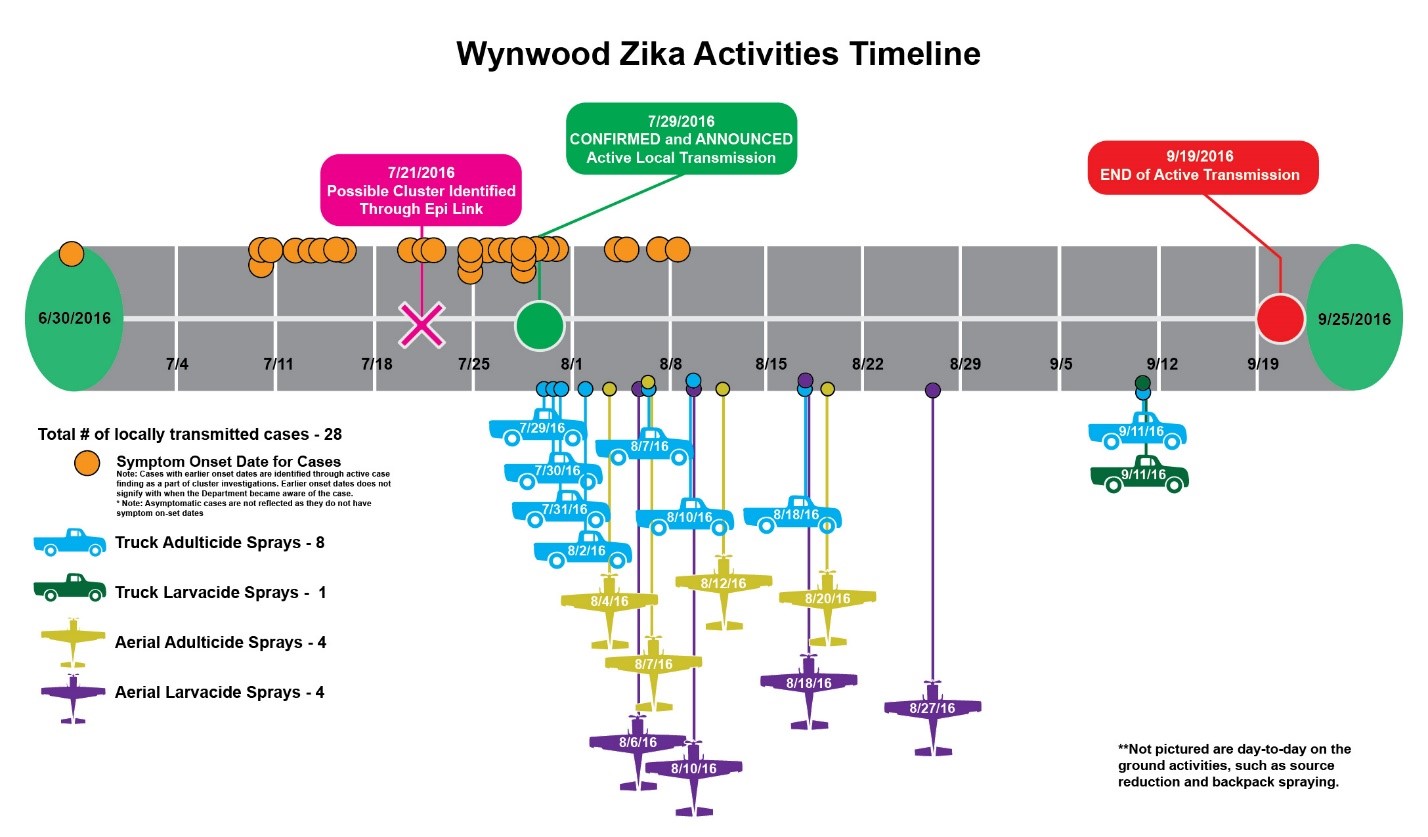
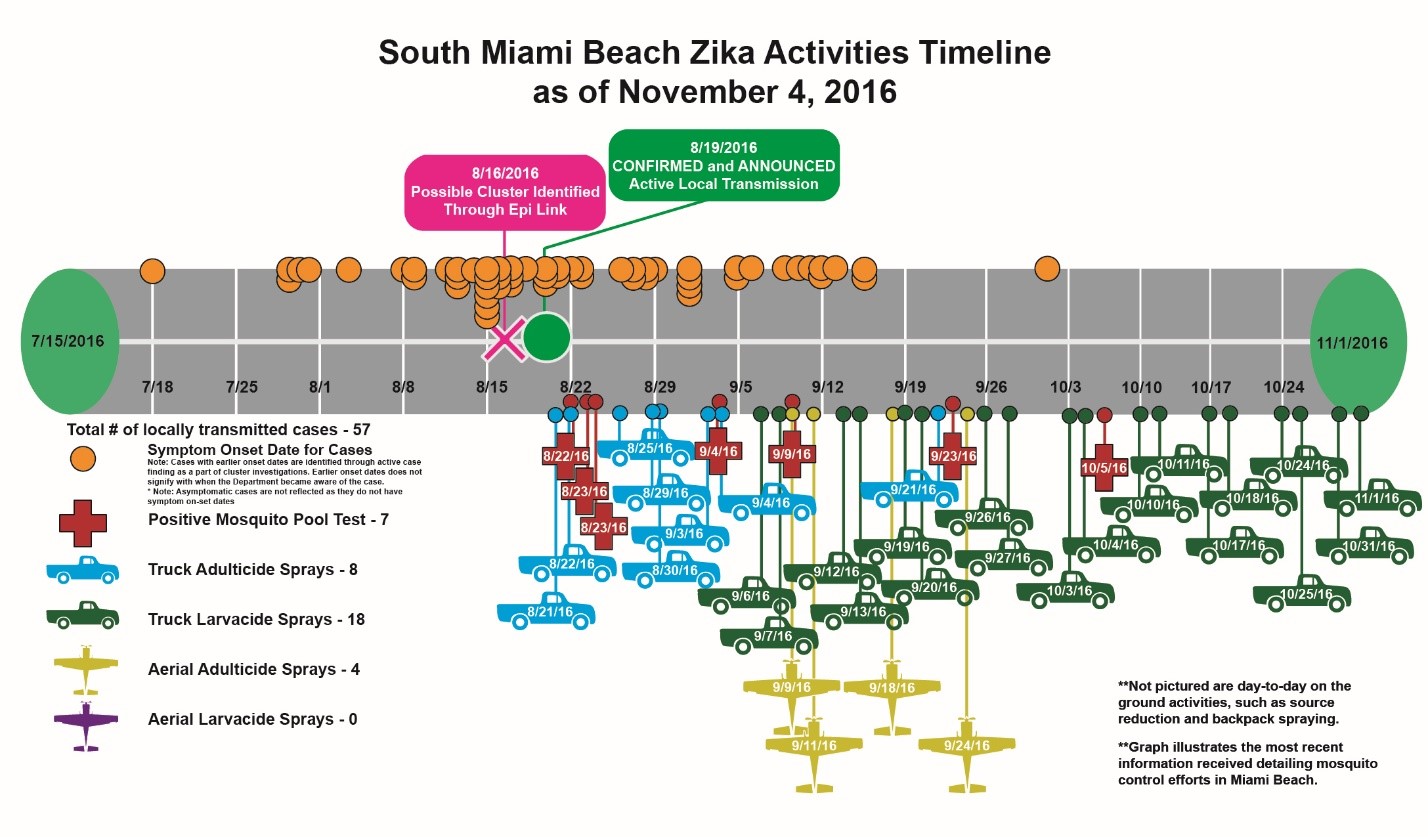
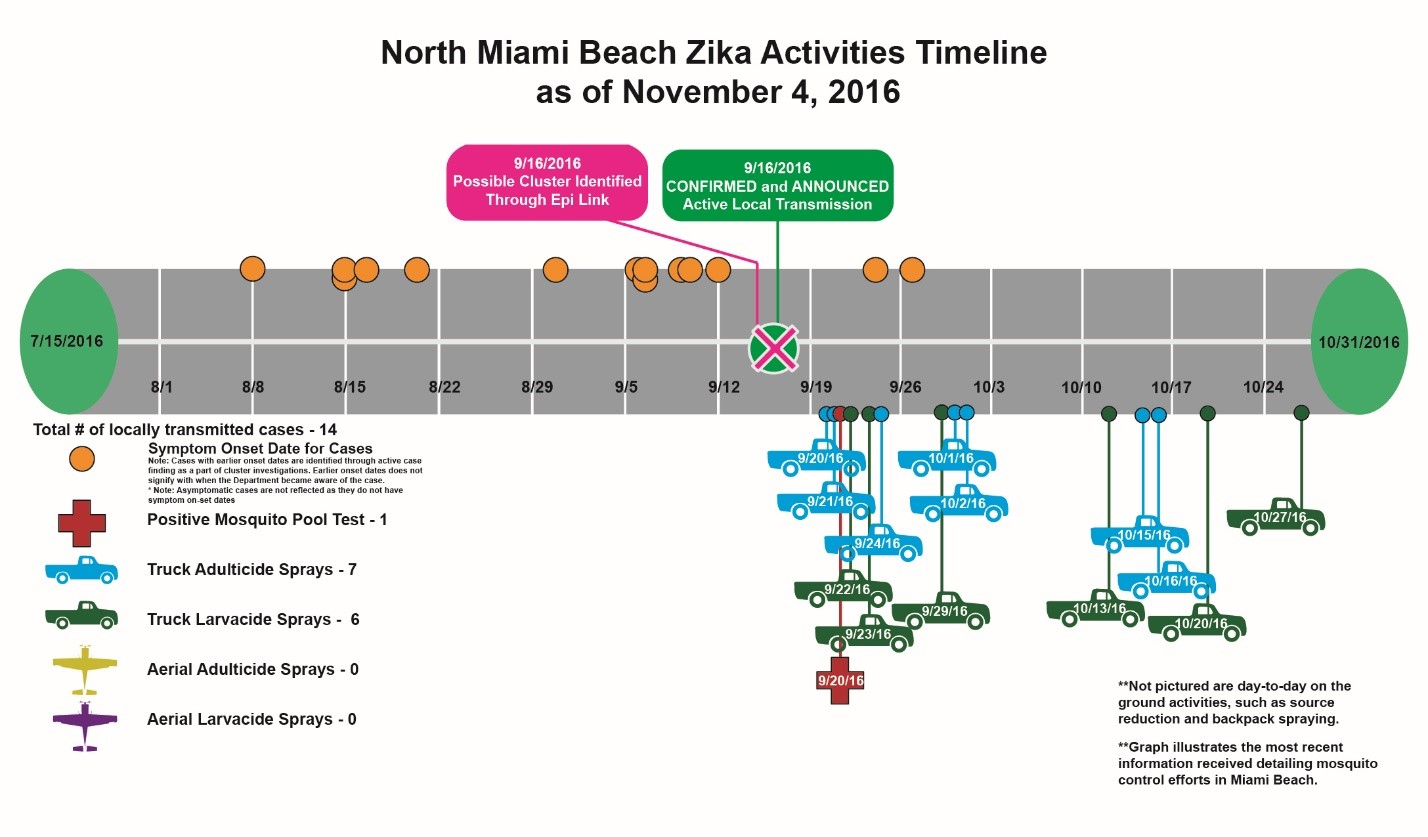
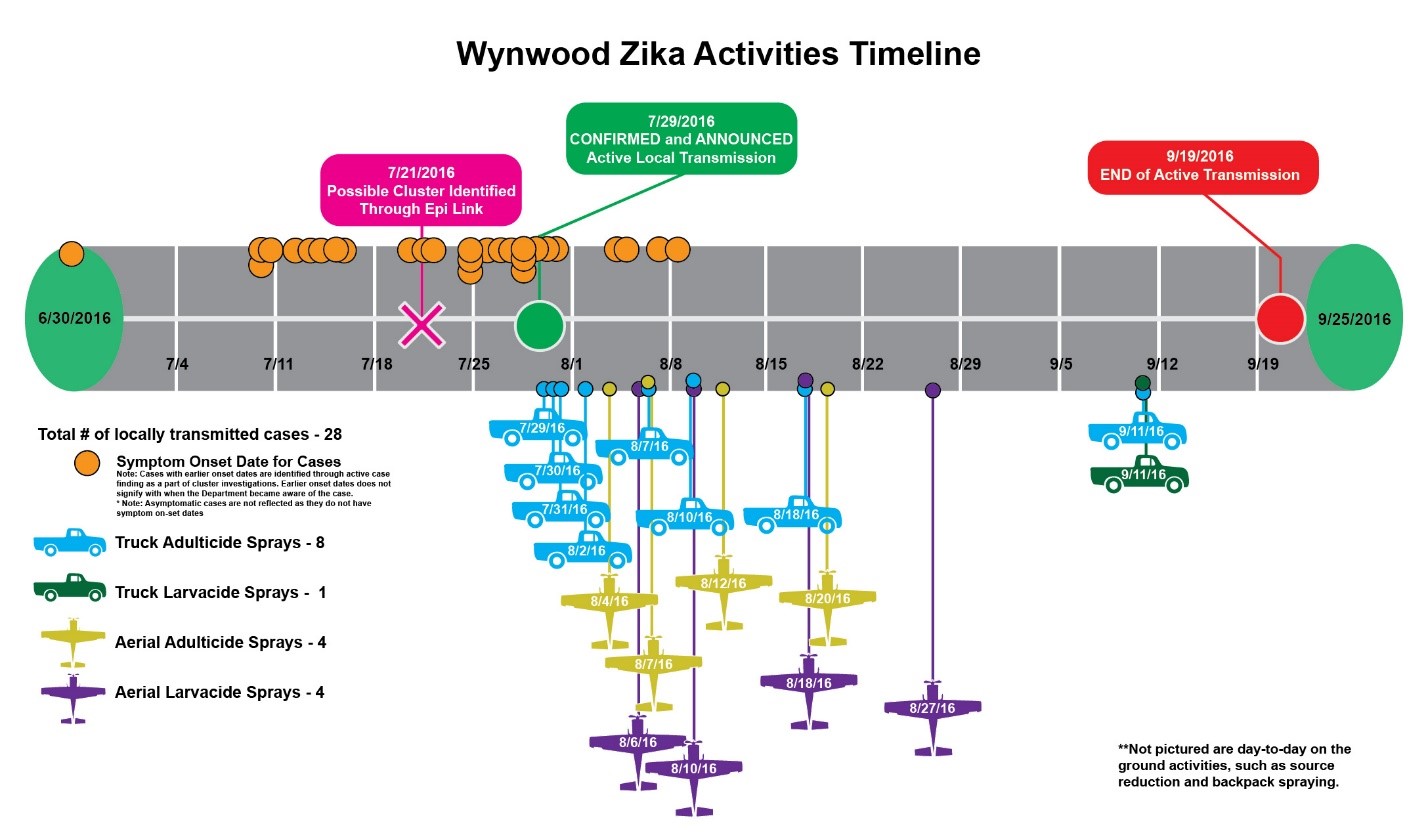
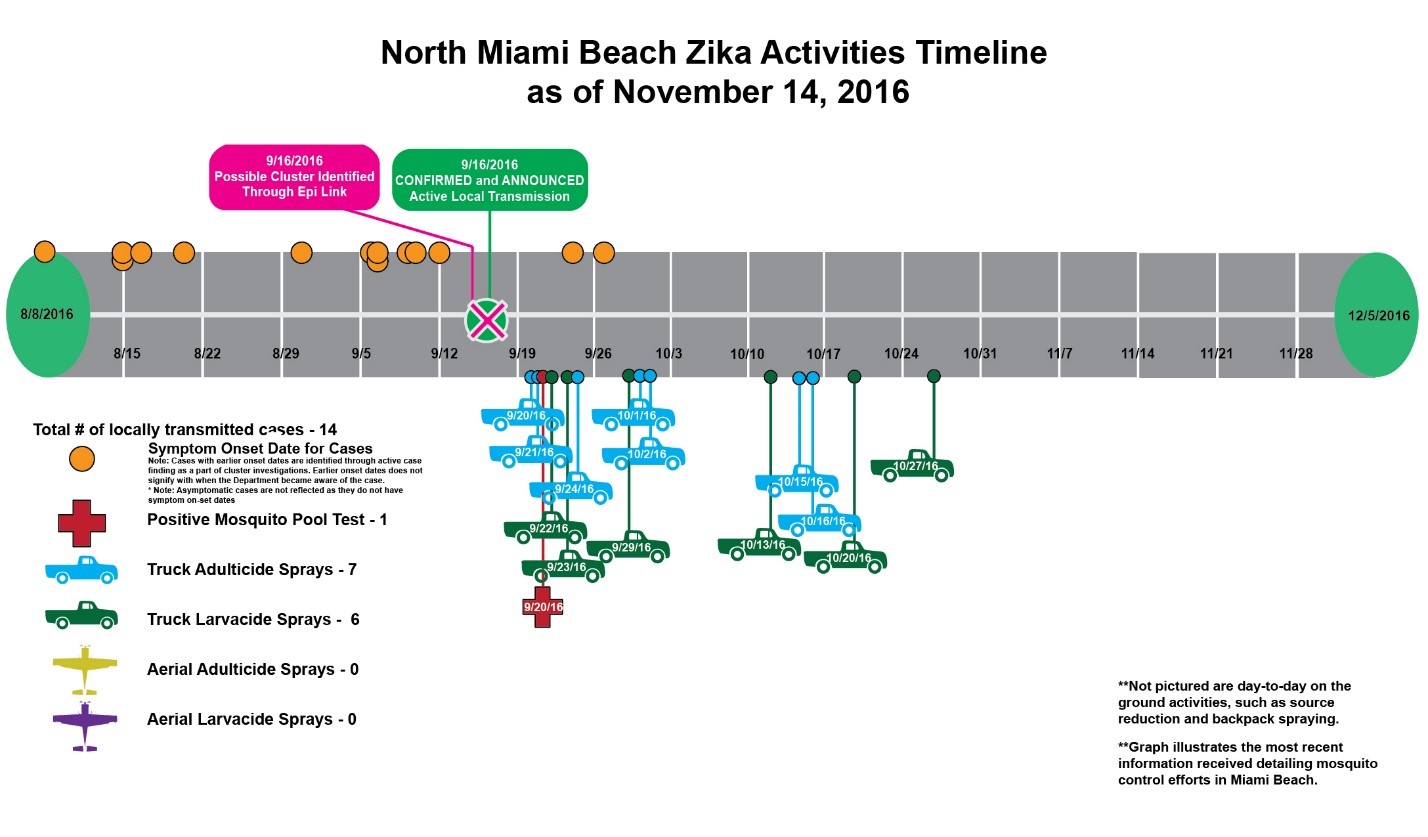
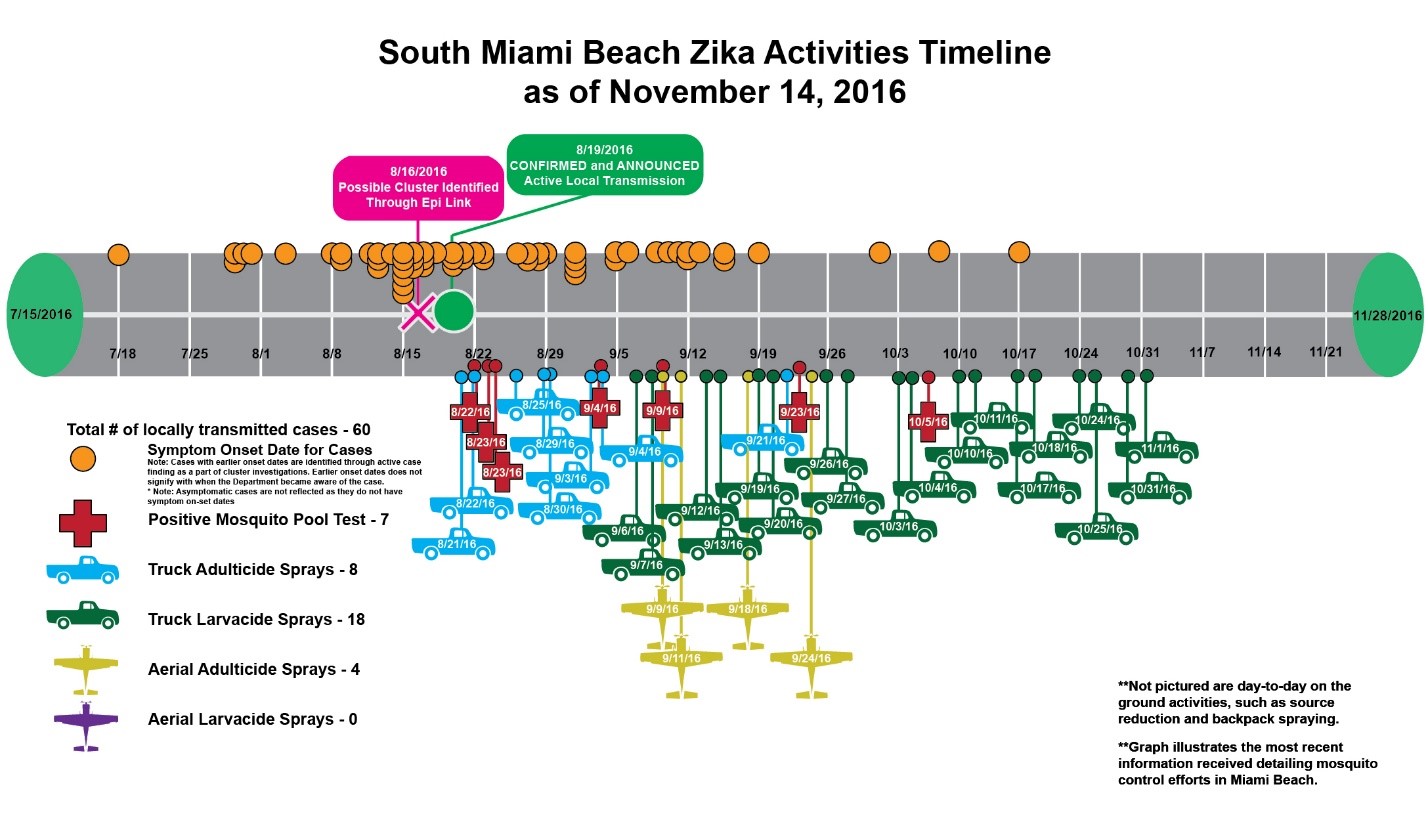
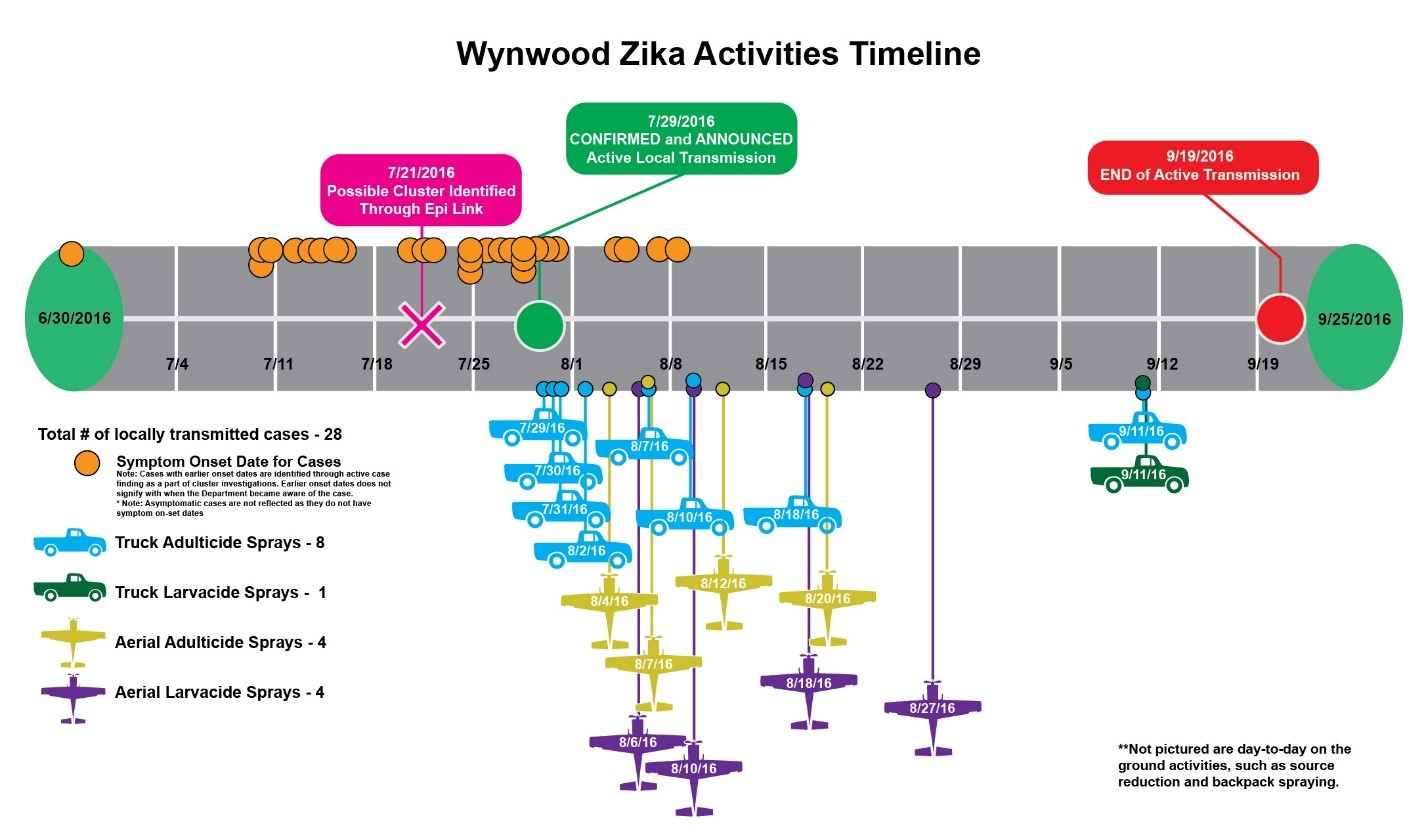
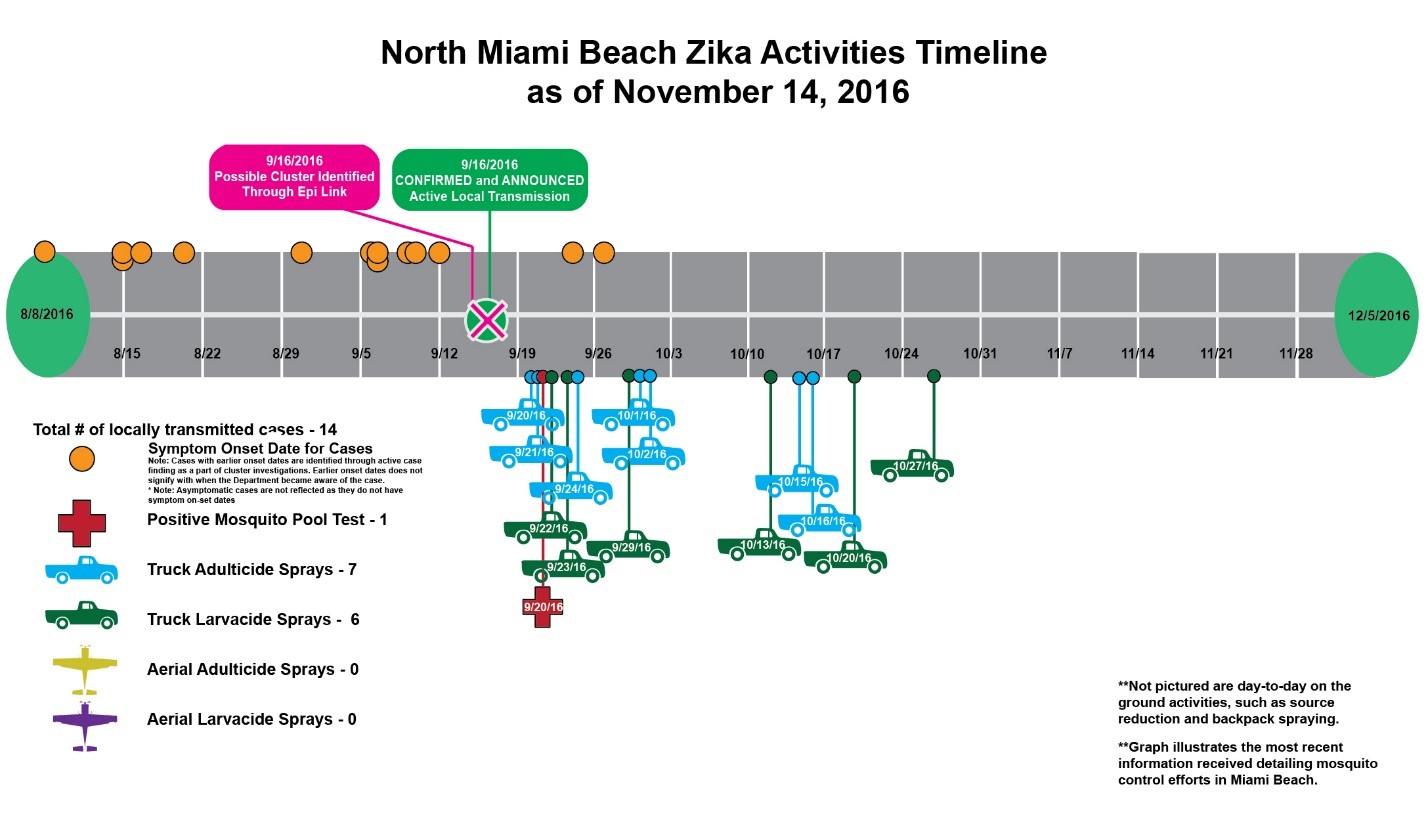
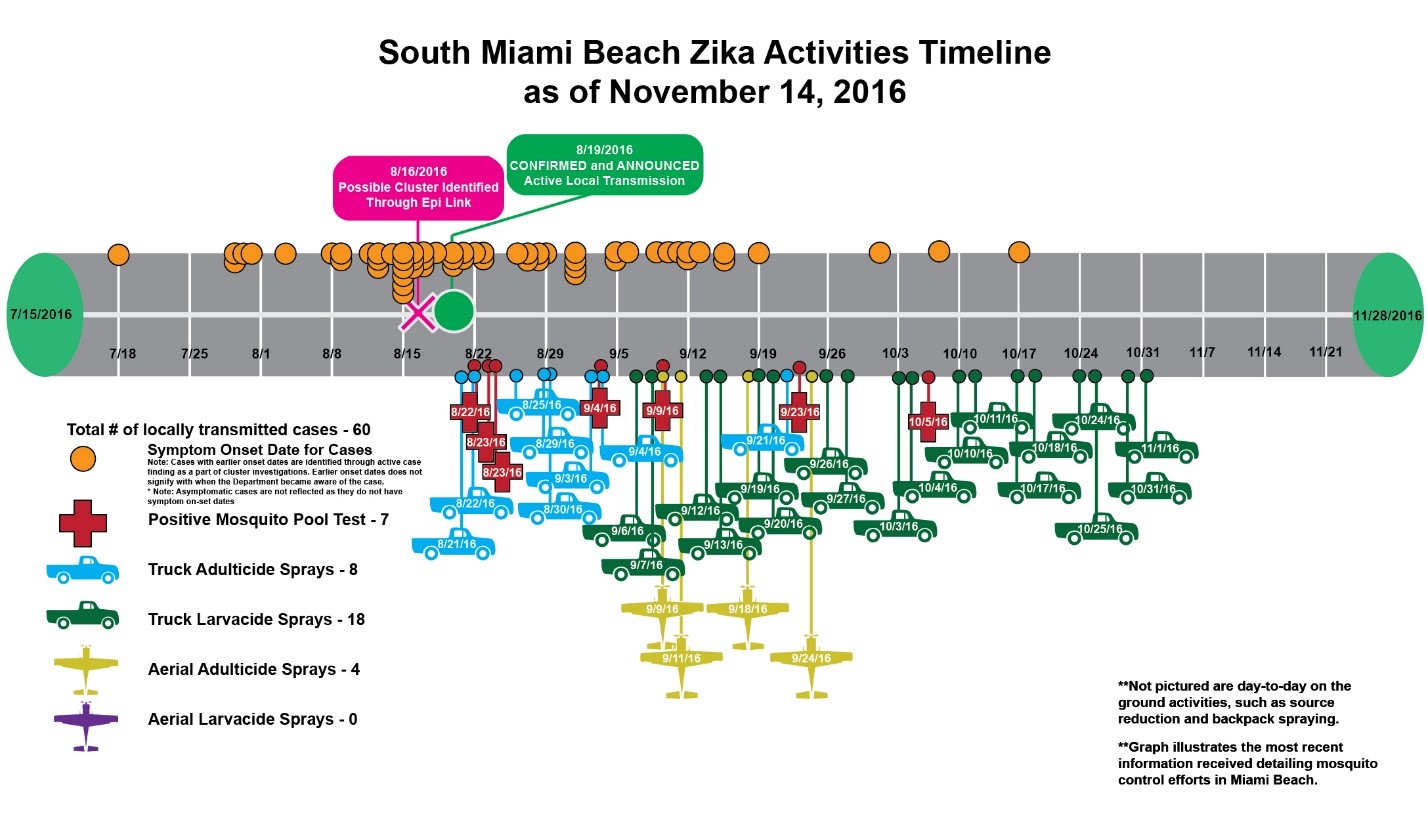
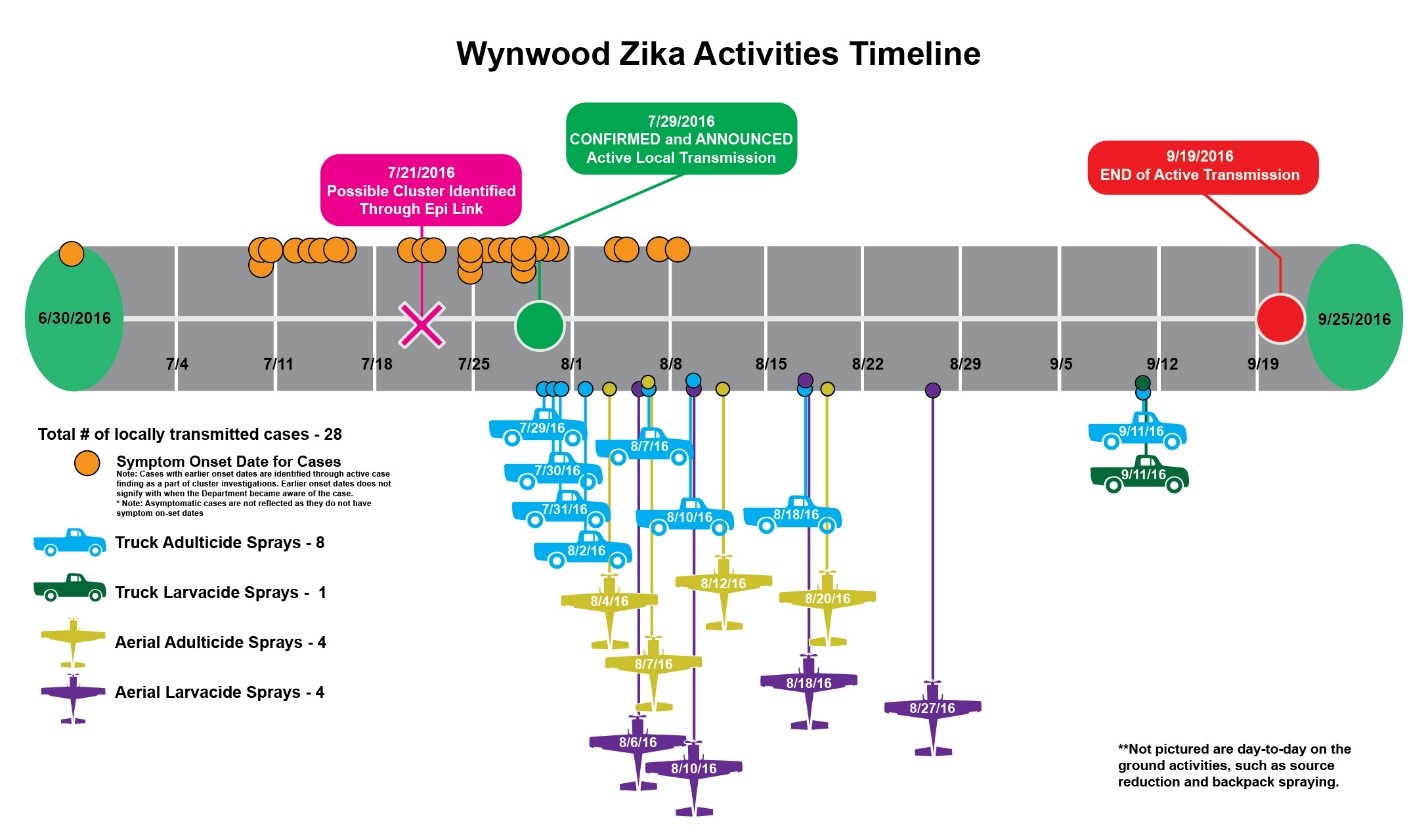
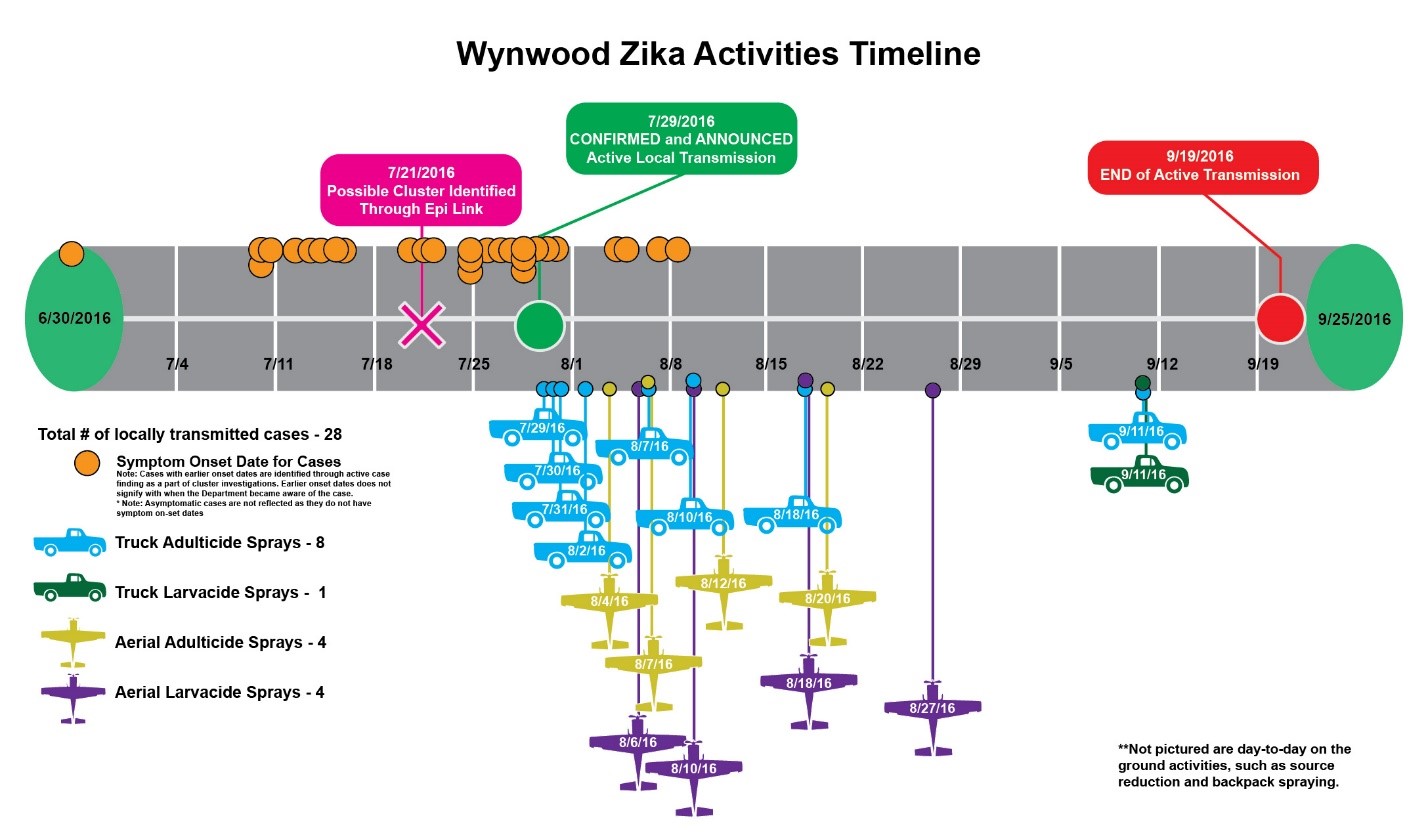
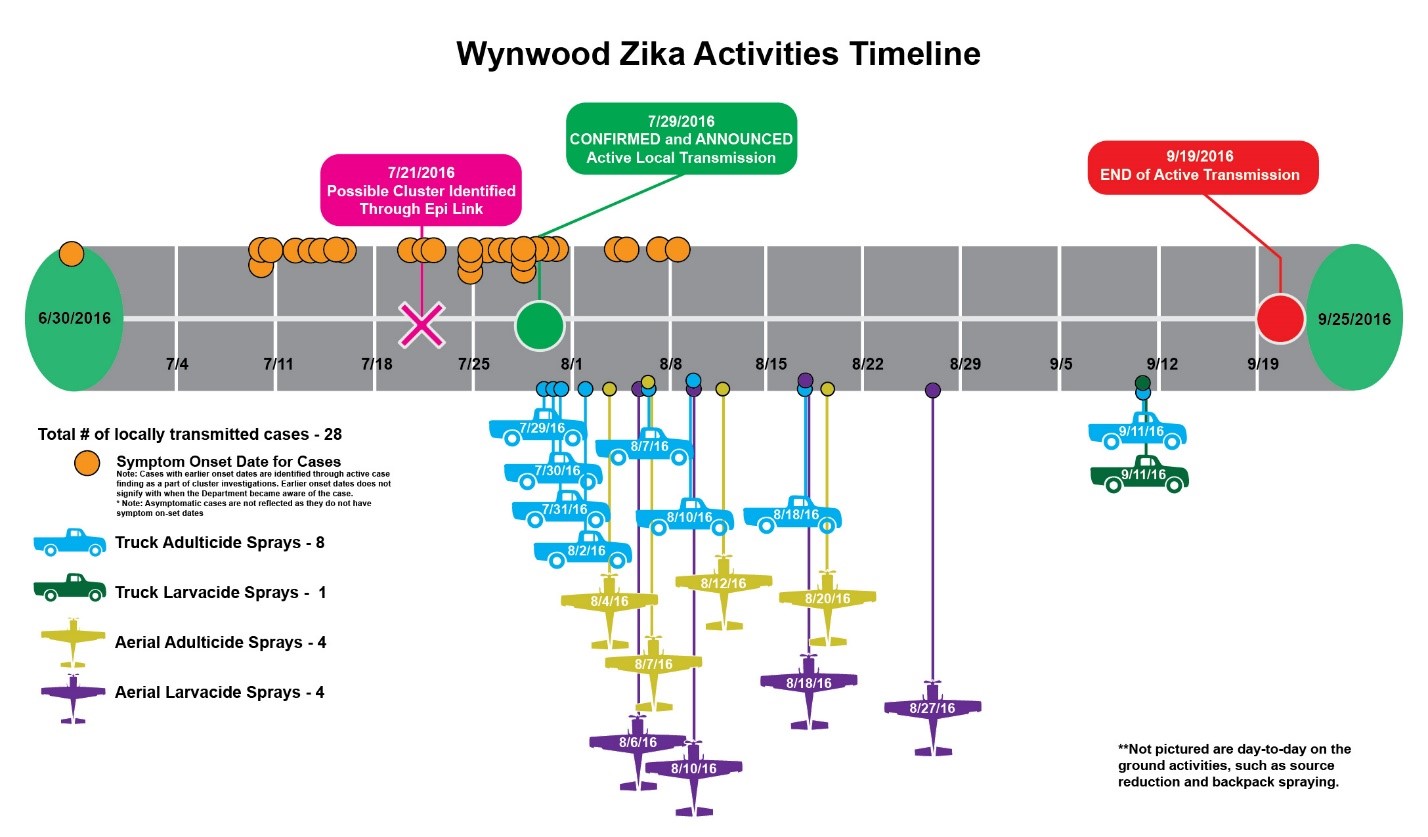
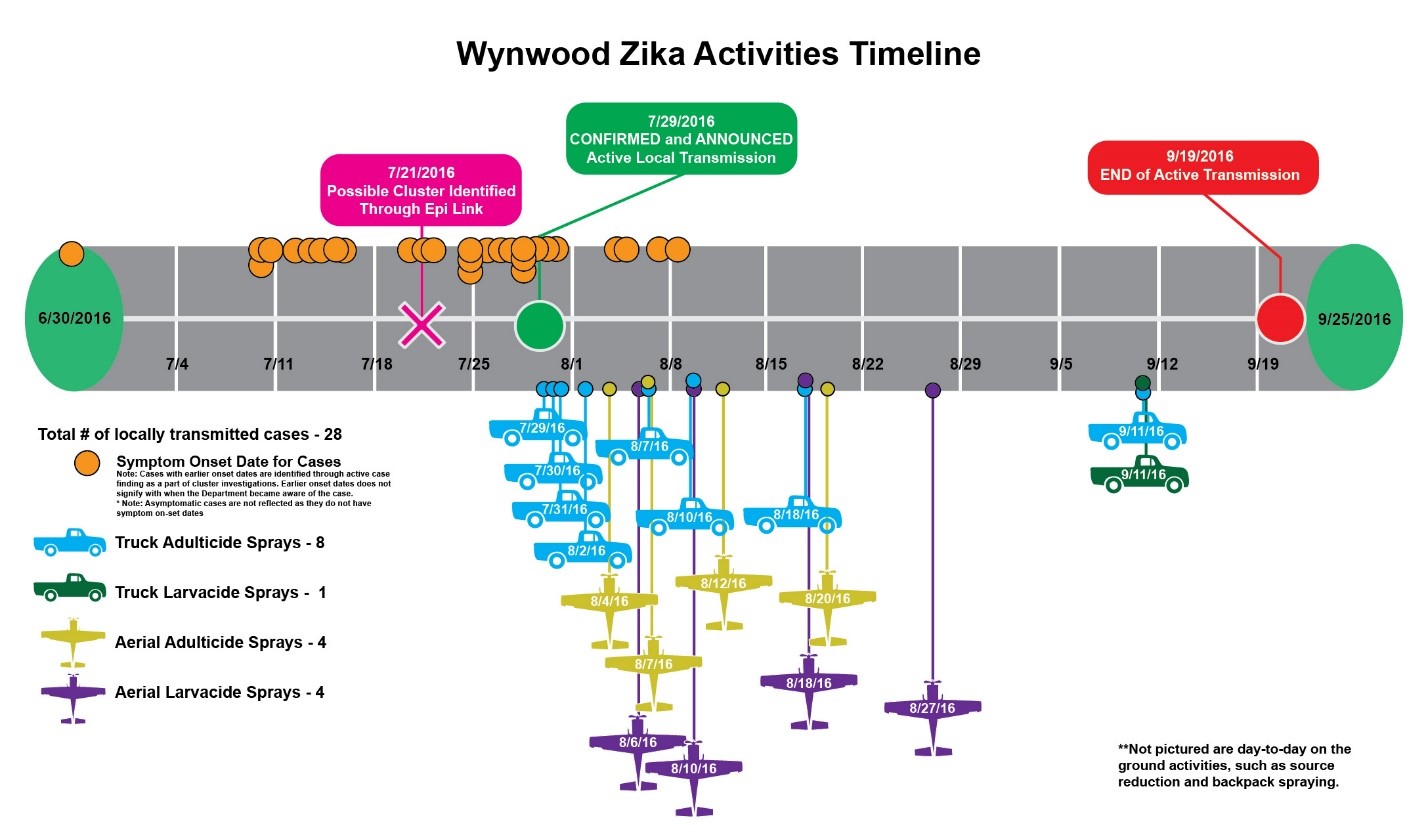
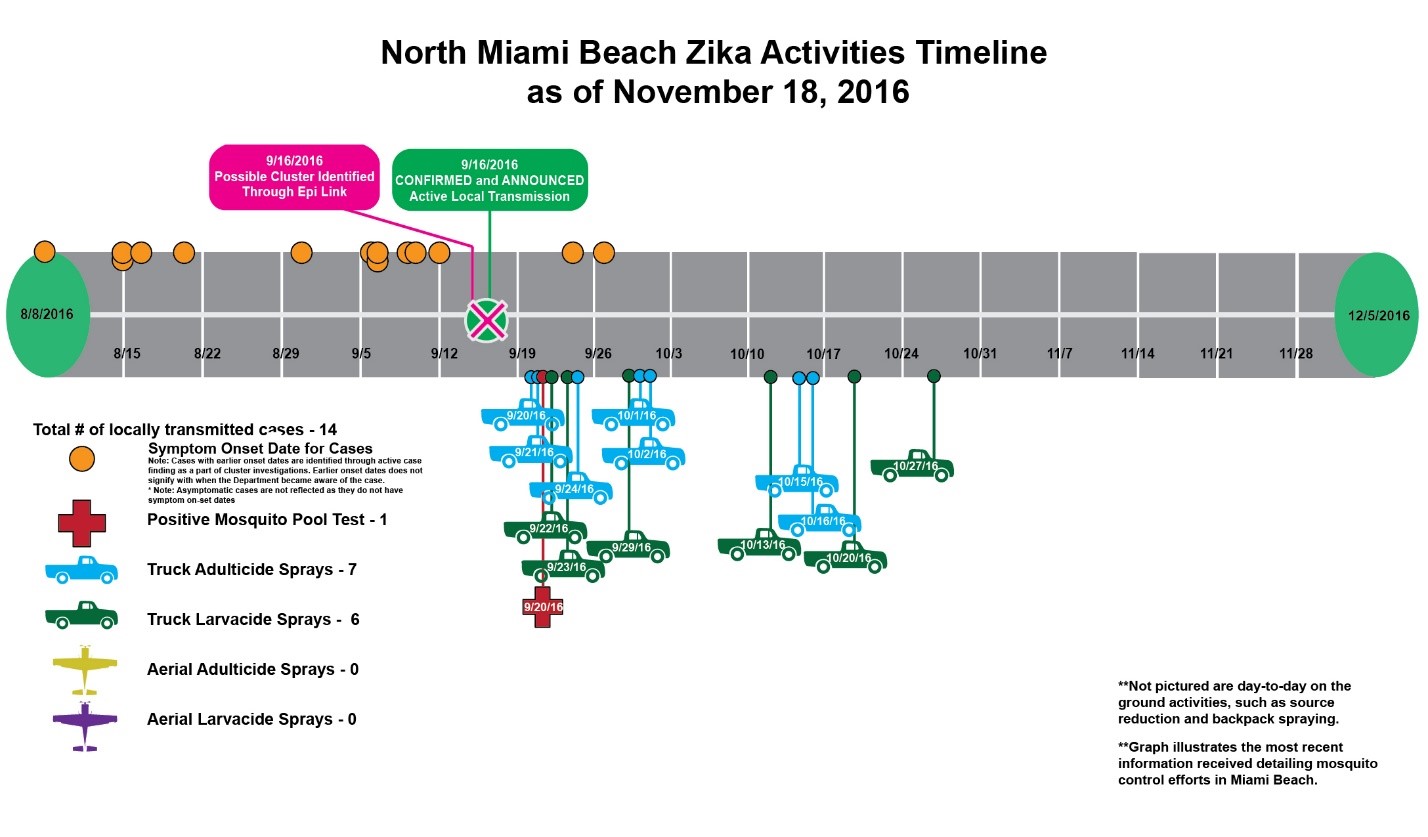
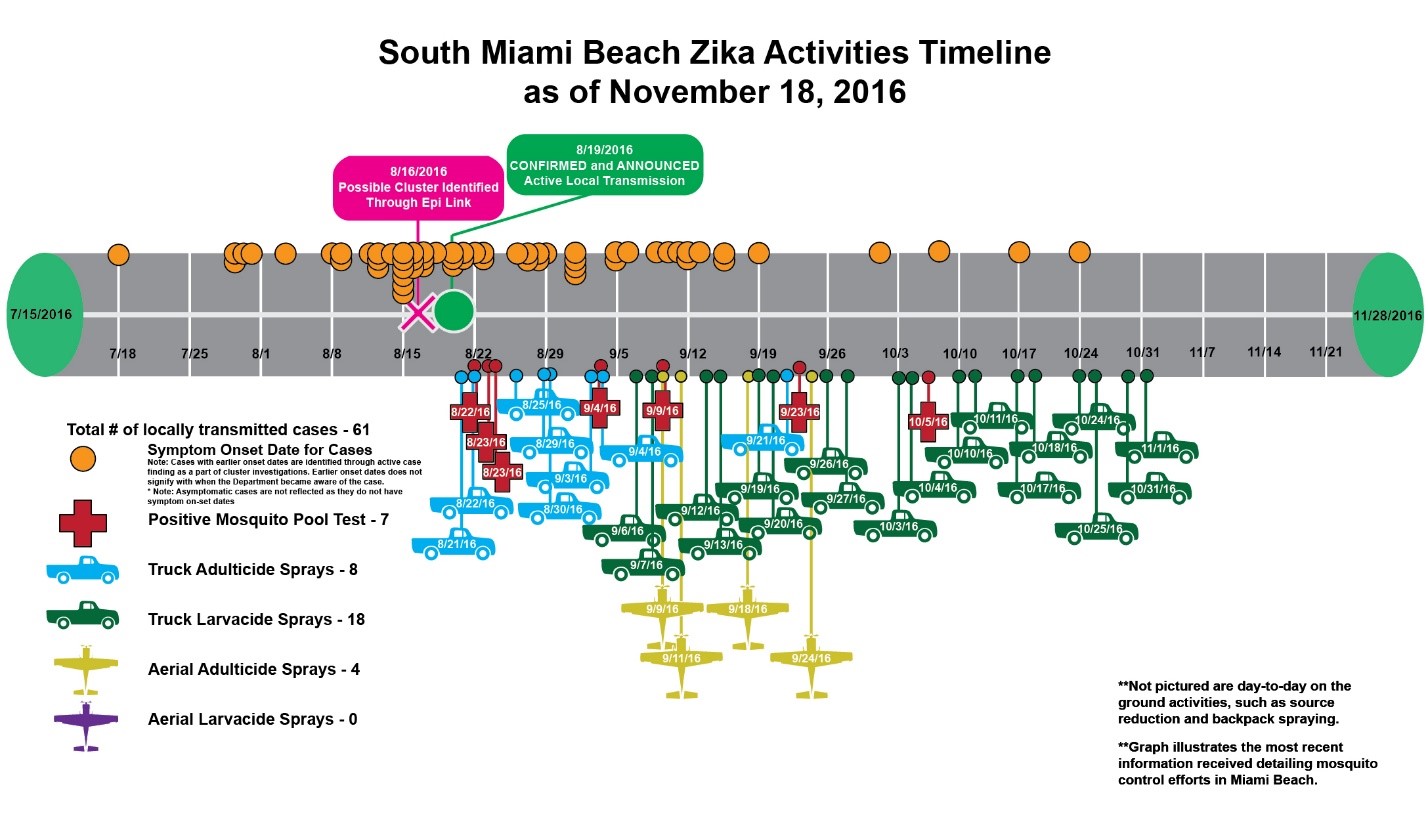
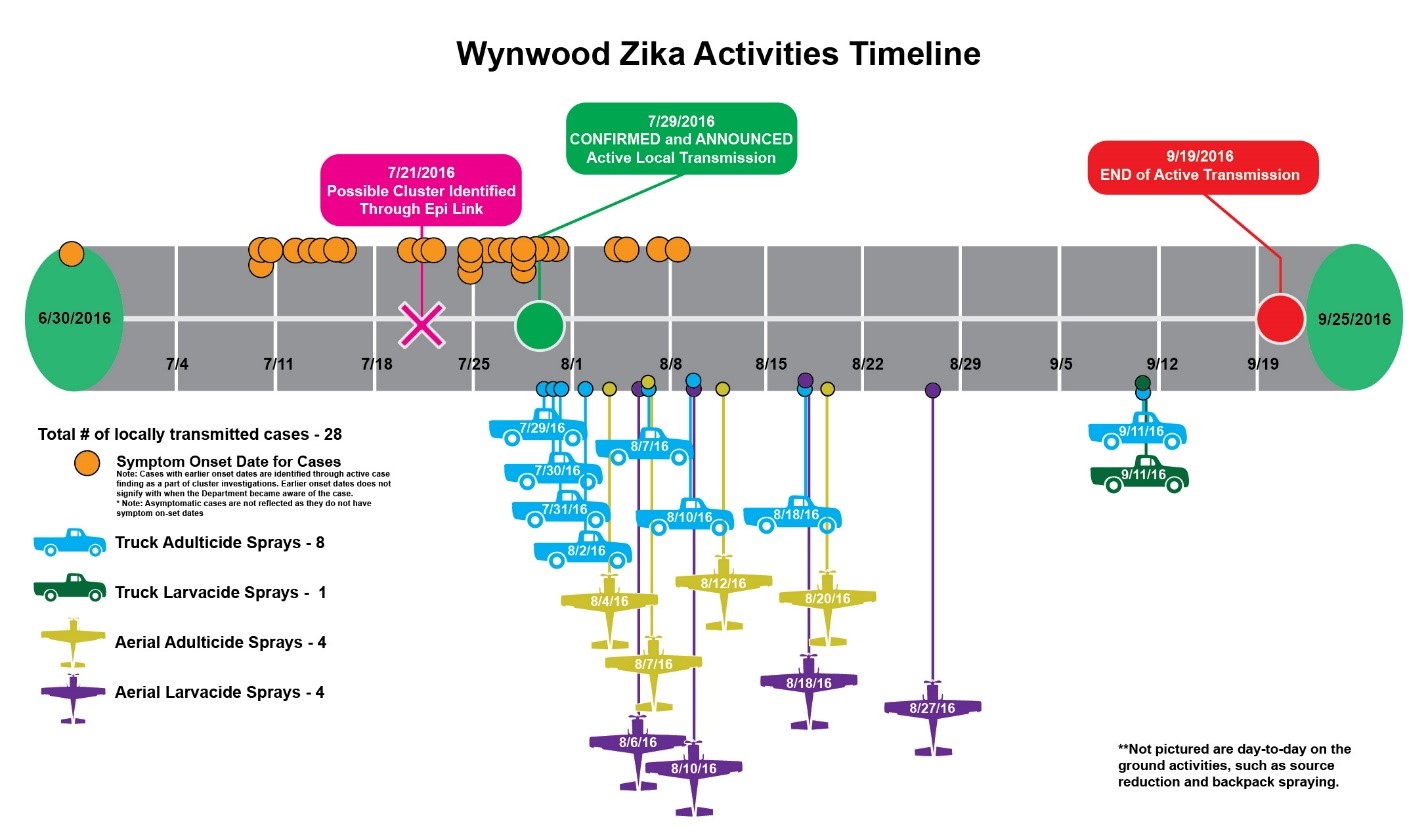
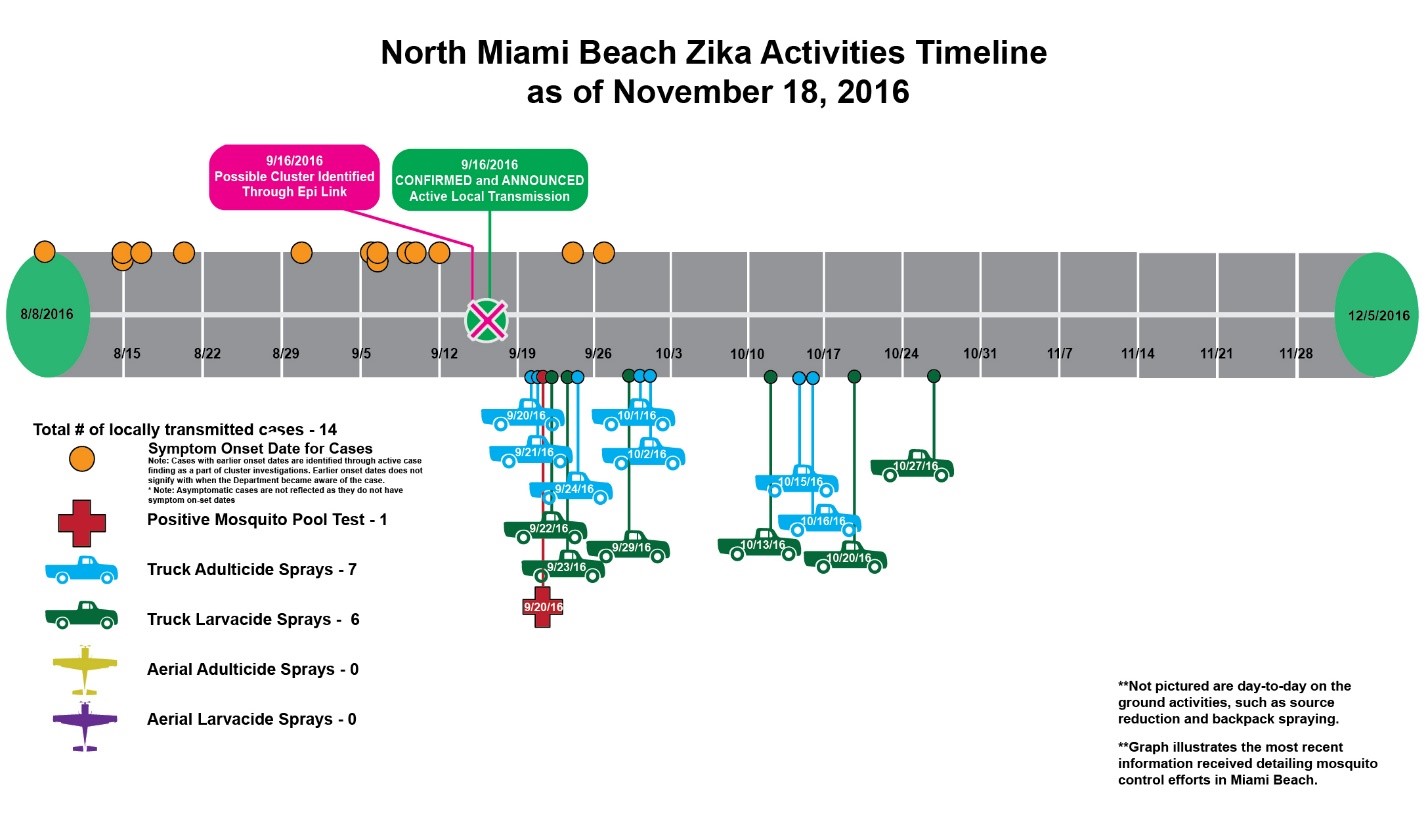
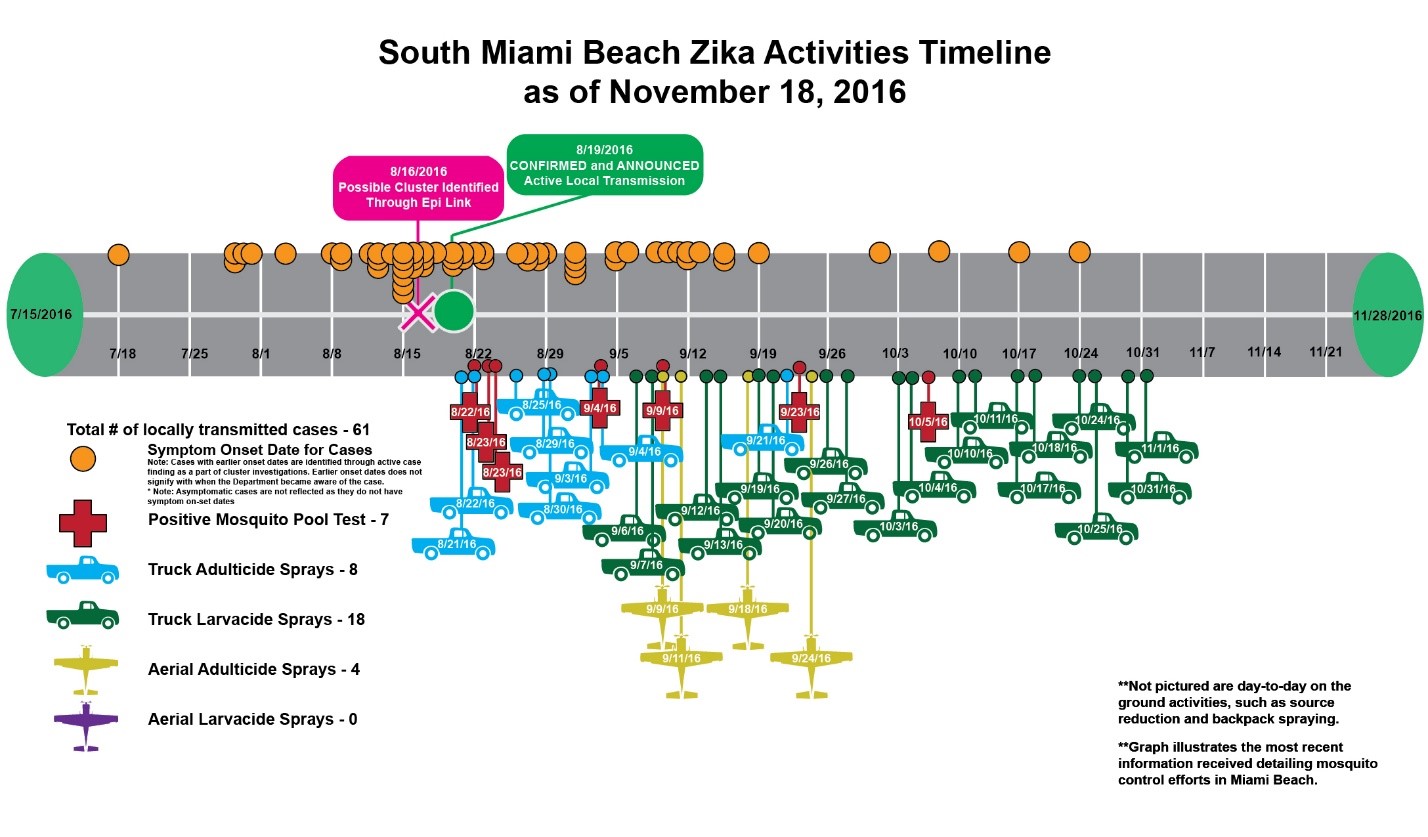
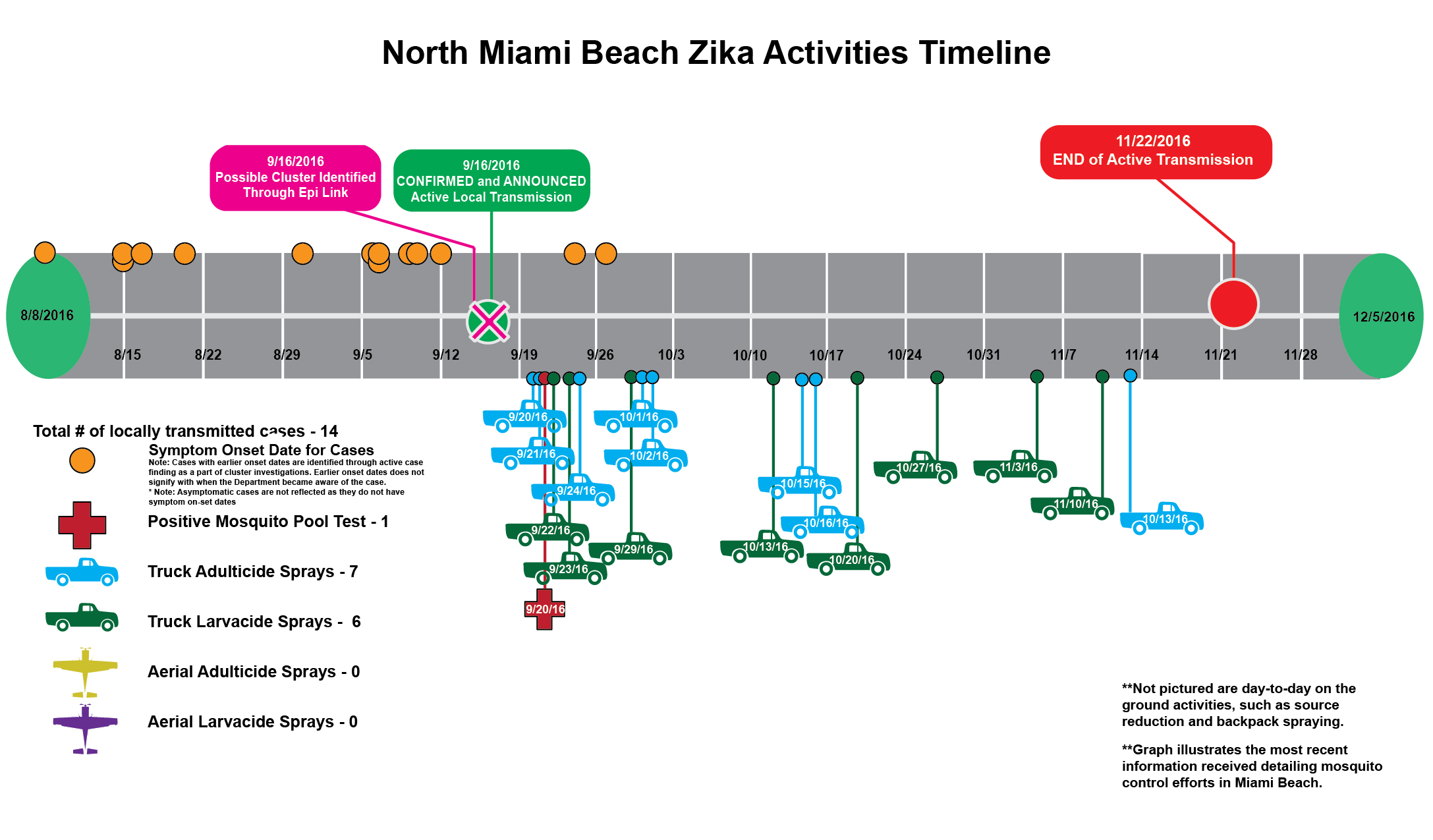
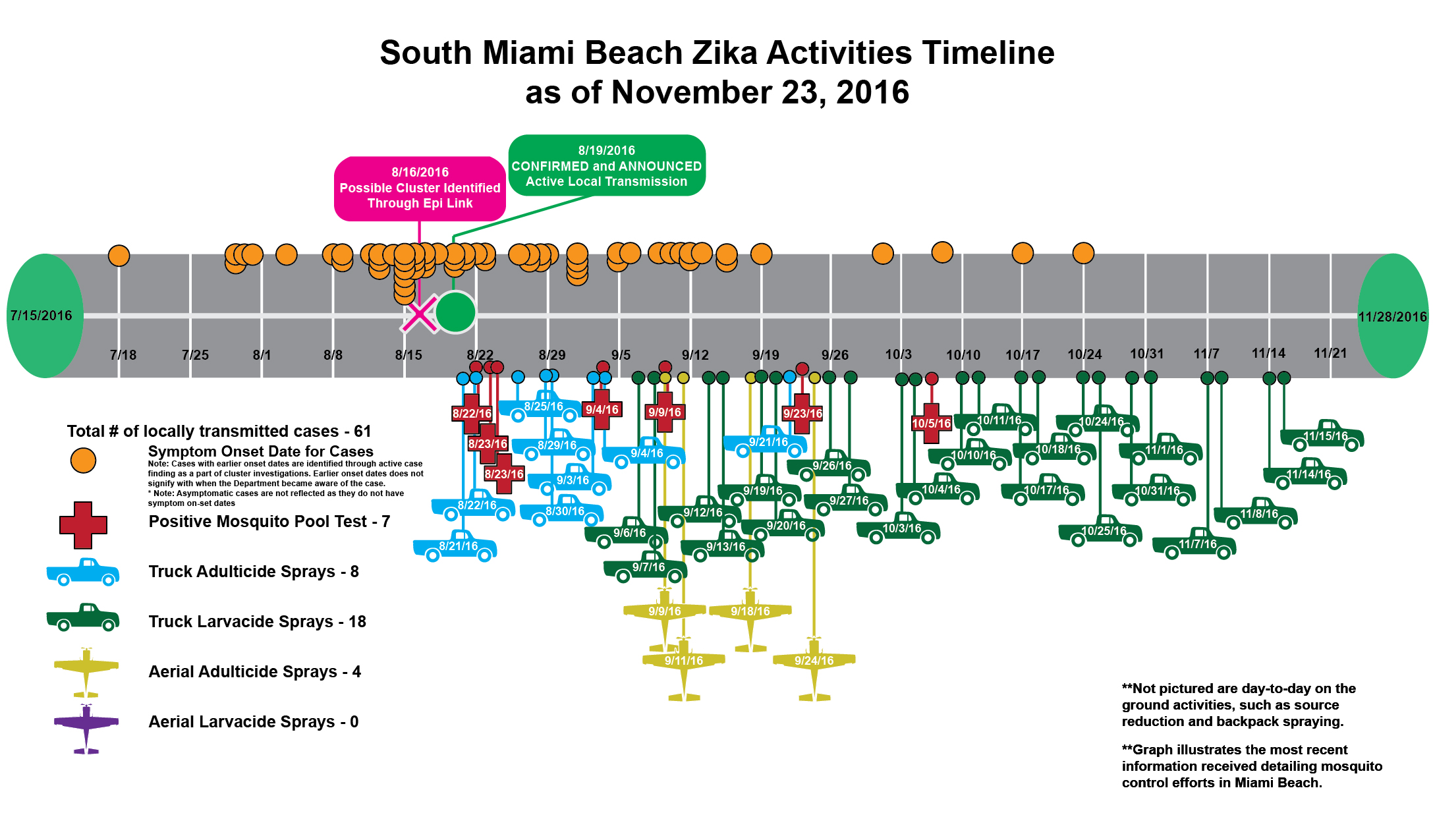
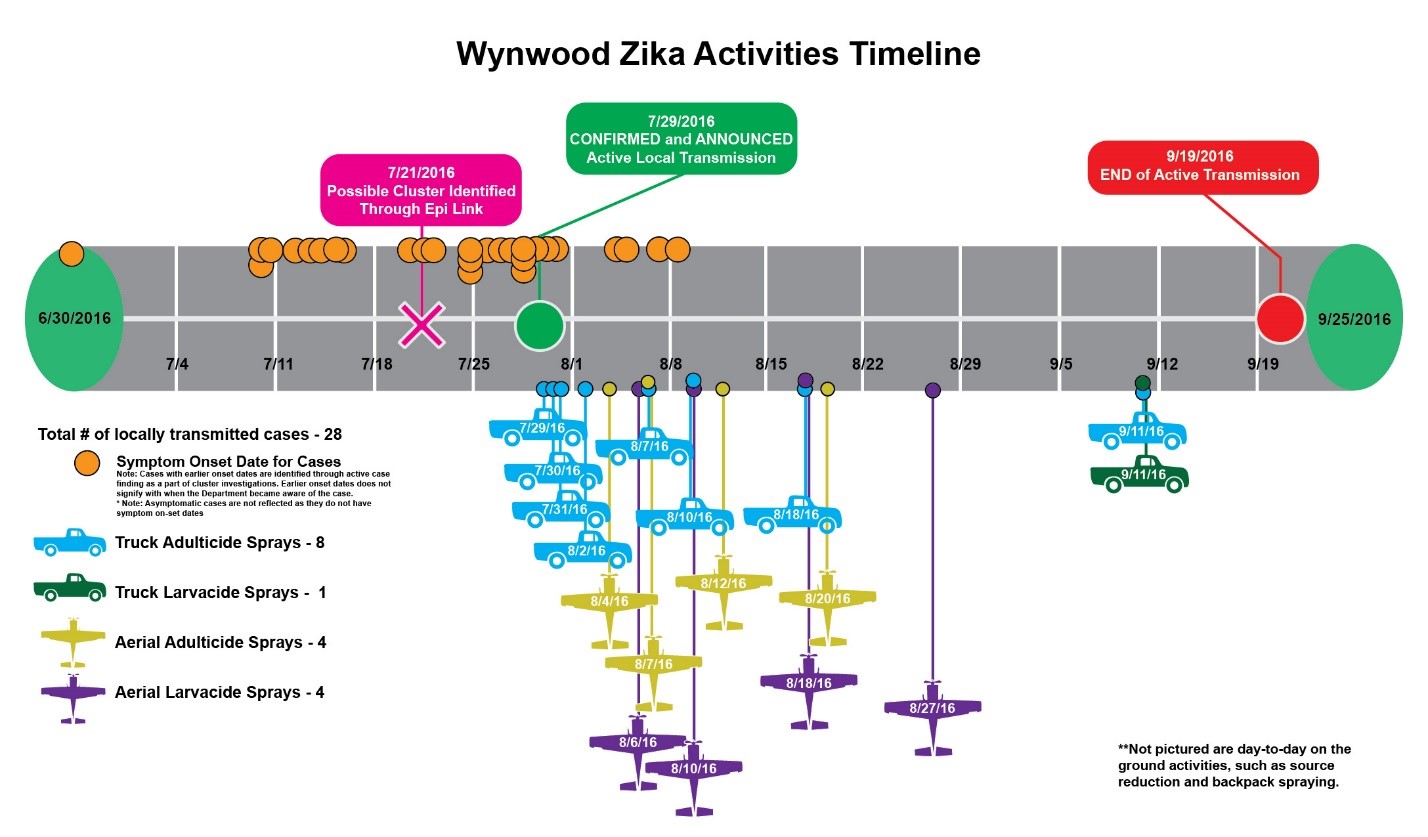
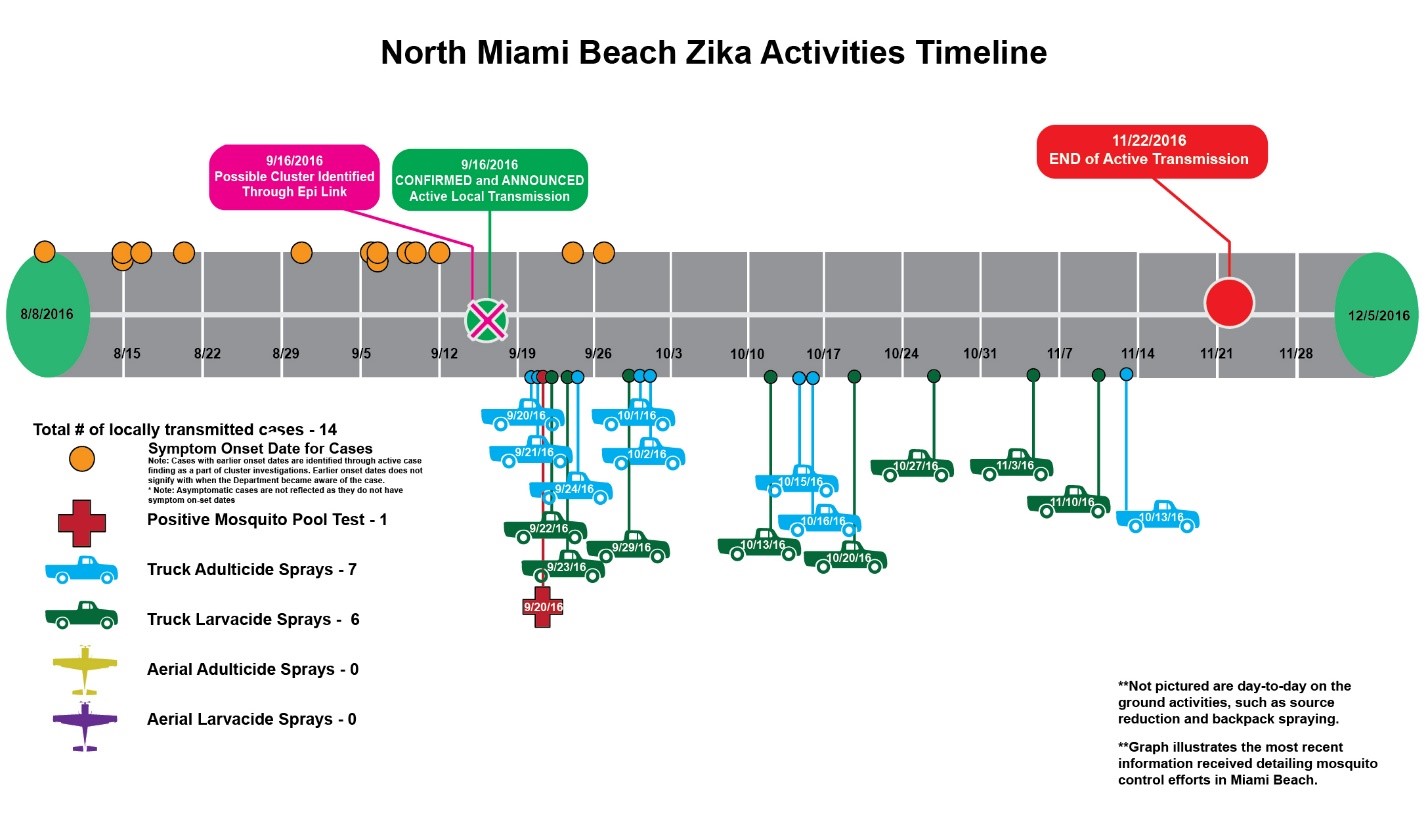
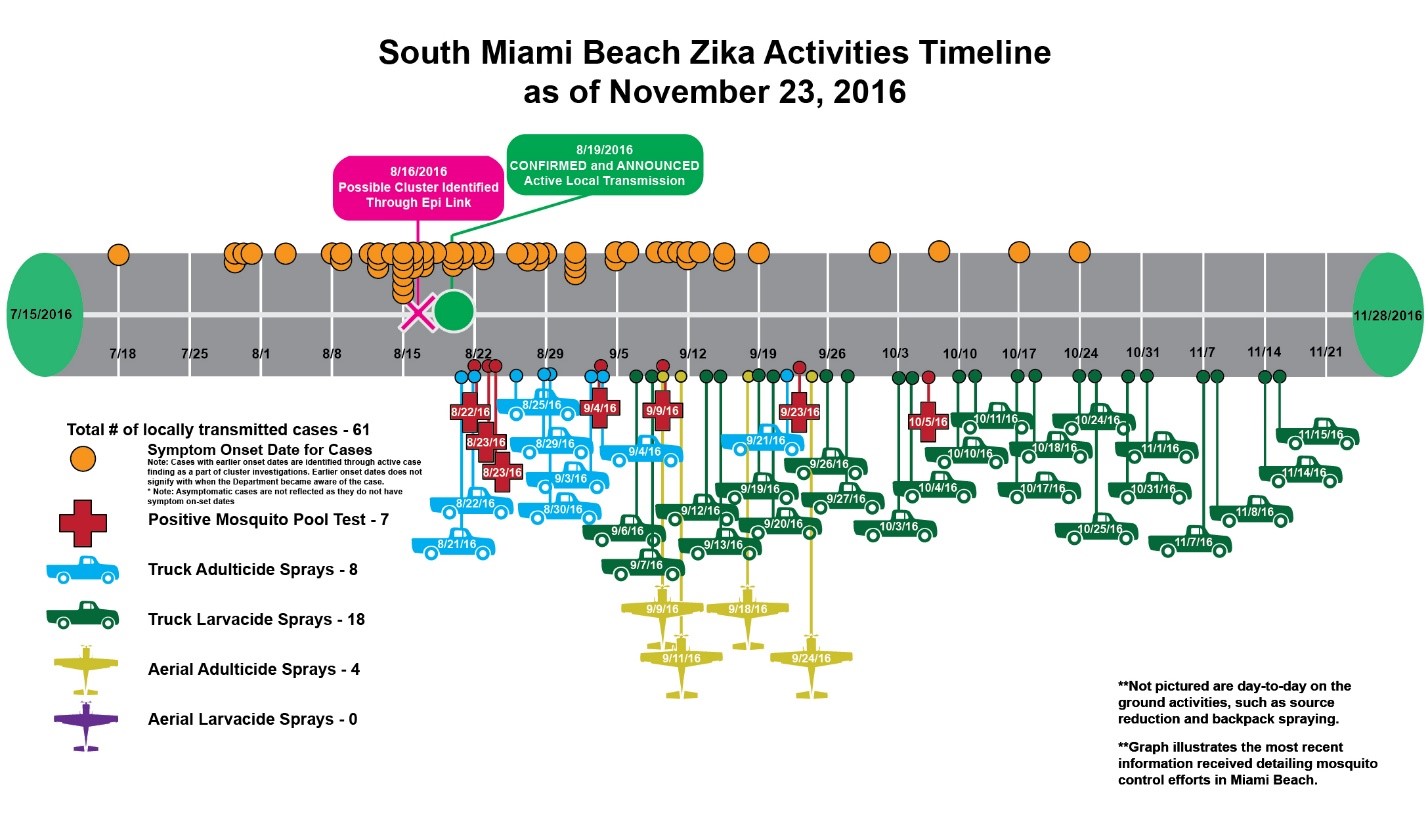
[FONT=&quot]The timelines below are as of Oct. 21 and will be updated every Friday. Note: Asymptomatic cases are not reflected as they do not have symptom on-set dates.[/FONT]
[FONT=&quot]click image above to enlarge[/FONT]
[FONT=&quot]click image above to enlarge[/FONT]
[FONT=&quot]click image above to enlarge[/FONT]
[FONT=&quot] [/FONT]
[FONT=&quot] [/FONT]
[FONT=&quot]The department is currently conducting 12 active investigations. The department has closed 33 investigations. Information regarding the investigations can be found here. If investigations reveal additional areas of active transmission, the department will announce a defined area of concern. [/FONT]
[FONT=&quot]The department has conducted Zika virus testing for more than 9,567 people statewide. Florida currently has the capacity to test 8,384 people for active Zika virus and 6,470 for Zika antibodies. At Governor Scott?s direction, all county health departments offer free Zika risk assessment and testing to pregnant women.[/FONT]
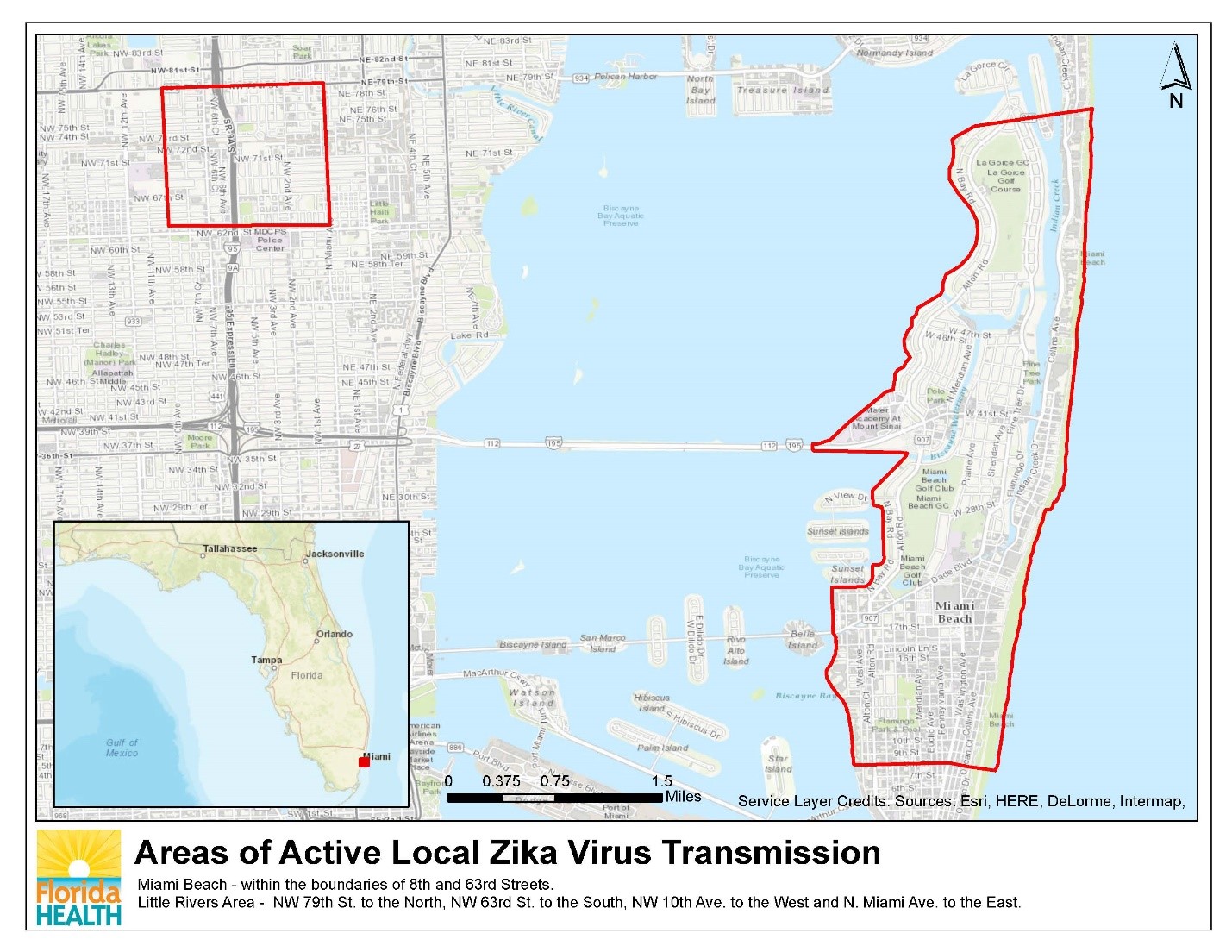
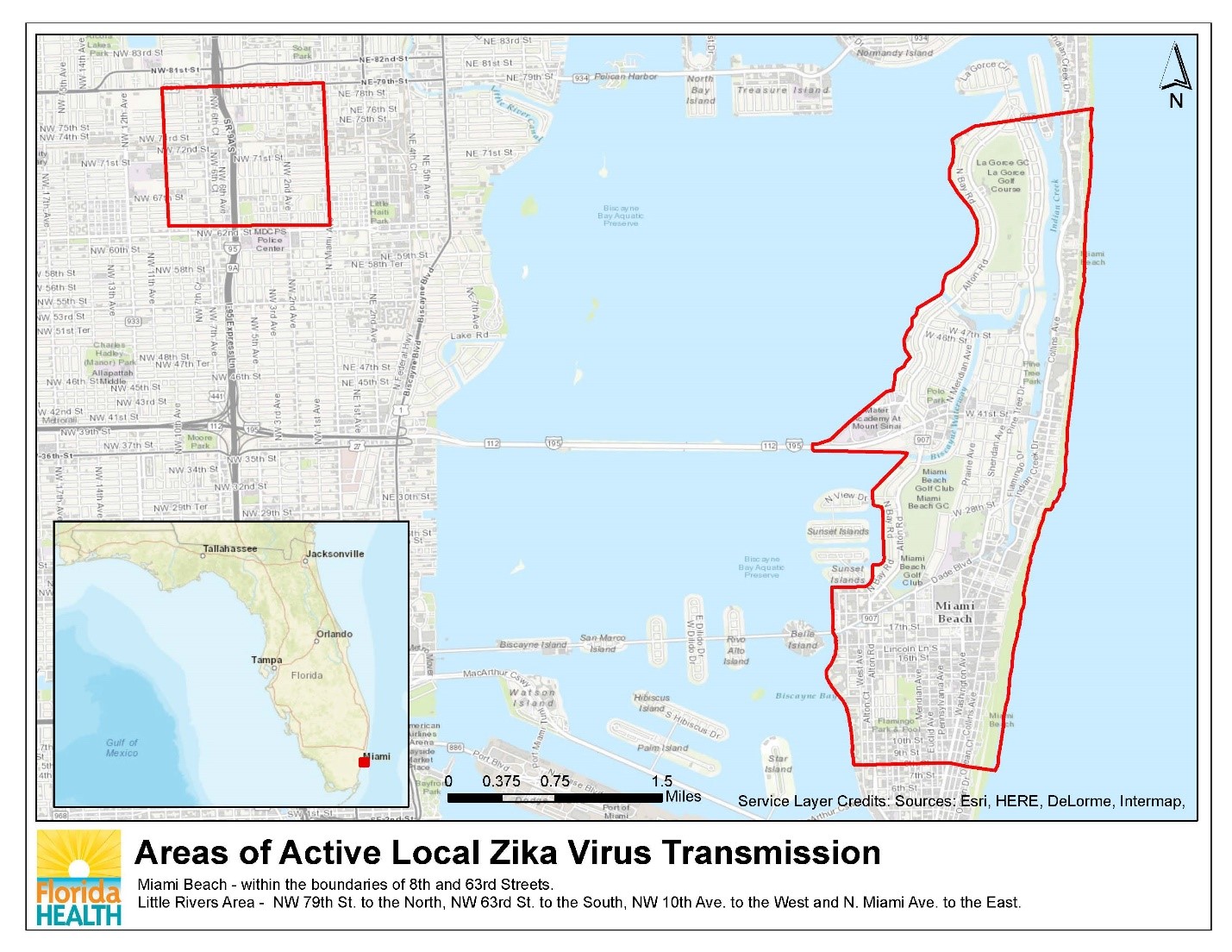
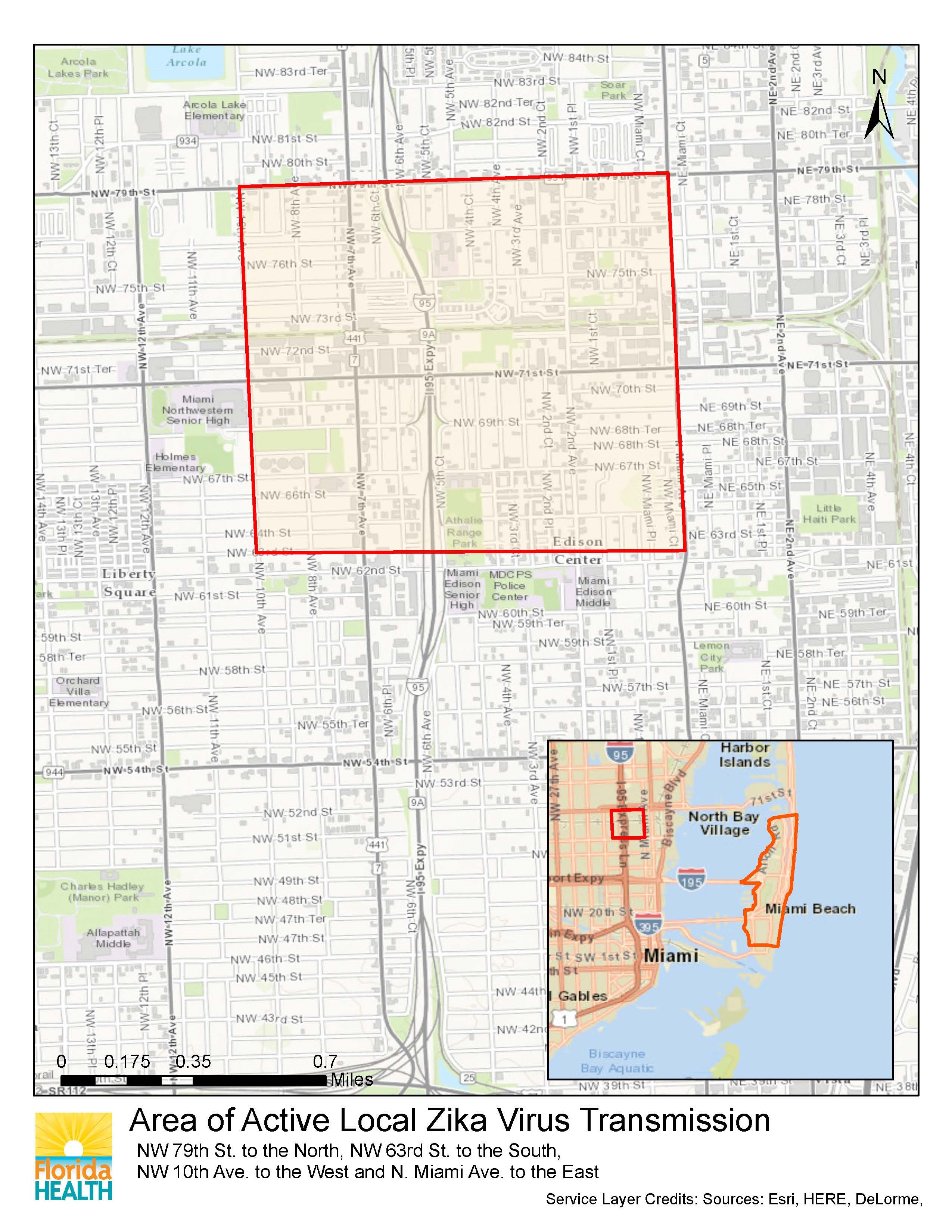
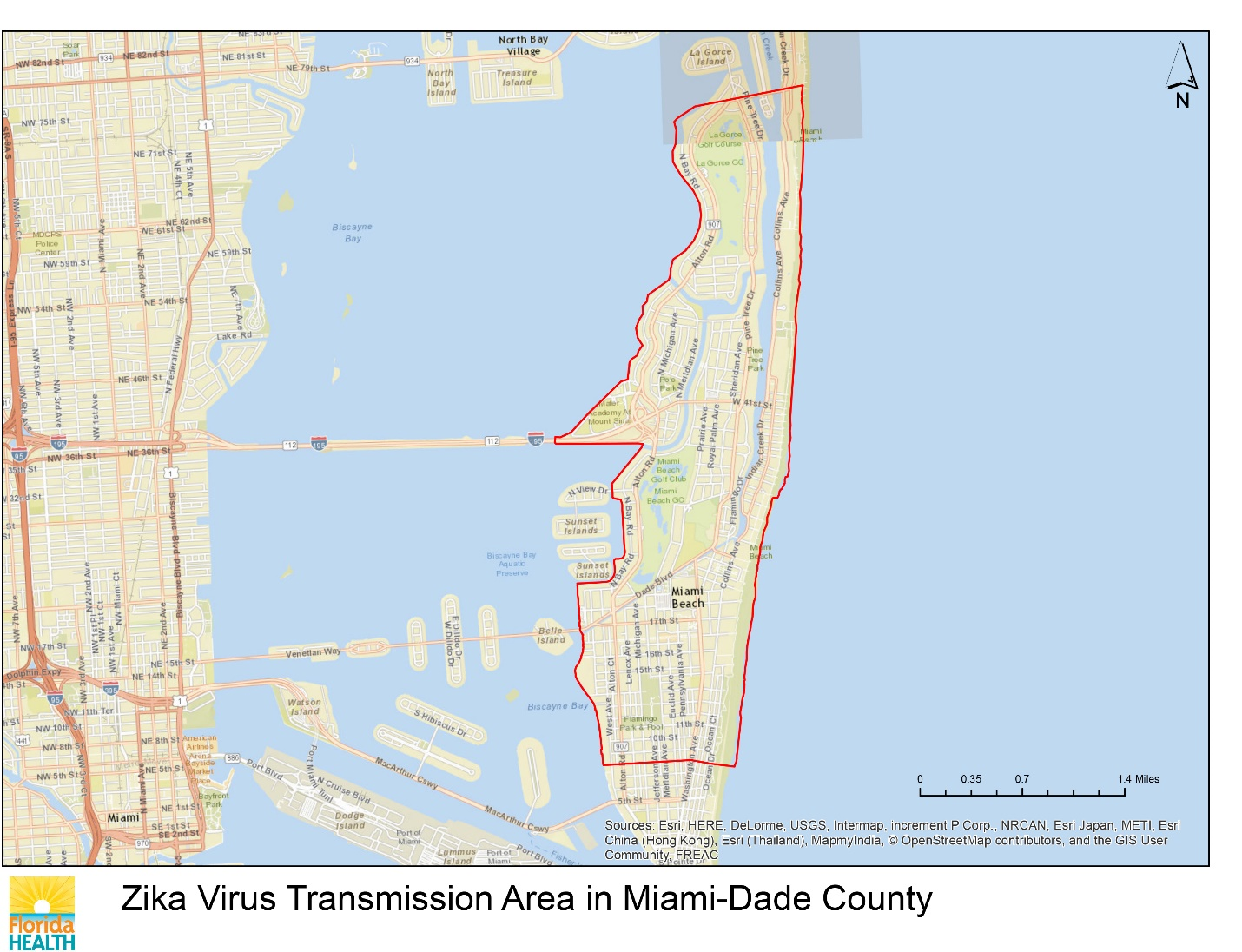
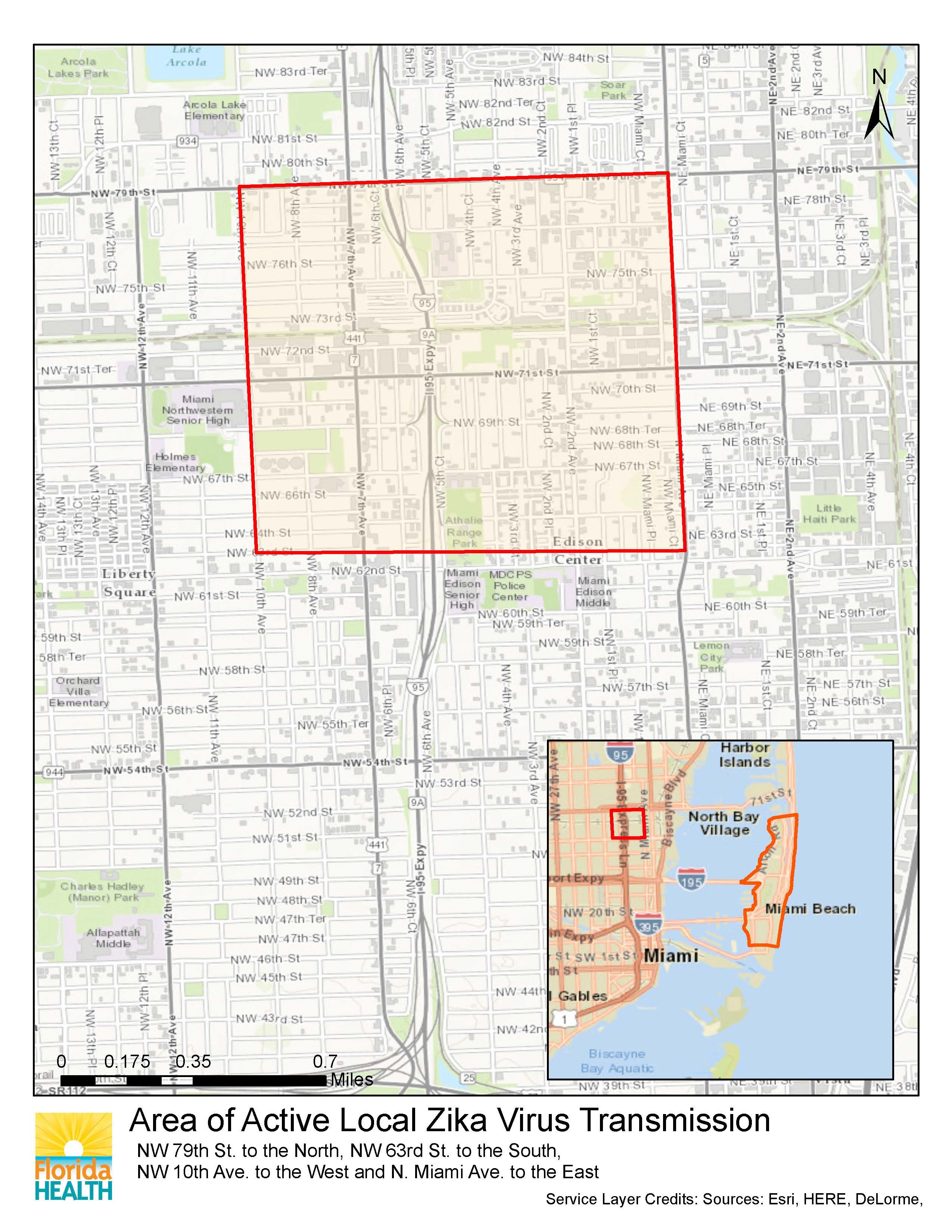
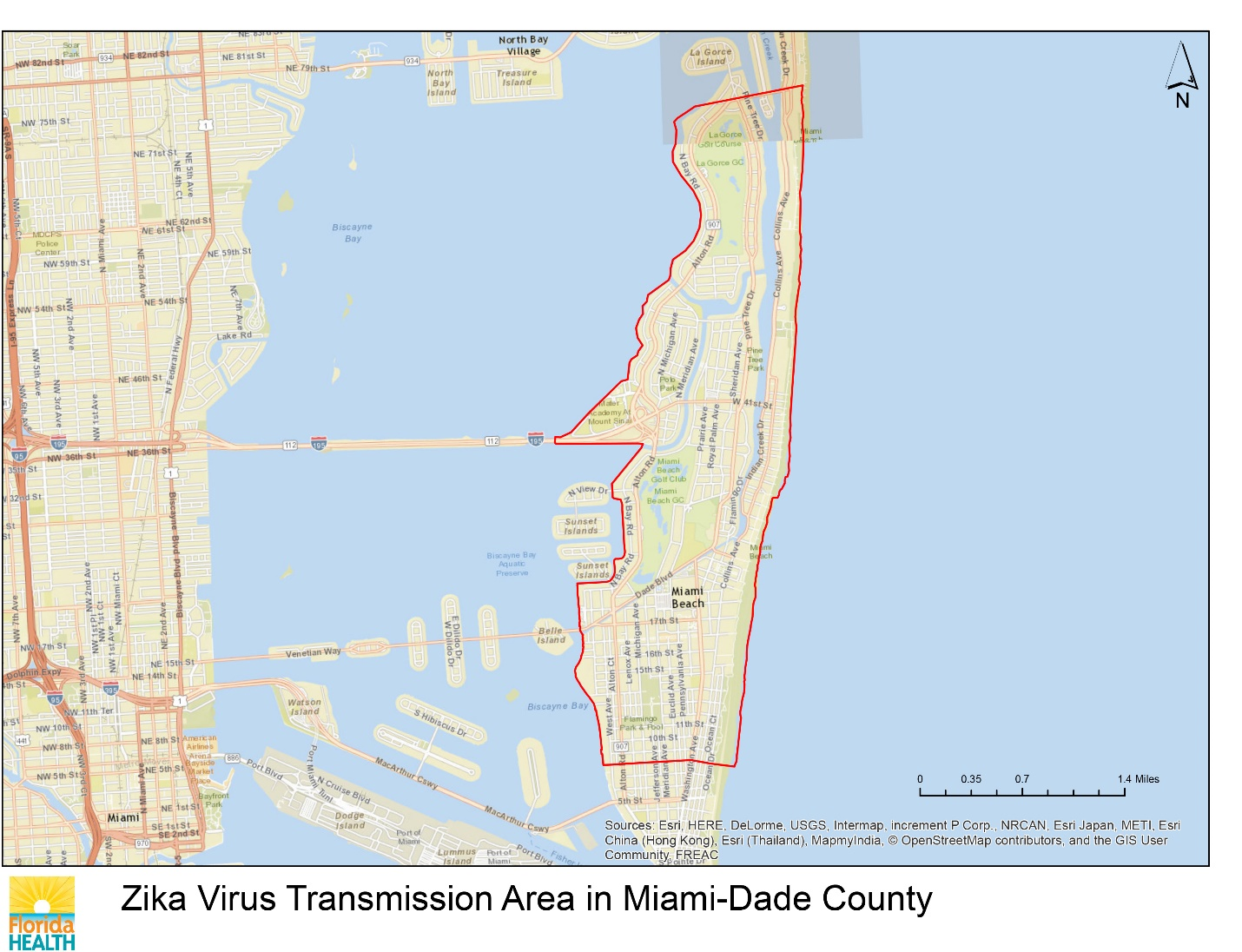
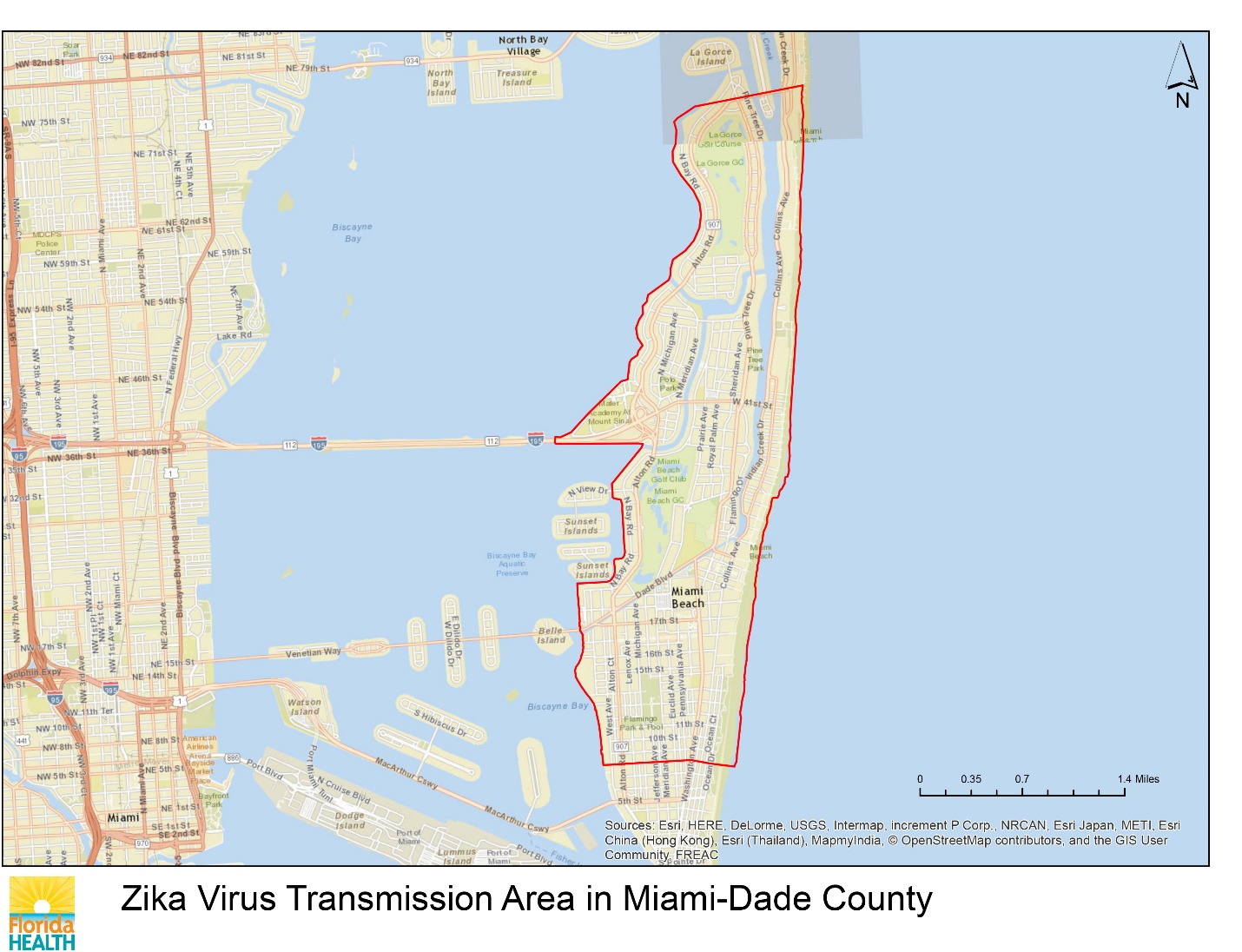
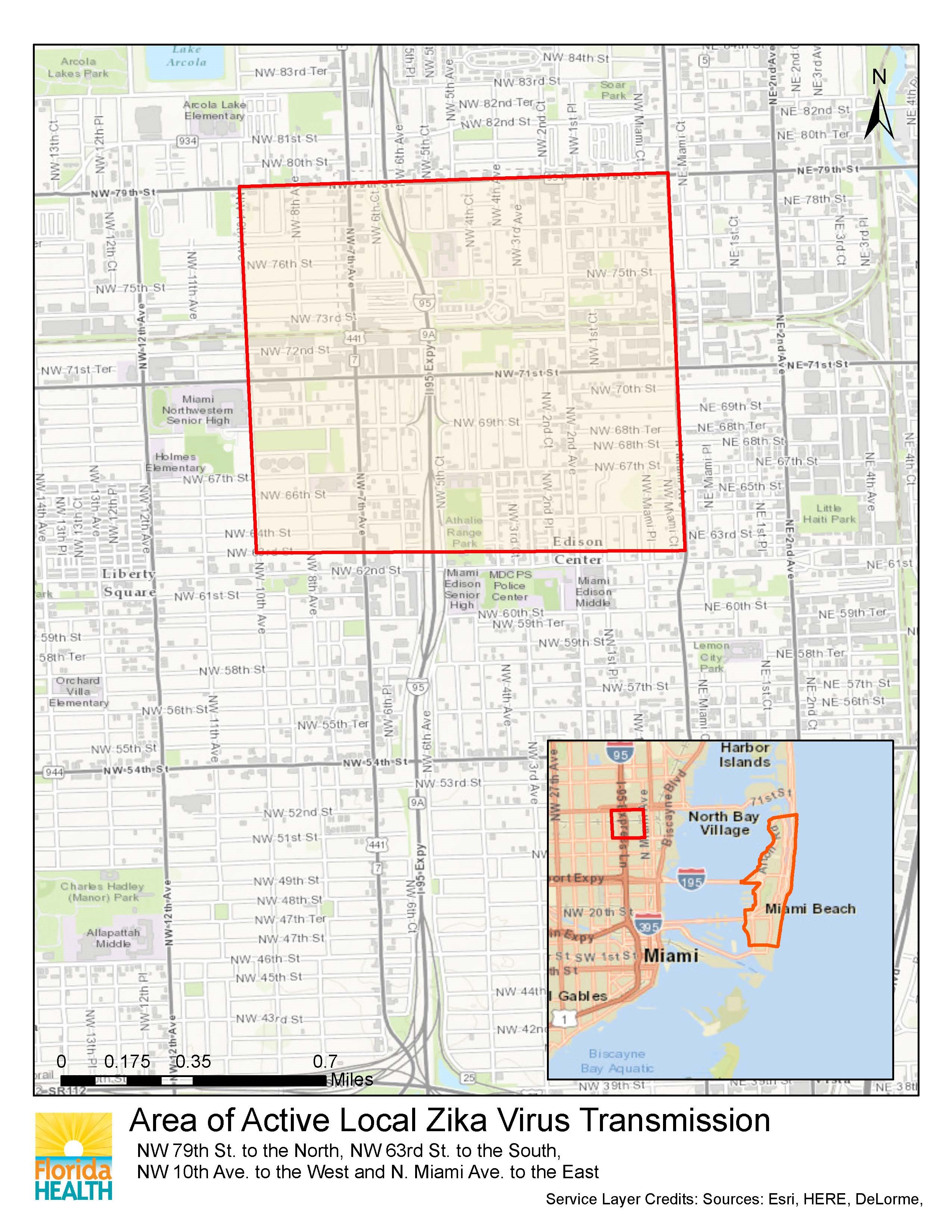
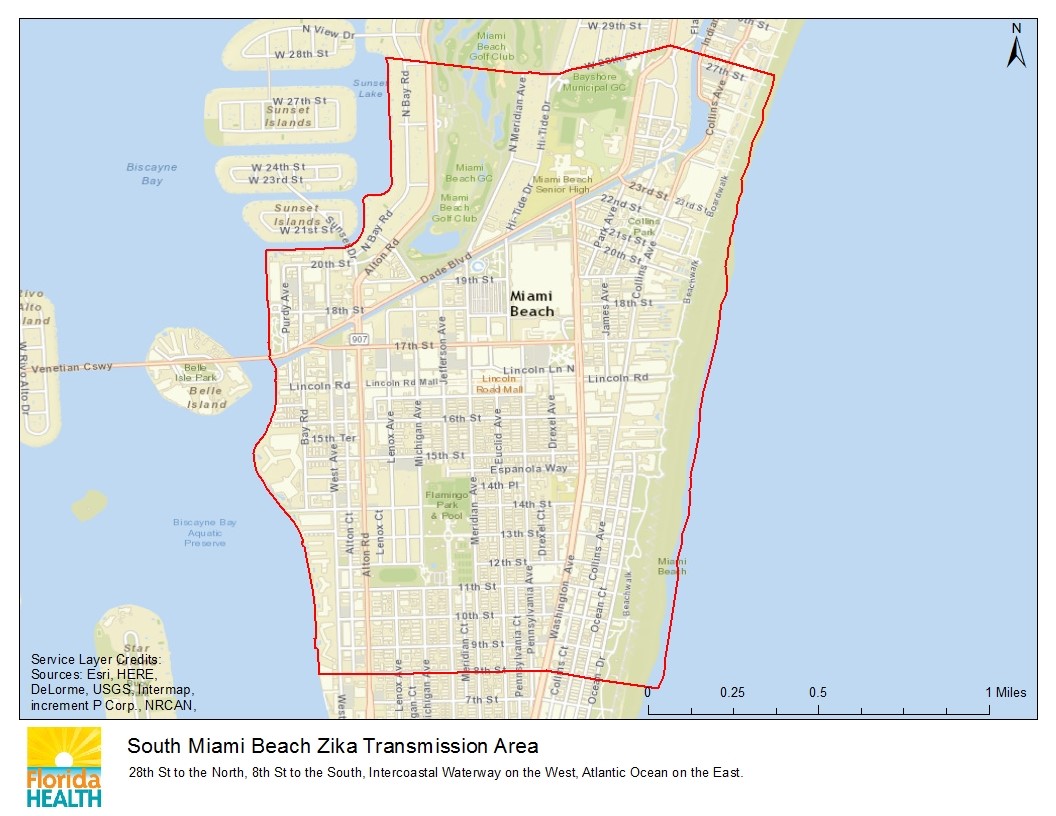
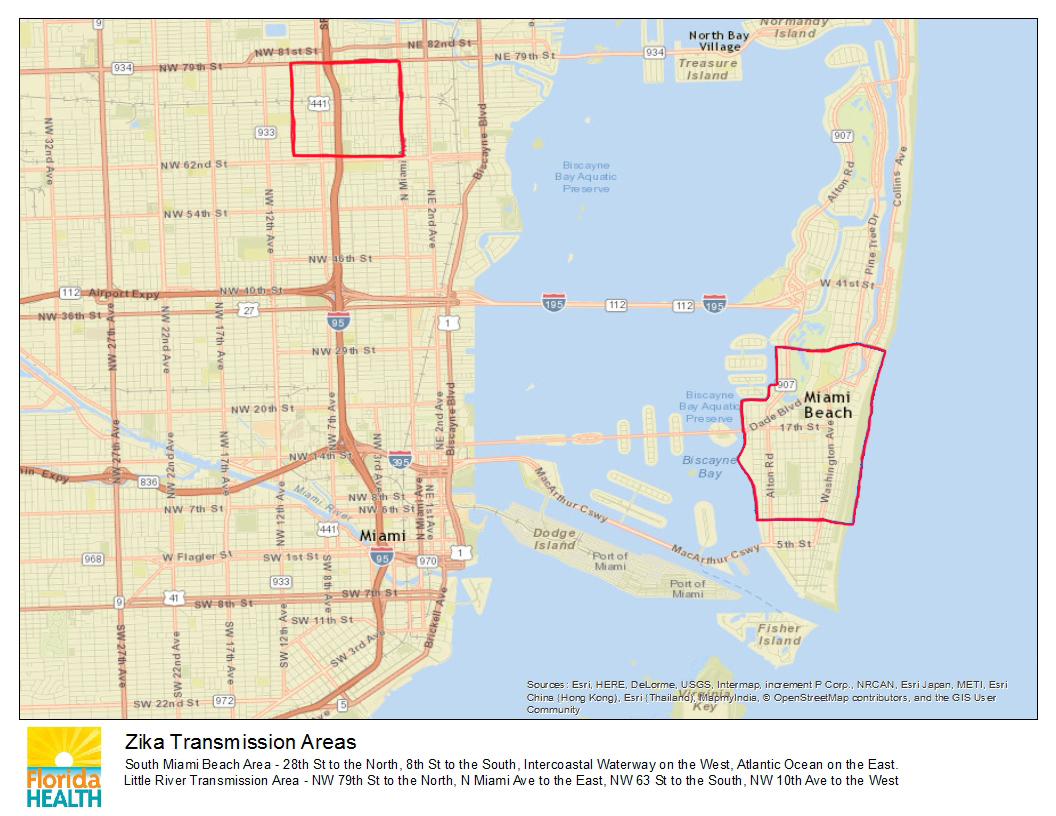
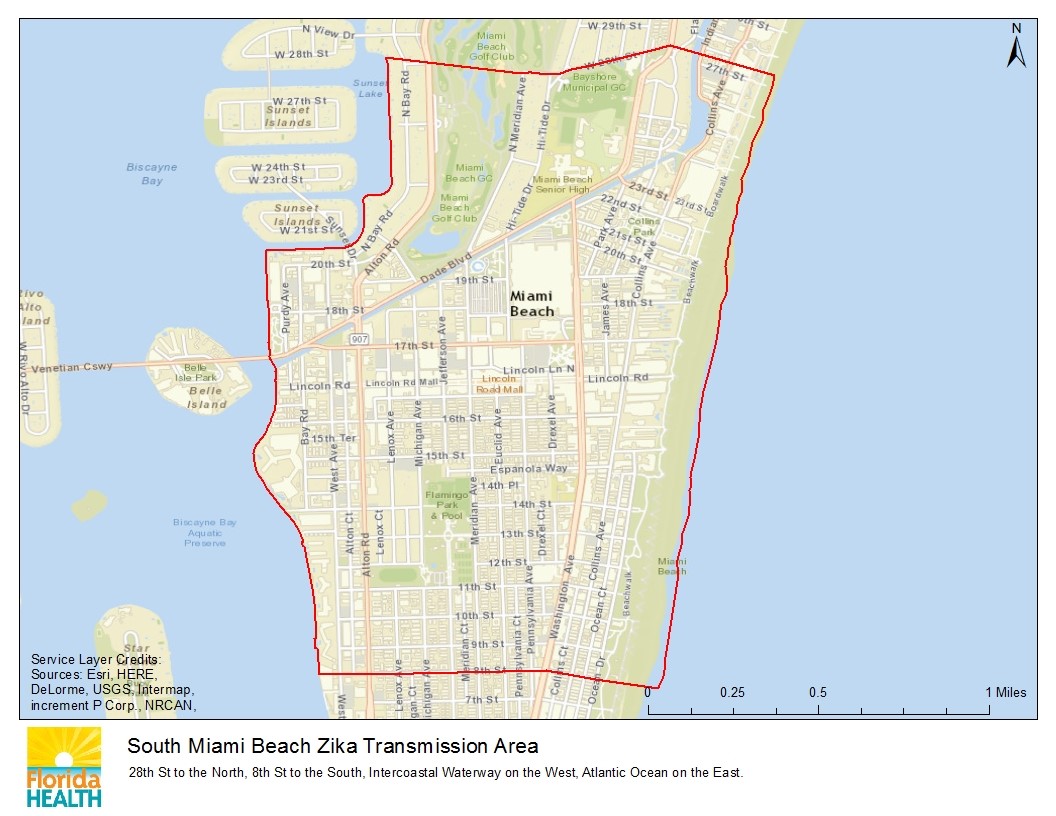
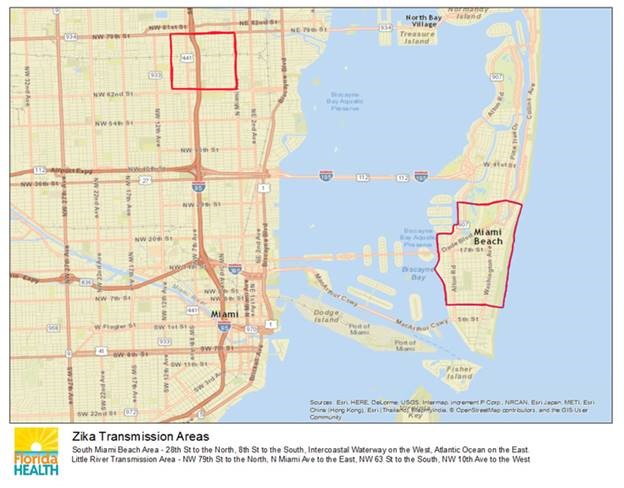
[FONT=&quot]Florida?s small case clusters is not considered widespread transmission, however, pregnant women are advised to avoid non-essential travel to the impacted areas in Miami-Dade County (see maps below). If you are pregnant and must travel or if you live or work in the impacted area, protect yourself from mosquito bites by wearing insect repellent, long clothing and limiting your time outdoors. [/FONT]
[FONT=&quot]According to CDC guidance, providers should consider testing all pregnant women with a history of travel to a Zika affected area for the virus. It is also recommended that all pregnant women who reside in or travel frequently to the area where active transmission is likely occurring be tested for Zika in the first and second trimester. Pregnant women in the identified area can contact their medical provider or their local county health department to be tested and receive a Zika prevention kit. CDC recommends that a pregnant woman with a history of Zika virus and her provider should consider additional ultrasounds. Additionally, the department is working closely with the Healthy Start Coalition of Miami-Dade County to identify pregnant women in the impacted areas to ensure they have access to resources and information to protect themselves. CDC recommends that a pregnant woman with a history of Zika virus and her provider should consider additional ultrasounds. [/FONT]
[FONT=&quot]Pregnant women can contact their local county health department for Zika risk assessment and testing hours and information. A Zika risk assessment will be conducted by county health department staff and blood and/or urine samples may be collected and sent to labs for testing. It may take one to two weeks to receive results.[/FONT]
[FONT=&quot]Florida has been monitoring pregnant women with evidence of Zika regardless of symptoms. The total number of pregnant women who have been or are being monitored is 115.[/FONT]
[FONT=&quot]On Feb. 12, Governor Scott directed the State Surgeon General to activate a Zika Virus Information Hotline for current Florida residents and visitors, as well as anyone planning on traveling to Florida in the near future. The hotline, managed by the Department of Health, has assisted more than 6,884 callers since it launched. The number for the Zika Virus Information Hotline is 1-855-622-6735.[/FONT]
[FONT=&quot]The department urges Floridians to drain standing water weekly, no matter how seemingly small. A couple drops of water in a bottle cap can be a breeding location for mosquitoes. Residents and visitors also need to use repellents when enjoying the Florida outdoors.[/FONT]
[FONT=&quot]For more information on DOH action and federal guidance, please click here.[/FONT]
[FONT=&quot]For resources and information on Zika virus, click here.[/FONT]
[FONT=&quot]click image above to enlarge[/FONT]
[FONT=&quot]click image above to enlarge


http://www.floridahealth.gov/newsroom/2016/10/102616-zika-update.html
[/FONT]
 
US - Florida: State Surgeon General: Comprehensive Mosquito Control Plan Needed from Miami-Dade County - October 28, 2016

[FONT=&quot]October 26, 2016[/FONT]
[h=2]State Surgeon General: Comprehensive Mosquito Control Plan Needed from Miami-Dade County[/h] [FONT=&quot]Contact:
Communications Office
NewsMedia@flhealth.gov
(850) 245-4111
[/FONT]

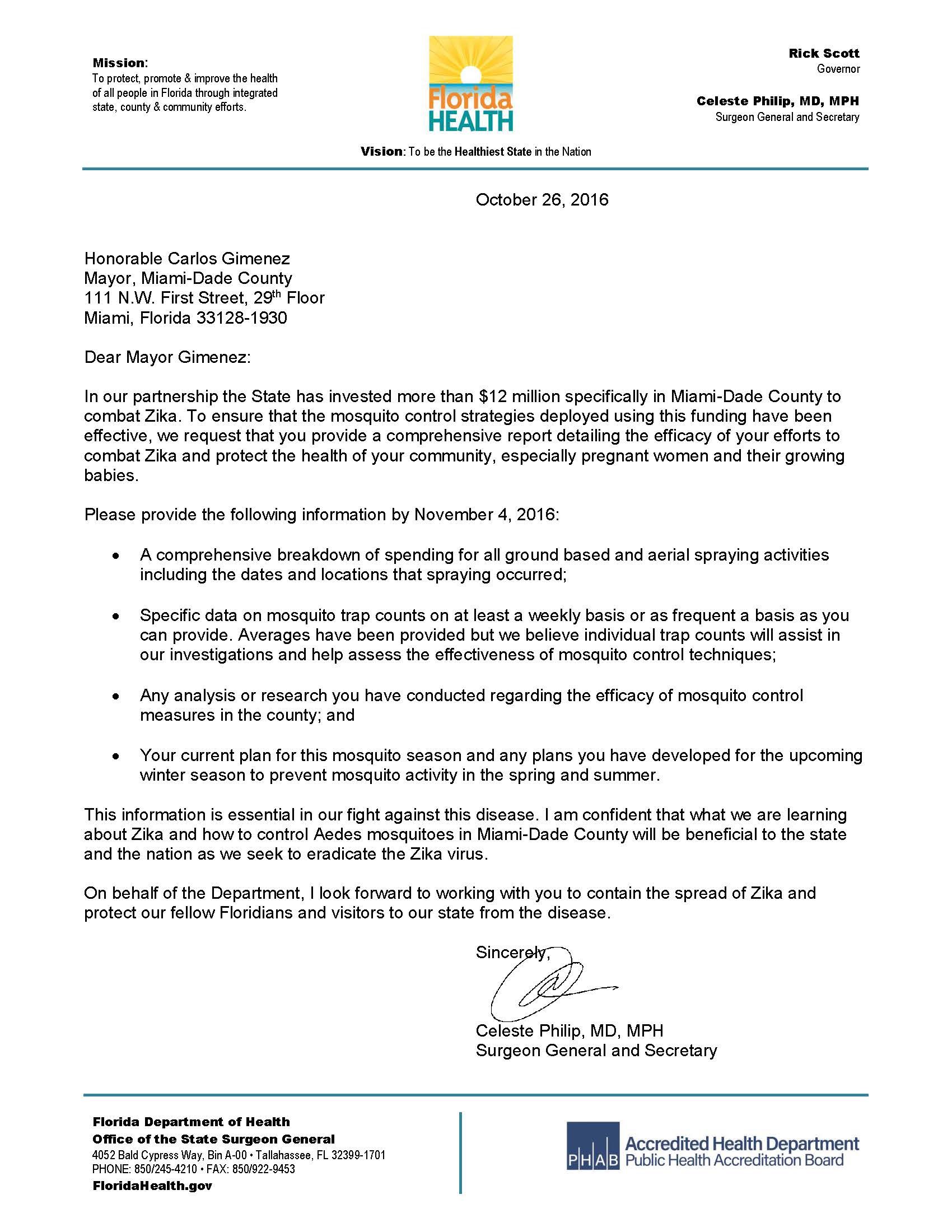
[FONT=&quot]Tallahassee, Fla.?Today, State Surgeon General and Secretary Dr. Celeste Philip sent the below letter to Miami-Dade County Mayor Carlos Gimenez requesting information regarding their mosquito control abatement strategies for combatting Zika.[/FONT]
[FONT=&quot]Below is a copy of the letter:[/FONT]
[FONT=&quot]click image above to enlarge

http://www.floridahealth.gov/newsroom/2016/10/102616-control-plan.html
[/FONT]
 
[FONT=&quot]October 27, 2016[/FONT]
[h=2]Department of Health Daily Zika Update[/h] [FONT=&quot]Contact:
Communications Office
NewsMedia@flhealth.gov
(850) 245-4111
[/FONT]

[FONT=&quot]Tallahassee, Fla.?In an effort to keep Florida residents and visitors safe and aware about the status of the Zika virus, the department will issue a Zika virus update each week day. Updates will include a Zika case count by county and information to keep Floridians informed and prepared. In order to keep the public informed, the department has posted our investigation process here.[/FONT]
[FONT=&quot]There are 14 new travel associated cases with four in Miami-Dade, one in Collier, one in Monroe, one in Palm Beach and seven involving pregnant women. Please visit our website to see the full list of travel-related cases.[/FONT]
[FONT=&quot]There is one non-travel associated case today. The individual had exposure in Wynwood with symptom onset in July. The department just received confirmatory testing from CDC. This case does not impact the lifting of the Zika zone in Wynwood.[/FONT]
[FONT=&quot]DOH continues door-to-door outreach and targeted testing in Miami-Dade County and mosquito abatement and reduction activities are also taking place around the locations that are being investigated. DOH believes ongoing transmission is only taking place within the identified areas in Miami-Dade County.[/FONT]
[FONT=&quot]One case does not mean ongoing active transmission is taking place. DOH conducts a thorough investigation by sampling close contacts and community members around each case to determine if additional people are infected. If DOH finds evidence that active transmission is occurring in an area, the media and the public will be notified.[/FONT]
[FONT=&quot]For a complete breakdown of non-travel and travel-related Zika infections to-date, please see below.[/FONT]
[TABLE="border: 1, cellpadding: 0, cellspacing: 0"]
[TR]
[TD="width: 397"] Infection Type
[/TD]
[TD="width: 382"] Infection Count
[/TD]
[/TR]
[TR]
[TD="width: 397"] Travel-Related Infections of Zika
[/TD]
[TD="width: 382"] 765
[/TD]
[/TR]
[TR]
[TD="width: 397"] Non-Travel Related Infections of Zika
[/TD]
[TD="width: 382"] 181
[/TD]
[/TR]
[TR]
[TD="width: 397"] Infections Involving Pregnant Women
[/TD]
[TD="width: 382"] 122
[/TD]
[/TR]
[TR]
[TD="width: 397"] Out of State Cases (not Florida Residents)
[/TD]
[TD="width: 382"] 19
[/TD]
[/TR]
[TR]
[TD="width: 397"] Undetermined
[/TD]
[TD="width: 382"] 6
[/TD]
[/TR]
[TR]
[TD="width: 397"] Total
[/TD]
[TD="width: 382"] 1,093
[/TD]
[/TR]
[/TABLE]
[FONT=&quot]click image above to enlarge[/FONT]
[FONT=&quot]click image above to enlarge[/FONT]
[FONT=&quot]click image above to enlarge[/FONT]
[FONT=&quot]The department is currently conducting 12 active investigations. The department has closed 33 investigations. Information regarding the investigations can be found here. If investigations reveal additional areas of active transmission, the department will announce a defined area of concern. [/FONT]
[FONT=&quot]The department has conducted Zika virus testing for more than 9,657 people statewide. Florida currently has the capacity to test 8,236 people for active Zika virus and 6,455for Zika antibodies. At Governor Scott?s direction, all county health departments offer free Zika risk assessment and testing to pregnant women.[/FONT]
[FONT=&quot]Florida?s small case clusters is not considered widespread transmission, however, pregnant women are advised to avoid non-essential travel to the impacted areas in Miami-Dade County (see maps below). If you are pregnant and must travel or if you live or work in the impacted area, protect yourself from mosquito bites by wearing insect repellent, long clothing and limiting your time outdoors. [/FONT]
[FONT=&quot]According to CDC guidance, providers should test all pregnant women who lived in, traveled to or whose partner traveled to Miami-Dade County after Aug. 1, 2016. It is also recommended that all pregnant women who reside in or travel frequently to the area where active transmission is likely occurring be tested for Zika in the first and second trimester. Pregnant women in the identified area can contact their medical provider or their local county health department to be tested and receive a Zika prevention kit. CDC recommends that a pregnant woman with a history of Zika virus and her provider should consider additional ultrasounds. Additionally, the department is working closely with the Healthy Start Coalition of Miami-Dade County to identify pregnant women in the impacted areas to ensure they have access to resources and information to protect themselves. CDC recommends that a pregnant woman with a history of Zika virus and her provider should consider additional ultrasounds.[/FONT]
[FONT=&quot]Pregnant women can contact their local county health department for Zika risk assessment and testing hours and information. A Zika risk assessment will be conducted by county health department staff and blood and/or urine samples may be collected and sent to labs for testing. It may take one to two weeks to receive results.[/FONT]
[FONT=&quot]Florida has been monitoring pregnant women with evidence of Zika regardless of symptoms. The total number of pregnant women who have been or are being monitored is 122.[/FONT]
[FONT=&quot]On Feb. 12, Governor Scott directed the State Surgeon General to activate a Zika Virus Information Hotline for current Florida residents and visitors, as well as anyone planning on traveling to Florida in the near future. The hotline, managed by the Department of Health, has assisted more than 6,913 callers since it launched. The number for the Zika Virus Information Hotline is 1-855-622-6735.[/FONT]
[FONT=&quot]The department urges Floridians to drain standing water weekly, no matter how seemingly small. A couple drops of water in a bottle cap can be a breeding location for mosquitoes. Residents and visitors also need to use repellents when enjoying the Florida outdoors.[/FONT]
[FONT=&quot]For more information on DOH action and federal guidance, please click here.[/FONT]
[FONT=&quot]For resources and information on Zika virus, click here.[/FONT]
[FONT=&quot]click image above to enlarge[/FONT]
[FONT=&quot]click image above to enlarge

http://www.floridahealth.gov/newsroom/2016/10/102716-zika-update.html
[/FONT]
 
[FONT=&quot] [h=1]Department of Health Daily Zika Update[/h] By Florida Department of Health, Office of Communications
November 02, 2016
[/FONT]

[FONT=&quot] Press Release[/FONT]
[FONT=&quot]
DOH_logo.png

November 2, 2016
[h=2]Department of Health Daily Zika Update[/h] Contact:
Communications Office
NewsMedia@flhealth.gov
(850) 245-4111

Tallahassee, Fla.?In an effort to keep Florida residents and visitors safe and aware about the status of the Zika virus, the department will issue a Zika virus update each week day. Updates will include a Zika case count by county and information to keep Floridians informed and prepared. In order to keep the public informed, the department has posted our investigation process here.
There are three new travel related Zika cases today with one in Broward and two involving pregnant women. Please visit our website to see the full list of travel-related cases.
There is one new non-travel associated case today, which the department is continuing to investigate. The individual is a Duval County resident who had multiple exposures in Miami-Dade County. The department does not believe transmission is occurring in Duval County.
DOH continues door-to-door outreach and targeted testing in Miami-Dade County and mosquito abatement and reduction activities are also taking place around the locations that are being investigated. DOH believes ongoing transmission is only taking place within the identified areas in Miami-Dade County.
One case does not mean ongoing active transmission is taking place. DOH conducts a thorough investigation by sampling close contacts and community members around each case to determine if additional people are infected. If DOH finds evidence that active transmission is occurring in an area, the media and the public will be notified.
For a complete breakdown of non-travel and travel-related Zika infections to-date, please see below.
[TABLE="border: 1, cellpadding: 0, cellspacing: 0"]
[TR]
[TD="width: 397"] Infection Type
[/TD]
[TD="width: 382"] Infection Count
[/TD]
[/TR]
[TR]
[TD="width: 397"] Travel-Related Infections of Zika
[/TD]
[TD="width: 382"] 774
[/TD]
[/TR]
[TR]
[TD="width: 397"] Non-Travel Related Infections of Zika
[/TD]
[TD="width: 382"] 186
[/TD]
[/TR]
[TR]
[TD="width: 397"] Infections Involving Pregnant Women
[/TD]
[TD="width: 382"] 129
[/TD]
[/TR]
[TR]
[TD="width: 397"] Out of State Cases (not Florida Residents)
[/TD]
[TD="width: 382"] 19
[/TD]
[/TR]
[TR]
[TD="width: 397"] Undetermined
[/TD]
[TD="width: 382"] 6
[/TD]
[/TR]
[TR]
[TD="width: 397"] Total
[/TD]
[TD="width: 382"] 1,114
[/TD]
[/TR]
[/TABLE]
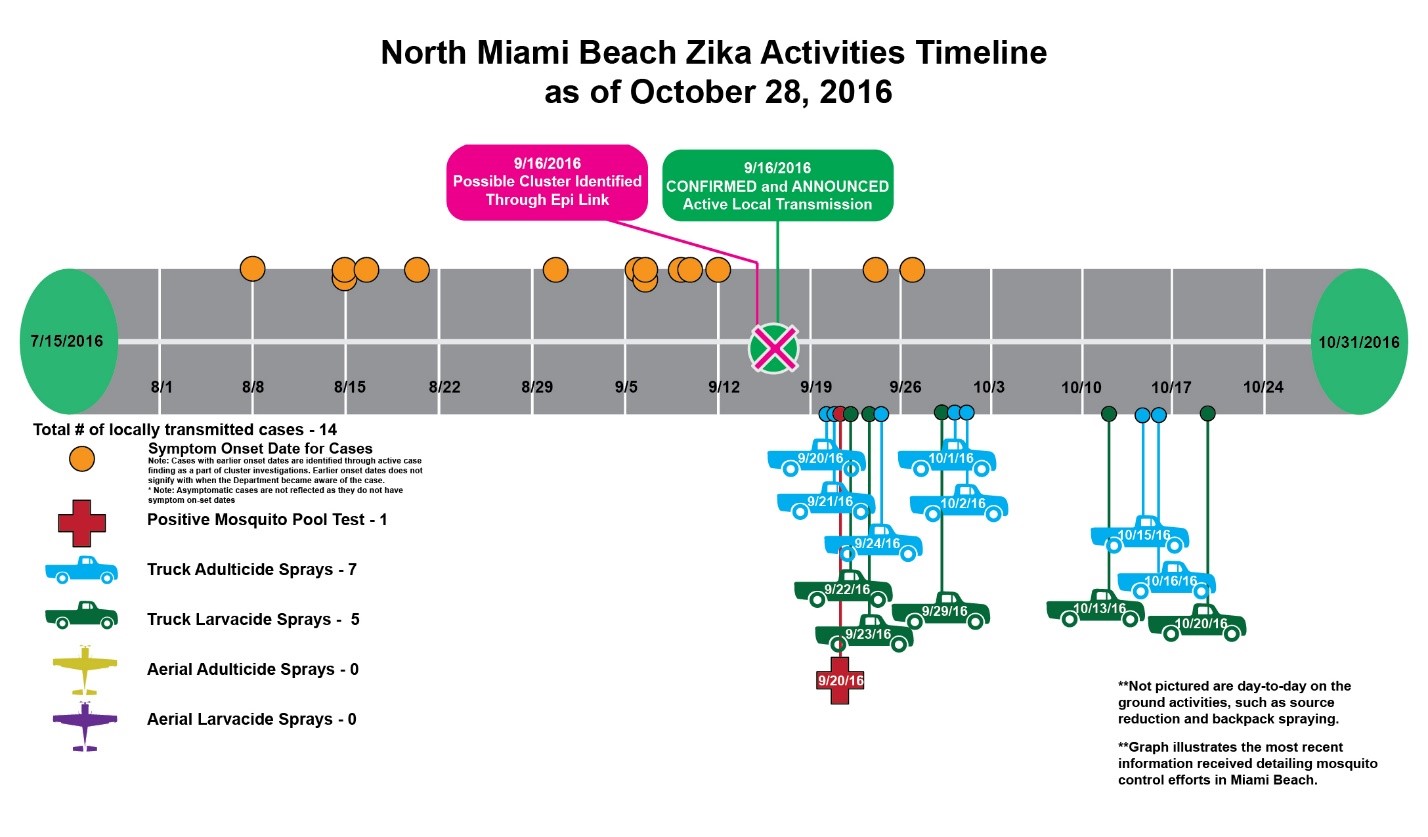
The timelines below are as of Oct. 28 and will be updated every Friday. Note: Asymptomatic cases are not reflected as they do not have symptom on-set dates.
click image above to enlarge


The department is currently conducting 12 active investigations. The department has closed 34 investigations. Information regarding the investigations can be found here. If investigations reveal additional areas of active transmission, the department will announce a defined area of concern.
The department has conducted Zika virus testing for more than 9,881 people statewide. Florida currently has the capacity to test 7,676 people for active Zika virus and 6,147 for Zika antibodies. At Governor Scott?s direction, all county health departments offer free Zika risk assessment and testing to pregnant women.
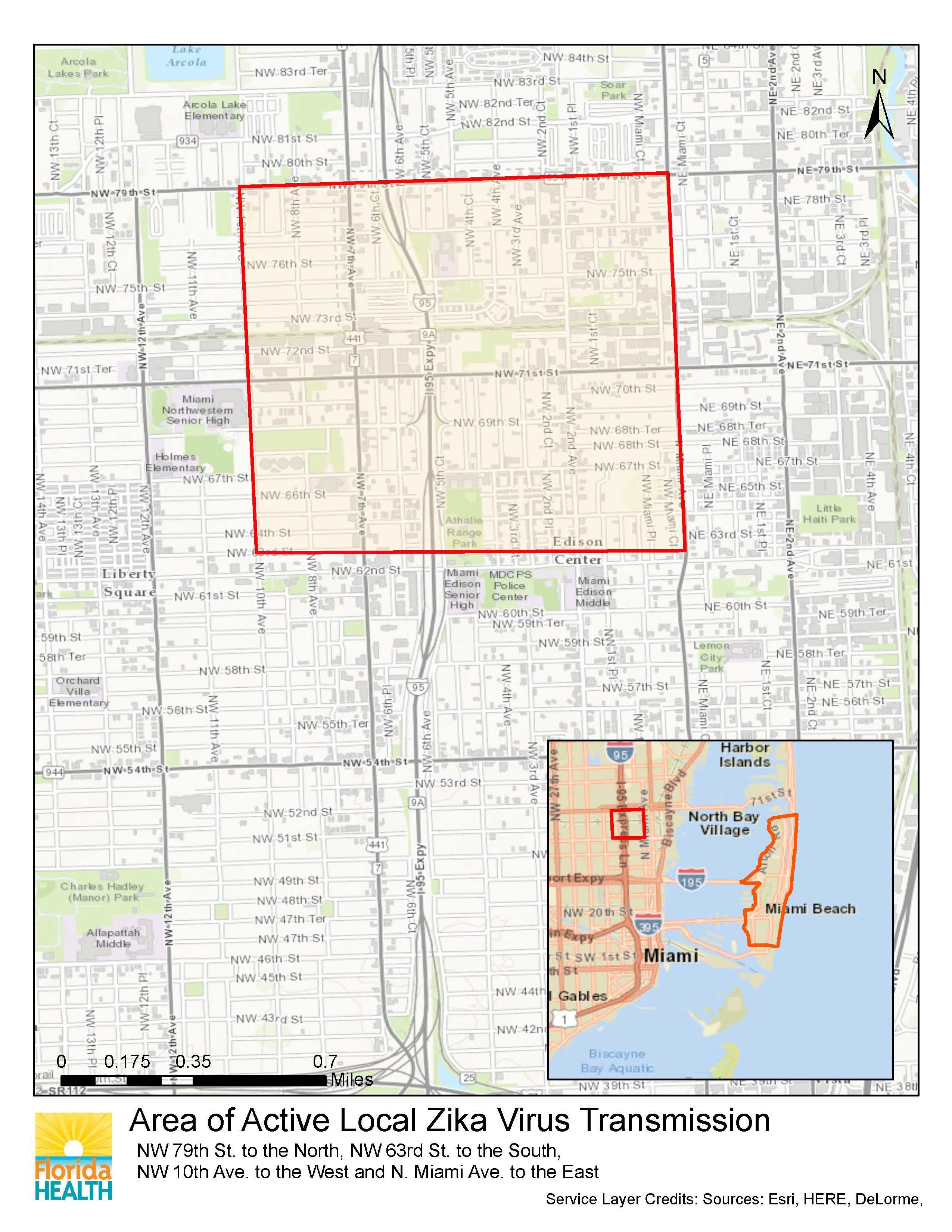
Florida?s small case clusters is not considered widespread transmission, however, pregnant women are advised to avoid non-essential travel to the impacted areas in Miami-Dade County (see maps below). If you are pregnant and must travel or if you live or work in the impacted area, protect yourself from mosquito bites by wearing insect repellent, long clothing and limiting your time outdoors.
According to CDC guidance, providers should test all pregnant women who lived in, traveled to or whose partner traveled to Miami-Dade County after Aug. 1, 2016. It is also recommended that all pregnant women who reside in or travel frequently to the area where active transmission is likely occurring be tested for Zika in the first and second trimester. Pregnant women in the identified area can contact their medical provider or their local county health department to be tested and receive a Zika prevention kit. CDC recommends that a pregnant woman with a history of Zika virus and her provider should consider additional ultrasounds. Additionally, the department is working closely with the Healthy Start Coalition of Miami-Dade County to identify pregnant women in the impacted areas to ensure they have access to resources and information to protect themselves. CDC recommends that a pregnant woman with a history of Zika virus and her provider should consider additional ultrasounds.
Pregnant women can contact their local county health department for Zika risk assessment and testing hours and information. A Zika risk assessment will be conducted by county health department staff and blood and/or urine samples may be collected and sent to labs for testing. It may take one to two weeks to receive results.
Florida has been monitoring pregnant women with evidence of Zika regardless of symptoms. The total number of pregnant women who have been or are being monitored is 129.
On Feb. 12, Governor Scott directed the State Surgeon General to activate a Zika Virus Information Hotline for current Florida residents and visitors, as well as anyone planning on traveling to Florida in the near future. The hotline, managed by the Department of Health, has assisted more than 7,020 callers since it launched. The number for the Zika Virus Information Hotline is 1-855-622-6735.
The department urges Floridians to drain standing water weekly, no matter how seemingly small. A couple drops of water in a bottle cap can be a breeding location for mosquitoes. Residents and visitors also need to use repellents when enjoying the Florida outdoors.
For more information on DOH action and federal guidance, please click here.
For resources and information on Zika virus, click here.
click image above to enlarge
About the Florida Department of Health
The department, nationally accredited by the Public Health Accreditation Board, works to protect, promote, and improve the health of all people in Florida through integrated state, county and community efforts.
Follow us on Twitter at @HealthyFla and on Facebook. For more information about the Florida Department of Health, please visit www.FloridaHealth.gov.

http://www.floridahealth.gov/newsroom/2016/11/110216-zika-update.html

[/FONT]
 
[FONT=&quot]November 3, 2016[/FONT]
[h=2]Department of Health Daily Zika Update[/h] [FONT=&quot]Contact:
Communications Office
NewsMedia@flhealth.gov
(850) 245-4111
[/FONT]

[FONT=&quot]Tallahassee, Fla.?In an effort to keep Florida residents and visitors safe and aware about the status of the Zika virus, the department will issue a Zika virus update each week day. Updates will include a Zika case count by county and information to keep Floridians informed and prepared. In order to keep the public informed, the department has posted our investigation process here.[/FONT]
[FONT=&quot]There are four new travel related Zika cases today with one in Miami Dade, one in Osceola and two involving pregnant women. Please visit our website to see the full list of travel-related cases.[/FONT]
[FONT=&quot]There are two new non-travel associated cases today. Both are Miami-Dade County residents and the department is investigating to determine where exposure occurred.[/FONT]
[FONT=&quot]DOH continues door-to-door outreach and targeted testing in Miami-Dade County and mosquito abatement and reduction activities are also taking place around the locations that are being investigated. DOH believes ongoing transmission is only taking place within the identified areas in Miami-Dade County.[/FONT]
[FONT=&quot]One case does not mean ongoing active transmission is taking place. DOH conducts a thorough investigation by sampling close contacts and community members around each case to determine if additional people are infected. If DOH finds evidence that active transmission is occurring in an area, the media and the public will be notified.[/FONT]
[FONT=&quot]For a complete breakdown of non-travel and travel-related Zika infections to-date, please see below.[/FONT]
[TABLE="border: 1, cellpadding: 0, cellspacing: 0"]
[TR]
[TD="width: 397"] Infection Type
[/TD]
[TD="width: 382"] Infection Count
[/TD]
[/TR]
[TR]
[TD="width: 397"] Travel-Related Infections of Zika
[/TD]
[TD="width: 382"] 776
[/TD]
[/TR]
[TR]
[TD="width: 397"] Non-Travel Related Infections of Zika
[/TD]
[TD="width: 382"] 188
[/TD]
[/TR]
[TR]
[TD="width: 397"] Infections Involving Pregnant Women
[/TD]
[TD="width: 382"] 131
[/TD]
[/TR]
[TR]
[TD="width: 397"] Out of State Cases (not Florida Residents)
[/TD]
[TD="width: 382"] 19
[/TD]
[/TR]
[TR]
[TD="width: 397"] Undetermined
[/TD]
[TD="width: 382"] 6
[/TD]
[/TR]
[TR]
[TD="width: 397"] Total
[/TD]
[TD="width: 382"] 1,120
[/TD]
[/TR]
[/TABLE]
[FONT=&quot]The timelines below are as of Oct. 28 and will be updated every Friday. Note: Asymptomatic cases are not reflected as they do not have symptom on-set dates.[/FONT]
[FONT=&quot]click image above to enlarge[/FONT]
[FONT=&quot]click image above to enlarge[/FONT]
[FONT=&quot]click image above to enlarge[/FONT]
[FONT=&quot] [/FONT]
[FONT=&quot] [/FONT]
[FONT=&quot]The department is currently conducting 13 active investigations. The department has closed 34 investigations. Information regarding the investigations can be found here. If investigations reveal additional areas of active transmission, the department will announce a defined area of concern. [/FONT]
[FONT=&quot]The department has conducted Zika virus testing for more than 9,917 people statewide. Florida currently has the capacity to test 7,569 people for active Zika virus and 6,121 for Zika antibodies. At Governor Scott?s direction, all county health departments offer free Zika risk assessment and testing to pregnant women.[/FONT]
[FONT=&quot]Florida?s small case clusters is not considered widespread transmission, however, pregnant women are advised to avoid non-essential travel to the impacted areas in Miami-Dade County (see maps below). If you are pregnant and must travel or if you live or work in the impacted area, protect yourself from mosquito bites by wearing insect repellent, long clothing and limiting your time outdoors. [/FONT]
[FONT=&quot]According to CDC guidance, providers should test all pregnant women who lived in, traveled to or whose partner traveled to Miami-Dade County after Aug. 1, 2016. It is also recommended that all pregnant women who reside in or travel frequently to the area where active transmission is likely occurring be tested for Zika in the first and second trimester. Pregnant women in the identified area can contact their medical provider or their local county health department to be tested and receive a Zika prevention kit. CDC recommends that a pregnant woman with a history of Zika virus and her provider should consider additional ultrasounds. Additionally, the department is working closely with the Healthy Start Coalition of Miami-Dade County to identify pregnant women in the impacted areas to ensure they have access to resources and information to protect themselves. CDC recommends that a pregnant woman with a history of Zika virus and her provider should consider additional ultrasounds. [/FONT]
[FONT=&quot]Pregnant women can contact their local county health department for Zika risk assessment and testing hours and information. A Zika risk assessment will be conducted by county health department staff and blood and/or urine samples may be collected and sent to labs for testing. It may take one to two weeks to receive results.[/FONT]
[FONT=&quot]Florida has been monitoring pregnant women with evidence of Zika regardless of symptoms. The total number of pregnant women who have been or are being monitored is 131.[/FONT]
[FONT=&quot]On Feb. 12, Governor Scott directed the State Surgeon General to activate a Zika Virus Information Hotline for current Florida residents and visitors, as well as anyone planning on traveling to Florida in the near future. The hotline, managed by the Department of Health, has assisted more than 7,046 callers since it launched. The number for the Zika Virus Information Hotline is 1-855-622-6735.[/FONT]
[FONT=&quot]The department urges Floridians to drain standing water weekly, no matter how seemingly small. A couple drops of water in a bottle cap can be a breeding location for mosquitoes. Residents and visitors also need to use repellents when enjoying the Florida outdoors.[/FONT]
[FONT=&quot]For more information on DOH action and federal guidance, please click here.[/FONT]
[FONT=&quot]For resources and information on Zika virus, click here.[/FONT]
[FONT=&quot]click image above to enlarge[/FONT]
[FONT=&quot]click image above to enlarge[/FONT]

http://www.floridahealth.gov/newsroom/2016/11/110316-zika-update.html
 
[FONT=&quot]November 4, 2016[/FONT]
[h=2]Department of Health Daily Zika Update[/h] [FONT=&quot]Contact:
Communications Office
NewsMedia@flhealth.gov
(850) 245-4111
[/FONT]

[FONT=&quot]Tallahassee, Fla.?In an effort to keep Florida residents and visitors safe and aware about the status of the Zika virus, the department will issue a Zika virus update each week day. Updates will include a Zika case count by county and information to keep Floridians informed and prepared. In order to keep the public informed, the department has posted our investigation process here.[/FONT]
[FONT=&quot]There are five new travel related cases today with one in Miami-Dade County, one in Indian River County, one in Palm Beach County and two involving pregnant women. This is Indian River?s first travel-related case and the Declaration of Public Health Emergency has been amended to include the county. Please visit our website to see the full list of travel-related cases.[/FONT]
[FONT=&quot]There are two new non-travel related cases today. Both are Miami-Dade County residents and the department is investigating to determine where exposure occurred.[/FONT]
[FONT=&quot]There is one additional out-of-state case. The department is investigating to determine where exposure occurred.[/FONT]
[FONT=&quot]DOH continues door-to-door outreach and targeted testing in Miami-Dade County and mosquito abatement and reduction activities are also taking place around the locations that are being investigated. DOH believes ongoing transmission is only taking place within the identified areas in Miami-Dade County.[/FONT]
[FONT=&quot]One case does not mean ongoing active transmission is taking place. DOH conducts a thorough investigation by sampling close contacts and community members around each case to determine if additional people are infected. If DOH finds evidence that active transmission is occurring in an area, the media and the public will be notified.[/FONT]
[FONT=&quot]For a complete breakdown of non-travel and travel-related Zika infections to-date, please see below.[/FONT]
[TABLE="border: 1, cellpadding: 0, cellspacing: 0"]
[TR]
[TD="width: 397"] Infection Type
[/TD]
[TD="width: 382"] Infection Count
[/TD]
[/TR]
[TR]
[TD="width: 397"] Travel-Related Infections of Zika
[/TD]
[TD="width: 382"] 779
[/TD]
[/TR]
[TR]
[TD="width: 397"] Non-Travel Related Infections of Zika
[/TD]
[TD="width: 382"] 190
[/TD]
[/TR]
[TR]
[TD="width: 397"] Infections Involving Pregnant Women
[/TD]
[TD="width: 382"] 133
[/TD]
[/TR]
[TR]
[TD="width: 397"] Out of State Cases (not Florida Residents)
[/TD]
[TD="width: 382"] 20
[/TD]
[/TR]
[TR]
[TD="width: 397"] Undetermined
[/TD]
[TD="width: 382"] 6
[/TD]
[/TR]
[TR]
[TD="width: 397"] Total
[/TD]
[TD="width: 382"] 1,128
[/TD]
[/TR]
[/TABLE]
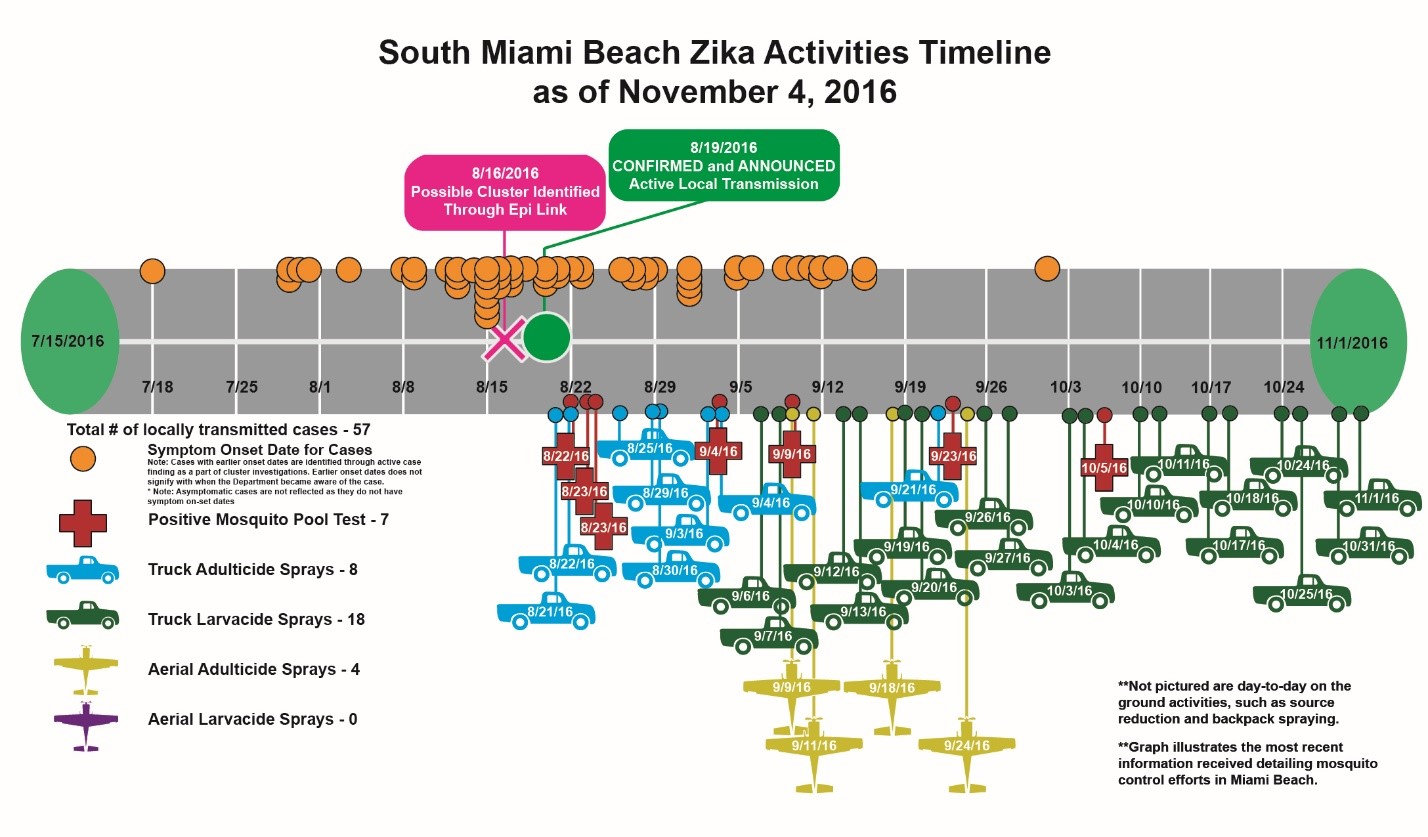
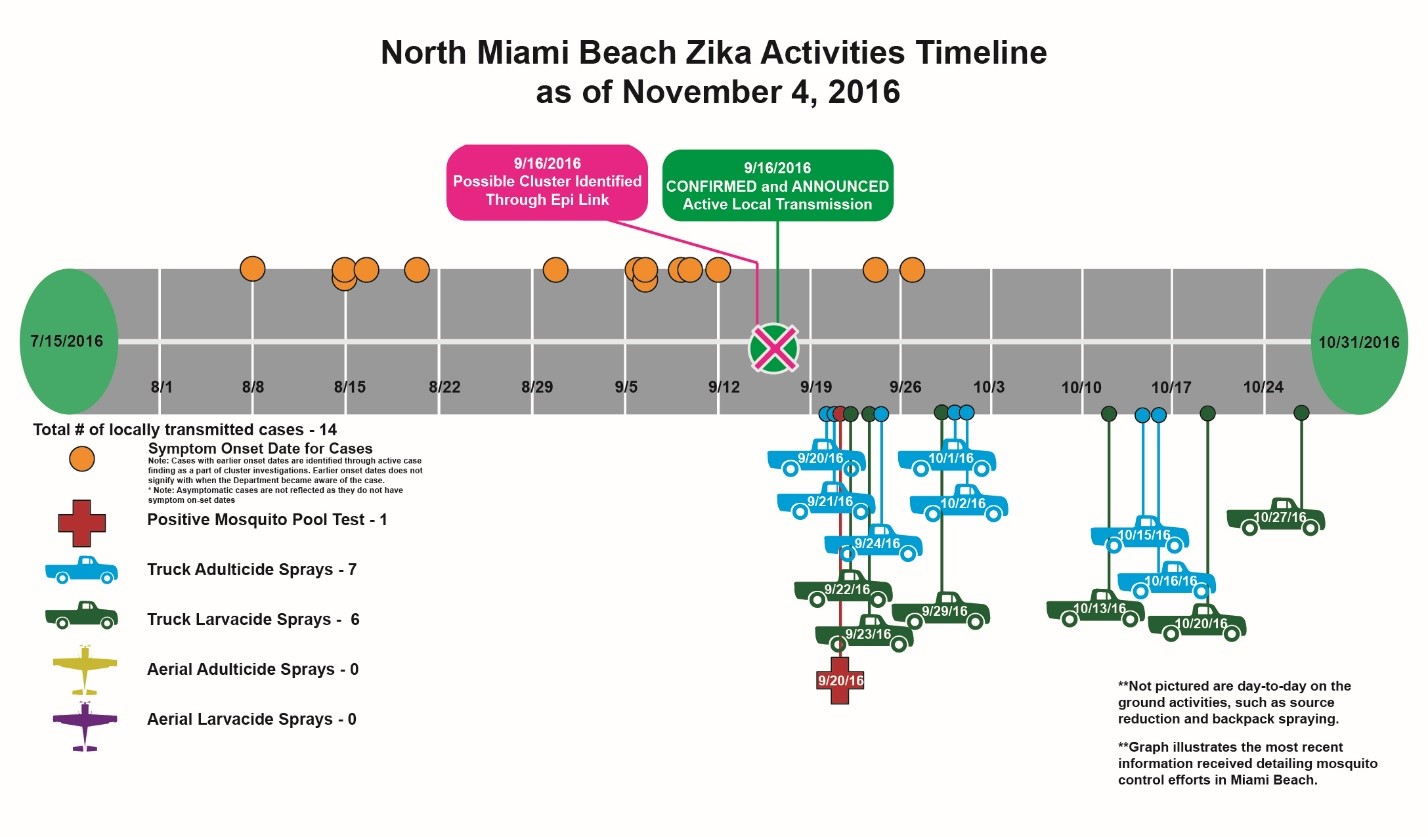
[FONT=&quot]The timelines below are as of Nov. 4 and will be updated every Friday. Note: Asymptomatic cases are not reflected as they do not have symptom on-set dates.[/FONT]
[FONT=&quot]click image above to enlarge[/FONT]
[FONT=&quot]click image above to enlarge[/FONT]
[FONT=&quot]click image above to enlarge[/FONT]
[FONT=&quot] [/FONT]
[FONT=&quot]The department is currently conducting 13 active investigations. The department has closed 34 investigations. Information regarding the investigations can be found here. If investigations reveal additional areas of active transmission, the department will announce a defined area of concern. [/FONT]
[FONT=&quot]The department has conducted Zika virus testing for more than 9,986 people statewide. Florida currently has the capacity to test 7,448 people for active Zika virus and 5.993 for Zika antibodies. At Governor Scott?s direction, all county health departments offer free Zika risk assessment and testing to pregnant women.[/FONT]
[FONT=&quot]Florida?s small case clusters is not considered widespread transmission, however, pregnant women are advised to avoid non-essential travel to the impacted areas in Miami-Dade County (see maps below). If you are pregnant and must travel or if you live or work in the impacted area, protect yourself from mosquito bites by wearing insect repellent, long clothing and limiting your time outdoors. [/FONT]
[FONT=&quot]According to CDC guidance, providers should consider testing all pregnant women with a history of travel to a Zika affected area for the virus. It is also recommended that all pregnant women who reside in or travel frequently to the area where active transmission is likely occurring be tested for Zika in the first and second trimester. Pregnant women in the identified area can contact their medical provider or their local county health department to be tested and receive a Zika prevention kit. CDC recommends that a pregnant woman with a history of Zika virus and her provider should consider additional ultrasounds. Additionally, the department is working closely with the Healthy Start Coalition of Miami-Dade County to identify pregnant women in the impacted areas to ensure they have access to resources and information to protect themselves. CDC recommends that a pregnant woman with a history of Zika virus and her provider should consider additional ultrasounds. [/FONT]
[FONT=&quot]Pregnant women can contact their local county health department for Zika risk assessment and testing hours and information. A Zika risk assessment will be conducted by county health department staff and blood and/or urine samples may be collected and sent to labs for testing. It may take one to two weeks to receive results.[/FONT]
[FONT=&quot]Florida has been monitoring pregnant women with evidence of Zika regardless of symptoms. The total number of pregnant women who have been or are being monitored is 133.[/FONT]
[FONT=&quot]On Feb. 12, Governor Scott directed the State Surgeon General to activate a Zika Virus Information Hotline for current Florida residents and visitors, as well as anyone planning on traveling to Florida in the near future. The hotline, managed by the Department of Health, has assisted more than 7,078 callers since it launched. The number for the Zika Virus Information Hotline is 1-855-622-6735.[/FONT]
[FONT=&quot]The department urges Floridians to drain standing water weekly, no matter how seemingly small. A couple drops of water in a bottle cap can be a breeding location for mosquitoes. Residents and visitors also need to use repellents when enjoying the Florida outdoors.[/FONT]
[FONT=&quot]For more information on DOH action and federal guidance, please click here.[/FONT]
[FONT=&quot]For resources and information on Zika virus, click here.[/FONT]
[FONT=&quot]click image above to enlarge[/FONT]
[FONT=&quot]click image above to enlarge


http://www.floridahealth.gov/newsroom/2016/11/110416-zika-update.html
[/FONT]
 
[FONT=&quot]November 7, 2016[/FONT]
[h=2]Department of Health Daily Zika Update[/h] [FONT=&quot]Contact:
Communications Office
NewsMedia@flhealth.gov
(850) 245-4111
[/FONT]

[FONT=&quot]Tallahassee, Fla.?In an effort to keep Florida residents and visitors safe and aware about the status of the Zika virus, the department will issue a Zika virus update each week day. Updates will include a Zika case count by county and information to keep Floridians informed and prepared. In order to keep the public informed, the department has posted our investigation process here.[/FONT]
[FONT=&quot]There are three new travel related cases today with one in Miami-Dade County and two involving pregnant women. Please visit our website to see the full list of travel-related cases.[/FONT]
[FONT=&quot]There is one new non-travel related case today. The individual is a Miami-Dade County resident and the department is investigating to determine where exposure occurred.[/FONT]
[FONT=&quot]Additionally, there is one case who had travel to an area outside of Florida with widespread Zika transmission as well as in Miami, which makes it impossible to determine exactly where exposure occurred. This case is being added to the undetermined category.[/FONT]
[FONT=&quot]DOH continues door-to-door outreach and targeted testing in Miami-Dade County and mosquito abatement and reduction activities are also taking place around the locations that are being investigated. DOH believes ongoing transmission is only taking place within the identified areas in Miami-Dade County.[/FONT]
[FONT=&quot]One case does not mean ongoing active transmission is taking place. DOH conducts a thorough investigation by sampling close contacts and community members around each case to determine if additional people are infected. If DOH finds evidence that active transmission is occurring in an area, the media and the public will be notified.[/FONT]
[FONT=&quot]For a complete breakdown of non-travel and travel-related Zika infections to-date, please see below.[/FONT]
[TABLE="border: 1, cellpadding: 0, cellspacing: 0"]
[TR]
[TD="width: 397"] Infection Type
[/TD]
[TD="width: 382"] Infection Count
[/TD]
[/TR]
[TR]
[TD="width: 397"] Travel-Related Infections of Zika
[/TD]
[TD="width: 382"] 780
[/TD]
[/TR]
[TR]
[TD="width: 397"] Non-Travel Related Infections of Zika
[/TD]
[TD="width: 382"] 191
[/TD]
[/TR]
[TR]
[TD="width: 397"] Infections Involving Pregnant Women
[/TD]
[TD="width: 382"] 135
[/TD]
[/TR]
[TR]
[TD="width: 397"] Out of State Cases (not Florida Residents)
[/TD]
[TD="width: 382"] 20
[/TD]
[/TR]
[TR]
[TD="width: 397"] Undetermined
[/TD]
[TD="width: 382"] 7
[/TD]
[/TR]
[TR]
[TD="width: 397"] Total
[/TD]
[TD="width: 382"] 1,133
[/TD]
[/TR]
[/TABLE]
[FONT=&quot]The timelines below are as of Nov. 4 and will be updated every Friday. Note: Asymptomatic cases are not reflected as they do not have symptom on-set dates.[/FONT]
[FONT=&quot]click image above to enlarge[/FONT]
[FONT=&quot]click image above to enlarge[/FONT]
[FONT=&quot]click image above to enlarge[/FONT]
[FONT=&quot] [/FONT]
[FONT=&quot] [/FONT]
[FONT=&quot]The department is currently conducting 13 active investigations. The department has closed 34 investigations. Information regarding the investigations can be found here. If investigations reveal additional areas of active transmission, the department will announce a defined area of concern. [/FONT]
[FONT=&quot]The department has conducted Zika virus testing for more than 10,050 people statewide. Florida currently has the capacity to test 7,337 people for active Zika virus and 5,993 for Zika antibodies. At Governor Scott?s direction, all county health departments offer free Zika risk assessment and testing to pregnant women.[/FONT]
[FONT=&quot]Florida?s small case clusters is not considered widespread transmission, however, pregnant women are advised to avoid non-essential travel to the impacted areas in Miami-Dade County (see maps below). If you are pregnant and must travel or if you live or work in the impacted area, protect yourself from mosquito bites by wearing insect repellent, long clothing and limiting your time outdoors. [/FONT]
[FONT=&quot]According to CDC guidance, providers should consider testing all pregnant women with a history of travel to a Zika affected area for the virus. It is also recommended that all pregnant women who reside in or travel frequently to the area where active transmission is likely occurring be tested for Zika in the first and second trimester. Pregnant women in the identified area can contact their medical provider or their local county health department to be tested and receive a Zika prevention kit. CDC recommends that a pregnant woman with a history of Zika virus and her provider should consider additional ultrasounds. Additionally, the department is working closely with the Healthy Start Coalition of Miami-Dade County to identify pregnant women in the impacted areas to ensure they have access to resources and information to protect themselves. CDC recommends that a pregnant woman with a history of Zika virus and her provider should consider additional ultrasounds.[/FONT]
[FONT=&quot]Pregnant women can contact their local county health department for Zika risk assessment and testing hours and information. A Zika risk assessment will be conducted by county health department staff and blood and/or urine samples may be collected and sent to labs for testing. It may take one to two weeks to receive results.[/FONT]
[FONT=&quot]Florida has been monitoring pregnant women with evidence of Zika regardless of symptoms. The total number of pregnant women who have been or are being monitored is 135.[/FONT]
[FONT=&quot]On Feb. 12, Governor Scott directed the State Surgeon General to activate a Zika Virus Information Hotline for current Florida residents and visitors, as well as anyone planning on traveling to Florida in the near future. The hotline, managed by the Department of Health, has assisted more than 7,144 callers since it launched. The number for the Zika Virus Information Hotline is 1-855-622-6735.[/FONT]
[FONT=&quot]The department urges Floridians to drain standing water weekly, no matter how seemingly small. A couple drops of water in a bottle cap can be a breeding location for mosquitoes. Residents and visitors also need to use repellents when enjoying the Florida outdoors.[/FONT]
[FONT=&quot]For more information on DOH action and federal guidance, please click here.[/FONT]
[FONT=&quot]For resources and information on Zika virus, click here.[/FONT]
[FONT=&quot]click image above to enlarge[/FONT]
[FONT=&quot]click image above to enlarge

http://www.floridahealth.gov/newsroom/2016/11/110716-zika-update.html
[/FONT]
 
[FONT=&quot]November 8, 2016[/FONT]
[h=2]Department of Health Daily Zika Update[/h] [FONT=&quot]Contact:
Communications Office
NewsMedia@flhealth.gov
(850) 245-4111
[/FONT]

[FONT=&quot]Tallahassee, Fla.?In an effort to keep Florida residents and visitors safe and aware about the status of the Zika virus, the department will issue a Zika virus update each week day. Updates will include a Zika case count by county and information to keep Floridians informed and prepared. In order to keep the public informed, the department has posted our investigation process here.[/FONT]
[FONT=&quot]There are three new travel related cases today with one in Miami-Dade, one in Orange and one in Palm Beach. Please visit our website to see the full list of travel-related cases.[/FONT]
[FONT=&quot]There is one new non-travel related case today linked to the investigation in Little River.[/FONT]
[FONT=&quot]DOH continues door-to-door outreach and targeted testing in Miami-Dade County and mosquito abatement and reduction activities are also taking place around the locations that are being investigated. DOH believes ongoing transmission is only taking place within the identified areas in Miami-Dade County.[/FONT]
[FONT=&quot]One case does not mean ongoing active transmission is taking place. DOH conducts a thorough investigation by sampling close contacts and community members around each case to determine if additional people are infected. If DOH finds evidence that active transmission is occurring in an area, the media and the public will be notified.[/FONT]
[FONT=&quot]For a complete breakdown of non-travel and travel-related Zika infections to-date, please see below.[/FONT]
[TABLE="border: 1, cellpadding: 0, cellspacing: 0"]
[TR]
[TD="width: 397"] Infection Type
[/TD]
[TD="width: 382"] Infection Count
[/TD]
[/TR]
[TR]
[TD="width: 397"] Travel-Related Infections of Zika
[/TD]
[TD="width: 382"] 783
[/TD]
[/TR]
[TR]
[TD="width: 397"] Non-Travel Related Infections of Zika
[/TD]
[TD="width: 382"] 192
[/TD]
[/TR]
[TR]
[TD="width: 397"] Infections Involving Pregnant Women
[/TD]
[TD="width: 382"] 135
[/TD]
[/TR]
[TR]
[TD="width: 397"] Out of State Cases (not Florida Residents)
[/TD]
[TD="width: 382"] 20
[/TD]
[/TR]
[TR]
[TD="width: 397"] Undetermined
[/TD]
[TD="width: 382"] 7
[/TD]
[/TR]
[TR]
[TD="width: 397"] Total
[/TD]
[TD="width: 382"] 1,137
[/TD]
[/TR]
[/TABLE]
[FONT=&quot]The timelines below are as of Nov. 4 and will be updated every Friday. Note: Asymptomatic cases are not reflected as they do not have symptom on-set dates.[/FONT]
[FONT=&quot]click image above to enlarge[/FONT]
[FONT=&quot]click image above to enlarge[/FONT]
[FONT=&quot]click image above to enlarge[/FONT]
[FONT=&quot] [/FONT]
[FONT=&quot] [/FONT]
[FONT=&quot]The department is currently conducting 13 active investigations. The department has closed 34 investigations. Information regarding the investigations can be found here. If investigations reveal additional areas of active transmission, the department will announce a defined area of concern. [/FONT]
[FONT=&quot]The department has conducted Zika virus testing for more than 10,096 people statewide. Florida currently has the capacity to test 7,296 people for active Zika virus and 5,916 for Zika antibodies. At Governor Scott?s direction, all county health departments offer free Zika risk assessment and testing to pregnant women.[/FONT]
[FONT=&quot]Florida?s small case clusters is not considered widespread transmission, however, pregnant women are advised to avoid non-essential travel to the impacted areas in Miami-Dade County (see maps below). If you are pregnant and must travel or if you live or work in the impacted area, protect yourself from mosquito bites by wearing insect repellent, long clothing and limiting your time outdoors. [/FONT]
[FONT=&quot]According to CDC guidance, providers should consider testing all pregnant women with a history of travel to a Zika affected area for the virus. It is also recommended that all pregnant women who reside in or travel frequently to the area where active transmission is likely occurring be tested for Zika in the first and second trimester. Pregnant women in the identified area can contact their medical provider or their local county health department to be tested and receive a Zika prevention kit. CDC recommends that a pregnant woman with a history of Zika virus and her provider should consider additional ultrasounds. Additionally, the department is working closely with the Healthy Start Coalition of Miami-Dade County to identify pregnant women in the impacted areas to ensure they have access to resources and information to protect themselves. CDC recommends that a pregnant woman with a history of Zika virus and her provider should consider additional ultrasounds. [/FONT]
[FONT=&quot]Pregnant women can contact their local county health department for Zika risk assessment and testing hours and information. A Zika risk assessment will be conducted by county health department staff and blood and/or urine samples may be collected and sent to labs for testing. It may take one to two weeks to receive results.[/FONT]
[FONT=&quot]Florida has been monitoring pregnant women with evidence of Zika regardless of symptoms. The total number of pregnant women who have been or are being monitored is 135.[/FONT]
[FONT=&quot]On Feb. 12, Governor Scott directed the State Surgeon General to activate a Zika Virus Information Hotline for current Florida residents and visitors, as well as anyone planning on traveling to Florida in the near future. The hotline, managed by the Department of Health, has assisted more than 7,178 callers since it launched. The number for the Zika Virus Information Hotline is 1-855-622-6735.[/FONT]
[FONT=&quot]The department urges Floridians to drain standing water weekly, no matter how seemingly small. A couple drops of water in a bottle cap can be a breeding location for mosquitoes. Residents and visitors also need to use repellents when enjoying the Florida outdoors.[/FONT]
[FONT=&quot]For more information on DOH action and federal guidance, please click here.[/FONT]
[FONT=&quot]For resources and information on Zika virus, click here.[/FONT]
[FONT=&quot]click image above to enlarge[/FONT]
[FONT=&quot]click image above to enlarge

http://www.floridahealth.gov/newsroom/2016/11/110816-zika-update.html
[/FONT]
 
[FONT=&quot]November 9, 2016[/FONT]
[h=2]Department of Health Daily Zika Update[/h] [FONT=&quot]Contact:
Communications Office
NewsMedia@flhealth.gov
(850) 245-4111
[/FONT]

[FONT=&quot]Tallahassee, Fla.?In an effort to keep Florida residents and visitors safe and aware about the status of the Zika virus, the department will issue a Zika virus update each week day. Updates will include a Zika case count by county and information to keep Floridians informed and prepared. In order to keep the public informed, the department has posted our investigation process here.[/FONT]
[FONT=&quot]As a result of a change in the CDC national case definition for Zika, the department is updating the daily Zika update to match Florida data published nationally.[/FONT]
[FONT=&quot]There are six new locally acquired cases today. Five are Miami-Dade County residents and one is a non-Florida resident. The department is investigating to determine where exposure occurred.[/FONT]
[FONT=&quot]Additionally, there is one new case in a Florida resident who had traveled to Miami and to an area outside of Florida with widespread Zika transmission. This case is being added to the undetermined category as the exact location of exposure is inconclusive. [/FONT]
[FONT=&quot]The total number of Zika cases reported in Florida as of today is 1,144.[/FONT]
[FONT=&quot]The following is a breakdown of current cases. Note, these categories are not mutually exclusive and cannot be added together. The pregnant women category now includes travel, locally acquired and undetermined cases.[/FONT]
[FONT=&quot]All categories include non-Florida residents. Non-Florida residents who acquired Zika in Florida are in the locally acquired category. Non-Florida residents who acquired Zika outside of Florida, but were diagnosed in Florida are included in the travel-related category. Please visit our website to see the full list of travel-related cases by county.[/FONT]
[TABLE="border: 1, cellpadding: 0, cellspacing: 0"]
[TR]
[TD="width: 238"] Infection Type
[/TD]
[TD="width: 229"] Infection Count
[/TD]
[/TR]
[TR]
[TD="width: 238"] Travel-Related Infections of Zika
[/TD]
[TD="width: 229"] 915
[/TD]
[/TR]
[TR]
[TD="width: 238"] Locally Acquired Infections of Zika
[/TD]
[TD="width: 229"] 217
[/TD]
[/TR]
[TR]
[TD="width: 238"] Undetermined
[/TD]
[TD="width: 229"] 12
[/TD]
[/TR]
[TR]
[TD="width: 468, colspan: 2"]
[/TD]
[/TR]
[TR]
[TD="width: 238"] Pregnant Women with Lab-Evidence of Zika
[/TD]
[TD="width: 229"] 143
[/TD]
[/TR]
[/TABLE]
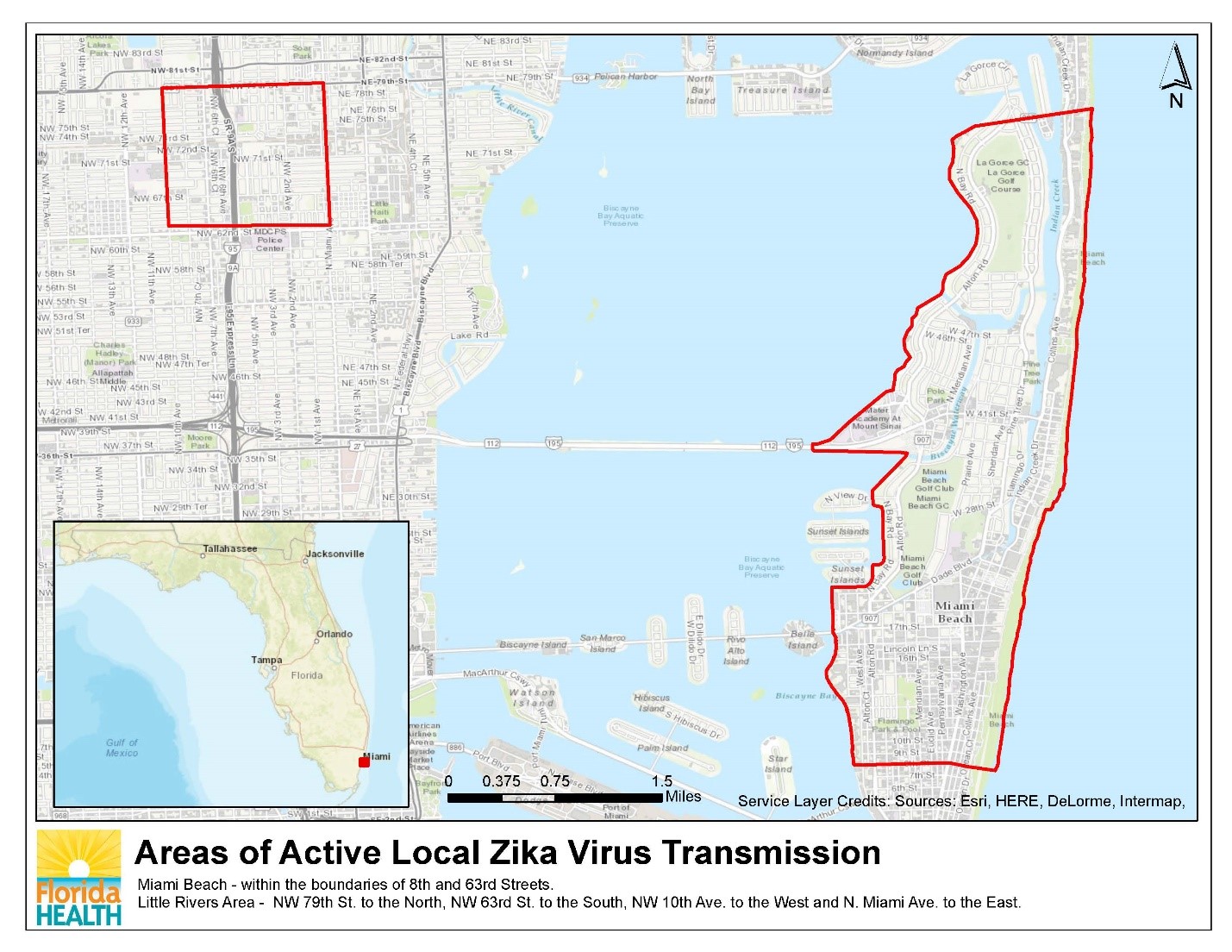
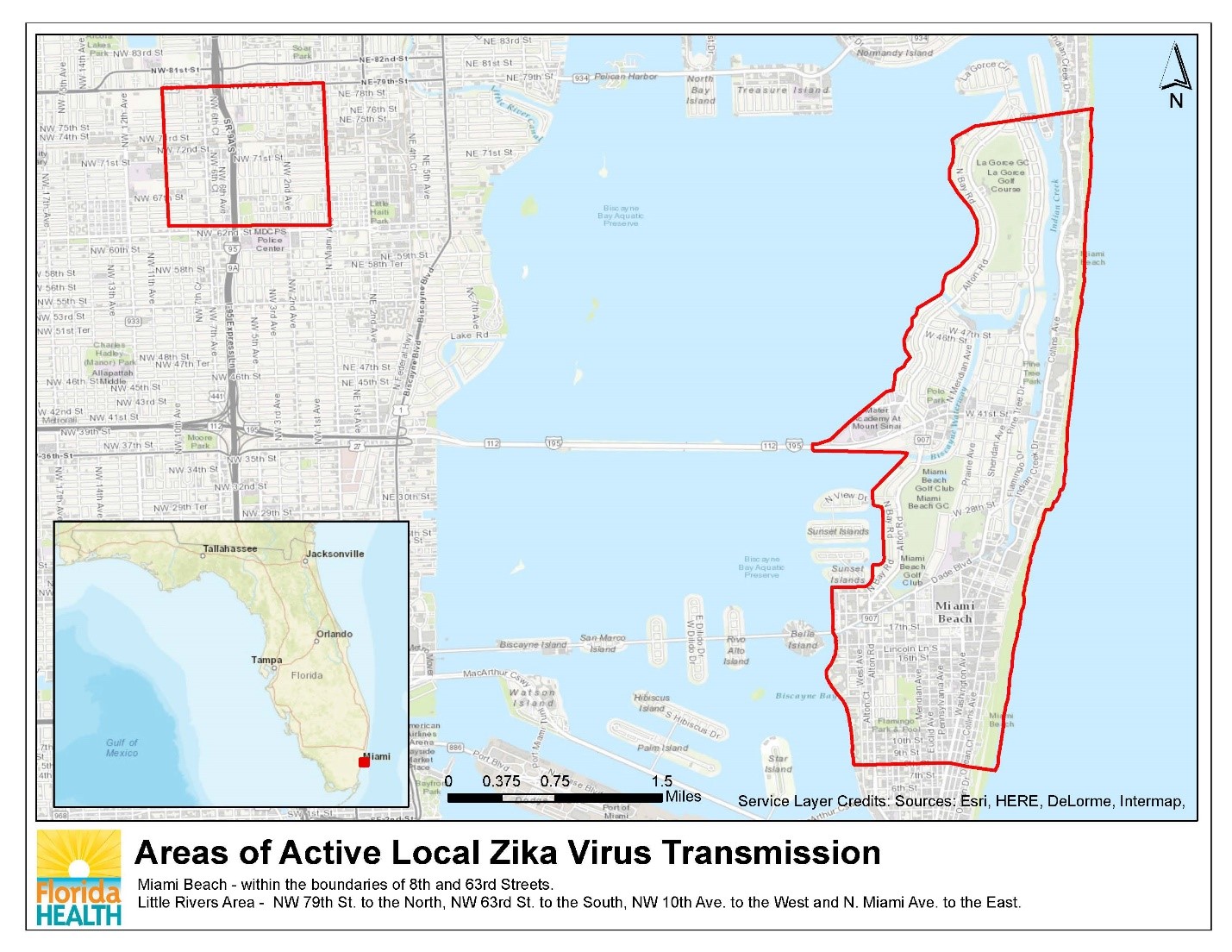
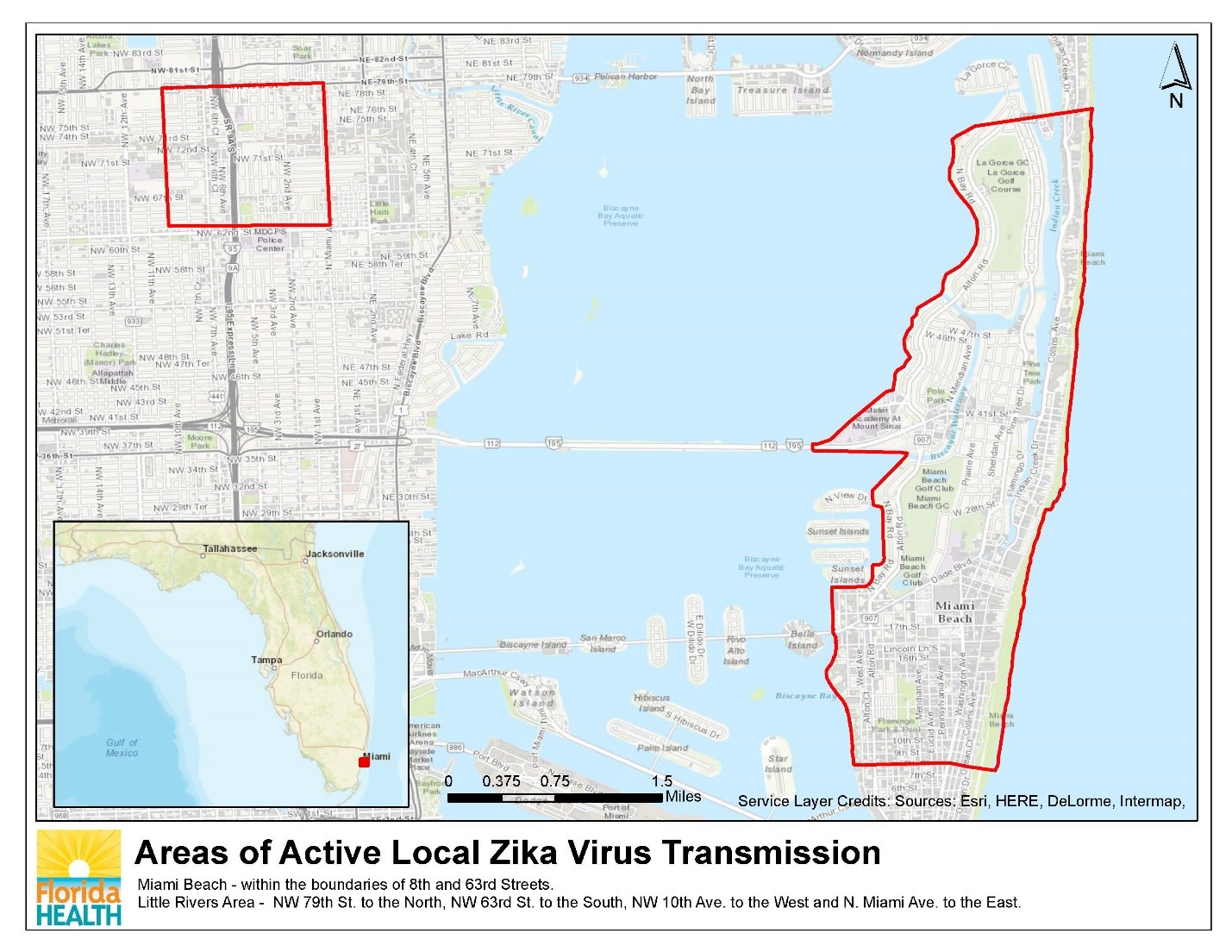
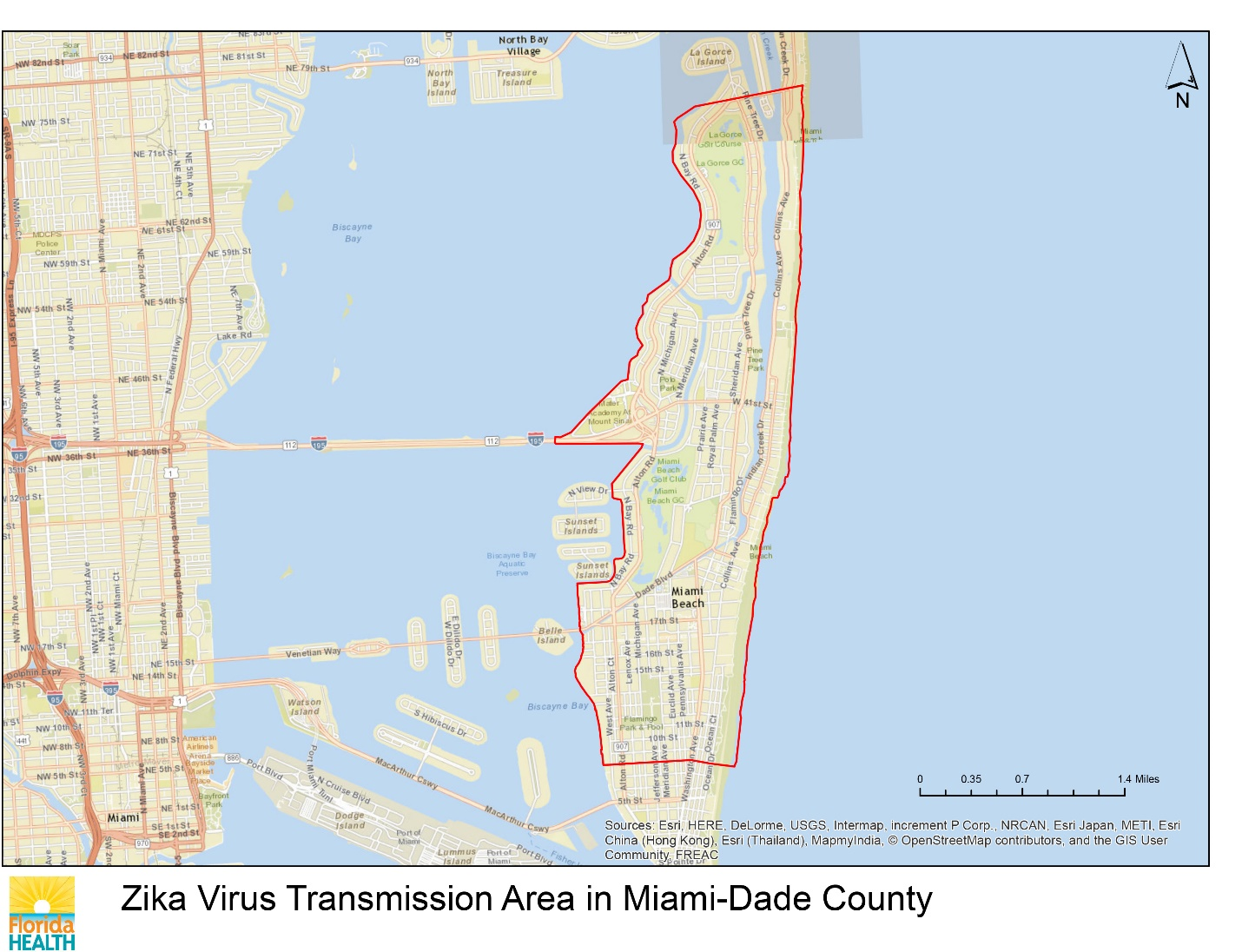
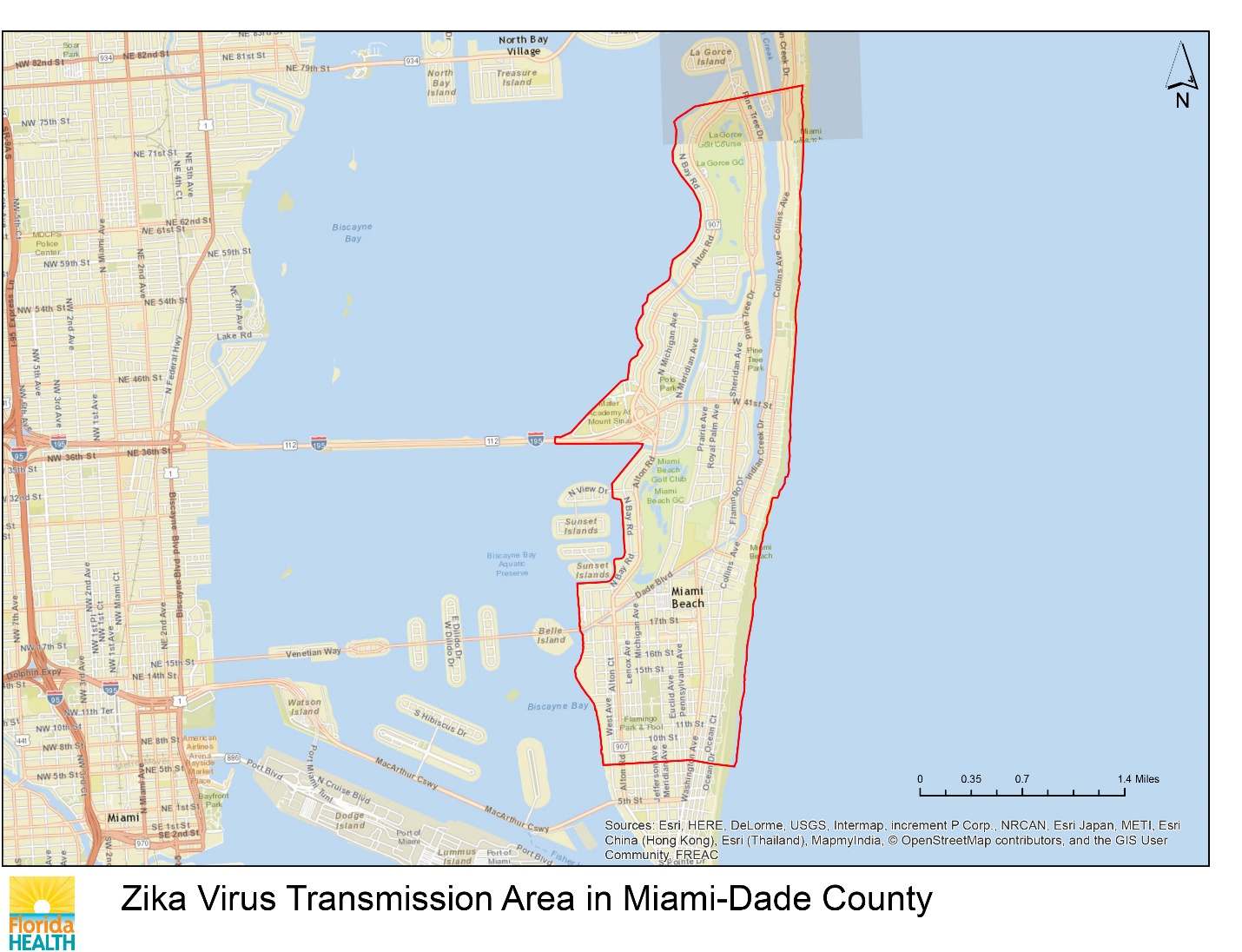
[FONT=&quot]DOH continues door-to-door outreach and targeted testing in Miami-Dade counties and mosquito abatement and reduction activities are also taking place around the locations that are being investigated. DOH believes ongoing transmission is only taking place within the identified area in Miami Beach in Miami-Dade County, see map below.[/FONT]
[FONT=&quot]One case does not mean ongoing active transmission is taking place. DOH conducts a thorough investigation by sampling close contacts and community members around each case to determine if additional people are infected. If DOH finds evidence that active transmission is occurring in an area, the media and the public will be notified.[/FONT]
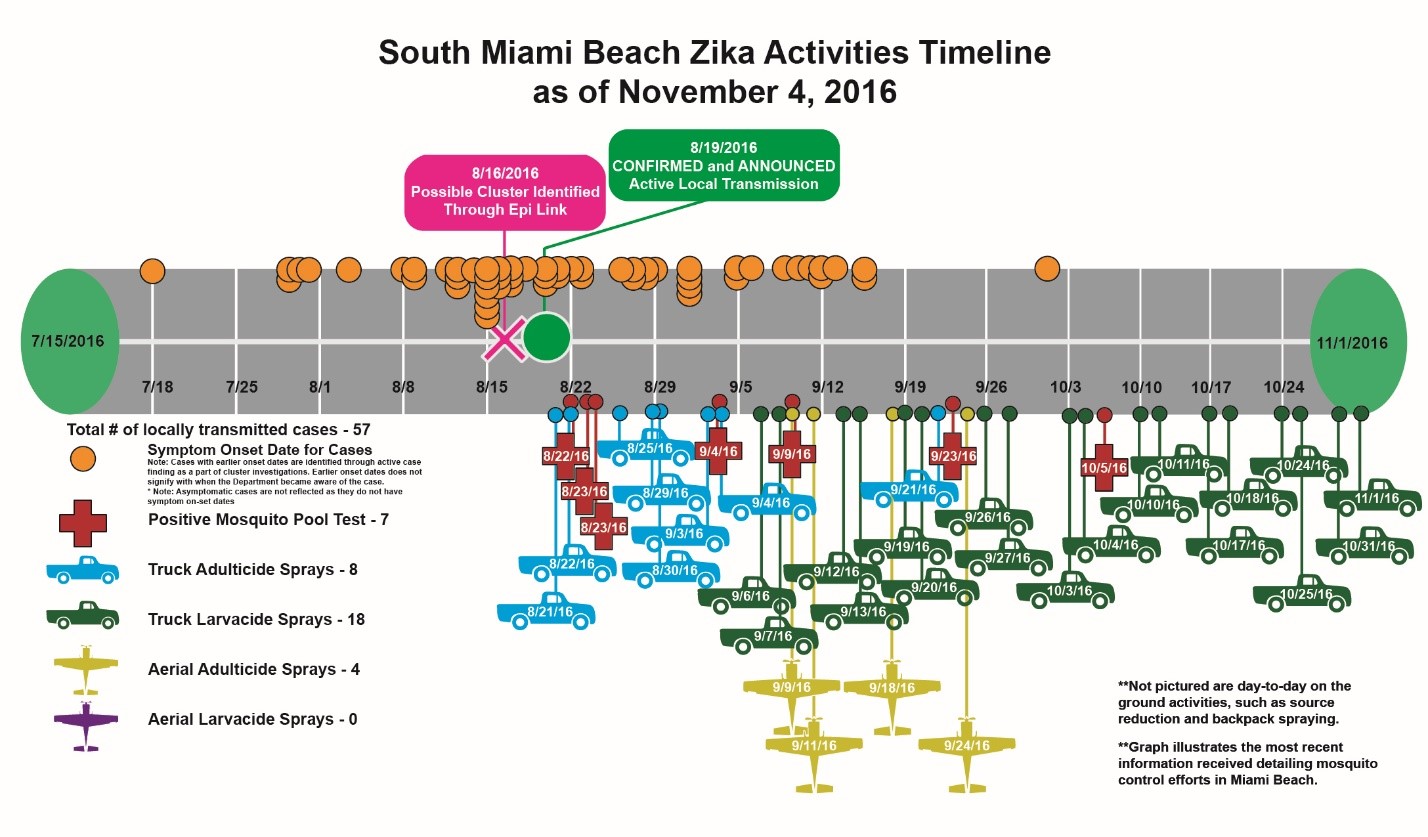
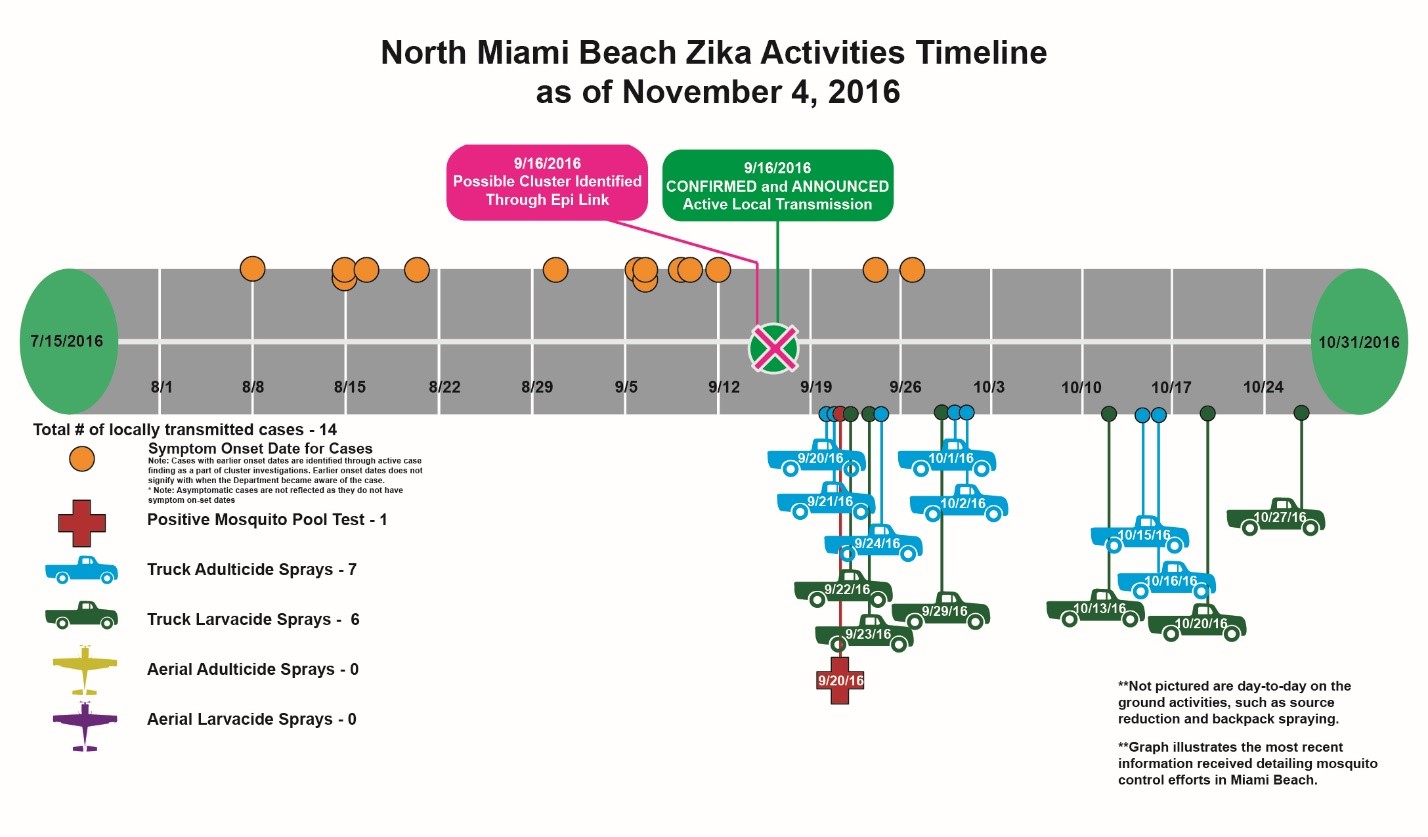
[FONT=&quot]The timelines below are as of Nov. 4 and will be updated every Friday. Note: asymptomatic cases are not reflected as they do not have symptom on-set dates.[/FONT]
[FONT=&quot]click image above to enlarge[/FONT]
[FONT=&quot]click image above to enlarge[/FONT]
[FONT=&quot]click image above to enlarge[/FONT]
[FONT=&quot] [/FONT]
[FONT=&quot] [/FONT]
[FONT=&quot]The department is currently conducting 14 active investigations. The department has closed 35 investigations. Information regarding the investigations can be found here. If investigations reveal additional areas of active transmission, the department will announce a defined area of concern. [/FONT]
[FONT=&quot]The department has conducted Zika virus testing for more than 10,118 people statewide. Florida currently has the capacity to test 7,149 people for active Zika virus and 5,813 for Zika antibodies. At Governor Scott?s direction, all county health departments now offer free Zika risk assessment and testing to pregnant women.[/FONT]
[FONT=&quot]Florida?s small case cluster is not considered widespread transmission, however, pregnant women are advised to avoid non-essential travel to the impacted area in Miami-Dade County (see map below). If you are pregnant and must travel or if you live or work in the impacted area, protect yourself from mosquito bites by wearing insect repellent, long clothing and limiting your time outdoors. [/FONT]
[FONT=&quot]According to CDC guidance, providers should test all pregnant women who lived in, traveled to or whose partner traveled to Miami-Dade County after Aug. 1, 2016. It is also recommended that all pregnant women who reside in or travel frequently to the area where active transmission is likely occurring be tested for Zika in the first and second trimester. Pregnant women in the identified area can contact their medical provider or their local county health department to be tested and receive a Zika prevention kit. CDC recommends that a pregnant woman with a history of Zika virus and her provider should consider additional ultrasounds. Additionally, the department is working closely with the Healthy Start Coalition of Miami-Dade County to identify pregnant women in the impacted areas to ensure they have access to resources and information to protect themselves. CDC recommends that a pregnant woman with a history of Zika virus and her provider should consider additional ultrasounds. [/FONT]
[FONT=&quot]Pregnant women can contact their local county health department for Zika risk assessment and testing hours and information. A Zika risk assessment will be conducted by county health department staff and blood and/or urine samples may be collected and sent to labs for testing. It may take one to two weeks to receive results.[/FONT]
[FONT=&quot]Florida has been monitoring pregnant women with evidence of Zika regardless of symptoms. The total number of pregnant women who have been or are being monitored is 143.[/FONT]
[FONT=&quot]On Feb. 12, Governor Scott directed the State Surgeon General to activate a Zika Virus Information Hotline for current Florida residents and visitors, as well as anyone planning on traveling to Florida in the near future. The hotline, managed by the Department of Health, has assisted 7,198 callers since it launched. The number for the Zika Virus Information Hotline is 1-855-622-6735.[/FONT]
[FONT=&quot]The department urges Floridians to drain standing water weekly, no matter how seemingly small. A couple drops of water in a bottle cap can be a breeding location for mosquitoes. Residents and visitors also need to use repellents when enjoying the Florida outdoors.[/FONT]
[FONT=&quot]For more information on DOH action and federal guidance, please click here.[/FONT]
[FONT=&quot]For resources and information on Zika virus, click here.[/FONT]
[FONT=&quot]click image above to enlarge[/FONT]
[FONT=&quot]click image above to enlarge

http://www.floridahealth.gov/newsroom/2016/11/110916-zika-update.html
[/FONT]
 
[FONT=&quot]November 10, 2016[/FONT]
[h=2]Department of Health Daily Zika Update[/h] [FONT=&quot]Contact:
Communications Office
NewsMedia@flhealth.gov
(850) 245-4111
[/FONT]

[FONT=&quot]Tallahassee, Fla. ? In an effort to keep Florida residents and visitors safe and aware about the status of the Zika virus, the department will issue a Zika virus update each week day. Updates will include a Zika case count by county and information to keep Floridians informed and prepared. In order to keep the public informed, the department has posted our investigation process here.[/FONT]
[FONT=&quot]There are five new locally acquired cases today. One is associated with the Miami Beach investigation. The other four are Miami-Dade County residents and the department is investigating to determine where exposure occurred. [/FONT]
[FONT=&quot]The total number of Zika cases reported in Florida as of today is 1,149.[/FONT]
[TABLE="border: 1, cellpadding: 0, cellspacing: 0"]
[TR]
[TD="width: 318"] Infection Type
[/TD]
[TD="width: 306"] Infection Count
[/TD]
[/TR]
[TR]
[TD="width: 318"] Travel-Related Infections of Zika
[/TD]
[TD="width: 306"] 915
[/TD]
[/TR]
[TR]
[TD="width: 318"] Locally Acquired Infections of Zika
[/TD]
[TD="width: 306"] 222
[/TD]
[/TR]
[TR]
[TD="width: 318"] Undetermined
[/TD]
[TD="width: 306"] 12
[/TD]
[/TR]
[TR]
[TD="width: 623, colspan: 2"]
[/TD]
[/TR]
[TR]
[TD="width: 318"] Pregnant Women with Lab-Evidence of Zika
[/TD]
[TD="width: 306"] 143
[/TD]
[/TR]
[/TABLE]
[FONT=&quot]Note, these categories are not mutually exclusive and cannot be added together. Please visit our website to see the full list of travel-related cases by county.[/FONT]
[FONT=&quot] [/FONT]
[FONT=&quot]DOH continues door-to-door outreach and targeted testing in Miami-Dade counties and mosquito abatement and reduction activities are also taking place around the locations that are being investigated. DOH believes ongoing transmission is only taking place within the identified area in Miami Beach in Miami-Dade County, see map below.[/FONT]
[FONT=&quot]One case does not mean ongoing active transmission is taking place. DOH conducts a thorough investigation by sampling close contacts and community members around each case to determine if additional people are infected. If DOH finds evidence that active transmission is occurring in an area, the media and the public will be notified.[/FONT]
[FONT=&quot]The timelines below are as of Nov. 4 and will be updated every Friday. Note: asymptomatic cases are not reflected as they do not have symptom on-set dates.[/FONT]
[FONT=&quot] [/FONT]
[FONT=&quot]click image above to enlarge[/FONT]
[FONT=&quot]click image above to enlarge[/FONT]
[FONT=&quot]click image above to enlarge[/FONT]
[FONT=&quot] [/FONT]
[FONT=&quot]The department is currently conducting 14 active investigations. The department has closed 35 investigations. Information regarding the investigations can be found here. If investigations reveal additional areas of active transmission, the department will announce a defined area of concern. [/FONT]
[FONT=&quot]The department has conducted Zika virus testing for more than 10,121 people statewide. Florida currently has the capacity to test 7,010 people for active Zika virus and 5,682 for Zika antibodies. At Governor Scott?s direction, all county health departments now offer free Zika risk assessment and testing to pregnant women.[/FONT]
[FONT=&quot]Florida?s small case cluster is not considered widespread transmission, however, pregnant women are advised to avoid non-essential travel to the impacted area in Miami-Dade County (see map below). If you are pregnant and must travel or if you live or work in the impacted area, protect yourself from mosquito bites by wearing insect repellent, long clothing and limiting your time outdoors. [/FONT]
[FONT=&quot]According to CDC guidance, providers should test all pregnant women who lived in, traveled to or whose partner traveled to Miami-Dade County after Aug. 1, 2016. It is also recommended that all pregnant women who reside in or travel frequently to the area where active transmission is likely occurring be tested for Zika in the first and second trimester. Pregnant women in the identified area can contact their medical provider or their local county health department to be tested and receive a Zika prevention kit. CDC recommends that a pregnant woman with a history of Zika virus and her provider should consider additional ultrasounds. Additionally, the department is working closely with the Healthy Start Coalition of Miami-Dade County to identify pregnant women in the impacted areas to ensure they have access to resources and information to protect themselves. CDC recommends that a pregnant woman with a history of Zika virus and her provider should consider additional ultrasounds. [/FONT]
[FONT=&quot]Pregnant women can contact their local county health department for Zika risk assessment and testing hours and information. A Zika risk assessment will be conducted by county health department staff and blood and/or urine samples may be collected and sent to labs for testing. It may take one to two weeks to receive results.[/FONT]
[FONT=&quot]Florida has been monitoring pregnant women with evidence of Zika regardless of symptoms. The total number of pregnant women who have been or are being monitored is 143.[/FONT]
[FONT=&quot]On Feb. 12, Governor Scott directed the State Surgeon General to activate a Zika Virus Information Hotline for current Florida residents and visitors, as well as anyone planning on traveling to Florida in the near future. The hotline, managed by the Department of Health, has assisted 7,258 callers since it launched. The number for the Zika Virus Information Hotline is 1-855-622-6735.[/FONT]
[FONT=&quot]The department urges Floridians to drain standing water weekly, no matter how seemingly small. A couple drops of water in a bottle cap can be a breeding location for mosquitoes. Residents and visitors also need to use repellents when enjoying the Florida outdoors.[/FONT]
[FONT=&quot]For more information on DOH action and federal guidance, please click here.[/FONT]
[FONT=&quot]For resources and information on Zika virus, click here.[/FONT]
[FONT=&quot]click image above to enlarge[/FONT]
[FONT=&quot]click image above to enlarge

http://www.floridahealth.gov/newsroom/2016/11/111016-zika-update.html
[/FONT]
 
[FONT=&quot]November 11, 2016[/FONT]
[h=2]Department of Health Daily Zika Update[/h] [FONT=&quot]Contact:
Communications Office
NewsMedia@flhealth.gov
(850) 245-4111
[/FONT]

[FONT=&quot]Tallahassee, Fla. ? In an effort to keep Florida residents and visitors safe and aware about the status of the Zika virus, the department will issue a Zika virus update each week day. Updates will include a Zika case count by county and information to keep Floridians informed and prepared. In order to keep the public informed, the department has posted our investigation process here.[/FONT]
[FONT=&quot]There are seven new travel-related cases today with four in Broward, two in Miami-Dade and one in Palm Beach.[/FONT]
[FONT=&quot]There are two new locally acquired cases today. Both cases are associated with the Miami Beach investigation. One individual is a Florida resident and the other is a non-Florida resident.[/FONT]
[FONT=&quot]The total number of Zika cases reported in Florida as of today is 1,158.[/FONT]
[TABLE="border: 1, cellpadding: 0, cellspacing: 0"]
[TR]
[TD="width: 318"] Infection Type
[/TD]
[TD="width: 306"] Infection Count
[/TD]
[/TR]
[TR]
[TD="width: 318"] Travel-Related Infections of Zika
[/TD]
[TD="width: 306"] 922
[/TD]
[/TR]
[TR]
[TD="width: 318"] Locally Acquired Infections of Zika
[/TD]
[TD="width: 306"] 224
[/TD]
[/TR]
[TR]
[TD="width: 318"] Undetermined
[/TD]
[TD="width: 306"] 12
[/TD]
[/TR]
[TR]
[TD="width: 623, colspan: 2"]
[/TD]
[/TR]
[TR]
[TD="width: 318"] Pregnant Women with Lab-Evidence of Zika
[/TD]
[TD="width: 306"] 147
[/TD]
[/TR]
[/TABLE]
[FONT=&quot]Note, these categories are not mutually exclusive and cannot be added together. Please visit our website to see the full list of travel-related cases by county.[/FONT]
[FONT=&quot]DOH continues door-to-door outreach and targeted testing in Miami-Dade counties and mosquito abatement and reduction activities are also taking place around the locations that are being investigated. DOH believes ongoing transmission is only taking place within the identified area in Miami Beach in Miami-Dade County, see map below.[/FONT]
[FONT=&quot]One case does not mean ongoing active transmission is taking place. DOH conducts a thorough investigation by sampling close contacts and community members around each case to determine if additional people are infected. If DOH finds evidence that active transmission is occurring in an area, the media and the public will be notified.[/FONT]
[FONT=&quot]The timelines below are as of Nov. 4. Due to the Veterans Day Holiday, the timelines will be updated on Monday. Note: asymptomatic cases are not reflected as they do not have symptom on-set dates.[/FONT]
[FONT=&quot] [/FONT]
[FONT=&quot]click image above to enlarge[/FONT]
[FONT=&quot]click image above to enlarge[/FONT]
[FONT=&quot]click image above to enlarge[/FONT]
[FONT=&quot] [/FONT]
[FONT=&quot]The department is currently conducting 14 active investigations. The department has closed 35 investigations. Information regarding the investigations can be found here. If investigations reveal additional areas of active transmission, the department will announce a defined area of concern. [/FONT]
[FONT=&quot]The department has conducted Zika virus testing for more than 10,162 people statewide. Florida currently has the capacity to test 6,878 people for active Zika virus and 5,650 for Zika antibodies. At Governor Scott?s direction, all county health departments now offer free Zika risk assessment and testing to pregnant women.[/FONT]
[FONT=&quot]Florida?s small case cluster is not considered widespread transmission, however, pregnant women are advised to avoid non-essential travel to the impacted area in Miami-Dade County (see map below). If you are pregnant and must travel or if you live or work in the impacted area, protect yourself from mosquito bites by wearing insect repellent, long clothing and limiting your time outdoors. [/FONT]
[FONT=&quot]According to CDC guidance, providers should test all pregnant women who lived in, traveled to or whose partner traveled to Miami-Dade County after Aug. 1, 2016. It is also recommended that all pregnant women who reside in or travel frequently to the area where active transmission is likely occurring be tested for Zika in the first and second trimester. Pregnant women in the identified area can contact their medical provider or their local county health department to be tested and receive a Zika prevention kit. CDC recommends that a pregnant woman with a history of Zika virus and her provider should consider additional ultrasounds. Additionally, the department is working closely with the Healthy Start Coalition of Miami-Dade County to identify pregnant women in the impacted areas to ensure they have access to resources and information to protect themselves. CDC recommends that a pregnant woman with a history of Zika virus and her provider should consider additional ultrasounds. [/FONT]
[FONT=&quot]Pregnant women can contact their local county health department for Zika risk assessment and testing hours and information. A Zika risk assessment will be conducted by county health department staff and blood and/or urine samples may be collected and sent to labs for testing. It may take one to two weeks to receive results.[/FONT]
[FONT=&quot]Florida has been monitoring pregnant women with evidence of Zika regardless of symptoms. The total number of pregnant women who have been or are being monitored is 147.[/FONT]
[FONT=&quot]On Feb. 12, Governor Scott directed the State Surgeon General to activate a Zika Virus Information Hotline for current Florida residents and visitors, as well as anyone planning on traveling to Florida in the near future. The hotline, managed by the Department of Health, has assisted 7,258 callers since it launched. The number for the Zika Virus Information Hotline is 1-855-622-6735.[/FONT]
[FONT=&quot]The department urges Floridians to drain standing water weekly, no matter how seemingly small. A couple drops of water in a bottle cap can be a breeding location for mosquitoes. Residents and visitors also need to use repellents when enjoying the Florida outdoors.[/FONT]
[FONT=&quot]For more information on DOH action and federal guidance, please click here.[/FONT]
[FONT=&quot]For resources and information on Zika virus, click here.[/FONT]
[FONT=&quot]click image above to enlarge[/FONT]
[FONT=&quot]click image above to enlarge

http://www.floridahealth.gov/newsroom/2016/11/111116-zika-update.html
[/FONT]
 
[FONT=&quot]November 14, 2016[/FONT]
[h=2]Department of Health Daily Zika Update[/h] [FONT=&quot]Contact:
Communications Office
NewsMedia@flhealth.gov
(850) 245-4111
[/FONT]

[FONT=&quot]Tallahassee, Fla.?In an effort to keep Florida residents and visitors safe and aware about the status of the Zika virus, the department will issue a Zika virus update each week day. Updates will include a Zika case count by county and information to keep Floridians informed and prepared. In order to keep the public informed, the department has posted our investigation process here.[/FONT]
[FONT=&quot]There are no new travel or locally acquired cases today.[/FONT]
[FONT=&quot]The total number of Zika cases reported in Florida as of today is 1,158.[/FONT]
[TABLE="border: 1, cellpadding: 0, cellspacing: 0"]
[TR]
[TD="width: 318"] Infection Type
[/TD]
[TD="width: 306"] Infection Count
[/TD]
[/TR]
[TR]
[TD="width: 318"] Travel-Related Infections of Zika
[/TD]
[TD="width: 306"] 922
[/TD]
[/TR]
[TR]
[TD="width: 318"] Locally Acquired Infections of Zika
[/TD]
[TD="width: 306"] 224
[/TD]
[/TR]
[TR]
[TD="width: 318"] Undetermined
[/TD]
[TD="width: 306"] 12
[/TD]
[/TR]
[TR]
[TD="width: 623, colspan: 2"]
[/TD]
[/TR]
[TR]
[TD="width: 318"] Pregnant Women with Lab-Evidence of Zika
[/TD]
[TD="width: 306"] 147
[/TD]
[/TR]
[/TABLE]
[FONT=&quot]Note, these categories are not mutually exclusive and cannot be added together. Please visit our website to see the full list of travel-related cases by county.[/FONT]
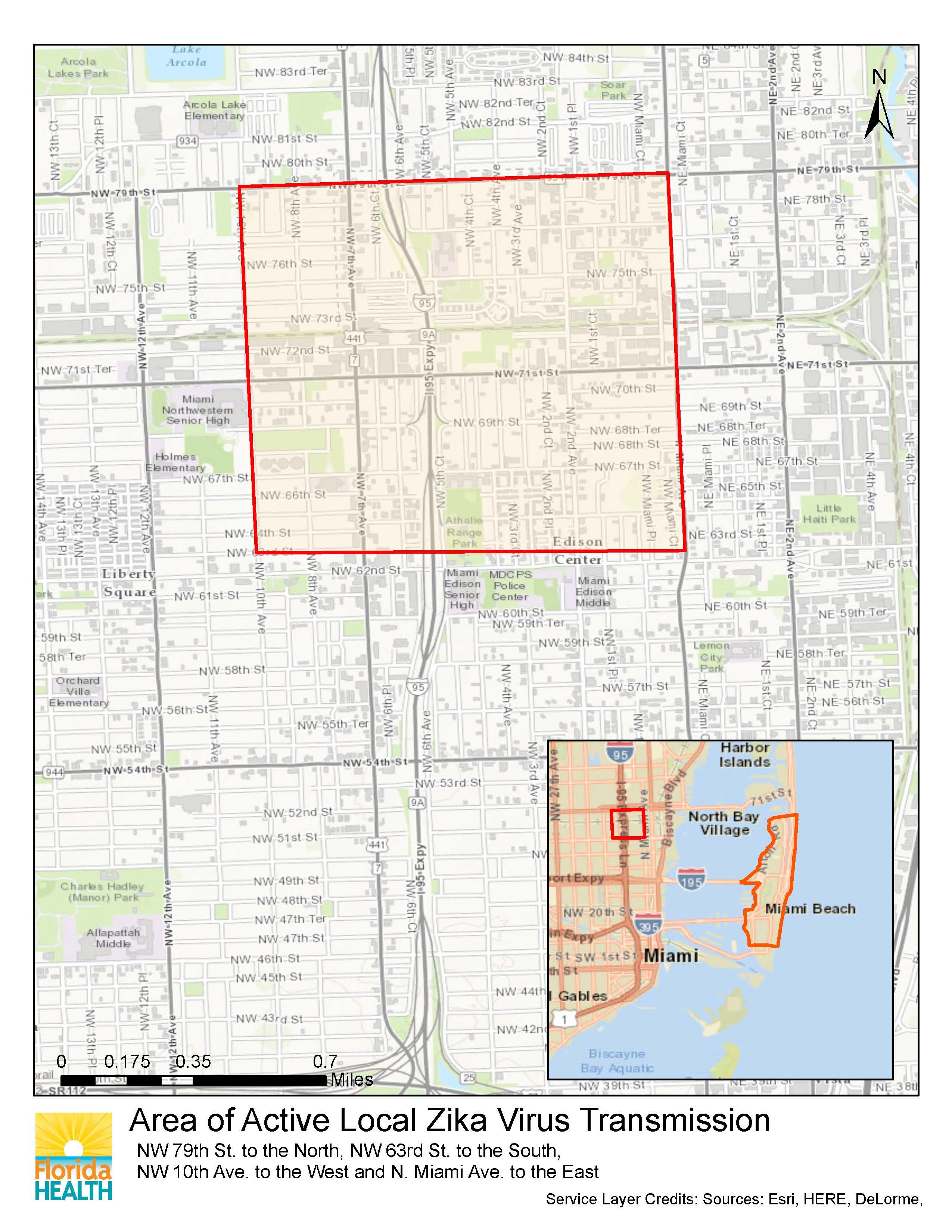
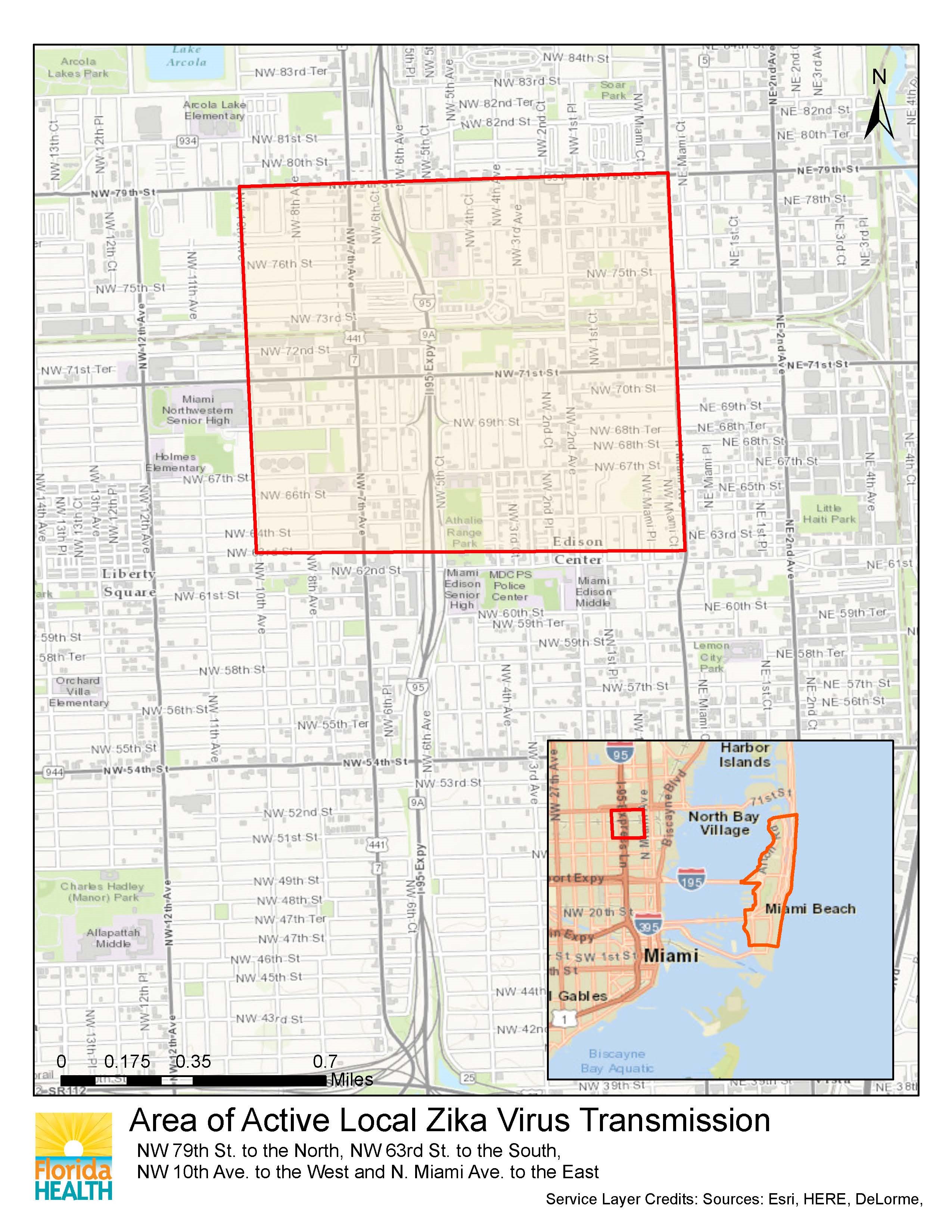
[FONT=&quot]DOH continues door-to-door outreach and targeted testing in Miami-Dade counties and mosquito abatement and reduction activities are also taking place around the locations that are being investigated. DOH believes ongoing transmission is only taking place within the identified area in Miami Beach in Miami-Dade County, see map below.[/FONT]
[FONT=&quot]One case does not mean ongoing active transmission is taking place. DOH conducts a thorough investigation by sampling close contacts and community members around each case to determine if additional people are infected. If DOH finds evidence that active transmission is occurring in an area, the media and the public will be notified.[/FONT]
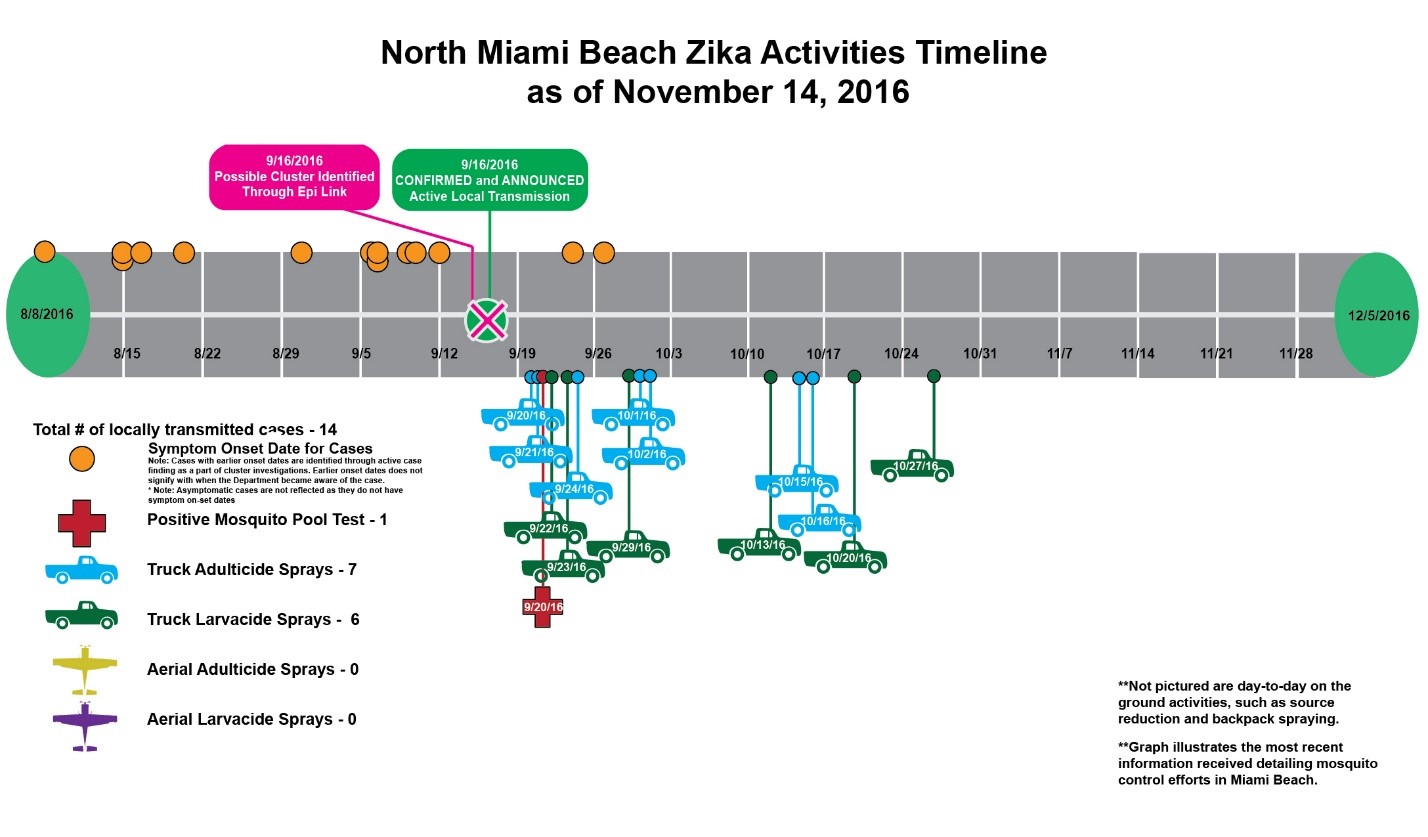
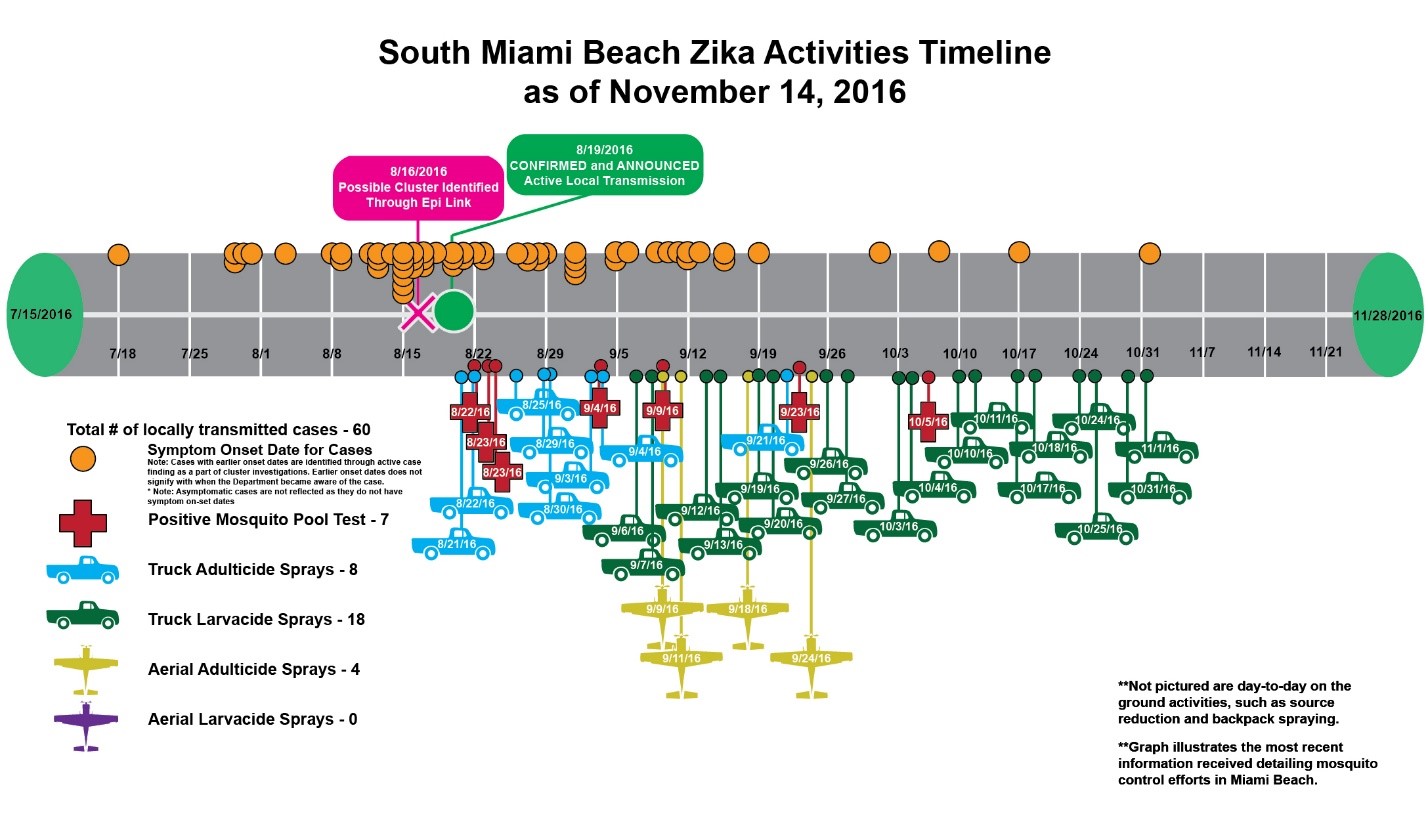
[FONT=&quot]The timelines below are as of Nov. 14. Note: asymptomatic cases are not reflected as they do not have symptom on-set dates.[/FONT]
[FONT=&quot] [/FONT]
[FONT=&quot]click image above to enlarge[/FONT]
[FONT=&quot]click image above to enlarge[/FONT]
[FONT=&quot]click image above to enlarge[/FONT]
[FONT=&quot] [/FONT]
[FONT=&quot]The department is currently conducting 14 active investigations. The department has closed 35 investigations. Information regarding the investigations can be found here. If investigations reveal additional areas of active transmission, the department will announce a defined area of concern. [/FONT]
[FONT=&quot]The department has conducted Zika virus testing for more than 10,181 people statewide. Florida currently has the capacity to test 6,878 people for active Zika virus and 5,650 for Zika antibodies. At Governor Scott?s direction, all county health departments now offer free Zika risk assessment and testing to pregnant women.[/FONT]
[FONT=&quot]Florida?s small case cluster is not considered widespread transmission, however, pregnant women are advised to avoid non-essential travel to the impacted area in Miami-Dade County (see map below). If you are pregnant and must travel or if you live or work in the impacted area, protect yourself from mosquito bites by wearing insect repellent, long clothing and limiting your time outdoors. [/FONT]
[FONT=&quot]According to CDC guidance, providers should test all pregnant women who lived in, traveled to or whose partner traveled to Miami-Dade County after Aug. 1, 2016. It is also recommended that all pregnant women who reside in or travel frequently to the area where active transmission is likely occurring be tested for Zika in the first and second trimester. Pregnant women in the identified area can contact their medical provider or their local county health department to be tested and receive a Zika prevention kit. CDC recommends that a pregnant woman with a history of Zika virus and her provider should consider additional ultrasounds. Additionally, the department is working closely with the Healthy Start Coalition of Miami-Dade County to identify pregnant women in the impacted areas to ensure they have access to resources and information to protect themselves. CDC recommends that a pregnant woman with a history of Zika virus and her provider should consider additional ultrasounds. [/FONT]
[FONT=&quot]Pregnant women can contact their local county health department for Zika risk assessment and testing hours and information. A Zika risk assessment will be conducted by county health department staff and blood and/or urine samples may be collected and sent to labs for testing. It may take one to two weeks to receive results.[/FONT]
[FONT=&quot]Florida has been monitoring pregnant women with evidence of Zika regardless of symptoms. The total number of pregnant women who have been or are being monitored is 147.[/FONT]
[FONT=&quot]On Feb. 12, Governor Scott directed the State Surgeon General to activate a Zika Virus Information Hotline for current Florida residents and visitors, as well as anyone planning on traveling to Florida in the near future. The hotline, managed by the Department of Health, has assisted 7,325 callers since it launched. The number for the Zika Virus Information Hotline is 1-855-622-6735.[/FONT]
[FONT=&quot]The department urges Floridians to drain standing water weekly, no matter how seemingly small. A couple drops of water in a bottle cap can be a breeding location for mosquitoes. Residents and visitors also need to use repellents when enjoying the Florida outdoors.[/FONT]
[FONT=&quot]For more information on DOH action and federal guidance, please click here.[/FONT]
[FONT=&quot]For resources and information on Zika virus, click here.[/FONT]
[FONT=&quot]click image above to enlarge[/FONT]
[FONT=&quot]click image above to enlarge

http://www.floridahealth.gov/newsroom/2016/11/111416-zika-update.html
[/FONT]
 
[FONT=&quot]November 15, 2016[/FONT]
[h=2]Department of Health Daily Zika Update[/h] [FONT=&quot]Contact:
Communications Office
NewsMedia@flhealth.gov
(850) 245-4111
[/FONT]

[FONT=&quot]Tallahassee, Fla.?In an effort to keep Florida residents and visitors safe and aware about the status of the Zika virus, the department will issue a Zika virus update each week day. Updates will include a Zika case count by county and information to keep Floridians informed and prepared. In order to keep the public informed, the department has posted our investigation process here.[/FONT]
[FONT=&quot]There are five new travel-related cases with three in Miami-Dade, one in Broward and one in Polk.[/FONT]
[FONT=&quot]There is one locally acquired case today. The person is a Miami-Dade County resident and the department is investigating to determine where exposure occurred.[/FONT]
[FONT=&quot]Additionally, there is one new case in a Florida resident who had traveled to Miami and to an area outside of Florida with widespread Zika transmission. This case is being added to the undetermined category as the exact location of exposure is inconclusive. [/FONT]
[FONT=&quot]The total number of Zika cases reported in Florida as of today is 1,165.[/FONT]
[TABLE="border: 1, cellpadding: 0, cellspacing: 0"]
[TR]
[TD="width: 318"] Infection Type
[/TD]
[TD="width: 306"] Infection Count
[/TD]
[/TR]
[TR]
[TD="width: 318"] Travel-Related Infections of Zika
[/TD]
[TD="width: 306"] 927
[/TD]
[/TR]
[TR]
[TD="width: 318"] Locally Acquired Infections of Zika
[/TD]
[TD="width: 306"] 225
[/TD]
[/TR]
[TR]
[TD="width: 318"] Undetermined
[/TD]
[TD="width: 306"] 13
[/TD]
[/TR]
[TR]
[TD="width: 623, colspan: 2"]
[/TD]
[/TR]
[TR]
[TD="width: 318"] Pregnant Women with Lab-Evidence of Zika
[/TD]
[TD="width: 306"] 153
[/TD]
[/TR]
[/TABLE]
[FONT=&quot]Note, these categories are not mutually exclusive and cannot be added together. Please visit our website to see the full list of travel-related cases by county.[/FONT]
[FONT=&quot]DOH continues outreach and targeted testing in Miami-Dade County and mosquito abatement and reduction activities are also taking place around the locations that are being investigated. DOH believes ongoing transmission is only taking place within the identified area in Miami Beach and Little River in Miami-Dade County, see maps below.[/FONT]
[FONT=&quot]One case does not mean ongoing active transmission is taking place. DOH conducts a thorough investigation by sampling close contacts and community members around each case to determine if additional people are infected. If DOH finds evidence that active transmission is occurring in an area, the media and the public will be notified.[/FONT]
[FONT=&quot]The timelines below are as of Nov. 14. Note: asymptomatic cases are not reflected as they do not have symptom on-set dates.[/FONT]
[FONT=&quot]click image above to enlarge[/FONT]
[FONT=&quot]click image above to enlarge[/FONT]
[FONT=&quot]click image above to enlarge[/FONT]
[FONT=&quot]The department is currently conducting 13 active investigations. The department has closed 37 investigations. Information regarding the investigations can be found here. If investigations reveal additional areas of active transmission, the department will announce a defined area of concern. [/FONT]
[FONT=&quot]The department has conducted Zika virus testing for more than 10,232 people statewide. Florida currently has the capacity to test 6,758 people for active Zika virus and 5,549 for Zika antibodies. At Governor Scott?s direction, all county health departments now offer free Zika risk assessment and testing to pregnant women.[/FONT]
[FONT=&quot]Florida?s small case cluster is not considered widespread transmission, however, pregnant women are advised to avoid non-essential travel to the impacted area in Miami-Dade County (see map below). If you are pregnant and must travel or if you live or work in the impacted area, protect yourself from mosquito bites by wearing insect repellent, long clothing and limiting your time outdoors. [/FONT]
[FONT=&quot]According to CDC guidance, providers should test all pregnant women who lived in, traveled to or whose partner traveled to Miami-Dade County after Aug. 1, 2016. It is also recommended that all pregnant women who reside in or travel frequently to the area where active transmission is likely occurring be tested for Zika in the first and second trimester. Pregnant women in the identified area can contact their medical provider or their local county health department to be tested and receive a Zika prevention kit. CDC recommends that a pregnant woman with a history of Zika virus and her provider should consider additional ultrasounds. Additionally, the department is working closely with the Healthy Start Coalition of Miami-Dade County to identify pregnant women in the impacted areas to ensure they have access to resources and information to protect themselves. CDC recommends that a pregnant woman with a history of Zika virus and her provider should consider additional ultrasounds. [/FONT]
[FONT=&quot]Pregnant women can contact their local county health department for Zika risk assessment and testing hours and information. A Zika risk assessment will be conducted by county health department staff and blood and/or urine samples may be collected and sent to labs for testing. It may take one to two weeks to receive results.[/FONT]
[FONT=&quot]Florida has been monitoring pregnant women with evidence of Zika regardless of symptoms. The total number of pregnant women who have been or are being monitored is 153.[/FONT]
[FONT=&quot]On Feb. 12, Governor Scott directed the State Surgeon General to activate a Zika Virus Information Hotline for current Florida residents and visitors, as well as anyone planning on traveling to Florida in the near future. The hotline, managed by the Department of Health, has assisted 7,363 callers since it launched. The number for the Zika Virus Information Hotline is 1-855-622-6735.[/FONT]
[FONT=&quot]The department urges Floridians to drain standing water weekly, no matter how seemingly small. A couple drops of water in a bottle cap can be a breeding location for mosquitoes. Residents and visitors also need to use repellents when enjoying the Florida outdoors.[/FONT]
[FONT=&quot]For more information on DOH action and federal guidance, please click here.[/FONT]
[FONT=&quot]For resources and information on Zika virus, click here.[/FONT]
[FONT=&quot]click image above to enlarge[/FONT]
[FONT=&quot]click image above to enlarge

http://www.floridahealth.gov/newsroom/2016/11/111516-zika-update.html
[/FONT]
 
[FONT=&quot]November 16, 2016[/FONT]
[h=2]Department of Health Daily Zika Update[/h] [FONT=&quot]Contact:
Communications Office
NewsMedia@flhealth.gov
(850) 245-4111
[/FONT]

[FONT=&quot]Tallahassee, Fla.?In an effort to keep Florida residents and visitors safe and aware about the status of the Zika virus, the department will issue a Zika virus update each week day. Updates will include a Zika case count by county and information to keep Floridians informed and prepared. In order to keep the public informed, the department has posted our investigation process here.[/FONT]
[FONT=&quot]There are three new locally acquired cases today. Two are Miami-Dade residents and the department is investigating to determine where exposure occurred. One is a Broward resident who had travel to multiple locations in Miami Dade County and we are investigating where exposure occurred. We do not believe transmission occurred in Broward County.[/FONT]
[FONT=&quot]Additionally, there is one new case in a Florida resident who had traveled to Miami and to an area outside of Florida with widespread Zika transmission. This case is being added to the undetermined category as the exact location of exposure is inconclusive. [/FONT]
[FONT=&quot]The total number of Zika cases reported in Florida as of today is 1,169.[/FONT]
[TABLE="border: 1, cellpadding: 0, cellspacing: 0"]
[TR]
[TD="width: 318"] Infection Type
[/TD]
[TD="width: 306"] Infection Count
[/TD]
[/TR]
[TR]
[TD="width: 318"] Travel-Related Infections of Zika
[/TD]
[TD="width: 306"] 927
[/TD]
[/TR]
[TR]
[TD="width: 318"] Locally Acquired Infections of Zika
[/TD]
[TD="width: 306"] 228
[/TD]
[/TR]
[TR]
[TD="width: 318"] Undetermined
[/TD]
[TD="width: 306"] 14
[/TD]
[/TR]
[TR]
[TD="width: 623, colspan: 2"]
[/TD]
[/TR]
[TR]
[TD="width: 318"] Pregnant Women with Lab-Evidence of Zika
[/TD]
[TD="width: 306"] 154
[/TD]
[/TR]
[/TABLE]
[FONT=&quot]Note, these categories are not mutually exclusive and cannot be added together. Please visit our website to see the full list of travel-related cases by county.[/FONT]
[FONT=&quot]DOH continues outreach and targeted testing in Miami-Dade County and mosquito abatement and reduction activities are also taking place around the locations that are being investigated. DOH believes ongoing transmission is only taking place within the identified area in Miami Beach and Little River in Miami-Dade County, see maps below.[/FONT]
[FONT=&quot]One case does not mean ongoing active transmission is taking place. DOH conducts a thorough investigation by sampling close contacts and community members around each case to determine if additional people are infected. If DOH finds evidence that active transmission is occurring in an area, the media and the public will be notified.[/FONT]
[FONT=&quot]The timelines below are as of Nov. 14. Note: asymptomatic cases are not reflected as they do not have symptom on-set dates.[/FONT]
[FONT=&quot]click image above to enlarge[/FONT]
[FONT=&quot]click image above to enlarge[/FONT]
[FONT=&quot]click image above to enlarge[/FONT]
[FONT=&quot]The department is currently conducting 14 active investigations. The department has closed 37 investigations. Information regarding the investigations can be found here. If investigations reveal additional areas of active transmission, the department will announce a defined area of concern. [/FONT]
[FONT=&quot]The department has conducted Zika virus testing for more than 10,306 people statewide. Florida currently has the capacity to test 6,631 people for active Zika virus and 5,511 for Zika antibodies. At Governor Scott?s direction, all county health departments now offer free Zika risk assessment and testing to pregnant women.[/FONT]
[FONT=&quot]Florida?s small case cluster is not considered widespread transmission, however, pregnant women are advised to avoid non-essential travel to the impacted area in Miami-Dade County (see map below). If you are pregnant and must travel or if you live or work in the impacted area, protect yourself from mosquito bites by wearing insect repellent, long clothing and limiting your time outdoors. [/FONT]
[FONT=&quot]According to CDC guidance, providers should test all pregnant women who lived in, traveled to or whose partner traveled to Miami-Dade County after Aug. 1, 2016. It is also recommended that all pregnant women who reside in or travel frequently to the area where active transmission is likely occurring be tested for Zika in the first and second trimester. Pregnant women in the identified area can contact their medical provider or their local county health department to be tested and receive a Zika prevention kit. CDC recommends that a pregnant woman with a history of Zika virus and her provider should consider additional ultrasounds. Additionally, the department is working closely with the Healthy Start Coalition of Miami-Dade County to identify pregnant women in the impacted areas to ensure they have access to resources and information to protect themselves. CDC recommends that a pregnant woman with a history of Zika virus and her provider should consider additional ultrasounds. [/FONT]
[FONT=&quot]Pregnant women can contact their local county health department for Zika risk assessment and testing hours and information. A Zika risk assessment will be conducted by county health department staff and blood and/or urine samples may be collected and sent to labs for testing. It may take one to two weeks to receive results.[/FONT]
[FONT=&quot]Florida has been monitoring pregnant women with evidence of Zika regardless of symptoms. The total number of pregnant women who have been or are being monitored is 154.[/FONT]
[FONT=&quot]On Feb. 12, Governor Scott directed the State Surgeon General to activate a Zika Virus Information Hotline for current Florida residents and visitors, as well as anyone planning on traveling to Florida in the near future. The hotline, managed by the Department of Health, has assisted 7,395 callers since it launched. The number for the Zika Virus Information Hotline is 1-855-622-6735.[/FONT]
[FONT=&quot]The department urges Floridians to drain standing water weekly, no matter how seemingly small. A couple drops of water in a bottle cap can be a breeding location for mosquitoes. Residents and visitors also need to use repellents when enjoying the Florida outdoors.[/FONT]
[FONT=&quot]For more information on DOH action and federal guidance, please click here.[/FONT]
[FONT=&quot]For resources and information on Zika virus, click here.[/FONT]
[FONT=&quot]click image above to enlarge[/FONT]
[FONT=&quot]click image above to enlarge

http://www.floridahealth.gov/newsroom/2016/11/111616-zika-update.html
[/FONT]
 
[FONT=&quot]November 17, 2016[/FONT]
[h=2]Department of Health Daily Zika Update[/h] [FONT=&quot]Contact:
Communications Office
NewsMedia@flhealth.gov
(850) 245-4111
[/FONT]

[FONT=&quot]Tallahassee, Fla.?In an effort to keep Florida residents and visitors safe and aware about the status of the Zika virus, the department will issue a Zika virus update each week day. Updates will include a Zika case count by county and information to keep Floridians informed and prepared. In order to keep the public informed, the department has posted our investigation process here.[/FONT]
[FONT=&quot]There are six new travel-related cases today with four in Orange, one in Collier and one in Hillsborough.[/FONT]
[FONT=&quot]There are two new locally acquired cases today. Both are Miami-Dade residents and the department is investigating to determine where exposure occurred.[/FONT]
[FONT=&quot]The total number of Zika cases reported in Florida as of today is 1,177.[/FONT]
[TABLE="border: 1, cellpadding: 0, cellspacing: 0"]
[TR]
[TD="width: 318"] Infection Type
[/TD]
[TD="width: 306"] Infection Count
[/TD]
[/TR]
[TR]
[TD="width: 318"] Travel-Related Infections of Zika
[/TD]
[TD="width: 306"] 933
[/TD]
[/TR]
[TR]
[TD="width: 318"] Locally Acquired Infections of Zika
[/TD]
[TD="width: 306"] 230
[/TD]
[/TR]
[TR]
[TD="width: 318"] Undetermined
[/TD]
[TD="width: 306"] 14
[/TD]
[/TR]
[TR]
[TD="width: 623, colspan: 2"]
[/TD]
[/TR]
[TR]
[TD="width: 318"] Pregnant Women with Lab-Evidence of Zika
[/TD]
[TD="width: 306"] 159
[/TD]
[/TR]
[/TABLE]
[FONT=&quot]Note, these categories are not mutually exclusive and cannot be added together. Please visit our website to see the full list of travel-related cases by county.[/FONT]
[FONT=&quot]DOH continues outreach and targeted testing in Miami-Dade County and mosquito abatement and reduction activities are also taking place around the locations that are being investigated. DOH believes ongoing transmission is only taking place within the identified area in Miami Beach and Little River in Miami-Dade County, see maps below.[/FONT]
[FONT=&quot]One case does not mean ongoing active transmission is taking place. DOH conducts a thorough investigation by sampling close contacts and community members around each case to determine if additional people are infected. If DOH finds evidence that active transmission is occurring in an area, the media and the public will be notified.[/FONT]
[FONT=&quot]The timelines below are as of Nov. 14. Note: asymptomatic cases are not reflected as they do not have symptom on-set dates.[/FONT]
[FONT=&quot]click image above to enlarge[/FONT]
[FONT=&quot]click image above to enlarge[/FONT]
[FONT=&quot]click image above to enlarge[/FONT]
[FONT=&quot]The department is currently conducting 14 active investigations. The department has closed 37 investigations. Information regarding the investigations can be found here. If investigations reveal additional areas of active transmission, the department will announce a defined area of concern. [/FONT]
[FONT=&quot]The department has conducted Zika virus testing for more than 10,349 people statewide. Florida currently has the capacity to test 6,481 people for active Zika virus and 5,428 for Zika antibodies. At Governor Scott?s direction, all county health departments now offer free Zika risk assessment and testing to pregnant women.[/FONT]
[FONT=&quot]Florida?s small case cluster is not considered widespread transmission, however, pregnant women are advised to avoid non-essential travel to the impacted area in Miami-Dade County (see map below). If you are pregnant and must travel or if you live or work in the impacted area, protect yourself from mosquito bites by wearing insect repellent, long clothing and limiting your time outdoors. [/FONT]
[FONT=&quot]According to CDC guidance, providers should test all pregnant women who lived in, traveled to or whose partner traveled to Miami-Dade County after Aug. 1, 2016. It is also recommended that all pregnant women who reside in or travel frequently to the area where active transmission is likely occurring be tested for Zika in the first and second trimester. Pregnant women in the identified area can contact their medical provider or their local county health department to be tested and receive a Zika prevention kit. CDC recommends that a pregnant woman with a history of Zika virus and her provider should consider additional ultrasounds. Additionally, the department is working closely with the Healthy Start Coalition of Miami-Dade County to identify pregnant women in the impacted areas to ensure they have access to resources and information to protect themselves. CDC recommends that a pregnant woman with a history of Zika virus and her provider should consider additional ultrasounds. [/FONT]
[FONT=&quot]Pregnant women can contact their local county health department for Zika risk assessment and testing hours and information. A Zika risk assessment will be conducted by county health department staff and blood and/or urine samples may be collected and sent to labs for testing. It may take one to two weeks to receive results.[/FONT]
[FONT=&quot]Florida has been monitoring pregnant women with evidence of Zika regardless of symptoms. The total number of pregnant women who have been or are being monitored is 159.[/FONT]
[FONT=&quot]On Feb. 12, Governor Scott directed the State Surgeon General to activate a Zika Virus Information Hotline for current Florida residents and visitors, as well as anyone planning on traveling to Florida in the near future. The hotline, managed by the Department of Health, has assisted 7,420 callers since it launched. The number for the Zika Virus Information Hotline is 1-855-622-6735.[/FONT]
[FONT=&quot]The department urges Floridians to drain standing water weekly, no matter how seemingly small. A couple drops of water in a bottle cap can be a breeding location for mosquitoes. Residents and visitors also need to use repellents when enjoying the Florida outdoors.[/FONT]
[FONT=&quot]For more information on DOH action and federal guidance, please click here.[/FONT]
[FONT=&quot]For resources and information on Zika virus, click here.[/FONT]
[FONT=&quot]About the Florida Department of Health[/FONT]
[FONT=&quot]click image above to enlarge[/FONT]
[FONT=&quot]click image above to enlarge

http://www.floridahealth.gov/newsroom/2016/11/111716-zika-update.html
[/FONT]
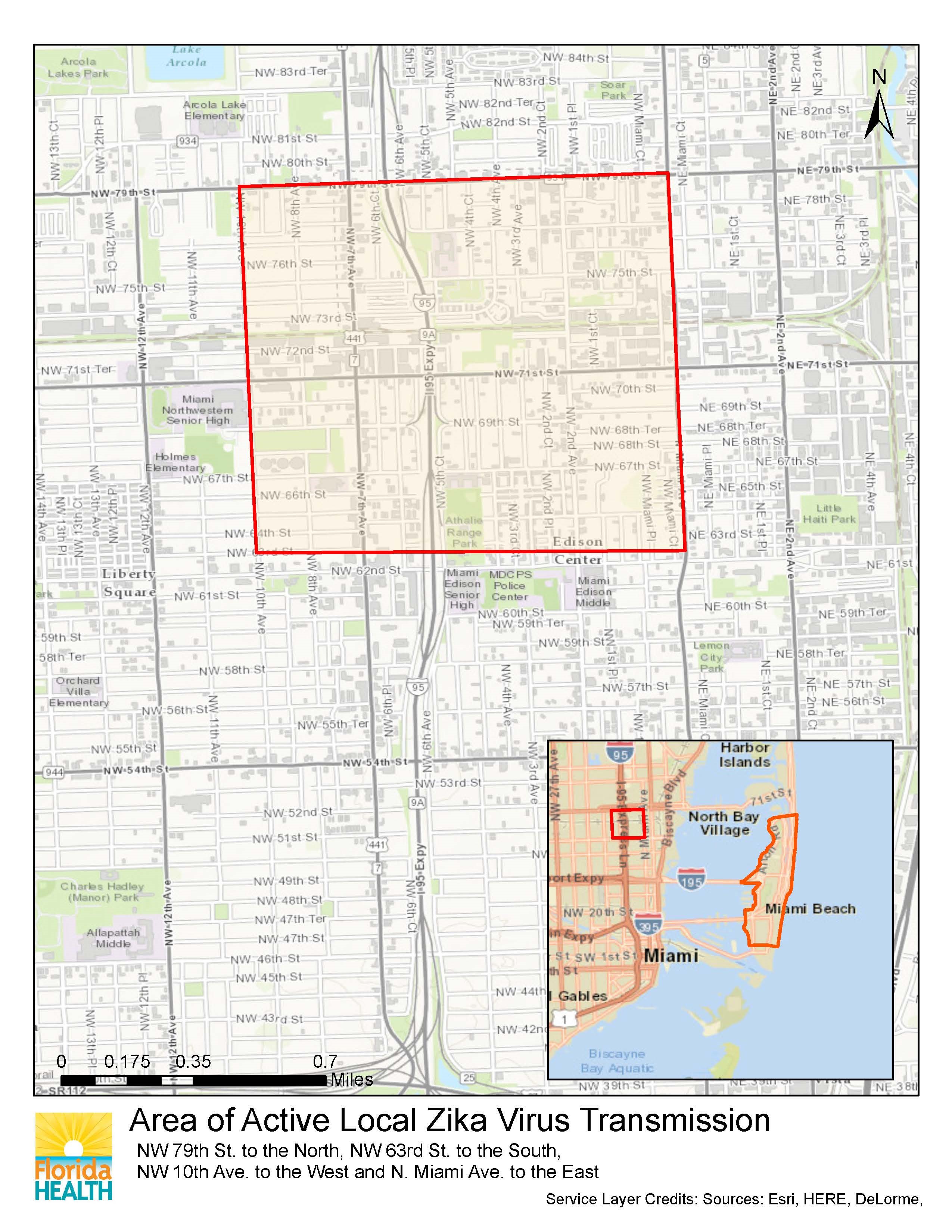
 
From: DOH COMMUNICATIONS OFFICE <DOHCOMMUNICATIONSOFFICE@flheal...
To:
Subject: FW: Department of Health Daily Zika Update
Date: Nov 18, 2016 2:45 PM
Attachments: image001.jpg image002.jpg image003.jpg image004.jpg image005.jpg

[TABLE="border: 0, cellpadding: 0, cellspacing: 0"]
[TR]
[TD] [TABLE="border: 0, cellpadding: 0, width: 963"]
[TR]
[TD]Nov. 18, 2016[/TD]
[TD]
MsgAttachment
[/TD]
[/TR]
[TR]
[TD] [/TD]
[/TR]
[TR]
[TD]DEPARTMENT OF HEALTH DAILY ZIKA UPDATE[/TD]
[/TR]
[TR]
[TD] [/TD]
[/TR]
[TR]
[TD] [/TD]
[/TR]
[TR]
[TD="colspan: 2"]Contact:
Communications Office
NewsMedia@flhealth.gov
850-245-4111[/TD]
[/TR]
[TR]
[TD="colspan: 2"] [/TD]
[/TR]
[TR]
[TD="colspan: 2"]Tallahassee, Fla. ?In an effort to keep Florida residents and visitors safe and aware about the status of the Zika virus, the department will issue a Zika virus update each week day. Updates will include a Zika case count by county and information to keep Floridians informed and prepared. In order to keep the public informed, the department has posted our investigation process here .
There are six new travel-related cases today with two in Miami-Dade, two in Volusia, one in Escambia and one in St. Lucie.
There are four new locally acquired cases today. Three are in Miami-Dade County residents and one is in a non-Florida resident. All were exposed in Miami-Dade County and the department is investigating where exposure occurred. One case had multiple exposures in Miami-Dade, including Miami Beach. Because Miami Beach cannot be ruled out as the location of transmission, this case has been added to the South Miami Beach timeline.
Additionally, there is one new case in a Florida resident who had traveled to Miami and to an area outside of Florida with widespread Zika transmission. This case is being added to the undetermined category as the exact location of exposure is inconclusive.
The total number of Zika cases reported in Florida as of today is 1,188. [TABLE="border: 1, cellpadding: 0, cellspacing: 0"]
[TR]
[TD]Infection Type[/TD]
[TD]Infection Count[/TD]
[/TR]
[TR]
[TD]Travel-Related Infections of Zika[/TD]
[TD]939[/TD]
[/TR]
[TR]
[TD]Locally Acquired Infections of Zika[/TD]
[TD]234[/TD]
[/TR]
[TR]
[TD]Undetermined[/TD]
[TD]15[/TD]
[/TR]
[TR]
[TD="colspan: 2"] [/TD]
[/TR]
[TR]
[TD]Pregnant Women with Lab-Evidence of Zika[/TD]
[TD]160[/TD]
[/TR]
[/TABLE]
Note, these categories are not mutually exclusive and cannot be added together. Please visit our website to see the full list of travel-related cases by county.
DOH continues outreach and targeted testing in Miami-Dade County and mosquito abatement and reduction activities are also taking place around the locations that are being investigated. DOH believes ongoing transmission is only taking place within the identified area in Miami Beach and Little River in Miami-Dade County, see maps below.
One case does not mean ongoing active transmission is taking place. DOH conducts a thorough investigation by sampling close contacts and community members around each case to determine if additional people are infected. If DOH finds evidence that active transmission is occurring in an area, the media and the public will be notified.
The timelines below are as of Nov. 18. Note: asymptomatic cases are not reflected as they do not have symptom on-set dates.[/TD]
[/TR]
[/TABLE]

[/TD]
[/TR]
[/TABLE]
 
[FONT=&quot]November 21, 2016[/FONT]
[h=2]Department of Health Daily Zika Update[/h] [FONT=&quot]Contact:
Communications Office
NewsMedia@flhealth.gov
(850) 245-4111
[/FONT]

[FONT=&quot]Tallahassee, Fla.?In an effort to keep Florida residents and visitors safe and aware about the status of the Zika virus, the department will issue a Zika virus update each week day. Updates will include a Zika case count by county and information to keep Floridians informed and prepared. In order to keep the public informed, the department has posted our investigation process here.[/FONT]
[FONT=&quot]There is one new travel-related case today in Miami-Dade County.[/FONT]
[FONT=&quot]There are two new locally acquired cases today. Both are Miami-Dade County residents and the department is investigating where exposure occurred.[/FONT]
[FONT=&quot]The total number of Zika cases reported in Florida as of today is 1,191. [/FONT]
[TABLE="border: 1, cellpadding: 0, cellspacing: 0"]
[TR]
[TD="width: 318"] Infection Type
[/TD]
[TD="width: 306"] Infection Count
[/TD]
[/TR]
[TR]
[TD="width: 318"] Travel-Related Infections of Zika
[/TD]
[TD="width: 306"] 940
[/TD]
[/TR]
[TR]
[TD="width: 318"] Locally Acquired Infections of Zika
[/TD]
[TD="width: 306"] 236
[/TD]
[/TR]
[TR]
[TD="width: 318"] Undetermined
[/TD]
[TD="width: 306"] 15
[/TD]
[/TR]
[TR]
[TD="width: 623, colspan: 2"]
[/TD]
[/TR]
[TR]
[TD="width: 318"] Pregnant Women with Lab-Evidence of Zika
[/TD]
[TD="width: 306"] 161
[/TD]
[/TR]
[/TABLE]
[FONT=&quot]Note, these categories are not mutually exclusive and cannot be added together. Please visit our website to see the full list of travel-related cases by county.[/FONT]
[FONT=&quot]DOH continues outreach and targeted testing in Miami-Dade County and mosquito abatement and reduction activities are also taking place around the locations that are being investigated. DOH believes ongoing transmission is only taking place within the identified area in Miami Beach and Little River in Miami-Dade County, see maps below.[/FONT]
[FONT=&quot]One case does not mean ongoing active transmission is taking place. DOH conducts a thorough investigation by sampling close contacts and community members around each case to determine if additional people are infected. If DOH finds evidence that active transmission is occurring in an area, the media and the public will be notified.[/FONT]
[FONT=&quot]The timelines below are as of Nov. 18. Note: asymptomatic cases are not reflected as they do not have symptom on-set dates.[/FONT]
[FONT=&quot]click image above to enlarge[/FONT]
[FONT=&quot]click image above to enlarge[/FONT]
[FONT=&quot]click image above to enlarge[/FONT]
[FONT=&quot]The department is currently conducting 14 active investigations. The department has closed 38 investigations. Information regarding the investigations can be found here. If investigations reveal additional areas of active transmission, the department will announce a defined area of concern. [/FONT]
[FONT=&quot]The department has conducted Zika virus testing for more than 10,482 people statewide. Florida currently has the capacity to test 6,212 people for active Zika virus and 5,376 for Zika antibodies. At Governor Scott?s direction, all county health departments now offer free Zika risk assessment and testing to pregnant women.[/FONT]
[FONT=&quot]Florida?s small case cluster is not considered widespread transmission, however, pregnant women are advised to avoid non-essential travel to the impacted area in Miami-Dade County (see map below). If you are pregnant and must travel or if you live or work in the impacted area, protect yourself from mosquito bites by wearing insect repellent, long clothing and limiting your time outdoors. [/FONT]
[FONT=&quot]According to CDC guidance, providers should test all pregnant women who lived in, traveled to or whose partner traveled to Miami-Dade County after Aug. 1, 2016. It is also recommended that all pregnant women who reside in or travel frequently to the area where active transmission is likely occurring be tested for Zika in the first and second trimester. Pregnant women in the identified area can contact their medical provider or their local county health department to be tested and receive a Zika prevention kit. CDC recommends that a pregnant woman with a history of Zika virus and her provider should consider additional ultrasounds. Additionally, the department is working closely with the Healthy Start Coalition of Miami-Dade County to identify pregnant women in the impacted areas to ensure they have access to resources and information to protect themselves. CDC recommends that a pregnant woman with a history of Zika virus and her provider should consider additional ultrasounds. [/FONT]
[FONT=&quot]Pregnant women can contact their local county health department for Zika risk assessment and testing hours and information. A Zika risk assessment will be conducted by county health department staff and blood and/or urine samples may be collected and sent to labs for testing. It may take one to two weeks to receive results.[/FONT]
[FONT=&quot]Florida has been monitoring pregnant women with evidence of Zika regardless of symptoms. The total number of pregnant women who have been or are being monitored is 161.[/FONT]
[FONT=&quot]On Feb. 12, Governor Scott directed the State Surgeon General to activate a Zika Virus Information Hotline for current Florida residents and visitors, as well as anyone planning on traveling to Florida in the near future. The hotline, managed by the Department of Health, has assisted 7,512 callers since it launched. The number for the Zika Virus Information Hotline is 1-855-622-6735.[/FONT]
[FONT=&quot]The department urges Floridians to drain standing water weekly, no matter how seemingly small. A couple drops of water in a bottle cap can be a breeding location for mosquitoes. Residents and visitors also need to use repellents when enjoying the Florida outdoors.[/FONT]
[FONT=&quot]For more information on DOH action and federal guidance, please click here.[/FONT]
[FONT=&quot]For resources and information on Zika virus, click here.[/FONT]
[FONT=&quot]click image above to enlarge[/FONT]
[FONT=&quot]click image above to enlarge

http://www.floridahealth.gov/newsroom/2016/11/112116-zika-update.html
[/FONT]
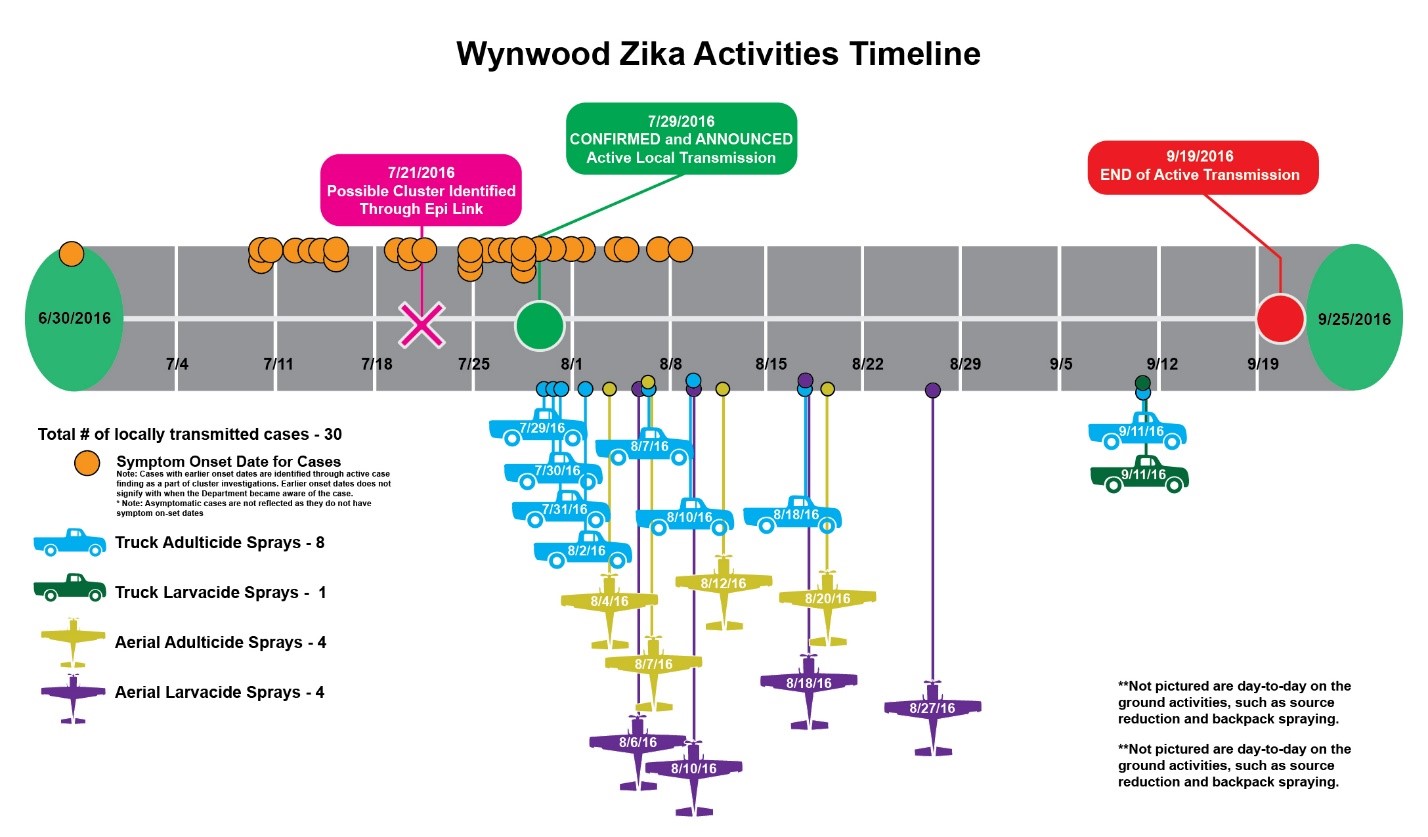
 
[FONT=&quot]November 22, 2016[/FONT]
[h=2]Department of Health Daily Zika Update[/h] [FONT=&quot]Contact:
Communications Office
NewsMedia@flhealth.gov
(850) 245-4111
[/FONT]

[FONT=&quot]Tallahassee, Fla.?In an effort to keep Florida residents and visitors safe and aware about the status of the Zika virus, the department will issue a Zika virus update each week day. Updates will include a Zika case count by county and information to keep Floridians informed and prepared. In order to keep the public informed, the department has posted our investigation process here.[/FONT]
[FONT=&quot]There are 10 new travel-related cases today with five in Orange, four in Broward and one in Miami-Dade.[/FONT]
[FONT=&quot]There are no new locally acquired cases today.[/FONT]
[FONT=&quot]The total number of Zika cases reported in Florida as of today is 1,201.[/FONT]
[TABLE="border: 1, cellpadding: 0, cellspacing: 0"]
[TR]
[TD="width: 318"] Infection Type
[/TD]
[TD="width: 306"] Infection Count
[/TD]
[/TR]
[TR]
[TD="width: 318"] Travel-Related Infections of Zika
[/TD]
[TD="width: 306"] 950
[/TD]
[/TR]
[TR]
[TD="width: 318"] Locally Acquired Infections of Zika
[/TD]
[TD="width: 306"] 236
[/TD]
[/TR]
[TR]
[TD="width: 318"] Undetermined
[/TD]
[TD="width: 306"] 15
[/TD]
[/TR]
[TR]
[TD="width: 623, colspan: 2"]
[/TD]
[/TR]
[TR]
[TD="width: 318"] Pregnant Women with Lab-Evidence of Zika
[/TD]
[TD="width: 306"] 168
[/TD]
[/TR]
[/TABLE]
[FONT=&quot]Note, these categories are not mutually exclusive and cannot be added together. Please visit our website to see the full list of travel-related cases by county.[/FONT]
[FONT=&quot]Today, Governor Rick Scott announced that the department has not detected any additional local transmissions of Zika in the north portion of Miami Beach in more than 45 days. That portion of the zone has been lifted. The newly lifted area is about three miles, from 28th street to 63rd street. The remaining area of active Zika transmission in Miami Beach is about 1.5 square miles between 8th and 28th streets. The remaining area of active Zika transmission in Little River is about one square mile.[/FONT]
[FONT=&quot]DOH continues outreach and targeted testing in Miami-Dade County and mosquito abatement and reduction activities are also taking place around the locations that are being investigated. DOH believes ongoing transmission is only taking place within the identified area in Miami Beach and Little River in Miami-Dade County, see maps below.[/FONT]
[FONT=&quot]One case does not mean ongoing active transmission is taking place. DOH conducts a thorough investigation by sampling close contacts and community members around each case to determine if additional people are infected. If DOH finds evidence that active transmission is occurring in an area, the media and the public will be notified.[/FONT]
[FONT=&quot]The timelines below are as of Nov. 18. Note: asymptomatic cases are not reflected as they do not have symptom on-set dates.[/FONT]
[FONT=&quot]click image above to enlarge[/FONT]
[FONT=&quot]click image above to enlarge[/FONT]
[FONT=&quot]click image above to enlarge[/FONT]
[FONT=&quot]The department is currently conducting 14 active investigations. The department has closed 38 investigations. Information regarding the investigations can be found here. If investigations reveal additional areas of active transmission, the department will announce a defined area of concern. [/FONT]
[FONT=&quot]The department has conducted Zika virus testing for more than 10,498 people statewide. Florida currently has the capacity to test 6,151 people for active Zika virus and 5,237 for Zika antibodies. At Governor Scott?s direction, all county health departments now offer free Zika risk assessment and testing to pregnant women.[/FONT]
[FONT=&quot]Florida?s small case cluster is not considered widespread transmission, however, pregnant women are advised to avoid non-essential travel to the impacted area in Miami-Dade County (see map below). If you are pregnant and must travel or if you live or work in the impacted area, protect yourself from mosquito bites by wearing insect repellent, long clothing and limiting your time outdoors. [/FONT]
[FONT=&quot]According to CDC guidance, providers should test all pregnant women who lived in, traveled to or whose partner traveled to Miami-Dade County after Aug. 1, 2016. It is also recommended that all pregnant women who reside in or travel frequently to the area where active transmission is likely occurring be tested for Zika in the first and second trimester. Pregnant women in the identified area can contact their medical provider or their local county health department to be tested and receive a Zika prevention kit. CDC recommends that a pregnant woman with a history of Zika virus and her provider should consider additional ultrasounds. Additionally, the department is working closely with the Healthy Start Coalition of Miami-Dade County to identify pregnant women in the impacted areas to ensure they have access to resources and information to protect themselves. CDC recommends that a pregnant woman with a history of Zika virus and her provider should consider additional ultrasounds. [/FONT]
[FONT=&quot]Pregnant women can contact their local county health department for Zika risk assessment and testing hours and information. A Zika risk assessment will be conducted by county health department staff and blood and/or urine samples may be collected and sent to labs for testing. It may take one to two weeks to receive results.[/FONT]
[FONT=&quot]Florida has been monitoring pregnant women with evidence of Zika regardless of symptoms. The total number of pregnant women who have been or are being monitored is 168.[/FONT]
[FONT=&quot]On Feb. 12, Governor Scott directed the State Surgeon General to activate a Zika Virus Information Hotline for current Florida residents and visitors, as well as anyone planning on traveling to Florida in the near future. The hotline, managed by the Department of Health, has assisted 7,540 callers since it launched. The number for the Zika Virus Information Hotline is 1-855-622-6735.[/FONT]
[FONT=&quot]The department urges Floridians to drain standing water weekly, no matter how seemingly small. A couple drops of water in a bottle cap can be a breeding location for mosquitoes. Residents and visitors also need to use repellents when enjoying the Florida outdoors.[/FONT]
[FONT=&quot]For more information on DOH action and federal guidance, please click here.[/FONT]
[FONT=&quot]For resources and information on Zika virus, click here.[/FONT]
[FONT=&quot]click image above to enlarge[/FONT]
[FONT=&quot]click image above to enlarge

http://www.floridahealth.gov/newsroom/2016/11/112216-zika-update.html
[/FONT]
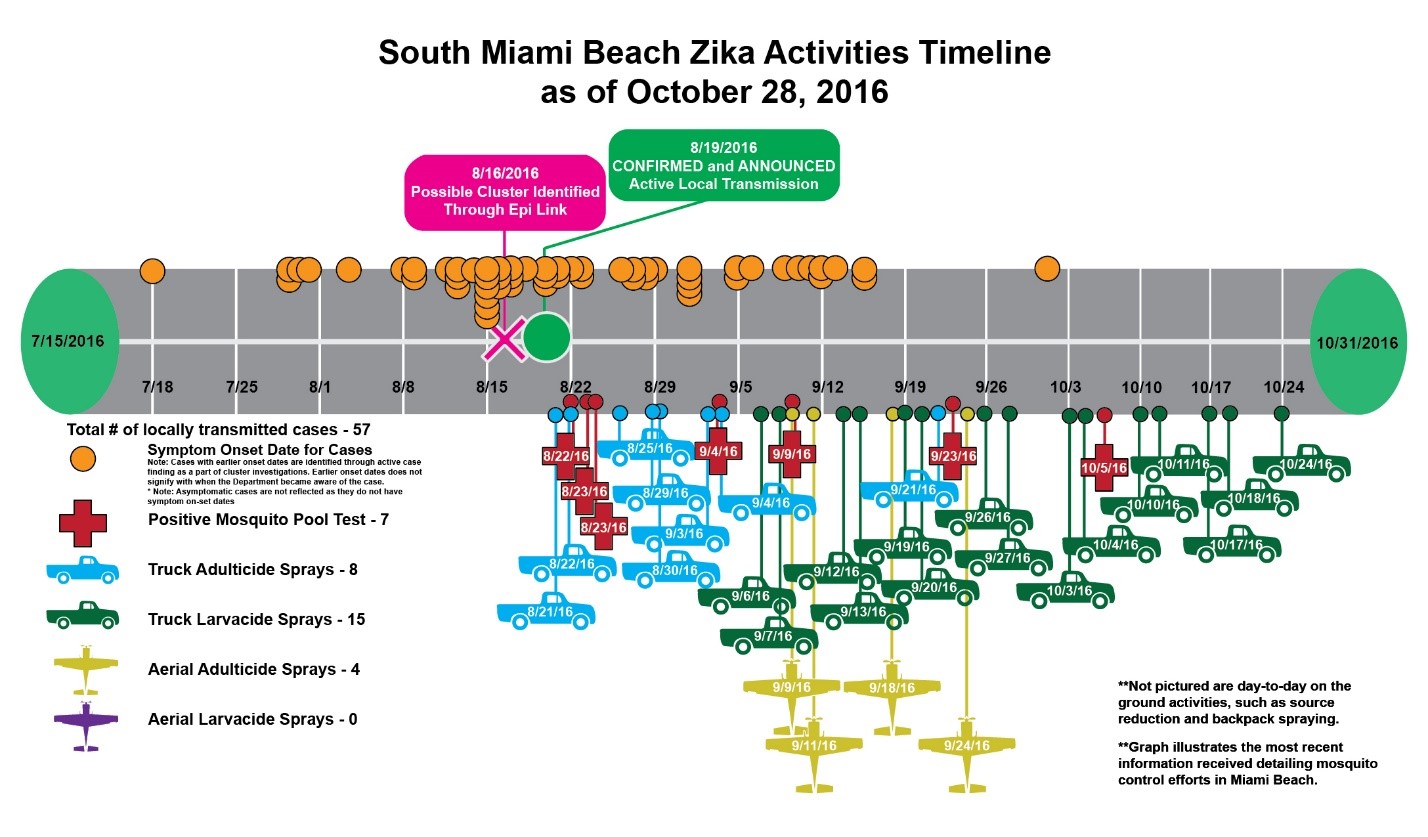
 
[FONT=&quot]November 23, 2016[/FONT]
[h=2]Department of Health Daily Zika Update[/h] [FONT=&quot]Contact:
Communications Office
NewsMedia@flhealth.gov
(850) 245-4111
[/FONT]

[FONT=&quot]Tallahassee, Fla.?In an effort to keep Florida residents and visitors safe and aware about the status of the Zika virus, the department will issue a Zika virus update each week day. Updates will include a Zika case count by county and information to keep Floridians informed and prepared. In order to keep the public informed, the department has posted our investigation process here.[/FONT]
[FONT=&quot]There are two new travel-related cases today with one in Orange and one in Collier.[/FONT]
[FONT=&quot]There are two new locally acquired cases today, one involving a Miami-Dade County resident and one involving a Broward County resident. The department is investigating to determine where both exposures occurred.
[/FONT]

[FONT=&quot]The total number of Zika cases reported in Florida as of today is 1,205.[/FONT]
[TABLE="border: 1, cellpadding: 0, cellspacing: 0"]
[TR]
[TD="width: 318"] Infection Type
[/TD]
[TD="width: 306"] Infection Count
[/TD]
[/TR]
[TR]
[TD="width: 318"] Travel-Related Infections of Zika
[/TD]
[TD="width: 306"] 952
[/TD]
[/TR]
[TR]
[TD="width: 318"] Locally Acquired Infections of Zika
[/TD]
[TD="width: 306"] 238
[/TD]
[/TR]
[TR]
[TD="width: 318"] Undetermined
[/TD]
[TD="width: 306"] 15
[/TD]
[/TR]
[TR]
[TD="width: 623, colspan: 2"]
[/TD]
[/TR]
[TR]
[TD="width: 318"] Pregnant Women with Lab-Evidence of Zika
[/TD]
[TD="width: 306"] 170
[/TD]
[/TR]
[/TABLE]
[FONT=&quot]Note, these categories are not mutually exclusive and cannot be added together. Please visit our website to see the full list of travel-related cases by county.[/FONT]
[FONT=&quot]Today, Governor Rick Scott announced that the department has not detected any additional local transmissions of Zika in the north portion of Miami Beach in more than 45 days. That portion of the zone has been lifted. The newly lifted area is about three miles, from 28th street to 63rd street. The remaining area of active Zika transmission in Miami Beach is about 1.5 square miles between 8th and 28th streets. The remaining area of active Zika transmission in Little River is about one square mile.[/FONT]
[FONT=&quot]DOH continues outreach and targeted testing in Miami-Dade County and mosquito abatement and reduction activities are also taking place around the locations that are being investigated. DOH believes ongoing transmission is only taking place within the identified area in Miami Beach and Little River in Miami-Dade County, see maps below. [/FONT]
[FONT=&quot]One case does not mean ongoing active transmission is taking place. DOH conducts a thorough investigation by sampling close contacts and community members around each case to determine if additional people are infected. If DOH finds evidence that active transmission is occurring in an area, the media and the public will be notified.[/FONT]
[FONT=&quot]The timelines below are as of Nov. 23. Note: asymptomatic cases are not reflected as they do not have symptom on-set dates.[/FONT]
[FONT=&quot]click image above to enlarge[/FONT]
[FONT=&quot]click image above to enlarge[/FONT]
[FONT=&quot]click image above to enlarge[/FONT]
[FONT=&quot]The department is currently conducting 15 active investigations. The department has closed 38 investigations. Information regarding the investigations can be found here. If investigations reveal additional areas of active transmission, the department will announce a defined area of concern. [/FONT]
[FONT=&quot]The department has conducted Zika virus testing for more than 10,538 people statewide. Florida currently has the capacity to test 6,063 people for active Zika virus and 5,209 for Zika antibodies. At Governor Scott?s direction, all county health departments now offer free Zika risk assessment and testing to pregnant women.[/FONT]
[FONT=&quot]Florida?s small case cluster is not considered widespread transmission, however, pregnant women are advised to avoid non-essential travel to the impacted area in Miami-Dade County (see map below). If you are pregnant and must travel or if you live or work in the impacted area, protect yourself from mosquito bites by wearing insect repellent, long clothing and limiting your time outdoors. [/FONT]
[FONT=&quot]According to CDC guidance, providers should test all pregnant women who lived in, traveled to or whose partner traveled to Miami-Dade County after Aug. 1, 2016. It is also recommended that all pregnant women who reside in or travel frequently to the area where active transmission is likely occurring be tested for Zika in the first and second trimester. Pregnant women in the identified area can contact their medical provider or their local county health department to be tested and receive a Zika prevention kit. CDC recommends that a pregnant woman with a history of Zika virus and her provider should consider additional ultrasounds. Additionally, the department is working closely with the Healthy Start Coalition of Miami-Dade County to identify pregnant women in the impacted areas to ensure they have access to resources and information to protect themselves. CDC recommends that a pregnant woman with a history of Zika virus and her provider should consider additional ultrasounds. [/FONT]
[FONT=&quot]Pregnant women can contact their local county health department for Zika risk assessment and testing hours and information. A Zika risk assessment will be conducted by county health department staff and blood and/or urine samples may be collected and sent to labs for testing. It may take one to two weeks to receive results.[/FONT]
[FONT=&quot]Florida has been monitoring pregnant women with evidence of Zika regardless of symptoms. The total number of pregnant women who have been or are being monitored is 170.[/FONT]
[FONT=&quot]On Feb. 12, Governor Scott directed the State Surgeon General to activate a Zika Virus Information Hotline for current Florida residents and visitors, as well as anyone planning on traveling to Florida in the near future. The hotline, managed by the Department of Health, has assisted 7,581 callers since it launched. The number for the Zika Virus Information Hotline is 1-855-622-6735.[/FONT]
[FONT=&quot]The department urges Floridians to drain standing water weekly, no matter how seemingly small. A couple drops of water in a bottle cap can be a breeding location for mosquitoes. Residents and visitors also need to use repellents when enjoying the Florida outdoors.[/FONT]
[FONT=&quot]For more information on DOH action and federal guidance, please click here.[/FONT]
[FONT=&quot]For resources and information on Zika virus, click here.[/FONT]
[FONT=&quot]click image above to enlarge[/FONT]
[FONT=&quot]click image above to enlarge

http://www.floridahealth.gov/newsroom/2016/11/112316-zika-update.html
[/FONT]
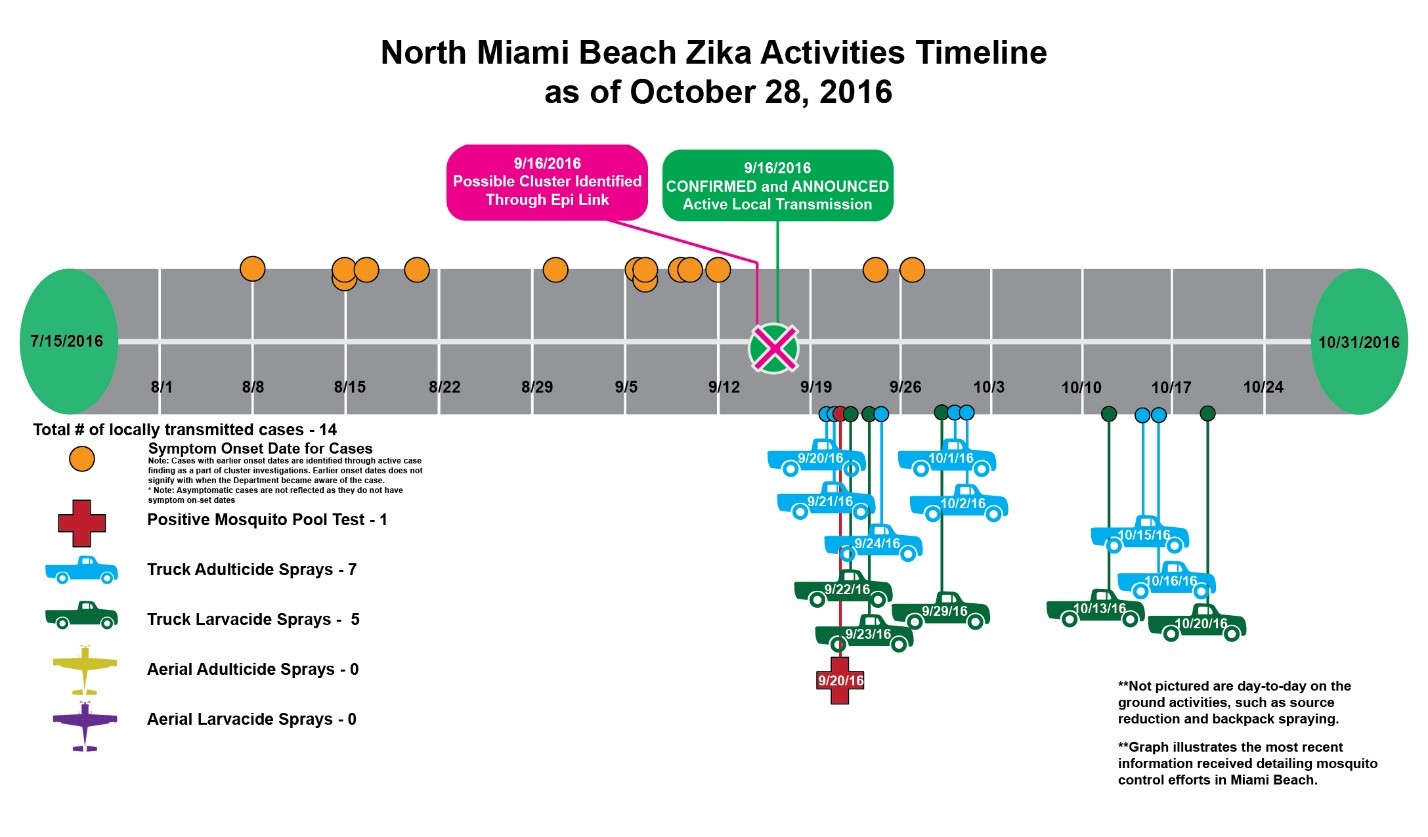
 
[FONT=&quot]November 28, 2016[/FONT]
[h=2]Department of Health Daily Zika Update[/h] [FONT=&quot]Contact:
Communications Office
NewsMedia@flhealth.gov
(850) 245-4111
[/FONT]
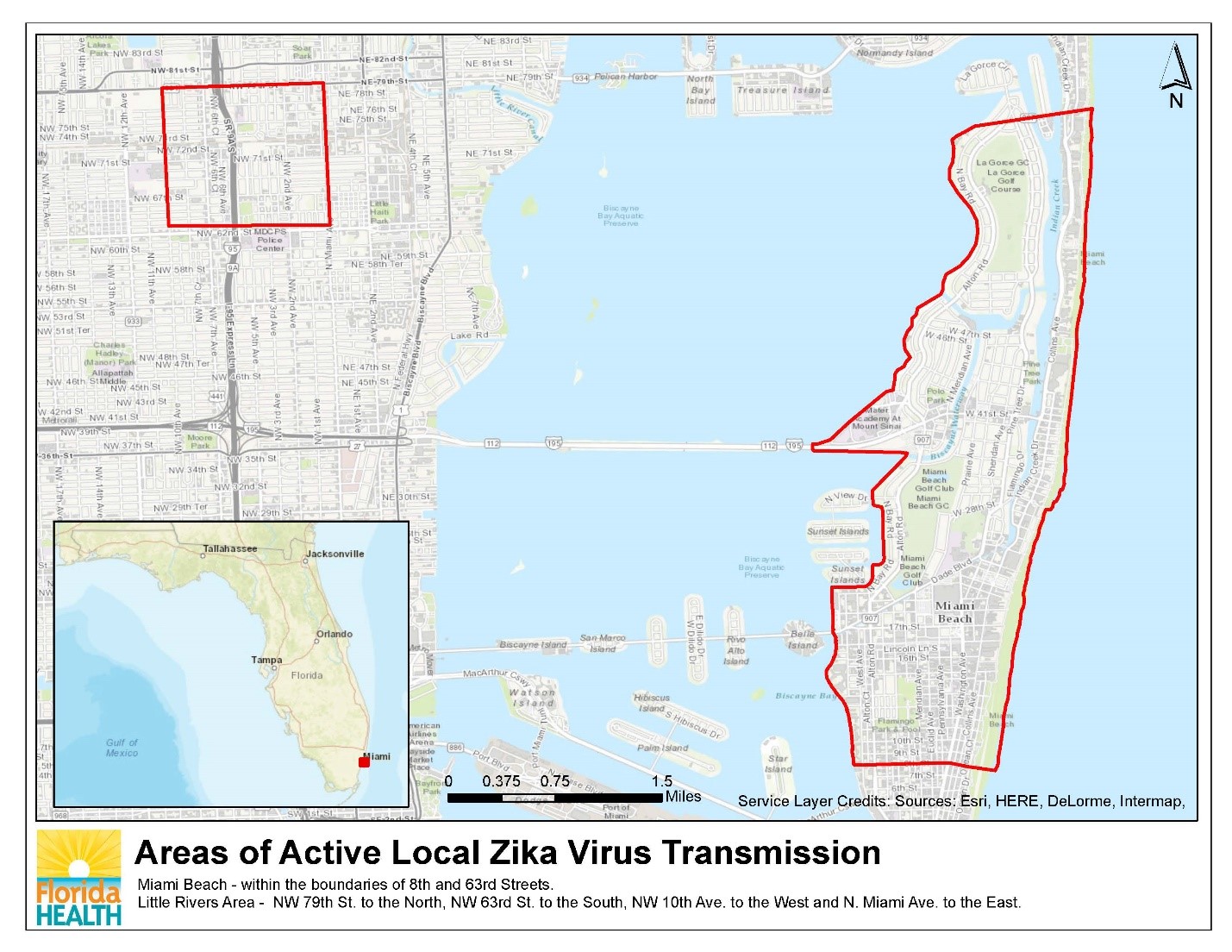
[FONT=&quot]Tallahassee, Fla.?In an effort to keep Florida residents and visitors safe and aware about the status of the Zika virus, the department will issue a Zika virus update each week day. Updates will include a Zika case count by county and information to keep Floridians informed and prepared. In order to keep the public informed, the department has posted our investigation process here.[/FONT]
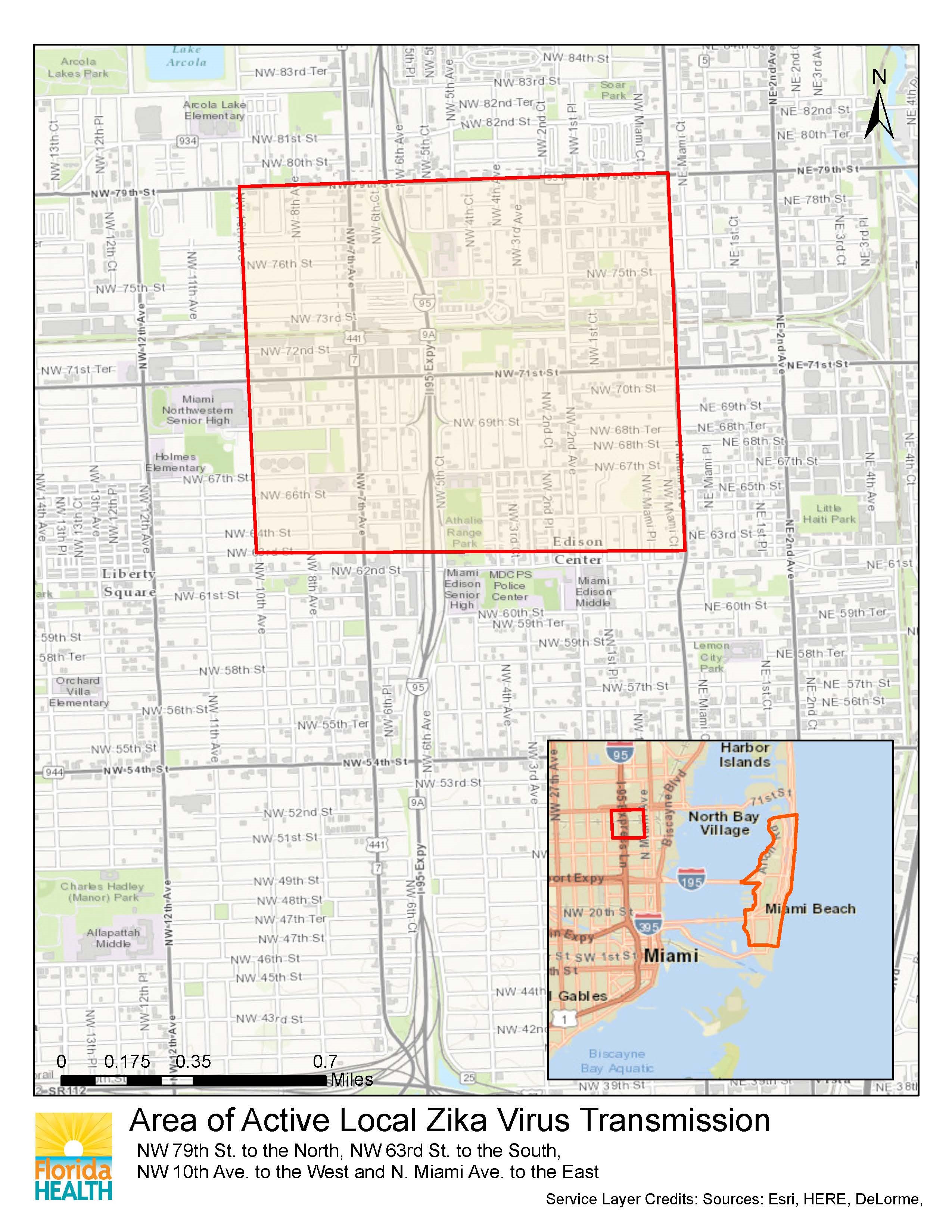
[FONT=&quot]There is one new travel-related case today in Miami-Dade.[/FONT]
[FONT=&quot]There are no new locally acquired cases today.[/FONT]
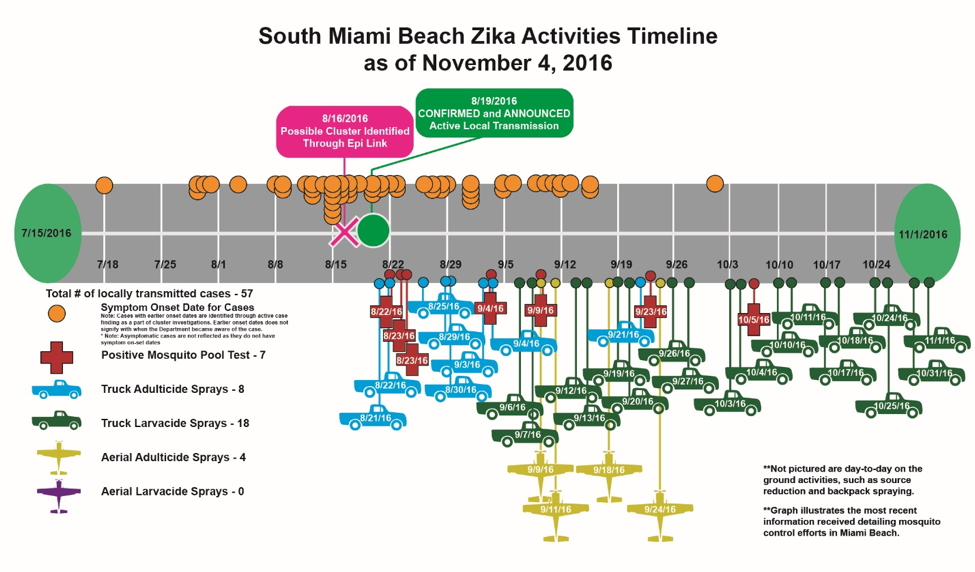
[FONT=&quot]The total number of Zika cases reported in Florida as of today is 1,206.[/FONT]
[TABLE="border: 1, cellpadding: 0, cellspacing: 0"]
[TR]
[TD="width: 318"] Infection Type
[/TD]
[TD="width: 306"] Infection Count
[/TD]
[/TR]
[TR]
[TD="width: 318"] Travel-Related Infections of Zika
[/TD]
[TD="width: 306"] 953
[/TD]
[/TR]
[TR]
[TD="width: 318"] Locally Acquired Infections of Zika
[/TD]
[TD="width: 306"] 238
[/TD]
[/TR]
[TR]
[TD="width: 318"] Undetermined
[/TD]
[TD="width: 306"] 15
[/TD]
[/TR]
[TR]
[TD="width: 623, colspan: 2"]
[/TD]
[/TR]
[TR]
[TD="width: 318"] Pregnant Women with Lab-Evidence of Zika
[/TD]
[TD="width: 306"] 170
[/TD]
[/TR]
[/TABLE]
[FONT=&quot]Note, these categories are not mutually exclusive and cannot be added together. Please visit our website to see the full list of travel-related cases by county.[/FONT]
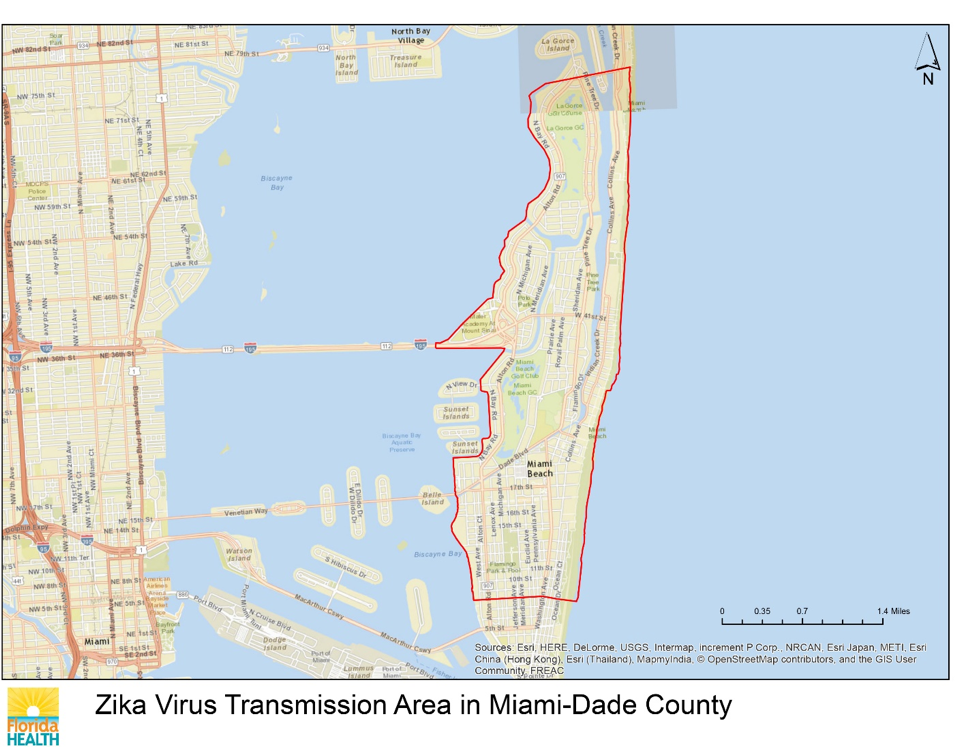
[FONT=&quot]Governor Rick Scott recently announced that the department has not detected any additional local transmissions of Zika in the north portion of Miami Beach in more than 45 days. That portion of the zone has been lifted. The newly lifted area is about three miles, from 28th street to 63rd street. The remaining area of active Zika transmission in Miami Beach is about 1.5 square miles between 8th and 28th streets. The remaining area of active Zika transmission in Little River is about one square mile.[/FONT]
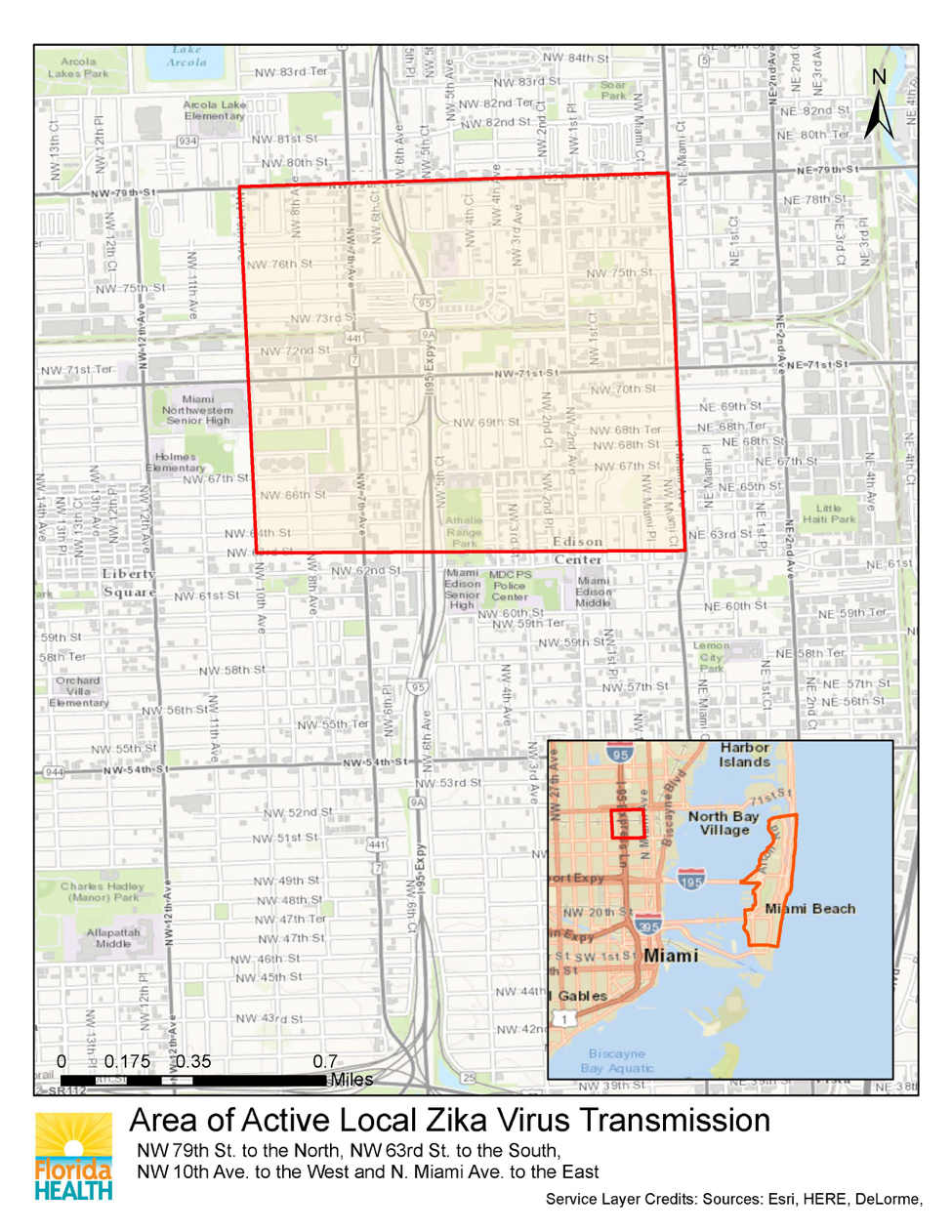
[FONT=&quot]DOH continues outreach and targeted testing in Miami-Dade County and mosquito abatement and reduction activities are also taking place around the locations that are being investigated. DOH believes ongoing transmission is only taking place within the identified area in Miami Beach and Little River in Miami-Dade County, see maps below.[/FONT]
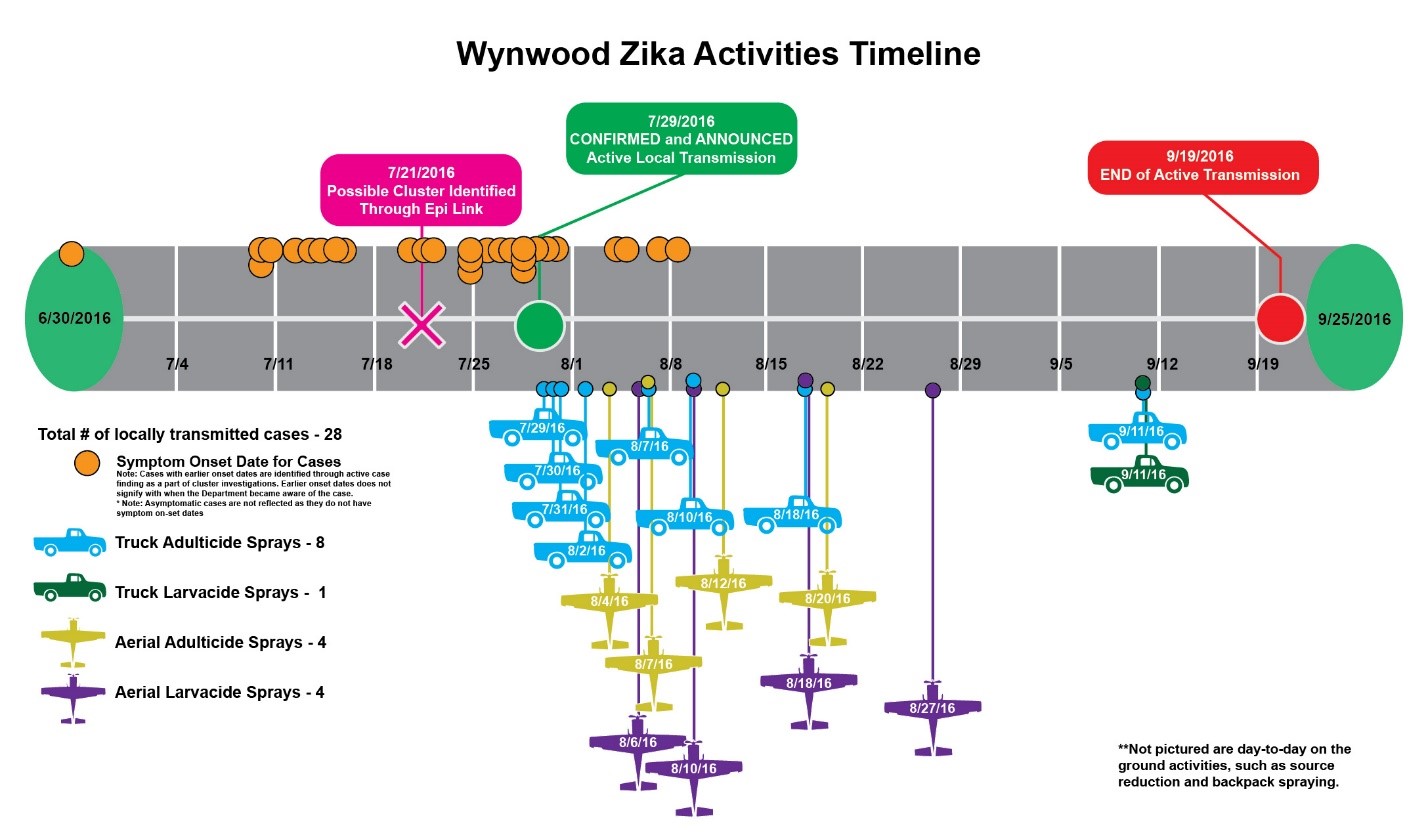
[FONT=&quot]One case does not mean ongoing active transmission is taking place. DOH conducts a thorough investigation by sampling close contacts and community members around each case to determine if additional people are infected. If DOH finds evidence that active transmission is occurring in an area, the media and the public will be notified.[/FONT]
[FONT=&quot]The timelines below are as of Nov. 23. Note: asymptomatic cases are not reflected as they do not have symptom on-set dates.[/FONT]
[FONT=&quot]click image above to enlarge[/FONT]
[FONT=&quot]click image above to enlarge[/FONT]
[FONT=&quot]click image above to enlarge[/FONT]
[FONT=&quot]The department is currently conducting 14 active investigations. The department has closed 38 investigations. Information regarding the investigations can be found here. If investigations reveal additional areas of active transmission, the department will announce a defined area of concern. [/FONT]
[FONT=&quot]The department has conducted Zika virus testing for more than 10,570 people statewide. Florida currently has the capacity to test 5,979 people for active Zika virus and 5,209 for Zika antibodies. At Governor Scott?s direction, all county health departments now offer free Zika risk assessment and testing to pregnant women.[/FONT]
[FONT=&quot]Florida?s small case cluster is not considered widespread transmission, however, pregnant women are advised to avoid non-essential travel to the impacted area in Miami-Dade County (see map below). If you are pregnant and must travel or if you live or work in the impacted area, protect yourself from mosquito bites by wearing insect repellent, long clothing and limiting your time outdoors. [/FONT]
[FONT=&quot]According to CDC guidance, providers should test all pregnant women who lived in, traveled to or whose partner traveled to Miami-Dade County after Aug. 1, 2016. It is also recommended that all pregnant women who reside in or travel frequently to the area where active transmission is likely occurring be tested for Zika in the first and second trimester. Pregnant women in the identified area can contact their medical provider or their local county health department to be tested and receive a Zika prevention kit. CDC recommends that a pregnant woman with a history of Zika virus and her provider should consider additional ultrasounds. Additionally, the department is working closely with the Healthy Start Coalition of Miami-Dade County to identify pregnant women in the impacted areas to ensure they have access to resources and information to protect themselves. CDC recommends that a pregnant woman with a history of Zika virus and her provider should consider additional ultrasounds. [/FONT]
[FONT=&quot]Pregnant women can contact their local county health department for Zika risk assessment and testing hours and information. A Zika risk assessment will be conducted by county health department staff and blood and/or urine samples may be collected and sent to labs for testing. It may take one to two weeks to receive results.[/FONT]
[FONT=&quot]Florida has been monitoring pregnant women with evidence of Zika regardless of symptoms. The total number of pregnant women who have been or are being monitored is 170.[/FONT]
[FONT=&quot]On Feb. 12, Governor Scott directed the State Surgeon General to activate a Zika Virus Information Hotline for current Florida residents and visitors, as well as anyone planning on traveling to Florida in the near future. The hotline, managed by the Department of Health, has assisted 7,634 callers since it launched. The number for the Zika Virus Information Hotline is 1-855-622-6735.[/FONT]
[FONT=&quot]The department urges Floridians to drain standing water weekly, no matter how seemingly small. A couple drops of water in a bottle cap can be a breeding location for mosquitoes. Residents and visitors also need to use repellents when enjoying the Florida outdoors.[/FONT]
[FONT=&quot]For more information on DOH action and federal guidance, please click here.[/FONT]
[FONT=&quot]For resources and information on Zika virus, click here.[/FONT]
[FONT=&quot]click image above to enlarge[/FONT]
[FONT=&quot]click image above to enlarge[/FONT]


http://www.floridahealth.gov/newsroom/2016/11/112816-zika-update.html
 
Back
Top Bottom