• FluTrackers.com Inc. does not provide medical advice. Information on this web site is collected from various internet resources, and the FluTrackers board of directors makes no warranty to the safety, efficacy, correctness or completeness of the information posted on this site by any author or poster. The information collated here is for instructional and/or discussion purposes only and is NOT intended to diagnose or treat any disease, illness, or other medical condition. Every individual reader or poster should seek advice from their personal physician/healthcare practitioner before considering or using any interventions that are discussed on this website. By continuing to access this website you agree to consult your personal physican before using any interventions posted on this website, and you agree to hold harmless FluTrackers.com Inc., the board of directors, the members, and all authors and posters for any effects from use of any medication, supplement, vitamin or other substance, device, intervention, etc. mentioned in posts on this website, or other internet venues referenced in posts on this website.
  • We are not asking for any donations. Do not donate to any entity who says they are raising funds for us.

France reports 12 outbreaks of HP H5N1 H5N2 H5N9 & LP H5N2 bird flu in birds in the departments of Dordogne, Landes, Haute-Vienne and Gers - November

Gert van der Hoek

In Memoriam - Editor, Senior Moderator
Wed Nov 25, 2015

PARIS


France's agriculture ministry on Wednesday said an outbreak of highly pathogenic H5N1 bird flu had been found in the southwest part of the country.

"A case of avian influenza has been confirmed in a backyard in Dordogne," it said in a statement.


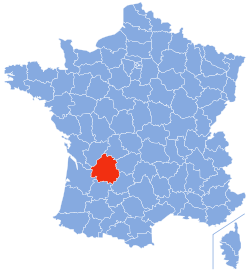
250px-Dordogne-Position.svg.png

wikipedia
 
  • Publi? le 25/11/2015
Dordogne: a case of bird flu detected in backyard poultry

A case of H5N1, a highly pathogenic strain in poultry was detected in a backyard in Dordogne, today announced that the French Ministry of Agriculture, who requested the activation of the National Plan Health Emergency Response.

Zones 3km protection and 10km surveillance and around the farm are established and an "expanded active surveillance" is engaged in farming and wildlife, the ministry said in a statement. "The confirmation of cases of avian influenza has been established on the evening of Tuesday, November 24 by the National Agency Risk Assessment (Anses) and the virus strain has been identified," it said.


"This is a highly pathogenic H5N1 in poultry," the ministry. "The sequencing of the strain is underway but it seems to be of a strain already detected in Europe, which until then had an LPAI profile."
 
Last edited:
Government announcement


A case of avian influenza detected in a backyard in Dordogne


print.png

partage.png
Share


AVIAN INFLUENZA
AVIAN FLU


13241_008.jpg

11/25/2015


COMMUNIQUE


A case of avian influenza has been confirmed in a backyard in Dordogne, following an abnormal mortality has immediately led to the taking of samples for analysis by the Departmental Directorate of protecting populations.

The confirmation of cases of avian influenza has been established on the evening of Tuesday, November 24 by the National Agency Risk Assessment (Anses) and strain of the virus was identified.This is a highly pathogenic H5N1 in poultry. The sequencing of the strain is underway but it seems to be of a strain already detected in Europe, which until then had an LPAI profile.

St?phane LE FOLL, Minister of agriculture, food and forestry, Spokesperson of the Government, immediately instructed his services to enable the national health emergency response plan in accordance with European rules and International.

Thus, protection zones and surveillance of 3 km and 10 km respectively livestock are implemented. Monitoring will be strengthened not only in farming but also in wildlife.

The Minister in charge of agriculture, St?phane LE FOLL, in conjunction with the Minister in charge of health, Marisol Touraine will also enter the ANSES, as a precaution, to assess the potential danger of the strain for 'man.

Finally, St?phane Le Foll asked the Director General to convene an emergency supply National Guidance Committee of animal health policy Thursday, 26 November to mobilize all stakeholders and to ensure the application immediate measures of protection and management against avian influenza. The speed of the implementation of management measures is a prerequisite to limit the spread and consequences of disease, especially for export.

Furthermore, it should be recalled that avian influenza is not transmissible to humans through the consumption of meat, eggs, foie gras and more generally any food product

St?phane Le Foll reaffirmed total mobilization of the state and its services alongside professionals.

A case of avian influenza detected in a backyard in Dordogne (PDF, 131.97 KB)

Press contacts:
St?phane LE FOLL Press Office - Tel: 01 49 55 59 74; Fax: 01 49 55 43 81 cab-presse.agriculture@agriculture.gouv.fr Press Service of the Department - Tel: 01 49 55 60 11 ministere.presse@agriculture.gouv.fr

http://agriculture.gouv.fr/un-cas-dinfluenza-aviaire-detecte-dans-une-basse-cour-en-dordogne

machine translation
 
Translation Google

H5N1 avian influenza back in France

Published on 11/25/2015 11:20 - Edited on 11/25/2015 at 14:55 | AFP

An outbreak of avian influenza H5N1 was detected in a farmyard in Dordogne in France marking the return of this potentially deadly virus to humans, more than eight years after the last confirmed cases.

Bird flu has reappeared at a private individual raising hens for personal consumption at Biras, said the prefecture of Dordogne, on Wednesday at a press conference.

Veterinary Services Department were alerted last Friday after the death of 22 of the 30 animals and when initial tests showed the virus, probably transmitted by wild ducks, according to the prefecture. Volatile survivors were euthanized and disinfected backyard.

The samples were transferred to the National Health Security Agency (ANSES), which confirmed on Tuesday the first results.

"This is a highly pathogenic H5N1 in poultry," appearing corresponding to "a strain detected already in Europe that presented a previously LPAI profile," said the Ministry of Agriculture in a statement.

The risk of contamination to humans of this strain is not established at this stage. The Ministers of Agriculture, St?phane Le Foll, and health, Marisol Touraine, seized the handles, "as a precautionary measure, to evaluate the potential dangerousness of the strain to humans".
...
- Two farms under surveillance -

As expected in this situation, the Government has activated the national health emergency response plan. Around Biras site, a protection zone of 3 km and a surveillance zone (live birds banned from sale, banned hunting) of 10 kilometers have been put in place.

In the protection zone, all pets must be confined (poultry but also dogs and cats) "to prevent any further spread," said the prefect of Dordogne, Christophe Bay.

Two other Dordogne farms have been placed under special surveillance, the usual checks have revealed high levels of antibodies suggesting that the birds were in contact with the disease, said the prefecture.

It concerns a breeding of reproductive gooses in Domme, at 90 km south of Biras, and a breeding of ducks, in Saint-Paul-la-Roche, at 50 km north.

The Minister of Agriculture has also convened an emergency meeting Thursday of the National Policy for Animal Health Policy Committee to "ensure the immediate implementation of measures of protection and management" against avian influenza.

The latest crisis caused by the H5N1 virus in France dates back to early 2006. After a slaughter in an industrial farm in Ain, the government of the time had imposed for three months the general containment of birds and free-range poultry or held by individuals on the entire territory.

During this period, 64 cases were confirmed in dead birds found on almost all in Ain. Latest isolated cases have been detected in Moselle in summer 2007 on swans and wild ducks.

11/25/2015 2:54:56 p.m. - Paris (AFP) - By Gabriel BOUROVITCH - ? 2015 AFP

http://www.lepoint.fr/societe/un-ca...-france-depuis-2007-25-11-2015-1984609_23.php
 
[TABLE="class: TableChoisir, border: 0, cellpadding: 0, cellspacing: 0"]
[TR]
[TD]

[TD="width: *, align: left"] Highly pathogenic avian influenza,
France

[/TD]
[TD="width: 1%, align: right"] [/TD]
[/TD]
[/TR]
[TR]
[TD] [TABLE="class: TableChoisir, border: 0, cellpadding: 0, cellspacing: 0"]
[TR]
[TD="class: topbigtabletitle27"]Information received on 25/11/2015 from Dr Loic Evain, Directeur G?n?ral adjoint, CVO, Direction g?n?rale de l'alimentation, Minist?re de l'Agriculture, de l'Agroalimentaire et de la For?t, Paris, France[/TD]
[/TR]
[/TABLE]
[/TD]
[/TR]
[TR]
[TD] Summary
[TABLE="class: TableFoyers, width: 917"]
[TR]
[TD="class: filtrer_th, width: 10%"]Report type[/TD]
[TD="width: 30%"]Immediate notification[/TD]
[/TR]
[TR]
[TD="class: filtrer_th, width: 10%"]Date of start of the event[/TD]
[TD="width: 30%"]14/11/2015[/TD]
[/TR]
[TR]
[TD="class: filtrer_th, width: 10%"]Date of confirmation of the event[/TD]
[TD="width: 30%"]24/11/2015[/TD]
[/TR]
[TR]
[TD="class: filtrer_th, width: 10%"]Report date[/TD]
[TD="width: 30%"]24/11/2015[/TD]
[/TR]
[TR]
[TD="class: filtrer_th, width: 10%"]Date submitted to OIE[/TD]
[TD="width: 30%"]25/11/2015[/TD]
[/TR]
[TR]
[TD="class: filtrer_th, width: 10%"]Reason for notification[/TD]
[TD="width: 30%"]Reoccurrence of a listed disease[/TD]
[/TR]
[TR]
[TD="class: filtrer_th, width: 10%"]Date of previous occurrence[/TD]
[TD="width: 30%"]2007[/TD]
[/TR]
[TR]
[TD="class: filtrer_th, width: 10%"]Manifestation of disease[/TD]
[TD="width: 30%"]Clinical disease[/TD]
[/TR]
[TR]
[TD="class: filtrer_th, width: 10%"]Causal agent[/TD]
[TD="width: 30%"]Highly pathogenic avian influenza virus[/TD]
[/TR]
[TR]
[TD="class: filtrer_th, width: 10%"]Serotype[/TD]
[TD="width: 30%"]H5N1[/TD]
[/TR]
[TR]
[TD="class: filtrer_th, width: 10%"]Nature of diagnosis[/TD]
[TD="width: 30%"]Clinical, Laboratory (advanced)[/TD]
[/TR]
[TR]
[TD="class: filtrer_th, width: 10%"]This event pertains to[/TD]
[TD="width: 30%"]a defined zone within the country[/TD]
[/TR]
[/TABLE]
[/TD]
[/TR]
[TR]
[TD] New outbreaks (1)
[TABLE="class: TableFoyers, width: 918"]
[/TABLE]

[/TD]
[/TR]
[TR]
[TD] [TABLE="class: TableFoyers, width: 917"]
[TR]
[TD="class: filtrer_th ta_left, align: left"]Outbreak 1[/TD]
[TD="class: filtrer_th ta_left"]Biras, DORDOGNE[/TD]
[/TR]
[TR]
[TD="class: filtrer_th ta_left"]Date of start of the outbreak[/TD]
[TD]14/11/2015[/TD]
[/TR]
[TR]
[TD="class: filtrer_th ta_left"]Outbreak status[/TD]
[TD]Resolved (20/11/2015)[/TD]
[/TR]
[TR]
[TD="class: filtrer_th ta_left"]Epidemiological unit[/TD]
[TD]Backyard[/TD]
[/TR]
[TR]
[TD="class: filtrer_th ta_left"]Affected animals[/TD]
[TD] [TABLE="class: TableFoyers, width: 735"]
[TR]
[TD="class: filtrer_th ta_center last"]Species[/TD]
[TD="class: filtrer_th ta_center last"]Susceptible[/TD]
[TD="class: filtrer_th ta_center last"]Cases[/TD]
[TD="class: filtrer_th ta_center last"]Deaths[/TD]
[TD="class: filtrer_th ta_center last"]Destroyed[/TD]
[TD="class: filtrer_th ta_center last"]Slaughtered[/TD]
[/TR]
[TR]
[TD]Birds[/TD]
[TD="class: ta_right"]32[/TD]
[TD="class: ta_right"]22[/TD]
[TD="class: ta_right"]22[/TD]
[TD="class: ta_right"]10[/TD]
[TD="class: ta_right"]0[/TD]
[/TR]
[/TABLE]
[/TD]
[/TR]
[TR]
[TD="class: filtrer_th ta_left"]Affected population[/TD]
[TD]A backyard (non-commercial farm) consisting of 32 broiler chickens and layer hens showing acute mortalities leading to testing and preventive slaughter.[/TD]
[/TR]
[/TABLE]

[/TD]
[/TR]
[TR]
[TD] [TABLE="class: TableFoyers, width: 917"]
[TR]
[TD="class: filtrer_th ta_left, align: left"]Summary of outbreaks[/TD]
[TD="class: filtrer_th ta_left"]Total outbreaks: 1[/TD]
[/TR]
[TR]
[TD="class: filtrer_th ta_left"]Total animals affected[/TD]
[TD] [TABLE="class: TableFoyers, width: 744"]
[TR]
[TD="class: filtrer_th ta_center last"]Species[/TD]
[TD="class: filtrer_th ta_center last"]Susceptible[/TD]
[TD="class: filtrer_th ta_center last"]Cases[/TD]
[TD="class: filtrer_th ta_center last"]Deaths[/TD]
[TD="class: filtrer_th ta_center last"]Destroyed[/TD]
[TD="class: filtrer_th ta_center last"]Slaughtered[/TD]
[/TR]
[TR]
[TD]Birds[/TD]
[TD="class: ta_right"]32[/TD]
[TD="class: ta_right"]22[/TD]
[TD="class: ta_right"]22[/TD]
[TD="class: ta_right"]10[/TD]
[TD="class: ta_right"]0[/TD]
[/TR]
[/TABLE]
[/TD]
[/TR]
[TR]
[TD="class: filtrer_th ta_left"]Outbreak statistics[/TD]
[TD] [TABLE="class: TableFoyers, width: 744"]
[TR]
[TD="class: filtrer_th ta_center last"]Species[/TD]
[TD="class: filtrer_th ta_center last"]Apparent morbidity rate[/TD]
[TD="class: filtrer_th ta_center last"]Apparent mortality rate[/TD]
[TD="class: filtrer_th ta_center last"]Apparent case fatality rate[/TD]
[TD="class: filtrer_th ta_center last"]Proportion susceptible animals lost*[/TD]
[/TR]
[TR]
[TD]Birds[/TD]
[TD="class: ta_right"]68.75%[/TD]
[TD="class: ta_right"]68.75%[/TD]
[TD="class: ta_right"]100.00%[/TD]
[TD="class: ta_right"]100.00%[/TD]
[/TR]
[/TABLE]
[/TD]
[/TR]
[TR]
[TD="class: filtrer_th ta_left, colspan: 2"]*Removed from the susceptible population through death, destruction and/or slaughter[/TD]
[/TR]
[/TABLE]

[/TD]
[/TR]
[TR]
[TD] Epidemiology
[TABLE="class: TableFoyers, width: 917"]
[TR]
[TD="class: filtrer_th ta_left"]Source of the outbreak(s) or origin of infection[/TD]
[TD]
  • Unknown or inconclusive
[/TD]
[/TR]
[TR]
[TD="class: filtrer_th ta_left"]Epidemiological comments[/TD]
[TD]Zoning: protection (3 km) and surveillance (10 km) zones around the farm.[/TD]
[/TR]
[/TABLE]
[/TD]
[/TR]
[TR]
[TD] [/TD]
[/TR]
[TR]
[TD] Control measures
[TABLE="class: TableFoyers, width: 917"]
[TR]
[TD="class: filtrer_th ta_left"]Measures applied[/TD]
[TD]
  • Movement control inside the country
  • Screening
  • Disinfection / Disinfestation
  • Stamping out
  • Official disposal of carcasses, by-products and waste
  • Surveillance within containment and/or protection zone
  • Zoning
  • Vaccination prohibited
  • No treatment of affected animals
[/TD]
[/TR]
[TR]
[TD="class: filtrer_th ta_left"]Measures to be applied[/TD]
[TD]
  • Traceability
  • Surveillance outside containment and/or protection zone
  • Control of wildlife reservoirs
[/TD]
[/TR]
[/TABLE]
[/TD]
[/TR]
[TR]
[TD] Diagnostic test results
[TABLE="class: TableFoyers, width: 917"]
[TR]
[TD="class: filtrer_th ta_left"]Laboratory name and type[/TD]
[TD="class: filtrer_th ta_left"]Species[/TD]
[TD="class: filtrer_th ta_left"]Test[/TD]
[TD="class: filtrer_th ta_left"]Test date[/TD]
[TD="class: filtrer_th ta_left last"]Result[/TD]
[/TR]
[TR]
[TD="class: filtrer"]National Reference Laboratory for Avian Influenza and Newcastle Disease (National laboratory)[/TD]
[TD="class: filtrer"]Birds[/TD]
[TD="class: filtrer"]nucleotide sequencing[/TD]
[TD="class: filtrer"]24/11/2015[/TD]
[TD="class: filtrer cb-centree last"]Positive[/TD]
[/TR]
[TR]
[TD="class: filtrer"]National Reference Laboratory for Avian Influenza and Newcastle Disease (National laboratory)[/TD]
[TD="class: filtrer"]Birds[/TD]
[TD="class: filtrer"]real-time reverse transcriptase/polymerase chain reaction (RRT-PCR)[/TD]
[TD="class: filtrer"]24/11/2015[/TD]
[TD="class: filtrer cb-centree last"]Positive[/TD]
[/TR]
[/TABLE]
[/TD]
[/TR]
[TR]
[TD] Future Reporting
[TABLE="class: TableFoyers, width: 917"]
[TR]
[TD="class: filtrer"]The event is continuing. Weekly follow-up reports will be submitted.[/TD]
[/TR]
[/TABLE]
[/TD]
[/TR]
[/TABLE]

.../

http://www.oie.int/wahis_2/public/w...?page_refer=MapFullEventReport&reportid=19171

 
ahh, a completely new HP H5N1, that presumable mutated from an avian LP virus in Europe ?!

mutated in the poultry, presumably ....
 
Last edited:
Two new cases of bird flu have been identified in Dordogne

nov 30, 2015

Two new cases of bird flu have been detected in poultry in Dordogne announced the Ministry of Agriculture Monday, November 30th. The new cases were detected during checks as part of a national health emergency response plan.

MORE:
 
Translation Google

Ministry of Agriculture,
Agri-Food and Forestry
Paris, November 30, 2015
PRESS RELEASE
_
Two new cases of avian influenza detected in Dordogne
_
Following the detection of a first case of avian influenza in a backyard November 24, the national health emergency response plan was immediately activated in accordance with European rules and International. Among the actions taken without delay, the Departmental Directorate of Protection

Dordogne populations established protection zones and strengthened monitoring around the barnyard. In addition, active surveillance extended has been implemented in farms that are monitored yearly for the avian Influenza virus. Samples have been made in different farms in Dordogne, despite the absence of mortality or clinical signs.

The results of these samples revealed the presence of strains of avian Influenza highly pathogenic for poultry at two farms. Their detailed sequencing is being carried out by ANSES.

In order to protect and limit the spread of the disease to other farms of sensitive species, the services of the Ministry of Agriculture conduct currently slaughter of all animals of the affected farms and decided the implementation of biosecurity measures throughout the department.

Furthermore, it should be recalled that avian influenza is not transmissible to humans through the consumption of meat, eggs, foie gras and more generally any food product.
...

http://agriculture.gouv.fr/sites/minagri/files/151130_cp_grippe_aviaire_dordogne.pdf
 
Translation Google

Two new cases of bird flu detected in Dordogne

By lefigaro.fr Posted on 11/30/2015 at 10:53 p.m.
...
Affected animals were found in farms located a few dozen kilometers of the localized outbreak of H5N1 last week. The animals were slaughtered.

New cases of bird flu in the Dordogne. A goose farm in Domme and another of ducks in Saint-Paul-la-Roche might have been infected with H5N1. These farms are located a few dozen kilometers from Biras. It is in this town, situated between P?rigueux and Brant?me, that an H5N1 avian influenza outbreak was detected last week in about twenty poultry of a small backyard breeding.

In the process, a national health emergency response plan was activated by the government. The farms of the department were then made subject to tighter controls. The results of the samples determined "revealed the presence of highly pathogenic avian Influenza strains for poultry at the two farms. Their detailed sequencing is being carried out by ANSES, "the National Health Security Agency, detailed on Monday, the Ministry of Agriculture in a statement. Last Wednesday, the prefect of Dordogne, Christophe Bay, had reported that high levels of antibodies had been found in poultry of the two farms, suggesting that they had been in contact with the disease. He must hold a press conference Tuesday in P?rigueux at 14 hours.

To avoid the risk of contagion, the services of the Ministry of Agriculture "are carrying out the slaughter of all animals of the affected farms" specify the authorities. Of "biosecurity measures" must be implemented in "the whole department." "The mobilization of the state's total services to professional sides to limit the spread and consequences of disease, especially for export," says the ministry. "Avian influenza is not transmissible to humans through the consumption of meat, eggs, foie gras, and more generally any food," says the Ministry of Agriculture in a statement, while the Dordogne is a big foie gras producer.

http://www.lefigaro.fr/sciences/201...as-de-grippe-aviaire-detectes-en-dordogne.php
 
Translation Google

Avian influenza in Dordogne: an "unusual" phenomenon, "serious" measures by the prefect

Benjamin Fontaine, France Blue and France Bleu Perigord
Tuesday, December 1, 2015 16:32

Some 14,000 ducks and 1,000 geese were slaughtered in the Dordogne since Monday, November 30 after the discovery of two new cases of bird flu in Domme and Saint-Paul-la-Roche. The prefect talkS about a situation "atypical". Protection measures were extended.

After the announcement on Monday evening of the discovery of two new cases of bird flu in the Dordogne, the prefect of the department, Christophe Bay, held a press conference Tuesday afternoon to take stock of the measures taken.

The situation is "serious" said the prefect because the virus is highly pathogenic. Deux new farms were identified as affected by avian influenza. One in Domme and the other in Saint-Paul-la-Roche. In both farms, antibodies were detected on ducks and geese. After analyzed it turns out that it is the H5 strain. It remains now to determine the nature of this influenza. "Paris epidemiologists are expected in Dordogne" , said the prefect while ensuring that the virus appears to be "atypical". "There is no mass mortality that questions us," explained Dr. Piron from health affairs.

14,000 ducks and 1,000 geese slaughtered

Meanwhile, all waterfowl were killed. 14,000 ducks in Saint-Paul-la-Roche (including 8,000 already stuffed) and 1,000 geese in Domme. The animals were electrocuted and containment measures have been implemented around the outbreaks infected with protective slippers and foot baths.

Within ten kilometers of farm poultry must be kept. The confinement period is expected to last 21 days. At Saint-Paul-la-Roche three farms are concerned. A total of 70 Perigord producers are affected by protective measures. The Prefect announced veterinarians and technical reinforcements.

https://www.francebleu.fr/infos/fai...-mesures-serieuses-selon-le-prefet-1448983953
 
Translation Google

Avian influenza in the Dordogne "atypical scientific phenomenon"

Published on 01/12/2015 at 4:13 p.m., amended 01.12.2015 at 4:13 p.m. by Adrien Vergnolle

The presence of the virus was found on three farms in the department. But the birds do not die significantly. A curiosity on which epidemiologists are working

Cases of bird flu identified in Dordogne in recent days are a mystery. "A scientific issue is facing us," said the Prefect of the Dordogne, Christophe Bay, Tuesday afternoon in a press conference.

To summarize, poultry are carrying the virus but do not die, or few die. "We should be facing massive mortality," said Dr. Frederick Piron, the departmental director of health affairs. "We have a hard time having a clear idea of what is happening on the ground."

Poultry are carrying the virus but do not die, or few die

So far, about twenty chickens died in a farmyard at Biras. The analyzes proved the presence of H5N1 November 24 and triggered the national health emergency response plan.

In parallel, two other farms were put under surveillance in Saint-Paul-la-Roche (ducks) and Domme (geese), after classical random analyzes. The "highly pathogenic" agents were revealed and, quite by chance.

But then, no significant cases of death related to virus. These animals were carriers of a strain "highly pathogenic H5," said the Prefect. The "N1" remains to "determined" by the national reference laboratory.

It is as if the birds of P?rigord were more resistant to the virus than others

Christophe Bay speaks of a "scientific phenomenon considered atypical." He added: "Serious, but atypical." It is as if the birds of P?rigord were more resistant to the virus than others. But even Gallinaceans, deemed more susceptible to avian influenza, do not die, or very little. "There is a paradox that can not be explained," resumes Dr. Piron.

The state representative also repeated that the virus does not affect human consumption.

No new case

The prefect of Dordogne confirmed euthanasia by electrocution 14 000 ducks in farms of Saint-Paul-la-Roche, in the northern department, and 1000 geese in Domme, in the south.

Both farms represent two other confirmed outbreaks of "avian influenza", but do not represent "new cases" strictly speaking, insisted the Prefect. "No new cases of mortality were detected," he repeated several times. And remember that animals have "no symptoms", it is called "viral load".

As Biras, a protection zone of 3 km was decided around the two farms in Saint-Paul-la-Roche and Domme, coupled with a 7 kilometer surveillance zone. In this scope, the prefect controls the "absolute containment" of all volatile and drastic disinfecting measures (footbaths, special equipment, etc.)

70 farms in the scope of protection

About 70 farms are affected by these measures. They will be systematic virological analyzes, by the fifty liberal veterinary health mobilized by the prefect.

A reinforcement of twenty veterinary and health technicians from other departments are expected. The Agriculture Minister Stephane Le Foll, also decided to send national epidemiologists on the ground "to examine this scientific phenomenon."

"Contagion risk is high," the prefect also explained in his speech. That said, it has not announced any measures throughout the department. However, he said that the Ministry of Agriculture is considering new measures.

Domestic poultry must be kept in shelters, being preserved from contact with wildlife. Furthermore, the National Office for Hunting and Wildlife patrol in search of dead animals, which might explain the spread of the virus. "We did not find any dead wild duck near the farms", however, said the prefect.

Christophe Bay asks mayors to identify farmyards individual and disseminate the containment measures. These will last at least 21 days, the incubation period of the virus. The transport of animals is also forbidden: they should leave the farm for slaughter.

An emergency cell for breeders

Tuesday, Christophe Bay also announced the establishment of an emergency cell, which meet particular professionals and health authorities, as well as the Chamber of Agriculture, social service and MSA to assess the economic consequences of the avian crisis.

http://www.sudouest.fr/2015/12/01/g...nomene-scientifique-atypique-2203372-4696.php
 
Translation Google

Avian influenza in the Dordogne "atypical scientific phenomenon"

Published on 01/12/2015 at 4:13 p.m., amended 01.12.2015 at 4:13 p.m. by Adrien Vergnolle

...

Christophe Bay speaks of a "scientific phenomenon considered atypical." He added: "Serious, but atypical." It is as if the birds of P?rigord were more resistant to the virus than others. But even Gallinaceans, deemed more susceptible to avian influenza, do not die, or very little. "There is a paradox that can not be explained," resumes Dr. Piron.

...

http://www.sudouest.fr/2015/12/01/g...nomene-scientifique-atypique-2203372-4696.php

I don't understand that statement. The domestic chicken is in the Order Galliformes and 22 of 32 birds supposedly died of this suspected mutant classical H5N1. That seems a high mortality rate to me if they did die of flu.

The other flocks of geese and ducks seem to have only had antibodies. Could it be that they were exposed to only the classical low path strain?

https://www.gov.uk/government/uploa...ent_data/file/480529/poa-h5n1-hpai-france.pdf
Department for Environment, Food and Rural Affairs
Animal & Plant Health Agency
Veterinary & Science Policy Advice Team - International Disease Monitoring
1
Preliminary Outbreak Assessment
Highly Pathogenic Avian Influenza H5N1 in poultry in France
26 November 2015 Ref: VITT/1200 H5N1 HPAI in France
Disease Report
France has reported an outbreak of highly pathogenic avian influenza, H5N1 in backyard poultry (broilers and layer hens) in the Dordogne (OIE, 2015; see map). An increase in mortality was reported with 22 out of 32 birds dead and the others destroyed as a disease control measure. Samples taken on the 19th November confirmed HPAI. Other disease control measures have been implemented including 3km protection and 10km surveillance zones in line with Directive 2005/94/EC.
This is an initial assessment and as such, there is still considerable uncertainty about the source of virus and where or when a mutation event occurred. However the French authorities have confirmed by sequence analysis that this is a European lineage virus (European Commission, 2015) and as such control measures are focussed on poultry.
Situation Assessment
The preliminary sequence of the strain indicates it is closely related to LPAI strains detected previously in Europe which are clearly distinguishable from contemporary strains associated with transglobal spread since 2003. H5N1 LPAI was last reported in France in 2009 in Calvados department in northern France in decoy ducks (ie tethered by hunters, and often in contact with wild birds). H5N1 LPAI viruses of the ?classical? European lineage have been isolated from both poultry and wild birds sporadically in Europe, but mutation to high pathogenicity of these strains is a rare event. The last known such event was in 1991 in the UK when mutation occurred in a single commercial flock. H5N1 HPAI viruses detected in Europe since 2005 have been characterised by the fact they all derived from a common progenitor (Goose/Guandong/1/96) and have been classified into several clades
(WHO 2014) three of which (clades 2.2, 2.3.2.1, 2.3.4.4) have reached Europe (Salzburg et al 2007; Reid et al 2011; Adlhoch et al 2014). This group of viruses can be transmitted as HPAI by wild birds and also have different biological properties to the ?classical European strains? which arise through conventional pathways ie introduced to galliforme poultry as LPAI and can mutate to HPAI, and which has been detected in this outbreak. These events are moderately rare given that in Europe detections of H5/H7 LPAI in domestic poultry are relatively frequent. Importantly the HPAI derived forms of this group of viruses have not been shown to be maintained and spread by wild birds....

If the geese and ducks were really infected somehow with an HPAI H5N1 strain that would be expected to cause clinical illness signs or deaths in those species of Order Anseriformes, then possibly vaccination against another H5 HPAI was cross-protective (if this was done to those flocks):

http://www.nytimes.com/2006/02/27/world/europe/27iht-flu-5803620.html?_r=0
Vaccination of geese and ducks begins in France
Published: Monday, February 27, 2006
 
[TABLE="class: TableChoisir, border: 0, cellpadding: 0, cellspacing: 0"]
[TR]
[TD]

[TD="width: *, align: left"] Highly pathogenic avian influenza,
France

[/TD]
[TD="width: 1%, align: right"] [/TD]
[/TD]
[/TR]
[TR]
[TD] [TABLE="class: TableChoisir, border: 0, cellpadding: 0, cellspacing: 0"]
[TR]
[TD="class: topbigtabletitle27"]Information received on 02/12/2015 from Dr Loic Evain, Directeur G?n?ral adjoint, CVO, Direction g?n?rale de l'alimentation, Minist?re de l'Agriculture, de l'Agroalimentaire et de la For?t, Paris, France[/TD]
[/TR]
[/TABLE]
[/TD]
[/TR]
[TR]
[TD] Summary
[TABLE="class: TableFoyers, width: 917"]
[TR]
[TD="class: filtrer_th, width: 10%"]Report type[/TD]
[TD="width: 30%"]Immediate notification[/TD]
[/TR]
[TR]
[TD="class: filtrer_th, width: 10%"]Date of start of the event[/TD]
[TD="width: 30%"]27/11/2015[/TD]
[/TR]
[TR]
[TD="class: filtrer_th, width: 10%"]Date of confirmation of the event[/TD]
[TD="width: 30%"]30/11/2015[/TD]
[/TR]
[TR]
[TD="class: filtrer_th, width: 10%"]Report date[/TD]
[TD="width: 30%"]02/12/2015[/TD]
[/TR]
[TR]
[TD="class: filtrer_th, width: 10%"]Date submitted to OIE[/TD]
[TD="width: 30%"]02/12/2015[/TD]
[/TR]
[TR]
[TD="class: filtrer_th, width: 10%"]Reason for notification[/TD]
[TD="width: 30%"]New strain of a listed disease[/TD]
[/TR]
[TR]
[TD="class: filtrer_th, width: 10%"]Manifestation of disease[/TD]
[TD="width: 30%"]Clinical disease[/TD]
[/TR]
[TR]
[TD="class: filtrer_th, width: 10%"]Causal agent[/TD]
[TD="width: 30%"]Highly pathogenic avian influenza virus[/TD]
[/TR]
[TR]
[TD="class: filtrer_th, width: 10%"]Serotype[/TD]
[TD="width: 30%"]H5N2[/TD]
[/TR]
[TR]
[TD="class: filtrer_th, width: 10%"]Nature of diagnosis[/TD]
[TD="width: 30%"]Clinical, Laboratory (advanced)[/TD]
[/TR]
[TR]
[TD="class: filtrer_th, width: 10%"]This event pertains to[/TD]
[TD="width: 30%"]the whole country[/TD]
[/TR]
[/TABLE]
[/TD]
[/TR]
[TR]
[TD] New outbreaks (1)
[TABLE="class: TableFoyers, width: 918"]
[/TABLE]

[/TD]
[/TR]
[TR]
[TD] [TABLE="class: TableFoyers, width: 917"]
[TR]
[TD="class: filtrer_th ta_left, align: left"]Outbreak 1 (1)[/TD]
[TD="class: filtrer_th ta_left"]Domme, Domme, DORDOGNE[/TD]
[/TR]
[TR]
[TD="class: filtrer_th ta_left"]Date of start of the outbreak[/TD]
[TD]27/11/2015[/TD]
[/TR]
[TR]
[TD="class: filtrer_th ta_left"]Outbreak status[/TD]
[TD]Resolved (02/12/2015)[/TD]
[/TR]
[TR]
[TD="class: filtrer_th ta_left"]Epidemiological unit[/TD]
[TD]Farm[/TD]
[/TR]
[TR]
[TD="class: filtrer_th ta_left"]Affected animals[/TD]
[TD] [TABLE="class: TableFoyers, width: 733"]
[TR]
[TD="class: filtrer_th ta_center last"]Species[/TD]
[TD="class: filtrer_th ta_center last"]Susceptible[/TD]
[TD="class: filtrer_th ta_center last"]Cases[/TD]
[TD="class: filtrer_th ta_center last"]Deaths[/TD]
[TD="class: filtrer_th ta_center last"]Destroyed[/TD]
[TD="class: filtrer_th ta_center last"]Slaughtered[/TD]
[/TR]
[TR]
[TD]Birds[/TD]
[TD="class: ta_right"]1338[/TD]
[TD="class: ta_right"]1[/TD]
[TD="class: ta_right"]1[/TD]
[TD="class: ta_right"]1337[/TD]
[TD="class: ta_right"]0[/TD]
[/TR]
[/TABLE]
[/TD]
[/TR]
[TR]
[TD="class: filtrer_th ta_left"]Affected population[/TD]
[TD]Three goslings were found dead in a goose and duck farm with a gavage unit. Three other goslings were culled for analysis. One sample was positive.[/TD]
[/TR]
[/TABLE]

[/TD]
[/TR]
[TR]
[TD] [TABLE="class: TableFoyers, width: 917"]
[TR]
[TD="class: filtrer_th ta_left, align: left"]Summary of outbreaks[/TD]
[TD="class: filtrer_th ta_left"]Total outbreaks: 1[/TD]
[/TR]
[TR]
[TD="class: filtrer_th ta_left"]Total animals affected[/TD]
[TD] [TABLE="class: TableFoyers, width: 744"]
[TR]
[TD="class: filtrer_th ta_center last"]Species[/TD]
[TD="class: filtrer_th ta_center last"]Susceptible[/TD]
[TD="class: filtrer_th ta_center last"]Cases[/TD]
[TD="class: filtrer_th ta_center last"]Deaths[/TD]
[TD="class: filtrer_th ta_center last"]Destroyed[/TD]
[TD="class: filtrer_th ta_center last"]Slaughtered[/TD]
[/TR]
[TR]
[TD]Birds[/TD]
[TD="class: ta_right"]1338[/TD]
[TD="class: ta_right"]1[/TD]
[TD="class: ta_right"]1[/TD]
[TD="class: ta_right"]1337[/TD]
[TD="class: ta_right"]0[/TD]
[/TR]
[/TABLE]
[/TD]
[/TR]
[TR]
[TD="class: filtrer_th ta_left"]Outbreak statistics[/TD]
[TD] [TABLE="class: TableFoyers, width: 744"]
[TR]
[TD="class: filtrer_th ta_center last"]Species[/TD]
[TD="class: filtrer_th ta_center last"]Apparent morbidity rate[/TD]
[TD="class: filtrer_th ta_center last"]Apparent mortality rate[/TD]
[TD="class: filtrer_th ta_center last"]Apparent case fatality rate[/TD]
[TD="class: filtrer_th ta_center last"]Proportion susceptible animals lost*[/TD]
[/TR]
[TR]
[TD]Birds[/TD]
[TD="class: ta_right"]0.07%[/TD]
[TD="class: ta_right"]0.07%[/TD]
[TD="class: ta_right"]100.00%[/TD]
[TD="class: ta_right"]100.00%[/TD]
[/TR]
[/TABLE]
[/TD]
[/TR]
[TR]
[TD="class: filtrer_th ta_left, colspan: 2"]*Removed from the susceptible population through death, destruction and/or slaughter[/TD]
[/TR]
[/TABLE]

[/TD]
[/TR]
[TR]
[TD] Epidemiology
[TABLE="class: TableFoyers, width: 917"]
[TR]
[TD="class: filtrer_th ta_left"]Source of the outbreak(s) or origin of infection[/TD]
[TD]
  • Unknown or inconclusive
[/TD]
[/TR]
[TR]
[TD="class: filtrer_th ta_left"]Epidemiological comments[/TD]
[TD]A 3 and 10 km zoning around the outbreak has been established.[/TD]
[/TR]
[/TABLE]
[/TD]
[/TR]
[TR]
[TD] [/TD]
[/TR]
[TR]
[TD] Control measures
[TABLE="class: TableFoyers, width: 917"]
[TR]
[TD="class: filtrer_th ta_left"]Measures applied[/TD]
[TD]
  • Movement control inside the country
  • Screening
  • Disinfection / Disinfestation
  • Stamping out
  • Official disposal of carcasses, by-products and waste
  • Surveillance within containment and/or protection zone
  • Zoning
  • No vaccination
  • No treatment of affected animals
[/TD]
[/TR]
[TR]
[TD="class: filtrer_th ta_left"]Measures to be applied[/TD]
[TD]
  • Traceability
  • Surveillance outside containment and/or protection zone
[/TD]
[/TR]
[/TABLE]
[/TD]
[/TR]
[TR]
[TD] Diagnostic test results
[TABLE="class: TableFoyers, width: 917"]
[TR]
[TD="class: filtrer_th ta_left"]Laboratory name and type[/TD]
[TD="class: filtrer_th ta_left"]Species[/TD]
[TD="class: filtrer_th ta_left"]Test[/TD]
[TD="class: filtrer_th ta_left"]Test date[/TD]
[TD="class: filtrer_th ta_left last"]Result[/TD]
[/TR]
[TR]
[TD="class: filtrer"]National Reference Laboratory for Avian Influenza and Newcastle Disease (National laboratory)[/TD]
[TD="class: filtrer"]Birds[/TD]
[TD="class: filtrer"]nucleotide sequencing[/TD]
[TD="class: filtrer"]30/11/2015[/TD]
[TD="class: filtrer cb-centree last"]Positive[/TD]
[/TR]
[TR]
[TD="class: filtrer"]National Reference Laboratory for Avian Influenza and Newcastle Disease (National laboratory)[/TD]
[TD="class: filtrer"]Birds[/TD]
[TD="class: filtrer"]real-time reverse transcriptase/polymerase chain reaction (RRT-PCR)[/TD]
[TD="class: filtrer"]30/11/2015[/TD]
[TD="class: filtrer cb-centree last"]Positive[/TD]
[/TR]
[/TABLE]
[/TD]
[/TR]
[TR]
[TD] Future Reporting
[TABLE="class: TableFoyers, width: 917"]
[TR]
[TD="class: filtrer"]The event is continuing. Weekly follow-up reports will be submitted.[/TD]
[/TR]
[/TABLE]
[/TD]
[/TR]
[/TABLE]

.../

http://www.oie.int/wahis_2/public/w...?page_refer=MapFullEventReport&reportid=19217
 
Translation Google

Avian Influenza: the current situation in France

AVIAN INFLUENZA AVIAN INFLUENZA 03/12/2015

What is Avian Influenza?

Avian influenza is an infectious animal disease, viral, very contagious. It affects birds in which it can cause, in its highly pathogenic form, significant damage can lead quickly to death. Avian influenza is part of the health dangers of first category, the declaration is mandatory.

What are the species concerned?

All species of birds, domestic and wild are susceptible to this disease. Migratory birds are a scattering vector viruses that can achieve the poultry farms. In certain circumstances, the viruses can be transmitted to other animals (particularly pig) and in some cases in humans. However, the transmission to humans is extremely rare, it requires an exceptional epidemiological context (transmission via the respiratory route, in confined with infected birds, special characters virulence of the virus).

In this case, a referral to the handles will be performed to evaluate the pathogenicity of this strain.

The highly pathogenic strain of poultry does not necessarily imply its pathogenicity for humans. Moreover, late 2014 / early 2015 a highly pathogenic strain for European poultry was detected in several Member States of the European Union and it was established the absence of danger for humans.

How the virus circulates?

The disease can be introduced into a farm through the vehicles, equipment, people, manure, livestock waste and of wild or domestic birds sick.

Consumption of poultry products it a risk?

No. Meat, foie gras, eggs are safe for consumption with regard to this disease.

How to protect your livestock?

To protect your operation, you should be let as trucks and equipment cleaned and disinfected. The carrier must present a certificate of cleaning and disinfection. Avoid bringing outsiders into your livestock buildings. Depending on the risk level of the area in which your operation is, it may be necessary to keep them locked birds or protect path by protective nets against wildlife.

To know the level of risk in your area, contact your departmental directorate for the protection of populations.

What are the clinical signs?

Severe forms result in a significant impairment of general condition of the birds, especially in chickens and turkeys, ducks and geese express few symptoms. Respiratory symptoms, digestive or nervous, may be involved. In case of lost productivity or abnormal mortality, even low, farmers should contact their veterinarian.

What are the countermeasures?

Control measures are defined at European level. They provide:

In case of suspicion, the surveillance of the operation, development of samples for analysis, conducting an epidemiological investigation.

If confirmed, slaughter and destruction on site of all poultry and egg operations, cleaning and disinfection of holdings followed by a crawl space of 21 days, the establishment of zones protection (3 km radius) and surveillance (10 km radius) around the farm, the implementation of these measures in suspected holdings identified during the epidemiological investigation.

Is the vaccine possible?

The great variety of influenza virus limits the scope for preventive vaccination. In France, avian influenza vaccination is currently prohibited. It can only be authorized in exceptional cases and for one-time vaccination programs, such as zoos, and after informing the Commission. It is however possible, in particularly larger fires, manufacture emergency vaccine from the strain involved within a few months.

The poultry sector professionals they receive financial aid, if millions of poultry had to be slaughtered or confined?

The confirmation of the disease leads to health measures, including slaughter. In this case, compensation for farmers is provided by ministerial order. The state also supports the financing of measures for monitoring and cleaning and disinfection.

Impact on trade

Consequences for export to third countries are expected, particularly in the field of export of poultry genetics (main countries: Algeria, Egypt, Morocco, Tunisia) and potentially to poultry meat.

What are the relevant strains?

At this point in the 3 outbreaks, ANSES confirms the presence of highly pathogenic avian influenza viruses for poultry. Two different strains are now identified: H5N1 for the backyard and H5N2 for one of the farms. The identification of the strain of the third outbreak is not yet finished.

The strain identified in the backyard (first identified case) is the H5N1 strain. This is a European strain that evolved by mutation from low pathogenic form to the highly pathogenic for poultry.

This is not an Asian strain, and it is not the Asian strain detected in the last few years.


http://agriculture.gouv.fr/influenza-aviaire-la-situation-actuelle-en-france
 
Situation overview: highly pathogenic avian influenza virus A of H5 type 2 December 2015

Main conclusions and options for response


? Highly pathogenic avian influenza (HPAI) of the subtypes A(H5N1) and A(H5N2) have been detected in birds in a backyard and in two poultry farms in the Dordogne region of France.

? The HPAI A(H5N1) virus detected in France is not related to the A(H5N1) viruses circulating in other parts of the world, but appears to have evolved from a low pathogenic avian influenza virus circulating in Europe.

? No human case has been reported related to the HPAI A(H5N1) virus detected in France.

? No human case has been reported related to any HPAI A(H5N2) virus worldwide.

? When avian influenza viruses circulate in poultry, sporadic infections or small clusters of human cases are possible in people exposed to infected poultry or contaminated environments, especially in households and at live bird markets. Sustained human-to-human transmission of influenza A(H5N1) virus and its highly pathogenic reassortants have never been observed.

? The risk of foodborne transmission, e.g. through the consumption of eggs or meat is considered extremely low.

? People having direct contact with diseased birds or poultry, or their carcasses (e.g. farmers, veterinarians and labourers involved in the culling and rendering) are at a potential risk of infection. Persons at risk of exposure should therefore wear personal protective equipment.

? People who have been exposed to the HPAI A(H5N1) or A(H5N2) virus should be monitored for at least 10 days.

? Animal and public health authorities should be prepared for a possible introduction of HPAI A(H5N1) or A(H5N2) virus into other European countries, although the risk is considered low.


Link to full article - PDF
 
FRANCE - Article published the Friday 04 December 2015 -

Ban on French poultry over bird flu outbreak

By RFI

A string of countries have banned the import of French poultry following a bird flu outbreak last month in a farm in the southwestern area of Dordogne. Amongst them, Japan, the largest importer of French foie gras.

Japan, China, South Korea, Algeria, Morocco, Egypt, Tunisia and Thailand have stopped imports of French poultry, the agriculture ministry said on Thursday night. ?But the list does not include France?s 27 European Union partners, who have accepted containment measures proposed by Paris under World Health Organisation guidelines,? said Lo?c Evain, deputy head of the ministry?s food division.

The French government banned on Thursday exports of French live birds and eggs for hatching coming from the southwestern area of Dordogne, the only French area infected with the avian flu. Containment measures have been applied, a close monitoring of 70 neighbouring farms has been set up...

http://www.english.rfi.fr/asia-pacific/20151204-ban-french-poultry-over-bird-flu-outbreak
 
Three new highly pathogenic avian influenza outbreaks in poultry have been confirmed, both in Les Landes and Dordogne.


Following the detection of three outbreaks of avian influenza in the Dordogne, enhanced surveillance was put into place on the entire national territory, including active surveillance of clinical signs of avian influenza in susceptible species.

The abnormal mortality detected by farmers have also led to systematic sampling. Many are suspicions already raised but three new highly pathogenic avian influenza outbreaks in poultry have been confirmed, both in the Landes (guinea fowl and ducks) and Dordogne (ducks).
 
Last edited:
Government announcement......machine translated

[h=1]Avian Influenza: new outbreaks detected in the departments of Dordogne and Landes[/h]
print.png

partage.png
Share


07/12/2015


COMMUNIQUE


Following the detection of three outbreaks of avian influenza in the Dordogne enhanced surveillance was put into place on the entire national territory, including active surveillance of clinical signs of avian influenza in sensitive species. The abnormal mortality detected by farmers have also led to systematic sampling.
Many are suspicions already raised but three new highly pathogenic avian influenza outbreaks in poultry have been confirmed, both in the Landes (guinea fowl and ducks) and Dordogne (ducks).
For more information on health situation: http://agriculture.gouv.fr/en-savoir-plus-sur-linfluenza-aviaire

The Ministry of Agriculture decided immediately deploying protective measures to prevent the risk of disease spread in the new outbreaks and new departments affected by avian influenza (protection zones and surveillance measures biosecurity, animal slaughter of households)
The Government has mobilized professionals concerned side to help them cope with this disease.
St?phane Le Foll, reminds consumers that avian influenza is not transmissible to humans through the consumption of meat, eggs, foie gras and more generally any food product.
Avian Influenza: new outbreaks detected in the departments of Dordogne and Landes (PDF, 133.3 KB)
Press contacts:
St?phane LE FOLL Press Office - Tel: 01 49 55 59 74; Fax: 01 49 55 43 81 cab-presse.agriculture@agriculture.gouv.fr Press Service of the Department - Tel: 01 49 55 60 11 ministere.presse@agriculture.gouv.fr


http://agriculture.gouv.fr/influenza-aviaire-de-nouveaux-foyers-detectes-dans-les-departements-de-la-dordogne-et-des-landes


Paris, december 7th 2015

PRESS RELEASE
?
Avian influenza (HPAI) : France assures food safety regarding poultry and duck products exportations
_
Several HPAI outbreaks have been discovered in the past few days. These 6 outbreaks are located within a small zone in France in Dordogne and Landes French d?partements (French administrative division).

Safety mesures to prevent disease expansion immediately entered into force in and around these 6 breeding farms : all poultry and ducks from the concerned farms have been culled, a 3 kilometers radius protection zone and a ten kilometers radius surveillance zone have been edicted, confinement of poultry and ducks as well as active surveillance are in force around concerned farms.

Furthermore, France decided to forbid exportation of all living animals and hatching eggs from Dordogne and Landes d?partements.

Therefore, according to international rules, all other areas of France are considered free of avian influenza. This assumption is valid regarding H5N1 HPAI as well as H5N2 HPAI notifications.

French authorities wish to remind consumers that there is no risk regarding avian influenza transmission linked to meat and processed products from ducks and poultry consumption.


http://agriculture.gouv.fr/sites/minagri/files/151207_cp_export_avian_influenza-en.pdf

http://agriculture.gouv.fr/influenz...aire-des-exportations-de-la-filiere-volailles
 
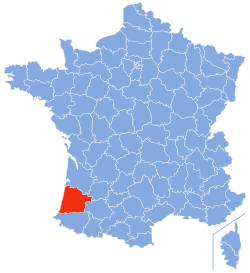
250px-Landes-Position.svg.png

Landes
https://en.wikipedia.org/wiki/Landes_(department)


Translation Google

Bird flu: 8400 poultry slaughtered in the Landes

Published 7:19 p.m.
Updated: 8:00 p.m.

Bird flu has arrived to the Landes. While a first outbreak was detected on November 25 in a farm in Dordogne, we learned Monday that a highly pathogenic avian influenza virus was discovered in a breeding of guinea fowl and another of ducks located in the south of Landes, in the area of Hagetmau, in Horsarrieu and Doazit. Another case of the virus was detected in Josse.

Two security perimeters

The prefect of the Landes, Nathalie Marthien, immediately took the precautionary measures to prevent the risk of disease spread. 8400 birds have been culled. Two containment areas, disinfection and protection have been enacted around the three affected farms. One within 3 km. The other 10 km. Live poultry, hatching eggs and raw products are for the time not allowed to leave the territory.

http://www.larepubliquedespyrenees....olailles-abattues-dans-les-landes,1293915.php
 
Back
Top Bottom