

Michael Coston
Editor, Senior Moderator
India: Media Reports Of A Large Surge In Pediatric Adenovirus Infections
#17,329
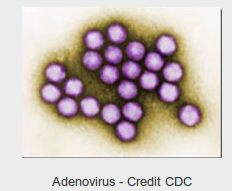
With the strong caveat that the Indian press often leans towards the sensational when it comes to coverage of influenza, and other infectious diseases - and many past stories have turned out to be overblown (see here, here, and here) - there are persistent reports of a large surge in Adenovirus infections affecting several areas of India, but most severely in West Bengal.
Overnight, CNBC carried the headline (based on reporting from IANS):
Other headlines from the Indian press suggest even higher numbers of pediatric fatalities, although local health departments have released far lower numbers.
Adenovirus: West Bengal reports over 40 deaths among children
Bengal to conduct door-to-door survey amid surge in Adenovirus infections
On Thursday West Bengal Chief Minister Mamata Banerjee downplayed these reports, and stated there was `no evidence of a viral epidemic at present' and stressed their ability to deal with the situation. Meanwhile, the media reports continue.
There are dozens of serotypes of adenovirus, but the CDC classifies the ones of greatest importance as:
(Excerpt)
(Continue . . . )
Adenoviruses are typically grouped with `lesser' seasonal respiratory viruses - like rhinoviruses, respiratory enteroviruses, parainfluenza (1-4), and metapneumonia viruses - and are not `reportable' to the CDC.
As a result we don't have a good handle on how often outbreaks occur. We do, occasionally, learn of outbreaks, including:
One such report was published just last month.
This is a scenario that was also addressed in 2021 in an article in PloS Pathogens (see What is the risk of a deadly adenovirus pandemic? by Eric J. Kremer).
While adenoviruses are admittedly pretty far down our list of pandemic concerns, the coronavirus pandemic proves that `lesser' viruses can sometimes surprise us.
As far as the outbreak in India is concerned, we'll have to wait for more details, particularly on the reported discovery of a recombinant 7/3 adenovirus.
Stay tuned.
https://afludiary.blogspot.com/2023/03/india-media-reports-of-large-surge-in.html
#17,329
With the strong caveat that the Indian press often leans towards the sensational when it comes to coverage of influenza, and other infectious diseases - and many past stories have turned out to be overblown (see here, here, and here) - there are persistent reports of a large surge in Adenovirus infections affecting several areas of India, but most severely in West Bengal.
Overnight, CNBC carried the headline (based on reporting from IANS):
Other headlines from the Indian press suggest even higher numbers of pediatric fatalities, although local health departments have released far lower numbers.
Adenovirus: West Bengal reports over 40 deaths among children
Bengal to conduct door-to-door survey amid surge in Adenovirus infections
On Thursday West Bengal Chief Minister Mamata Banerjee downplayed these reports, and stated there was `no evidence of a viral epidemic at present' and stressed their ability to deal with the situation. Meanwhile, the media reports continue.
There are dozens of serotypes of adenovirus, but the CDC classifies the ones of greatest importance as:
- Adenovirus types 3, 4 and 7 are most commonly associated with acute respiratory illness.
- Adenovirus type 7 has been associated with more severe outcomes than other adenovirus types, particularly in people with weakened immune systems. In the last 10 years, instances of severe illness and death from adenovirus type 7 infection have been reported in the United States.
- Adenovirus type 14, which since 2007 has been associated with outbreaks of acute respiratory illness among U.S. military recruits and the general public
- Adenovirus types 8, 19, 37, 53, and 54, which can cause epidemic keratoconjunctivitis
- Enteric adenovirus types 40 and 41, which cause gastroenteritis, usually in children
- Some adenoviruses (e.g., 4 and 7) that spread in bodies of water such as small lakes or swimming pools without adequate chlorine and can cause outbreaks of febrile disease with conjunctivitis
(Excerpt)
Dr Prabhas Prasun Giri, associate professor and PICU (paediatric ICU) in-charge at Institute of Child Health in Kolkata, said genomic sequencing has revealed that the adenovirus serotype 3, 7 as well as a new 7/3 recombinant strain were found in most cases in Bengal.
(Continue . . . )
Adenoviruses are typically grouped with `lesser' seasonal respiratory viruses - like rhinoviruses, respiratory enteroviruses, parainfluenza (1-4), and metapneumonia viruses - and are not `reportable' to the CDC.
As a result we don't have a good handle on how often outbreaks occur. We do, occasionally, learn of outbreaks, including:
- Last September, in Vietnam MOH Warns On Adenovirus
- In 2018 we saw several high profile adenovirus outbreaks (see DOH: 2nd NJ Facility Reporting Adenovirus Outbreak & 10th Fatality At Wanaque Center
- and Heath Dept. Reports A Cluster Of Severe Adenovirus Cases In Upper Michigan).
- In 2016, we looked at a report in the EID Journal: Human Adenovirus Associated with Severe Respiratory Infection, Oregon, USA, 2013–2014, that described a relatively large outbreak in the Pacific Northwest.
- in 2012, China: Hebei Outbreak Identified As Adenovirus 55 an outbreak that was first thought to be SARS
- a multi-state outbreak of virulent serotype Ad14 17 years ago (see 2007 MMWR Acute Respiratory Disease Associated with Adenovirus Serotype 14 --- Four States, 2006—2007)
One such report was published just last month.
An Old Acquaintance: Could Adenoviruses Be Our Next Pandemic Threat?
by
Gustavo Saint-Pierre Contreras 1,2,*, Daniel Conei Valencia 3, Luis Lizama 1, Daniela Vargas Zuñiga 1, Luis Fidel Avendaño Carvajal 1 andSandra Ampuero Llanos 1,*
by
Gustavo Saint-Pierre Contreras 1,2,*, Daniel Conei Valencia 3, Luis Lizama 1, Daniela Vargas Zuñiga 1, Luis Fidel Avendaño Carvajal 1 andSandra Ampuero Llanos 1,*
This is a scenario that was also addressed in 2021 in an article in PloS Pathogens (see What is the risk of a deadly adenovirus pandemic? by Eric J. Kremer).
While adenoviruses are admittedly pretty far down our list of pandemic concerns, the coronavirus pandemic proves that `lesser' viruses can sometimes surprise us.
As far as the outbreak in India is concerned, we'll have to wait for more details, particularly on the reported discovery of a recombinant 7/3 adenovirus.
Stay tuned.
https://afludiary.blogspot.com/2023/03/india-media-reports-of-large-surge-in.html