• FluTrackers.com Inc. does not provide medical advice. Information on this web site is collected from various internet resources, and the FluTrackers board of directors makes no warranty to the safety, efficacy, correctness or completeness of the information posted on this site by any author or poster. The information collated here is for instructional and/or discussion purposes only and is NOT intended to diagnose or treat any disease, illness, or other medical condition. Every individual reader or poster should seek advice from their personal physician/healthcare practitioner before considering or using any interventions that are discussed on this website. By continuing to access this website you agree to consult your personal physican before using any interventions posted on this website, and you agree to hold harmless FluTrackers.com Inc., the board of directors, the members, and all authors and posters for any effects from use of any medication, supplement, vitamin or other substance, device, intervention, etc. mentioned in posts on this website, or other internet venues referenced in posts on this website.
  • We are not asking for any donations. Do not donate to any entity who says they are raising funds for us.

Kenya - Ebola: October 3, 2026+

1791302784578.webp​

Kenya confirms first imported Bundibugyo virus disease case; WHO supports control efforts​

6 October 2026|News Release|Reading time: 4 min
A health worker wearing personal protective equipment, including goggles, a face mask, a protective suit and gloves

Kenya confirms first imported Bundibugyo virus disease case; WHO supports control efforts

Nairobi—Following the confirmation by Kenyan authorities of the country's first imported case of Bundibugyo virus disease (BVD), the World Health Organization (WHO) is working closely with the Government of Kenya to intensify key control measures to prevent further spread of the virus.

The government is strengthening its response coordination and case investigation, while monitoring and listing contacts for enhanced disease surveillance. At the core of the response efforts are screening at high-risk points of entry, and clear risk communication, while engaging communities to help prevent infection. These measures are rapidly being deployed to ensure the identification of cases and help contain further transmission.

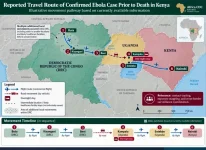
The patient, a Kenyan citizen, fell ill in the Democratic Republic of the Congo, where they had been living, and was treated at several health facilities there. The patient then travelled by road to Kampala, Uganda through Beni on 2 October 2026, and flew to Nairobi, arriving on 3 October 2026. On arrival, the patient was transported to a hospital in Nairobi and was quickly isolated. Samples tested positive for Bundibugyo virus at both the National Virology Reference Laboratory and the Kenya Medical Research Institute. Despite supportive care, the patient died on the night of 5 October 2026 and was buried on 6 October 2026 in line with the country’s Ebola safe and dignified burial protocol.

The Government of Kenya notified WHO of the case in line with the International Health Regulations (2005) on 6 October 2026. Kenya is the fourth country to confirm BVD. The Democratic Republic of the Congo is responding to an ongoing BVD outbreak, while Uganda, where the Bundibugyo virus species was first detected in 2007, ended the latest outbreak in August 2026. Most cases in Uganda were imported from the Democratic Republic of the Congo and the remaining few were locally acquired among contacts and health workers linked to imported cases. France reported a travel-related case of BVD in June 2026.
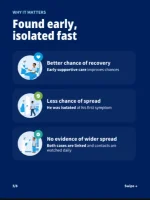
Health authorities in Kenya have so far listed 28 contacts, including family members and health workers who cared for the patient. They are also tracing 23 passengers and four crew members from the same flight, with arrangements underway for appropriate follow-up and quarantine of people assessed to be at risk.

"Health emergency preparedness gives us a head start. Kenya has put important outbreak control measures in place. The priority now is to move swiftly to detect any further cases before the virus has an opportunity to spread. We're supporting the ongoing efforts to strengthen the response, and with rapid and coordinated action, we can prevent the virus from gaining a foothold and stop a potential larger outbreak," said Dr Mohamed Janabi, WHO Regional Director for Africa.

Kenya has been on high alert since May 2026, when outbreaks were declared in the Democratic Republic of the Congo and Uganda. As of 6 October 2026, Kenya has screened over 652 000 travellers entering the country, tested 267 suspected samples and trained around 5000 health workers on Ebola prevention and management.

WHO and partners have supported Kenya’s Ministry of Health and National Public Health Institute in these efforts. This includes Ebola simulation exercises and training a national pool of rapid response trainers, among them responders who served during the 2014–2016 West Africa outbreak. Isolation units across 27 high-risk counties in Kenya have been identified and assessed, case managers trained, and Ebola surveillance tools have been updated so that suspected cases can be quickly identified, reported and investigated. Risk communication and community engagement activities have also been strengthened through public messaging, media and community engagement, call centre support, and monitoring and responding to rumours and misinformation.

WHO has also delivered about 1000 Ebola tests and 1000 personal protective equipment kits to high-risk counties in Kenya.

Kenya's Ebola preparedness score, which tracks progress on key readiness measures such as surveillance, laboratory testing, isolation and treatment facilities and trained response teams, rose from 66% in May to 82% in July 2026.

WHO advises against any restriction of travel to, or trade with, the Democratic Republic of the Congo, Uganda or Kenya based on the currently available information. WHO continues to closely monitor and, where necessary, verify travel and trade measures in relation to this event.

WHO calls for continued support to the response in affected countries. Global solidarity, along with government-led responses with engaged communities, is the best route to ending the outbreak.
...

 
Translation Google
1791303927387.webp
News / Press Releases

Africa CDC expresses its solidarity with Kenya and calls for strengthened regional preparedness against Ebola.​


Africa-CDC-SEAL-1024x586-1.jpg

Addis Ababa, Ethiopia, October 6, 2026

The Africa Centres for Disease Control and Prevention (Africa CDC) reaffirmed their support for Kenya following the confirmation of the first imported case of Bundibugyo strain Ebola virus disease in the country and the death of the patient.

His Excellency Dr. Jean Kaseya , Executive Director of Africa CDC, met today with Kenyan authorities and offered his condolences to the family and loved ones of the deceased, as well as to the Government and people of Kenya. A high-level, multidisciplinary team from Africa CDC is traveling to Kenya today to provide appropriate support.

“I thank the Kenyan authorities for the measures quickly put in place and I reiterate the full support of Africa CDC. I will personally travel to Kenya in the coming days to assess, with the national authorities, the needs of the response and any additional support required,” said Dr. Kaseya.

Africa CDC commends the speed with which the patient was identified, isolated, and tested. He had left the Democratic Republic of Congo by road to travel to Uganda, where he spent one night, before taking a flight to Kenya.

Kenyan authorities have identified 28 contacts, including family members and healthcare workers, and are also searching for 23 passengers and crew members who traveled with the patient. Africa CDC notes that Kenya has maintained a high level of vigilance since the start of the outbreak. Kenya has urged the public to remain calm and refer to official sources of information, while also calling on healthcare professionals to strengthen infection prevention and control measures.

HE Dr Jean Kaseya also spoke with Ugandan authorities and commended the immediate steps taken to identify and isolate all contacts related to this case.

Regional preparation is essential

The confirmation of this case in Kenya underlines the importance of maintaining a high level of preparedness across the region, including through enhanced surveillance, cross-border information sharing, laboratory preparedness, rapid response capabilities, and infection prevention and control.

Africa CDC is working with Member States and partners to support coordinated preparedness and response, while strengthening its support to countries affected by the outbreak or at risk. This case also highlights the ongoing regional risk of this epidemic.

Community transmission continues to determine the response in the DRC

Africa CDC acknowledges the significant efforts of the DRC government to contain the outbreak, including its cooperation and transparency throughout the response. Africa CDC notes that significant progress has been made, but community transmission and the effectiveness of contact tracing remain major challenges, with over 70% of new cases still being detected in the community among individuals who had not been previously identified, registered, and monitored as contacts. This indicates that some chains of transmission continue to elude the response system.

Africa CDC encourages the DRC Government to accelerate the implementation of the village and community-based approach , including through active case finding, systematic contact tracing, daily follow-up and strengthened community engagement.

“To interrupt this epidemic, we must know where every contact is, track them, and quickly identify anyone developing symptoms before they transmit the virus to their family, community, or across borders. Our response must be African-led, united, transparent, and community-centered. We will only control this epidemic when the last chain of transmission has been broken,” said Dr. Kaseya.

The resources mobilized must translate into results.

Africa CDC, with the commitment of the United States Government and other partners, has helped mobilize approximately US$2.9 billion to support the response.

Africa CDC supports the call by the DRC authorities for greater transparency regarding announced, disbursed, received and used resources.

“Every dollar mobilized for this epidemic must be traceable back to the results it produces on the ground. Transparency is essential to preserving the trust of communities, governments and partners,” said Dr. Kaseya.

The case reported in Kenya underscores the need for sustained vigilance throughout the region. Africa CDC calls on Member States to strengthen surveillance and cross-border information sharing, ensure laboratory preparedness, bolster rapid response teams, and maintain rigorous infection prevention and control measures.

Africa CDC will continue its work alongside the DRC, Kenya, other Member States and partners to interrupt the chains of transmission and end the epidemic.

###

 
1791379476720.webp

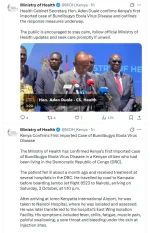
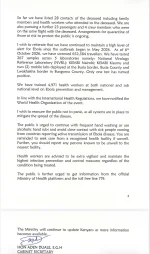
The Cabinet Secretary for Health, Hon. Aden Duale, has reassured Kenyans that the country is not experiencing an Ebola outbreak. He gave the assurance during a tour of Nairobi Hospital’s 133-bed Ebola Isolation Unit, following confirmation of one imported case from the Democratic Republic of Congo. The patient died on 6 October 2026.

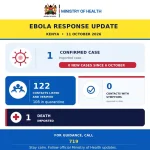
Health authorities have identified 57 contacts linked to the case. Ten have been accounted for and placed under quarantine at the National Police Service Hospital in Nairobi. Efforts to trace and follow up with the remaining contacts are ongoing.

The Cabinet Secretary reviewed the country’s capacity to isolate and manage suspected and confirmed cases at five designated facilities: Kenyatta National Hospital, with eight beds, including five intensive care beds; Moi Teaching and Referral Hospital, with 50 beds; National Police Service Hospital, with 49 beds; Port Reitz Hospital, with four beds; and Nairobi Hospital, with 133 beds, including 45 high dependency and intensive care beds. Capacity can be expanded if required.

At Nairobi Hospital, the isolation unit is separated from the main hospital campus, with designated zones and measures to prevent interaction between patients in the unit and other hospital patients.

Preparedness is also being strengthened at points of entry. Temporary isolation centres have been identified at Malaba and Kocholia, while Alupe is undergoing renovation. Traveller screening has been intensified at Gate 16, especially for passengers arriving from the Democratic Republic of Congo, Uganda, Tanzania, Ethiopia, Angola, Zambia, Rwanda, Burundi, the Central African Republic and South Sudan. Travellers are urged to complete health declaration forms truthfully and provide accurate information to support surveillance and contact tracing.

The Ministry urges the public to remain vigilant without panic. Anyone experiencing symptoms or concerned about possible exposure should seek care promptly at a recognised health facility. For guidance, call the toll-free health information line 719 and follow official Ministry of Health platforms for updates.

The Cabinet Secretary was accompanied by Principal Secretary for Public Health and Professional Standards Ms Mary Muthoni, Director-General for Health Dr Patrick Amoth, Nairobi Hospital Chief Executive Officer Dr Felix Osano and senior Ministry officials.
1791379512876.webp
4:43 AM · Oct 7, 2026
 

1791499083893.webp


Ebola disease caused by Bundibugyo virus - Democratic Republic of the Congo​

8 October 2026

Situation at a glance​

On 5 October 2026, WHO was informed about a laboratory-confirmed imported case of Bundibugyo virus disease (BVD) in Kenya with travel history from the Democratic Republic of the Congo. The patient travelled from the Democratic Republic of the Congo to Kenya through Uganda. The patient was hospitalized and treated in Kenya but subsequently died on 5 October. Public health response measures have been initiated in Kenya and Uganda, including contact tracing...
...
Kenya

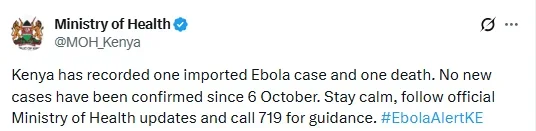
On 6 October 2026, the Ministry of Health of Kenya reported the first laboratory-confirmed imported case of BVD in Kenya.

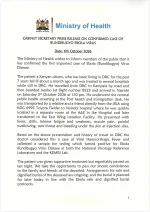
According to an official statement from the Ministry of Health, the individual is an adult who lived in the Democratic Republic of the Congo. The patient became ill approximately one month ago and was treated in several hospitals while in the Democratic Republic of the Congo. The patient travelled from the Democratic Republic of the Congo to Kampala, Uganda, by road before arriving in Nairobi, Kenya by air on 3 October. It is currently unclear if and when he was symptomatic during these travels, but upon arriving ill in Kenya, the patient was transported by a relative directly to Nairobi Hospital and isolated in the facility. A sample collected from the patient on 5 October was positive for BDBV at both the National Virology Reference Laboratory and the Kenya Medical Research Institute Laboratory on the same day. The patient was given supportive treatment but subsequently died.

A safe and dignified burial has been conducted. Public health response actions were immediately initiated. Contact tracing is ongoing, including for the international flight.

Given the timelines of the illness, and the one month time from initial symptoms to death, it is presumed he was not initially sick with BVD, which does not usually have such a long progression from infection to symptoms and death, but became infected with BVD in a health facility or community while seeking care for another ailment.
...

 
Suspected Ebola Case in Wajir Tests Negative, Governor Confirms

by Timothy Cerullo on Friday, 9 October 2026 - 8:05 am

Wajir County has announced that laboratory tests for a suspected Ebola case involving a 20-year-old man who travelled from the Democratic Republic of Congo (DRC) through Uganda to Kenya returned negative results.

In a statement on Thursday, October 8, Wajir Governor Ahmed Abdullahi said the patient was reported at Habaswein Sub-County Hospital in Wajir South Sub-County, prompting health officials to conduct tests due to his travel history.

“I am pleased to report that the preliminary laboratory results indicate that the sample is negative for Ebola virus disease,” the governor stated.

The county government said the patient would continue to receive medical care as health officials monitor his condition in line with established public health protocols.

The announcement has since eased fears that the patient could be Kenya’s second Ebola case following the death of a 40-year-old Kenyan who tested positive for the Ebola Bundibugyo virus.
...
 
Questions remain over Ebola patient who travelled across three nations undetected

15 hours ago
Wycliffe Muia
...
The man had spent much of late August and early September in the province of Bas-Uélé, visiting towns including Buta, Aketi and Likati.
...
His symptoms first emerged around 15 September. He was given antibiotics and sent home.

Two days later, he was admitted to the Tongo Etandi Health Centre in Bondo, where he remained until 19 September.

Despite suffering from fever and a rash, he was diagnosed with a skin infection.
...
On 20 September, he flew to Kisangani, a city with a population of about 1.5 million people on the Congo River, where he spent more than 10 days seeking medical care.
...
However, on 1 October, more than two weeks after first becoming ill, the businessman boarded another domestic flight to Beni, before continuing his journey to Kasindi, a busy border town.
...
But he did not stay there long, crossing into Uganda later that day.
...
Once he had, he travelled by road to the capital, Kampala, and then Entebbe International Airport, where he boarded a flight to Nairobi on 3 October.

Ugandan officials said his temperature was normal when he passed through airport screening. Health experts say his case highlights the limitations of relying on temperature checks and self-declarations.
...
Similarly, he was not flagged as a suspected Ebola patient when he reached Nairobi's Jomo Kenyatta International Airport, where a relative collected him and drove him directly to Nairobi Hospital, a private medical facility in the Kenyan capital.

By then, he was suffering from fever, chills, muscle pain, a sore throat and bleeding.

Laboratory tests confirmed that he had contracted the Bundibugyo species of Ebola - the same one responsible for the outbreak in DR Congo.

He was placed in isolation while his condition deteriorated. He died on 5 October and was buried the following day under strict infection-control measures.
...
-------------------------------------------------------------------------------

1791644325012.webp
Source: Africa CDC – “Reported Travel Route of Confirmed Ebola Case Prior to Death in Kenya” (Special Briefing, 8 October 2026)

 
News

10 October 2026 - 17:16

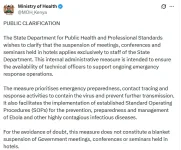
Health Ministry clarifies hotel meeting suspension after Ebola case

Ministry says directive applies only to staff of State Department for Public Health and Professional Standards.


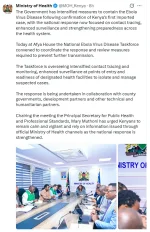
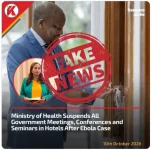
‎The Ministry of Health has clarified that the suspension of meetings, seminars and conferences held in hotels applies only to staff of the State Department for Public Health and Professional Standards, dismissing reports suggesting a government-wide ban.

In a public clarification, the State Department said the measure was an internal administrative decision to ensure technical officers remained available to support ongoing emergency response operations following the confirmation of an imported case of Bundibugyo virus disease, a strain of Ebola, in Kenya.
...
----------------------------------------------------------------------
1791645343841.webp
1791645411442.webp
6:42 AM · Oct 10, 2026
 
1792082132639.webp

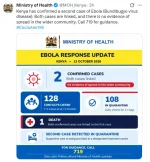
WHO urges vigilance after Kenya confirms second Ebola case
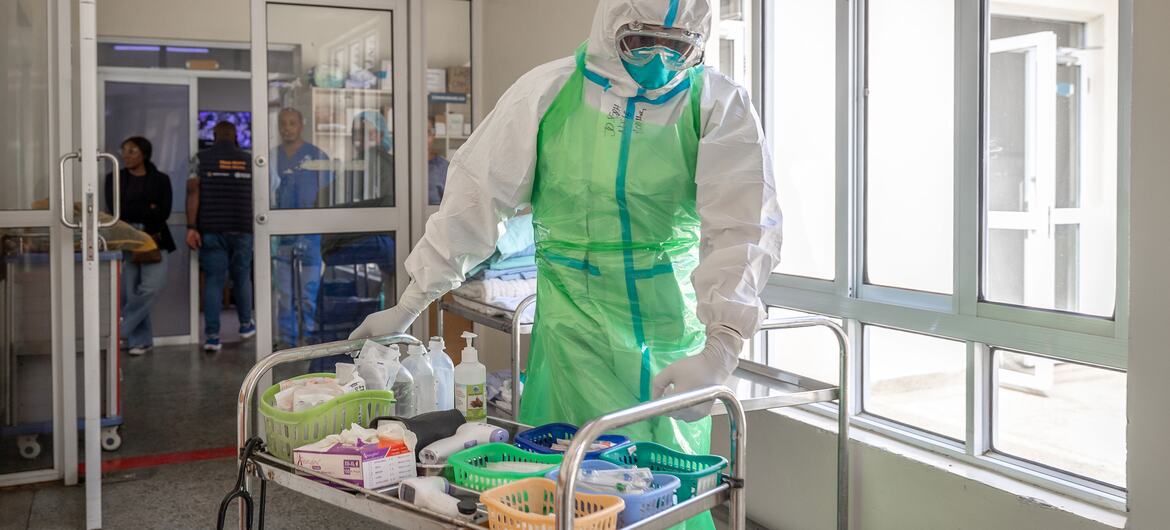
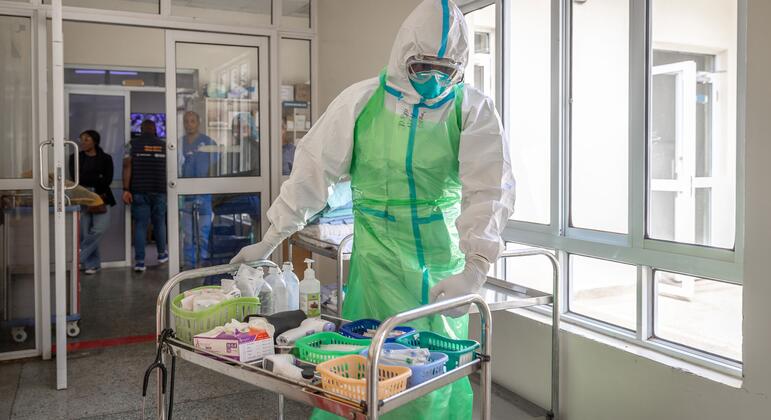
A healthcare worker in white and green personal protective equipment, face shield, mask, and gloves pushes a metal cart stocked with medical supplies and disinfectant bottles through a hospital corridor; people stand near a glass door in the background.


© WHO/Ardo Farah A healthcare worker in Kenay prepares Ebola response materials as part of a training exercise.

15 October 2026 Health

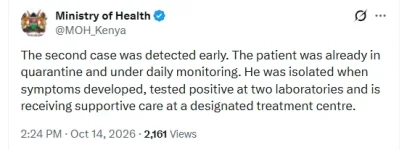
The World Health Organization (WHO) continues to support Kenya’s efforts to contain Ebola after a second person tested positive for the Bundibugyo virus, the UN agency’s representative in the country said on Thursday.

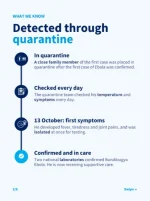
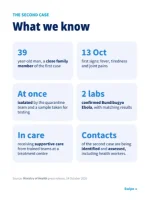
The patient, a 39-year-old man, is a relative of Kenya’s first case – related to the ongoing deadly outbreak in the Democratic Republic of the Congo (DRC) – who died in hospital on 5 October.

He was among contacts who were placed in quarantine and developed symptoms on 13 October.

‘We all have a role to play’​

“I congratulate the Government for taking this important step to ensure that contacts are listed and quarantined,” WHO Representative Dr. Neema Rusibamayila Kimambo told UN News in Nairobi, a day after the Ministry of Health confirmed the new case.

“But to defeat this disease, it's not about the Government, it is not about partners It is about everybody,” she insisted. “We all have a role to play and if each one of us plays our part, then we should be able to contain the disease and stop community spread.”

Casting a wide net​

Kenya’s first Ebola patient and fatality was a local man who had been living in the DRC, where the record outbreak continues to spread in the east.

He arrived in Nairobi via Uganda on 3 October and died in hospital two days later.

Dr. Kimambo commended health authorities who “cast the net very wide” to identify people who had come into contact with him – whether in the air or on the ground.

The more than 40 people included airline passengers and crew, airplane cleaners, airport workers, baggage handlers and immigration officials, as well as health personnel and family members.

Most are in quarantine, while a few low-risk contacts have self-quarantined and are being monitored. Meanwhile, every effort is being made to reach six passengers who have been difficult to locate because they have foreign phone numbers.

Stepping up preparedness​

Even before the first case , WHO and the Kenyan Government were stepping up Ebola preparedness after the outbreak was declared in the DRC in May. Neighbouring Uganda also confronted the disease, with any outbreak officially ruled out in late August.

Teams are working across all areas, including surveillance and contact tracing. WHO has also brought in a senior incident manager who participated in the Ebola response in Uganda, as well as other experts.

“We are building on the work that we started during the preparedness phase, so case management and IPC (infection prevention and control) are critical at this time in the quarantine centres,” Dr. Kimambo said.

WHO also continues to provide assistance to Kenya in various other ways. The UN agency has donated some $70,000 worth of supplies, including IPC and laboratory items, since the first Ebola case was identified.

Additionally, more than 4,000 health workers have been trained, including for screenings at ports of entry.

Keep borders open​

While Dr. Kimambo said there still is no need to impose travel restrictions or close national borders, she underlined the importance of appropriate screening to identify travellers who may pose a health risk.

Preventing Ebola begins with understanding how the disease is transmitted, she said, which is through contact with the bodily fluids of an infected person.

She reiterated the advice to practice regular handwashing, use hand sanitizer and avoid shaking hands.

As Ebola symptoms include fever, vomiting and diarrhoea – which mimic symptoms of malaria and other diseases – she stressed the need to seek medical care quickly. In the interim, Kenyans are urged to keep calm and stay safe.

“I think one is not to over panic and be very fearful because we do not have community spread,” she said. “But two, let us be responsible.
Whoever is sick, let’s make sure we go to a health facility and get care. And also, let us ensure that we take IPC measures.”

 
Back
Top Bottom