
• FluTrackers.com Inc. does not provide medical advice. Information on this web site is collected from various internet resources, and the FluTrackers board of directors makes no warranty to the safety, efficacy, correctness or completeness of the information posted on this site by any author or poster. The information collated here is for instructional and/or discussion purposes only and is NOT intended to diagnose or treat any disease, illness, or other medical condition. Every individual reader or poster should seek advice from their personal physician/healthcare practitioner before considering or using any interventions that are discussed on this website. By continuing to access this website you agree to consult your personal physican before using any interventions posted on this website, and you agree to hold harmless FluTrackers.com Inc., the board of directors, the members, and all authors and posters for any effects from use of any medication, supplement, vitamin or other substance, device, intervention, etc. mentioned in posts on this website, or other internet venues referenced in posts on this website.
  • We are not asking for any donations. Do not donate to any entity who says they are raising funds for us.

Mixed Messaging On HPAI Food Safety - FDA on Virus Particles Detected In Finished Milk - Canada Not testing Milk

Michael Coston

Editor, Senior Moderator
Mixed Messaging On HPAI Food Safety
grilling-chicken.jpg


#18,021

Although the USDA and FDA continue to reassure the American public that the food chain (including milk) is safefrom HPAI H5N1, there remain unanswered questions about how widespread the virus is in cattle, and how effective regular pasteurization is in killing the virus.

While the extent of the spread in cattle remains unknown, 3 days ago the New York Times carried an article (see Scientists Fault Federal Response to Bird Flu Outbreaks on Dairy Farms) where they cite (so far, unverified) reports of positive tests from asymptomatic cattle in North Carolina.


Testing by the USDA of cattle has remained both limited and voluntary, and has so far only been recommended for symptomatic dairy cows (see APHIS/USDA Updated FAQ On Detection of HPAI (H5N1) in Dairy Herds).

This `don't test, don't tell' policy apparently extends to pigs as well, despite ongoing concerns that HPAI could find a home in swine herds (see EID Journal: Divergent Pathogenesis and Transmission of Highly Pathogenic Avian Influenza A(H5N1) in Swine).


An excellent overview by Jon Cohen in Science yesterday (see U.S. government in hot seat for response to growing cow flu outbreak) describes the parsimonious release of information by the U.S. government, along with the limited evidence on the effectiveness of standard pasteurization in deactivating the virus. Under what I assume to be an abundance of caution, the CDC recently revised their food safety advice (see below) regarding HPAI, which now includes guidance on safely cooking beef (which, according to the USDA, are unlikely to be infected).

  • Whole cuts of beef, veal, lamb, and pork, including fresh ham: 145°F
  • Ground meats, such as beef and pork: 160°F
  • All poultry, including ground chicken and turkey: 165°F


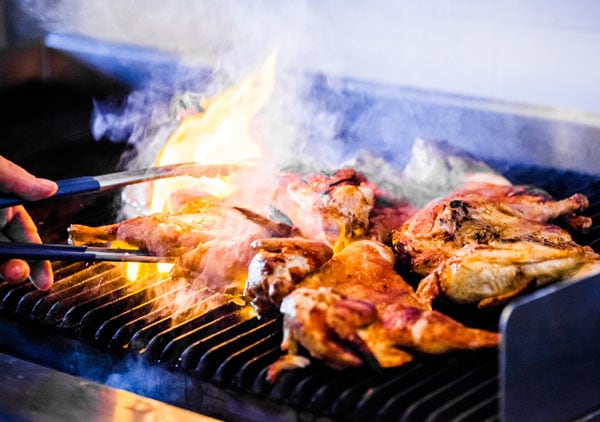
It is also worth mentioning that despite the mantra that `properly prepared foods are safe to consume', there may be some small risks entailed in the preparation of raw meat. PAHO (the Pan-American Health Organization) mentions this on their Avian Influenza landing page:

Transmission

The most common way for the virus to enter a territory is through migratory wild birds. The main risk factor for transmission from birds to humans is direct or indirect contact with infected animals or with environments and surfaces contaminated by feces. Plucking, handling infected poultry carcasses, and preparing poultry for consumption, especially in domestic settings, may also be risk factors.


In Asia, more than a few human HPAI H5 infections have been linkd to preparing and cooking poultry. Although it gets mentioned, far more attention needs to be paid to safe food handling practices in this time of HPAI.

While I fully understand the USDA's desire to reassure the public about the safety of the food supply - doing so while slow rolling the release of information is a risky strategy.​


Particularly when dealing with a virus with a history of repeatedly doing the unexpected.


https://afludiary.blogspot.com/2024/04/mixed-messaging-on-hpai-food-safety.html
 
Last edited:
FDA Statement On Investigation Of H5N1 Virus Particles Detected In Finished Milk


AVvXsEiV9zDAP0_DiNsc4rq3ZTKIOGTob8ymVKjzTIkNM503Y1bDT-P2SHHxhICglYzqraLD5pZ1XVYUP2tKdA761Z7grfbKw9GlqYErLk1hdzjIdtPzbQbeldrTsUnasX2BrCv-1IAF1_7MATz2tOuF84Zku00SUD2qxMxUiQ3A8YobivbEVbw8Wya7NQ=w320-h205


#18,022

As we've discussed many times (see here, here, and here), highly specific and sensitive PCR testing is great for detecting the presence of pathogens like influenza A, but it can also detect non-viable virus particles as well.

So, despite the furor overnight in the media about the discovery of `HPAI virus' in pasteurized milk, we don't know whether it presents a public health hazard or not.​

It does, however, deflate repeated claims by the USDA/FDA that:

Dairies are required to send only milk from healthy animals into processing for human consumption; milk from impacted animals is being diverted or destroyed so that it does not enter the human food supply.

Further testing, where attempts will be made to grow (culture) the virus, will tell us a lot more. But that process could take days or (if the virus is toxic to the growth medium) weeks.

While my guess is that pasteurization greatly reduces any risks of infection, it is a mystery why - a full month after the virus was confirmed in dairy cows - they don't have those answers yet.​

The FDA's low-key admission (see below) was buried well down the page in last night's Updates on Highly Pathogenic Avian Influenza (HPAI).

(Excerpt)

As noted by USDA and some press reports from the World Health Organization (WHO) and other sources, the presence of the virus has been detected in raw milk. Based on available information, pasteurization is likely to inactivate the virus, however the process is not expected to remove the presence of viral particles. Therefore, some of the samples collected have indicated the presence of HPAI using quantitative polymerase chain reaction (qPCR) testing.

During the course of the outbreak, the FDA has been evaluating milk from affected animals, in the processing system, and on the shelves. We are completing a large representative national sample, to better understand the extent of these findings. Because qPCR findings do not represent actual virus that may be a risk to consumers, the FDA is further assessing any positive findings through egg inoculation tests, a gold-standard for determining viable virus. To date, we have seen nothing that would change our assessment that the commercial milk supply is safe. Results from multiple studies will be made available in the next few days to weeks.


(Continue . . . )


Remarkably, this statement came only after repeated calls by researchers (see here, here, and here) for better surveillance and more disclosure. Under growing pressure, the USDA released 239 Sequences From HPAI H5N1 Viruses late Sunday night, but dates of collection and locations were notably absent.

As reported by Lisa Schnirring on CIDRAP earlier this week (see Scientists find clues in early analysis of newly shared US H5N1 avian flu sequences), there is now evidence that HPAI H5 may have been circulating in cattle for weeks (or even months) longer than previously suspected.​

A bias against testing cattle for influenza A (despite evidence of their susceptibility) allowed the virus to circulate undetected until a month ago. Since then, further reluctance to test non-dairy cattle, or asymptomatic cows, has left us with no clear idea of how widespread this HPAI outbreak really is.

This `don't test, don't tell' policy also extends to pigs, and other potentially susceptible livestock.​

We have a bad habit of assuming the `best case scenario' when it comes to emerging viruses.

In 2020 it took weeks and even months for governments to accept that COVID couldn't be contained by travel restrictions, that it was spread via the `airborne' route, and early reports of asymptomatic spread and reinfections were dismissed by the experts.

Those early overly-optimistic assumptions undoubtedly cost lives.​

While the jury is still out on whether HPAI H5 will spark the next global public health crisis, another pandemic is inevitable.

Although I understand it may be politically and economically inconvenient, we have to be willing to actively look for the next threat, otherwise we'll never see it coming.


https://afludiary.blogspot.com/2024/04/fda-statement-on-investigation-of-h5n1.html
 
Canada: Food Inspection Agency Not Currently Testing Milk For HPAI


#18,026

Late yesterday I mentioned that Sky News reported the UK was not planning on testing cows for HPAI, and that I had found no mention of doing so in Mexico. Although testing remains far less than it should be here in the U.S., elsewhere it appears almost nonexistent.

Overnight Canada's Food Inspection Agency weighed in (see Twitter/X msg above), stating that they aren't testing milk, but aren't worried because they haven't detected the virus in cattle and `pasteurization kills harmful bacteria and viruses'

It isn't clear from this post whether they are actively testing cattle for HPAI (one hopes so) - and while the sale of unpasteurized milk has been illegal in Canada for more than 30 years- there is ample evidence that some degree of raw milk consumption continues.​

A quick web search shows numerous groups supporting the legalization of selling raw milk in Canada, and various forums discussing how to get around the law. You'll also find occasional news reports of farms fined for selling raw milk.

A 2023 report in the PHAC CCDR (Public health risks of raw milk consumption:Lessons from a case of paediatric hemolytic uremic syndrome) cited:

Between 2005 and 2013, 263 confirmed cases of enteric and zoonotic illnesses in Canada were attributed to the consumption of raw milk products 3. This number is likely an underestimate, as the vast majority of enteric illnesses often do not present to health care or are tested to a confirmatory extent; literature has identified that there may be nearly 25 times the number of unreported cases of illness as compared to confirmed cases in at least one jurisdiction in the United States 4. According to a 2017 study, unpasteurized dairy products cause 840 times more illnesses and 45 times more hospitalizations than pasteurized products, making raw milk a dangerous food 4


Given this illicit trade - even if we assume pasteurization effectively inactivates the virus - it would seem worth knowing if the virus was in the milk supply, if for no other reason than to issue a stronger warnings about the dangers of raw milk consumption.


Right now, agencies like the USDA and FDA are dealing with the fallout from their initial passive response following the detection of H5N1 in cattle a month ago. It seems incredible that other countries are willing to follow in their footsteps.

A decade ago, my two favorite risk communications experts Peter Sandman and Jody Lanard wrote about the unprecedented Ebola outbreak in West Central Africa, and the world's Failures Of Imagination in grasping its potential impact.​


While their essay dealt with a specific time, place, and pathogen, it's lessons can be applied to our current - and probably any future - pandemic threat. We revisited that essay in early 2020, when the world was still in deep denial about the spread of COVID, and it is well worth reading again today.

It seems - no matter how much we may talk about theoretical risks - when a credible threat actually does emerge, the first `official' instinct is to deny or down play the risk.​

Now would be a very good time for risk communicators to spend a few hours reviewing the sage advice offered on the Sandman Risk Communications Website. There's a lot to absorb, so pack a lunch.


If you don't have time, at least go read the 2009 essay by Peter Sandman: Swine Flu For Grownups, and the 9 rules that every risk communicator should live by:
  1. Don’t feign confidence
  2. Don’t over-reassure
  3. Don’t worry about panic
  4. Don’t obsess over accusations of fear-mongering
  5. Don’t fight the adjustment reaction.
  6. Don’t oversell what the government is doing
  7. Don’t oversell what the public can do
  8. Don’t ask the impossible
  9. Don’t neglect the teachable moment

Four years ago, I asked what I intended to be a rhetorical question in this blog about our lack of preparedness for COVID:

The $64 question is whether we'll learn from this, and immediately begin to prepare for the next one. Or if we will we just go back to sleep, and hope the next one doesn't come on our watch.
Because next time, Nature's laboratory may throw something at us far worse than COVID-19.

Sadly, we seem to have an answer.​


https://afludiary.blogspot.com/2024/04/canada-food-inspection-agency-not.html
 
Back
Top Bottom