• FluTrackers.com Inc. does not provide medical advice. Information on this web site is collected from various internet resources, and the FluTrackers board of directors makes no warranty to the safety, efficacy, correctness or completeness of the information posted on this site by any author or poster. The information collated here is for instructional and/or discussion purposes only and is NOT intended to diagnose or treat any disease, illness, or other medical condition. Every individual reader or poster should seek advice from their personal physician/healthcare practitioner before considering or using any interventions that are discussed on this website. By continuing to access this website you agree to consult your personal physican before using any interventions posted on this website, and you agree to hold harmless FluTrackers.com Inc., the board of directors, the members, and all authors and posters for any effects from use of any medication, supplement, vitamin or other substance, device, intervention, etc. mentioned in posts on this website, or other internet venues referenced in posts on this website.
  • We are not asking for any donations. Do not donate to any entity who says they are raising funds for us.

Russia - The woman died of the plague in Shelekhov - about 200 contacts quarantined - October 2, 2026 - gov. reportedly denies

sharon sanders

Editor-in-Chief & President
The woman who died of the plague in Shelekhov worked as a lab technician and broke a test tube containing the infectious agent.
About 200 of her contacts have been quarantined.
October 2, 2026·
The girl's name was Daria Shipilova, and she was 28 years old, People of Baikal was able to confirm. She worked as a lab technician at the Irkutsk Anti-Plague Institute. On September 25, Shipilova broke a test tube containing the pneumonic plague pathogen. She soon fell ill, and an ambulance took her to the Shelekhov hospital. She stayed there for three days and died on the night of October 2.

Two years ago, Shipilova graduated with honors from her residency at the Irkutsk State Medical University in the specialty of Clinical Laboratory Diagnostics.


"It's likely the girl's number of contacts was as high as three digits," says Irkutsk journalist Pavel Stepanov. Residents of Shelekhov have already noticed people wearing protective suits, masks, and gloves on the streets. Residents also reported that masks were being distributed in kindergartens.

On the evening of October 1, a meeting was held in Irkutsk with the heads of law enforcement and administrative agencies. Since October 1, FSB patrols have begun escorting ambulances transporting people who had been in contact with Shipilova for testing, according to LB sources. In total, according to their estimates, about 90 contacts were quarantined in a COVID-19 center that day. By October 2, the figure had increased to about 200.

We spoke with a doctor familiar with treating severe infections. He explained how events typically unfold in particularly dangerous infections.

According to the doctor, plague is treated with strong doses of antibiotics, which can cause severe damage to the body but are not fatal. There are two forms of plague: bubonic and pneumonic. Bubonic plague is transmitted through a rodent bite and is not spread from person to person. The pneumonic form, however, is transmitted from person to person and is highly contagious.

If the case is sporadic, he believes, information won't be released quickly. Under such a quarantine, entry and exit are prohibited, and troops may be deployed. The doctor repeated this twice: they are specifically trained not to speak to the press in such situations.

"Why is the hospital silent? A healthcare facility always has a press secretary, and only they can comment. Calling the emergency room or the front desk is pointless. You won't get a comment from the chief physician's office either, unless there's a dedicated PR specialist. Doctors are prohibited from speaking to journalists: doctor-patient confidentiality and a ban on unauthorized statements," the specialist notes.

The doctor explained that quarantine of this level is imposed only for a few infections, including smallpox and plague, which are particularly dangerous. Large institutes with a strong scientific base, including the Novosibirsk Institute, handle diagnostics, and Moscow and St. Petersburg are also involved. First, doctors notify the relevant authorities, the department is closed, an investigation is conducted, and specialists arrive and conduct tests. After cultures and identification of the pathogen, information can be provided in approximately six days.

 
Please also see near the border of Russia -

China - Inner Mongolia CDC issues health tips for the prevention and control of Yersinia pestis (plague) - September 7, 2026 link
 
snip

The People of Baikal news outlet reported that she may have contracted pneumonic plague after a test tube broke, while other Russian reports described the suspected infection as bubonic plague. There was no immediate official confirmation of the specific form of the disease.

Russia's Health Ministry had not issued an immediate statement.

snip

Residents of Shelekhov, a suburb of Irkutsk where the woman died, were also ordered to wear masks. Footage cited in the reports showed a medical worker wearing full protective equipment in the town.


One resident said seeing a person in a full protective suit among ordinary people had caused concern about whether samples were already being collected in the city.

more.... https://www.turkiyetoday.com/world/...-suspected-plague-case-in-siberia-3229495?s=1
 
snip

The Irkutsk administration has decided to postpone the citywide cleanup day scheduled for October 3, 2026. As the mayor's office press service told an IRK.ru journalist, the event was postponed to another day due to the unfavorable epidemiological situation and the safety of residents . No other public events have been canceled yet.

more.... http://www.irk.ru/news/20261002/cancel/

--------------------------------------------------------------------

snip

Anna Popova, head of the federal agency Rospotrebnadzor and chief state sanitary doctor of Russia, arrived in Irkutsk and participated in an extraordinary meeting of the regional sanitary and anti-epidemic commission. The emergency meeting was prompted by information about a suspected case of a regional resident contracting a particularly dangerous infection , Governor Igor Kobzev announced on social media.

more.... http://www.irk.ru/news/20261002/head/
 
A mask requirement was introduced at Irkutsk Automobile Plant due to a suspected infection in the Angara region.
October 4, 11:02


The Irkutsk Aluminum Smelter has introduced a mask mandate as a preventative measure , Artem Fominykh, the plant's director, announced on social media. The initiative was prompted by reports of a resident of the region contracting a highly infectious disease.

The plant's manager urged employees to take precautions. If symptoms of illness appear, they are advised to seek medical attention immediately.

On October 1, 2026, a quarantine was imposed at the Shelekhov District Hospital . The reason for the quarantine was a suspected, highly infectious infection in one of the patients. On October 2, a meeting of the regional sanitary and anti-epidemic commission was held , attended by Rospotrebnadzor head Anna Popova and Governor Igor Kobzev. Rospotrebnadzor has implemented a full range of anti-epidemic measures.

The head of the Republic of Buryatia, Alexey Tsydenov, commented on the death of a woman from a highly infectious disease in the Irkutsk Region , citing plague as the cause. He asserted that the incident has no connection to the republic.

All identified individuals who had contact with the infected woman are under medical observation. They currently show no signs of infection, and laboratory tests are negative. The situation remains under constant monitoring by Rospotrebnadzor and the regional government. Please refer to official announcements.

more.... https://www.irk.ru/news/20261004/mask/
 

About that Russian `Lab Leak' Story​


transparent.gif
AVvXsEhRXMarCNAip_Tb7nI5qWUesdLwvQy8mt7BwpO7JqxtxqzUgYAM4G5b0s9Vi4Z2TFnTmKW0DBEyLK8wKlLIplEXtUEFfhs4mx7wLoTcr59fV1xhrj3pr4rzob5DnLNtXV4JxywvVLIar35x1UM4r4ukTd5C-TW45XC1rUIiIhzfGzGCjuuBQlWwjA=w400-h205

#19,358

Over the past 72 hours there has been a media frenzy over a reported plague death, supposedly in a Russian laboratory worker, and the subsequent quarantining of roughly 200 contacts.

While headlines have often been bombastic, official information has been sparse. My attempts to access Russia's Rospotrebnadzor - their National Health Agency's website - even using a VPN, have been unsuccessful.
Complicating matters, the Russian media has presented several conflicting stories. Given the `tabloid' nature of many Russian news outlets - and the lack of official information - it is difficult to separate the fact from the fiction.

The Moscow Times' - which is one of the more reliable sources for Russian news - reported on Friday:


Nearly 200 People Under Observation After Irkutsk Lab Worker Dies From Plague
Citing `other news reports' and a statement on the social media platform VKontakte by Alexei Tsydenov, head of the neighboring republic of Buryatia - they reported:


`Health authorities in Siberia’s Irkutsk region have placed nearly 200 people under medical observation after a laboratory worker died from plague.'
According to exiled news outlet Lyudi Baikala (People of Baikal) and pro-Kremlin broadcaster REN TV, the lab worker was a 27 or 28 year-old female, who reported that she had accidentally broken a test tube containing live bacteria.

They go on to say she was hospitalized on Tuesday with severe pneumonia, was placed on a ventilator, and died on Thursday.
While this reads like the opening to a Michael Crichton novel, we've seen lab leaks and handling `mishaps' before (see here, here, here, here, and here), so it is plausible. It would seem, however, that a number of important BSL biosecurity measures would have to be breached.

A Latvian-based media outlet (https://meduza.io/) reported several alternate scenarios involving recent field trips where exposure might have occurred.
Local governments have posted, then removed, warnings (see original and translation below) from social media sites.


Perhaps most credible are reports of a high-level meeting between local and federal officials (including Anna Popova, Chief State Sanitary Physician of the Russian Federation). This (translated)post from Irkutsk regional governor Igor Kobzev was posted on Oct 2nd.

An extraordinary meeting of the regional sanitary and anti-epidemic commission was held with the participation of Anna Yuryevna Popova, Chief State Sanitary Doctor of the Russian Federation. The reason for the meeting was information about a suspected case of a particularly dangerous infection in a resident of the region.

In this regard, Rospotrebnadzor has organized and is implementing a full range of anti-epidemic measures. At the SPEC meeting, an operational action plan was approved and instructed to strictly implement all its sections and provisions.

I would like to inform you that all identified contacts have been placed under medical observation. Currently, these contacts show no signs of illness, and laboratory test results are negative.

The situation is under strict monitoring by Rospotrebnadzor and the Irkutsk Regional Government. I ask everyone to rely solely on official information.

My channel on MAX | VK | OK | Zen

t.me/kobzevii/17919

58.9K edited Oct 2 at 01:08
The best round-up of news reports, and analysis, I've found is from the BEACON biothreats surveillance platform, housed by Boston University Center on Emerging Infectious Diseases.

RFI: Fatal laboratory-acquired infection in Irkutsk Region, Russia; possible pneumonic plague; 197 contacts hospitalized for observation

While I would hope we'll get more details soon, the willingness of many countries to share sensitive infectious disease information has eroded over the past few years (see No News Is . . . Now Commonplace).
Assuming this involves a `plain vanilla' Yersinia pestis - and treatment is begun promptly - it should respond to antibiotics. We've seen outbreaks of pneumonic plague before in Madagascar, Mongolia, and even the United States, and all were eventually brought under control.
Plague can present in three forms: bubonic, septicemic and pneumonic. If untreated, bubonic plague can evolve to a more transmissible pneumonic plague.

  • Bubonic Plague (Yersinia pestis) - carried by rats, squirrels, and other small rodents, and transmitted by fleas - sets up in the lymphatic system, resulting in the tell-tale buboes, or swollen lymph glands in the the groin, armpits, and neck.
  • Less commonly pneumonic plague may develop, when the infected individual develops a severe pneumonia, with coughing and hemoptysis (expectoration of blood), which may spread the disease by droplets from human-to-human.
In 2019's CDC: The 8 Zoonotic Diseases Of Most Concern In The United States, we looked at a joint CDC, USDA, DOI report on the top (n=56) zoonotic diseases of national concern for the United States.

While Zoonotic Influenzas (avian, swine, etc.) were at the top of the list, Plague ranked 4th, and novel coronaviruses (MERS, SARS, etc.) ranked 5th.

I confess to having a particular interest in Plague, which stems from my brief stint working as a paramedic in Phoenix, Arizona where plague cases are still occasionally found.

I also read, around the age of 11 – James Leasor’s The Plague and The Fire -which recounts two incredible years in London’s history (1665-1666), which began with the Great plague, and ended with the Fire of London.


A fascinating read (if you can find a copy) for both history and epidemic aficionados.


https://afludiary.blogspot.com/2026/10/about-that-russian-lab-leak-story.html


Posted by Michael Coston at 6:50 AM
 
Translation Google

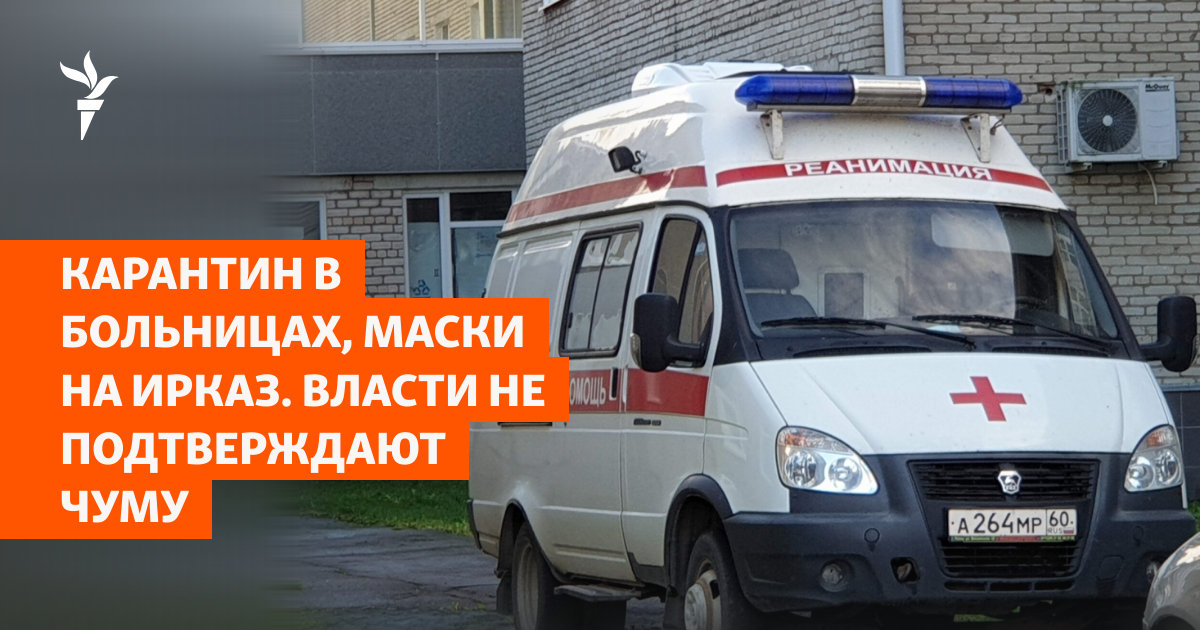
Hospital quarantine, masks at Irkutsk Automotive Plant. Authorities deny plague

2 hours ago

The Irkutsk Aluminum Smelter (IrkAZ) has issued a directive requiring the mandatory wearing of medical masks. This was announced on Telegram by the plant's CEO, Artyom Fominykh. The smelter is located in the city of Shelekhov, where a woman recently died , believed to have been infected with the plague.

Fominykh's statement reads, in part: "Meetings of the sanitary and anti-epidemic commission were held in the Irkutsk region, with the participation of Anna Yuryevna Popova, Chief State Sanitary Doctor of the Russian Federation. Rospotrebnadzor is implementing the necessary range of anti-epidemic measures. All identified contacts are under medical observation. Currently, they show no signs of illness, and laboratory test results are negative. <...> As a preventative measure, we have introduced a mask requirement at the plant. Better safe than sorry – please observe precautions."

On October 2, it was reported that a young patient had died at a hospital in Shelekhov—from a "particularly dangerous infection," as authorities stated at the time. Speculation arose that the cause of death was pneumonic plague. The deceased was reportedly a lab technician at the Irkutsk Anti-Plague Institute. Unofficial reports indicate that she broke a test tube containing the pathogen in the lab. People of Baikal sources claim that since October 1, ambulances transporting those who had been in contact with the deceased for testing have been accompanied by FSB patrols. Approximately 200 people have been quarantined.

On October 4, Rospotrebnadzor announced that "an employee of the Anti-Plague Institute in the Irkutsk Region has been diagnosed with pneumonia of unknown etiology," and that "microorganisms related to her professional activities were not detected in the patient's samples." The Irkutsk Anti-Plague Institute also reported that "no accidents involving pathogenic microorganisms were detected." The statement stated that the sanitary and epidemiological situation in the Irkutsk Region and the cities of Irkutsk and Shelekhov is "stable."

The publication "People of Baikal" reported on October 4 that several hospitals in Irkutsk were closed for a three-week quarantine.
Specifically, these include City Clinical Hospitals No. 1, 3, and 10, as well as the Ivano-Matreninskaya City Children's Clinical Hospital. Strict restrictions have been imposed there: Patients are not allowed to see their families; visiting is prohibited; only items or food can be delivered.

Furthermore, at least one maternity hospital has been quarantined, as relatives of one of the women in labor told People of Baikal. They said doctors told them the cause was plague. The woman's husband was not allowed into the room, even though they have a contract for paid partner births.

Earlier, the Central District Hospital of Shelekhov was closed for quarantine.

A source in the healthcare sector for People of Baikal reports that Irkutsk doctors are "already openly discussing the plague." However, according to him, the official diagnosis isn't listed in the documents received by hospitals, and plague doesn't appear there.

-----------------------------------------------------------------------------------
Rospotrebnadzor (the Federal Service for Surveillance on Consumer Rights Protection and Human Wellbeing) has verified information about the plague in the Irkutsk region.

Alexey Kurilchenko
October 4, 2026, 1:48 PM

Rospotrebnadzor has not identified any accidents at the Irkutsk Anti-Plague Institute.

The Irkutsk Anti-Plague Institute has reported no accidents while working with pathogenic microorganisms, Rospotrebnadzor reported. It noted that no employees have reported any health problems in the past few days.

"Based on the work of the Commission for Monitoring Compliance with Biological Safety Requirements <...> no emergency situations were identified when working with pathogenic microorganisms ," the department stated.

Following the employee's illness, specialists identified two cases of COVID-19 and two cases of rhinovirus infection. No other illnesses were found among the employees.


According to the Telegram channel "Ostorozhno, Novosti," hospitals in the Irkutsk region have been placed under quarantine amid reports of a "particularly dangerous infection."

It was previously reported that 189 people in the Irkutsk region were placed under medical observation after the death of a patient suspected of pneumonic plague. Specialists have identified the circle of people who had been in contact with the patient.

-------------------------------------------------------------------------------------
In Russia 12:55, October 4, 2026

Rospotrebnadzor reported a stable situation in the Irkutsk region.


Moscow. October 4. INTERFAX.RU - Rospotrebnadzor reported that the sanitary and epidemiological situation in the Irkutsk region and the cities of Irkutsk and Shelekhov is stable.

"The sanitary and epidemiological situation in the Irkutsk region and the cities of Irkutsk and Shelekhov is stable. A special set of measures has been organized and implemented in response to the case of an employee of the Irkutsk Anti-Plague Institute of Siberia and the Far East who has been diagnosed with pneumonia of unknown etiology," the Rospotrebnadzor press service said in a statement on Sunday.

Based on the results of extensive testing, no microorganisms associated with the patient's professional activities were detected in the patient's sample, the department noted.


Rospotrebnadzor reported that no infectious disease cases have been reported among the institute's employees over the past 10 days.

The Irkutsk Anti-Plague Institute of Siberia and the Far East's biosafety compliance monitoring committee found no emergency situations involving pathogenic microorganisms. The committee's findings were confirmed by an expert commission sent to the institute at the request of Anna Popova, head of Rospotrebnadzor.

"Due to the patient's professional activities, upon receiving information, a comprehensive set of anti-epidemic measures was immediately and fully implemented in accordance with sanitary legislation. This included identifying the widest possible circle of people who had been in contact with the patient, inpatient medical observation, and daily laboratory testing. The results revealed two cases of Covid-19 and two cases of rhinovirus infection. No other infectious agents were detected," Rospotrebnadzor stated.

"None of the contacts have shown any changes in health related to infectious pathology," the press service added.

Seasonal acute respiratory viral infections are being reported among residents of Irkutsk and Shelekhov. The incidence rate is consistent with long-term averages.

The situation remains under the strict control of Rospotrebnadzor, the agency emphasized.

 
Back
Top Bottom