

Pathfinder
Editor, Senior Moderator
Translation Google
January 20, 202614:20
Scientists have created a prototype vaccine to protect birds from the rapidly spreading H5N1 flu virus.
Source: Press Service of the Russian Science Foundation
Scientists have developed a new vaccine strain against the highly pathogenic H5N1 avian influenza virus . Unlike existing vaccines, it precisely targets the currently circulating variant. The researchers created the artificial H5N1 influenza virus using reverse genetics, introducing point mutations into the virus's RNA. This resulted in the strain being safe for animals and humans while retaining its ability to induce an immune response. This development could serve as the basis for an effective vaccine that could help reduce economic losses in the poultry industry and prevent mass bird mortality on farms. The results of the study, supported by a grant from the Russian Science Foundation (RSF), were published in the journal Agricultural Biology.
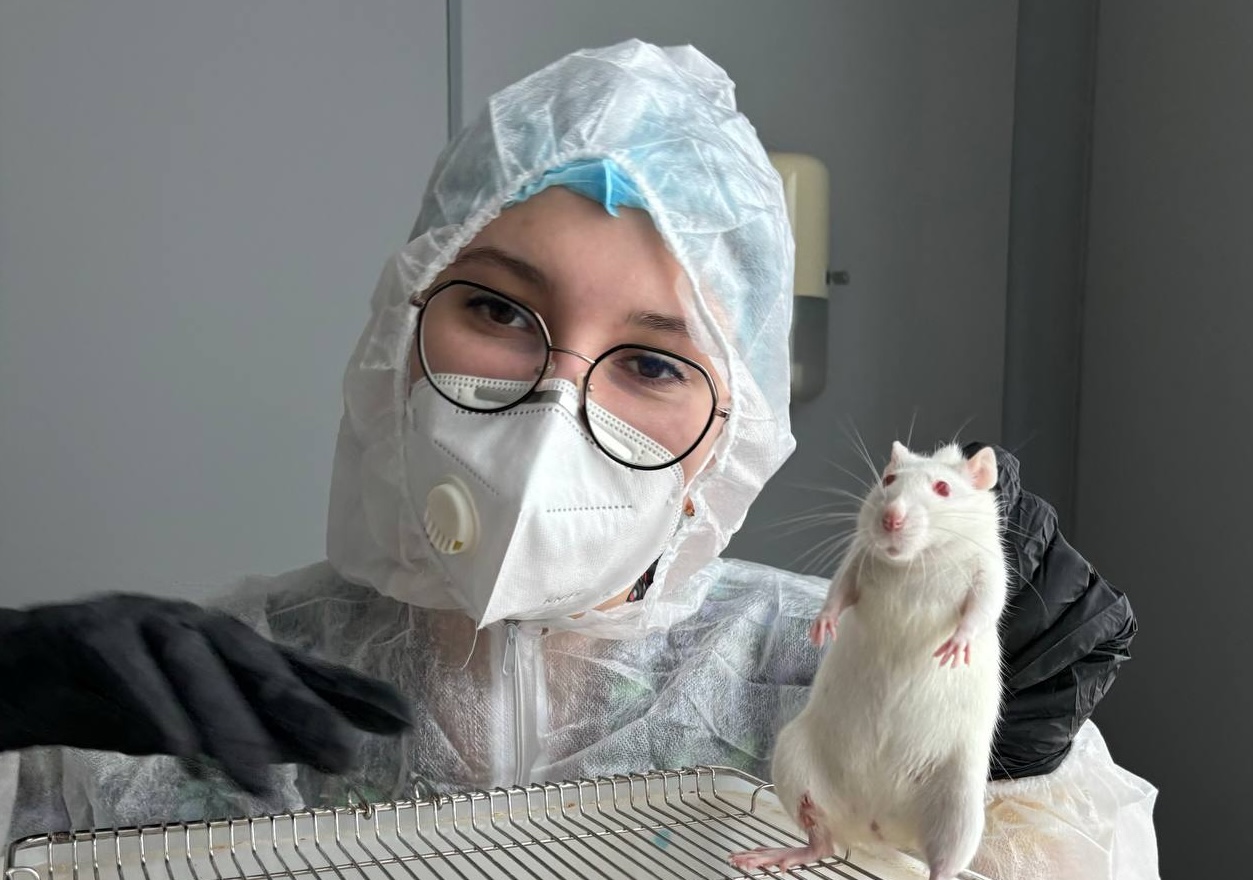 Research team member Kira Kudrya works with a lab animal. Source: Nikolai Tarlavin
The highly pathogenic avian influenza virus subtype H5N1 is circulating widely worldwide. According to the World Organisation for Animal Health, more than 25 million domestic and wild birds were infected with this virus in 2022. H5N1 is also dangerous because it can cross species barriers and infect humans and farm animals, such as cattle. Traditional control methods, such as culling infected flocks and vaccination, are not always effective due to the virus's high variability. Existing vaccines often do not match current strains, reducing their protective properties. For example, in Russia, the most popular avian influenza vaccines are based on an inactivated ("neutralized") strain genetically related to viruses isolated in China in May 2005—an outdated group of pathogens. Therefore, scientists are searching for new ways to develop safe and effective drugs capable of combating modern variants of the virus.
Researchers from the Saint Petersburg State University of Veterinary Medicine (Saint Petersburg) and the A.A. Smorodintsev Influenza Research Institute (Saint Petersburg) have developed an influenza virus strain that can be used to vaccinate birds. To do this, the authors used reverse genetics, a technique that allows the construction of viruses with specific properties.
The scientists used the genes for the surface proteins hemagglutinin and neuraminidase of the highly pathogenic H5N1 strain , isolated from a black-headed gull in Syktyvkar in 2023, as a basis. After testing the virus's relevance to chicken flocks, its hemagglutinin and neuraminidase genes were modified to reduce pathogenicity. They were then combined with fragments of a safe laboratory-produced H1N1 virus strain , which is easily propagated in the laboratory, allowing for rapid production of large quantities of the prototype vaccine.

Chickens used to test the vaccine prototype. Source: Nikolai Tarlavin
The authors produced the required quantities of hybrid viral particles in chicken embryos and then used the virus to vaccinate chickens. The birds were injected with a virus-containing preparation twice, 14 days apart, and the levels of H5N1 -specific antibodies in their blood were measured on day 28 of the experiment .
It turned out that the titer (level) of these protective molecules was ten times higher than the minimum amount required to effectively protect the body from the virus. This indicates that the vaccine prototype based on the proposed virus induces a strong immune response sufficient to protect against the disease.
https://rscf.ru/news/release/ucheny...t-aktivno-rasprostranyayushchegosya-virusa-g/
January 20, 202614:20
Scientists have created a prototype vaccine to protect birds from the rapidly spreading H5N1 flu virus.
Source: Press Service of the Russian Science Foundation
Scientists have developed a new vaccine strain against the highly pathogenic H5N1 avian influenza virus . Unlike existing vaccines, it precisely targets the currently circulating variant. The researchers created the artificial H5N1 influenza virus using reverse genetics, introducing point mutations into the virus's RNA. This resulted in the strain being safe for animals and humans while retaining its ability to induce an immune response. This development could serve as the basis for an effective vaccine that could help reduce economic losses in the poultry industry and prevent mass bird mortality on farms. The results of the study, supported by a grant from the Russian Science Foundation (RSF), were published in the journal Agricultural Biology.
The highly pathogenic avian influenza virus subtype H5N1 is circulating widely worldwide. According to the World Organisation for Animal Health, more than 25 million domestic and wild birds were infected with this virus in 2022. H5N1 is also dangerous because it can cross species barriers and infect humans and farm animals, such as cattle. Traditional control methods, such as culling infected flocks and vaccination, are not always effective due to the virus's high variability. Existing vaccines often do not match current strains, reducing their protective properties. For example, in Russia, the most popular avian influenza vaccines are based on an inactivated ("neutralized") strain genetically related to viruses isolated in China in May 2005—an outdated group of pathogens. Therefore, scientists are searching for new ways to develop safe and effective drugs capable of combating modern variants of the virus.
Researchers from the Saint Petersburg State University of Veterinary Medicine (Saint Petersburg) and the A.A. Smorodintsev Influenza Research Institute (Saint Petersburg) have developed an influenza virus strain that can be used to vaccinate birds. To do this, the authors used reverse genetics, a technique that allows the construction of viruses with specific properties.
The scientists used the genes for the surface proteins hemagglutinin and neuraminidase of the highly pathogenic H5N1 strain , isolated from a black-headed gull in Syktyvkar in 2023, as a basis. After testing the virus's relevance to chicken flocks, its hemagglutinin and neuraminidase genes were modified to reduce pathogenicity. They were then combined with fragments of a safe laboratory-produced H1N1 virus strain , which is easily propagated in the laboratory, allowing for rapid production of large quantities of the prototype vaccine.
Chickens used to test the vaccine prototype. Source: Nikolai Tarlavin
The authors produced the required quantities of hybrid viral particles in chicken embryos and then used the virus to vaccinate chickens. The birds were injected with a virus-containing preparation twice, 14 days apart, and the levels of H5N1 -specific antibodies in their blood were measured on day 28 of the experiment .
It turned out that the titer (level) of these protective molecules was ten times higher than the minimum amount required to effectively protect the body from the virus. This indicates that the vaccine prototype based on the proposed virus induces a strong immune response sufficient to protect against the disease.
"Our development is an important step in the fight against highly pathogenic avian influenza. We not only created a strain that can be safely used in vaccine production but also ensured its compatibility with currently circulating virus variants. This is especially important for poultry farms, where H5N1 outbreaks cause enormous economic losses. In the future, our technology can be adapted for other dangerous influenza strains," explains Nikolai Tarlavin, PhD in veterinary science and senior lecturer in the V.P. Urban Department of Epizootology at the St. Petersburg State University of Veterinary Medicine, who led the project supported by the Russian Science Foundation grant.
https://rscf.ru/news/release/ucheny...t-aktivno-rasprostranyayushchegosya-virusa-g/