Re: Scientists: Iceland's Grimsvotn volcano erupting - Eruption ended on May 28, 2011
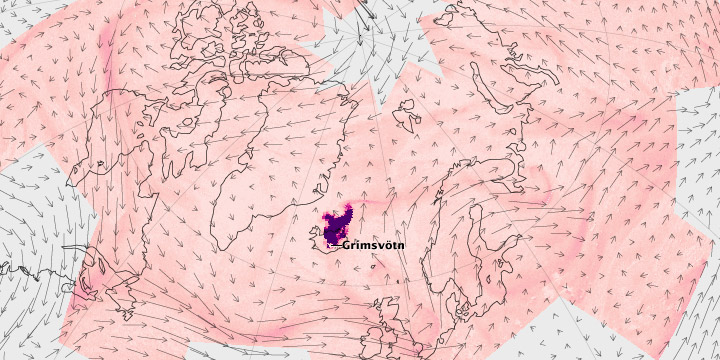
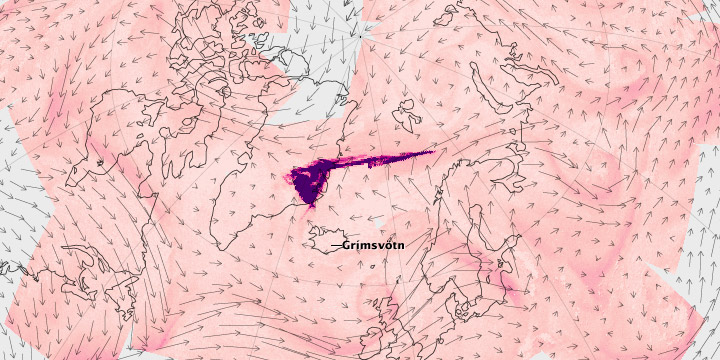
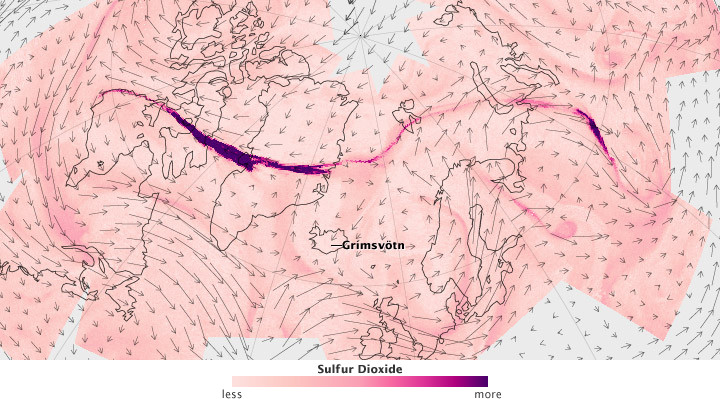
Sulfur Dioxide plume from Gr?msv?tn
Jun 2, 2011
acquired May 22, 2011
acquired May 23, 2011
acquired May 24, 2011
acquired May 22 - 26, 2011
download high definition animation (13 MB, QuickTime)
acquired May 22 - 26, 2011
download web resolution animation (5 MB, QuickTime)
Sulfur dioxide, or SO<SUB>2</SUB>, is a colorless, pungent gas that can be both air pollutant and important atmospheric component, depending on where it resides. Along with water vapor and carbon dioxide, sulfur dioxide is one of the most abundant gas emissions during volcanic eruptions.
The images above, along with the linked animation, show the emission and transport of sulfur dioxide from the Gr?msv?tn Volcano in Iceland at the end of May 2011. The images are based on measurements from the
Atmospheric Infrared Sounder (AIRS) on NASA?s Aqua spacecraft that were input into the
Goddard Earth Observing System, Version 5 (GEOS-5) experimental model, which characterizes the background wind fields. The concentration of SO<SUB>2</SUB> is represented in purple, with the small arrows depicting dominant wind direction.
As the days pass, the plume spreads north and then thousands of kilometers to the east and west, carried by complex polar winds in the upper atmosphere. In the animation, the plume is still visible over Canada nearly five days after the eruption, when the polar jet stream starts carrying the SO<SUB>2</SUB> east again.
Sulfur dioxide near the surface of Earth can harm human breathing, particularly for people with asthma. It also blends with water in the atmosphere to produce
acid rain and volcanic smog, or
vog. Most immediately after an eruption, corrosive sulfur dioxide aerosols can damage aircraft windows, though they do not necessarily pose an immediate hazard to aircraft operations.
When injected into higher reaches of the atmosphere, SO<SUB>2</SUB> can react with other gases and particles to create aerosols that block sunlight and can
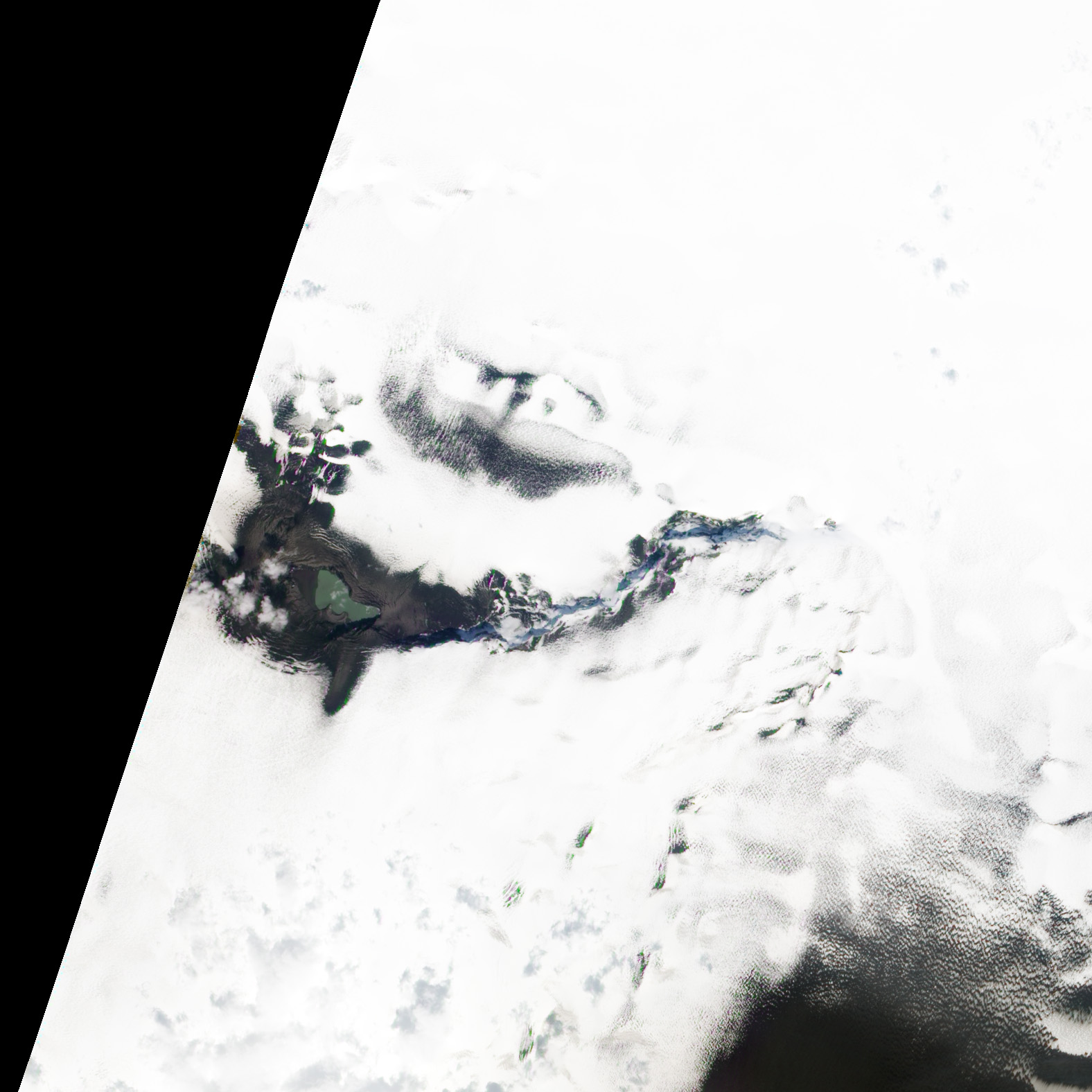
cool the climate. That's not likely in this case, as the eruption that began on May 21, 2011, ended by May 28, according to the Icelandic Met Office.
.../
http://earthobservatory.nasa.gov/IOTD/view.php?id=50766