

Michael Coston
Editor, Senior Moderator
Study Finds No Relationship Between Suicide & Oseltamivir In Pediatric Patients
#13,195
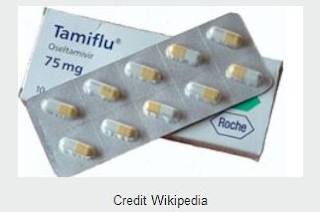
Despite being the first line of treatment for severe influenza for more than a decade, Oseltamivir (aka Tamiflu) continues to be battered in the press as either ineffective (see Daily Mail’s bombastic Ministers blew ?650MILLION on useless anti-flu drugs)or worse - dangerous(see 6-year-old tries jumping out of window after taking Tamiflu).
We've addressed the first critique - its effectiveness - many times over the years, including:
Everybody seems to remember the press reports of abnormal behavior in adolescents in Japan a dozen years ago while taking the drug, but few recall that a study in 2008 found no link between the drug and those events (see Japan: No Link Between Tamiflu And Abnormal Behavior).
In 2010 a review in the journalEurosurveillance: Adverse Effects of Oseltamivir in Children, looked at the antiviral treatment of a number of students at a primary school in Sheffield, UK during the 2009 pandemic.
[TR]
[TD] [/TD]
[/TD]
[/TR]
[TR]
[TD="class: tr-caption"]Credit CDC 2018 COCA Call On Severe Influenza[/TD]
[/TR]
[/TABLE]
All of which makes it very difficult toascertain the cause. The manufacturers of Tamiflu do warn:
All of which brings us to a new study, published this week in the Annals of Family Medicine, which looks again at the association of use of oseltamivir and neuropsychiatric events in pediatric patients.
The Relationship Between Oseltamivir and Suicide in Pediatric Patients
Rachel Harrington, BA1, Sruthi Adimadhyam, MS1, Todd A. Lee, PharmD, PhD1, Glen T. Schumock, PharmD, MBA, PhD1 and James W. Antoon, MD, PhD2
Abstract
PURPOSE Studies examining the association between use of oseltamivir and neuropsychiatric events (including suicide) among children have had mixed findings and have been limited by small sample size, reliance on older data, and potential confounding. We undertook an analysis that addresses these limitations.
METHODS Using a national administrative claims database and a case-crossover design that minimized confounding, we analyzed data from 5 contemporary influenza seasons (2009–2013) for individuals aged 1 to 18 years and ascertained oseltamivir exposure from pharmacy dispensing.
RESULTS We identified 21,407 suicide-related events during this study period, 251 of which were in oseltamivir-exposed children. In case-crossover analysis, we did not find any significant association with suicide either for oseltamivir exposure (odds ratio = 0.64; 95% CI, 0.39–1.00; P = .05) or for influenza diagnosis alone (odds ratio = 0.63; 95% CI, 0.34–1.08; P = .10).
CONCLUSION Our findings suggest that oseltamivir does not increase risk of suicide in the pediatric population. While subject to certain limitations (as are all studies) these researchers found no significant difference between attempted suicides by pediatric patients who were taking Tamiflu and those who had influenza and were not taking the drug.
http://afludiary.blogspot.com/2018/0...p-between.html
#13,195
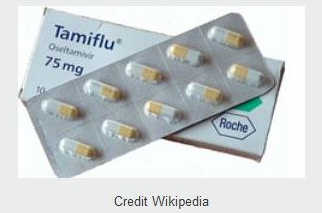
Despite being the first line of treatment for severe influenza for more than a decade, Oseltamivir (aka Tamiflu) continues to be battered in the press as either ineffective (see Daily Mail’s bombastic Ministers blew ?650MILLION on useless anti-flu drugs)or worse - dangerous(see 6-year-old tries jumping out of window after taking Tamiflu).
We've addressed the first critique - its effectiveness - many times over the years, including:
ECDC: Expert Opinion On Use Of Neuraminidase Inhibitor Antivirals For Influenza
EID Journal: Revisiting The Oseltamivir Effectiveness Debate
Wellcome Trust/AMS Report On Antivirals For Influenza
CID Journal: Outcomes Of Prompt Influenza Antiviral Treatment Of Older Adults
While its value in treating mild to moderate influenza in healthy adults is debatable, early treatment with antivirals (see CDC: Influenza Antiviral Medications - Summary for Clinicians) has shown great value when treating patients who:EID Journal: Revisiting The Oseltamivir Effectiveness Debate
Wellcome Trust/AMS Report On Antivirals For Influenza
CID Journal: Outcomes Of Prompt Influenza Antiviral Treatment Of Older Adults
- are hospitalized;
- have severe, complicated, or progressive illness, or;
- are at higher risk for influenza complications.
But . . . of those who received at least one dose of Tamiflu . . . 60% survived . . . as opposed to only 24% who received no antivirals.
The other recurring question has been over its safety, and while there is no drug or medication that is 100% safe and without side effects - even those sold over the counter (see NSAIDs & The Risk Of Heart Failure) - the safety profile of Tamiflu has been pretty solid.Everybody seems to remember the press reports of abnormal behavior in adolescents in Japan a dozen years ago while taking the drug, but few recall that a study in 2008 found no link between the drug and those events (see Japan: No Link Between Tamiflu And Abnormal Behavior).
In 2010 a review in the journalEurosurveillance: Adverse Effects of Oseltamivir in Children, looked at the antiviral treatment of a number of students at a primary school in Sheffield, UK during the 2009 pandemic.
While none of the side effects reported were life-threatening, the nausea, vomiting, abdominal pain and other symptoms were bothersome enough that a minority of those who started the Tamiflu (< 10% ) stopped taking the drug.
In 2012, inStudy: Adverse Events Associated With Oseltamivir Outpatient Treatment, researchers writing in the journal Pharmacoepidemiology and Drug Safety, found that `no evidence was identified for an increased risk of neuropsychiatric or other AEs following oseltamivir treatment.’ Still, social media rumors and press reports have continued to cast doubt on the drug's safety - particularly when administered to children and adolescents.
While aberrant behavior has been observed in young patients taking Tamiflu for influenza, the same can be said for patients with the flu who weren't taking the drug (see JNeurosci: Another Study On The Neurocognitive Impact Of Influenza Infection). [TABLE="class: tr-caption-container, align: center, cellpadding: 0, cellspacing: 0"][TR]
[TD]
[/TD][/TR]
[TR]
[TD="class: tr-caption"]Credit CDC 2018 COCA Call On Severe Influenza[/TD]
[/TR]
[/TABLE]
All of which makes it very difficult toascertain the cause. The manufacturers of Tamiflu do warn:
Neuropsychiatric events: Patients with influenza, including those receiving TAMIFLU, particularly pediatric patients, may be at an increased risk of confusion or abnormal behavior early in their illness. Monitor for signs of abnormal behavior.
But this is good advice for anyone with influenza, regardless of the medications they might be taking.All of which brings us to a new study, published this week in the Annals of Family Medicine, which looks again at the association of use of oseltamivir and neuropsychiatric events in pediatric patients.
The Relationship Between Oseltamivir and Suicide in Pediatric Patients
Rachel Harrington, BA1, Sruthi Adimadhyam, MS1, Todd A. Lee, PharmD, PhD1, Glen T. Schumock, PharmD, MBA, PhD1 and James W. Antoon, MD, PhD2
Abstract
PURPOSE Studies examining the association between use of oseltamivir and neuropsychiatric events (including suicide) among children have had mixed findings and have been limited by small sample size, reliance on older data, and potential confounding. We undertook an analysis that addresses these limitations.
METHODS Using a national administrative claims database and a case-crossover design that minimized confounding, we analyzed data from 5 contemporary influenza seasons (2009–2013) for individuals aged 1 to 18 years and ascertained oseltamivir exposure from pharmacy dispensing.
RESULTS We identified 21,407 suicide-related events during this study period, 251 of which were in oseltamivir-exposed children. In case-crossover analysis, we did not find any significant association with suicide either for oseltamivir exposure (odds ratio = 0.64; 95% CI, 0.39–1.00; P = .05) or for influenza diagnosis alone (odds ratio = 0.63; 95% CI, 0.34–1.08; P = .10).
CONCLUSION Our findings suggest that oseltamivir does not increase risk of suicide in the pediatric population.
A finding which is consistent with earlier studies.
While this may not be the last word on the subject, this should provide some additional reassurance to parents who have concerns over the safety of the drug.http://afludiary.blogspot.com/2018/0...p-between.html