WEEKLY BULLETIN ON OUTBREAKS
AND OTHER EMERGENCIES
Week 45: 31 October - 6 November 2022
Data as reported by: 17:00; 6 November 2022
...
Ebola disease caused by Sudan virus in Uganda
135 cases
53 Deaths
39.3% CFR
EVENT DESCRIPTION
In the past week, a new district Masaka, located in Central
Uganda registered a positive case of Ebola disease bringing the
total number of affected districts to seven. The confirmed cases
(deceased) was a 23-year-old female who earlier admitted at
Masaka Regional Referral Hospital where she was identified as
a suspect case and isolated. She succumbed to the deadly virus
hours after being evacuated to Entebbe treatment centre.
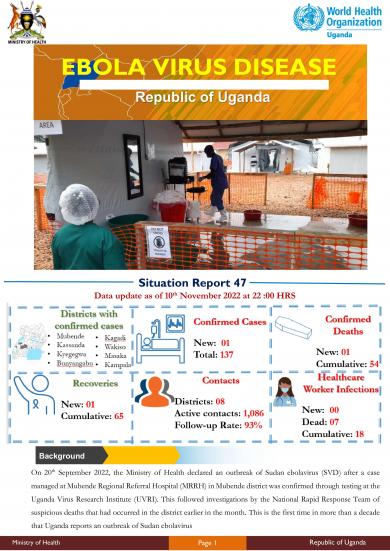
As of 6 November 2022, a total of 135 laboratory-confirmed
and 21 probable cases have been reported. Seventy-four (74)
fatalities have been registered including 53 confirmed cases,
resulting to an overall case fatality ratio of 47.4%, and 39.3%
among confirmed cases.
Cumulatively, 66 patients have been discharged, giving a recovery
rate of 48.9%. In total, 18 healthcare worker infections have been
recorded including two probable cases, of whom seven (39.0%)
have died.
Between weeks 43 (24-30 October) and 44 (31 October-6
November), the number of new confirmed cases has decreased
sharply, by 84.6%, from 39 to six new confirmed cases, while
the number of new recoveries has increased by 35.3%, from 17
to 23. However, the number of new deaths has kept increasing
over the past three weeks, from five deaths in week 42 (17-23
October), nine deaths in week 43, to 16 deaths in week 44.
No new affected Sub-County has been reported over the past
seven days. Hence, the number of affected Sub-Counties
remains at 26, distributed in seven Districts of which Mubende
has reported majority of cases (65 confirmed and 19 probable;
53.8%), followed by Kassanda (43 confirmed and two probable;
28.8%) and Kampala (18 confirmed; 11.5%). Kassanda remains
the District of highest concern, reporting two-thirds (66.7%) of
the new confirmed cases in the past week. No new case has been
reported from Mubende over the past week.
From the beginning of the outbreak to 5 November 2022, a total
of 3 867 contacts have been listed in 14 Districts, of whom 2
237 have completed 21 days of follow-up including all those
from Bunyangabu, Fort Portal City, Kagadi, Kakumiro, Luweero,
Nakasongola, and Ntungamo. On 5 November 2022, 1 396
contacts were still under active follow-up in seven
Districts including Kampala, Kassanda, Kyegegwa, Masaka,
Mitooma, Mityana and Mubende, 91.9% of whom (n=1 274) were
seen over the past 24hrs. An average of 1 464 contacts have been
followed-up on a daily basis during week 44, which represents a
14% decrease from week 43 during which 1 703 contacts were
followed-up daily. Since the beginning of week 44, 34 contacts
have become suspected cases of SVD.
Alert systems have been set-up in Mubende, Kassanda, Greater
Kampala Metropolitan with call centre, alert desk and linkage to
Emergency Medical Services (EMS) dispatch system. As of 5
November, a total of 2 798 alerts have been received, giving an
average of 71 alerts per day. Of these, 2 636 (94.2%) alerts were
investigated within 24hrs, of which 1 120 (42.5%) alerts were
validated as suspected cases of SVD. The proportion of alerts
investigated within 24hrs has consistently increased; in week 44,
100% (n=622) of alerts were investigated within 24hrs, of which
32.6% (n=203) were validated as suspected cases of SVD.
Of note, findings from the population mobility mapping exercise
conducted by the International Organization for Migration and
WHO, prioritized four mobility corridors based on the high
volume of population movement and connectivity to and from the
epicentre to major towns: Mubende – Kassanda Road, Kassanda
– Kampala Road, Kassanda – Mubende – Fort portal – Kasese
road and Mubende – Kygegwa – Kazo – Ibanda – Mbarara road.
In addition, four key factors were identified to be the main drivers
of population mobility to, within and from the five initially affected
Districts: gold mining, refugee settlements, socioeconomic
factors including pastoral movements, and traditional healers/
shrines.
PUBLIC HEALTH ACTIONS
Coordination
Daily District Task Force meetings, partners’ meetings and
pillar meetings continue to be held in all affected Districts.
National Task Force meetings are held thrice a week.
Surveillance and Laboratory
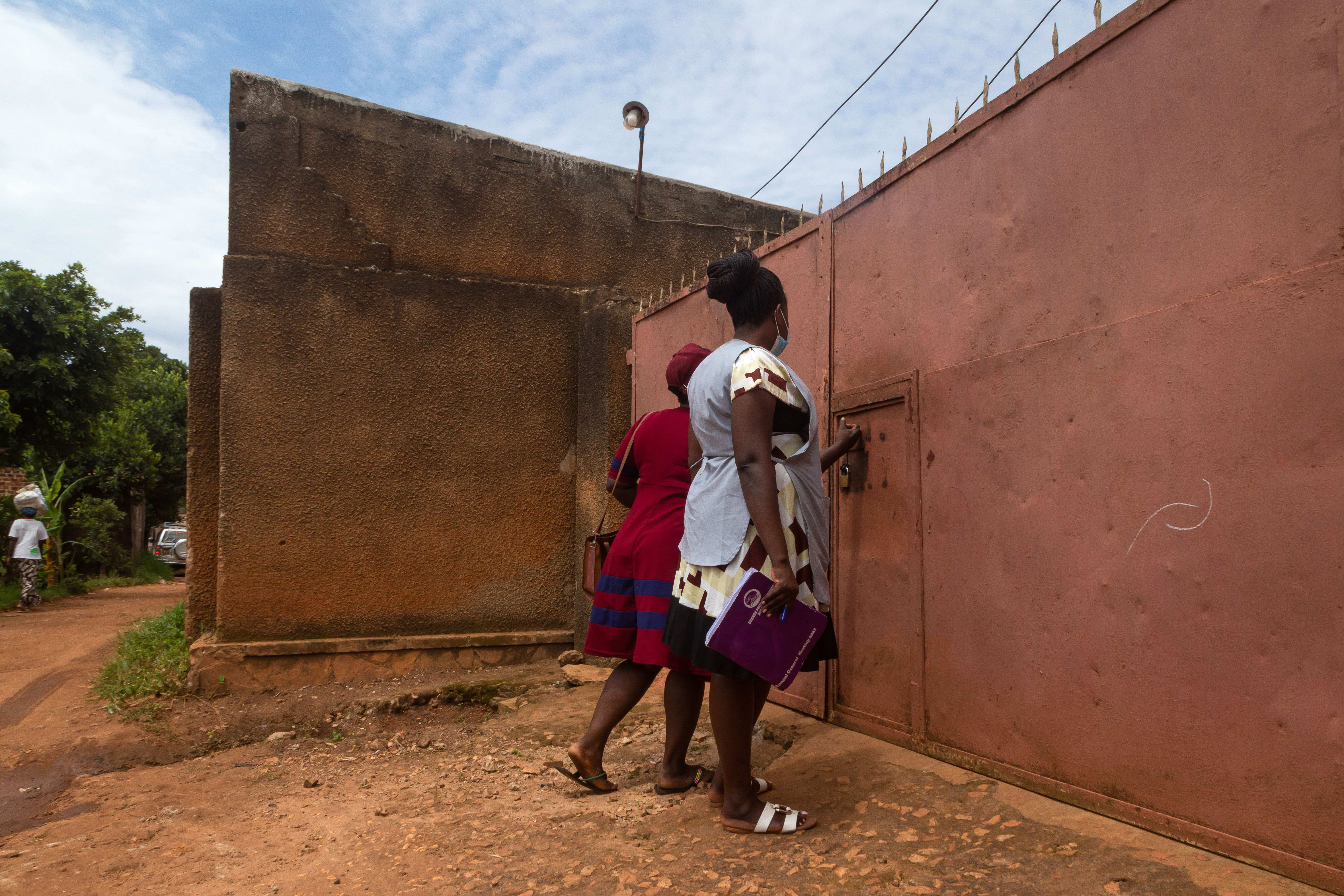
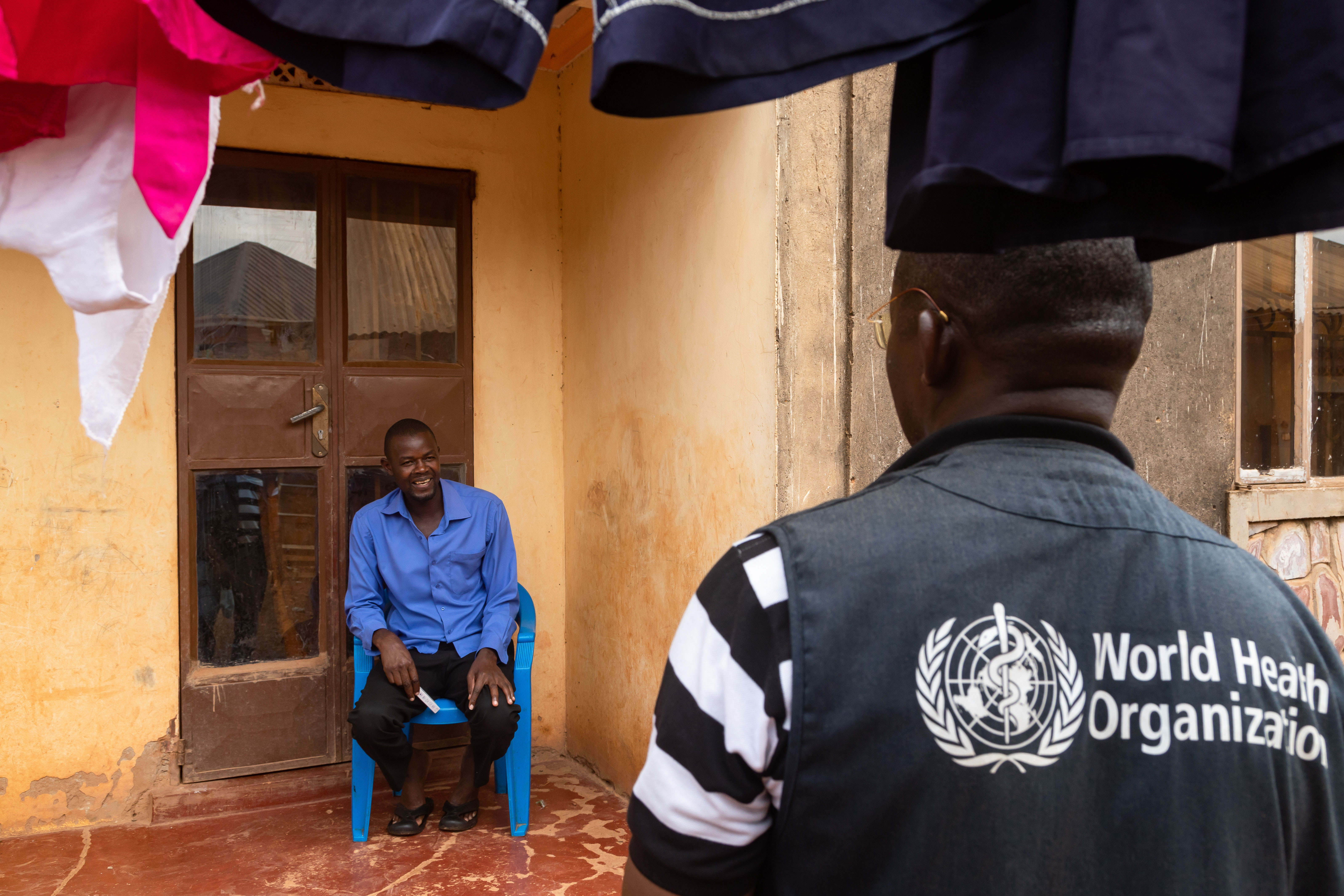
Epidemiological investigations, contact tracing, and active
case finding are ongoing in all affected Districts. On 5
November 2022, 1 386 contacts were still under active
follow-up, among whom 1 274 (91.9%) were seen over the
past 24hrs.
On 5 November, 126 alerts were received nationwide, all of
whom were verified; 34 (27.0%) of them were validated as
new suspected cases and 9 (26.5%) were evacuated to Ebola
Treatment Units (ETUs).
On 5 November, 81 samples were processed at Uganda Viral
Research Institute and Mubende mobile laboratory, with no
new confirmed case.
Case management and psychosocial support
Four ETUs, one each in Entebbe, Madudu, Mubende, and
Mulago are fully operational. The total bed capacities are 182
beds for the isolation unit, and 103 beds for the treatment
unit. Cumulatively, 66 (48.9%) recoveries have so far been
recorded.
The training in case management has been completed for
cohort 3 participants.
On 5 November 2022, Emergency Medical Services teams
performed 21 evacuations in Mubende, 13 in Kassanda and
one in Kampala/Wakiso.
Psychosocial support continues to be offered to suspected
and confirmed cases in ETUs, as well as to their family
members. Pre-test (and post-test) counselling are also being
offered to all patients at ETUs, and to contacts. In addition,
the resettling of the discharged persons and negative
suspected cases into their community continues.
Psychosocial teams are also providing supportive counselling
to all staff working at ETUs.
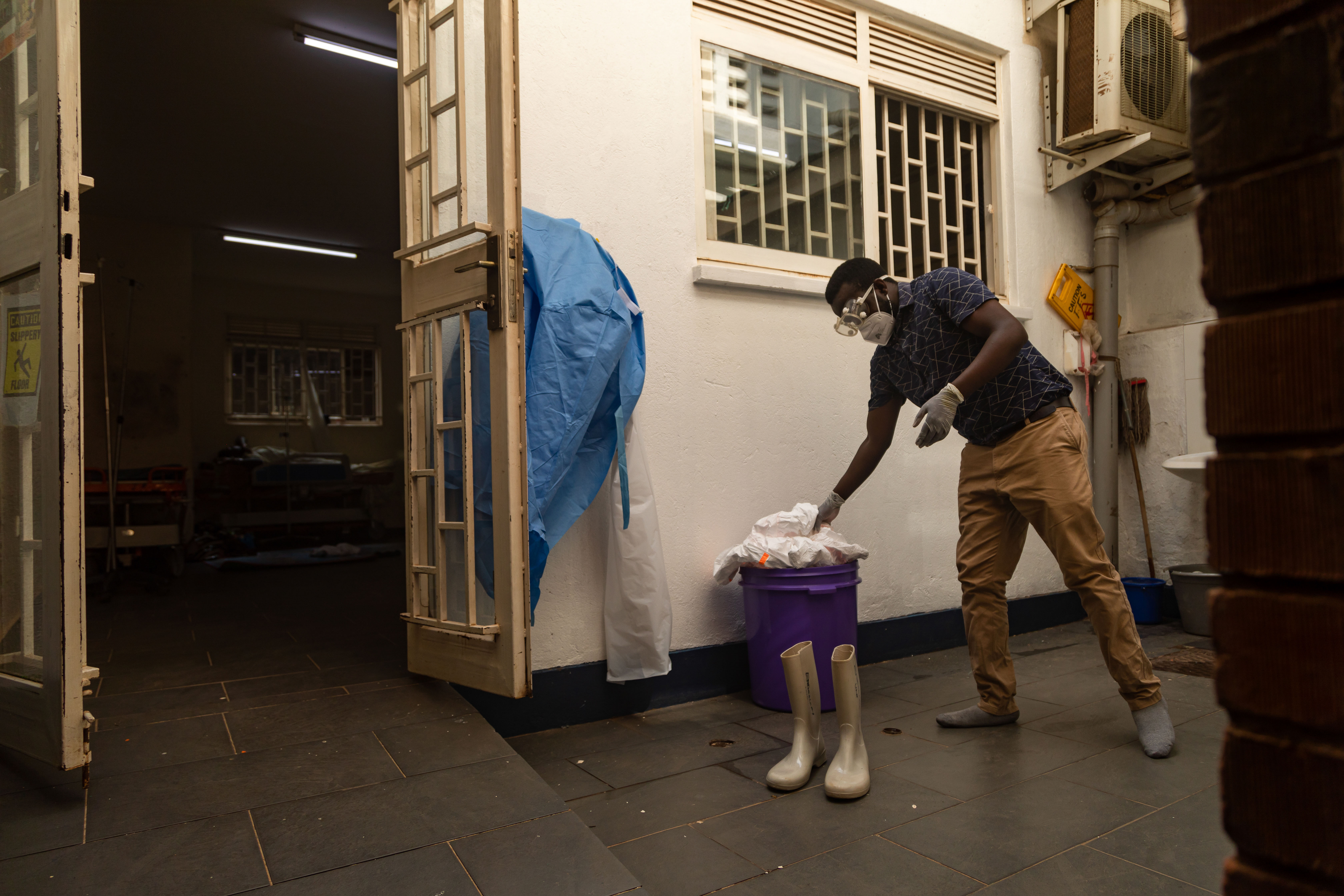
Infection, prevention and control (IPC)
Daily monitoring of IPC measures is ongoing in all ETUs.
IPC and WASH teams continue to participate in the hotspot
integrated community engagement activities ongoing in
hotspot villages, and plan to include traditional medicine
practitioners.
Safe and dignified burial teams continue to undertake safe
and dignified burials in all affected Districts. Ten safe and
dignified burials were performed on 5 November.
Risk communication and community engagement
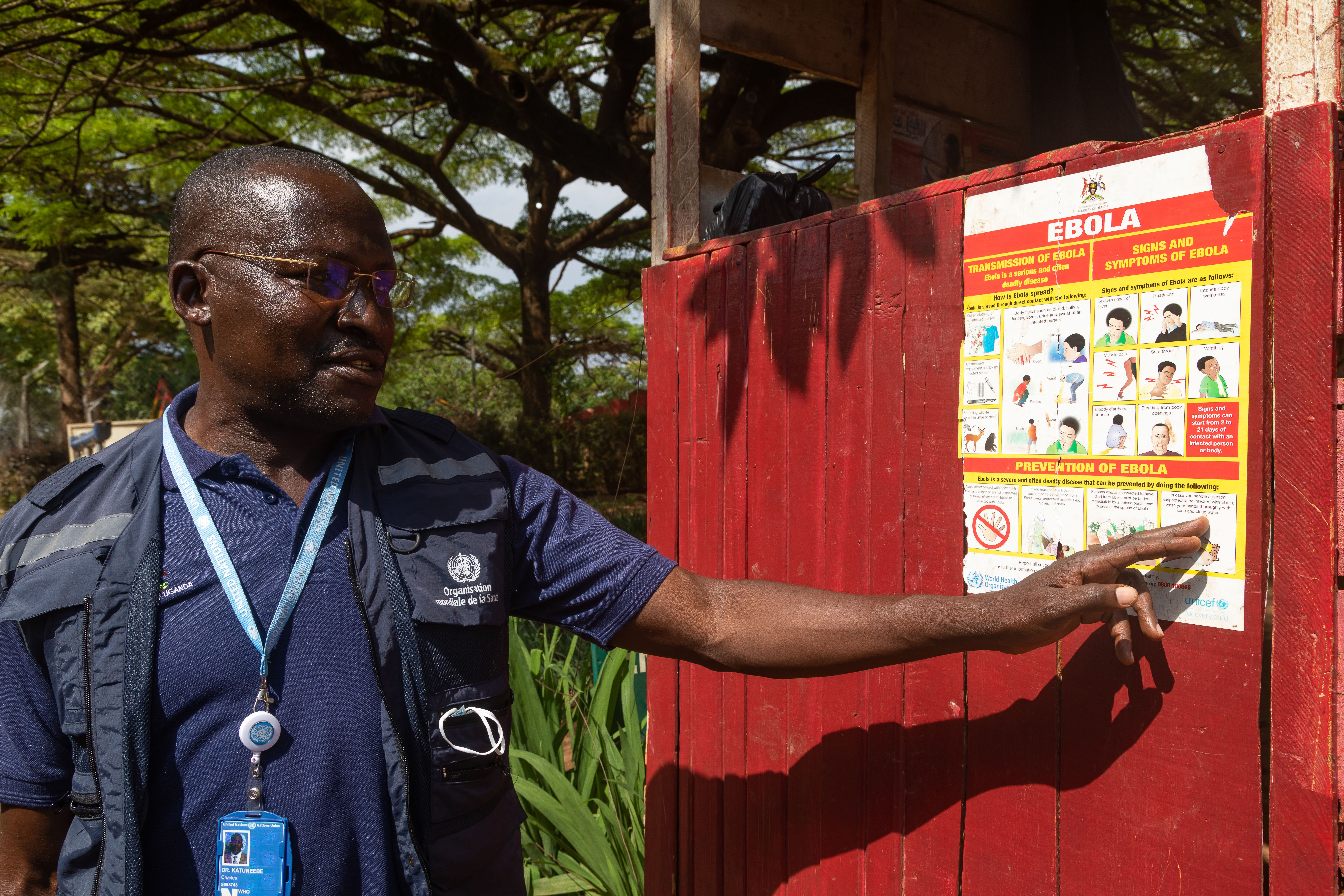
RCCE interventions are ongoing in all affected Districts and
beyond.
At least 120 radio spots messages continue to be aired daily
through six radio stations in Mubende, Kassanda, Kagadi,
Kakumiro, Buyangabu and Kyegegwa.
At total of 350 information, education and communication
(IEC) materials have been disseminated in Kagadi and
Bunyangabu.
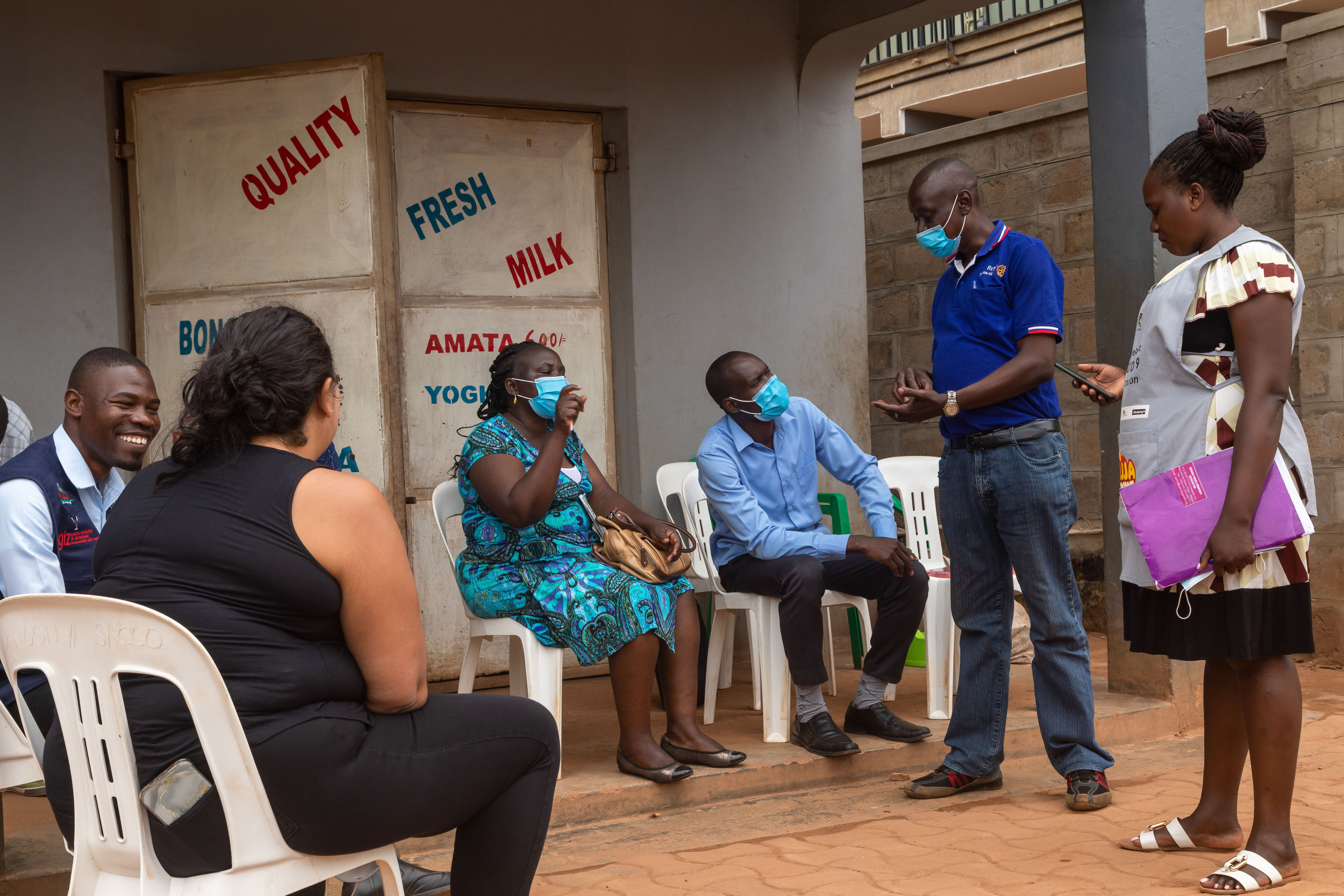
House to house sensitization is ongoing in Mubende,
Bunyangabu, Kagadi, Kyegegwa and Kassanda Districts, by
community volunteers and Village Health Teams, where 898
households representing 8 480 people including 4 411 males
and 4 069 females have been reached with SVD prevention
messages.
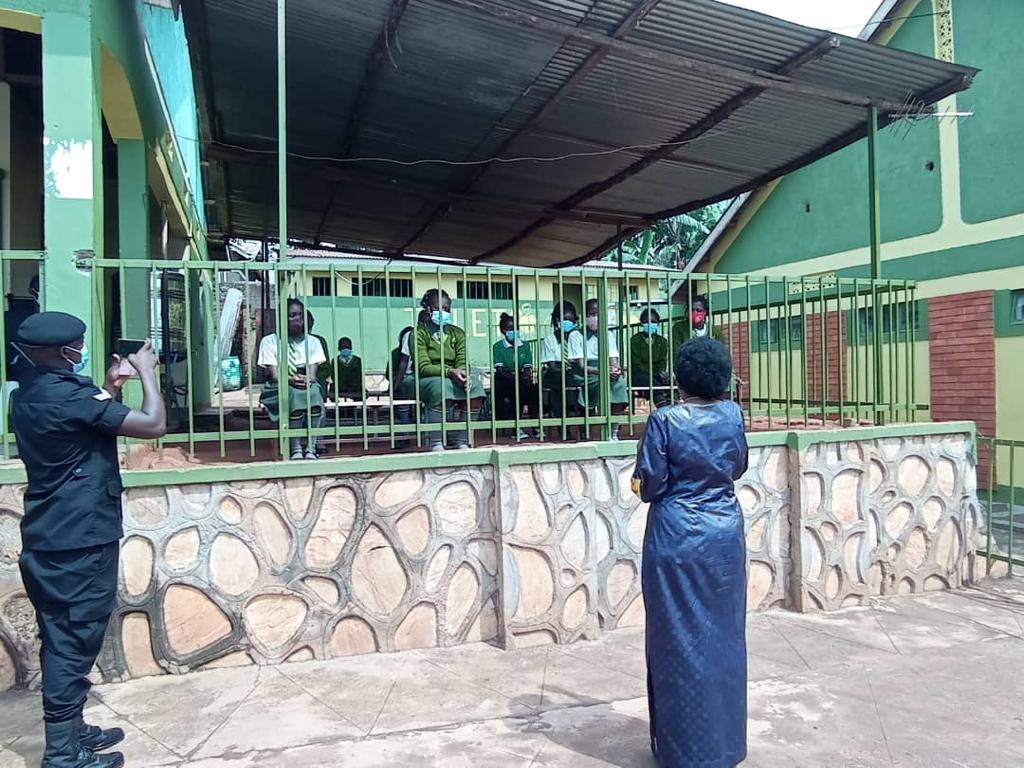
At least 26 head teachers/deputies from schools in Makindye
Division, Kampala have been trained on SVD prevention and
response.
Logistics
The distribution of supplies in healthcare facilities within all
affected districts is ongoing, including personal protective
equipment, spray pumps, wooden pallets, tarpaulin,
essential medicines, discharge packages, fuel, vehicles,
stationery, digital thermometers, infra-red thermometers
from MoH and partners.
SITUATION INTERPRETATION
The ongoing response interventions have yielded positive and
promising results, with a significant reduction in the number of
new confirmed cases over the past week. Of note, no new case
has been reported from Mubende over the past seven days,
inferring that transmission chains are being controlled locally.
However, over the two preceding weeks, majority of cases have
been reported from Kassanda where there is still need to scaleup
response interventions. The number of deaths has however
kept increasing, highlighting some challenges around case
management, considering that the chance of survival is dependent
of early detection of, and rapid and adequate care to confirmed
cases. Moreover, IPC is another area of improvement. A recent
evaluation in Kampala has revealed an overall IPC capacity of
77% in health care facilities, much lower in private facilities.
...
https://apps.who.int/iris/bitstream/handle/10665/364336/OEW45-311006112022.pdf